
Review · BARCELONA
The Spanish Civil War & Franco Barcelona Walking Tour
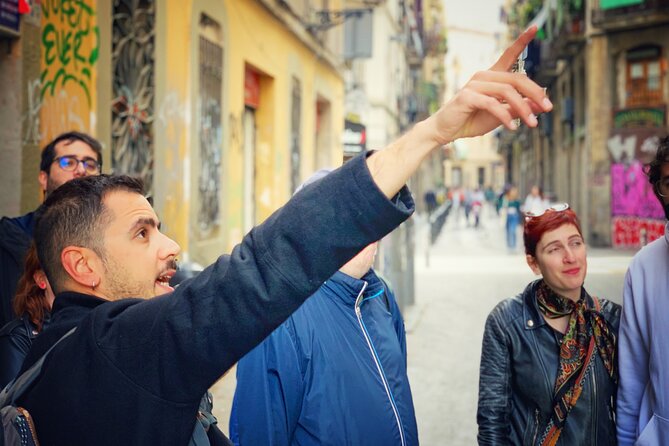
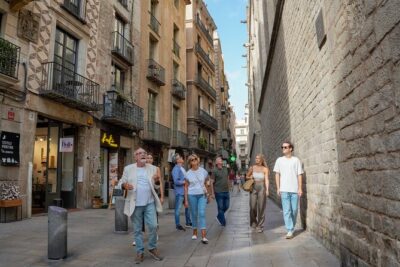
Barcelona’s Civil War story is not presented behind museum glass here. It unfolds in the streets, churches, squares, and old buildings around the Gothic Quarter, where modern shopfronts can sit beside the marks and memories of political violence. This two-and-a-half-hour walk gives you a useful way to read Barcelona beyond Gaudí and the beach.
I like the way the tour connects major events to specific places, and I like the use of historic photographs to show what these streets looked like during the war. Guides such as Henrieta, Filipa, Chrisa, Evan, and Yannis have earned praise for making difficult politics understandable. The main drawback is that this is a walking-intensive history lesson, and the lack of monuments marking many events can make some stops feel abstract.
Key points to know before booking
- A street-level Civil War tour: Follow the conflict through Plaça Catalunya, La Rambla, the old hospital quarter, and several historic churches and squares.
- Complex politics made clearer: The guide explains the Republican factions, anarcho-syndicalists, Franco’s forces, and the social pressures that shaped Barcelona.
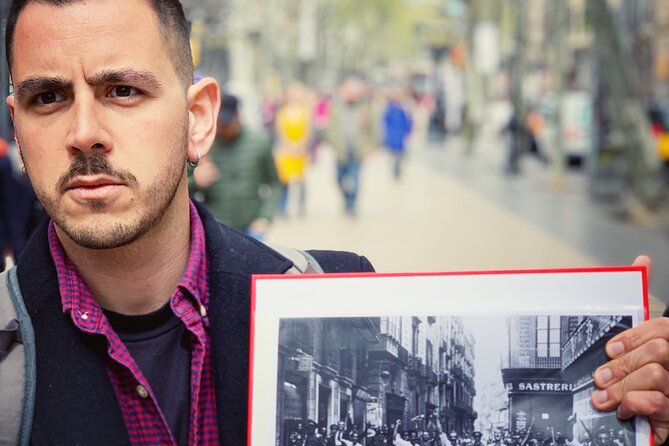
- Historic images add context: Photographs and posters help you picture damage and events that are no longer obvious from the street.
- A serious but approachable subject: This is a thoughtful tour about war, dictatorship, working-class life, and Catalan identity.
- Plan for steady walking: Comfortable shoes matter, and the guide radio costs an extra €1 per person.
- Small enough for questions: The group can include up to 25 people, with the tour offered in English.
Why this Barcelona history walk is different
Most first visits to Barcelona focus on Roman remains, medieval lanes, Modernisme, markets, and tapas. Those are good reasons to come, but they do not explain the political tensions that shaped the city in the 20th century.
This tour takes a different route through the city. You learn how Barcelona’s working class, political movements, and competing visions for Spain collided during the Spanish Civil War from 1936 to 1939. You also hear how Franco’s dictatorship affected Spain after the fighting ended.
The subject is not simple. Republican, anarchist, socialist, communist, Catalan, and Nationalist forces did not always agree, even when they opposed Franco. A good guide must explain not just who fought whom, but why groups on the same side sometimes turned against each other.
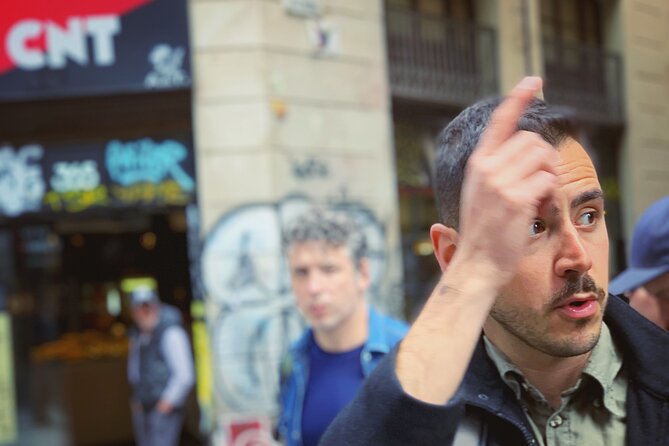
That is where the tour earns its price. You are not simply looking at old buildings. You are being given a framework for understanding the city and the country. Guides including Evan, Filipa, Yannis, and Chrisa have been praised for taking their time with the political details and answering many questions without making the walk feel like a university lecture.
Still, the experience depends strongly on the guide assigned to your group. The strongest guides bring order to a tangled subject, use photographs at the right moments, and check that everyone is following. One less successful experience was described as disorganized, with names and factions introduced too quickly. That is a fair warning: this tour is at its best when the guide keeps the story clear.
More Walking Tours in Barcelona:
- Barcelona Tapas and Wine Experience Small-Group Walking Tour
★ 5.0 · 5,804 reviews - Barcelona: Tapas Walking Tour with Food, Wine, and History
★ 4.8 · 4,261 reviews - Barcelona: Food Walking Tour with Tapas and Wine
★ 4.9 · 2,180 reviews
Plaça Catalunya and the opening chapter
The walk begins near Foot Locker at Plaça de Catalunya, a central meeting point between the Eixample and the Old Town. The meeting place is easy to reach by public transportation, but it is also a busy urban area, so arrive with enough time to locate the exact starting point.
Plaça Catalunya mattered during the Civil War, making it a fitting place to begin. The guide uses the square to set the scene and explain the forces shaping Barcelona before moving into the Old Town.
This opening matters because the war did not appear out of nowhere. Social inequality, political conflict, working-class organizing, regional identity, and competing ideas about Spain had been building for years. You get a better grasp of the later street battles if you first understand that Barcelona was already divided by class and politics.
Expect about 10 minutes here. That sounds brief, but it is enough for a clear introduction before the group begins moving. If you know little about the Spanish Civil War, pay close attention to the basic names and political labels at this stage. They return throughout the walk.
La Rambla and the city in conflict
From Plaça Catalunya, the tour continues along La Rambla. Today, this famous avenue is one of Barcelona’s busiest pedestrian routes, but the walk asks you to picture it in a very different period.
The guide points out Civil War-related locations and explains how public spaces became part of the conflict. Historic photographs help bridge the gap between the present-day street and the tense city of the late 1930s.
La Rambla is a useful stop because it gives scale to the story. This was not a remote battlefield. Political struggles played out in places where you now find shops, cafés, and crowds. The contrast can be striking, although the modern setting can also make it hard to imagine the events without the guide’s visual material.
The stop lasts about 10 minutes. You will likely spend much of it standing, so good shoes still matter even before the longer stretch through the Old Town begins.
The old hospital and Barcelona’s working-class story
The Antic Hospital de la Santa Creu adds an older layer to the route. This former hospital dates to the 15th century, and its presence helps show how much of Barcelona’s political story is written into medieval and early modern buildings.
The stop is short, around five minutes, but it connects the city’s older institutions with the modern social conflict discussed by the guide. You are not visiting the hospital as a separate museum experience. Instead, you are using the site as a setting for the Civil War story.
One of the tour’s strongest themes is Barcelona’s working-class past and the period when anarcho-syndicalism had major influence. That subject is important because the city was not simply divided into two neat camps. Workers, unions, political parties, and armed groups had different goals, and those differences shaped events on the ground.
The guide’s job here is to keep those groups distinct. The best presentations explain their ideals as well as their actions, so you can understand why the conflict attracted such intense loyalty and produced such bitter internal disputes.
Same streets, a different guide:
- Barcelona Tapas Walking Tour: Food, Wine & History
★ 4.5 · 1,928 reviews - Barcelona Helicopter, Sailboat & Old Town Private Walking Tour
★ 5.0 · 1,395 reviews - Barcelona: Old Town and Gothic Quarter Walking Tour
★ 4.8 · 1,393 reviews - Barcelona: City Walking Tour with a Local Guide
★ 4.9 · 1,384 reviews
Santa Maria del Pi and history beneath the surface
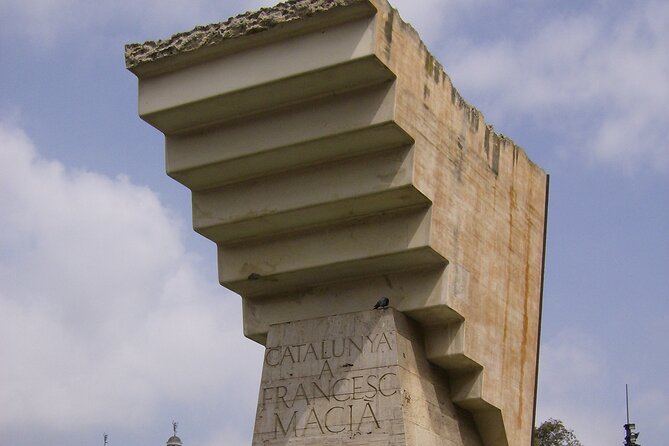
The Basilica de Santa Maria del Pi is an old church with a less obvious connection to the Civil War. This is the sort of stop that makes the walking tour worthwhile: the building may not be labeled as a major Civil War site, but the guide provides the missing connection.
Admission to the basilica is not included, so do not assume this stop means a full interior visit. The tour focuses on the historical link and the surrounding setting. If you want to explore the church inside, treat that as a separate plan.
This stop also illustrates a practical limitation of Civil War sightseeing in Barcelona. Many events happened in ordinary streets and buildings, but modern visitors may find few plaques or formal memorials explaining them. You rely on the guide, the photographs, and your own imagination.
That lack of visible markers is not a flaw in the tour itself, but it can affect your experience. If you want grand monuments and obvious remains, this will feel restrained. If you enjoy learning what happened in places that look ordinary today, it is one of the most rewarding parts.
Plaça Sant Felip Neri and the scars of violence
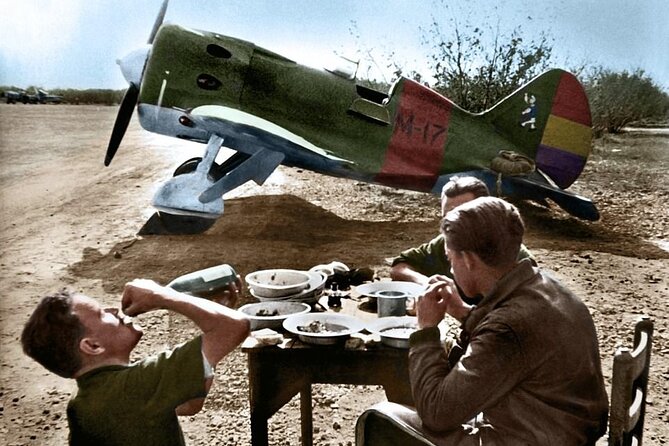
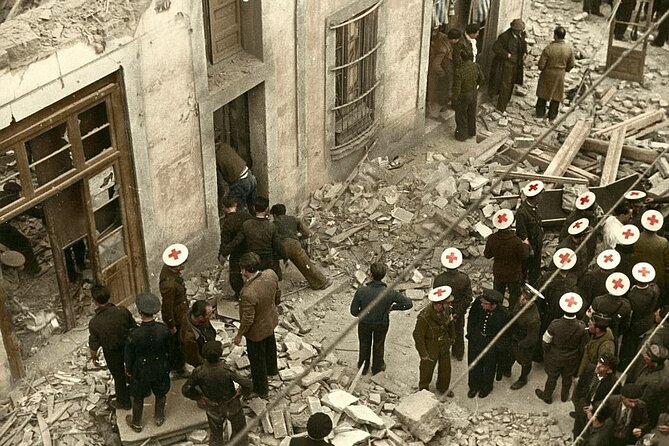
Plaça Sant Felip Neri is one of the most memorable stops. It is a beautiful, quiet square, yet its walls carry one of the clearest physical reminders of the destruction associated with the Civil War.
The contrast between the square’s peaceful appearance and its violent past gives the guide a powerful setting for discussing civilian suffering and the lasting marks of conflict. This is a place where the subject feels less distant. You can look at the architecture and understand that the past is not only a matter of dates and political names.
The stop itself is listed at about five minutes, but the guide may spend longer answering questions or explaining the photographs. Be respectful here. The square is not simply a scenic photo stop, and the tour treats it as a serious place.
For me, this is the kind of moment that makes the route more than a collection of historical facts. You see how a city can preserve physical traces while leaving much of the wider story difficult to read.
How the guides handle a complicated subject
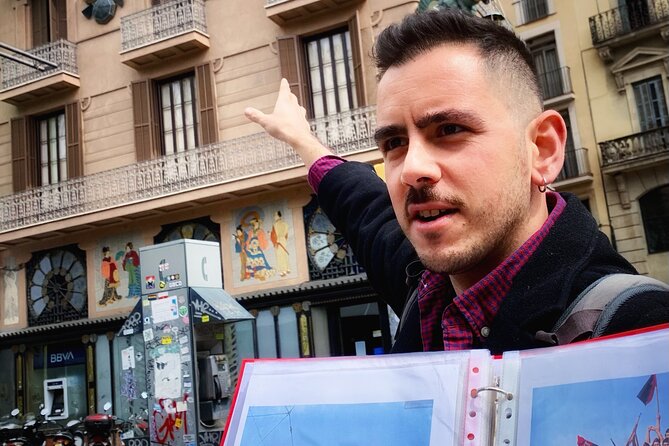
The guide can make or break a Civil War tour. The strongest guides on this experience include Henrieta, Filipa, Chrisa, Evan, Yannis, Evangelos, and Onno. Their approach varies, but the most praised qualities are clear explanations, warmth, patience, and a willingness to take questions.
Henrieta has been especially noted for explaining the many Republican factions and the period from 1936 through late 1938 with unusual detail. Filipa is described as articulate and engaging, with a strong grasp of the political and social forces behind the conflict. Chrisa brings an archaeology background and a thoughtful approach to a sensitive subject.
Evan is praised for making difficult political relationships easier to follow while also explaining the human pressure on Barcelona’s working class. Yannis is known for connecting historical events to everyday life and allowing breaks when needed. Onno has adjusted the route to address questions, which is useful when a group becomes interested in a particular topic.
You should still expect different styles. Some guides may give a more academic presentation, while others rely more on storytelling and visual material. A small number of experiences may feel rushed or poorly organized if the guide introduces too many names at once.
The tour is offered in English. A radio headset costs an additional €1 per person and is paid at the meeting point to an outside provider. It is worth using if the group is spread out or the streets are noisy. One person specifically found headphones useful for concentration.
Price, timing, and practical value
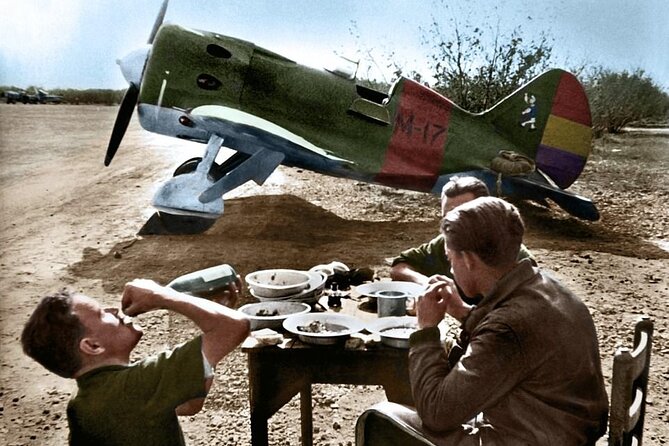
The price is $47.16 per person for about two hours and 30 minutes. That is more than a casual city stroll, so the value depends on how much you want from a history-focused experience.
If you already have a solid understanding of the Spanish Civil War, you may still appreciate the local sites and visual material, but you may find parts of the introduction familiar. If the subject is new to you, the price buys something harder to arrange alone: a coherent explanation tied to real locations.
The group can include up to 25 people. That is not a private walk, but it is small enough for questions when the guide manages the group well. Group discounts are available, which may help if you are booking for several people.
Wear comfortable shoes. The route includes several stops in the Old Town, and the experience is more walking-intensive than the short timetable at each individual location might suggest. The tour ends somewhere different from the starting point, though the supplied details do not specify the final location.
Most people can participate, and service animals are allowed. The activity is near public transportation. It requires good weather, and it can be canceled if the minimum number of people is not reached. In either case, you are offered another date or experience, or a full refund.
You can cancel for a full refund up to 24 hours before the start time. Changes or cancellations made inside that period are not accepted for a refund.
Who should book this tour?
I would choose this walk early in a Barcelona visit if you want history to shape the rest of your sightseeing. It gives you a new way to read the Old Town, and it may help you notice political symbols, memorial gaps, and traces of conflict that you would otherwise pass without thought.
It suits adults and older teenagers who enjoy serious history, political discussion, and local context. It is also a good choice if you have visited Barcelona before and want something beyond the usual architecture route.
I would not book it for a relaxed scenic stroll or a first activity after a long flight. The subject is heavy, the politics can be complicated, and you need to stay focused. If your ideal tour is mainly about food, architecture, or light entertainment, choose another walk.
Final verdict: a worthwhile history lesson with one important caveat
Book this tour if you want to understand how the Spanish Civil War and Franco’s dictatorship shaped Barcelona. The strongest guides turn a difficult subject into a clear, human story, using photographs and city streets rather than relying only on dates.
The main caveat is guide consistency. A well-organized guide can make the factions and events understandable; a less structured presentation may leave you struggling to place the names. Even so, the tour offers unusual access to Barcelona’s political past at a fair price for a focused two-and-a-half-hour experience.
Choose it for the history, the local setting, and the chance to see familiar streets differently. Bring comfortable shoes, allow time for questions, and use the €1 radio headset if hearing clearly will help you follow the discussion.
FAQ
How long does the Spanish Civil War and Franco Barcelona Walking Tour last?
The tour lasts approximately two hours and 30 minutes.
How much does the tour cost?
The listed price is $47.16 per person. Group discounts are available.
In what language is the tour offered?
The tour is offered in English.
Where does the tour begin?
The meeting point is at Foot Locker, Plaça de Catalunya, 20, in Barcelona’s Ciutat Vella district.
Where does the tour end?
The activity ends at a different location from the starting point. The supplied details do not specify the exact end location.
Is the guide radio headset included?
No. A guide radio headset costs €1 per person and is paid at the meeting point to an external provider.
What places does the tour visit?
The route includes Plaça Catalunya, La Rambla, the Antic Hospital de la Santa Creu, the Basilica de Santa Maria del Pi, and Plaça Sant Felip Neri.
Can I cancel for a full refund?
Yes. You can cancel at least 24 hours before the start time for a full refund. Cancellations or changes made less than 24 hours before the start time are not accepted for a refund.
New routes in Barcelona
- Barcelona Historical Walking Tour: Gothic Quarter and El Born★ 5.0 · 217 reviews
- Gothic Quarter Donation-Based Walking Tour in English★ 5.0 · 72 reviews
- Private Tailored Barcelona Walking Tour★ 5.0 · 80 reviews
- Jewish Walking Tour Barcelona by Expert Jewish Guide 2h★ 5.0 · 297 reviews
- Barcelona Dark History Night Walking Tour With Drinks★ 5.0 · 153 reviews
- Ramblas, Old Town, Gothic and Gaudi Architecture Walking Tour★ 5.0 · 723 reviews
- Barcelona Gems, 10+ Sights Immersive Walking Tour★ 5.0 · 209 reviews
- Barcelona: Guided Food Walking Tour with Tapas and Wine★ 5.0 · 848 reviews
Barcelona Walking Tours, compared.
Barcelona Tapas and Wine Experience Small-Group Walking Tour
Read our review →
Tapas Walking Tour with Food, Wine, and History
Read our review →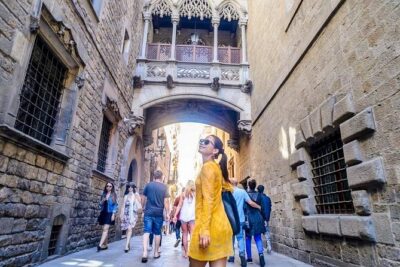
Barcelona Helicopter, Sailboat & Old Town Private Walking Tour
Read our review →

Helicopter Flight, Boat Ride, and Walking Tour
Read our review →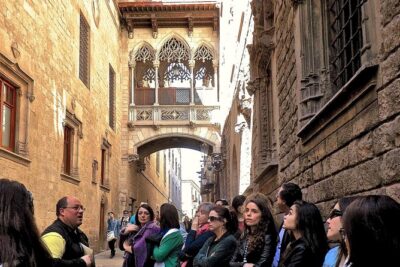
Barcelona Old Town & Gothic Quarter Small Group Tour
Read our review →
Barcelona Food Tour: Tapas, Paella, Sangria & 8+ Local Tastings
Read our review →Browse the lists this tour appears in