
Review · BARCELONA
Barcelona Historical Walking Tour: Gothic Quarter and El Born
Barcelona’s oldest quarters reveal themselves best on foot, one narrow lane and worn stone wall at a time. This two-hour walk links the Gothic Quarter with El Born, moving from Roman Barcino to medieval royal power, Jewish Barcelona, Civil War scars, and the city’s great maritime church. Els 4 Gats adds a lively artistic connection to Picasso and Gaudi.
I like the compact route and the guides’ story-driven approach. Guides such as Juan, Lidia, Darren, Vanesa, and Jordan are praised for bringing humor, local traditions, food advice, and useful historical context. I also like that the group is capped at 20 people, small enough to hear the guide without turning the walk into a private tour.
The main drawback is that the two-hour schedule gives you only about ten minutes at each listed stop. Admission to Barcelona Cathedral and Santa Maria del Mar is not included, and one poor experience involved a guide who spoke too softly. Guide quality can vary, so arrive ready to speak up if you are having trouble hearing.
Key points at a glance
- Picasso and Gaudi’s old meeting place: Begin at Els 4 Gats, an Art Nouveau café tied to Barcelona’s artistic past.
- Eleven historic stops in two hours: See Roman remains, medieval squares, churches, political centers, and El Born without a bus.
- Stories beyond the buildings: Expect legends, local traditions, Civil War history, Catalan identity, and details about Barcelona’s Jewish quarter.
- A useful first-day orientation: The walk ends near Santa Maria del Mar, placing you in a good area for further exploring.
- English guide and small group: The tour is offered in English and limited to 20 people.
- Good value with two paid sights outside the price: The $30.25 fee covers the guide and route, but church admission is extra.
Why this route works for Barcelona’s oldest neighborhoods
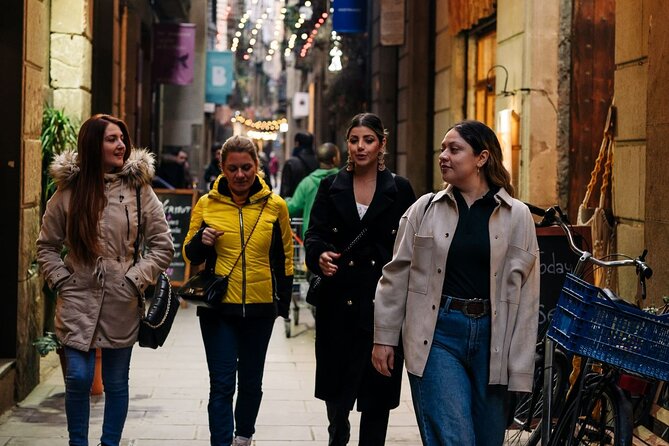
This tour is less about entering every monument and more about learning how Barcelona fits together. In two hours, you move through the old city’s main layers: Roman streets, Gothic churches, royal courts, Jewish heritage, Catalan politics, and the merchant world of El Born.
That makes it a useful first activity in Barcelona. You get a map in your head before spending time at individual sights. I would use the tour to decide where to return later, especially if a church interior, museum, square, or restaurant catches your attention.
The walk starts at Plaça del Vuit de Març in Ciutat Vella and finishes at Basílica de Santa Maria del Mar. The route is near public transportation, and most people can take part. It is not described as a strenuous walk, and one especially useful tip from the tour experience is to choose a morning departure if possible. The streets are cooler and less crowded then.
The listed group limit is 20 people. That is a sensible middle ground. You still get the social feel of a shared walk, but the group should be manageable in narrow lanes and small squares. The exact experience depends on your guide. Juan is praised for using an iPad to show how places looked in the past, while Lidia is noted for energy and humor. Darren has been especially effective with teenagers, and Vanesa has handled family groups warmly.
More History Walking Tours in Barcelona
- Barcelona: Tapas Walking Tour with Food, Wine, and History
★ 4.8 · 4,261 reviews - Barcelona Tapas Walking Tour: Food, Wine & History
★ 4.5 · 1,928 reviews - Barcelona: Dark History Night Walking Tour
★ 4.8 · 344 reviews
Els 4 Gats and Barcelona’s artistic crowd
The first stop, Els 4 Gats, gives the tour an appealing opening. This historic café and restaurant became a meeting place for artists, intellectuals, and modernists. Pablo Picasso and Antoni Gaudi were among the people connected with it.
You may not spend long inside, since the scheduled visit is about ten minutes and admission is free. Still, the stop helps explain why Barcelona became such fertile ground for modern art and architecture. It also gives you a useful connection between the city’s medieval center and its later artistic identity.
I like starting here because the setting is more personal than a grand monument. Instead of beginning with a church or palace, you begin with people meeting, arguing, eating, and developing ideas. If Gaudi interests you, guides such as David have been particularly praised for explaining his work.
A mosaic about Catalonia at El Mon Neix En Cada Besada
The next stop is El Mon Neix En Cada Besada, a photomosaic installed in 2014. Its name refers to the idea that the world begins with every kiss, but the work also connects to Catalonia’s defeat on September 11, 1714, during the War of the Spanish Succession.
That defeat gave rise to La Diada, Catalonia Day, and the image carries a message about freedom for many people in Barcelona. This is one of the tour’s more modern stops, and it helps you see that Catalan identity is not just a matter of language or architecture. It remains part of public life and local conversation.
The ten-minute visit is enough for a guide to explain the basic story and give you time to look closely at the mosaic. You should not expect a long political lecture, but you will get context that is easy to miss if you simply pass by with a camera.
Barcelona Cathedral and the story of Saint Eulalia
Barcelona Cathedral occupies the heart of the Gothic Quarter. Its Gothic design and connection to Saint Eulalia make it an important stop, even if the tour does not include admission.
Eulalia is Barcelona’s patron saint. According to the traditional story, Roman authorities tortured and killed her because of her Christian faith. The guide uses the cathedral to connect religion, local identity, and the development of the medieval city.
You receive about ten minutes here, so think of this as an introduction rather than a full church visit. The admission fee is not included, which is an important cost detail. If the cathedral interests you, plan to return separately when you can give it more time.
This stop also shows the value of a walking guide. A bus might take you past the cathedral, but it cannot pause naturally in the narrow lanes around it or explain how the church fits into the surrounding quarter. A guide can point out details, answer questions, and help you understand why this part of Barcelona feels so dense and layered.
Same streets, a different guide:
- Barcelona Tapas and Wine Experience Small-Group Walking Tour
★ 5.0 · 5,804 reviews - Barcelona: Food Walking Tour with Tapas and Wine
★ 4.9 · 2,180 reviews - Barcelona Helicopter, Sailboat & Old Town Private Walking Tour
★ 5.0 · 1,395 reviews - Barcelona: Old Town and Gothic Quarter Walking Tour
★ 4.8 · 1,393 reviews
Casa de l’Ardiaca and the Roman wall
Casa de l’Ardiaca is an unusual architectural mix of Gothic and Renaissance elements. It also contains part of Barcelona’s Roman wall and aqueducts, giving you a direct look at the city’s earliest urban foundations.
The old Roman settlement was known as Barcino. Here, the ancient city is not presented as a remote archaeological site. Its remains are folded into later buildings, which is typical of Barcelona’s Old Town. Medieval and Renaissance structures grew around Roman foundations, and modern life continues above them.
The stop is free and lasts around ten minutes. I find this kind of pause especially useful because Roman remains can otherwise seem disconnected from the streets around them. The guide supplies the missing link: this was not simply a ruin, but part of the city’s original infrastructure.
Pont del Bisbe and a Gothic Quarter legend
Carrer de Bisbe once served as one of the main routes through Roman-occupied Barcino. Today, its most famous feature is the Neo-Gothic Pont del Bisbe, or Bishop’s Bridge.
The bridge is tied to a superstitious legend. The exact story is part of the fun, especially when told with the right amount of drama. It is the sort of detail you might remember long after you have forgotten a date.
This is also one of the places where the route benefits from a guide who can manage a short stop in a popular photo spot. The bridge is visually striking, but the story gives it more staying power. Keep your camera ready, but listen before moving on.
Plaça Sant Felip Neri and the city’s darker memories

Plaça Sant Felip Neri is one of the most affecting stops. It is a quiet square with a painful connection to the Spanish Civil War, and the scars on the surrounding walls still point to its tragic past.
The square can look peaceful at first. That contrast is exactly what gives the stop its force. You are not simply looking at attractive old buildings. You are seeing a place where political violence left a physical mark.
A ten-minute visit is enough to explain the basic event and let you take in the setting. I appreciate that the route does not treat Barcelona as a postcard city without difficult chapters. The guide’s tone matters here. The best guides, including those praised for balancing humor with insight, know when to slow down and let the place speak for itself.
El Call and Barcelona’s Jewish quarter
MUHBA El Call takes you into the former Jewish quarter. Narrow streets and medieval buildings offer a glimpse into Jewish life in Barcelona, including the area’s synagogue and its associated stories.
This portion of the route gives the tour some welcome range. You move beyond the better-known Gothic churches and royal buildings to consider a community that helped shape the medieval city. The lanes are close and atmospheric, but the main value comes from the explanation of how the neighborhood functioned.
The scheduled stop is free and lasts about ten minutes. Do not expect a full museum visit or an extended study of the synagogue. Instead, you get a concise introduction and a reason to return if this part of Barcelona interests you.
Plaça de Sant Jaume and Catalan government
Plaça de Sant Jaume is one of the city’s main civic squares. Government buildings surround it, and political activity remains part of its identity.
This is a good place to connect the earlier discussion of Catalan freedom and La Diada with present-day public life. The square is not only an old architectural setting. It is also a working center of government and public events.
The stop is free and takes about ten minutes. Your guide may focus on the buildings, the political role of the square, or the way Barcelona’s past continues to shape its public identity. Guides such as Juan are praised for answering questions and adding useful trivia, so this is a good moment to ask about Catalonia if you want more context.
Plaça del Rei and Barcelona’s royal past
Plaça del Rei looks charming, but its story has a darker side. The square is home to the Royal Palace and offers a view into Barcelona’s medieval power structure.
This is where the tour shifts toward royal history. You see the setting of authority, ceremony, and political decisions, while the guide adds the less polished details behind the attractive stonework. The stop helps explain how Barcelona developed from a Roman settlement into a major medieval city.
Again, the ten-minute schedule is brief. You will learn the main points, but you will not explore every building in depth. If the square catches your interest, mark it for a return visit and look into the wider museum area nearby.
Plaça de l’Àngel and a heavenly name
Plaça de l’Àngel was once known as Wheat Square, a trading area connected with grain. Its current name, Angel’s Square, comes from a local heavenly legend.
This is a small but useful example of how place names preserve old stories. A busy trade center becomes a modern urban square, yet the earlier activity remains part of its identity. The guide turns what might look like an ordinary junction into a stop with an economic and religious past.
The short visit works well near the end of the route. By this point, you have seen how Barcelona’s streets carried Roman traffic, medieval trade, royal power, and religious life. Plaça de l’Àngel adds another piece: the everyday business that kept the city fed.
Santa Maria del Mar and the finish in El Born
The walk ends at Basílica de Santa Maria del Mar, one of Barcelona’s finest Catalan Gothic churches. Its design reflects the importance of the city’s maritime and merchant communities.
This is a strong finishing point. The Gothic Quarter route has taken you through religious and royal power, while Santa Maria del Mar brings you toward the world of sailors, traders, and El Born’s commercial past. The church’s scale and style make the ending feel substantial, even after a short visit.
Admission is not included, so consider the tour an exterior introduction unless you plan to pay separately. The end location is useful for continuing your day on foot, exploring El Born, or finding food and drinks nearby. Several guides, including Tammy, have provided food and drink suggestions after the walk. That practical advice can be as useful as another historical date.
What the $30.25 price gets you
At $30.25 per person, the tour is priced as a guided orientation rather than an all-inclusive sightseeing package. You are paying for an English-speaking local guide, a planned route through several old neighborhoods, and the stories that connect the stops.
The value is strongest if you are new to Barcelona or short on time. You see eleven important locations in roughly two hours, including places that bus tours cannot reach. You also avoid spending your first morning trying to work out how the Gothic Quarter, El Call, and El Born connect.
The value is weaker if you want long interior visits. Two paid churches are outside the price, and each stop receives only about ten minutes. If you already know the Old Town well, you may prefer a longer specialist tour focused on architecture, Jewish Barcelona, or Gaudi.
Group discounts are available, which may help families or larger parties. The 4.9 rating from 217 ratings and 97 percent recommendation rate suggest a strong overall record, but the occasional poor guide experience is worth keeping in mind. The best practical move is to arrive early, stay close to the guide, and say something promptly if the group cannot hear.
Who should book this walk
I would choose this tour for a first or second day in Barcelona. It gives you orientation, basic historical structure, and a list of places to revisit. It also suits families, since one guide was praised for keeping children engaged and another for holding a teenager’s attention.
It works well for people who prefer a relaxed pace. One account describes the walk as easy and comfortable, with enough time for photographs. The route is also suitable for most people according to the activity information, though you should still be comfortable walking through old-city streets for two hours.
You may want a different experience if your priority is entering every church, sitting down for long explanations, or focusing on one narrow subject. This is a broad introduction. Its success depends on the guide’s voice, timing, and ability to turn many short stops into one coherent story.
Free cancellation is available up to 24 hours before the start time for a full refund. Changes or cancellations inside that window are not accepted for a refund, so keep the local cut-off time in mind.
Should you book the Gothic Quarter and El Born walk?
Book it if you want a well-paced introduction to Barcelona’s oldest districts, especially if you value stories more than a checklist of interiors. The route covers Roman remains, churches, Jewish history, Catalan identity, royal power, Civil War memory, and maritime Barcelona in a single morning or afternoon.
I would book it early in your visit, ideally in the morning when the streets are cooler and quieter. Use the guide’s advice to plan later visits, and budget separately for the cathedral or Santa Maria del Mar if you want to go inside.
Skip it if you already know these neighborhoods well or want a deep architectural study. For most first-time visitors, though, $30.25 is a fair price for two hours of context, local guidance, and access to corners a bus cannot reach.
FAQ
How long is the Barcelona Historical Walking Tour?
The tour lasts approximately two hours.
Where does the walking tour start?
It starts at Plaça del Vuit de Març in Ciutat Vella, Barcelona.
Where does the tour finish?
The walk ends at Basílica de Santa Maria del Mar, at Plaça de Santa Maria, 1.
Is the tour offered in English?
Yes. The tour is offered in English.
What is included in the price?
The price includes a guided walking tour, a local tour guide, city highlights, and lesser-known places along the route.
Are church admission fees included?
No. Admission to Barcelona Cathedral and Basílica de Santa Maria del Mar is not included.
How many people can join the tour?
The group can include a maximum of 20 people.
Can I cancel for a full refund?
Yes. You can cancel at least 24 hours before the experience start time for a full refund. Cancellations or changes made less than 24 hours in advance are not accepted for a refund.
New routes in Barcelona
- Gothic Quarter Donation-Based Walking Tour in English★ 5.0 · 72 reviews
- Private Tailored Barcelona Walking Tour★ 5.0 · 80 reviews
- The Spanish Civil War & Franco Barcelona Walking Tour★ 5.0 · 539 reviews
- Jewish Walking Tour Barcelona by Expert Jewish Guide 2h★ 5.0 · 297 reviews
- Barcelona Dark History Night Walking Tour With Drinks★ 5.0 · 153 reviews
- Ramblas, Old Town, Gothic and Gaudi Architecture Walking Tour★ 5.0 · 723 reviews
- Picasso Small Group Walking Tour with Museum Skip the Line Ticket★ 4.0 · 548 reviews
- Barcelona Gems, 10+ Sights Immersive Walking Tour★ 5.0 · 209 reviews
Barcelona Walking Tours, compared.
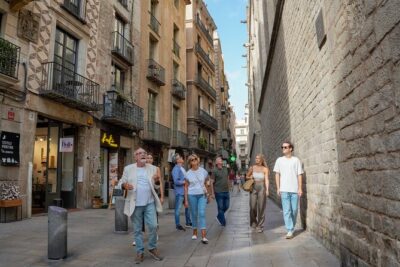
Barcelona Tapas and Wine Experience Small-Group Walking Tour
Read our review →
Tapas Walking Tour with Food, Wine, and History
Read our review →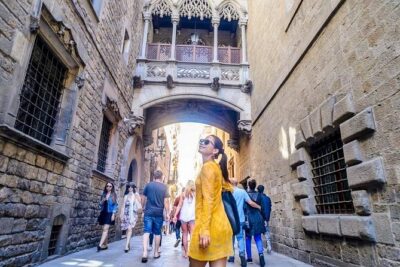
Barcelona Helicopter, Sailboat & Old Town Private Walking Tour
Read our review →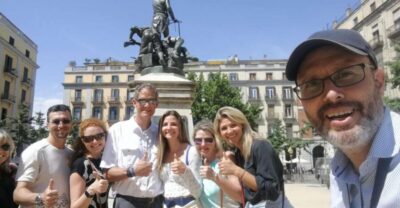
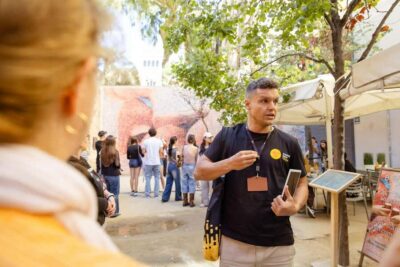

Helicopter Flight, Boat Ride, and Walking Tour
Read our review →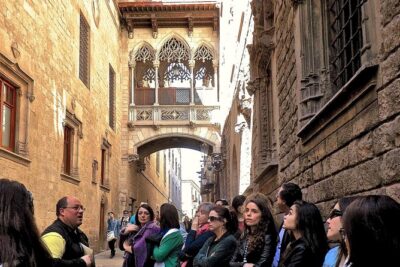
Barcelona Old Town & Gothic Quarter Small Group Tour
Read our review →
Barcelona Food Tour: Tapas, Paella, Sangria & 8+ Local Tastings
Read our review →Browse the lists this tour appears in