Review · GERMANY
Trier: Guided Old Town Highlights and History Walking Tour
Trier’s story is written in its streets, and this tour gets straight to the best chapter: the Porta Nigra, a Roman city gate built as early as 170 AD. From there, your guide connects Roman rule, medieval architecture, Karl Marx, and modern Trier in a compact 1.5-hour walk.
I like two things here. First, the route ties famous sights to ordinary life, including what daily life was like under Roman rule. Second, guides such as Patrick and Herbert bring clear explanations, humor, and a personal touch. The main consideration is that the tour is German only, so it suits German speakers best.
Key points to know before you book
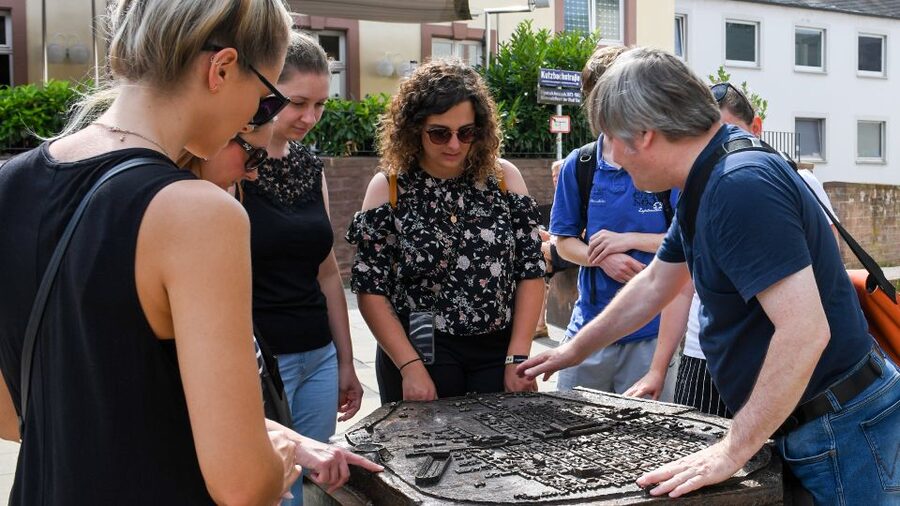
- The Porta Nigra anchors the tour: Begin beside Trier’s best-known Roman monument and learn why it shaped the city.
- The walk covers several eras: Roman, medieval, and modern Trier all appear within 1.5 hours.
- Karl Marx gets a local setting: See the residential house connected with one of the world’s most influential philosophers.
- Patrick and Herbert are named guides: Their style is described as informative, humorous, and good with questions.
- The price is modest: At $16 per person, the tour offers a useful orientation before you explore on your own.
- The language matters: The live guide speaks German, with no English option listed.
Starting beside Trier’s Roman gate
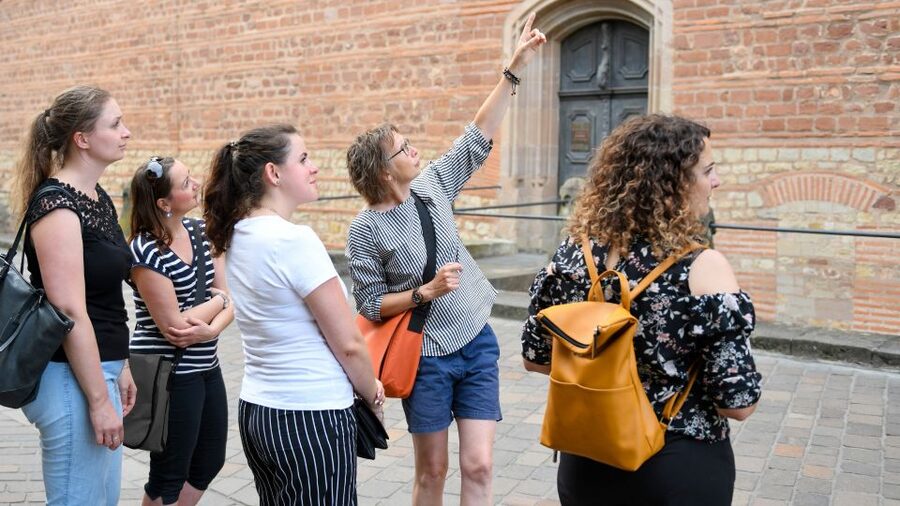
You meet your guide in front of the Mercure Hotel, opposite the Porta Nigra. This is an easy place to find because the Roman gate is one of Trier’s clearest landmarks. Arriving a little early gives you time to locate the meeting point without rushing through the opening explanation.
The Porta Nigra is not just a photo stop. It gives the whole walk a firm sense of place. Built by the Romans as early as 170 AD, the gate points to Trier’s role as an ancient city and helps your guide explain how Roman rule shaped the streets, buildings, and daily routines around you.
I like tours that begin with a real object rather than a long abstract introduction. Here, you are standing beside the evidence before hearing the story. The stonework gives the Roman section weight, while the guide’s explanation supplies the human side: how people lived, moved through the city, and experienced Roman control.
The description says you will visit the Porta Nigra and learn about life under Roman rule. It does not promise a separate interior visit or extended time inside the monument, so you should think of this as a city walk with the gate as its starting point and historical anchor.
More City Highlights Walking Tours in Germany
- Frankfurt Highlights English Walking Tour
★ 5.0 · 1,203 reviews - Cologne: Old Town Highlights Walking Tour
★ 4.6 · 1,093 reviews - Bamberg: City Highlights Walking Tour
★ 4.6 · 679 reviews
Following Trier from Rome to the present
The route uses Trier’s old center as a kind of open-air timeline. Your guide leads you through changes in the city from Roman origins to the Middle Ages and then toward the modern period. That broad range is valuable because Trier can otherwise feel like a collection of unrelated monuments.
One minute, the focus is ancient Rome. The next, the architecture shows how the city changed across centuries. The tour does not treat history as a list of dates. It connects buildings and public spaces with the people who used them, ruled them, or left their mark on them.
The 1.5-hour length is a good fit for this kind of introduction. You get enough time for context without committing half a day to a formal walk. At the same time, the short format means the tour cannot explain every major building in detail. Think of it as a well-placed first layer, not a complete study of Trier.
I would especially recommend taking notes about places you want to revisit. A guide can point out the sites that deserve a longer look, then you can return later with more time and a better sense of what you are seeing.
The Porta Nigra and the daily life of Roman Trier
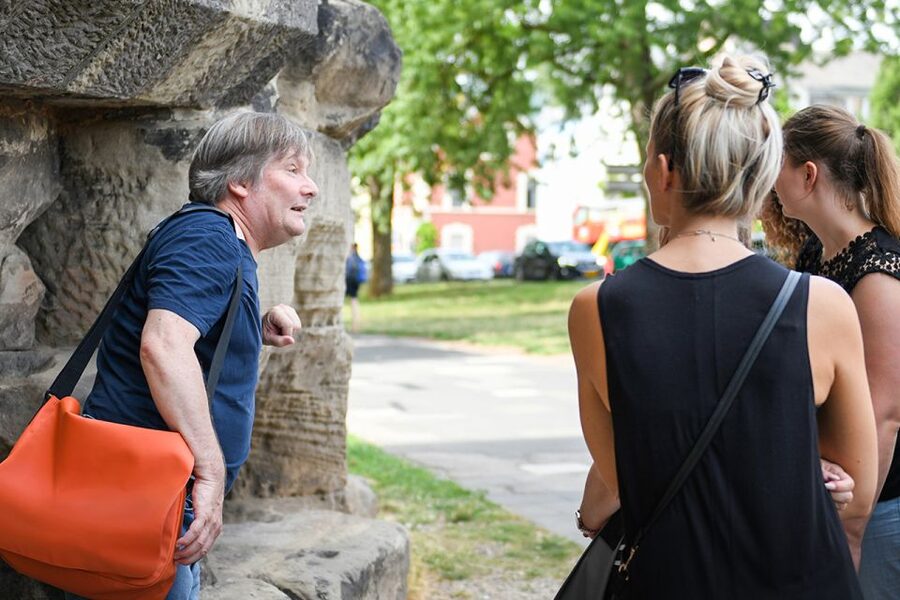
The Roman section is likely to be the most memorable part for anyone interested in ancient history. The Porta Nigra is an imposing reminder that Trier was not founded as a medieval town. Its roots reach much farther back, and the tour uses the gate to explain how the city functioned under Roman rule.
The useful detail is the focus on daily life, not only emperors and military power. A city becomes easier to understand when you picture how ordinary people used its gates, streets, and public spaces. Your guide’s job is to turn the monument from a large stone backdrop into part of a working city.
Because the tour starts at the gate, you will also get your bearings quickly. Trier’s old center can feel dense with history, especially when several periods appear close together. The opening explanation helps you understand why the Roman remains matter before you move on to later buildings.
The information provided does not give a full list of Roman sites along the route, so do not book this expecting a dedicated archaeology walk. You will hear about Trier’s Roman origins and the life of the city under Roman rule, but the overall program also gives substantial attention to medieval and modern Trier.
Medieval buildings and the Main Market
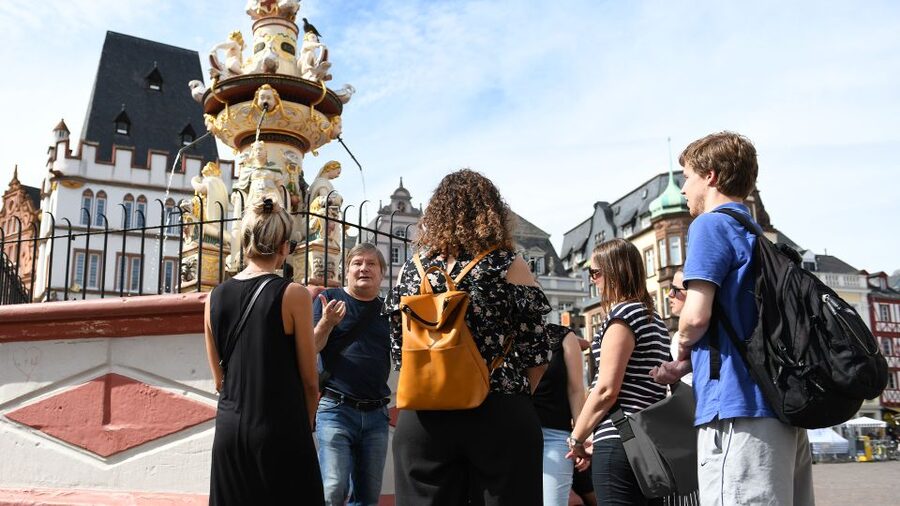
The Main Market is one of the key stops, and it gives the tour a change of mood. After the Roman gate, you move into a central public space where the city’s later development becomes easier to read. Your guide can show how Trier’s architecture changed as the centuries passed.
This is where the tour’s broad time span works well. Rather than seeing the Middle Ages as a separate subject, you can compare their buildings with the Roman remains you have already seen. The city becomes a sequence of additions, repairs, and new uses.
The Main Market also helps explain the practical side of an old city. Public squares are not only pretty places for photographs. They are where commerce, civic life, and movement come together. The tour’s emphasis on stories and anecdotes should make this part feel less like a building inventory.
The walk is guided, but it is not presented as a silent procession from one landmark to the next. You can ask questions as you go, and the guide is expected to explain the historical buildings in a clear and sometimes humorous way. That matters in a place with many dates and architectural details. A little humor keeps the information from turning into a lecture.
More History Walking Tours in Germany
- Leipzig: 1.5-Hour Historical Walking Tour in German
★ 4.7 · 2,217 reviews - Berlin: History of the Third Reich Guided Walking Tour
★ 4.7 · 791 reviews - Berlin Historical Highlights Walking Tour
★ 4.9 · 657 reviews - Berlin Private Complete History All Day Walking Tour
★ 5.0 · 474 reviews
Trier Cathedral and the city’s changing identity
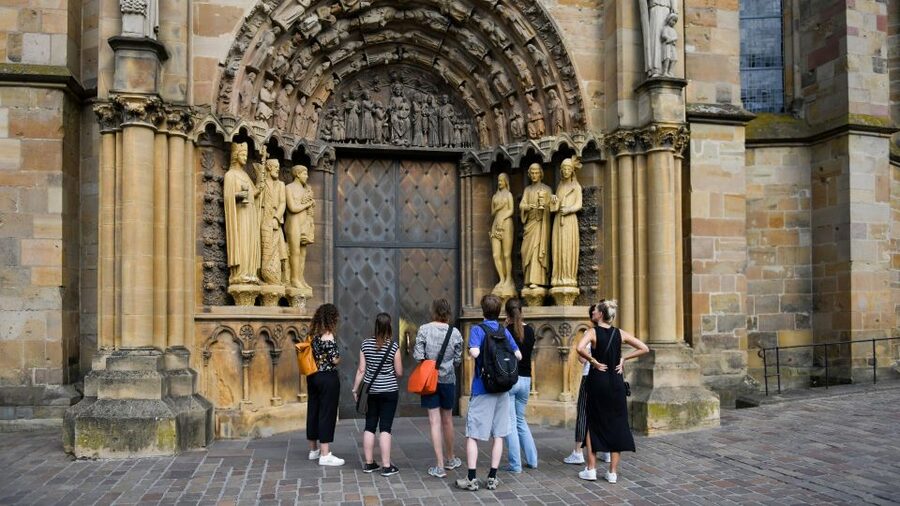
Trier Cathedral is another major highlight. The tour places it within the larger story of the city rather than treating it as an isolated religious building. That approach helps you see how Trier’s identity shifted across Roman, medieval, and modern periods.
The information supplied does not specify an interior visit, a religious service, or a detailed art-history presentation. You should therefore expect to admire the cathedral and hear about its place in Trier’s development, not necessarily take part in a long guided examination of the inside.
That distinction is useful when planning your day. If you want a detailed cathedral visit, allow separate time after the walking tour. The tour gives you a framework, while an independent visit can handle the details that a 1.5-hour city route cannot fit.
I like this kind of division of labor. A guide helps you understand why a building matters. Then you can return and spend as long as you want looking at it, photographing it, or reading more about it.
Karl Marx’s former home
The modern section of the route adds a completely different voice: Karl Marx. You see the residential house associated with the philosopher and revolutionary, linking Trier to one of the most influential political thinkers of the modern era.
This stop is useful because it moves the tour beyond ancient stones. Trier is not only a Roman and medieval city. It also produced or shaped people whose ideas reached far beyond Germany. The house gives that larger story a local address.
The tour does not promise entry into the residence, so expect to see the building and hear about Marx’s connection with Trier. If Marx is a major reason for your interest in the city, you may want to set aside additional time for related sights after the walk. The guided tour provides context, but it is not described as a specialized Karl Marx program.
I also appreciate the contrast between the Porta Nigra and Marx’s former home. One represents the city’s ancient foundations. The other points toward modern political thought. In a short walk, you move from imperial power to ideas that changed the modern world.
Guides who keep the history moving
The guide can make or break a history walk, and the strongest comments about this experience point to two qualities: solid explanations and humor. Patrick and Herbert are named as guides who make the material easy to follow, answer questions, and add a personal note.
That combination matters. A guide who only recites facts may leave you with dates but no sense of the place. A guide who only entertains may leave gaps in the story. The ideal balance is clear information with enough warmth to keep the group engaged.
The tour is offered in German, so language is the most important practical filter. If you understand German well, the format should allow you to follow explanations and ask questions directly. If you need an English tour, this is not the right booking based on the information provided.
You should also feel free to ask the guide for suggestions about restaurants and bars after the walk. That can be a useful way to turn a short orientation into a fuller evening in Trier. The guide may help you decide where to go next, though no specific restaurant or bar is included with the tour.
Is $16 a fair price for 90 minutes?
At $16 per person, this is a reasonably priced introduction to Trier. You receive a live walking tour covering the Porta Nigra, Trier Cathedral, the Main Market, Karl Marx’s former residence, and the wider story connecting them.
The value is strongest if you are new to Trier and want a quick map of the old center. A good guide can save you time by explaining what you are looking at and showing how the major sights fit together. You then have the rest of your visit to explore at your own pace.
The price is less compelling if you already know Trier well or plan to spend most of your time inside individual museums and monuments. This is a general city highlights walk, not a private tour or a specialist program. Its strength is breadth, clarity, and a manageable cost.
Children aged 0 to 5 can join for free, which helps families keep the total price down. The tour lasts 1.5 hours, a length that should be manageable for many children, though the experience is still built around listening to historical explanations and walking through the city.
Practical details that affect your choice
The meeting point is in front of the Mercure Hotel opposite the Porta Nigra. Since the gate is a major landmark, it should be easier to locate than a small side street, but check the exact starting time when booking because availability varies.
The tour includes the walking tour and a live guide. It does not list museum admission, food, drinks, or transportation. Plan on paying separately for anything you choose to do after the walk.
Free cancellation is available up to 24 hours in advance for a full refund. You can also reserve now and pay later, which is useful if your schedule is still changing. These policies do not alter the experience itself, but they make a short city tour easier to fit into a flexible itinerary.
Wear shoes you can walk in comfortably. The tour is outdoors and moves through the old center, so your comfort will affect how much attention you can give to the guide. The supplied details do not describe step-free access or the exact route surface, so ask the provider directly if you have mobility concerns.
Who will get the most from this Trier walk?
I would choose this tour for a first visit, a short stay, or an arrival day when you want to understand the city before exploring alone. It is also a good pick if you enjoy history presented through buildings and public spaces rather than through a long museum visit.
Families may appreciate the short length and free entry for children aged 0 to 5. The personal, humorous guiding style described for Patrick and Herbert can also help younger listeners stay with the story, though parents know best how their children handle a history-focused walk.
German speakers are the clearest audience. Since the live guide speaks German, you should not book it if you require English commentary. The tour may still be useful to someone with developing German skills, but the historical detail will only help if you can follow the explanation comfortably.
History fans who want a specialist Roman archaeology tour may find the program too broad. The route moves from Rome through the Middle Ages to Karl Marx and modern Trier, so its appeal is the sweep of the story rather than an exhaustive treatment of one era.
Should you book this Trier walking tour?
Book it if you want a low-cost, well-paced introduction to Trier with the city’s most important themes in one route. The Porta Nigra, Main Market, cathedral, and Karl Marx’s former home give you a strong set of reference points, while the guide adds the connections that a self-guided stroll can miss.
I would be especially inclined to book if you can follow German and want a guide who explains history clearly without making the walk feel stiff. Patrick and Herbert are both associated with an approach that combines information, humor, and good answers to questions.
Skip it if you need an English-language tour, a private experience, or detailed interior visits. For everyone else, $16 is a sensible price for 90 minutes of orientation, local context, and ideas for where to continue your evening.
FAQ
Where does the Trier walking tour meet?
Meet your guide in front of the Mercure Hotel, opposite the Porta Nigra.
How long does the tour last?
The walking tour lasts 1.5 hours.
What language is the tour conducted in?
The live tour guide speaks German.
Which sights are included?
The tour highlights the Porta Nigra, Trier Cathedral, the Main Market, and the residential house associated with Karl Marx.
Does the tour cover Trier’s Roman past?
Yes. You learn about Trier’s Roman origins, the Porta Nigra, and daily life in the city under Roman rule.
Are young children allowed to join?
Yes. Children aged 0 to 5 years can join for free.
What is included in the price?
The price includes the walking tour and a live guide.
Can I ask the guide where to eat or have a drink afterward?
Yes. You are welcome to ask the guide for tips about restaurants and bars to visit after the tour.
More Old Town Walking Tours in Germany
- Nuremberg: Old Town Guided Walking Tour
★ 4.6 · 2,416 reviews - Munich: Old Town & Viktualienmarkt City Walk in German
★ 4.7 · 2,304 reviews - Heidelberg: Walking Tour of the Old Town
★ 4.6 · 1,742 reviews - Cologne: Night Watchman Old Town Walking Tour
★ 4.6 · 1,638 reviews
New routes in Germany
- Munich: Walking Tour Old Town and Viktualienmarkt★ 4.7 · 839 reviews
- Stuttgart: Guided Ghost Walking Tour★ 4.5 · 867 reviews
- Stuttgart: Private Guided Circular City Walk★ 4.7 · 129 reviews
- Stuttgart: Old Town Highlights Guided Walking Tour★ 4.2 · 101 reviews
- Stuttgart: City Highlights – Guided Walking Tour★ 4.7 · 189 reviews
- Hamburg: Private Tour Red Light District Walking Tour★ 4.7 · 227 reviews
- Small Group Walking Tour: “Wild Kreuzberg”★ 4.8 · 199 reviews
- Sachsenhausen Memorial: Walking Tour from Berlin★ 4.7 · 132 reviews
Germany Walking Tours, compared.
Berlin City walk Government District and Places of Democracy
Read our review →
Berlin’s Best: 2 Hour Walking Tour Third Reich and the Cold War
Read our review →
Explore Berlin: See All The Iconic Sights & Some Hidden Gems
Read our review →
Third Reich Berlin: Hitler and WWII Walking Tour
Read our review →