
Review · 3-HOUR EXPERIENCES
Belgrade: 3-Hour Serbian History Walking Tour
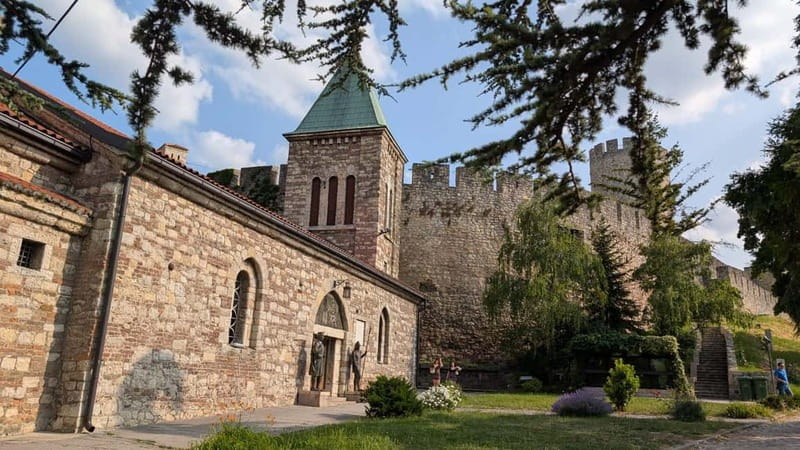
Belgrade’s story is unusually concentrated. In about four kilometers, you move from grand government buildings and a busy pedestrian street to the fortress where the Danube and Sava meet. I like the way this tour connects Serbian history with present-day politics and daily life, rather than treating the city as a museum. I also like the stop at Ružica Church, a small and memorable 15th-century church tucked inside the fortress area.
The main consideration is pace. Three hours covers a lot, and the route includes roughly four kilometers on foot. You will get a strong introduction, not a leisurely study of every site. Bring comfortable shoes, and in hot weather expect to value the guide’s choice of shady stopping places.
Key points at a glance
- A four-kilometer route through central Belgrade: Start at Terazije Square and finish near Rajićeva Shopping Center.
- History told across centuries: The walk links Celtic, Roman, Byzantine, Ottoman, Austro-Hungarian, German, and Russian influences.
- Belgrade’s essential sights: See the National Assembly, Kneza Mihaila, Republic Square, Skadarlija, Kalemegdan, and the fortress.
- A useful introduction to difficult subjects: Guides explain Serbia, Yugoslavia, the Balkans, and current political issues in clear language.
- Strong guide-led experience: Marija, Pedja, Jovana, Aleksandar, Tibor, Tibi, and others are praised for storytelling, patience, and clear answers.
- Good first-day value: At $35 per person, the tour combines orientation, history, local suggestions, and a walk through the city center.
Why this Belgrade walk works so well
Belgrade can feel hard to read at first. Its streets carry Roman foundations, Ottoman memories, Serbian national symbols, socialist-era traces, and reminders of the wars of the 20th century. Those layers do not always explain themselves.
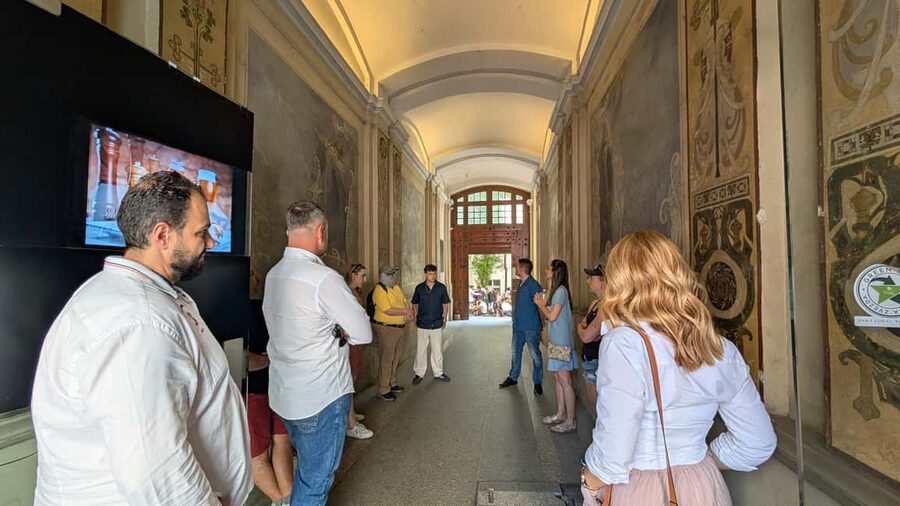
That is where a local guide helps. Instead of simply pointing at a building, the guide can explain why the site matters, how the city changed, and how Serbian history connects with the wider Balkans. The strongest guides on this tour, including Marija, Pedja, Jovana, Aleksandar, Tibor, and Tibi, are described as clear, funny, patient, and open to questions.
The subject matter is not light. Serbia’s past involves shifting borders, competing empires, religion, nationalism, Yugoslavia, the 1990s, and current politics. A good guide has to simplify without flattening the story. This experience aims to do that in an accessible way, while leaving room for direct questions.
I especially value the link between old events and things you can see around you. Architecture becomes easier to understand when someone explains who built it, who controlled the area, and what later generations did with it. You get a city walk and a basic lesson in Balkan geography at the same time.
More History Walking Tours in the world:
- History and Hauntings of Salem Guided Walking Tour
★ 5.0 · 14,564 reviews - Lisbon: History, Stories and Lifestyle Walking Tour
★ 4.8 · 10,902 reviews - Boston: Freedom Trail History Small Group Walking Tour
★ 5.0 · 6,450 reviews
Starting at Terazije and the National Assembly
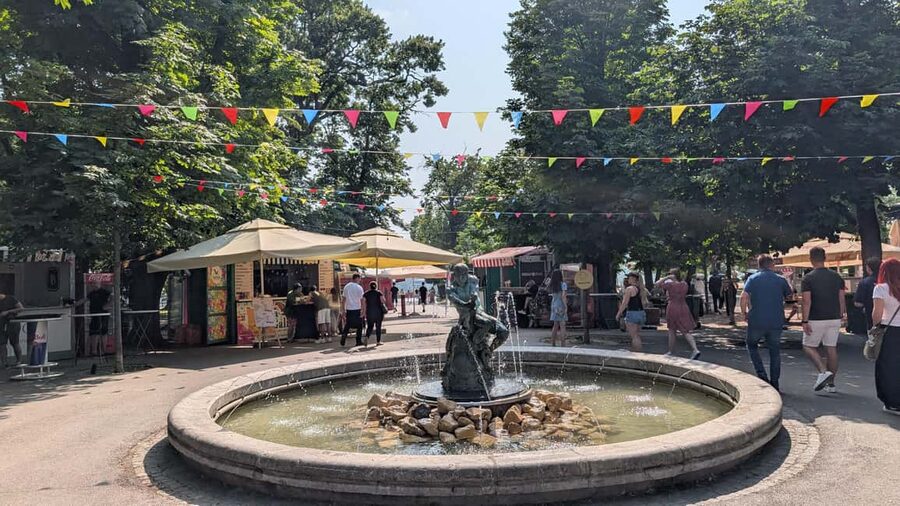
The meeting point is beside the fountain at Terazije Square. This is a practical place to begin because the route quickly moves into Belgrade’s central civic and commercial areas.
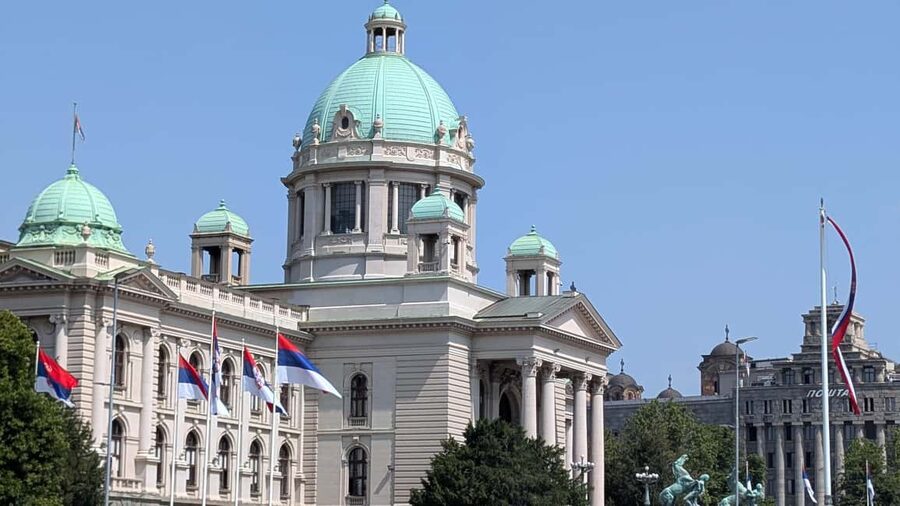
The first formal stop is the National Assembly of the Republic of Serbia. You have about 20 minutes for guided explanation, sightseeing, and free time. The building gives the tour an early chance to discuss Serbia as a modern state, its institutions, and the political forces that shaped the capital.
Do not expect an interior museum visit here. The value is the outside setting and the context supplied by the guide. This is also a useful first stop for learning how the city’s public spaces reflect national identity.
The opening section helps you understand that Belgrade is not only an old fortress city. It is also Serbia’s political center, and the route keeps moving between official buildings, historic quarters, churches, parks, and public monuments.
Kneza Mihaila and Republic Square
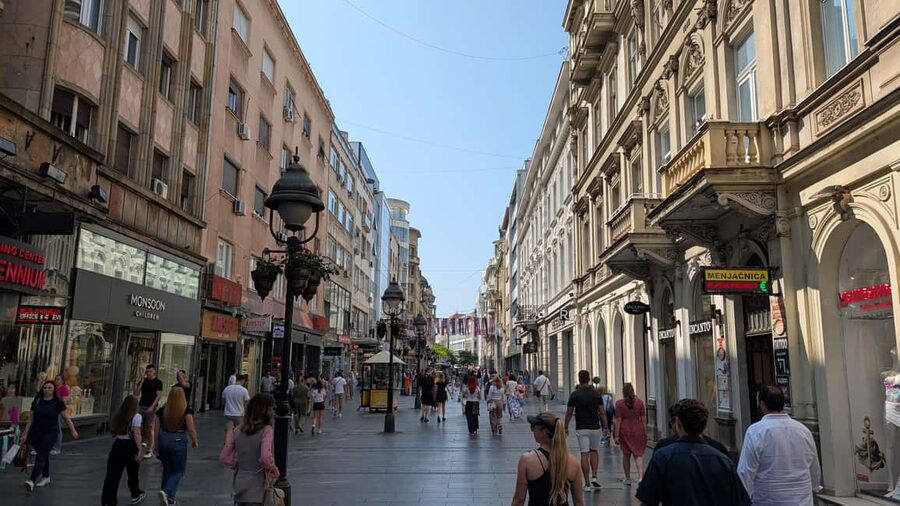
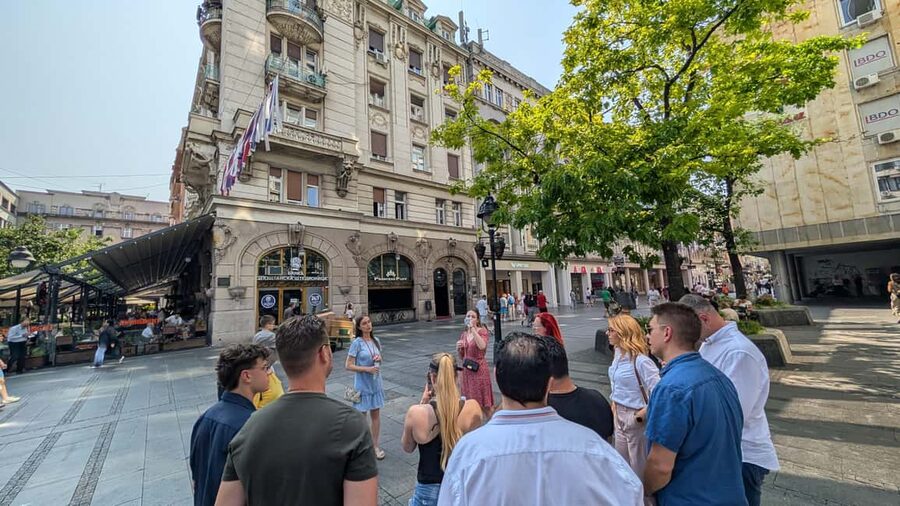
From the National Assembly, the walk continues toward Kneza Mihaila, Belgrade’s best-known pedestrian street. You have around 20 minutes here for a guided walk and sightseeing.
This section brings you into the city’s everyday rhythm. Shops, cafés, architecture, and foot traffic make it easier to see how Belgrade functions now. The guide can point out how the central street fits into the city’s past, rather than leaving you with a collection of unrelated façades.
The next stop is Republic Square, also allotted about 20 minutes. This is one of the key meeting places in central Belgrade and a natural point for discussing Serbian public life, culture, and national memory.
I like this part of the route because it gives the history a human scale. You are not only hearing about rulers and battles. You are walking through places where people meet, shop, gather, and move through the city today.
The practical drawback is that the central streets can be busy. You will need to stay close enough to hear the guide, especially if the group is large. The walking route is easy to follow, but the information comes quickly.
Skadarlija, Belgrade’s old bohemian quarter
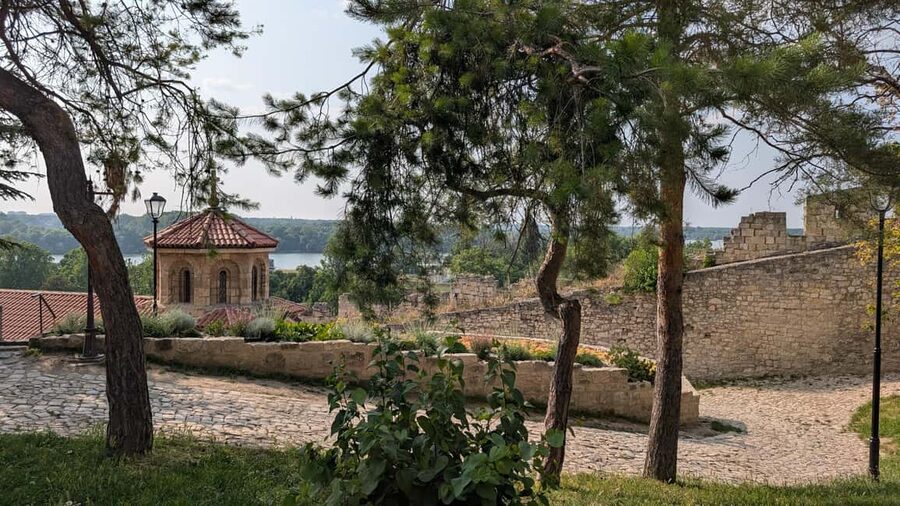
Skadarlija, also called Skadarska Street, gets a 20-minute stop for photos, sightseeing, and explanation. This is one of the most atmospheric sections of the tour.
The street is tied to Belgrade’s artistic and restaurant culture, and it offers a change of mood after the formal center. The guide can explain how the quarter fits into local traditions and urban life. You will have time for photographs, but this is not a meal stop, so do not arrive expecting lunch or dinner to be included.
Skadarlija is particularly useful for seeing the difference between a historic setting and a living neighborhood. Its appeal is not only its age. It is the sense of place, the connection with Serbian customs, and the way the area remains part of the city’s social identity.
Some guides also offer food, museum, and restaurant suggestions for later in your visit. That makes the stop more useful than a quick photo pause. Write down recommendations as you go, since the tour covers enough ground that small details can be easy to forget.
More Three-Hour Walks in the world:
- Prague: 3-Hour Walking Tour of Old Town & Prague Castle
★ 4.7 · 5,696 reviews - Eat Like a Local: Venice 3-Hour Small-Group Food Tasting Tour
★ 5.0 · 3,137 reviews - Experience Porto’s Charm: 3-Hour Guided Walking Tour
★ 5.0 · 2,432 reviews - Valletta: 3-Hour Walking Tour
★ 4.7 · 2,219 reviews
Student Park and the church of St. Michael
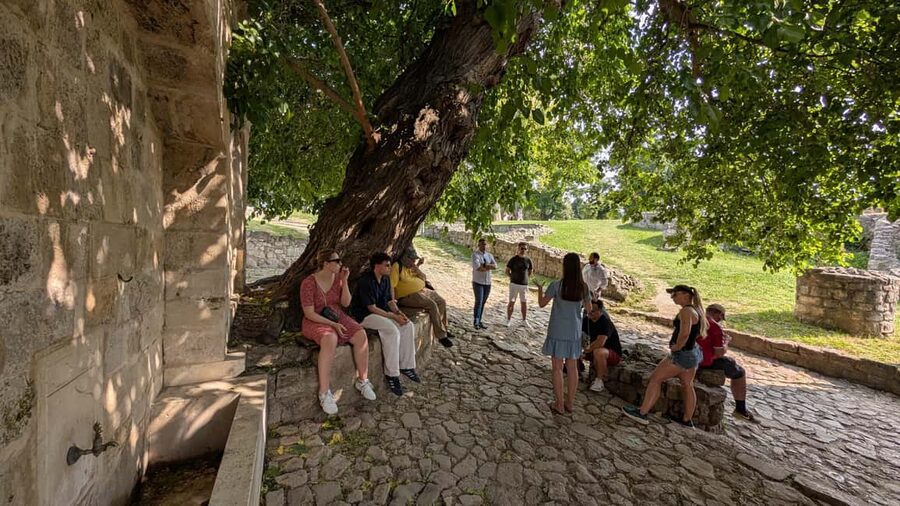
The route then reaches Student Park for about 10 minutes of guided sightseeing and walking. This is a shorter stop, but it helps keep the route from becoming a string of major monuments with no breathing room.
The park gives the guide a place to explain the city’s student and intellectual life, as well as the relationship between open public areas and Belgrade’s central neighborhoods. You will not spend as long here as at the fortress, but the stop helps connect the city’s past to its current population.
Next comes the Church of the Holy Archangel Michael, usually known as St. Michael’s Cathedral. The visit lasts about 15 minutes. This is an important religious and cultural stop, and it gives you a chance to consider the role of Serbian Orthodox tradition in the country’s identity.
The guide’s explanation matters here. Religious buildings in the Balkans can carry several meanings at once: worship, national memory, art, and political history. A short visit cannot cover every detail, but it can give you the background needed to understand later sights.
Remember that this is a walking tour, not a church-focused art tour. You should expect a guided introduction rather than an extended indoor visit.
Kalemegdan Park and Belgrade Fortress
The most substantial section of the experience comes at Kalemegdan Park and Belgrade Fortress. The listed timing gives about 20 minutes to the park and another 20 minutes to the fortress, with walking, sightseeing, scenic views, and photo stops included.
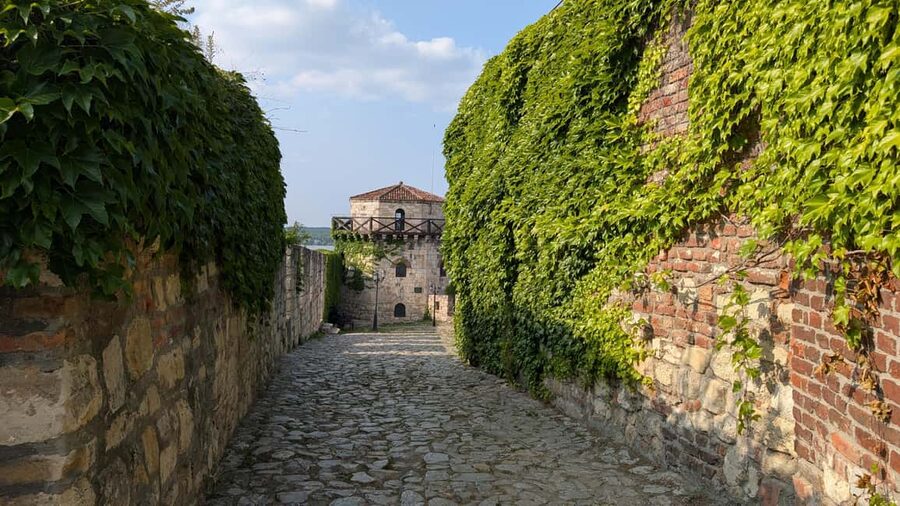
Kalemegdan is where Belgrade’s geography becomes clear. The fortress occupies the area above the meeting point of the Sava and Danube, making it easier to understand why this place mattered so much to rival powers. The rivers were not just pleasant scenery. They helped make Belgrade a strategic border position between different political and cultural worlds.
The fortress carries the central theme of the tour: empires repeatedly fought over this city. Celtic, Roman, Byzantine, Ottoman, Austro-Hungarian, German, and Russian influences are part of the broad story presented here. The guide’s job is to put those changes in order and show how the city’s location shaped its fate.
You will hear about conflict, conquest, liberation, and the long process of building a Serbian capital. The subject can become heavy, but the fortress setting keeps the discussion tied to something visible and real.
The Military Museum is part of the fortress area and is listed among the tour highlights. The supplied schedule does not promise a full museum entry or a set amount of time inside, so treat it as an encounter with the museum area rather than a dedicated museum tour. If the museum is a priority for you, ask the guide what the route includes on your date.
The fortress section also offers some of the best views on the walk. Bring a camera, but keep your attention on the explanation. The point is not simply to look over the rivers. It is to understand why the view made this location valuable for centuries.
In warm weather, the fortress and park can be more comfortable than the exposed streets, depending on the route and time of day. One guide was praised for finding shade during a particularly hot walk, but conditions vary. Water is a sensible addition to your day bag, even though it is not listed as an included item.
Ružica Church and the Monument of Gratitude to France
Ružica Church is one of the most distinctive stops. The church was built in the 15th century and sits within the fortress area. The tour allows about 15 minutes for a visit, photographs, and explanation.
Its setting makes it memorable. You are not leaving the fortress district to find a separate religious site. Instead, the church helps show how military, religious, and civic history overlap in Belgrade.
A short visit is enough to appreciate the church’s age and character, but not enough for a full study of its art or construction. If you are deeply interested in Serbian Orthodox churches, you may want to return later or ask your guide for more suggestions.
The final listed sight is the Monument of Gratitude to France, with about 15 minutes of sightseeing. This gives the guide another opening to discuss international relationships and the way public monuments preserve political memory.
The monument also reinforces one of the tour’s useful habits: looking at Belgrade as part of a wider European story. Serbia’s history is not isolated from France, the Ottoman world, Central Europe, Russia, or the other powers that shaped the region.
The walk finishes at Rajićeva Shopping Center. That is a convenient end point in the central area, with the historic core still close at hand. You can continue exploring, find a meal, or use the guide’s suggestions for the rest of your stay.
The guides make the difference
A history walk is only as good as the person explaining it. This experience has several guides, and the strongest pattern in the feedback is not one single personality but a shared ability to make hard material understandable.
Marija is repeatedly praised for presenting complicated Serbian and Balkan history in clear, balanced language. She is also described as funny, open to discussion, and able to connect centuries of history with current events without turning the walk into a political speech.
Pedja is noted for patience, warmth, and local insight. He has helped families keep a comfortable pace, offered assistance beyond the formal tour, and connected history with buildings and architecture. Jovana is described as friendly and well informed, with useful suggestions about museums, restaurants, traditions, and local habits.
Aleksandar is especially suited to people who want the larger picture of Serbia and Yugoslavia. Tibi and Tibor are praised for communication, personal stories, and the ability to make complex cultural and political topics easy to follow. Other guides, including Andjelka, have been appreciated for vivid storytelling and humor.
Your exact guide matters, and the experience may feel different depending on who leads it. Still, the repeated strengths are clear: plain explanations, room for questions, and a personal connection to Belgrade.
Price, pace, and who should book
At $35 per person, I consider this a solid value for a first visit. You are paying for three hours with a live English-speaking guide, a route through many major central sights, and help understanding a country whose history is difficult to sort out from guidebook summaries alone.
The value is greatest if you want context. If you only need photographs of the fortress and Skadarlija, you can visit those areas yourself. The tour earns its price by explaining why the places matter and by linking them to Serbia’s past and present.
The route is about four kilometers, so comfortable shoes are essential. The tour is listed as wheelchair accessible, but the length and historic setting still make it sensible to discuss your needs in advance if you have mobility concerns.
I would book it near the beginning of a Belgrade stay. The end point leaves you in a useful central area, and the guide’s suggestions can shape the rest of your visit. The walk also helps you decide which churches, museums, neighborhoods, or restaurants deserve more of your time.
This is a good match for:
- First-time visitors who want city orientation and history together
- People interested in Serbia, Yugoslavia, and Balkan politics
- Families who appreciate a patient guide and the chance to ask questions
- Visitors who prefer a small-group feel and direct conversation
- Anyone who wants to understand Belgrade before exploring alone
It is less suited to you if you want long indoor visits, extensive free time at each monument, or a slow photography walk. The three-hour schedule covers many stops, so the experience favors breadth and explanation over close study.
Should you book the Serbian History Walking Tour?
Book this tour if you want Belgrade to make sense quickly. The route includes the city’s central streets, Skadarlija, St. Michael’s Cathedral, Kalemegdan, Belgrade Fortress, Ružica Church, and the Monument of Gratitude to France. More important, it gives you a way to connect those places.
I would choose it for a first or second day in town, especially if Serbian history feels confusing or unfamiliar. At $35, it is a sensible introduction, with strong value for anyone who enjoys asking questions and learning through local stories.
Skip it only if four kilometers sounds tiring or if you prefer to explore entirely at your own pace. For most visitors who want history, local perspective, and a useful orientation in one outing, this is a smart starting point.
FAQ
How long is the Serbian History Walking Tour?
The tour lasts three hours.
How far do you walk?
The route covers around four kilometers on foot.
Where does the tour begin?
The meeting point is Terazije Square, next to the fountain.
Where does the tour finish?
The tour finishes at Rajićeva Shopping Center.
What language is the tour offered in?
The live guided tour is offered in English.
Is the tour wheelchair accessible?
Yes, the activity is listed as wheelchair accessible.
What should I bring?
Bring comfortable shoes because the experience is a walking tour of about four kilometers.
New routes in the world
- Barcelona Historical Walking Tour: Gothic Quarter and El Born★ 5.0 · 217 reviews
- Gothic Quarter Donation-Based Walking Tour in English★ 5.0 · 72 reviews
- Private Tailored Barcelona Walking Tour★ 5.0 · 80 reviews
- The Spanish Civil War & Franco Barcelona Walking Tour★ 5.0 · 539 reviews
- Jewish Walking Tour Barcelona by Expert Jewish Guide 2h★ 5.0 · 297 reviews
- Ramblas, Old Town, Gothic and Gaudi Architecture Walking Tour★ 5.0 · 723 reviews
- Barcelona Dark History Night Walking Tour With Drinks★ 5.0 · 153 reviews
- Barcelona Gems, 10+ Sights Immersive Walking Tour★ 5.0 · 209 reviews
3-Hour Experiences, compared.
3-Hour Walking Tour of Old Town & Prague Castle
Read our review →
Eat Like a Local: Venice 3-Hour Small-Group Food Tasting Tour
Read our review →
Experience Porto’s Charm: 3-Hour Guided Walking Tour
Read our review →

Prague 3-hour Afternoon Walking Tour including Prague Castle
Read our review →
3-Hour Orientation Walking Tour of Buda and Pest
Read our review →Browse the lists this tour appears in