
Review · LISBON
Lisbon: City Highlights Guided Walking Tour
Lisbon’s central story unfolds on foot, from the grand riverfront of Praça do Comércio to the tiled streets and cafés of Baixa and Chiado. This tour connects the monuments to Portugal’s earthquakes, monarchy, dictatorship, revolution, and everyday traditions, so you get more than a quick look at pretty façades.
I like the useful local advice, especially tips on food, public transport, free viewpoints, and places such as the world’s oldest bookstore. I also like the relaxed pace and the way guides such as Tiago, Claudia, Walter, Kate, Samuel, and Beatriz turn difficult history into clear, entertaining stories. The main consideration is group size: some departures have been much larger than expected, and a few people found it hard to hear without audio devices.
Key points at a glance
- Start at Praça do Comércio: Meet beneath the big arch, between the arch and the statue, with the guide carrying an orange umbrella.
- Follow Lisbon’s rebuilt center: See how Baixa Pombalina grew from the ruins of the 1755 earthquake.
- Visit São Domingos Church: This unusual church is one of the tour’s most memorable stops, with a powerful story attached to it.
- Cover major sights in 150 minutes: The route includes Rossio, Santa Justa, Carmo, Chiado, and several historic squares.
- Get practical city advice: Guides share ideas for food, drinks, transport, free views, and places to visit later.
- Expect a lively walking tour: The pace is generally easy, but there are a few uphill sections and Lisbon’s streets can be crowded.
Why this walking tour makes sense early in your Lisbon stay
This is a good first look at Lisbon because the route brings together the city center’s main landmarks in one compact walk. You are not simply ticking off buildings. You are learning why the center looks so orderly, why some streets feel grand and others feel old and uneven, and how a major disaster changed the city.
The tour lasts about two and a half hours. That is long enough to cover a lot without using up your whole day. You can take the advice you receive and apply it afterward, perhaps by returning to a café, museum, shop, or viewpoint that caught your attention.
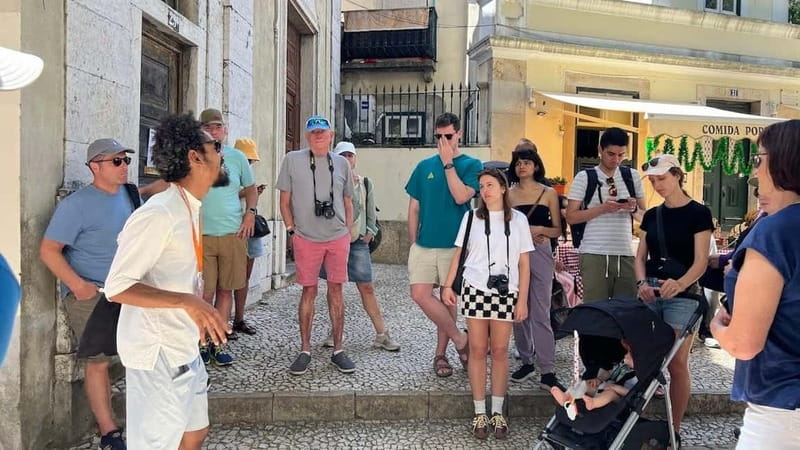
The tour is conducted in English. The guides are the main reason this experience works well. Tiago is praised for humor and practical recommendations, Walter for animated storytelling, Kate for a clear pace and strong command of Lisbon’s past, and Claudia, Samuel, Beatriz, Jose, James, and others for making the walk personal and easy to follow.
This is not a silent sightseeing procession. You should expect stories, questions, fun facts, and commentary about Portuguese customs. That makes the walk especially useful if you want context before exploring Lisbon on your own.
More City Highlights Walking Tours in Lisbon:
- Lisbon: Starter Walking Tour to the highlights in German
★ 4.9 · 781 reviews - Lisbon: Full-Day Private Walking Sightseeing Tour
★ 4.9 · 123 reviews - Ho Chi Minh City Street Food Tour & Sightseeing By Motorbike
★ 5.0 · 9,413 reviews
Praça do Comércio and the city rebuilt after disaster
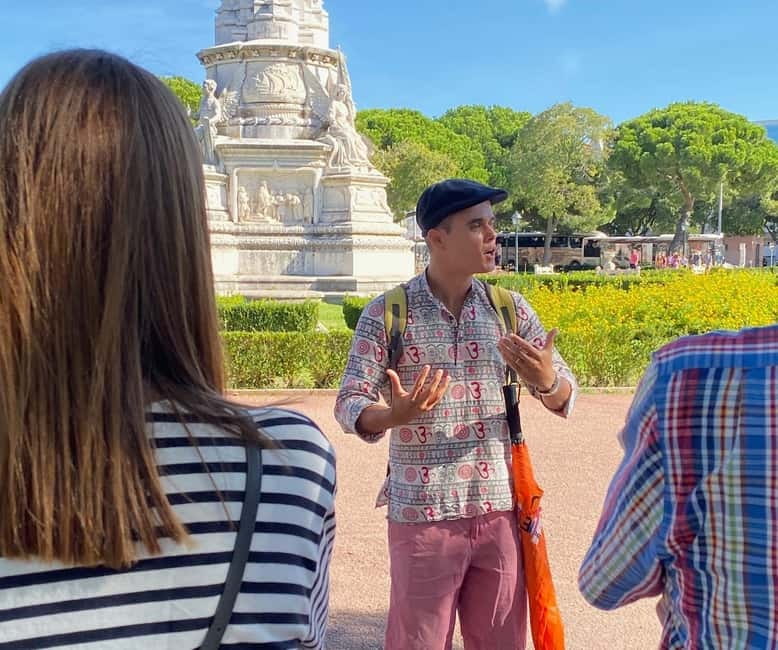
The meeting point is Praça do Comércio, Lisbon’s monumental square beside the Tagus. Look for the orange umbrella between the large arch and the statue in the middle of the square. Take a moment to get the meeting location right, since one person missed the start after going to the wrong place.
The square is a fitting beginning. From here, your guide explains the earthquake of 1755 and the rebuilding that followed. Baixa Pombalina was laid out with broad streets and a more regular plan, a striking change from the older, hillier parts of Lisbon.
The key point is not just that Lisbon suffered an earthquake. The disaster shaped the city you see today. As you walk farther into Baixa, the straight streets and imposing buildings make more sense. You begin to see the center as a planned response to destruction, rather than simply an attractive shopping district.
The square also gives your guide room to explain Portugal’s political past. The tour touches on the end of the monarchy, the period when the capital was moved outside Portugal, the country’s long dictatorship, and the revolution that changed modern Portugal. These subjects can become dry in a classroom. A good guide links them to streets, statues, churches, and public spaces.
Baixa Pombalina, Augusta Street, and the Santa Justa Elevator
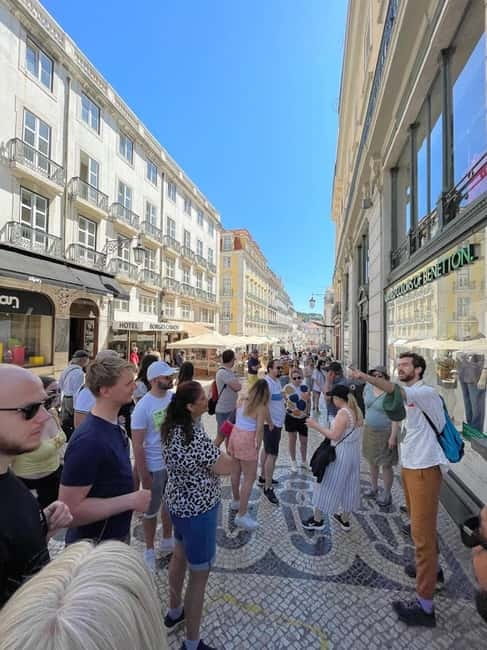
From the square, the walk heads through Baixa and along Augusta Street. This is one of Lisbon’s main pedestrian routes, framed by rebuilt façades and filled with shops, cafés, and foot traffic.
You’ll see the famous Augusta Arch, which frames the route back toward Praça do Comércio. It is one of those places that looks impressive in photographs, but the guide’s explanation gives it more meaning. You learn how the rebuilt center was organized and why this part of town became Lisbon’s social and commercial heart.
The Santa Justa Elevator is another major stop. Its iron structure rises above the surrounding streets and offers one of the city’s most recognizable urban views. On this tour, you should expect an explanation of the landmark rather than a guaranteed ride to the top. That distinction matters if riding the elevator is a priority for you.
The walk through Baixa is fairly manageable, but do not confuse manageable with completely flat. Lisbon’s central streets include slopes, steps, and uneven paving. One recent departure was described as easy overall, with only a few uphill stretches. Comfortable shoes will make the experience much more pleasant.
Rossio Square and São Domingos Church
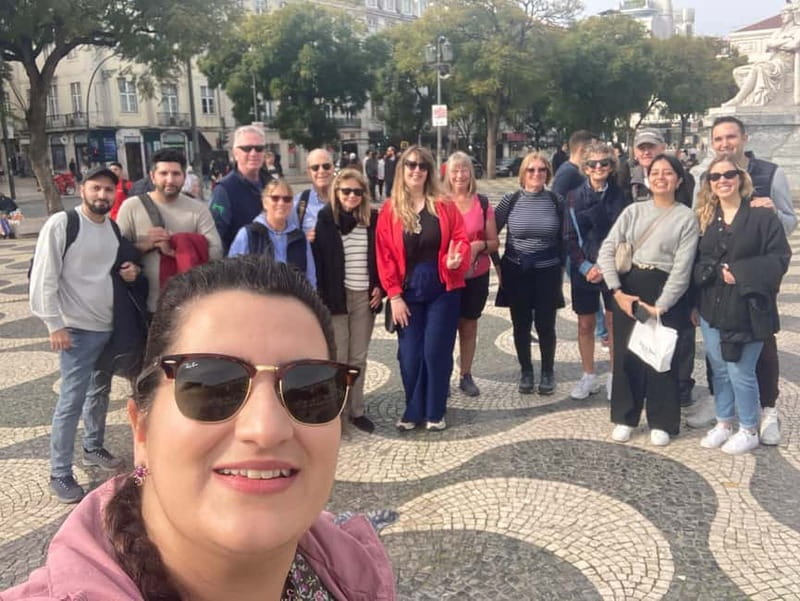
Rossio Square brings you into another important center of Lisbon life. The square is linked to the Rossio Train Station, whose ornate exterior makes it an easy landmark to recognize. Your guide can also use this area to explain how people move around the city and suggest transport options for the rest of your visit.
São Domingos Church is one of the most striking stops. It is often described as one of the world’s most unusual churches, and its interior has a dark, dramatic character that differs from the bright public squares outside. The building’s story includes tragedy and damage, and guides use it to explain difficult parts of Lisbon’s past.
This is where storytelling matters most. Walter has been especially effective at making the church’s history memorable, while other guides use the stop to connect religious spaces with social and political events. You are not just looking at an old church. You are being asked to consider how memory, loss, and survival are written into the city’s buildings.
The route also includes the Jewish memorial. This adds an important layer to the walk, since Lisbon’s past includes persecution and a massacre of Jewish residents. The subject is serious, and it keeps the tour from presenting Portugal as only a pleasant destination of tiled buildings, pastries, and sunshine.
More Guided Walks in Lisbon:
- Best of Lisbon Small-Group Guided Walking Tour
★ 5.0 · 4,869 reviews - Lisbon: Private Boat Trip, Guided Walking Tour, Bike & Tram
★ 4.8 · 116 reviews - Lisbon by Night: Guided Walking Tour – The Unholy Secrets
★ 4.8 · 93 reviews - Lisbon: City of Spies Guided Walking Tour
★ 4.7 · 81 reviews
Ginjinha, Casa do Alentejo, and local flavor
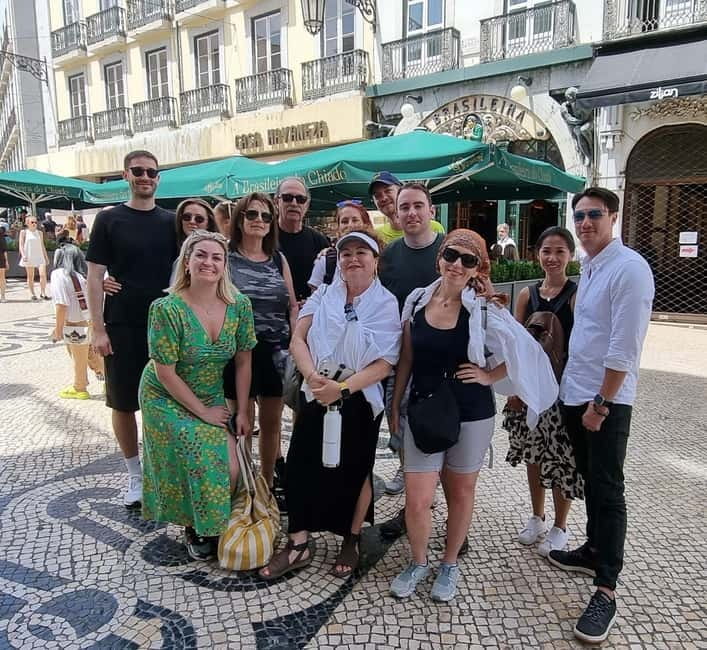
The walk includes the original Ginjinha shop. Ginjinha is Portugal’s sour-cherry liqueur, and a taste may be available along the route, but it is not included in the tour price. You should budget separately if you want to try it.
Past visitors have also appreciated food and drink suggestions from guides. Tiago, Jose, Walter, and others have offered advice on where to eat, what to order, and which local specialties are worth trying. One guide recommended a lunch spot called Super Mario, while another pointed out the world’s oldest bookstore. These specific suggestions can save you from choosing a restaurant only because it happens to be on a busy street.
Casa do Alentejo is another interesting stop. The building gives the tour a chance to talk about regional Portuguese culture inside the capital. You may find that these smaller cultural details are more useful than another list of dates, especially if you want your Lisbon visit to include more than the main monuments.
Pastel de nata and cherry liqueur may also enter the conversation, and some departures have included opportunities to try them along the way. These are not guaranteed inclusions, so treat them as possible extras rather than part of the paid package.
Carmo, Chiado, and Lisbon’s literary side
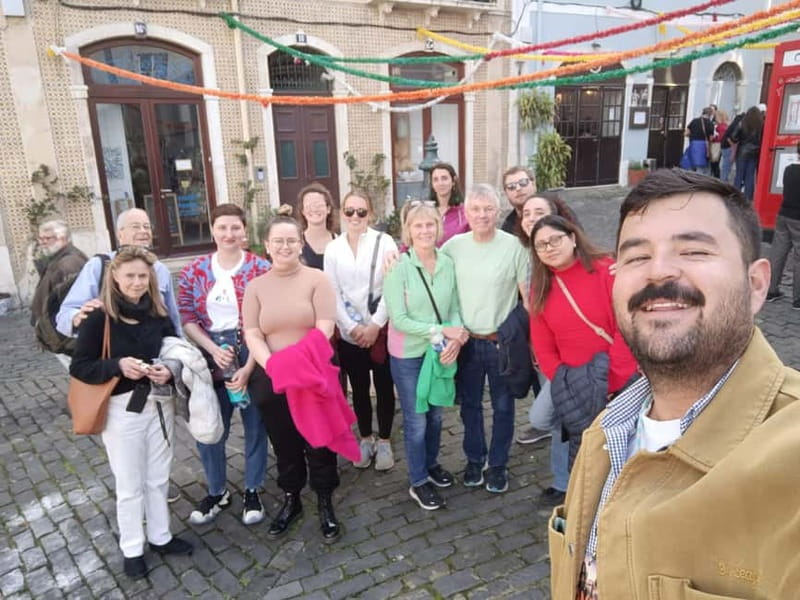
The walk continues toward the Carmo area and the Carmo Square and Monastery. The ruins are among Lisbon’s most moving landmarks. They recall the earthquake and give you a direct sense of how much of the old city was lost.
Carmo also marks the transition from the orderly Baixa grid toward Chiado. The streets become more theatrical, with cafés, shops, historic buildings, and a stronger connection to writers, artists, poets, and political figures.
Chiado has long been one of Lisbon’s meeting points. The tour explains why it became such an important cultural quarter and how it remains one of the city’s most cosmopolitan areas. At A Brasileira café, you get another link to Lisbon’s literary tradition. The café is a good reminder that city history is not only found in palaces and churches. It also lives in places where people met, argued, wrote, and watched the street.
Camões Square brings the walk toward its final section. This is a useful place to end because you are well placed to continue exploring Chiado, return toward Baixa, or follow the guide’s suggestions for food and sightseeing.
The guides make or break the experience
The tour uses different guides, so the exact tone will vary. That is normal for a walking experience, but the strongest pattern is clear: the guides are praised for making history lively and practical.
Tiago is repeatedly described as funny and generous with advice. Walter is valued for stories, especially at São Domingos Church. Kate is praised for her clear English, sensible pacing, and ability to explain both history and culture. Claudia combines humor with a large amount of information, while Samuel has been appreciated for an engaging delivery and helpful instructions.
James received particularly strong praise for holding attention through the full two and a half hours, using stories that covered sad, political, joyful, and surprising parts of Lisbon’s past. Jose has also been singled out for transport advice, food suggestions, and free ways to see good views.
That said, a good guide cannot solve every group problem. If the crowd is large, you may need to stand close and stay alert when the guide moves. One person specifically wished for audio equipment so the commentary could be heard more easily through earphones. If you prefer a quiet private walk or need every word to be crystal clear, this may not be the right format.
Group size, pace, and practical comfort
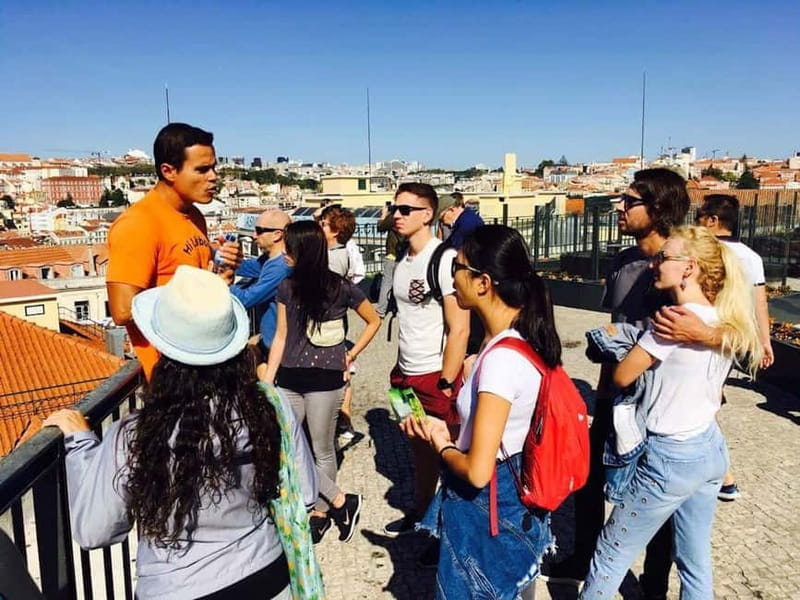
The advertised experience is a guided city walk, but group size can vary. Some departures have felt small, while others have operated more like a standard free walking tour, with groups reported at around 15 or even 30 people.
That difference affects the experience. A smaller group lets you ask more questions and hear the guide with less effort. A larger group can still work well when the guide is confident, but you may spend more time positioning yourself near the front.
The walking pace is generally easy and the route is not described as highly demanding. Still, Lisbon is built on hills, and there are uphill sections. Wear shoes with a firm sole, carry water, and check the weather before you set out. Sun and rain can both arrive during the same walk.
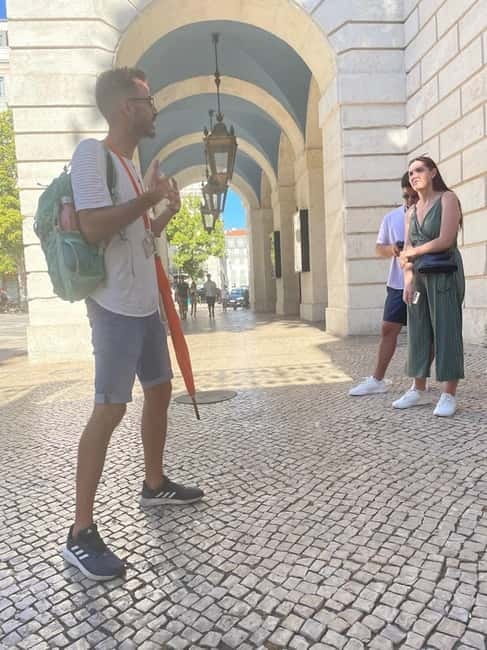
The meeting point is central and easy to connect with from the surrounding Baixa area. The guide carries an orange umbrella, which is the key visual marker. Arrive with enough time to locate the group rather than relying on a last-minute rush through Praça do Comércio.
Is $17 good value?
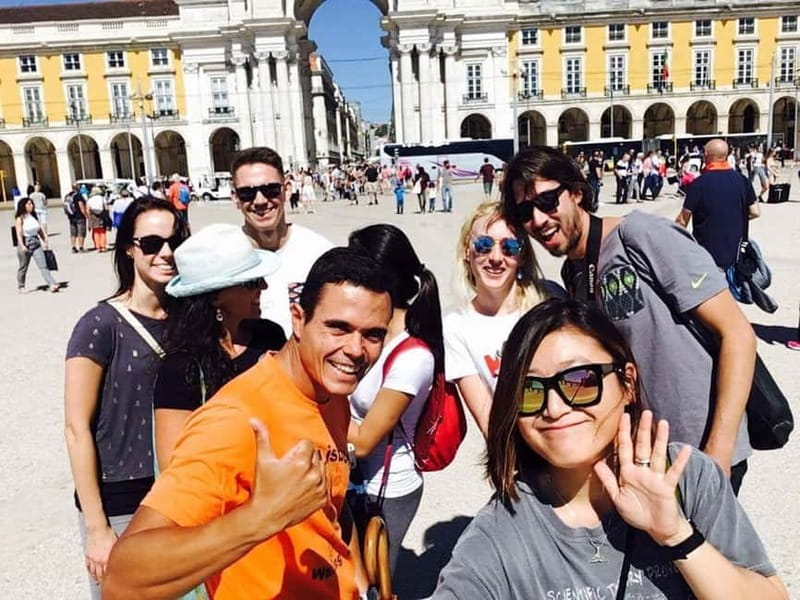
At $17 per person, the tour offers strong value if you want a broad introduction to central Lisbon. You receive 150 minutes with an English-speaking local guide, a substantial overview of Portuguese history, and practical suggestions you can use for the rest of your stay.
The value is not in admission tickets, since this is primarily an outdoor walking route. It comes from the explanations and the structure. You see many important places without having to plan the order yourself, and you learn how the earthquake, politics, religion, food, and literature fit together.
The price does not include gratuities or a Ginjinha tasting. Also, some people have understood the booking as a small paid group, then found a larger free-walking-tour setup. Check the group expectations carefully before booking if size is important to you.
Free cancellation up to 24 hours before the start and the option to reserve now and pay later add useful flexibility. Those terms matter if your Lisbon schedule is still shifting.
Who should book this Lisbon walk?
I would choose this tour for a first or second day in Lisbon, especially if you want the city’s central landmarks explained rather than photographed without context. It suits couples, solo visitors, and families who can manage a two-and-a-half-hour walk with some slopes.
It is also a good match for people who like practical advice. The guides regularly cover food, transport, free viewpoints, places to drink, and sights worth returning to later.
I would be more cautious if you want a private experience, a guaranteed small group, or an audio system. Group size may vary, and the English commentary can be harder to hear when the crowd grows. You should also book a different type of outing if your main goal is entering every landmark, since this walk focuses on exterior sights, stories, and city orientation.
Should you book it?
Yes, if you want an affordable introduction to Baixa and Chiado with a guide who can connect famous places to Portugal’s difficult and fascinating past. The strongest part is the storytelling, especially at São Domingos Church, Carmo, and the earthquake-rebuilt streets.
Before booking, make two checks. Confirm that you are comfortable with a group size that may vary, and arrive at Praça do Comércio looking for the orange umbrella between the arch and central statue. If those conditions suit you, $17 is a sensible way to get your bearings, collect useful local tips, and begin seeing Lisbon as a living city rather than a set of isolated monuments.
FAQ
How long does the Lisbon City Highlights Guided Walking Tour last?
The tour lasts approximately 150 minutes, or two and a half hours.
What language is the tour conducted in?
The live guided tour is conducted in English.
Where does the tour meet?
Meet at Praça do Comércio, between the large arch and the statue in the middle of the square. Look for the guide carrying an orange umbrella.
What landmarks are included?
The route includes Praça do Comércio, Lisbon City Hall, Augusta Street and Arch, the Santa Justa Elevator, Rossio Square and Train Station, São Domingos Church, the Jewish memorial, the original Ginjinha shop, Casa do Alentejo, Carmo Square and Monastery, A Brasileira café, Camões Square, Baixa Pombalina, and Chiado.
Is Ginjinha included in the price?
No. Ginjinha is not included, so you pay separately if you choose to try it.
Are gratuities included?
No. Gratuities are not included in the tour price.
Can I cancel for a full refund?
Yes. You can cancel up to 24 hours in advance for a full refund.
Will the group be small?
Group size may vary. Some departures have been small, while others have operated with larger groups, including groups of about 15 or 30 people.
New routes in Lisbon
- Small Group Walking Tour of Belém★ 4.9 · 80 reviews
- Lisbon: Walking Tour in the Center (Max 12 Participants)★ 5.0 · 741 reviews
- Lisbon Through the Eyes of a Local – Food and Walking Tour★ 4.9 · 141 reviews
- Lisbon: Street Art Walk★ 5.0 · 79 reviews
- Lisbon: Food and Culture 3-Hour Walking Tour★ 4.7 · 95 reviews
- Lisbon Tram No. 28 Ride & Walking Tour★ 4.1 · 766 reviews
- Lisbon: Private Boat Trip, Guided Walking Tour, Bike & Tram★ 4.8 · 116 reviews
- Lisbon: Jewish Walking Tour★ 4.9 · 96 reviews
Lisbon Walking Tours, compared.
Best of Lisbon Small-Group Guided Walking Tour
Read our review →
Best of Lisbon Walking Tour: Rossio, Chiado & Alfama
Read our review →

Lisbon Food Tour with 10+ Tastings of Local Delicacies & Wines
Read our review →
Sintra & Cascais Day Tour with Pena Palace Entry and Gardens Walk
Read our review →
Lisbon Roots – Small group Food & Culture Walking Tour w/tastings
Read our review →Browse the lists this tour appears in