
Review · LISBON
Lisbon: City of Spies Guided Walking Tour
Lisbon’s wartime story is far stranger than the usual sightseeing script. This three-hour spy walk follows the city’s role as a neutral meeting ground for agents, refugees, profiteers, royals, and movie stars, with stories of double agents, escape routes, Nazi gold, and secret networks along the way. I like the way it connects grand politics with individual lives, including a lonely Portuguese consul and the people trying to get out of Europe.
I especially like two things here: the focus on 20th-century Lisbon, which many city tours skip, and the guides’ strong storytelling. José, Rita, Joana, Filippa, and others have brought humor, local background, and plenty of detail to the walk. The main caution is timing: the advertised length is three hours, but one booking lasted about one hour and 40 minutes, while another used 90 minutes of seated discussion and 90 minutes on foot.
Key points to know before you book
- Lisbon becomes a WWII stage: Explore why neutral Portugal drew spies, refugees, royals, artists, and escapees from across Europe.
- The stories reach beyond espionage: Expect politics, Salazar’s dictatorship, Portuguese neutrality, Nazi gold, and the struggle to flee Europe.
- Guides make the difference: José, Rita, Joana, Filippa, and other guides are praised for clear explanations, humor, and lively storytelling.
- It is an actual walking tour: Wear comfortable shoes and plan for rain or shine.
- You can choose the group style: Private and small-group options are available, depending on the booking you select.
- Allow flexibility with the schedule: The stated duration is three hours, but the actual balance of walking and seated talk can vary.
Why wartime Lisbon makes such a good subject
At first glance, Lisbon seems an unlikely setting for a spy tour. Portugal stayed officially neutral during WWII, yet that neutrality placed Lisbon in a very unusual position. People from opposing sides could meet there, pass through the same streets, use the same cafés and hotels, and search for ways across the Atlantic.
That is the central idea of this experience. Lisbon was not simply watching the war from a safe distance. It became a crossroads for intelligence work, trade, escape, and political maneuvering. You hear about Allied and Axis agents, double agents, refugees, royal families in exile, and wealthy profiteers moving through the same city.
I like this angle because it gives Lisbon a more complicated wartime identity. The city was a place of refuge, but also a place where money could open doors. It offered escape, yet Portugal’s politics and neutrality shaped who could leave, who had to wait, and who could operate in secret.
The tour also places the city in the wider story of European politics. You learn about Salazar’s dictatorship, the pressures faced by Portugal, and the difficult position of remaining officially neutral while events around the country grew more dangerous. This is not just a collection of cloak-and-dagger tales. The spy stories work best because they sit inside a larger story about power and survival.
More Guided Walks in Lisbon:
- Best of Lisbon Small-Group Guided Walking Tour
★ 5.0 · 4,869 reviews - Lisbon: City Highlights Guided Walking Tour
★ 4.7 · 168 reviews - Lisbon: Private Boat Trip, Guided Walking Tour, Bike & Tram
★ 4.8 · 116 reviews
Following double agents and escape networks
The heart of the walk is the people who operated between sides. You hear about double agents, undercover networks, and the struggle to gather information without exposing the people involved. The subject can sound abstract in a book, but walking through Lisbon gives it a human scale.
The stories include a spy network linked to Allied ship convoys. That detail helps explain why Lisbon mattered beyond its streets. Portugal’s position on the Atlantic made information about shipping routes and naval movement especially important. The tour also covers RAF and Luftwaffe battles along the Portuguese coast, showing that the war was not entirely distant even inside a neutral country.
You should expect the guide to spend time on names and individual cases rather than rushing through a list of dates. José is especially praised for building stories around people and for answering questions beyond a fixed script. Rita has also been noted for linking WWII events to wider Portuguese culture and politics.
That style suits this subject. Espionage is confusing when reduced to acronyms and alliances. A good guide makes it easier to follow by showing who wanted what, who was under pressure, and how a seemingly ordinary person could affect a much larger operation.
One especially striking story concerns the Portuguese consul in Brussels and his lonely fight during the crisis. The details give the tour a welcome change of scale. Instead of hearing only about famous leaders, you see how one official could face moral and political pressure while trying to help people in danger.
Nazi gold, refugees, and the moral questions
The tour’s mention of Nazi gold adds an uncomfortable but important layer. Portugal’s position made it a place where money, goods, and people could move through the country during the war. The subject raises questions about neutrality, commerce, and the difference between helping people escape and benefiting from wartime chaos.
You should not expect a simple story with clear heroes at every turn. The material includes refugees looking for a route out, but also profiteers and people who used the confusion to their advantage. That balance is one of the tour’s strengths. It treats Lisbon as a city caught between humanitarian need, political control, and financial opportunity.
The refugee stories also help explain why Lisbon attracted so many outsiders. European royalty in exile, famous artists, writers, and socialites passed through on their way to the United States. The city became one of the few places in war-torn Europe where people from different sides could meet on relatively equal ground.
That sounds glamorous, but the walk gives you the darker side too. Many refugees were not arriving for a pleasant stopover. They were trying to secure papers, find transport, locate contacts, and escape a continent at war. The contrast between royal exile and anonymous flight makes the setting feel more real.
From Lisbon streets to James Bond stories
The tour connects wartime Lisbon with the writers and popular stories that later shaped spy fiction. Ian Fleming and Graham Greene drew inspiration from the atmosphere of wartime Europe, and Lisbon helped supply the right mix of secrecy, money, danger, and international movement.
The James Bond connection is a useful entry point, but this is not a movie-themed walk in disguise. You get the real political background behind the fiction. The point is less about spotting film locations and more about understanding why Lisbon could inspire stories of secret meetings, coded loyalties, and glamorous danger.
I like this part because it gives you a way to compare fantasy with reality. Fiction often turns espionage into a world of fast cars and polished agents. The real stories were usually more uncertain, bureaucratic, and morally messy. People waited for documents, relied on fragile contacts, and made choices with incomplete information.
The guide’s delivery matters here. José has been praised for humor and for making complex material easy to follow. Other guides, including Rita and Filippa, have been described as passionate and engaging. That warmth helps keep the subject from becoming a heavy lecture.
More Walking Tours in Lisbon:
- Lisbon: History, Stories and Lifestyle Walking Tour
★ 4.8 · 10,902 reviews - Lisbon: Food and Wine Small Group Walking Tour
★ 4.9 · 4,082 reviews - Best of Lisbon Walking Tour: Rossio, Chiado & Alfama
★ 4.9 · 2,700 reviews - Age of Discoveries Walking Tour in Belém
★ 5.0 · 1,513 reviews
What the walking route feels like
The exact meeting point can vary with the option you book, so check your confirmation before setting out. The tour takes place on foot and lasts up to three hours as advertised, but you should be prepared for some variation in how that time is used.
The route is built around Lisbon’s streets and landmarks, with the guide using places in the city to explain the people and events connected to them. You may pass locations you would otherwise treat as ordinary urban scenery. The value comes from learning what happened around them and why the city’s setting mattered.
This is not a monument-by-monument tour. You are not signing up for a long list of churches, viewpoints, or grand buildings. The focus is on atmosphere, political background, and stories tied to Lisbon’s wartime role.
Comfortable shoes are important. Lisbon’s streets can make any three-hour walk more tiring, and this tour may include pauses for explanations as well as stretches of walking. It runs rain or shine, so bring suitable clothing and do not assume poor weather will cancel the outing.
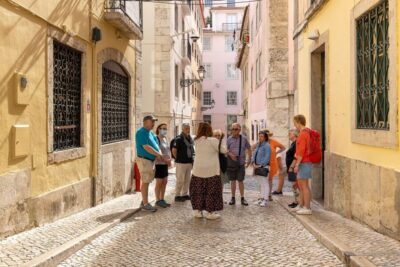
The format may also change with the group. A small group can make it easier to ask questions and keep close to the guide. A private option gives you more control over the pace and discussion. One unusual version of the experience included about 90 minutes seated and 90 minutes walking, which worked well for people with walking or hearing limitations.
That arrangement is not promised for every booking, but it shows that the tour can sometimes be adapted. If you need a slower pace or more seated time, ask when booking rather than assuming it will happen automatically.
The guides are a major part of the value
The strongest part of this experience is the human delivery. José receives repeated praise for his command of the subject, humor, and ability to make the walk feel personal. Rita is described as combining WWII history with Portuguese cultural and political context. Joana and Filippa have also been singled out for clear, engaging tours.
You should still remember that guide quality can vary from one departure to another. The tour is built around storytelling, so your experience depends partly on who leads it and on the questions your group asks.
That is not a reason to avoid it. It is simply a reason to choose a small group or private option if the subject matters a great deal to you. A private walk may give you more time to ask about a particular spy, refugee route, political issue, or literary connection.
The guides appear to be at their best when they can respond to curiosity. One of the appealing features is the sense that the material is not delivered as a rigid speech. If you enjoy asking how a political decision affected ordinary people, or how spy fiction changed the public image of Lisbon, you should find plenty to discuss.
Is $29 a fair price?
At $29 per person, this is a reasonable price for a three-hour guided city walk, especially if you want a focused subject rather than a standard introduction to Lisbon. You are paying for the guide’s research, storytelling, and ability to connect scattered events into one understandable route.
The value is strongest for repeat visitors. If you have already seen the major sights, this tour gives you a different way to read the city. It also works well near the start of a longer stay if you want political and historical context before exploring Lisbon on your own.
For a first-time visitor with only a day or two, the choice is less clear. You will not get a broad survey of Lisbon’s main monuments. You will get a specialized walk about spies, WWII, neutrality, and escape. That makes the price worthwhile only if those subjects appeal to you.
The private option will cost more than the starting price if selected, but the smaller setting may suit you if you want a slower pace or detailed questions. For most people, the regular small-group version should offer the best balance of cost and personal attention.
The free cancellation window of 24 hours and reserve-now, pay-later option also reduce the risk of fitting this into a changing itinerary. The important point is to confirm the group type, starting time, and meeting point before you finish your booking.
Who should take this Lisbon spy tour?
I would recommend it to you if you enjoy modern European history, political stories, espionage, literature, or unusual city walks. It is also a strong choice for people returning to Lisbon who want to see familiar streets through a new lens.
You do not need to be a history specialist. The guides explain the setting as they go, and the stories provide an easy way into the subject. Still, you should enjoy listening and walking. This is not a quick photo stop or a light entertainment tour.
Families with older children may like the spy angle, though the themes can include dictatorship, war, refugees, and moral compromise. The material is more serious than a standard sightseeing stroll, even when the guide uses humor.
People with mobility or hearing concerns should contact the provider before booking. One guide adapted the format with substantial seated time and extra accommodation, but that arrangement is not guaranteed for every departure.
Who might choose another tour?
You may want a different Lisbon walk if this is your first few hours in the city and you need the major landmarks explained first. You may also prefer another activity if you dislike political history or long spoken explanations.
The timing issue deserves attention. Most of the supplied experiences describe a full and satisfying tour, but one booking lasted only one hour and 40 minutes. Since the advertised duration is three hours, I would confirm the expected schedule at the meeting point, particularly if you have another reservation afterward.
The route is also weather-dependent in the sense that it runs in rain or shine. Lisbon’s weather can change, and three hours outdoors is a long time if you arrive unprepared. Bring comfortable shoes and clothing suited to the forecast.
Should you book Lisbon: City of Spies?
Book it if you want a story-led look at Lisbon’s WWII past, not a checklist of famous sights. The mix of double agents, Nazi gold, royal exiles, refugees, Portuguese politics, and literary connections gives the city a fresh set of questions.
I would choose a small group if you want the best value, or private format if you care about a tailored pace and plenty of questions. Check the meeting point and expected length, then leave room in your schedule in case the walking and seated portions vary.
At $29, it is a good buy for history-minded visitors and repeat visitors. It is less useful if you want a broad first introduction to Lisbon. For the right audience, though, this is the sort of tour that can change how you see an ordinary street long after the walk ends.
FAQ
Where does the Lisbon City of Spies tour meet?
The meeting point can vary depending on the option you book. Check the details for your selected departure before going.
How long does the tour last?
The stated duration is three hours. The exact balance between walking and seated discussion can vary, and one reported booking lasted about one hour and 40 minutes.
What languages are available?
The tour is offered in English and Portuguese.
Is this a private tour?
You can choose between a private tour and a non-private small-group option, depending on the booking selected.
What subjects does the tour cover?
It covers spies, double agents, refugees, Nazi gold, royal families in exile, Portuguese neutrality, Salazar’s dictatorship, escape routes, Allied ship convoys, and wartime activity near the Portuguese coast.
Does the tour include food or drinks?
No. Food and drinks are not included.
Is hotel pickup included?
No. Hotel pickup and drop-off are not included.
What should I bring?
Bring comfortable shoes. The tour takes place on foot and runs rain or shine.
Can I cancel for a refund?
You can cancel up to 24 hours in advance for a full refund. A reserve-now, pay-later option is also available.
New routes in Lisbon
- Small Group Walking Tour of Belém★ 4.9 · 80 reviews
- Lisbon: Walking Tour in the Center (Max 12 Participants)★ 5.0 · 741 reviews
- Lisbon Through the Eyes of a Local – Food and Walking Tour★ 4.9 · 141 reviews
- Lisbon: Food and Culture 3-Hour Walking Tour★ 4.7 · 95 reviews
- Lisbon Tram No. 28 Ride & Walking Tour★ 4.1 · 766 reviews
- Lisbon: Street Art Walk★ 5.0 · 79 reviews
- Lisbon: Private Boat Trip, Guided Walking Tour, Bike & Tram★ 4.8 · 116 reviews
- Lisbon: Jewish Walking Tour★ 4.9 · 96 reviews
Lisbon Walking Tours, compared.
Best of Lisbon Small-Group Guided Walking Tour
Read our review →
Best of Lisbon Walking Tour: Rossio, Chiado & Alfama
Read our review →

Lisbon Food Tour with 10+ Tastings of Local Delicacies & Wines
Read our review →
Sintra & Cascais Day Tour with Pena Palace Entry and Gardens Walk
Read our review →
Lisbon Roots – Small group Food & Culture Walking Tour w/tastings
Read our review →Browse the lists this tour appears in