
Review · TOKYO
Tokyo: Imperial Palace and Shogun Walking Tour
The most interesting part of this $16 tour is that you are not simply looking at pretty palace grounds. You are walking through the former center of Edo, where the Tokugawa shoguns controlled Japan for more than two centuries. I like the way the tour connects massive stone walls and quiet gardens to real political power, and I like that guides such as Tony, Blake, and Jim explain how the old city still shapes modern Tokyo.
I also like the two-hour length and gentle pace. The tour gives you time to stop at the koi ponds and Ninomaru Garden instead of rushing from one photo spot to another. The main drawback is that you see the East Gardens and historic remains rather than the private interior of the Imperial Palace, so anyone expecting grand palace rooms should adjust expectations.
Key points to know before you book
- You walk through Edo Castle’s former stronghold: Gates, moats, guardhouses, and stone foundations show how carefully the shogun’s seat was protected.
- Ninomaru Garden is the calm heart of the tour: Seasonal plants, ponds, and koi offer a peaceful contrast to the political stories around them.
- The guides add the value: Tony, Blake, Jim Allen, Miguel, Embla, Thomas, and others are praised for clear explanations, humor, patience, and practical Tokyo advice.
- The pace suits first-time visitors: Stops are spread across two hours, with time for questions and, according to one account, a short pause near a vending machine.
- The price is unusually modest: At $16 per person, the guide’s context costs little more than a casual snack in central Tokyo.
- You return to the same meeting point: The walk begins and ends near Starbucks at Kokyo Gaien Wadakura Fountain Park.
Why Edo Castle matters more than the palace name suggests

Tokyo’s Imperial Palace is associated today with Japan’s imperial family, but the East Gardens reveal an older chapter. This was once part of Edo Castle, the political center of the Tokugawa shogunate. The shoguns ruled Japan from here while the emperor lived in Kyoto, and the castle complex became the seat of practical power.
That distinction makes the tour useful. Without a guide, you may see walls, lawns, trees, and a few stone remains without understanding why they matter. With the right explanation, a gate becomes part of a defensive system, a foundation marks the scale of a lost tower, and a garden becomes a sign of status and careful design.
I particularly value the way the guides connect past events to life in present-day Tokyo. Tony is repeatedly praised for explaining how Japanese history relates to the modern city, while Jim Allen is noted for bringing in unusual details about the shogun dynasty and Japanese culture. That kind of context gives the walk more purpose than a simple garden visit.
More Castle and Palace Walking Tours in Tokyo:
- Tokyo: Imperial Palace and Shogun Historical Walking Tour
★ 5.0 · 2,251 reviews - Tokyo Castle & Imperial PalaceーShogun Walking Tour
★ 4.7 · 1,068 reviews - Tokyo: Imperial Palace Japanese History Walking Tour
★ 4.9 · 987 reviews
Meeting at Kokyo Gaien Wadakura Fountain Park
The meeting point is in front of Starbucks Kokyo Gaien, at 35.6830391, 139.7614181. This is a practical starting place because it gives your guide a clear landmark and puts you near the outer grounds of the palace.
You should allow enough time to locate the Starbucks and gather before the walk begins. Since this is a walking tour in an open public area, the group may be easy to spot, but the guide’s name is still worth confirming when you arrive. The tour is offered in English and returns to this same location at the end.
The opening and closing point also make the tour easy to fit into a day of sightseeing around central Tokyo. You are not left at a different neighborhood with a complicated final transfer. From here, you can continue exploring nearby areas or follow the guide’s suggestions for food and other activities.
Ote-Mon Gate: the first lesson in castle defense

The first major stop is Ote-Mon Gate, where the guided explanation lasts about ten minutes. This is where the tour begins to show that Edo Castle was designed for control and defense, not just ceremony.
Pay attention to the route through the gate and the surrounding stonework. The tour’s central theme is how authority was protected, and Ote-Mon gives your guide a natural place to explain entry points, castle security, and the importance of approaching the shogun’s compound through controlled spaces.
This stop is especially helpful if you are not familiar with Japanese castle design. You do not need a background in samurai history to follow along. Guides such as Blake and Tony are praised for making the subject clear and approachable, answering questions without turning the walk into a lecture.
The Imperial Palace grounds and the layers of power
The next stop is the broader Tokyo Imperial Palace area, with about 15 minutes for a guided visit. The name can create confusion, so it is worth being clear: this experience focuses on the East Gardens and historic sections of the former Edo Castle complex. It is not a tour of private imperial rooms.
That limitation is not necessarily a weakness. The surviving outdoor remains make it possible to see the physical setting where Japan’s political order operated. You get a sense of the separation between public access, guarded approaches, gardens, and the spaces once used by the ruling elite.
The guides also add the transition from feudal rule to modern Japan. That shift is one of the most useful parts of the walk because it explains why the same central site can represent both shogunal power and the modern imperial institution.
More Walking Tours in Tokyo:
- Tokyo Tsukiji Fish Market Food and Culture Walking Tour
★ 5.0 · 3,184 reviews - Tokyo: Shinjuku Local Bar and Izakaya Guided Walking Tour
★ 4.9 · 1,794 reviews - Tokyo: Tsukiji Fish Market Food and Walking tour
★ 5.0 · 1,724 reviews - Tokyo: Asakusa Walking Tour with Sensoji Temple Visit
★ 4.8 · 1,583 reviews
Hyakunin Bansho guardhouse and the human side of security
The Hyakunin Bansho guardhouse receives about ten minutes of guided attention. This stop brings the castle’s security system down to a human scale. Instead of only seeing stone and moats, you consider the guards who watched the approaches and controlled movement inside the compound.
The stop works well for families and first-time visitors because it turns an abstract idea into a simple question: who was allowed through, and who was not? Guides often use stories and small details to keep the past understandable. Jim is praised for holding teenagers’ attention, and several guides are described as patient and willing to answer questions.
There is not a large interior attraction here, so do not expect a long building visit. The value comes from the explanation and the way the guardhouse fits into the larger defensive plan.
Fujimi-yagura and the view across the old castle grounds
The tour then reaches Fujimi-yagura, with about 15 minutes for sightseeing and interpretation. A yagura is a castle watchtower, and this structure helps you picture how the compound was observed and defended.
The tour’s focus is not only the building itself but also its place within the castle system. From this point, you can better understand the relationship between elevated structures, walls, moats, and controlled entrances. Your guide can also explain why the remains are important even when much of Edo Castle no longer survives.
This is a good point to slow down and take photographs. The setting can feel surprisingly quiet for such a central part of Tokyo. If you are hoping for a dramatic skyline viewpoint, expectations should remain modest. The attraction is the historical setting and the surviving structure, not a high panoramic view.
The castle tower base and the scale of Tokugawa power
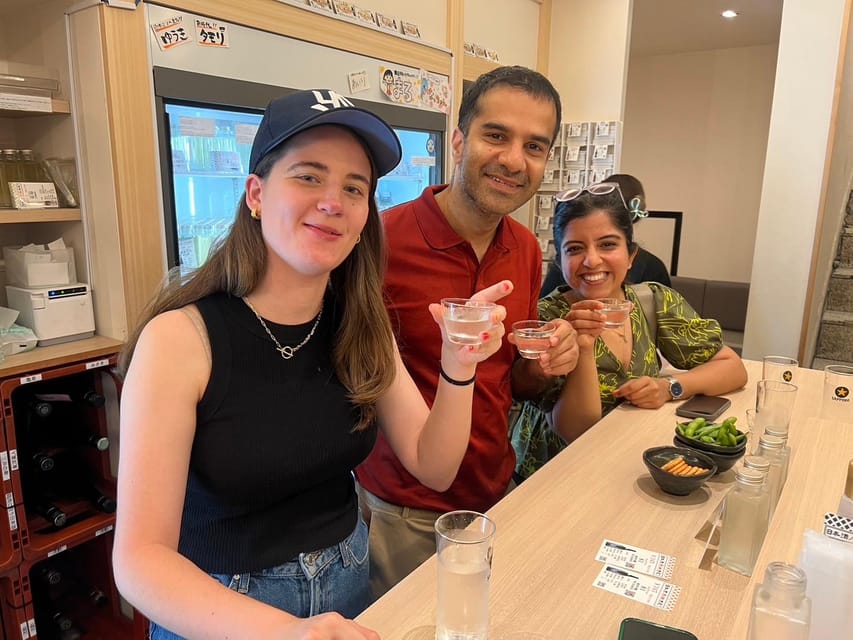
One of the most meaningful sights in the East Gardens is the remaining base of the former castle tower. The tower itself is gone, but the stone foundation gives you a clear sense of its size and importance.
This is where a guide earns the $16 price. On your own, you might photograph the stones and move on. With an explanation, you can understand that the foundation represents the scale of the old political center and the resources needed to build and defend it.
The tour description places this sight among the main highlights, and the guide-led format helps you read the site rather than merely observe it. Tony, Miguel, and Embla are praised for explaining the Imperial Palace, Edo Castle, and the surrounding gardens in a way that gives the remains meaning.
East Gardens: a quiet break in central Tokyo

About 30 minutes are given to the Imperial Palace East Gardens. This is the point where the tour shifts from defensive architecture to open space, plants, paths, ponds, and carefully arranged views.
I like this balance. The walk does not treat the gardens as decoration added after the history. They are part of the story, showing how power could be expressed through controlled beauty as well as stone walls and guarded gates.
The gardens also offer a welcome change of pace. Tokyo can be crowded and noisy, but this part of the palace grounds gives you room to breathe. You may find the quiet especially valuable after a morning of train stations, shopping streets, or busy sightseeing districts.
Wear comfortable shoes. The tour lasts two hours and covers several sites on foot, with time spent standing while the guide explains each location. The pace is generally described as comfortable, and one account specifically praises the timing and a short chance to sit and buy a drink from a vending machine.
Ninomaru Garden and the koi ponds
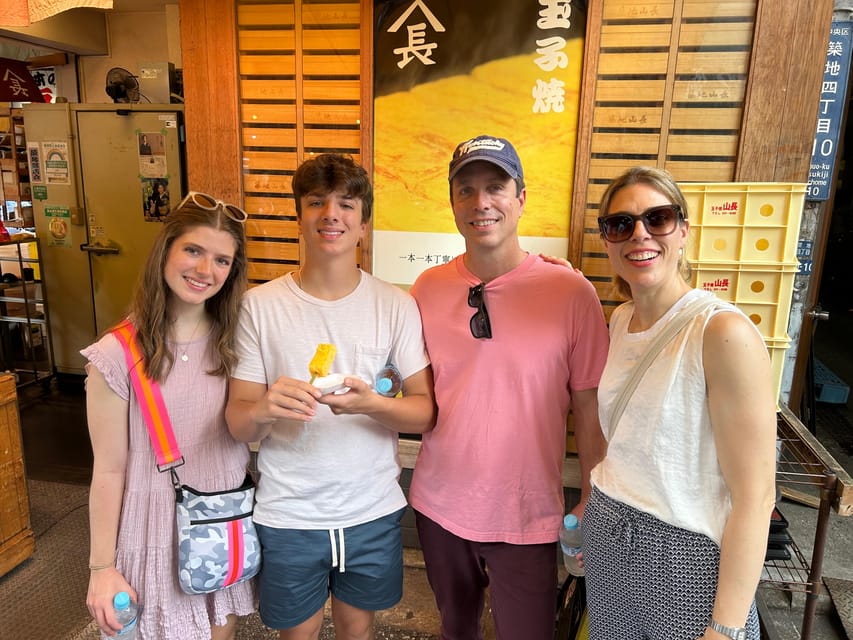
Ninomaru Garden receives about 30 minutes, making it the longest scheduled stop. It is also likely to be the most relaxing part of the walk.
The garden includes tranquil ponds with koi, seasonal plantings, and carefully arranged scenery. The appeal changes with the time of year, so the exact colors and flowers will depend on when you visit. Even without peak seasonal displays, the ponds and landscaping provide a peaceful setting for photographs and a quiet pause.
The garden also carries historical weight. It was connected to the shogun’s inner world, so you are not simply visiting a public park. Your guide can explain how gardens fit into the culture and status of the ruling class, linking the scenery to the people who once controlled the castle.
This stop is a good reason to choose the guided walk even if you already plan to visit the palace grounds. The koi and gardens are easy to appreciate on your own, but the historical connection is less obvious without someone explaining it.
The guide makes the difference
The strongest feature of this experience is the English-speaking guide. The individual guide can vary, but several names appear repeatedly in the feedback: Tony, Blake, Jim Allen, Miguel, Embla, Thomas, and others.
Tony is praised for clear history lessons, practical suggestions, and his ability to connect Edo-era events with modern Tokyo. Blake is described as friendly, interactive, patient, and good at using imagination to bring the gardens to life. Jim Allen is noted for quirky details, cultural insight, and keeping younger visitors engaged.
Other guides, including Embla, Miguel, Thomas, Lasse, Mayumi, Manny, and Michi, are praised for warmth, patience, and strong explanations. One particularly useful detail is that a guide was easy to hear, a small matter that can make a large difference in an outdoor group.
You should still remember that a live tour depends on the person leading it. The supplied guide names suggest a broad team rather than a guaranteed individual assignment. The format gives you a person to ask questions, but it cannot promise a specific storytelling style every time.
Is $16 good value for two hours?
At $16 per person, this is a strong value if you want historical context. The East Gardens are the setting, but the real purchase is the interpretation. You are paying a modest amount to understand the gates, guardhouse, tower foundation, garden design, and shift from shogunate to imperial Japan.
The value is strongest for a first visit to Tokyo. Several guides also provide suggestions for nearby meals and other activities, which can help you plan the rest of your stay. The tour may also work well for a group with mixed interests because it combines gardens, architecture, politics, and stories rather than focusing on only one subject.
The value is weaker if you prefer to wander alone, read at your own pace, or avoid scheduled group activities. You can visit the East Gardens without this format, and the tour does not include access to private palace interiors.
The booking terms add flexibility. You can cancel up to 24 hours before the activity for a full refund, and you can reserve now and pay later. The experience is also listed as wheelchair accessible, though you should still consider that it takes place across outdoor paths and historic grounds.
Who should take this walk?
I would recommend it to first-time Tokyo visitors who want an easy introduction to Japanese political history. It is also a good fit for families, since guides have kept teenagers engaged, and for business groups looking for a calm cultural activity after meetings.
History fans will appreciate the chance to connect physical remains with the Tokugawa shogunate. Garden lovers will enjoy Ninomaru Garden, the koi ponds, and the seasonal setting. You do not need to be an expert, and the guides are used to explaining the material in plain English.
I would be less quick to recommend it to someone seeking an imperial palace interior tour, a private experience, or a long photography session. The attraction is an outdoor walk with shared explanations and a clear route.
Should you book the Imperial Palace and Shogun Walking Tour?
Book it if you want the Imperial Palace East Gardens to make sense rather than simply look attractive. For $16, you get two hours of English guidance through Ote-Mon Gate, the Hyakunin Bansho guardhouse, Fujimi-yagura, the castle tower base, East Gardens, and Ninomaru Garden.
The best reason to go is the combination of political history and peaceful scenery. You will see where power was organized, guarded, and displayed, then spend time beside koi ponds and garden paths. Just remember that the tour covers outdoor remains, not private palace rooms. If that matches your expectations, it is an inexpensive and useful way to begin a Tokyo visit.
FAQ
How much does the Tokyo Imperial Palace and Shogun Walking Tour cost?
The tour costs $16 per person.
How long does the tour last?
The walking tour lasts two hours.
What language is the tour conducted in?
The tour is conducted in English with a live English-speaking guide.
Where does the tour meet?
The meeting point is in front of Starbucks Kokyo Gaien at Kokyo Gaien Wadakura Fountain Park. The coordinates are 35.6830391, 139.7614181.
Where does the tour finish?
The walk returns to the starting point at Starbucks Kokyo Gaien Wadakura Fountain Park.
What places are included on the walk?
The route includes Ote-Mon Gate, the Tokyo Imperial Palace grounds, Hyakunin Bansho guardhouse, Fujimi-yagura, the Imperial Palace East Gardens, and Ninomaru Garden.
Will I see the former Edo Castle tower?
You will see the remains of the castle tower base. The tour does not state that the original tower still survives.
Can I cancel for a refund?
Yes. You can cancel up to 24 hours in advance for a full refund.
Is the tour wheelchair accessible?
Yes. The activity is listed as wheelchair accessible.
New routes in Tokyo
- Tokyo: Tsukiji Market Walking Tour & Sushi Cooking Class★ 4.6 · 122 reviews
- Tokyo: Shinjuku Nightlife & Secret Backstreets Walking Tour★ 4.8 · 229 reviews
- Tokyo: Shinjuku Bar Hopping & Night Walking Tour★ 4.6 · 137 reviews
- Tokyo: Dark Side of Tokyo Shinjuku Red Light Walking Tour★ 4.7 · 862 reviews
- Tokyo: Shibuya Highlights Walking Tour★ 4.8 · 601 reviews
- Tokyo: Shibuya Highlights Walking Tour & Secret View Spot★ 4.9 · 196 reviews
- Tokyo: Shibuya Crossing & Hidden Streets Walking Tour★ 4.8 · 128 reviews
- Tokyo: Private Custom Walking Tour with Local Guide★ 4.9 · 350 reviews
Tokyo Walking Tours, compared.
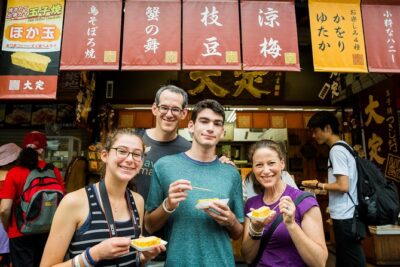
Tokyo Tsukiji Fish Market Food and Culture Walking Tour
Read our review →
Imperial Palace and Shogun Historical Walking Tour
Read our review →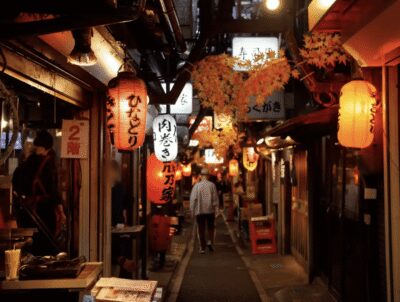
Shinjuku Local Bar and Izakaya Guided Walking Tour
Read our review →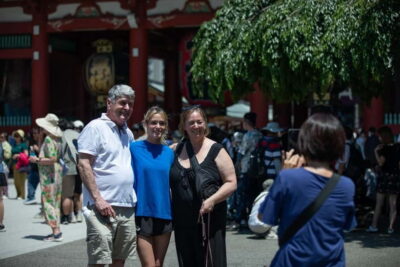
Asakusa Walking Tour with Sensoji Temple Visit
Read our review →
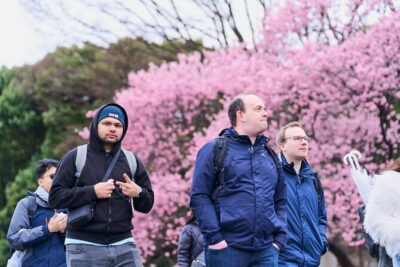
Tokyo Castle & Imperial PalaceーShogun Walking Tour
Read our review →
Shibuya Meltdown Nightlife Tour: All-You-Can-Drink Bar Hopping
Read our review →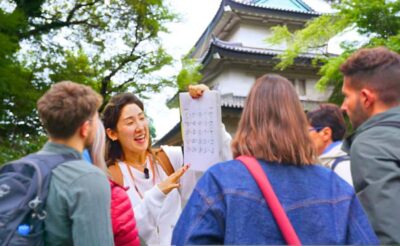
Browse the lists this tour appears in