
Review · TOKYO
Tokyo: Shibuya Crossing & Hidden Streets Walking Tour
Shibuya can feel like Tokyo turned up too loud: giant screens, rushing crowds, neon, and one famous crossing that seems to move in every direction at once. This two-hour walk gives that spectacle some useful context, beginning with The Myth of Tomorrow and ending at Hachiko, while also slipping into quieter corners most first-time visitors could miss.
I especially like the contrast between old Nonbei Yokocho and sleek Miyashita Park. I also like that guides such as Loc, Kumi, Rio, Grey, and Daichi have adjusted the pace, answered questions, helped solo guests with photos, and offered practical food and shopping advice. The main drawback is the meeting point: SABON inside Mark City’s third floor can be hard to find, so arriving early matters.
Key points at a glance
- A strong introduction to Shibuya: The route connects art, war history, shopping streets, nightlife, and local customs.
- More than the famous crossing: Nonbei Yokocho and Maruyama-cho show a quieter, older side of the district.
- A useful English-speaking guide: Loc, Kumi, Rio, Grey, Daichi, Zach, and others have led the walk, with guide assignments varying by date.
- Good for a short Tokyo visit: Two hours gives you a practical first look without taking up the whole day.
- Worth the $22 price: The fee mainly buys orientation, context, and local recommendations rather than entry to paid attractions.
- Plan the meeting carefully: Mark City is large, and the tour does not wait comfortably for late arrivals.
Why this two-hour Shibuya walk works
Shibuya is easy to visit badly. You can photograph the crossing, pose with Hachiko, and leave with a handful of bright pictures, but still have little sense of how the district fits together. This walking tour fixes that by linking major sights with streets that reward a slower look.
The route is compact, but the subjects are broad. You move from Taro Okamoto’s dramatic anti-nuclear mural to a famous pedestrian crossing, then into a narrow drinking lane, a modern public park, a youth shopping center, and an old nightlife quarter. That mix gives you a better feel for Shibuya than a single viewing platform or a quick station stop.
I would use this as an early Tokyo activity, especially on a first visit. It helps you recognize the main zones, understand where you are, and return later for a meal, shopping, or an evening walk with more confidence.
More Walking Tours in Tokyo:
- Tokyo Tsukiji Fish Market Food and Culture Walking Tour
★ 5.0 · 3,184 reviews - Tokyo: Imperial Palace and Shogun Historical Walking Tour
★ 5.0 · 2,251 reviews - Tokyo: Shinjuku Local Bar and Izakaya Guided Walking Tour
★ 4.9 · 1,794 reviews
Meeting at Mark City without a last-minute scramble
The official meeting point is SABON Shibuya Mark City, inside the Mark City building on the third floor. The listed coordinates are 35.6586643, 139.6999525. Your guide will hold a sign, but you should not treat that as a reason to arrive at the last minute.
Mark City is not the simplest place to navigate on your first day in Tokyo. Give yourself extra time to reach the building, find the third floor, and locate SABON. The operator makes a clear point about punctuality, and that matters here because a walking tour has a fixed route and a short two-hour schedule.
The guide assignments vary. Loc, Kumi, Rio, Grey, Daichi, Zach, Annette, and others have led the experience at different times. The strongest pattern is a friendly, flexible guiding style. Guides have adjusted explanations for teenagers, moved at a family’s preferred pace, answered questions about Japanese culture, and helped solo guests take photographs.
The Myth of Tomorrow gives Shibuya a serious opening
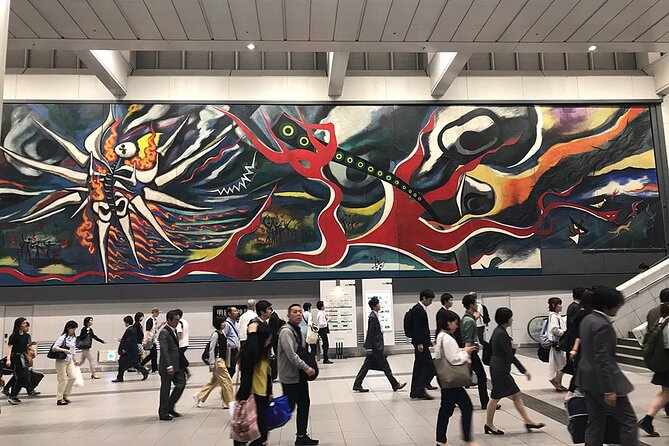
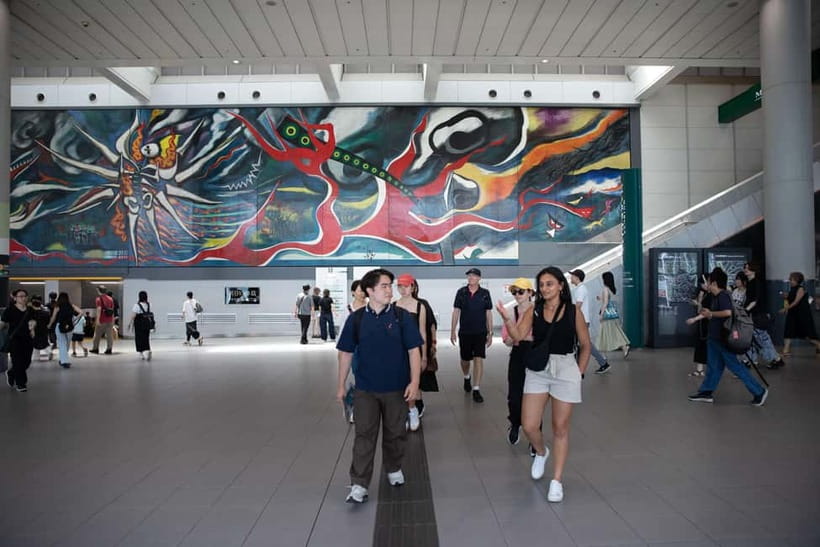
The walk includes The Myth of Tomorrow, a large mural by Taro Okamoto. It reflects on the impact of nuclear weapons, but its message is not simply bleak. The guide explains its themes and the sense of hope behind the work.
This is a smart first stop because it interrupts the usual Shibuya routine. Instead of beginning with advertising screens and shopping, you begin with public art that asks a difficult question about modern Japan. That gives the rest of the walk more weight.
Allow about ten minutes here. It is primarily a viewing and photo stop, with enough time for the guide to explain what you are seeing. I would pay attention rather than rush through it for a quick picture. The mural is large, serious, and easy to miss if you are focused only on the station exits.
Shibuya Crossing, with help instead of guesswork
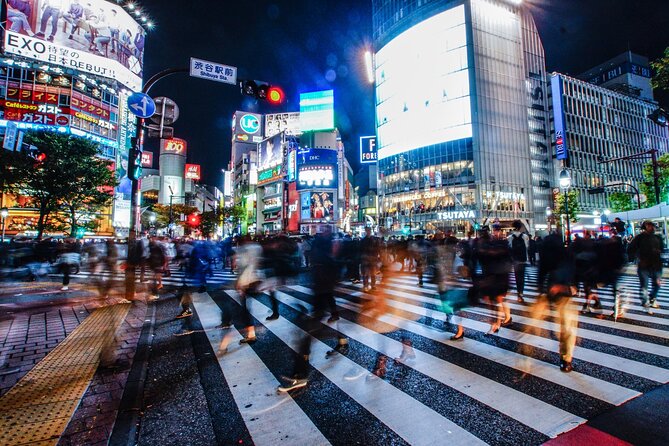
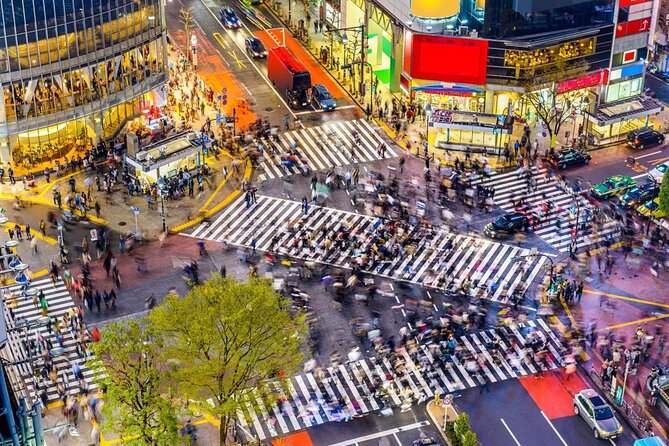
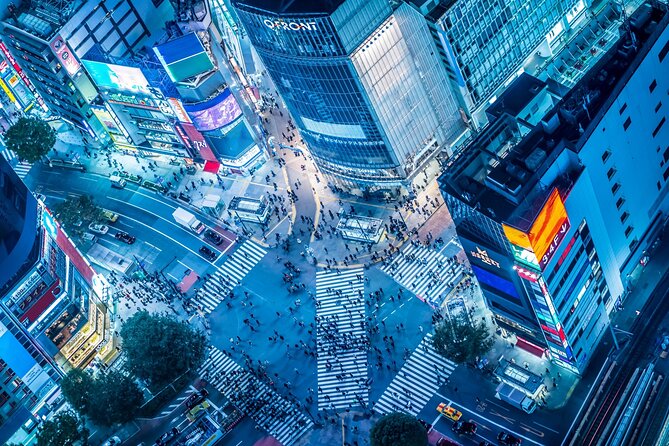
The crossing is the visual heart of the tour. When the signals change, pedestrians move across the intersection from several directions, creating the famous human flow that appears in countless Tokyo photographs.
You receive about ten minutes here for a guided visit and photos. That is enough for an introduction, but not a long photography session from every possible angle. If you want a particular picture, tell the guide early. One solo guest specifically appreciated help with photos, and that kind of assistance can make a real difference when you are traveling alone.
The crossing is exciting, but it is also the most crowded part of the walk. Stay close to your guide and watch the meeting instructions. The point is not simply to cross. The guide helps you understand why this place matters to Shibuya’s identity and how it connects with the surrounding station, shops, signs, and streets.
Same streets, a different guide:
- Tokyo: Tsukiji Fish Market Food and Walking tour
★ 5.0 · 1,724 reviews - Tokyo: Asakusa Walking Tour with Sensoji Temple Visit
★ 4.8 · 1,583 reviews - Tokyo: Tsukiji Fish Market Guided Walking Tour
★ 4.9 · 1,397 reviews - Tokyo Castle & Imperial PalaceーShogun Walking Tour
★ 4.7 · 1,068 reviews
Nonbei Yokocho shows an older Shibuya
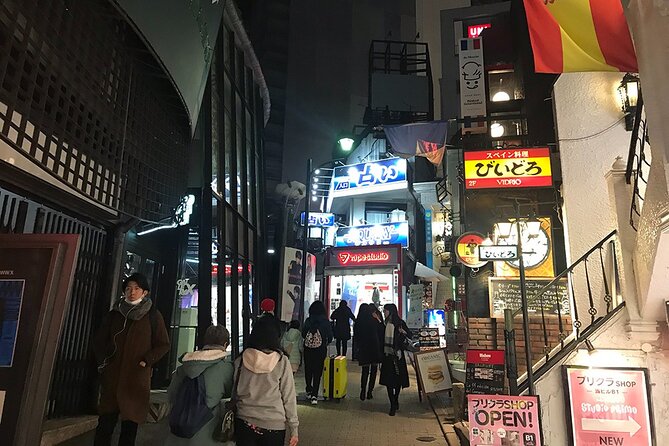
Nonbei Yokocho, often translated as Drunkard’s Alley, is one of the route’s best changes of mood. Its narrow lanes and compact drinking spots offer a sharp contrast to the wide crossing and towering commercial buildings nearby.
The visit lasts about ten minutes, so think of it as a quick orientation rather than a meal stop. You get a look at a more intimate side of the district and a sense of how older, small-scale nightlife survives beside modern retail.
I like this stop because it makes the tour feel less like a checklist. Shibuya is often reduced to screens, fashion, and crowds, but Nonbei Yokocho reminds you that the neighborhood also has tight lanes and long-standing local character. The small spaces may feel cramped, and you should be respectful around businesses and people using the alley, but that is part of the point.
Miyashita Park brings in modern Tokyo
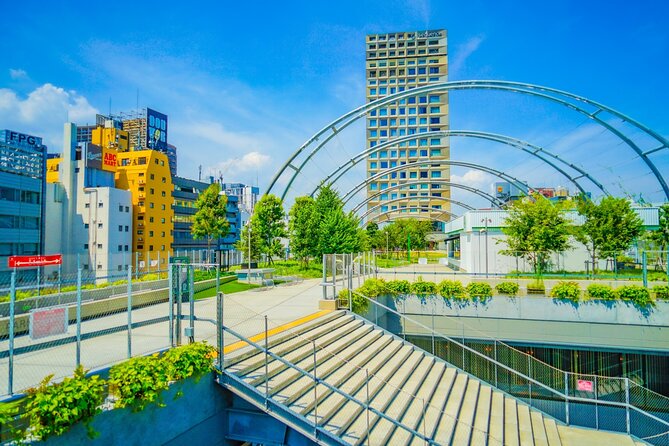
Miyashita Park receives the longest stop, about twenty minutes. This multi-level urban park represents a newer vision of city life, combining open public space with shopping, food, and recreation in a dense part of Tokyo.
The guide uses the stop to explain how Shibuya has changed and how newer developments fit into the district. After the tight lanes of Nonbei Yokocho, the park offers room to pause and reset.
This is also a useful practical stop. You can ask your guide about nearby food and shopping areas, and several guides have offered recommendations suited to specific interests, including vegan food. Do not expect a long break or a separate meal. The schedule remains active, but the extra time here makes the route feel less rushed.
Center Gai puts you in the middle of youth culture
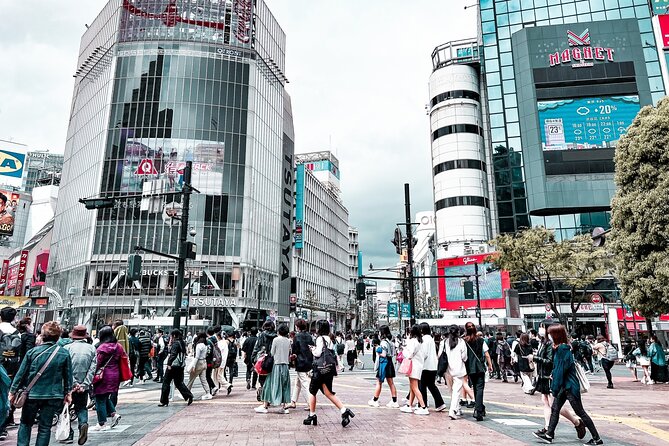
Center Gai is another ten-minute visit. This is the energetic shopping and entertainment district that many people picture when they hear Shibuya: busy pedestrian streets, fashion, restaurants, music, and a strong youth-oriented feel.
The guide’s role here is useful because the area can blur together when you walk it alone. You get help reading the district as more than a wall of signs. Ask about the types of shops, local etiquette, and where to return later if you want food or shopping advice.
Center Gai can be crowded and noisy, which may not suit everyone. Still, the short visit keeps it manageable. You see the central action without spending the entire afternoon in a commercial zone.
Maruyama-cho connects history with nightlife
The route then heads to Maruyama-cho, a part of Shibuya with older streets and a strong nightlife presence. The area shows another layer of the district, where historical traces sit alongside restaurants, bars, and evening entertainment.
This stop lasts about ten minutes. That timing gives you a useful preview rather than a full nightlife tour. If you plan to return after dark, ask the guide for practical suggestions. Several guides have helped people choose places to eat and pointed out areas worth revisiting.
Maruyama-cho is particularly valuable because it counters the idea that Shibuya is only one large shopping center. The district changes quickly from major roads to smaller streets, and this portion of the walk helps you notice that shift.
Hachiko makes a clear final stop
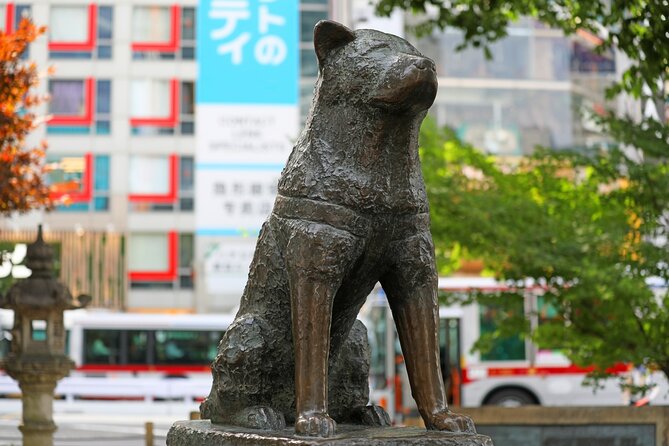
The tour ends at the Hachiko Memorial Statue, near the center of Shibuya. Hachiko’s story of loyalty has made the statue one of Tokyo’s best-known meeting points, and your guide explains its cultural importance.
Ending here is practical. You finish near a landmark you can easily find again, making it simple to continue exploring on your own. You can also return for photographs, meet friends, or use the statue as a reference point when navigating the area.
The statue itself is small and often surrounded by people. Do not expect a quiet memorial experience. Its value comes from the story and its place in daily Shibuya life, not from the size of the monument.
What the $22 price really buys
At $22 per person, this is a reasonably priced orientation walk. The fee covers the local guide, not admission to a paid attraction, a meal, or private transport. You are paying for the route, explanations, local context, and the time saved by not having to work out Shibuya on your own.
I see the best value in the guide’s local advice. Loc has offered cultural background and practical tips. Rio has helped families and adjusted content for teenagers. Grey has shared food and shopping suggestions, including vegan options. Daichi has adapted the pace and answered detailed questions. Those small additions can shape the rest of your time in Tokyo.
The price is less compelling if you already know Shibuya well or only want a quick photograph at the crossing. It is much better value for a first visit, a short stay, a solo visit, or anyone who wants a readable introduction before exploring independently.
Timing, pace, and who should book
Two hours is a good length for this route. You cover several distinct areas without giving up an entire day, and you finish with enough time for dinner, shopping, or another Tokyo sight.
The walk includes multiple busy streets and changing surfaces, so comfortable shoes are sensible. One group completed the tour in light rain and still found it worthwhile, but weather will affect your comfort because this is an outdoor walking experience. Bring what you need for the forecast.
I would recommend it most to:
- First-time visitors who want to understand Shibuya quickly
- Solo visitors who would like help with photographs and navigation
- Families with older children or teenagers
- Anyone interested in both modern Tokyo and older neighborhood streets
- Visitors who want food, shopping, and nightlife suggestions
It may not suit you if you want a slow photography walk, a food tasting tour, or a detailed visit inside attractions. The schedule is fairly full, and each stop is short.
Booking details worth knowing
The tour is conducted in English with a live guide. You can cancel up to 24 hours before the start for a full refund, and the reserve-now, pay-later option keeps payment flexible.
Check the available starting times when booking, since the exact schedule can vary. The meeting location deserves special attention: SABON is on the third floor inside Mark City, not simply somewhere outside Shibuya Station. Arrive early enough to find it without stress.
The activity has a 4.8 rating from 128 reviews, and the repeated praise centers on the guides’ friendliness, clear explanations, flexibility, and practical recommendations. I would place more weight on those traits than on the number itself, since the individual guide affects the tone of your walk.
Should you book this Shibuya tour?
Book it if you want Shibuya explained rather than merely photographed. The route gives you the major sights, but its real strength is the contrast between The Myth of Tomorrow, Nonbei Yokocho, Miyashita Park, Center Gai, Maruyama-cho, and Hachiko.
At $22, two hours is a sensible investment for a first look at the district. Just arrive early at Mark City, expect a brisk urban walk, and remember that the guide assignment can vary. If you want a short, friendly introduction with useful local pointers, this is a strong choice. If you prefer to wander alone or spend serious time at each photo stop, save your money and explore Shibuya at your own pace.
FAQ
How long does the Shibuya walking tour last?
The tour lasts two hours.
What is the price?
The price is $22 per person.
Where does the tour start?
It starts at SABON Shibuya Mark City, inside Mark City on the third floor.
Where does the tour finish?
The tour finishes at the Hachiko Memorial Statue.
Is the tour conducted in English?
Yes. It includes a live English-speaking guide.
What places does the tour visit?
The route includes Nonbei Yokocho, The Myth of Tomorrow, Shibuya Crossing, Miyashita Park, Center Gai, Maruyama-cho, and the Hachiko Statue.
What is included in the price?
The local guide fee is included.
Can I cancel the booking?
Yes. You can cancel up to 24 hours in advance for a full refund. You can also reserve now and pay later.
New routes in Tokyo
- Tokyo: Tsukiji Market Walking Tour & Sushi Cooking Class★ 4.6 · 122 reviews
- Tokyo: Shinjuku Nightlife & Secret Backstreets Walking Tour★ 4.8 · 229 reviews
- Tokyo: Shinjuku Bar Hopping & Night Walking Tour★ 4.6 · 137 reviews
- Tokyo: Dark Side of Tokyo Shinjuku Red Light Walking Tour★ 4.7 · 862 reviews
- Tokyo: Shibuya Highlights Walking Tour★ 4.8 · 601 reviews
- Tokyo: Shibuya Highlights Walking Tour & Secret View Spot★ 4.9 · 196 reviews
- Tokyo: Private Custom Walking Tour with Local Guide★ 4.9 · 350 reviews
- Tokyo: Meiji Shrine Walking Tour — Shinto & Imperial System★ 4.9 · 266 reviews
Tokyo Walking Tours, compared.
Tokyo Tsukiji Fish Market Food and Culture Walking Tour
Read our review →
Imperial Palace and Shogun Historical Walking Tour
Read our review →
Shinjuku Local Bar and Izakaya Guided Walking Tour
Read our review →
Asakusa Walking Tour with Sensoji Temple Visit
Read our review →
Tokyo Castle & Imperial PalaceーShogun Walking Tour
Read our review →
Shibuya Meltdown Nightlife Tour: All-You-Can-Drink Bar Hopping
Read our review →
Browse the lists this tour appears in