
Review · TOKYO
Tokyo: Asakusa Temple & Shrine Walking Tour with Local Guide
Asakusa makes more sense when someone explains what you are seeing. This two-hour walk links the riverside view of Tokyo Skytree, the famous red lantern at Kaminarimon Gate, Sensoji Temple, and Asakusa Shrine while showing you the rituals that many first-time visitors miss. I love the practical lessons, especially how to wash your hands, handle omikuji fortunes, use incense, and pray in Buddhist and Shinto settings.
I also like the small groups of no more than eight, which gives you room to ask questions and request help with photos, translations, or later plans. Guides such as Nicolas, Erik, Nana, and Lino have been praised for friendly, personal tours. The main drawback is physical: you walk for two hours in crowded outdoor areas, with no stated wheelchair access, so hot weather, rain, and tired legs are real considerations.
Key points at a glance
- A smart first stop in Tokyo: Learn the basic customs before visiting more temples and shrines on your own.
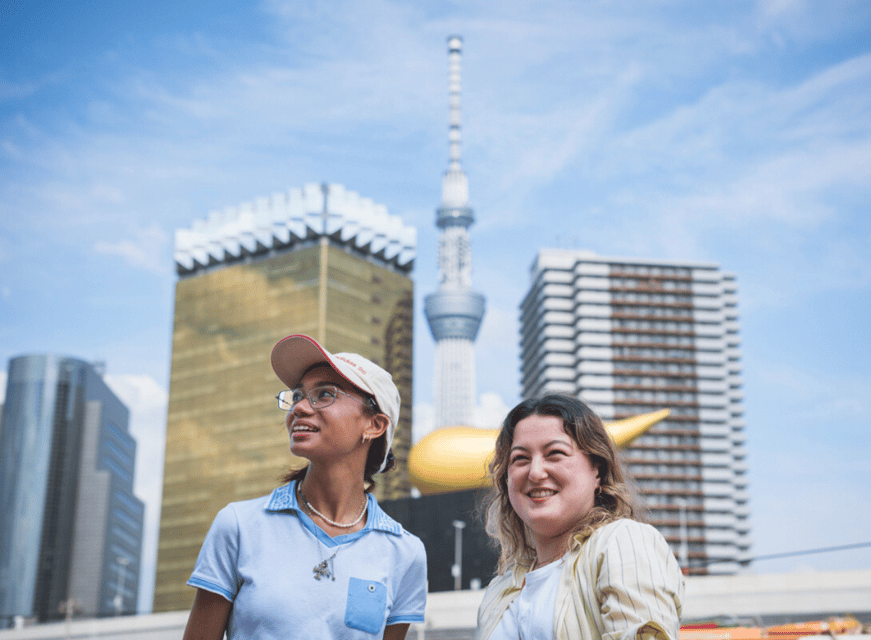
- The golden poop viewpoint: Begin beside the Sumida River with a playful local landmark and Tokyo Skytree views.
- More than Sensoji: The walk includes Asakusa Shrine and smaller religious sites that are easy to miss.
- Hands-on cultural lessons: Practice temizu, incense rituals, omikuji, bowing, and Buddhist prayer etiquette.
- Good value at $30: Two hours, a small group, a local guide, and a high viewpoint make this a useful introduction to Asakusa.
Why this Asakusa walk is more useful than a quick temple visit
Sensoji is one of Tokyo’s best-known sights, but its scale and crowds can make it hard to understand. You see gates, lanterns, incense, offerings, and worshippers, yet the meaning behind each action is easy to miss.
This tour gives you a simple framework. You learn how Buddhism and Shinto appear side by side in Asakusa, how their rituals differ, and how to behave without guessing. That matters beyond this one neighborhood. Once you understand the basic patterns, later visits to Japanese temples and shrines become less confusing and more rewarding.
The tone is intended to be relaxed rather than formal. The guide explains customs in plain language, answers questions, and adjusts the pace when possible. Several guides have also helped with photos, restaurant suggestions, translations, and directions after the walk. That extra help is especially useful at the start of a Japan trip, when even simple temple etiquette can feel unfamiliar.
The tour is limited to eight participants, though some departures may be smaller. A few people have ended up with a private-feeling experience because they were the only participants booked. You should not count on that, but the small format does make conversation easier than on a large coach tour.
More Guided Walks in Tokyo:
- Tokyo: Shinjuku Local Bar and Izakaya Guided Walking Tour
★ 4.9 · 1,794 reviews - Tokyo: Tsukiji Fish Market Guided Walking Tour
★ 4.9 · 1,397 reviews - Tokyo: Private Custom Walking Tour with Local Guide
★ 4.8 · 533 reviews
Starting beside the Sumida River and Tokyo Skytree
The walk begins near Burger King Asakusa Azumabashi, with the exact meeting point depending on the option booked. The first stop is Azuma Bridge, where you spend about 10 minutes taking in the river and the Tokyo Skytree.
This is a good opening because it places Asakusa in its wider setting. You get water, modern Tokyo, and the old temple district in one view. Your guide also points out the gold sculpture on the nearby Asahi building. Locals call it the golden poop, a name that is far more memorable than the official design description.
This opening stop is mainly for orientation and photos, not a long history lesson. Bring a phone or camera, but do not expect much shade or shelter. The walk continues outdoors, so comfortable shoes and weather-appropriate clothing matter from the first few minutes.
The Asakusa Culture Tourist Information Center viewpoint
Next, the group visits the Asakusa Culture Tourist Information Center for around 15 minutes. The useful feature here is the upper-level viewpoint, which gives you a look over the temple area from above.
From street level, Sensoji can feel like a series of separate gates, shops, and courtyards. The higher view helps you see how the parts connect. It is also one of the best places on this route for a clear photo of the temple approach and the surrounding city.
This stop adds real value because it comes before the main temple visit. You see the shape of the district first, then walk through it. The viewpoint is also a welcome pause before entering the busiest section of the route.
Kaminarimon Gate and its 700-kilogram lantern
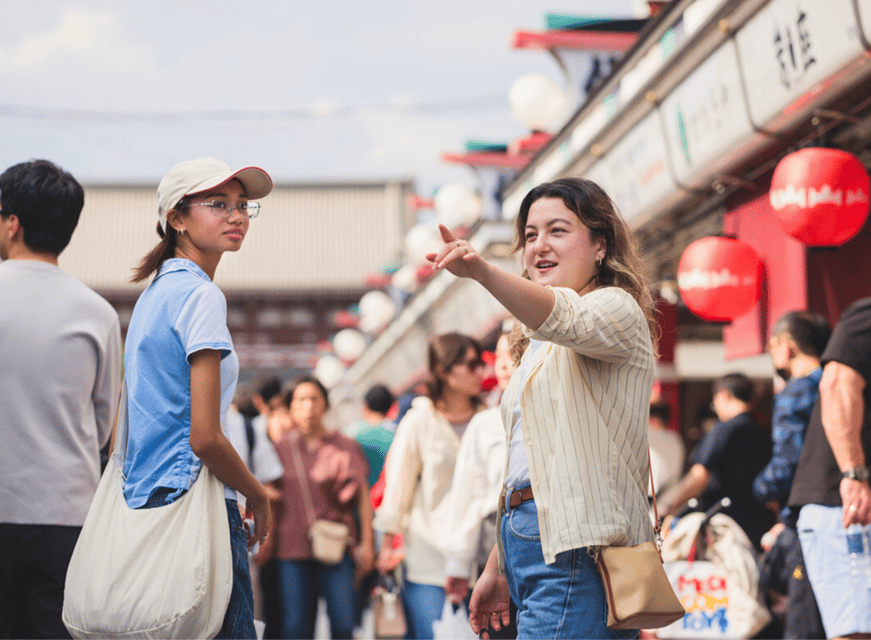
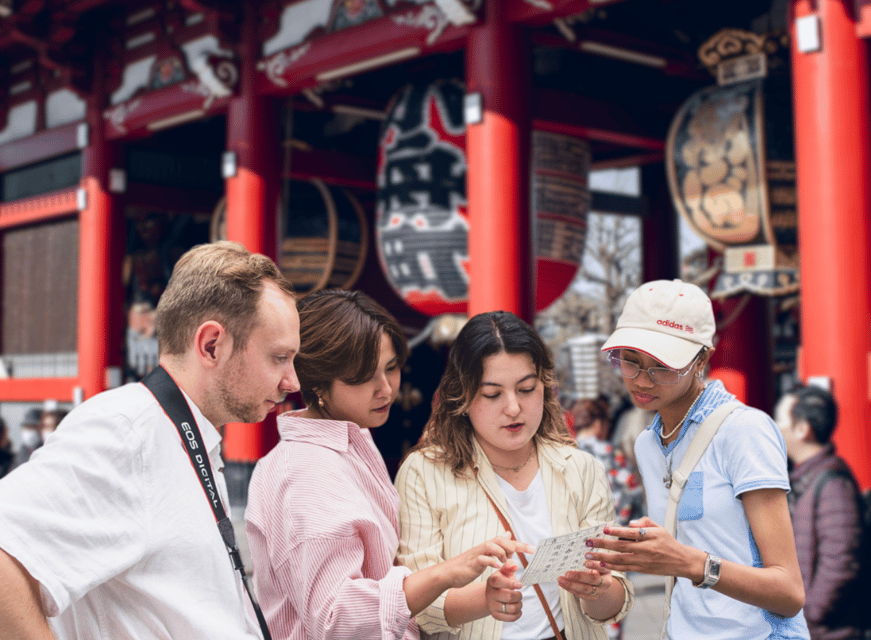
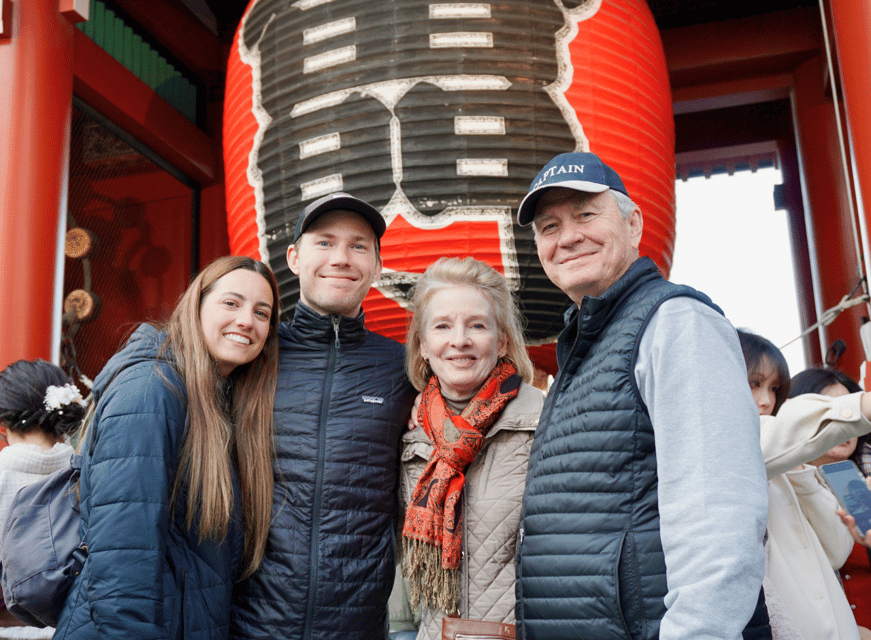
Kaminarimon, or Thunder Gate, is the dramatic entrance to Sensoji. The enormous red lantern weighs about 700 kilograms, and your guide explains the story behind the gate and the meaning of its name.
You will likely see people taking photos beneath the lantern, so timing and positioning can be tricky. A small group helps, since your guide can suggest better angles and keep the explanation moving while the crowd flows around you.
This is where the tour begins to separate itself from a simple photo stop. You learn why the gate looks as it does, what it leads toward, and how it fits into the larger temple grounds. The information is brief, but it gives the rest of the walk a clear purpose.
More Walking Tours in Tokyo:
- Tokyo Tsukiji Fish Market Food and Culture Walking Tour
★ 5.0 · 3,184 reviews - Tokyo: Imperial Palace and Shogun Historical Walking Tour
★ 5.0 · 2,251 reviews - Tokyo: Tsukiji Fish Market Food and Walking tour
★ 5.0 · 1,724 reviews - Tokyo: Asakusa Walking Tour with Sensoji Temple Visit
★ 4.8 · 1,583 reviews
Nakamise Street, snacks, souvenirs, and shopping advice
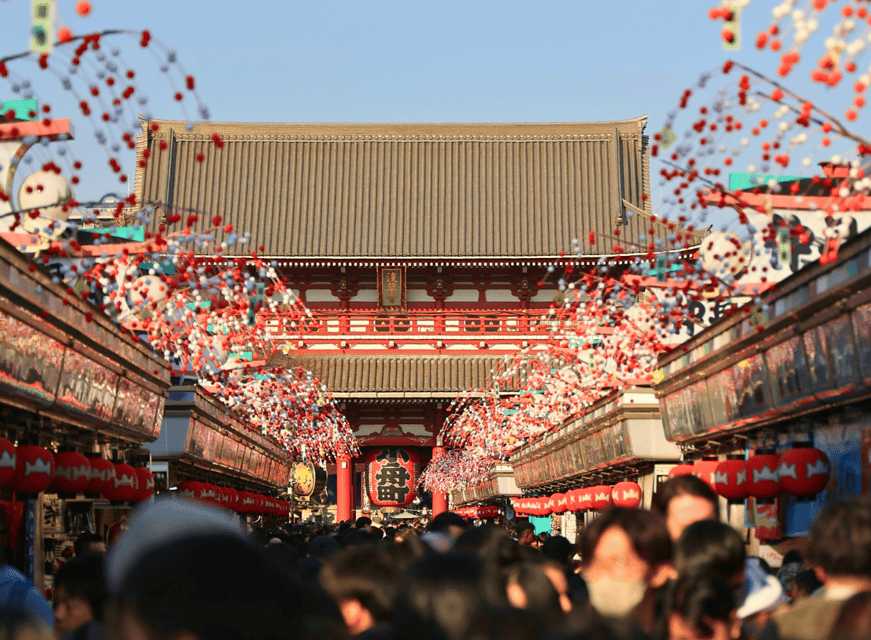
From Kaminarimon, you walk along Nakamise Shopping Street for about 15 minutes. This is the main commercial approach to Sensoji, lined with snacks, small gifts, and traditional-style souvenirs.
Your guide explains the cultural background of the treats and points out where to look for good purchases. You can ask for help with translations, which is handy if you want to understand a label or speak with a vendor. Personal shopping is not included, so bring money if you plan to buy snacks or souvenirs.
Nakamise can be crowded, and it is easy to focus only on shopping. I like having a guide here because the street becomes more than a row of stalls. You get context for why this kind of commercial approach belongs beside a major temple, while still having a chance to browse.
Keep your group together and watch your footing. The street is not the place for a long stop if the group is moving, and the two-hour schedule leaves limited time for extended shopping.
Hozomon Gate and the approach to Sensoji
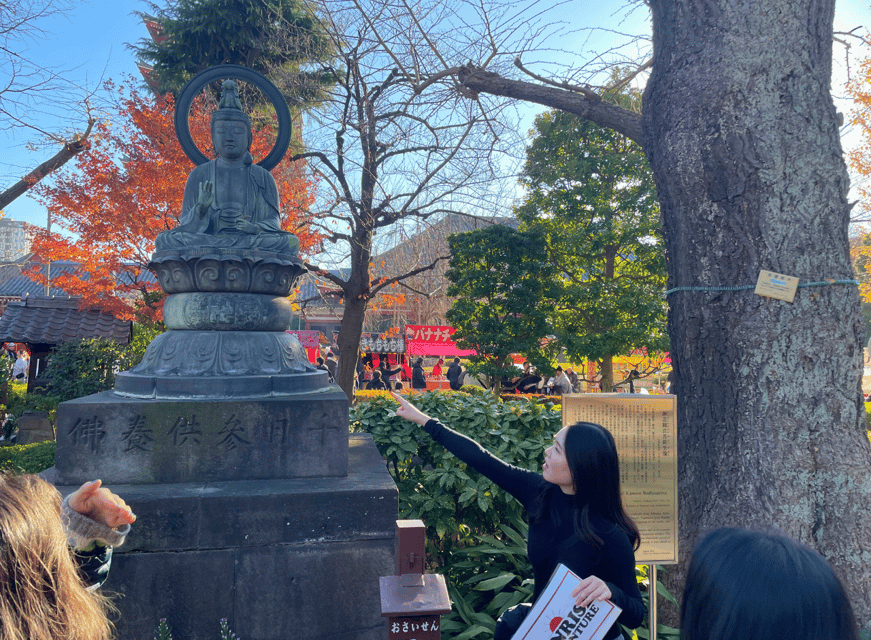
The route continues to Hozomon Gate, another major entrance within the temple complex. The guide uses this section to explain the buildings, symbols, and changing feel of the approach to Sensoji.
The gates create a strong sense of progression. You move from the city street into a more concentrated religious space, although the crowds and shops remain close by. This is a useful place to ask questions before reaching the main temple, especially if you want to understand the difference between a gate, a temple hall, and a shrine precinct.
The itinerary also includes two additional smaller temple or religious stops, each listed at about 10 minutes. Their exact names are not specified, but this part of the walk is important. The guide draws your attention away from only the famous landmarks and toward quieter sites that show how much religious activity is packed into Asakusa.
Sensoji Temple and the meaning behind the rituals
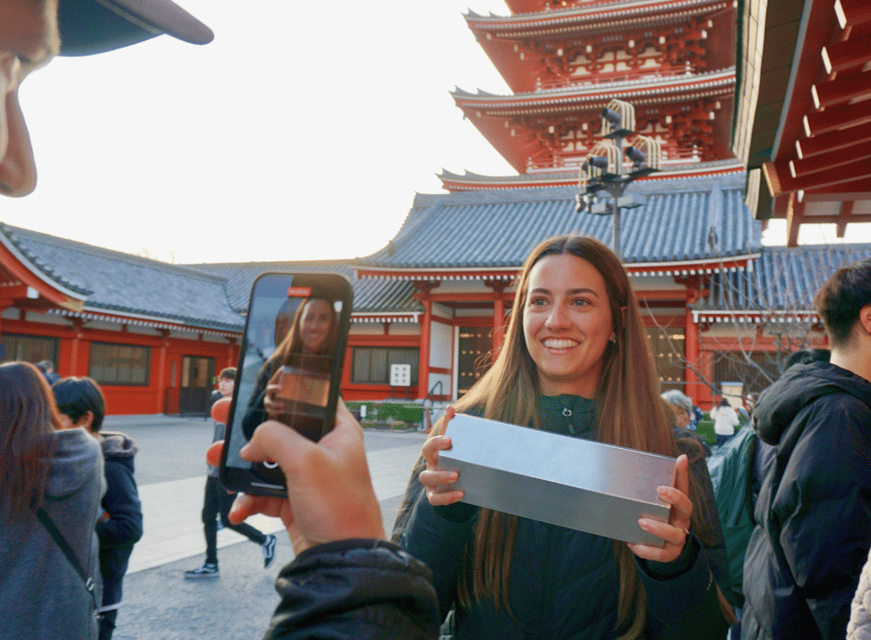
The main visit to Sensoji lasts about 30 minutes, making it the longest stop. This is the center of the tour, but the emphasis is not only on architecture or photographs.
You learn how to perform the Buddhist style of prayer. Your guide also explains the proper way to bow, where to walk, and how to approach the worship space respectfully. These instructions are practical, not abstract. You can take part in the rituals instead of standing back and trying to copy the person in front of you.
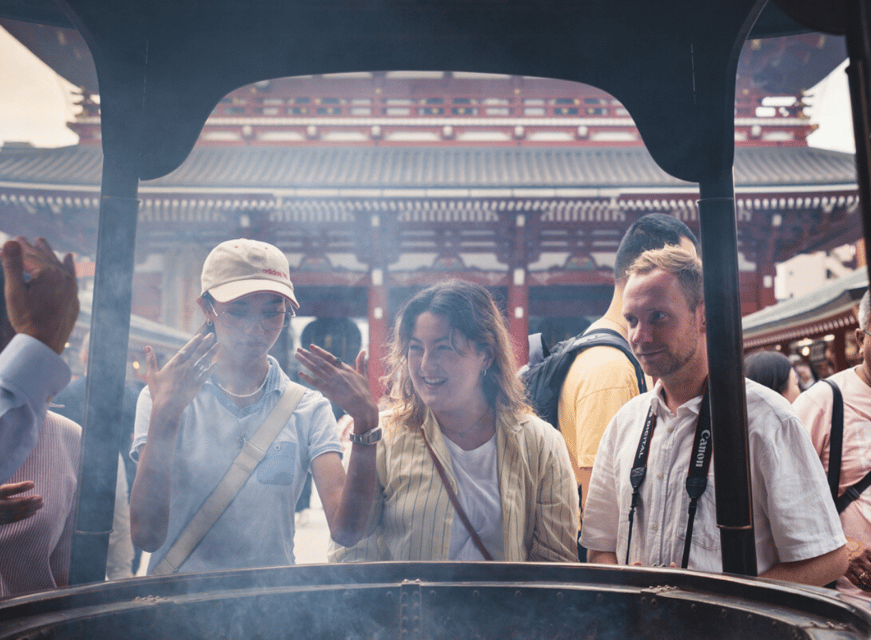
The tour includes temizu, the hand-washing ritual used to prepare before entering a sacred space. You may also try omikuji fortune telling and use incense smoke, which is associated with healing for the body and mind. The guide explains how these practices work and what they mean, so the actions do not feel like random tourist activities.
Omikuji can be a fun part of the visit, but remember that fortune telling is not the whole purpose of the temple. The useful lesson is how a small ritual fits into everyday religious practice. The same applies to incense. You are not simply waving smoke toward yourself for a photo. You are learning how people use the space and why the gesture matters.
Sensoji can be very crowded. One advantage of a local guide is the ability to adjust the order or pace when conditions allow. Still, do not expect an empty temple courtyard, especially during popular periods or festivals.
Asakusa Shrine and the meeting of Buddhism and Shinto
The final major stop is Asakusa Shrine, with about 15 minutes set aside for the visit. This is where the guide clearly compares Shinto practice with the Buddhist customs you have just learned at Sensoji.
You learn that the two traditions coexist in the same neighborhood, yet they use different forms of prayer and different sacred markers. The guide explains the proper way to approach a Shinto shrine, including how to bow and how to walk through torii gates.
This comparison is one of the strongest parts of the experience. Many first-time visitors see every Japanese religious site as a temple, or every ritual as interchangeable. Here, you get a direct explanation of the differences while standing in two connected but distinct settings.
The tour also highlights details that even some Japanese people may not have been taught directly. That does not mean the guide turns the visit into a lecture. The best version of this walk is conversational, with space for your questions about belief, custom, architecture, and daily life.
Guides, family pacing, and personal help
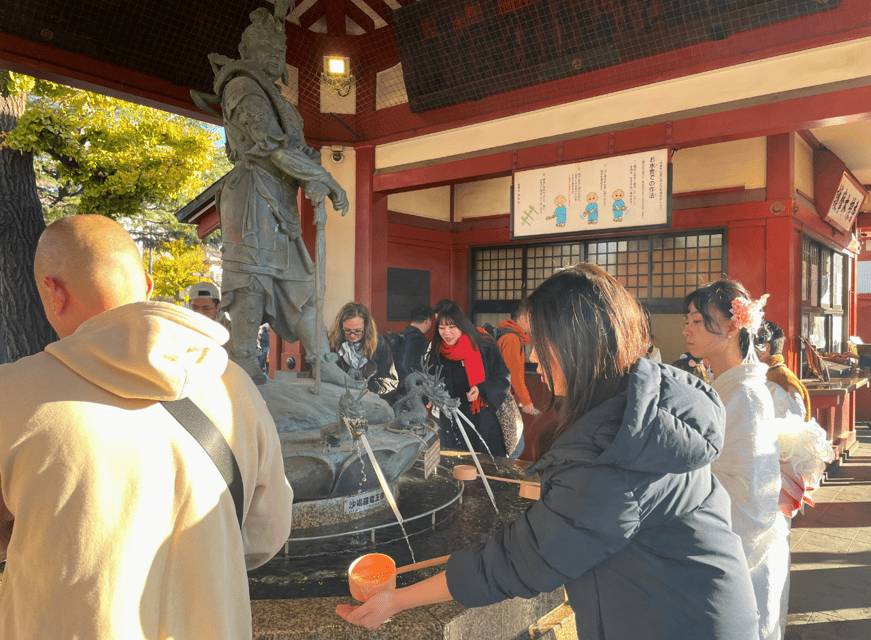
The guides vary by departure. Nicolas has been especially useful for questions about Buddhist and Shinto traditions, while Erik has helped with coins for temple offerings, etiquette, and directions toward Kappabashi Street. Nana has worked patiently with children aged five and eight, keeping explanations understandable for the whole family.
Other named guides include Lino, Diane, Arief, Ayaka, Somi, Joe, and Ariel. The important point is that you are booking a small-group format with a rotating guide team, not a tour guaranteed to be led by one particular person.
The experience suits solo visitors particularly well. You can ask questions without feeling you are holding up a large group, and you may receive help with photos. Couples and families also fit the format, provided everyone can keep up with a two-hour walk.
The tour is not suitable for wheelchair users, people with mobility impairments, or people with a low level of fitness. There is no dress code, and tattoos are welcome, which removes two concerns some people may have about visiting religious sites in Japan.
Is $30 a fair price for two hours?
At $30 per person, this is not the cheapest way to walk around Asakusa, since you can enter the public temple and shrine areas without buying this tour. The question is what you want from the visit.
If you only need photographs of Kaminarimon and Sensoji, you can explore independently. If you want to understand the rituals, compare Buddhism and Shinto, learn where to stand and how to pray, and get a rooftop view with someone explaining the district, the price is reasonable.
The small group improves the value. A guide can answer questions, help with photos, explain shopping, and suggest what to do next. One guide even accompanied a participant toward a restaurant, while another helped point the way to Kappabashi Street. These extras are not guaranteed, but they show how the experience can be useful beyond the scheduled route.
Two hours is enough for an introduction, not a complete study of Asakusa. You will not have unlimited time for shopping or long meals. Think of it as a well-organized orientation that leaves you better prepared to explore the area on your own.
Weather, shoes, and booking details
Wear comfortable walking shoes. The tour takes place rain or shine, so bring water on a hot day and dress for the forecast. Vending machines are available along the way, but you should not rely on the route for a long refreshment break.
Kimono rental can be arranged through a partner shop about two minutes from the meeting point. Ask about this before or around the time of booking if dressing traditionally is part of your plan, since the rental is not included in the walking tour.
The tour is offered in English and French. It lasts two hours, and starting times depend on availability. You can cancel up to 24 hours ahead for a full refund, and the reserve-now, pay-later option keeps your plans flexible.
Who should book this walk?
I would book it early in a Tokyo visit if you want a friendly introduction to Japanese temple and shrine etiquette. It is especially useful for first-time visitors, solo travelers, families with older children, and anyone who prefers asking a person rather than reading signs on a phone.
You should skip it if you dislike walking in crowds, want a long shopping session, or need step-free access. Independent explorers who already understand Buddhist and Shinto customs may find the route too basic.
For most people, the strongest reason to book is not simply seeing Sensoji. It is learning how to see it. At $30, the tour offers a clear two-hour lesson in Asakusa’s landmarks, customs, and local character, with enough flexibility to feel personal without turning into an expensive private tour.
FAQ
How long does the Asakusa walking tour last?
The tour lasts two hours.
How many people can join the tour?
The small group is limited to eight participants.
Which languages are available?
The tour is available in English and French.
What places does the tour visit?
The route includes Azuma Bridge, the Asakusa Culture Tourist Information Center viewpoint, Kaminarimon Gate, Nakamise Shopping Street, Hozomon Gate, smaller temple sites, Sensoji Temple, and Asakusa Shrine.
Does the tour include temple and shrine rituals?
Yes. You can learn about and take part in temizu hand washing, omikuji fortune telling, incense rituals, Buddhist prayer, bowing, and proper movement through torii gates.
Is there a dress code?
No. The tour states that there is no dress code, and tattoos are welcome.
What should I bring?
Bring comfortable shoes and water. Dress for the weather because the tour runs outdoors in rain or sunshine.
Is the tour suitable for wheelchair users?
No. The experience is not suitable for wheelchair users, people with mobility impairments, or people with a low level of fitness.
Can I cancel the booking?
You can cancel up to 24 hours in advance for a full refund. A reserve-now, pay-later option is also available.
New routes in Tokyo
- Tokyo: Tsukiji Market Walking Tour & Sushi Cooking Class★ 4.6 · 122 reviews
- Tokyo: Shinjuku Nightlife & Secret Backstreets Walking Tour★ 4.8 · 229 reviews
- Tokyo: Shinjuku Bar Hopping & Night Walking Tour★ 4.6 · 137 reviews
- Tokyo: Dark Side of Tokyo Shinjuku Red Light Walking Tour★ 4.7 · 862 reviews
- Tokyo: Shibuya Highlights Walking Tour★ 4.8 · 601 reviews
- Tokyo: Shibuya Highlights Walking Tour & Secret View Spot★ 4.9 · 196 reviews
- Tokyo: Shibuya Crossing & Hidden Streets Walking Tour★ 4.8 · 128 reviews
- Tokyo: Private Custom Walking Tour with Local Guide★ 4.9 · 350 reviews
Tokyo Walking Tours, compared.
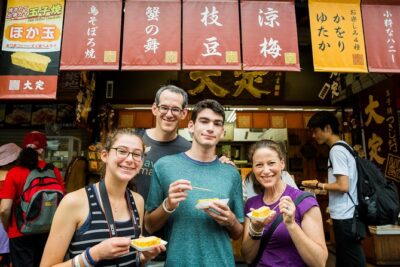
Tokyo Tsukiji Fish Market Food and Culture Walking Tour
Read our review →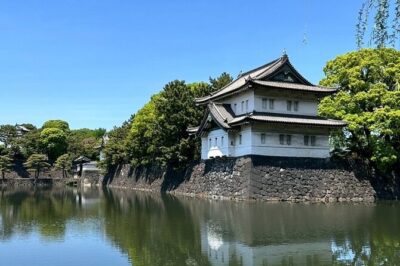
Imperial Palace and Shogun Historical Walking Tour
Read our review →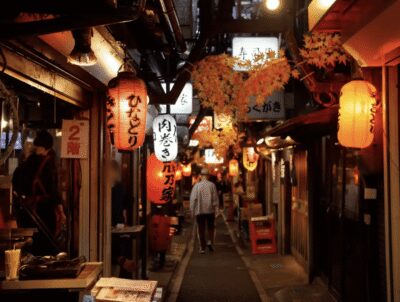
Shinjuku Local Bar and Izakaya Guided Walking Tour
Read our review →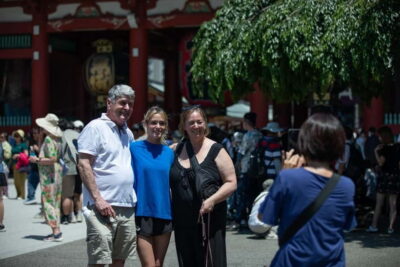
Asakusa Walking Tour with Sensoji Temple Visit
Read our review →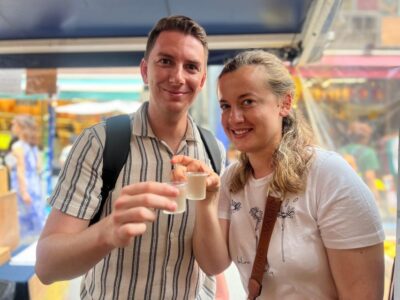
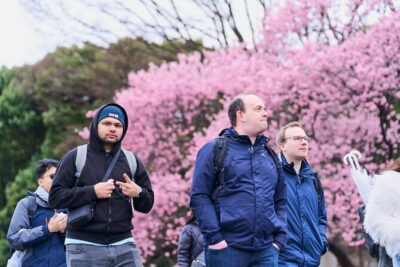
Tokyo Castle & Imperial PalaceーShogun Walking Tour
Read our review →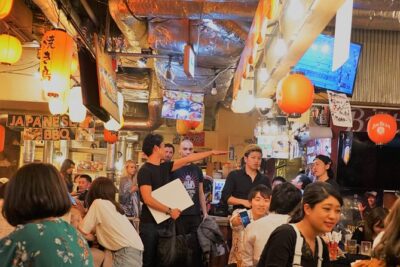
Shibuya Meltdown Nightlife Tour: All-You-Can-Drink Bar Hopping
Read our review →
Browse the lists this tour appears in