
Review · LISBON
Lisbon: Best of City Private Walking Tour
Lisbon makes more sense when you walk through its hills and squares in one connected sweep. This private tour links Rossio, Baixa, Chiado, Carmo, and Alfama, so you see how the modern city grew from an older, more tangled one.
I like the personal format, which lets your guide adjust the pace and answer your questions. I also like the small food stops: a pastel de nata, a tapa, and wine make the history easier to remember. The main drawback is simple: three hours is a lot of walking, and the route packs in several districts without entering the monuments.
Key points at a glance
- Start in Rossio: Meet at Praça Dom Pedro IV, beside the column of King Pedro IV, in one of Lisbon’s most useful central squares.
- See the city’s political story: Restauradores recalls independence from Spain, while Carmo Square connects to the 1974 Carnation Revolution.
- Walk through several distinct districts: The route moves from planned Baixa to elegant Chiado and the narrow lanes of Alfama.
- Eat and drink along the way: The price includes a pastel de nata, one tapa, and a wine tasting at a local bar.
- Use the guide as your Lisbon shortcut: Guides have offered restaurant ideas, metro help, shopping suggestions, and plans for the rest of a stay.
- Expect a private experience: The tour is for your own group, with English, Spanish, or Portuguese available.
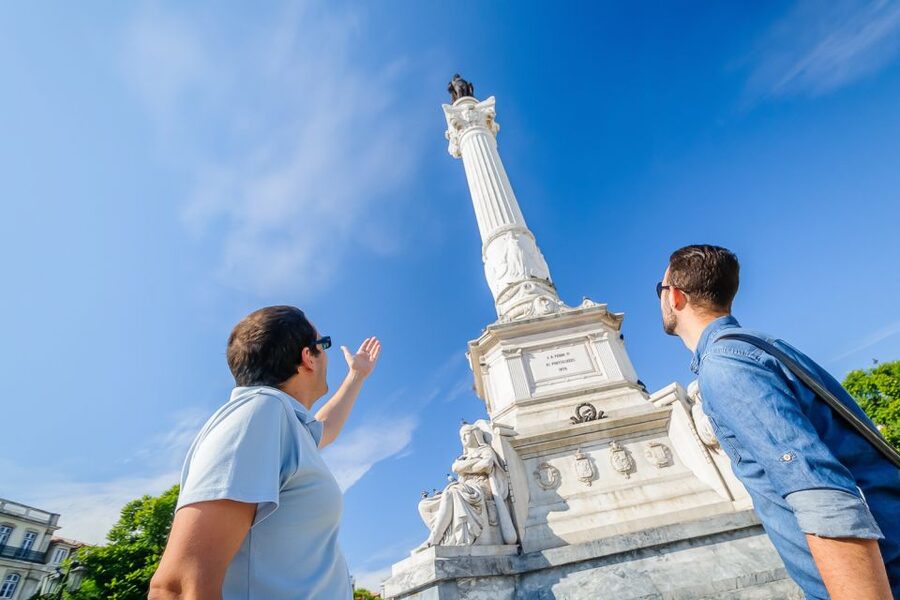
Starting beside the King Pedro IV column
The tour begins at Praça Dom Pedro IV, better known as Rossio Square. Meet your guide in front of the column of King Pedro IV, a clear landmark in the heart of central Lisbon.
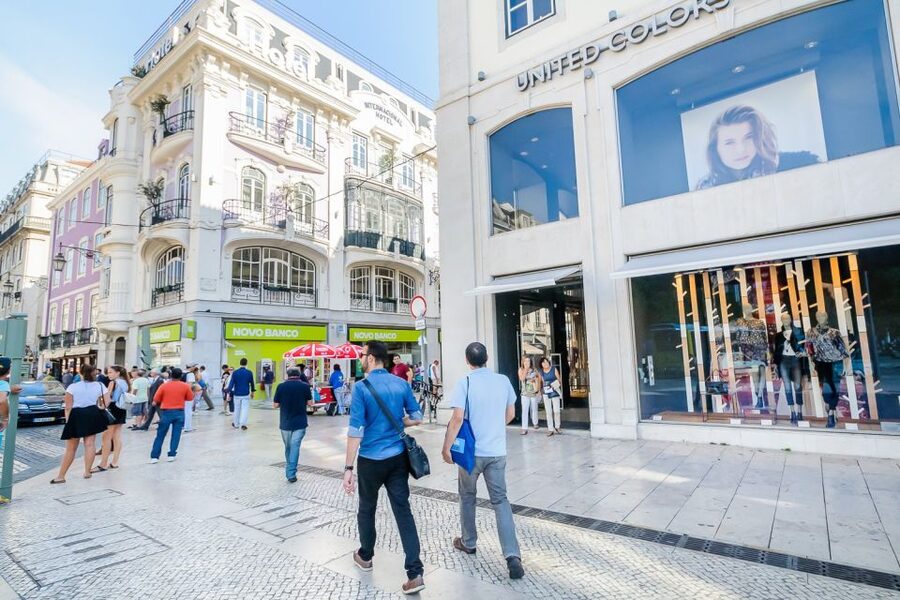
Rossio is a smart starting point because it sits between the old city and the rebuilt downtown. Its patterned pavement, broad open space, and surrounding buildings give you an immediate sense of Lisbon’s scale. You are not beginning in an isolated monument. You are starting in the city’s working center, where streets lead toward Baixa, Chiado, the river, and the older hills.
Your guide will use this first section to explain how Lisbon changed after the devastating earthquake of the 18th century. Much of Baixa was rebuilt with a regular street plan and new building rules. For its time, this was an ambitious attempt to make a damaged city safer and easier to organize.
I find this opening especially useful if it is your first day in Lisbon. Instead of seeing squares and streets as separate sights, you begin to understand why the center looks orderly in one place and wonderfully irregular just a few minutes away.
More Private Walking Tours in Lisbon
- Lisbon Private Food Tour – Taste 10+ Local Dishes & Wines
★ 5.0 · 896 reviews - Lisbon: Private Dark History Walking Tour with Drinks
★ 4.8 · 387 reviews - Best of Lisbon Private Walking Tour
★ 5.0 · 370 reviews
From Restauradores to the rebuilding of Baixa

From Rossio, the route takes in Restauradores Square and its tall obelisk. The monument marks Portugal’s restoration of independence from Spain in 1640, giving your guide a chance to explain a major chapter in Portuguese national history without turning the walk into a classroom lecture.
The square also helps show the contrast between symbolic Lisbon and everyday Lisbon. The obelisk draws the eye, but the surrounding streets remain part of the city’s normal rhythm. This is the kind of stop that works best with a guide because the meaning of the monument is not always obvious from its appearance.
Baixa is the next major piece of the story. Its straight streets and planned blocks were part of the rebuilding after the earthquake. The design included anti-seismic ideas that were considered highly innovative at the time. Your guide can point out how this section differs from the older neighborhoods on the hills.
You will not take a guided tour inside the monuments, and entrance tickets are not included. That keeps the walk focused on the city itself, rather than on long indoor visits. If you want to enter a particular church or monument later, use this tour to mark it for a separate visit.
Carmo Square and the Carnation Revolution
Carmo Square brings the history forward to the 20th century. This is where your guide discusses the Carnation Revolution of 1974, the movement that ended Portugal’s 48-year dictatorial regime.
That story gives the walk a welcome modern edge. Lisbon is not only about kings, earthquakes, churches, and old streets. It is also a city shaped by recent political change. Carmo Square is a fitting place for the subject because the setting is both beautiful and tied to a decisive moment in the country’s past.
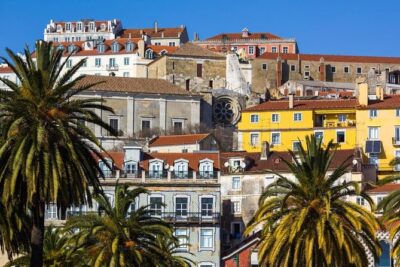
The nearby Carmo Church is one of the memorable sights on the route. Its ruined structure recalls the earthquake, while the surrounding square feels calm and open. You should think of this stop as a chance to see history in the fabric of the city, rather than as a formal museum visit.
The tour does not include admission into monuments. That is worth noting if the Carmo Church interior is high on your list. You can see the exterior and learn its story during the walk, then decide if you want to return on your own.
Chiado, old cafés, and a custard tart
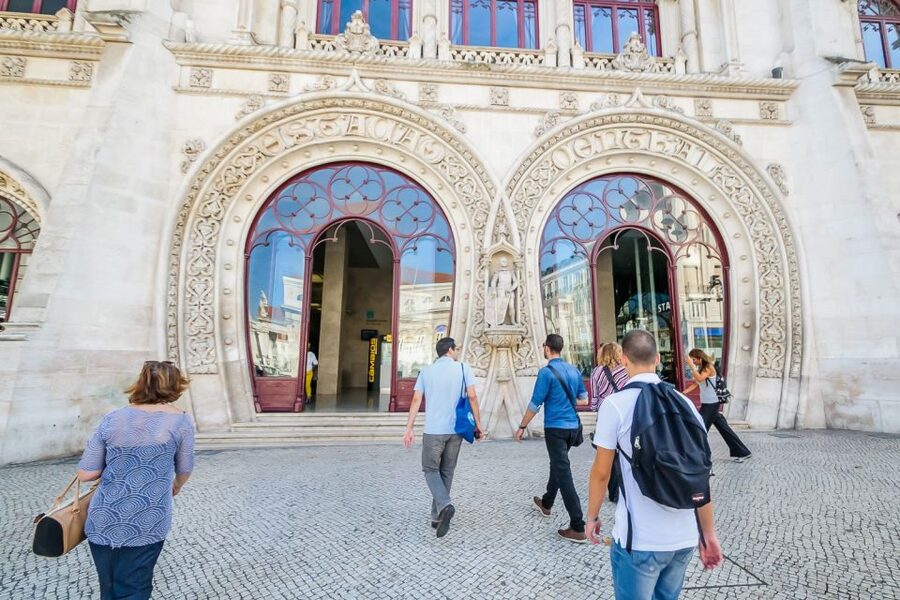
The route continues through Chiado, one of central Lisbon’s most polished districts. Here you pass old cafés, boutiques, theaters, and bookstores. Chiado gives the tour a different mood from Baixa’s broad streets and Alfama’s lanes.
This is a good stretch for noticing how Lisbon mixes the old with the commercial. The district is historic, but it is also a place to browse, shop, stop for coffee, or return for an evening meal. One guide, Rachel, was praised for allowing time to browse in shops, which points to one advantage of a private walk: you can ask for a little more time when something catches your eye.
A pastel de nata is included. This small Portuguese custard tart is one of the useful pleasures of the tour, especially because it gives you a taste of local food without taking up much time. The tour also includes one tapa, so the food element is more than a single sweet bite.
Do not expect a full food tour. The included tastings are brief stops within a history walk. If you want a long meal or a broad sampling of Portuguese dishes, book a dedicated food experience instead. For a first look at Lisbon, though, these pauses break up the walking and give the tour a more local feel.
More Private Walking Tours in Portugal
- Lisbon: Full-Day Private Walking Sightseeing Tour
★ 4.9 · 123 reviews - Lisbon: Private Boat Trip, Guided Walking Tour, Bike & Tram
★ 4.8 · 116 reviews - Lisbon: Belém Private Walking Tour & Jerónimos Monastery
★ 4.5 · 83 reviews - Coimbra: Private & Flexible Walking Tour in Historic Center
★ 4.9 · 92 reviews
Alfama’s narrow lanes and the sound of Fado
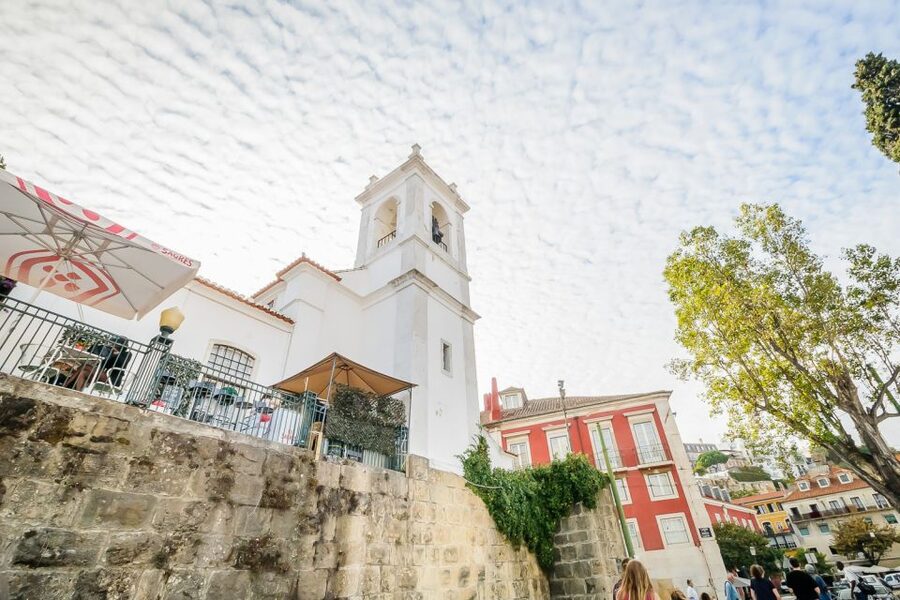
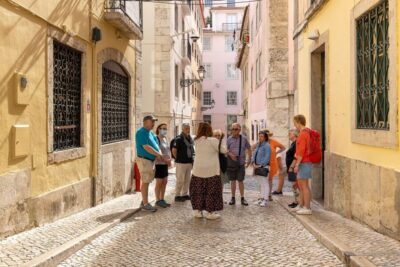
Alfama changes the shape of the tour. After the planned streets of Baixa and the refined avenues of Chiado, you enter a maze of small squares, tight lanes, and steep passages.
The neighborhood is presented as the Moorish quarter, with a street pattern that feels far older than the rebuilt downtown. That contrast is one of the strongest reasons to take this route. In a single afternoon, you see two very different answers to the same question: how to build and rebuild a city on steep ground beside the river.
The walk through Alfama can be visually rewarding, but it is also where comfortable shoes matter most. The tour provider specifically recommends them. You should be ready for uneven pavement, slopes, and a steady amount of walking, even if the guide keeps the pace manageable.
Alfama is also the place to hear about Fado, Lisbon’s own musical style. The route passes hidden Fado restaurants, allowing your guide to explain how the music fits into the neighborhood. You should not expect a full Fado performance as part of the tour. Instead, you get an introduction to the places and traditions that can guide your choice of an evening show.
The private format helps here. Alfama’s lanes are not always easy to follow, and a guide can keep the route moving while adding the small explanations that turn a pleasant walk into a useful orientation.
Wine, a tapa, and the riverfront finish
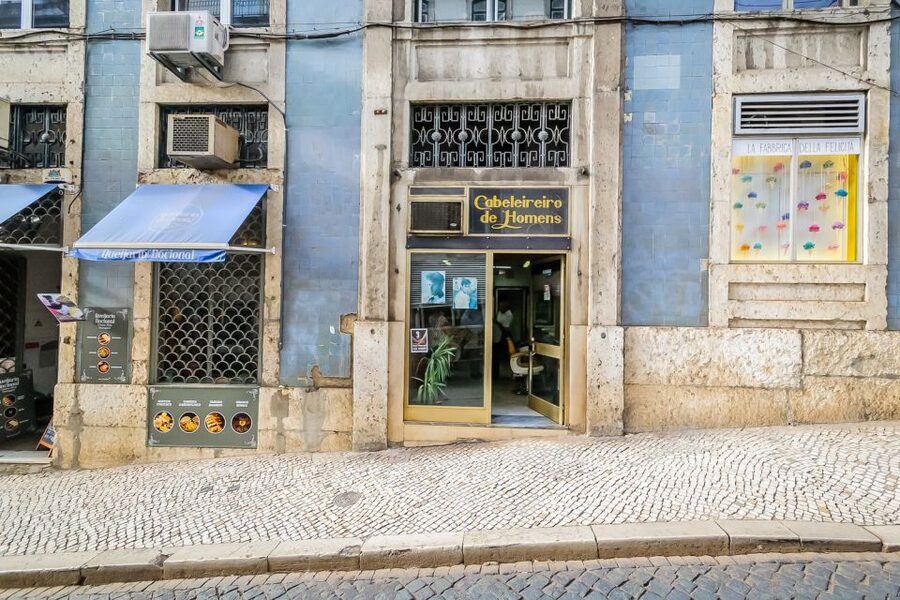
Before the tour ends, you stop at a local bar for wine tasting. The included tapa may be served as part of this food stop, with the exact setting depending on the guide and the day.
This is one of the tour’s better features for people who want a taste of Lisbon without committing to a long restaurant visit. The combination of wine, a tapa, and the pastel de nata gives you three simple introductions to Portuguese eating and drinking.
The route is described as ending at Praça do Comércio, the grand riverfront square that once served as the entrance hall to the city. It is one of Lisbon’s most impressive open spaces, with monumental buildings on three sides and the river beyond.
There is a small point to confirm before booking. The tour information also says the activity ends back at the meeting point, while the route description names Praça do Comércio as the final stop. Ask the operator to confirm the exact finish for your date. If Praça do Comércio is the actual ending, that is convenient for continuing along the waterfront or finding dinner nearby. If the group returns to Rossio, allow time for that walk.
What the private format adds at $102
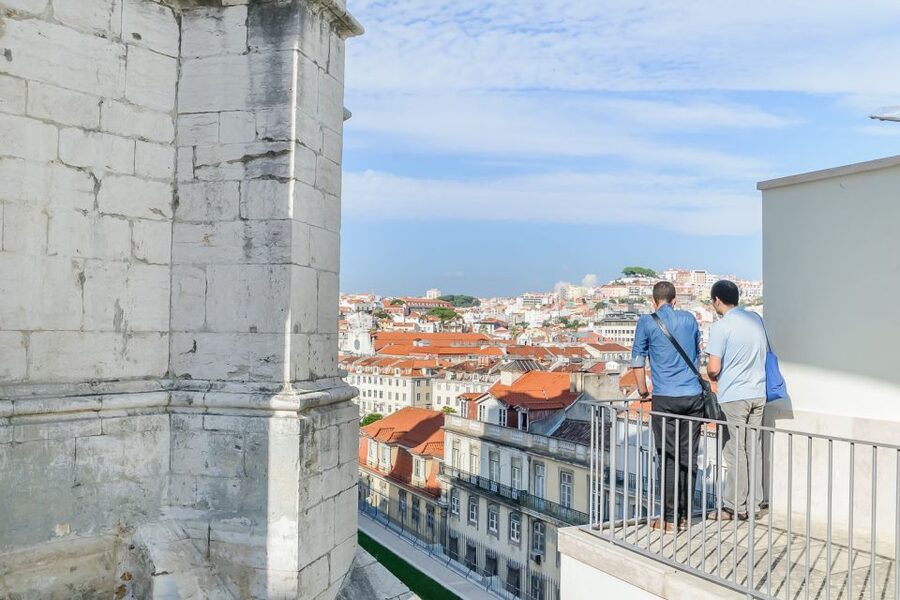
At $102 per person, this is not the cheapest way to see Lisbon. You are paying for a private guide rather than joining a large group, so the value depends heavily on how much you want personal attention.
For a first visit, the price can make sense. You cover several central districts, receive a connected explanation of Lisbon’s past and present, and get food and wine included. The guide can also answer questions about where to eat, what to see next, and how to use the metro. One guide even helped a group understand metro tickets, a small but practical detail that can save time later.
The value is stronger for families and small groups. Several guides have been praised for keeping children and teenagers interested, adjusting the pace, and answering questions without overwhelming the group. A private walk also lets you ask for more architecture, politics, shopping, food, or family-friendly ideas, depending on your interests.
The value is less clear if you prefer long museum visits or a slow food experience. No monument admissions are included, and the three hours are spread across a large section of the city. You are buying orientation, context, and local advice more than entry into major attractions.
The high overall rating of 4.9 from 601 reviews suggests a strong record, but the guide matters. Named guides associated with bookings include João, Chon, Filipa, Inês, Beatriz, Beatriz, Raquel, Pedro Osorio, Tiago, Catarina, Carolina, Nina, Miguel, Julia, and Rossana. You may not be assigned a particular person, so focus on the private format and language rather than expecting a specific guide.
Pace, hills, and who should book
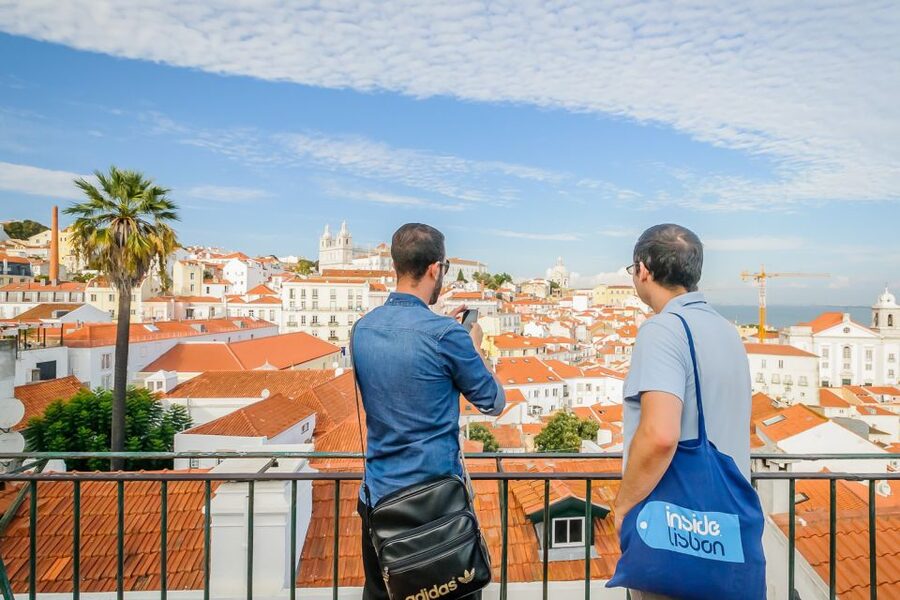
This is a good choice if you want to get your bearings early in a Lisbon stay. You will see the central districts, learn how the earthquake shaped Baixa, hear about the Carnation Revolution, and finish with a clearer idea of where to return for dinner, shopping, Fado, or museums.
It also suits families. Guides have adjusted the tone for children, kept tired teenagers engaged, and made room for questions. The route is not described as a strenuous hike, and some older participants found the pace manageable, but you should still prepare for several hours on foot.
If you have mobility concerns, ask the operator for details before booking. The information only specifies that comfortable shoes are needed. It does not provide a full accessibility description, and Alfama’s narrow lanes and slopes may be a factor.
Cruise passengers can request flexible timing. The tour operator says port visitors may be able to adjust the schedule, exclude lunch time, or shorten the tour to fit time in Lisbon. Contact the operator after booking to confirm this rather than assuming it will happen automatically. Hotel pickup is available for hotels in Lisbon’s city center.
The available languages are English, Spanish, and Portuguese. Pets are not allowed. Free cancellation is available up to 24 hours before the tour, and you can reserve now and pay later, which helps if your Lisbon schedule is still shifting.
My verdict for a first Lisbon day
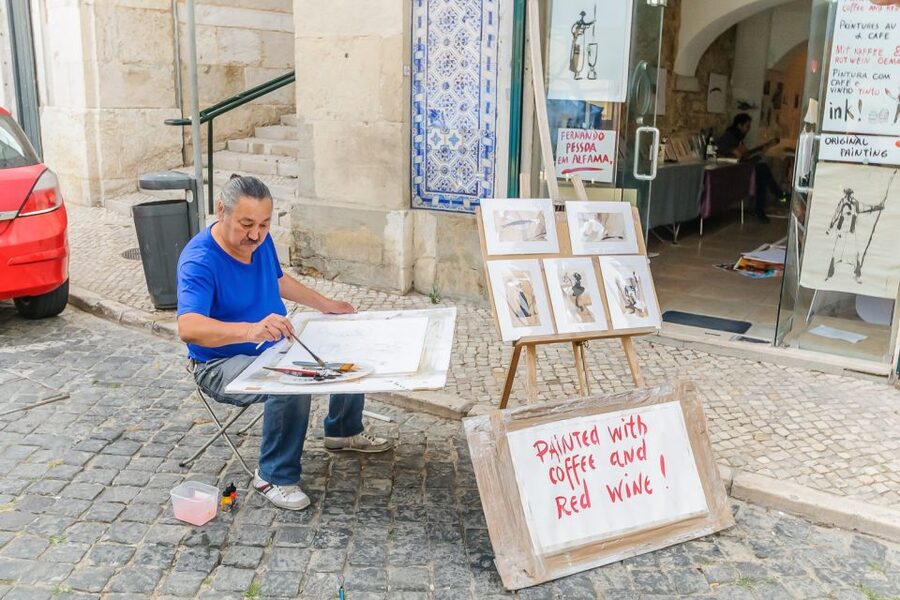
I would book this tour near the start of a Lisbon visit, especially if you want a private orientation with history, food, and practical advice in one compact outing. The route covers enough ground to make the city feel connected, and the guide can point you toward places worth revisiting.
I would skip it if your priority is entering monuments, sitting down for a full meal, or spending a slow afternoon in one neighborhood. In that case, choose separate museum, food, or Fado experiences.
For most first-time visitors, the strongest reason to book is not the list of squares. It is the chance to ask a local guide what matters to you, then use the rest of your stay with better direction. Just wear good shoes, keep expectations realistic about the walking, and confirm the final stop before setting your next appointment.
FAQ
How long is the Lisbon private walking tour?
The tour lasts three hours. Starting times depend on availability.
Where does the tour begin?
Meet at Praça Dom Pedro IV, also called Rossio Square, in front of the column of King Pedro IV.
Where does the tour end?
The route description names Praça do Comércio as the final stop, while the meeting information says the activity ends back at the meeting point. Confirm the exact ending with the operator before booking.
Which languages are available?
The live guide service is available in English, Spanish, and Portuguese.
Are food and drinks included?
Yes. The tour includes a pastel de nata, one tapa, and a wine tasting at a local bar.
Are entrance tickets to monuments included?
No. The tour includes guided commentary and visits to the exterior areas, but monument entrance tickets and guided tours inside monuments are not included.
Can cruise passengers request a flexible schedule?
Yes. Shore excursion times may be flexible, and lunch time can potentially be excluded or the tour shortened. Contact the operator after booking to confirm the arrangements.
New routes in Lisbon
- Small Group Walking Tour of Belém★ 4.9 · 80 reviews
- Lisbon: Walking Tour in the Center (Max 12 Participants)★ 5.0 · 741 reviews
- Lisbon Through the Eyes of a Local – Food and Walking Tour★ 4.9 · 141 reviews
- Lisbon: Street Art Walk★ 5.0 · 79 reviews
- Lisbon: Food and Culture 3-Hour Walking Tour★ 4.7 · 95 reviews
- Lisbon Tram No. 28 Ride & Walking Tour★ 4.1 · 766 reviews
- Lisbon: Private Boat Trip, Guided Walking Tour, Bike & Tram★ 4.8 · 116 reviews
- Lisbon: Jewish Walking Tour★ 4.9 · 96 reviews
Lisbon Walking Tours, compared.
Best of Lisbon Small-Group Guided Walking Tour
Read our review →
Best of Lisbon Walking Tour: Rossio, Chiado & Alfama
Read our review →

Lisbon Food Tour with 10+ Tastings of Local Delicacies & Wines
Read our review →
Sintra & Cascais Day Tour with Pena Palace Entry and Gardens Walk
Read our review →
Lisbon Roots – Small group Food & Culture Walking Tour w/tastings
Read our review →Browse the lists this tour appears in