
Review · LISBON
Lisbon: Belem Walking Tour with Jeronimos Monastery Entry
Jerónimos Monastery is the star here, and the pre-purchased entry matters. Instead of trying to work out the ticket line on your own, you meet the guide near the monastery entrance and head in with the group. Inside, the carvings, cloisters, royal tombs, and church make far more sense when someone explains what you are looking at.
I especially like two things: the tour connects the monastery to Portugal’s Age of Discovery, and it includes a genuine Pastel de Belém from the famous bakery nearby. Guides such as Luis, Leonardo, Leo, and Federico are repeatedly praised for clear English, humor, and a real feel for the subject. The main drawback is that Belém Tower is closed for restoration, so you see it from outside rather than entering.
Key points
- Early access to Jerónimos Monastery: Meet near the entrance with your ticket already arranged, helping you avoid the main ticket-buying queue.
- A guide makes the monastery readable: Learn the meaning behind the Manueline stonework, cloisters, tombs, and church rather than simply walking past them.
- The original Pastel de Belém is included: Taste the custard tart linked to the monastery’s monks and the historic bakery next door.
- A history-focused walk through Belém: Connect the monastery, Empire Square, the Discoveries Monument, and Belém Tower.
- Belém Tower is exterior-only for now: Restoration work means you cannot go inside, though the guide still explains its role and architecture.
- Best for walkers and history lovers: Plan for several hours on foot, sunshine or rain, with comfortable shoes and weather protection.
Why the monastery visit is worth the $70 price
At $70 per person, this is not the cheapest way to see Belém. You are paying for more than entry, though. The price includes the Jerónimos Monastery ticket, a Pastel de Belém, and roughly three to three and a half hours with an English-speaking guide.
For me, the value comes from the interpretation. Jerónimos Monastery has very little explanatory material inside, so you can easily admire the white stone and ornate carvings without understanding why the building mattered. A good guide gives the decoration a purpose and puts the monastery into the story of Portugal’s seafaring expansion.
The separate access arrangement also saves time, especially when the monument is busy. It does not mean you can arrive casually at the last second. You still need to meet at the correct spot, near the line for the monastery and close to the south entrance of the church. But once you connect with the guide, the entry process is more orderly than buying a ticket on your own.
A private group option is available, which may suit you if you want to ask many questions or keep the pace focused on architecture, art, or Portuguese history. The standard experience is also small enough at times to feel personal. One group had only four people, while other departures may be larger.
More Walking Tours in Lisbon:
- Lisbon: History, Stories and Lifestyle Walking Tour
★ 4.8 · 10,902 reviews - Best of Lisbon Small-Group Guided Walking Tour
★ 5.0 · 4,869 reviews - Lisbon: Food and Wine Small Group Walking Tour
★ 4.9 · 4,082 reviews
Starting at Jerónimos Monastery around 9:30
The morning start is smart. Belém’s major sights fill up, and beginning at about 9:30 lets you see the monastery before the day becomes even more crowded. Check the available departure time when booking, since the exact start can vary.
Your guide waits near the monastery entrance, where the access lines form. Look carefully at the supplied meeting-point image and the south entrance to the church. One person found the meeting instructions less clear than expected, so I would arrive early and allow extra time for traffic. If you are using a taxi or ride service, Lisbon traffic can make a short trip take longer than planned.
Once together, the guide gives a short explanation before taking you inside. The monastery tour lasts about an hour and a half. That is long enough to cover the major spaces without turning the morning into a lecture, though one person found the amount of information almost too much to follow. If you like history, architecture, and questions, you will probably appreciate the detail. If you prefer a quick photo stop, this tour may feel slow.
Reading the Upper Cloister
The visit begins in the Upper Cloister, where the architecture gets room to show off. This is not simply a courtyard with pretty arches. The guide explains what the construction represented in its time and how it tied into the wealth and ambition created by Portugal’s maritime voyages during the 15th and 16th centuries.
Look up and around before rushing for photographs. The cloister’s appeal lies in the small details: carved stone, repeated patterns, religious symbols, and the way the open space frames the surrounding building. The Manueline style combines late Gothic forms with Renaissance touches, and the guide helps you identify that mixture.
This is where the experience earns its keep. You are not left to guess which details are decorative, symbolic, or connected to Portugal’s royal and religious identity. Guides including Leonardo and Federico have been praised for using pictures and clear explanations to show how the monastery fits into the larger story.
The lower cloister, Chapter Room, and Refectory
The lower level brings you into important working spaces, including the Chapter Room and the old Refectory. These rooms help balance the grand public image of the monastery. You get a sense of the spaces used by the religious community, not just the ceremonial architecture designed to impress.
You also see the tomb of Fernando Pessoa, the major Portuguese poet whose remains were moved to the monastery in the 20th century. That detail adds a later chapter to a building usually associated with monks, kings, and explorers.
A good guide will point out how the spaces functioned and what changed over time. Luis is often singled out for answering questions and linking small details to broader Portuguese history. The tone is informative but not stiff. Several guides are described as funny and easy to spend a morning with, which helps when the subject matter becomes dense.
Same streets, a different guide:
- Best of Lisbon Walking Tour: Rossio, Chiado & Alfama
★ 4.9 · 2,700 reviews - Age of Discoveries Walking Tour in Belém
★ 5.0 · 1,513 reviews - Lisbon Food Tour with 10+ Tastings of Local Delicacies & Wines
★ 5.0 · 1,339 reviews - Sintra & Cascais Day Tour with Pena Palace Entry and Gardens Walk
★ 5.0 · 962 reviews
Santa Maria de Belém Church and royal tombs
The church, known as Santa Maria de Belém Church, is one of the tour’s strongest stops. It shows Manueline architecture on a larger, more dramatic scale, with tall spaces, stone ornament, and an impressive sense of height.
This is also where the national story becomes personal. King Manuel I and his son João III are buried here, along with Vasco da Gama and the poet Luiz Vaz de Camões. Your guide explains who these figures were and why their presence matters.
Vasco da Gama’s tomb is especially important in the setting. The monastery was closely linked to Portugal’s maritime expansion, and the church connects that political story with royal power, religion, and national memory. You do not need to know Portuguese history beforehand. The best guides, including Leo, Luis, and Federico, explain the subject in plain English and take questions along the way.
The church can be busy, so do not expect a quiet private visit. A guide also needs to keep the group together and respect the no-noise rule. Comfortable shoes help, since you are on your feet for much of the morning.
A proper Pastel de Belém stop
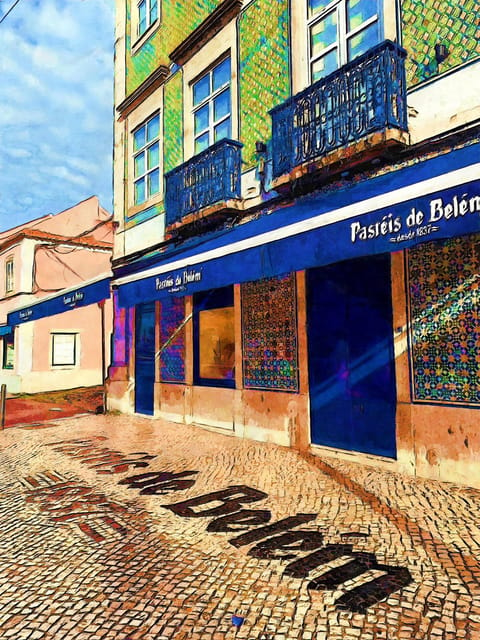
After the monastery, the tour stops at Pastéis de Belém for the pastry included in your booking. This is not just a generic custard tart from a random café. The recipe is linked to the monks of Jerónimos Monastery, and the bakery has sold it at the same establishment since the mid-19th century.
You get to try the original Pastel de Belém, commonly grouped with Portugal’s pastéis de nata. The stop lasts about 30 minutes, giving you time to enjoy the pastry rather than swallowing it during a rushed walk.
This small food stop gives the morning a welcome change of pace. After a long stretch of architecture and history, you get a taste of how the monastery’s story still appears in everyday Lisbon. Several guides also use the break to offer suggestions for other places to visit.
I would not treat the included tart as a full meal. Lunch is not included, and the tour finishes near Belém Tower. Plan another meal afterward if you need more than a snack.
Empire Square and the Monument to the Discoveries
The walk continues through Empire Square Garden, with about 15 minutes on foot. This part of the route gives you a chance to move between sights while the guide keeps explaining Belém’s role in Portugal’s past.
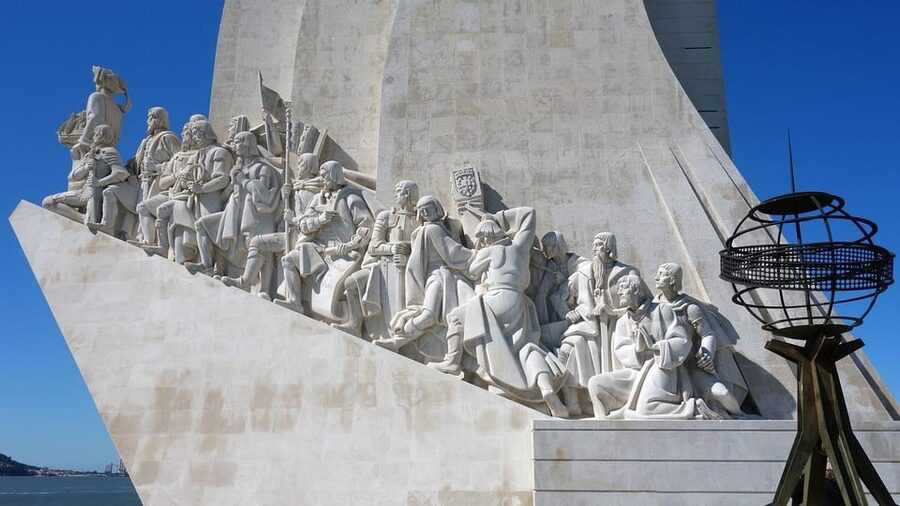
The Monument to the Discoveries is next. Built in 1960 to mark the 500th anniversary of the death of Infante D. Henrique, it presents the leading figures associated with Portuguese navigation. The monument is a large 20th-century tribute, so it is worth remembering that it reflects a later period’s view of the Age of Discovery.
The guided stop lasts around 20 minutes. You will hear about Infante D. Henrique and the other figures represented on the monument, along with their role in spreading Portuguese influence beyond Europe. The guide helps you read the monument as a piece of national storytelling, not just a large riverside sculpture.
This stop is outdoors, so the weather matters. Bring sunscreen, a hat, and an umbrella. The tour runs in rain or shine, and a rainy morning has not prevented the route from continuing. On a hot day, the walk can feel more demanding, particularly if you are not used to Lisbon’s sun.
Seeing Belém Tower from the outside
A final walk of about 15 minutes brings you to Belém Tower. The tower and Jerónimos Monastery share UNESCO World Heritage status and both use Manueline design, but the tower had a different job. It served as a defensive point guarding access to Lisbon.
At present, restoration work prevents interior visits. This is the clearest limitation of the experience. You can walk to the tower, examine its exterior, take photographs, and hear the guide explain its history and design, but you cannot climb through the rooms or see the inside.
That makes the exact value of the tour depend on your expectations. If entering Belém Tower is essential to your Lisbon plans, this experience will not provide it. If you mainly want to understand how the tower fits with the monastery and the riverfront, the exterior stop still completes the story.
The tour ends at the tower, not back at the monastery. That is useful because you can continue exploring Belém from there, but you must arrange your own transportation afterward. Transportation is not included.
What the guides add
The strongest part of this experience is the human element. Luis receives repeated praise for clear explanations, friendly communication, and an easy sense of humor. Leonardo and Leo are also noted for enthusiasm and detailed explanations. Federico is often described as engaging and particularly good at connecting Portuguese history with the buildings in front of you.
Other named guides include Renan Stein, Daniel, Ricardo, and Frederick. The guide assigned to your departure can vary, so you should not book expecting one specific person unless the operator confirms it.
The best guide for you will be one who can adjust the depth of the talk. Some people want dates, dynasties, and architectural terms. Others want the main story and a few memorable details. This tour tends toward a generous amount of information, but the tone remains relaxed and conversational.
Headsets may be provided, as one participant noted, which can help when the area is crowded. Do not assume every departure will feel identical, but the repeated praise for English, preparation, humor, and historical context points to a consistent strength.
Walking, weather, and access concerns
This is a walking tour, not a seated sightseeing trip. You move through the monastery, church, garden, monument area, and tower route over several hours. Wear shoes you can comfortably use for a morning on foot, and bring sun protection even when the forecast looks mild.
The tour is not suitable for wheelchair users or people with mobility impairments. The route includes walking between separated sights, and the activity information specifically rules out those access needs.
Arrive early. Please do not be late, since the guide must keep the group moving and coordinate entry. The meeting point can be confusing if you rely only on a general map pin, so study the meeting image and look for the south entrance area of the monastery church.
Free cancellation is available up to 24 hours before the start, and you can reserve now while paying later. The tour can also be canceled if the minimum group size is not reached. Those terms are useful if your Lisbon schedule is still changing.
Who should book this Belém morning?
I would choose this tour if you want the monastery to make sense rather than simply see it. It suits first-time Lisbon visitors, history fans, architecture lovers, and anyone who would rather have the Age of Discovery explained in front of the places connected to it.
It is also a good choice if you dislike standing in a long ticket queue or worry that you will miss important details inside the monastery. The included pastry adds a simple local food stop without requiring you to plan another reservation.
I would skip it if you want a very short visit, need wheelchair access, or consider the interior of Belém Tower essential. You should also think twice if you dislike guided commentary or prefer to set your own pace at every sight.
Should you book it?
For $70, this is a solid value when you want entry, context, and a planned route through Belém in one morning. The monastery is the main reason to book, while the Pastel de Belém and the Discoveries Monument round out the experience.
Book it for the guide’s explanations and the time saved at the monastery. Just arrive early, prepare for outdoor walking, and understand that Belém Tower is currently an exterior stop only. If those conditions suit you, this is a useful, well-paced introduction to one of Lisbon’s most important districts.
FAQ
How long does the Belém walking tour last?
The tour lasts about three to three and a half hours. The guided visit inside Jerónimos Monastery takes about 1.5 hours, followed by walking and sightseeing at the other stops.
Is entry to Jerónimos Monastery included?
Yes. Your entrance ticket to Jerónimos Monastery is included, and the guide meets you near the access queue with the tickets already purchased.
Can I go inside Belém Tower?
No. Belém Tower is currently undergoing restoration work and cannot be visited inside. The tour includes an exterior visit with historical and architectural commentary.
Is a Pastel de Belém included?
Yes. The tour includes an original custard tart from Pastéis de Belém, the bakery associated with the historic recipe linked to the monks of Jerónimos Monastery.
Where does the tour meet and finish?
The meeting point is in front of Jerónimos Monastery near the south entrance to the church, where the access lines form. The tour finishes at Belém Tower.
Is the tour suitable for wheelchair users?
No. The activity is not suitable for wheelchair users or people with mobility impairments.
New routes in Lisbon
- Small Group Walking Tour of Belém★ 4.9 · 80 reviews
- Lisbon: Walking Tour in the Center (Max 12 Participants)★ 5.0 · 741 reviews
- Lisbon Through the Eyes of a Local – Food and Walking Tour★ 4.9 · 141 reviews
- Lisbon: Street Art Walk★ 5.0 · 79 reviews
- Lisbon: Food and Culture 3-Hour Walking Tour★ 4.7 · 95 reviews
- Lisbon Tram No. 28 Ride & Walking Tour★ 4.1 · 766 reviews
- Lisbon: Private Boat Trip, Guided Walking Tour, Bike & Tram★ 4.8 · 116 reviews
- Lisbon: Jewish Walking Tour★ 4.9 · 96 reviews
Lisbon Walking Tours, compared.
Best of Lisbon Small-Group Guided Walking Tour
Read our review →
Best of Lisbon Walking Tour: Rossio, Chiado & Alfama
Read our review →

Lisbon Food Tour with 10+ Tastings of Local Delicacies & Wines
Read our review →
Sintra & Cascais Day Tour with Pena Palace Entry and Gardens Walk
Read our review →
Lisbon Roots – Small group Food & Culture Walking Tour w/tastings
Read our review →Browse the lists this tour appears in