
Review · GERMANY
Bremen: Walking Tour of Historic Schnoor District
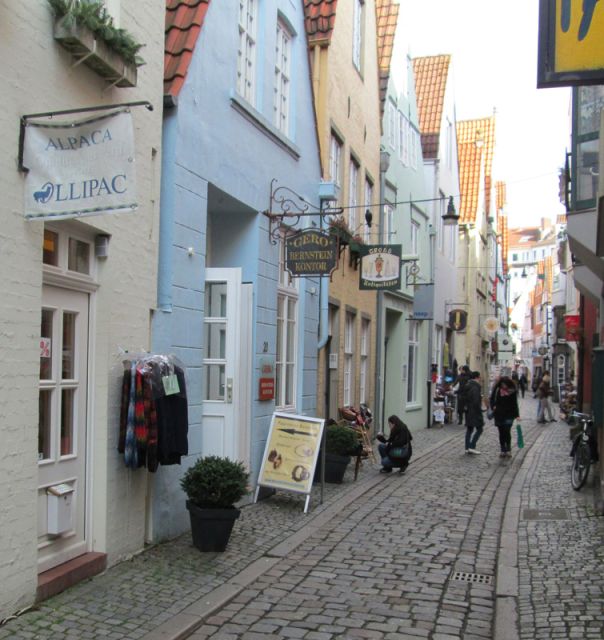
Bremen’s Schnoor quarter is made for slow walking. Tiny houses crowd the winding lanes, their upper floors nearly leaning toward one another, while old facades reveal Gothic, Baroque, Renaissance, and later styles. I like the way this tour connects the pretty streets to real dates and buildings, especially Haus Schnoor 15 and Packhaus Schnoor 2. I also like its low $14 price for a focused one-hour introduction.
The main catch is simple: you only see the buildings from the outside, and the narrow, historic streets are not suitable for wheelchair users. The tour is also conducted in German, so you’ll get the most from it if you can follow spoken German.
Key points
- Schnoor’s narrow lanes: Walk through one of Bremen’s most atmospheric old quarters, where small houses are packed together like pearls.
- 14th to 18th-century buildings: See preserved homes, recreated facades, and some of the quarter’s oldest secular structures.
- St. John’s Church: Pass the redbrick Gothic church built in the 14th century on the site of an earlier Franciscan presence.
- Stories beyond the postcard view: The guide explains architecture, local life, and the people connected with Schnoor.
- A compact one-hour route: The tour gives you a useful introduction without taking over your day.
- German-speaking guidance: Private groups are available, and guide Sönke is known for adding humor and local character.
Entering Bremen’s Schnoor quarter from Domsheide
The tour begins in front of Die Glocke concert hall at Domsheide 6. Look for the guide holding a sign that says Bremen Tour Guide. This central meeting point makes practical sense because the walk begins close to Bremen’s cathedral area and the old city center.
From there, you head toward Schnoor, Bremen’s oldest quarter. The name is linked to the old rope-making trade, and the shape of the district helps explain why. Narrow lanes and tightly packed houses made good use of limited space near the Weser River. You are not walking through a broad parade street here. You are moving through a small, irregular network of lanes where the scale changes every few steps.
I like this beginning because it gives you a quick sense of place before the details begin. You notice the quarter first with your eyes: crooked lines, compact doorways, half-timbered upper stories, and buildings pressed close together. Then the guide gives those details a date and a purpose.
The route is only one hour, so you should expect a brisk introduction rather than a slow examination of every lane. That short length is useful if you are fitting Schnoor between other sights in Bremen. It also means you may want to return on your own afterward if you find a particular shop, facade, or lane worth another look.
More History Walking Tours in Germany
- Leipzig: 1.5-Hour Historical Walking Tour in German
★ 4.7 · 2,217 reviews - Berlin: History of the Third Reich Guided Walking Tour
★ 4.7 · 791 reviews - Trier: Guided Old Town Highlights and History Walking Tour
★ 4.7 · 687 reviews
A quarter shaped by medieval trade and religious life
The first written reference to Schnoor dates to the 13th century. Around that time, a Franciscan monastery was built at the edge of the area. Most of the monastery is gone, but the monastery church remains, giving the neighborhood a direct link to its early religious history.
The present Catholic St. John’s Church was built in the 14th century in redbrick Gothic style. It is one of the clearest architectural anchors on the walk. Its brickwork looks very different from the half-timbered houses nearby, and that contrast helps you read the quarter as a collection of different periods rather than a single carefully designed set.
I find this kind of context useful because Schnoor can otherwise seem almost too neat and picturesque. The little houses and craft shops are appealing, but the district is more interesting when you understand that it grew over centuries around work, worship, trade, and crowded urban living.
The guide discusses Schnoor and its inhabitants while pointing out buildings from different eras. You may hear about the people who lived and worked here, as well as the ways the quarter changed over time. The experience is not only about taking attractive photographs. It is about learning why the streets look the way they do.
Half-timbered houses and changing building styles
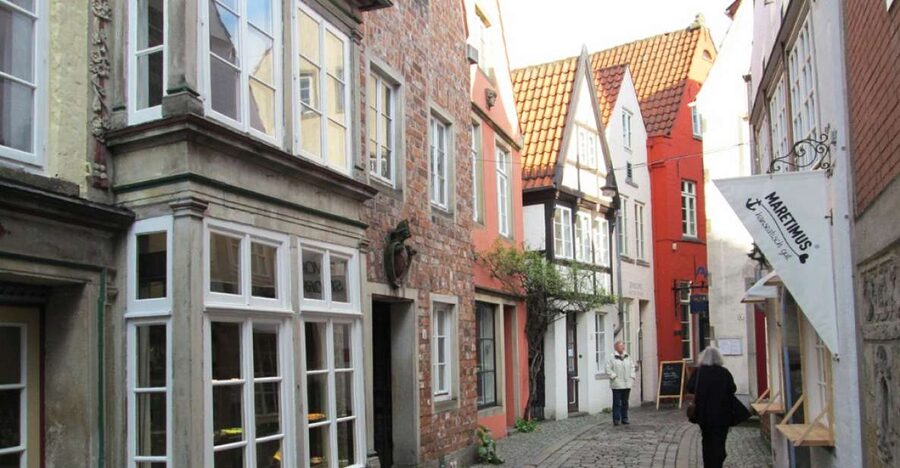
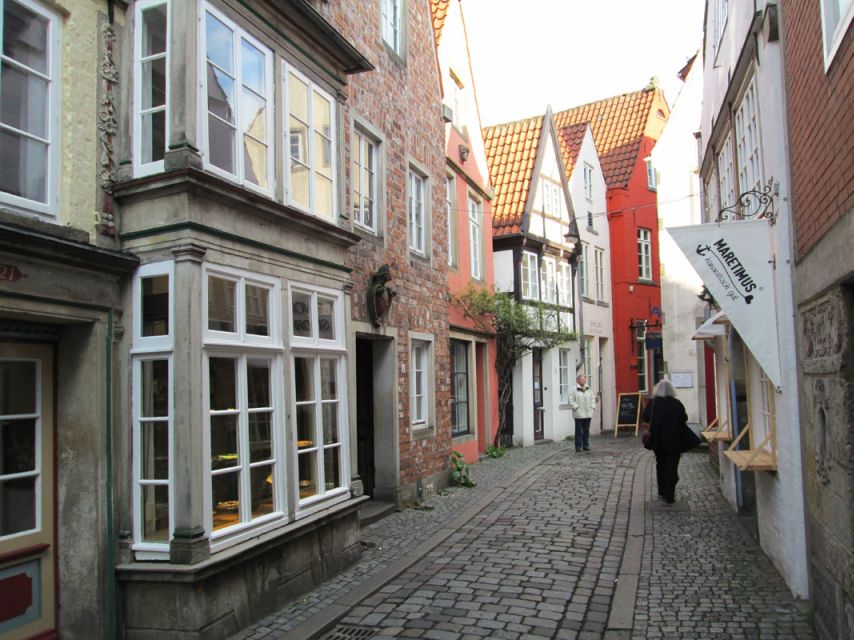
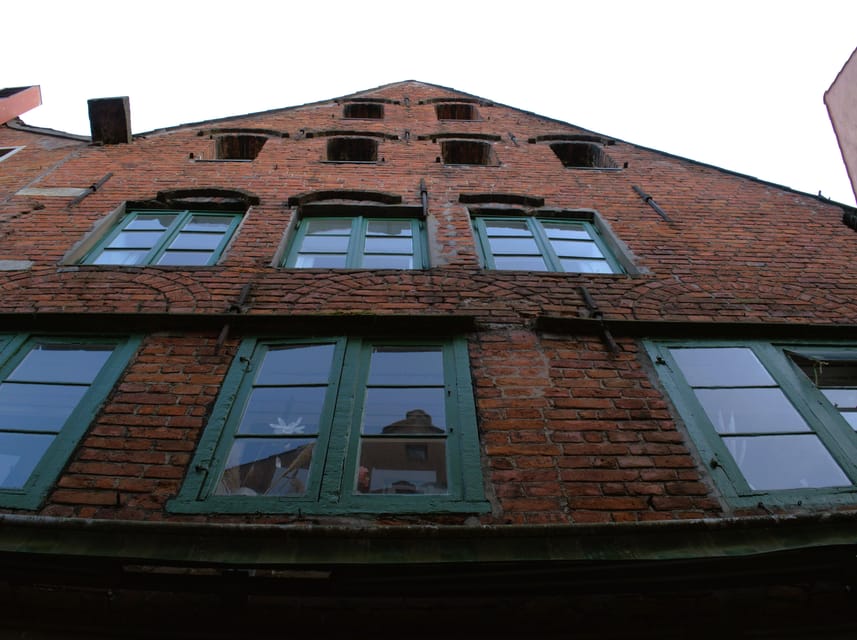
The best part of the walk is the close look at the buildings. Many houses from the 17th and 18th centuries remain in their original form, creating the romantic feel that draws people into Schnoor in the first place. Their small scale is easy to appreciate on foot, especially in lanes where you can see several facades at once.
You will also see a range of architectural styles, including Classicism, Historicism, Baroque, and Renaissance elements. The tour does not treat Schnoor as a single medieval scene. Instead, it shows how later changes were added to an older quarter.
That distinction matters. Some buildings are original, some have been recreated according to historical specifications, and some locations now retain only their facades. The guide helps you separate those categories. Without that explanation, it would be easy to assume every charming wall and timber frame has survived untouched for centuries.
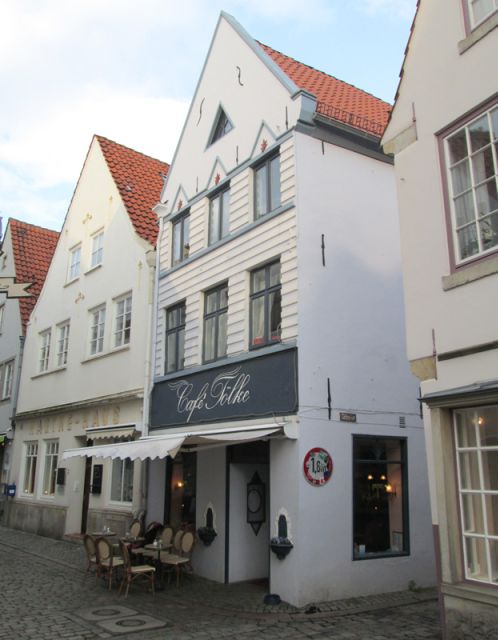
One particularly interesting example is the half-timbered house with a tea room. It gives the tour a pleasant link between architecture and present-day use. You are looking at a historic building, but you are also seeing how the old quarter functions now, with small businesses occupying spaces that once served other purposes.
The narrow houses near the Weser River are another visual highlight. Their proportions reflect an older urban pattern, with limited room and buildings set close together. You will not get grand city views here. Schnoor works through small details: rooflines, timber framing, brick, painted facades, and doorways that seem to lead into another century.
Haus Schnoor 15 and Packhaus Schnoor 2
The tour includes some of the oldest surviving secular buildings in the quarter. Haus Schnoor 15, also known as Brasilhaus, is one of the key stops. Packhaus Schnoor 2 is another, dating back to the 15th century.
These buildings are valuable stops because they shift the focus from general atmosphere to specific evidence. You can look at the entire lane and think old. A named building with a documented date gives you something firmer to notice. The guide can point out construction details and explain how the building fits into Schnoor’s development.
Packhaus Schnoor 2 also hints at the area’s working past. The word Packhaus points toward storage and trade, a useful reminder that this was not simply a residential quarter preserved for beauty. Schnoor was shaped by practical urban life.
Haus Schnoor 15, or Brasilhaus, gives the route another memorable name to carry with you. I like tours that leave you with a few precise landmarks instead of only a general impression. Afterward, you can walk back through the quarter and recognize the buildings the guide discussed.
Because the buildings are viewed only from the street, do not expect interior rooms, museum displays, or access to private homes. That limitation is worth keeping in mind. The value comes from the guide’s explanation and your ability to read the exteriors, not from going inside.
Same streets, a different guide:
- Discover Berlin Half-Day Walking Tour
★ 5.0 · 9,624 reviews - Berlin City walk Government District and Places of Democracy
★ 4.7 · 8,467 reviews - Berlin: Third Reich & Cold War Guided Walking Tour
★ 4.9 · 8,378 reviews - Munich: Third Reich & WWII Walking Tour
★ 4.6 · 6,181 reviews
Goldsmiths, handicrafts, and Schnoor today
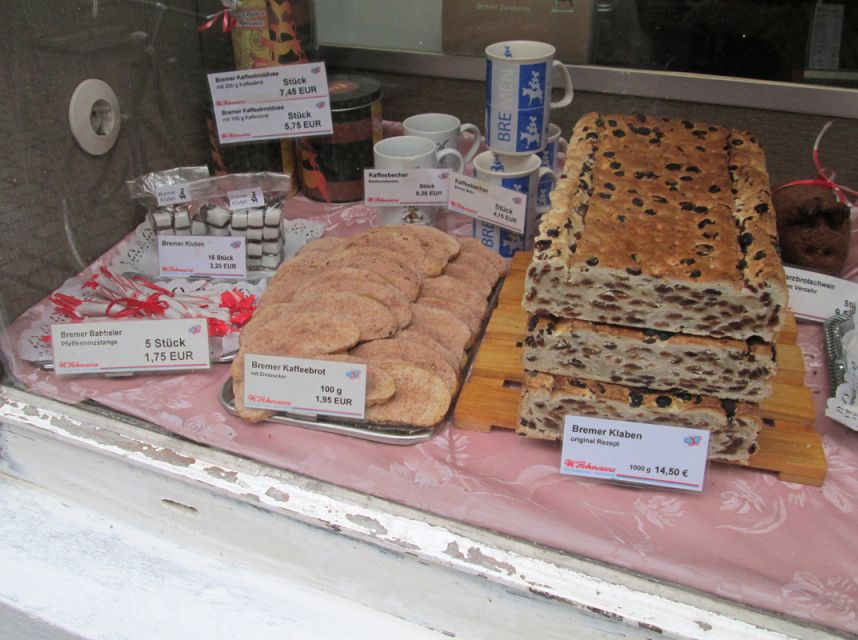
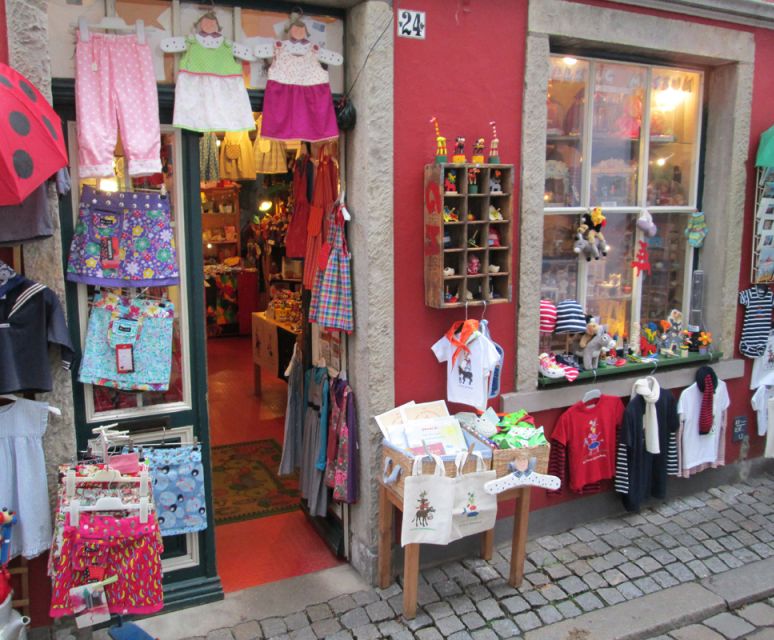
Schnoor is still a living district, not just an outdoor history display. As you walk, you pass goldsmiths and shops selling local handicrafts. These businesses add color and give the old lanes a present-day purpose.
I like this part of the route because it keeps the experience from becoming too solemn. Historic streets are more enjoyable when you can see how people use them now. A shop window, a workshop, or a small tea room can make the architecture feel connected to everyday life.
At the same time, shops can make the lanes feel more commercial than purely residential. If you are looking for untouched old Bremen, you may find the retail activity slightly distracting. The tour’s job is to explain both sides: the quarter’s older working life and its modern role as a popular part of the city center.
The one-hour format gives you enough time to notice this balance without turning the walk into a shopping outing. You can browse after the tour if something catches your eye, but the main focus remains the streets, buildings, and stories.
What guide Sönke adds to the walk
Guide Sönke receives special praise for his witty stories and local personality. His approach appears to combine historical information with jokes and small tales about Schnoor and its people. That matters in a district where the architecture can be admired quickly but takes longer to understand.
A dry list of dates would not do much for these lanes. The best guide points out a building, explains its age or style, and then gives you a human detail that makes it easier to remember. Sönke’s reported style is especially lively, with humor woven into the explanation rather than saved for the end.
You should still note that the live guide language is German. If you do not understand German well, you may enjoy the visual side of the walk but miss much of the historical explanation and humor. The tour has a private group option, which may be useful if you want a more personal format, but the information provided does not promise a different language.
The shared option is likely the better value for most people at $14 per person. A private booking can make sense for a family or group that wants to keep the walk together and ask questions along the way. Since the total tour lasts only one hour, the decision comes down to how much you value privacy and flexibility.
Is one hour enough for Schnoor?
One hour is enough for an introduction, not a complete study of the quarter. You can see the main architectural character, hear the key historical background, and pass several notable buildings without giving up half a day.
I think the length is one of the tour’s strongest features. Bremen has plenty to see, and a short guided walk leaves time for the cathedral, the old town, museums, meals, or an independent return to Schnoor. It also suits you if you prefer a focused experience rather than a long walking lecture.
The tradeoff is that the route may feel quick if you want to photograph every lane or browse the shops. The supplied details do not specify every turn or the exact time spent at each stop, so you should treat the tour as a structured overview. Plan to return on your own if you want a slower look.
Wear comfortable shoes. The tour takes place entirely on foot, and the old quarter’s narrow streets are not suitable for wheelchair users. The buildings are seen from outside, so anyone wanting interior access should plan separate visits where possible.
The $14 price and overall value
At $14 per person, this is an inexpensive way to add context to a neighborhood you could technically walk through for free. The question is not simply how much ground you cover. It is whether the guide helps you notice details you would otherwise pass without understanding.
For me, the answer is yes, especially if you care about architecture and local stories. A free wander gives you the lanes and facades. This tour adds dates, names, building styles, religious history, and information about the people who shaped the quarter.
The value is strongest for a first visit. If you already know Schnoor well, the one-hour walk may offer fewer surprises, although the guide’s stories can still add something new. One especially useful point is that the route explains which buildings are original, which were recreated, and which are only surviving facades. That kind of distinction is easy to miss alone.
Food and drinks are not included, but that is not a major weakness for such a short activity. You can decide afterward whether to stop at a tea room, browse the craft shops, or continue through Bremen’s center.
You can cancel up to 24 hours before the start for a full refund, and the reserve-now, pay-later option keeps the booking flexible. Those policies are helpful if your Bremen plans are still taking shape.
Who should book this Schnoor walking tour?
I would recommend it to first-time visitors who want a quick introduction to Bremen’s oldest quarter. It is also a good fit for anyone who enjoys architecture, old urban neighborhoods, local anecdotes, and short guided walks.
The tour suits you especially well if you want:
- A one-hour activity that fits neatly into a busy day
- A close look at half-timbered houses and historic facades
- Specific buildings and dates instead of general sightseeing
- A German-speaking guide with a humorous local style
- A low-cost introduction before exploring Schnoor independently
I would hesitate if you need wheelchair access, want to tour interiors, or do not understand German. I would also choose a longer experience if you want time for extensive shopping, photographs, or detailed visits to individual buildings.
Should you book the Schnoor tour?
Book it if you want Bremen’s Schnoor quarter to become more than a pretty maze of old houses. For $14, the tour gives you a clear introduction to the district’s medieval roots, 14th to 18th-century buildings, church history, trade connections, and present-day craft shops.
The strongest reason to go is the combination of compact size and specific detail. Guide Sönke’s humor can make the information easier to remember, while stops such as Haus Schnoor 15 and Packhaus Schnoor 2 give the walk a firm structure.
Just arrive ready to walk, listen in German, and view everything from outside. After the guided hour, give yourself extra time to wander back through the lanes at your own pace.
FAQ
Where does the Schnoor walking tour begin?
The meeting point is in front of Die Glocke concert hall at Domsheide 6, Bremen, 28195. Your guide will hold a sign saying Bremen Tour Guide.
How long does the tour last?
The walking tour lasts one hour.
What language is the tour conducted in?
The live tour guide language is German.
Are the buildings visited from inside?
No. The buildings viewed during the tour are seen from the outside only.
Is the tour suitable for wheelchair users?
No. The tour is not suitable for wheelchair users.
What does the $14 price include?
The price includes the guided walking tour. Food and drinks are not included. A private tour is included only when that option is selected.
New routes in Germany
- Munich: Walking Tour Old Town and Viktualienmarkt★ 4.7 · 839 reviews
- Stuttgart: Guided Ghost Walking Tour★ 4.5 · 867 reviews
- Stuttgart: Private Guided Circular City Walk★ 4.7 · 129 reviews
- Stuttgart: Old Town Highlights Guided Walking Tour★ 4.2 · 101 reviews
- Stuttgart: City Highlights – Guided Walking Tour★ 4.7 · 189 reviews
- Hamburg: Private Tour Red Light District Walking Tour★ 4.7 · 227 reviews
- Small Group Walking Tour: “Wild Kreuzberg”★ 4.8 · 199 reviews
- Sachsenhausen Memorial: Walking Tour from Berlin★ 4.7 · 132 reviews
Germany Walking Tours, compared.

Berlin City walk Government District and Places of Democracy
Read our review →

Berlin’s Best: 2 Hour Walking Tour Third Reich and the Cold War
Read our review →
Explore Berlin: See All The Iconic Sights & Some Hidden Gems
Read our review →
Third Reich Berlin: Hitler and WWII Walking Tour
Read our review →
Browse the lists this tour appears in