
Review · TOKYO
Tokyo: Guided Walking Tour of Tsukiji Market with Breakfast
Tsukiji is best understood with something in your hand and a guide beside you. This 150-minute walking tour takes you from the Indian-inspired facade of Tsukiji Hongwanji Temple into the market for seven breakfast tastings, including grilled seafood or wagyu beef, omelette, tuna sandwich, fish paste, tea, dashi, and a drink.
I like the way the guides turn a crowded food stop into a cultural lesson, explaining the link between Japanese cuisine, Buddhism, and daily life. I also like the small-group limit of 10, since guides can help with translations, wait in food lines, and adjust tastings for picky eaters or dietary preferences.
The main consideration is that this is a generous breakfast, not a light nibble. English is the tour language, and one past participant found some speech difficult to follow, though the food and personal help still made the outing worthwhile.
Key points to know before booking
- Seven tastings make this a full breakfast: Plan to arrive hungry, since the food includes meat, seafood, soup stock, tea, and more.
- Tsukiji Hongwanji Temple gives the tour a strong opening: You meet outside this unusual Buddhist temple before entering the market.
- Small groups make the market easier: With no more than 10 people, the guide can translate, manage purchases, and adapt food choices.
- Guides help you move through the crowds: This matters at Tsukiji, where stalls, shoppers, restaurants, and workers share narrow lanes.
- The tour ends early enough for more market time: After the 150 minutes, you can continue exploring Tsukiji on your own.
- Bring comfortable shoes: You will be walking and standing while eating at several stops.
Starting at Tsukiji Hongwanji Temple
The meeting point is simple to find. From Tsukiji Station on the Hibiya Line, take Exit A1, turn left, and look for the temple entrance about 50 meters away. Meet your guide in front of Tsukiji Hongwanji Temple, not inside it.
The temple exterior is one of the more unexpected sights in this part of Tokyo. Its design has ancient Buddhist influences with an Indian-inspired appearance, giving you a quick architectural lesson before the food begins. The visit here is exterior only, so do not expect a long temple tour or interior ceremony.
I like this opening because it gives the market visit some context. Tsukiji is not only a place to buy fish and snacks. Food in Japan is tied to religion, seasonal customs, hospitality, and everyday work. A short stop at the temple helps your guide explain those connections before you enter the market.
The meeting spot also works well for a first morning in Tokyo. The station is close, the landmark is easy to identify, and you do not need to find a tucked-away shop in a maze of streets.
More Market Walking Tours in Japan
- Tokyo Tsukiji Fish Market Food and Culture Walking Tour
★ 5.0 · 3,184 reviews - Tokyo: Tsukiji Fish Market Food and Walking tour
★ 5.0 · 1,724 reviews - Tokyo: Tsukiji Fish Market Guided Walking Tour
★ 4.9 · 1,397 reviews
Entering Tsukiji Outer Market
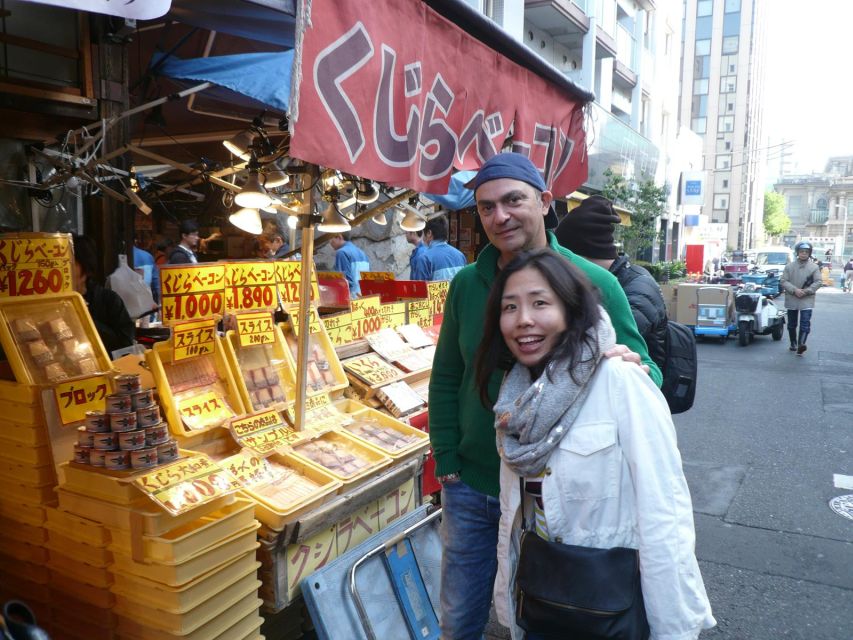
From the temple, you walk into Tsukiji Outer Market. This is the part of the old Tsukiji area open to the public, with food stalls, restaurants, specialist shops, wholesalers, and small businesses packed into a busy network of lanes.
The market is known for fish, but it is not limited to raw seafood. You might pass meat sellers, tea shops, cooking suppliers, prepared-food counters, and stalls selling products that are unfamiliar to first-time visitors. The appeal is the working atmosphere. Expert wholesalers and shop workers are handling products, serving customers, and keeping business moving around you.
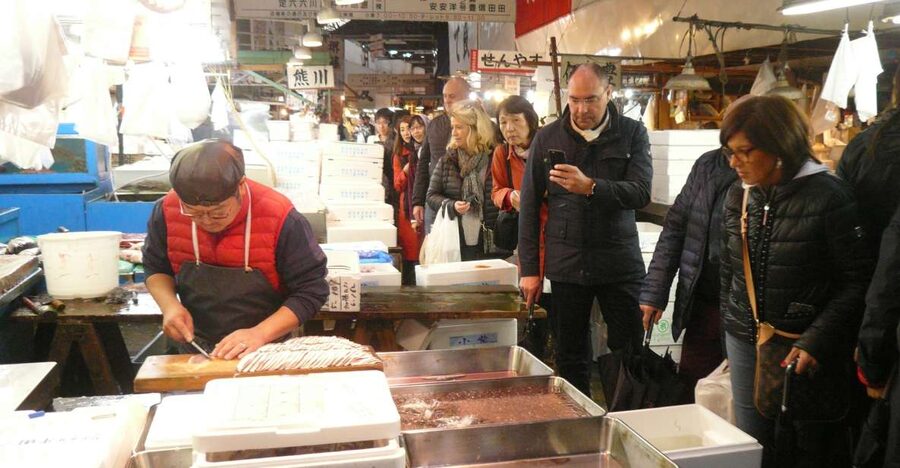
That activity can be hard to read on your own. A guide points out what you are looking at and helps you avoid treating the market like a simple food court. You may learn why a certain ingredient matters, how a product is used, or how Japanese food customs connect with the market.
The lanes can be crowded, and there are plenty of people sharing limited space. Stay close to the guide and wear shoes that are comfortable for walking and standing. This is not a slow, empty market stroll. It is a working food district, and the energy comes partly from seeing people at work.
Seven tastings, from grilled skewers to dashi

The central promise is easy to understand: you receive seven local specialties during the walk. The exact order can change, but the planned range gives you a useful sampling of Japanese breakfast and street food.
You can expect tastings such as:
- Grilled seafood or beef skewers, with wagyu included among the possible specialties
- Japanese-style omelette
- Tuna sandwich
- Fried fish paste skewer
- A drink
- Japanese tea
- Dashi soup stock
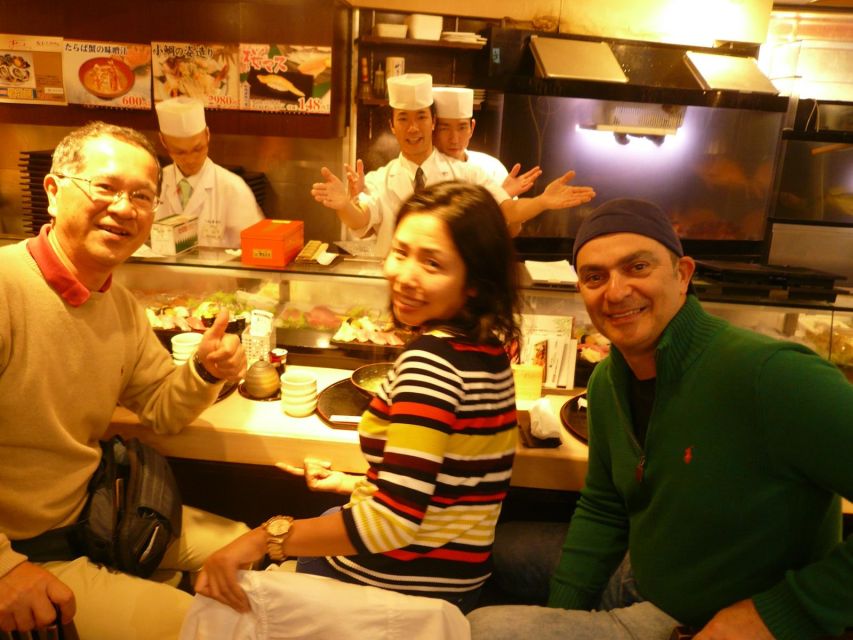
The grilled skewer is a good introduction because it is familiar in format but still tied to the market. Depending on the stop, you may taste seafood or beef, including wagyu. The omelette gives you a different texture and shows how a simple egg dish can be treated as a specialty rather than an afterthought.
The tuna sandwich may surprise you. It is a practical way to taste fish in a form that feels accessible if you are less comfortable with raw seafood. The fried fish paste skewer offers another change in texture, while dashi gives you a direct taste of the stock that supports many Japanese dishes.
Tea and dashi are especially useful stops because they are not just quick snacks. Your guide can explain how they fit into Japanese cooking and dining. Dashi is a basic building block in many dishes, so tasting it by itself helps you notice the savory depth that is easy to miss when it is mixed into soup or sauce.
There may also be extra opportunities to buy food or drinks as you go, but the listed seven tastings are the included portion. If you want something beyond that, ask your guide about the cost before ordering. One past group appreciated that the guides helped them choose extra items and even assisted with ordering a beer.
A tour that can adjust to your appetite
This experience works well for groups with different comfort levels. If you do not want to eat every item, tell the guide early. Guides have adjusted the food for people who disliked certain ingredients and offered alternatives when possible.
That flexibility matters in a market setting. You may be curious about Japanese food but still have limits, especially with seafood, fish paste, or unfamiliar textures. The tour is not built around forcing every person to eat exactly the same thing. The guides have helped guests choose foods they preferred and translate with vendors so they received the intended order.
At the same time, you should not book this expecting a tiny sample at each stop. The food adds up. One participant specifically advised arriving hungry, and that is sensible. Breakfast is the main event here, not a decorative extra between sightseeing stops.
The tour can also suit families and mixed-age groups. A family of four had enough flexibility to make the experience work for a picky teenager. A private-feeling outing has also occurred when only one small party booked, although you should not assume every departure will be private.
More Market Walking Tours in Tokyo
- Tsukiji Fish Market Small-Group Food Walking Tour
★ 5.0 · 621 reviews - Tokyo: Tsukiji Market Walking Tour & Sushi Cooking Class
★ 4.6 · 122 reviews
Why the guide matters at Tsukiji
The strongest part of this tour is the human help. Tsukiji is easy to reach but less easy to understand. Food labels may not be clear, vendors may speak limited English, and the best stall is not always obvious from the street.
A good guide solves several problems at once. You can ask what an item is, learn how it is eaten, and decide if it suits you before spending money. The guide can also speak with vendors, wait in line, and keep the group together while people look around.
Past guides have included Yumi, Nori, Minoko, and Rico. The specific guide depends on the departure, so do not book based on a particular name. What you can count on from the activity details is an English-speaking live guide and a small group of no more than 10 people.
English ability may vary by guide. One person found the guide somewhat difficult to understand, though the group managed with patience and still enjoyed the experience. If cultural explanation is your top priority, stay near the guide, ask for repetition when needed, and confirm unfamiliar food names.
The personal attention is most useful for first-time visitors to Japan. Guides have also offered suggestions for later meals and helped people find their next tour or return to their hotel. That extra local help is not a formal sightseeing stop, but it can make a morning in Tokyo easier.
What the $85 price really buys
At $85 per person, this is not the cheapest way to eat at Tsukiji. You could buy individual snacks on your own for less, especially if you choose only one or two items.
The value comes from combining food with guidance. Your fee covers the live guide and seven included tastings, plus help with translation, navigation, food choices, and market etiquette. You are paying to reduce guesswork in a place where it is easy to walk past something excellent or order something you do not understand.
The price makes more sense if you want a structured first visit. It is also useful if you are nervous about ordering in Japanese, traveling with a picky eater, or trying seafood and meat specialties without knowing what you are getting.
It makes less sense for confident repeat visitors who already know Tsukiji and want to browse independently. You may also find the cost high if you are mainly interested in the temple or architecture, since the temple portion is brief and exterior only.
The tour can offer good value for a first morning in Tokyo because it finishes soon enough for you to remain in the area. After the guided portion, you can continue looking through the market, return to a favorite stall, or make your own purchases.
Timing, group size, and physical effort
The activity lasts 150 minutes. That gives you enough time for the temple exterior, a guided walk through the market, explanations, and seven tastings without taking your entire day.
A group of up to 10 is a useful middle ground. It is more social than a private tour but small enough for the guide to keep track of everyone. Several past departures have had only a few people, and some have felt almost private. That depends on booking numbers.
You will be on your feet for much of the outing. Comfortable shoes are specifically recommended, and they are a sensible choice given the walking, narrow lanes, waiting, and food stops. The activity is wheelchair accessible, but the market can still be busy and crowded, so it is wise to consider your comfort with close pedestrian traffic.
The meeting point near Tsukiji Station keeps the start uncomplicated. You should still allow enough time to find Exit A1 and reach the temple entrance. Missing a small-group departure could be difficult, as one late arrival missed the tour entirely, though a refund was ultimately arranged in that case.
Who should book this Tsukiji tour
I would choose this for a first visit to Tokyo when you want food, local context, and practical help in one morning. It suits solo visitors, couples, families, and small groups who would rather have someone explain the market than simply wander through it.
It is particularly useful for you if:
- You want to try several Japanese foods but need help identifying them
- You are unsure how to order at market stalls
- You enjoy food history and cultural explanation
- You have a picky eater in your group
- You want to finish early and keep exploring Tsukiji
- You prefer a small group rather than a large bus tour
I would think twice if you dislike seafood, cannot eat a substantial breakfast, or want a quiet architectural tour. The market is active, crowded, and focused on eating. The temple is a worthwhile introduction, but it is not the main event.
Should you book it?
Book this tour if you want Tsukiji made easy without stripping away its working character. The food is generous, the guide can smooth out language problems, and the small group gives you room to ask questions and change a tasting when needed.
Skip it if you are comfortable ordering on your own and prefer to spend $85 on several independent meals. For most first-time visitors, though, the combination of seven tastings, market access, temple context, and personal guidance makes this a practical start to Tokyo.
FAQ
Where does the Tsukiji walking tour meet?
The meeting point is in front of Tsukiji Hongwanji Temple. From Tsukiji Station on the Hibiya Line, take Exit A1, turn left, and walk about 50 meters to the temple entrance.
How long does the tour last?
The activity lasts 150 minutes, or two and a half hours.
What food is included?
The seven tastings include grilled seafood or beef skewers, a Japanese-style omelette, a tuna sandwich, a fried fish paste skewer, a drink, Japanese tea, and dashi soup stock.
Is the tour conducted in English?
Yes. The tour has a live English-speaking guide.
How large is the group?
The tour is limited to 10 participants. Some departures may be smaller, but a private tour is not guaranteed.
Is the activity wheelchair accessible?
Yes, the activity is listed as wheelchair accessible.
What should I bring?
Bring comfortable shoes, since the experience involves walking through the market and standing during food tastings.
New routes in Tokyo
- Tokyo: Tsukiji Market Walking Tour & Sushi Cooking Class★ 4.6 · 122 reviews
- Tokyo: Shinjuku Nightlife & Secret Backstreets Walking Tour★ 4.8 · 229 reviews
- Tokyo: Shinjuku Bar Hopping & Night Walking Tour★ 4.6 · 137 reviews
- Tokyo: Dark Side of Tokyo Shinjuku Red Light Walking Tour★ 4.7 · 862 reviews
- Tokyo: Shibuya Highlights Walking Tour★ 4.8 · 601 reviews
- Tokyo: Shibuya Highlights Walking Tour & Secret View Spot★ 4.9 · 196 reviews
- Tokyo: Shibuya Crossing & Hidden Streets Walking Tour★ 4.8 · 128 reviews
- Tokyo: Private Custom Walking Tour with Local Guide★ 4.9 · 350 reviews
Tokyo Walking Tours, compared.
Tokyo Tsukiji Fish Market Food and Culture Walking Tour
Read our review →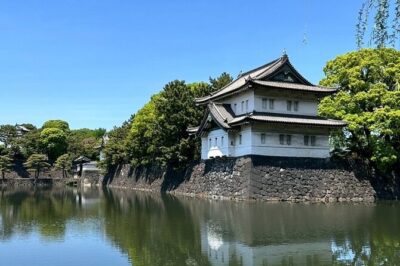
Imperial Palace and Shogun Historical Walking Tour
Read our review →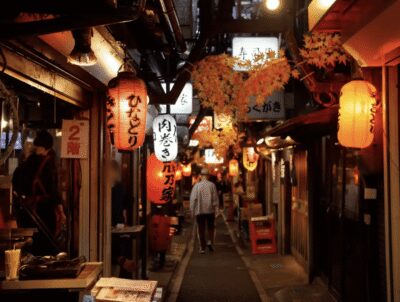
Shinjuku Local Bar and Izakaya Guided Walking Tour
Read our review →
Asakusa Walking Tour with Sensoji Temple Visit
Read our review →
Tokyo Castle & Imperial PalaceーShogun Walking Tour
Read our review →
Shibuya Meltdown Nightlife Tour: All-You-Can-Drink Bar Hopping
Read our review →
Browse the lists this tour appears in