

Review · LISBON
Lisbon: Alfama and São Jorge Castle Quarters Walking Tour
Lisbon’s oldest quarter is best understood on foot, and this Alfama walking tour takes you through the maze of lanes below São Jorge Castle. You’ll follow old city walls, Roman remains, Moorish traces, Jewish Quarter streets, and fado landmarks before reaching the Portas do Sol viewpoint.
I like the way the route connects big history with ordinary city life. I also like that Lisbon Cathedral entry is included, giving you more than an outside look at one of the city’s key monuments. Guides such as Ricardo, Agatha, Helena, Elena, Lucy, and Beatrice have been praised for clear storytelling and a friendly approach.
The main catch is simple: São Jorge Castle is not included. You’ll explore its surrounding quarter and reach the castle walls, but you must buy a separate ticket if you want to go inside. The steep, uneven streets also make this a poor choice for anyone with limited mobility.
Key points to know before booking

- Casa dos Bicos is an easy-to-spot meeting place: Meet beside the striking House of Spikes at Campo das Cebolas, near Terreiro do Paço Metro station.
- The castle is part of the setting, not the entrance ticket: You’ll walk around the castle quarter and see its walls, but admission to São Jorge Castle costs extra.
- The route covers nearly two thousand years of Lisbon: Roman salting tanks, Moorish thermal waters, medieval lanes, and post-earthquake buildings all appear along the way.
- Lisbon Cathedral entry is included: You get a guided visit inside the 12th-century cathedral and its mix of architectural styles.
- Portas do Sol is the payoff: The belvedere gives you one of Alfama’s best views and helps you understand how the quarter spreads downhill.
- Plan for slopes and steps: Comfortable clothing and sensible walking shoes matter, and the tour is not suitable for people with mobility impairments.
Starting at the House of Spikes

Your meeting point is Casa dos Bicos, also called the House of Spikes, at Campo das Cebolas. Its diamond-shaped stone façade makes it one of the easiest meeting places in central Lisbon to recognize. Look for the guide carrying a black bag marked with the Lisboa Autêntica logo.
Casa dos Bicos dates from around 1523 and survived the 1755 Lisbon Earthquake, a useful detail because that disaster erased or damaged so much of the city. Beginning here gives the tour a strong visual introduction: Lisbon is not one single old city, but a place rebuilt, altered, and reused over many centuries.
The nearest Metro station is Terreiro do Paço. Transfers are not included, so you’ll need to make your own way to the meeting point. I’d arrive a little early, especially if you are unfamiliar with Lisbon’s transport system or are trying to locate the guide in a busy public square.
This location also works well for planning the rest of your day. You are starting near the river and the lower edge of Alfama, then walking uphill through the old quarter. After the tour, you can continue exploring on foot or return toward the Baixa and Praça do Comércio area.
More Castle and Palace Walking Tours in Lisbon:
- Sintra & Cascais Day Tour with Pena Palace Entry and Gardens Walk
★ 5.0 · 962 reviews - Edinburgh Castle: Guided Walking Tour with Entry Ticket
★ 4.7 · 11,699 reviews - Venice: Doge’s Palace and St Mark’s Basilica Walking Tour
★ 4.4 · 6,291 reviews
Roman Olisipo beneath modern Lisbon
One of the tour’s most useful features is the way it reaches back before medieval Lisbon. You’ll learn about Olisipo, the Roman name for the city, and see traces of the old Roman salting tanks at the Cetária.
The salting tanks point to the practical side of Roman life. Fish processing supported the city, and these remains help turn a broad history lesson into something you can see under your feet. This is not simply a walk past grand churches and viewpoints. It is a look at the work, food, and trade that helped the settlement function.
The tour also explains Alfama’s thermal waters. The Romans found the hot springs, and the later Muslim population gave the area the name Al-Hamma, linked to baths or hot water. That name helps explain why Alfama feels different from the more orderly streets rebuilt after the earthquake.
I like this early section because it gives you a timeline before the lanes become confusing. You are not just told that Alfama is old. You learn how Roman, Muslim, Jewish, Christian, and later Portuguese influences left marks in the same compact area.
Alleys, patios, and the old Jewish Quarter
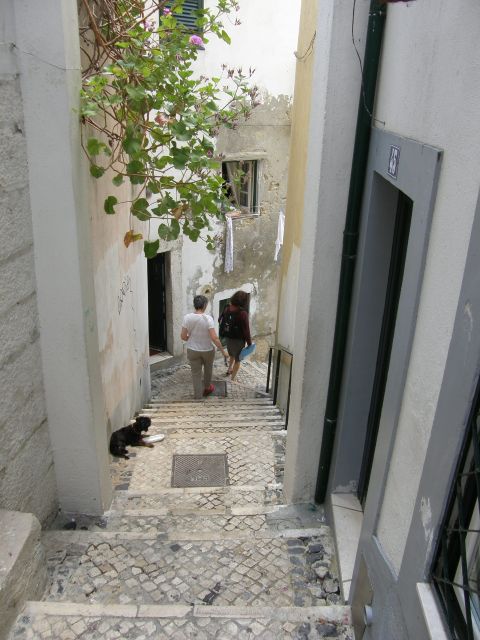
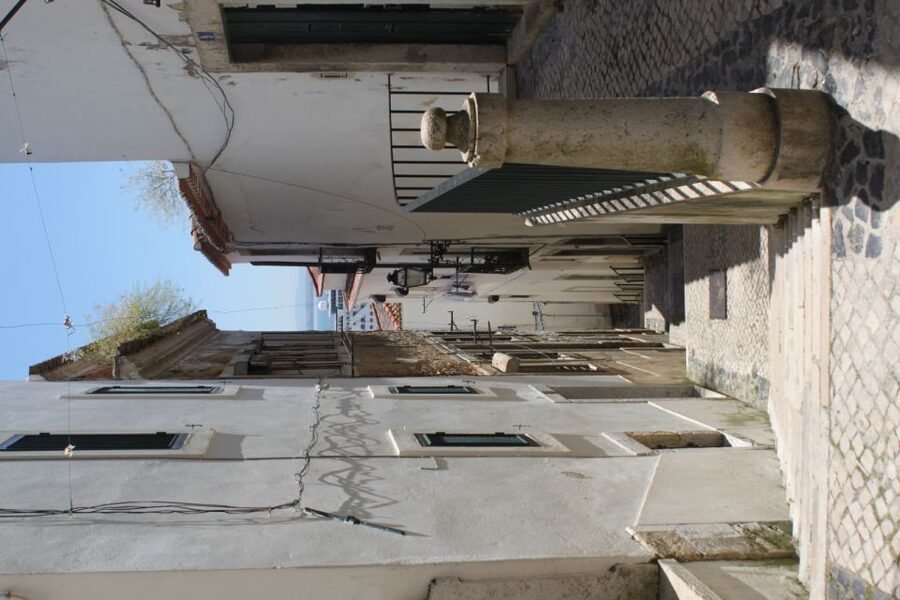
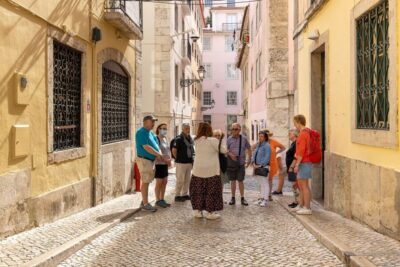
From the lower streets, the route climbs into Alfama’s tight network of alleys and stairways. Expect a maze rather than a formal avenue. Interior patios, small squares, and abrupt turns are part of the experience, and the guide helps you understand how these spaces fit together.
This is where a live guide matters most. A map can show you where Alfama is, but it cannot easily explain why one stairway matters, how the old walls shaped the streets, or how residents use spaces that seem tucked away from the main route.
The walk reaches the area that used to be Lisbon’s Jewish Quarter. The point is not a single grand monument. It is the pattern of streets and the layers of communities that once lived close to one another. Listen for the way your guide links the physical setting with customs, religion, work, and daily routines.
Several people who took this tour appreciated getting their bearings for later independent exploring. That is good advice. Alfama is a rewarding place to revisit after the tour because you can recognize the lanes, return to a square that caught your eye, or use the guide’s suggestions for the rest of your stay.
The route is also where the walking becomes most demanding. Alfama’s charm comes with inclines, steps, and uneven paving. The supplied information specifically rules out the tour for people with mobility impairments, so take that warning seriously. Even fit walkers should wear comfortable shoes and avoid treating this as a polished, level promenade.
Fado customs around Largo do Chafariz de Dentro
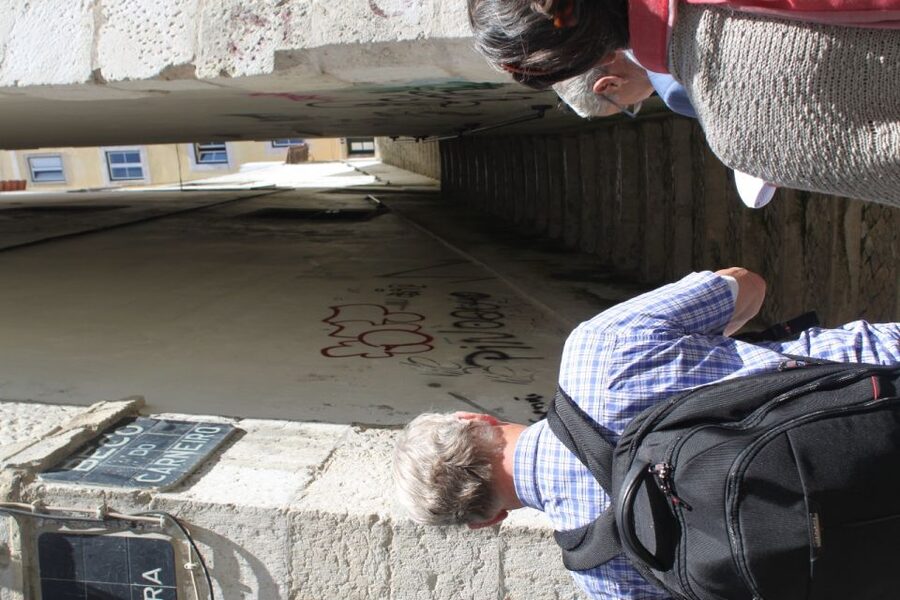
The tour introduces you to fado, Lisbon’s famous song tradition, and explains how it developed in this part of the city. You’ll pass through Largo do Chafariz de Dentro, one of Alfama’s older meeting places, while hearing about the customs tied to the neighborhood.
This part is valuable because fado makes more sense when you connect it with place. The music is not presented as a detached performance for tourists. Instead, the guide relates it to Alfama’s streets, residents, and long-running social customs.
Do not expect a full fado concert as part of the walking tour. The experience gives you background and local context. If you want to hear a performance later, this is the point at which you can ask your guide for suggestions. The activity specifically says the guide will advise you on places to visit during the rest of your stay.
Guides have been especially praised for making this material engaging. Ricardo, described as a history teacher, led one particularly well-received visit, while Agatha was noted for her friendly manner and strong local knowledge. The guide you receive will depend on the date and language, but the available languages are English, Spanish, Portuguese, German, and French.
More Walking Tours in Lisbon:
- Lisbon: History, Stories and Lifestyle Walking Tour
★ 4.8 · 10,902 reviews - Best of Lisbon Small-Group Guided Walking Tour
★ 5.0 · 4,869 reviews - Lisbon: Food and Wine Small Group Walking Tour
★ 4.9 · 4,082 reviews - Best of Lisbon Walking Tour: Rossio, Chiado & Alfama
★ 4.9 · 2,700 reviews
Lisbon Cathedral and its mixed architectural story
The tour includes entry and a guided visit to Lisbon Cathedral, known locally as Sé. Built in the 12th century, it has been changed over time, which is why you’ll see a mix of architectural styles rather than one perfectly uniform design.
That mixture is part of the appeal. The cathedral gives you a chance to see how Lisbon’s buildings carry evidence of different periods, repairs, and changes. After walking through small lanes and old residential spaces, the cathedral provides a larger, more formal landmark.
The included entry improves the value of the tour. Many walking tours keep all visits outside, but here you get a guided interior stop as well as the outdoor route. It also breaks up the climb and gives you a place where your guide can explain architectural details with the building in front of you.
Keep in mind that the tour is only 150 minutes, so the cathedral visit is one part of a tightly planned route. You should not expect a long, free-ranging museum visit. The benefit is that you see the cathedral without having to plan a separate stop, while still covering much of Alfama in the same morning or afternoon.
Portas do Sol and the view over Alfama
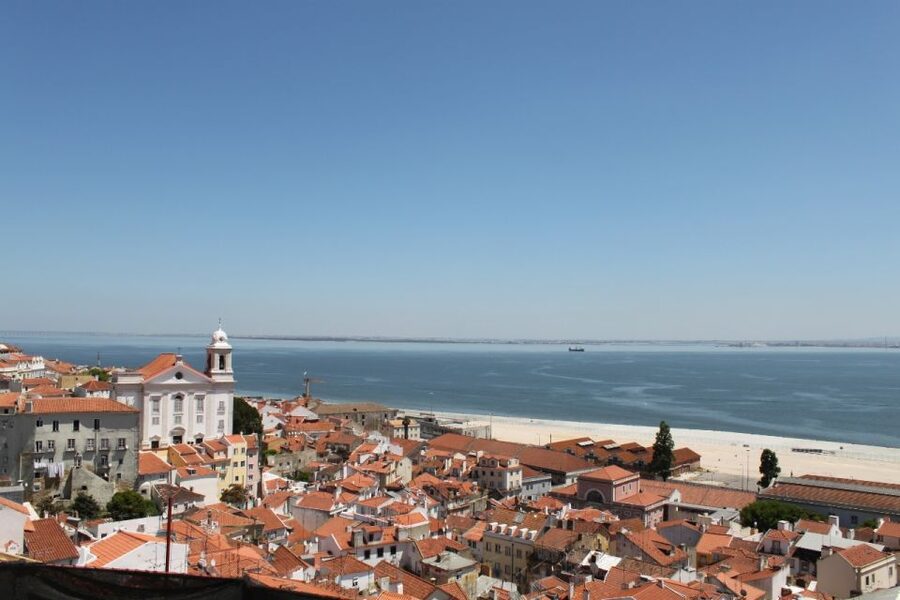
The route eventually reaches Portas do Sol, one of the best-known belvederes in Alfama. This is the natural visual payoff of the walk. After moving uphill through narrow streets, you arrive at a broad viewpoint where the quarter’s form becomes easier to read.
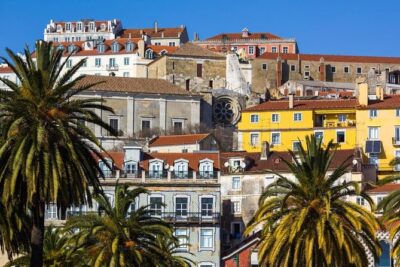
From here, you can better understand Alfama as a hillside district running down toward the river. The viewpoint also helps connect the places you have just visited: the cathedral, castle quarter, lanes, and lower streets no longer feel like separate stops.
I would not treat this as only a photo stop. Use the pause to ask your guide about the parts of Lisbon you can see and to make notes about where you want to return. Several guides have been praised for helping people plan the rest of their time in the city, and this is an ideal moment to ask for practical suggestions.
The exact pace can vary with the group and guide. Some past visits have been very small, including one booking made by a family that ended up with a private-style experience. You should not assume every departure will be private, but small groups may allow more questions and a more flexible rhythm.
What the São Jorge Castle wording really means
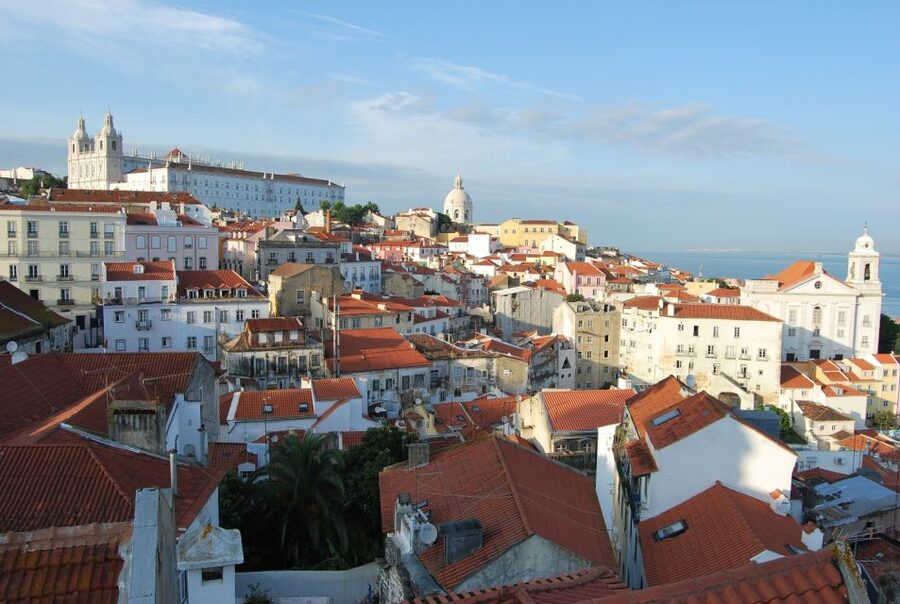
The tour is built around São Jorge Castle and its quarter, but it does not include entrance to the castle itself. You’ll explore the streets around the fortress, follow parts of the old defensive setting, and see the castle walls, but you will not receive a castle admission ticket.
This distinction matters because the title may lead you to expect a full castle visit. If entering São Jorge Castle is a priority, plan a separate visit and budget for its admission. You may also prefer to schedule the castle before or after the walking tour, depending on your energy and available time.
The advantage of keeping the castle entrance separate is that the walking tour remains focused on the whole Alfama district rather than spending most of its time inside one attraction. You get Roman, Moorish, Jewish, Christian, and fado-related context across the neighborhood.
The drawback is that anyone expecting a castle tour may feel the experience stops short. One direct assessment of the tour praised the walk but singled out the missing castle entry as the main disappointment. I agree that this is the one point you should understand before paying.
Is $23 a fair price for 150 minutes?
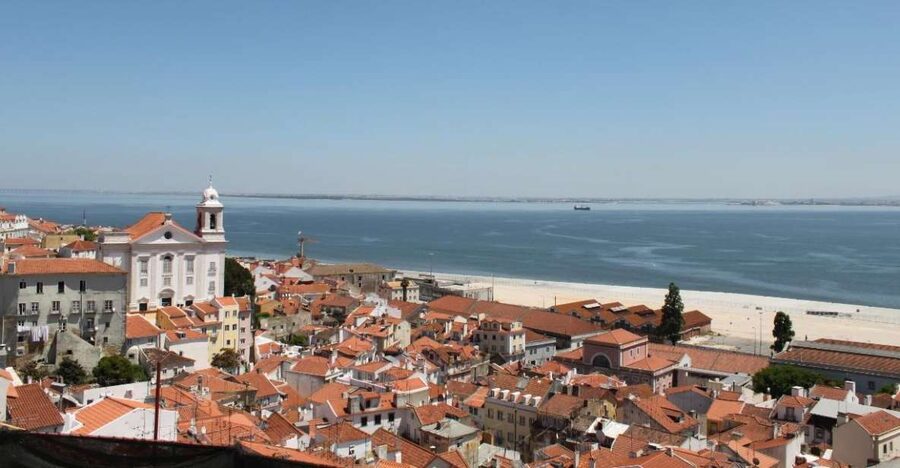
At $23 per person, the tour offers a reasonable package if you want structure, local explanation, and cathedral entry. You are paying for a live guide, a 150-minute route, and admission with a guided visit to Lisbon Cathedral. That is better value than a basic orientation walk that keeps every sight outside.
The price is less attractive if you mainly want to wander independently or if your only goal is to enter São Jorge Castle. In that case, you would still need to arrange the castle separately, and the tour does not replace that ticket.
For a first day in Lisbon, I think the price makes more sense. The route gives you a working map of Alfama and introduces the city’s main historical layers before you return on your own. It can save time and help you decide which parts deserve a slower second visit.
The experience has a 4.8 rating from 136 reviews, with repeated praise for clear explanations, friendly guides, useful route planning, and stories that held the attention of both adults and children. One 15-year-old particularly enjoyed the experience, which suggests the storytelling can work for families when the guide keeps the pace lively.
Timing, languages, and practical comfort
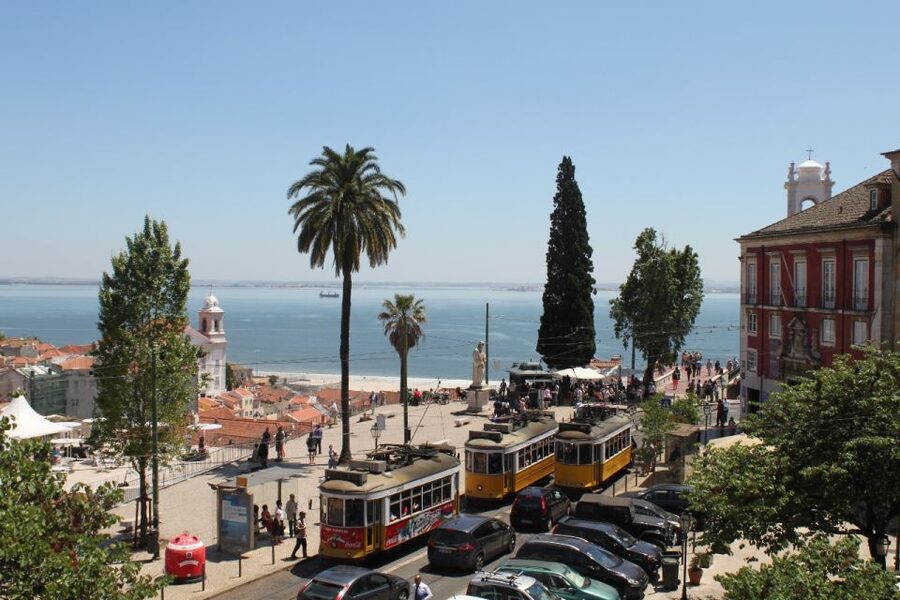
The duration is 150 minutes, or two and a half hours. Check the available departure times when booking because the supplied information does not list one fixed daily start time.
You can choose from English, Spanish, Portuguese, German, and French departures. If you care about a specific language, confirm its availability for your chosen time rather than assuming every departure offers all five.
Wear comfortable clothes and shoes. The route includes slopes, alleys, stairways, and old paving, so fashion-first footwear is a poor match. Personal protective equipment, including a mask and disinfectant gel, is listed as included.
The meeting point is not a hotel pickup. You are responsible for reaching Casa dos Bicos, and transport to and from the start is not included. Terreiro do Paço is the nearest Metro station, which makes the starting point fairly straightforward to reach from central Lisbon.
The booking terms are flexible: you can cancel up to 24 hours before the activity for a full refund, and you can reserve now and pay later. Those details help if your Lisbon schedule is still changing.
Who will get the most from this walk?
I would recommend this tour to first-time Lisbon visitors who want context before exploring alone. It suits people who enjoy architecture, city history, local customs, and a good amount of walking in a short period.
Families may also like it, especially if the guide tells stories rather than delivering a long lecture. The experience has worked well for children and teenagers when the guide actively engages the group.
It is less suitable for anyone who needs step-free access, dislikes hills, or wants a slow visit focused on one monument. It is also not the right choice if your main goal is a full São Jorge Castle tour.
The strongest part is the guide-led connection between places. You are not only seeing Casa dos Bicos, the Cetária, the cathedral, fado landmarks, and Portas do Sol as isolated sights. You are learning how they fit into Lisbon’s long development.
Should you book the Alfama and São Jorge Castle Quarters tour?
Book it if you want a well-organized introduction to Alfama, appreciate strong local storytelling, and are happy to explore the castle quarter without entering the castle. At $23, the included cathedral visit and two and a half hours with a live guide make this a sound first-day choice.
Skip it if you have mobility concerns, prefer a completely independent walk, or would feel disappointed without castle admission. If you do book, arrive at Casa dos Bicos early, wear shoes made for hills, and treat the guide’s later recommendations as part of the value. The tour gives you the framework. Your own return walks can fill in the details.
FAQ
Where does the tour meet?
The meeting point is Campo das Cebolas, beside Casa dos Bicos, also called the House of Spikes. The nearest Metro station is Terreiro do Paço.
How long does the walking tour last?
The tour lasts 150 minutes, or two and a half hours.
Is São Jorge Castle entry included?
No. The tour explores the streets and castle quarter around São Jorge Castle, but entrance to the castle is not included.
Is Lisbon Cathedral entry included?
Yes. The price includes entrance and a guided visit to Lisbon Cathedral.
Which languages are available?
The live guide service is available in Spanish, Portuguese, German, English, and French.
Is transport to the meeting point included?
No. You must arrange your own transport to and from the meeting point.
Is the tour suitable for people with mobility impairments?
No. The activity is specifically listed as unsuitable for people with mobility impairments.
What should I wear?
Wear comfortable clothes and shoes suitable for walking on slopes, steps, and old paving.
Can I cancel for a full refund?
Yes. You can cancel up to 24 hours in advance for a full refund.
Can I reserve now and pay later?
Yes. The booking option allows you to reserve your place and pay later, helping you keep your plans flexible.
New routes in Lisbon
- Small Group Walking Tour of Belém★ 4.9 · 80 reviews
- Lisbon: Walking Tour in the Center (Max 12 Participants)★ 5.0 · 741 reviews
- Lisbon Through the Eyes of a Local – Food and Walking Tour★ 4.9 · 141 reviews
- Lisbon: Street Art Walk★ 5.0 · 79 reviews
- Lisbon: Food and Culture 3-Hour Walking Tour★ 4.7 · 95 reviews
- Lisbon Tram No. 28 Ride & Walking Tour★ 4.1 · 766 reviews
- Lisbon: Private Boat Trip, Guided Walking Tour, Bike & Tram★ 4.8 · 116 reviews
- Lisbon: Jewish Walking Tour★ 4.9 · 96 reviews
Lisbon Walking Tours, compared.
Best of Lisbon Small-Group Guided Walking Tour
Read our review →
Best of Lisbon Walking Tour: Rossio, Chiado & Alfama
Read our review →

Lisbon Food Tour with 10+ Tastings of Local Delicacies & Wines
Read our review →
Sintra & Cascais Day Tour with Pena Palace Entry and Gardens Walk
Read our review →
Lisbon Roots – Small group Food & Culture Walking Tour w/tastings
Read our review →Browse the lists this tour appears in