
Review · GERMANY
Leipzig: 1.5-Hour Historical Walking Tour in German
Leipzig’s best stories are not all carved into monuments. Some involve Greenlanders in Leipzig, Shakespeare’s stockings, and a train station built in two halves. This 90-minute walk uses those odd details to make the city easier to understand, while also covering major sights such as the Mädler Passage, Old Town Hall, and St. Thomas Church.
I like the short, central route and the fact that the guide explains Leipzig in German rather than simply pointing at buildings. I also like the strong focus on humor and clear storytelling. The main catch is simple: you need enough German to follow live commentary, and 90 minutes gives you an introduction rather than a full tour of the city.
Key points at a glance
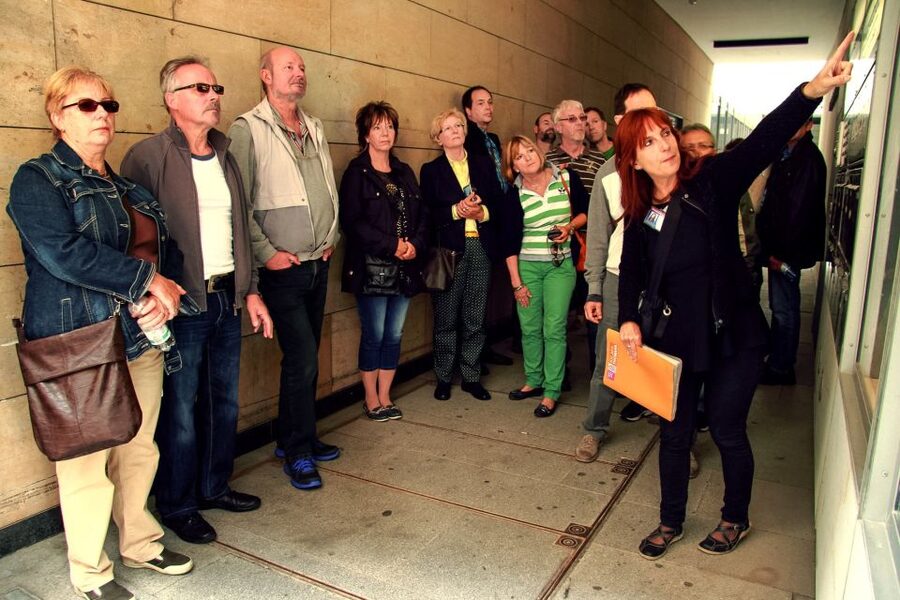
- The route links Leipzig’s main historic sights: See the Opera House, Gewandhaus concert hall, university, Mädler Passage, Old Town Hall, and St. Thomas Church.
- The stories are unusually specific: Learn why Leipzig’s Central Train Station has two halves and hear the tale behind local fountains.
- German is the only tour language: The guide speaks live German throughout, so this is best for German speakers or strong learners.
- Guides focus on humor and clear delivery: Uwe Lange and Thorsten have received particular praise for engaging, well-paced explanations.
- The tour costs $17 per person: For 90 minutes in the city center, that is a fair price if you want orientation and local stories.
- The meeting point is easy to find: Start at the Tourist Information Center at Katharinenstraße 8, arriving 15 minutes early.
Why Leipzig’s odd stories make the tour work
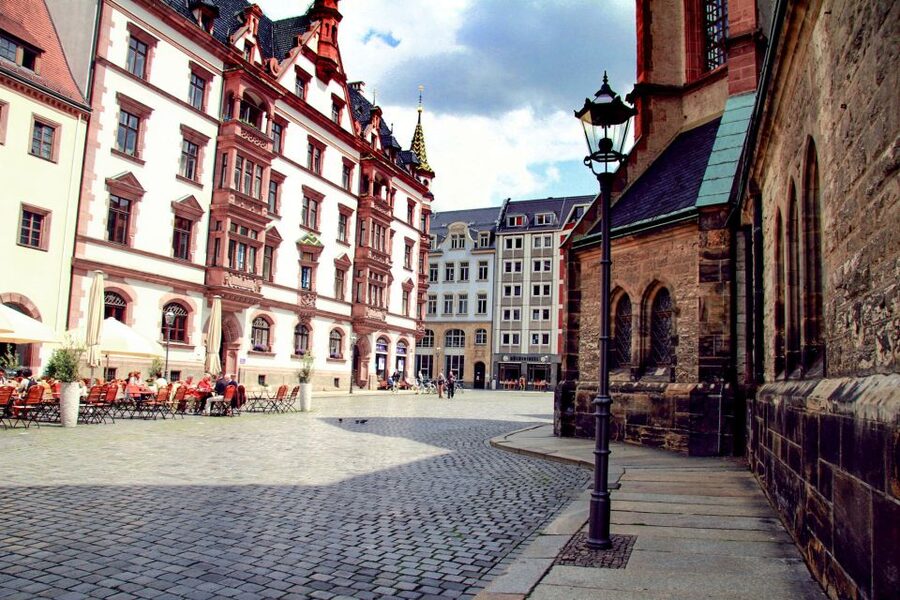
A standard city walk can become a parade of names and dates. This one appears designed to avoid that trap. Instead of treating Leipzig as a series of grand facades, the guide connects buildings to curious questions: Why was the Central Train Station divided into two halves? What is the story behind the fountains? How did Greenlanders end up in Leipzig? And what is interesting about Shakespeare’s stockings?
Those details matter because they give you handles for remembering the city. You may forget a construction date, but you are more likely to recall a strange story tied to a place you have just seen. That is useful when you continue exploring on your own.
The walk also mixes older and newer parts of Leipzig’s story. Music, trade, university life, architecture, and political history all appear in the route. The result should suit you if you want a broad first look without spending half a day indoors.
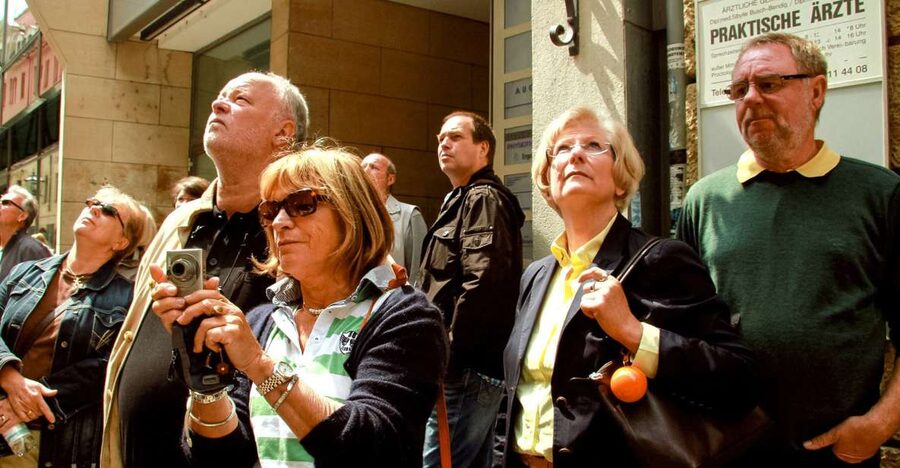
The tone is another strength. Recent guide feedback points to lively, humorous delivery, strong subject knowledge, and clear pronunciation. Uwe Lange was singled out for telling Leipzig’s story with warmth and humor, while Thorsten was praised for being well informed. One especially memorable stop was a talk near St. Nicholas Church about the period before the fall of the Berlin Wall.
That last point is worth keeping in mind. The tour is not only about Leipzig’s older buildings. It can also connect the city center to its more recent political story, including the years before the Wall came down.
More History Walking Tours in Germany
- Berlin: History of the Third Reich Guided Walking Tour
★ 4.7 · 791 reviews - Trier: Guided Old Town Highlights and History Walking Tour
★ 4.7 · 687 reviews - Berlin Historical Highlights Walking Tour
★ 4.9 · 657 reviews
Starting at Katharinenstraße 8
The meeting point is the Tourist Information Center at Katharinenstraße 8. Arrive 15 minutes before departure. That small time cushion is sensible for a walking tour because late arrivals can be hard to fold into a moving group.
The start puts you in a useful part of central Leipzig. You are close to the historic core, so the tour can move quickly into the main sights without spending time on transfers. No transportation is included or needed during the experience. You walk from place to place with the guide.
The activity lasts 1.5 hours. That is long enough to build a clear picture of the center, but short enough to fit around a museum visit, lunch, or train connection. It is also a good first activity after arriving in Leipzig, since the route can help you understand where the main sights sit in relation to one another.
Group size is not specified, so I would not book this expecting a private walk. One recent booking specifically praised a small group, but the practical approach is to plan for a shared tour and enjoy a smaller group if that is how your departure runs.
The Opera House and Gewandhaus: Leipzig’s musical face
The route includes the Opera House and Gewandhaus concert hall, two places that help explain Leipzig’s strong connection to music. You may not go inside either venue on this walk, but seeing them from outside gives the city tour a useful theme.
Leipzig is often introduced through its composers and musical institutions. A good guide can make that subject less abstract by showing you the buildings where performances, rehearsals, and public musical life have mattered. The Gewandhaus, in particular, gives the route a sense of cultural weight before you move back toward the older streets.
The practical benefit is that you see these landmarks without committing to a concert or a separate guided visit. If music is a main reason for your stay, use this stop to mark places you may want to return to later. If music is not your main interest, the guide’s anecdotes should keep the visit from feeling like a formal lecture.
This is also where the guide’s delivery matters. Architectural facts can be dry when presented one after another. The strongest part of this experience is likely to be the way the guide links the buildings to stories, personalities, and city life.
The university and the changing city center
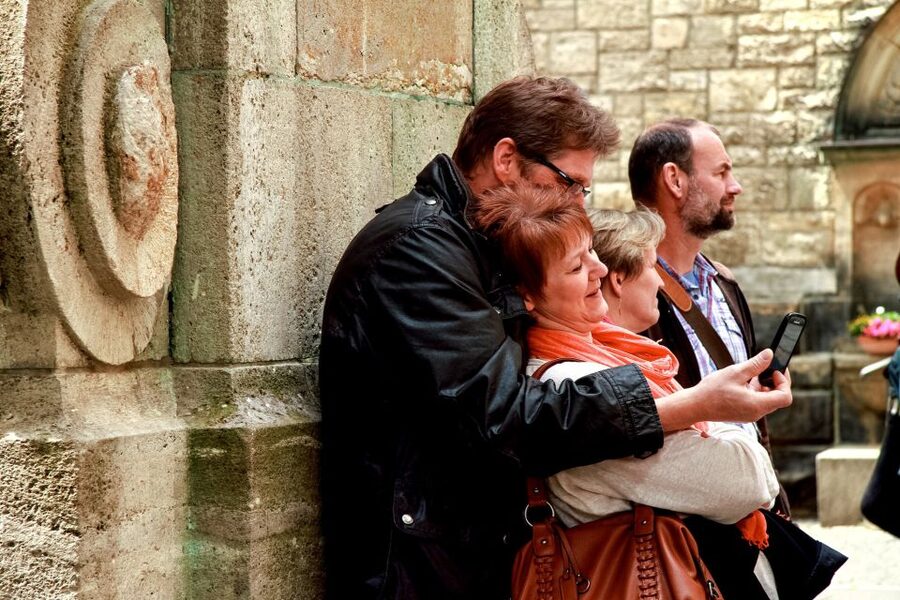
The university is another stop on the route. It adds a different layer to Leipzig’s center, which can otherwise seem dominated by churches, historic commercial buildings, and music venues.
University areas often show how a city remains active rather than becoming an outdoor museum. Here, the university helps connect Leipzig’s older center to its intellectual and student life. The guide may also use it to explain how the city developed as a place of study, debate, and public activity.
Do not expect a long campus visit. The tour covers several locations in 90 minutes, so this is a brief city-center stop, not a detailed look at university buildings or academic history. Still, it helps create a fuller picture of Leipzig.
I like this variety in the route. You move from performance spaces to an academic institution, then into historic passages and civic buildings. That range gives the walk a good rhythm.
Same streets, a different guide:
- Discover Berlin Half-Day Walking Tour
★ 5.0 · 9,624 reviews - Berlin City walk Government District and Places of Democracy
★ 4.7 · 8,467 reviews - Berlin: Third Reich & Cold War Guided Walking Tour
★ 4.9 · 8,378 reviews - Munich: Third Reich & WWII Walking Tour
★ 4.6 · 6,181 reviews
Mädler Passage and the stories behind Leipzig’s commerce
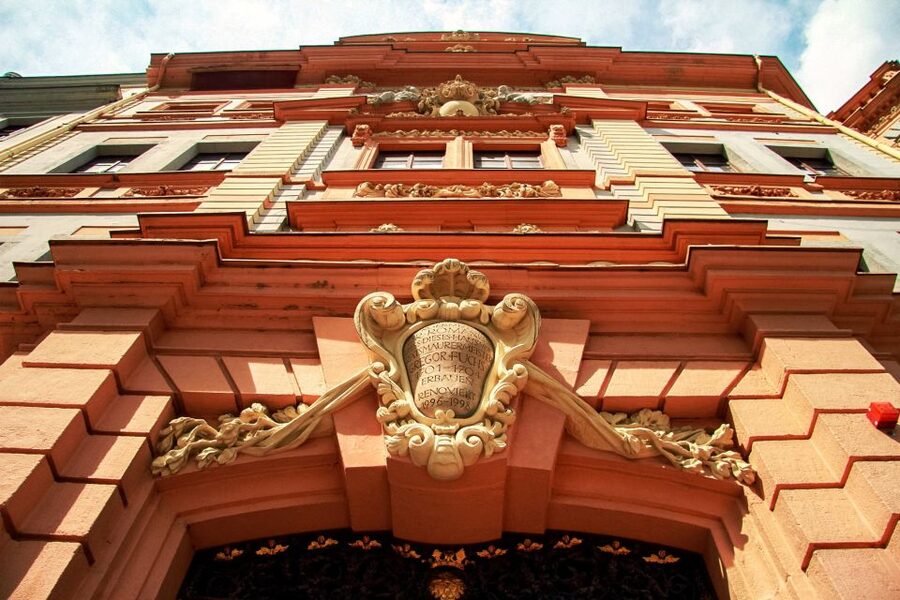
The Mädler Passage is one of the most appealing stops on the walk. Its elegant passageway shows how Leipzig’s commercial center was organized around covered shopping and meeting spaces.
A passage is easy to hurry through on your own. With a guide, you get a reason to pause and look up, notice the design, and understand why this kind of urban space mattered. The Mädler Passage is not just a pretty shortcut. It helps you see Leipzig as a trading city with a long tradition of bringing shops, visitors, and public life together in the center.
This is also the kind of stop where small anecdotes can be more useful than a long architectural explanation. The tour promises stories about fountains and other curious details, so keep your eyes open while the guide talks. The exact story told may depend on the guide, but the format clearly favors memorable local color over a list of dates.
The passage is a good place to take a mental break from the larger monuments. After the Opera House, concert hall, and university, you get a more intimate view of daily city life.
Old Town Hall and the heart of the historic center
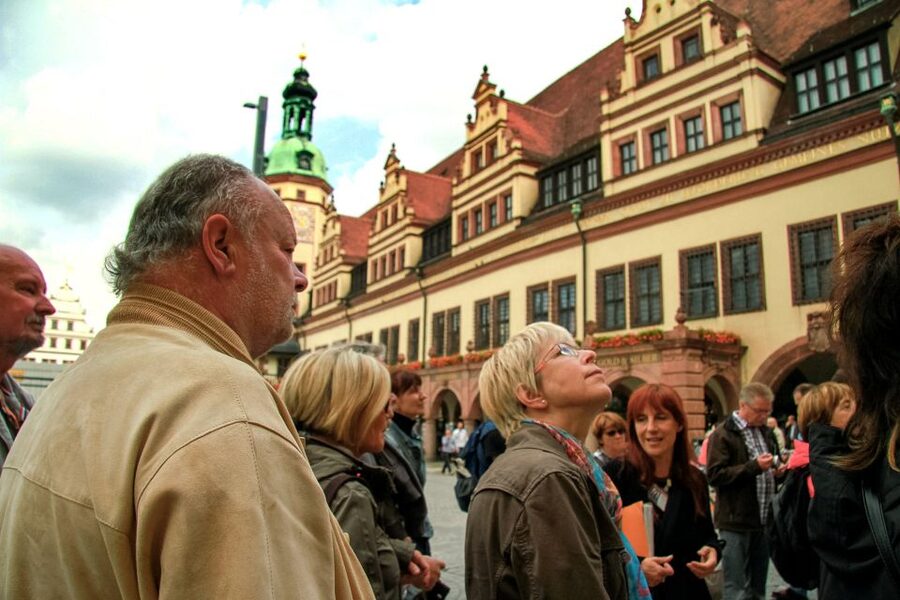
The Old Town Hall gives the walk its civic anchor. Its location and scale make it a natural place to talk about Leipzig’s government, trade, and public life.
Expect the guide to explain the building as part of the city rather than treat it as an isolated facade. That is the real value of seeing it with a local guide. You learn how the main square, the town hall, and nearby commercial streets fit together.
The route does not promise an interior tour, so plan to appreciate the exterior and the surrounding space. If you want a detailed examination of rooms, collections, or municipal history, you will need a separate visit. This walk is about orientation and context.
The Old Town Hall is also a useful point for getting your bearings. After the tour, you should have a clearer sense of where the central sights are and how easily they connect on foot. That can save time during the rest of your stay.
St. Thomas Church and Leipzig’s major names
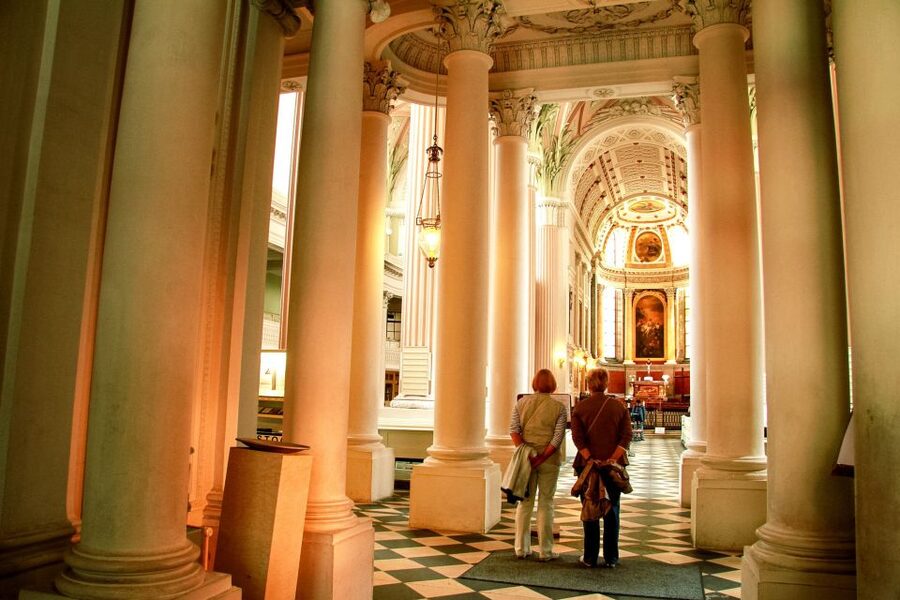
St. Thomas Church is one of the tour’s most important stops. It carries strong connections to Leipzig’s musical tradition and is one of the places many visitors most want to see in the center.
The guide can give the church more meaning than a quick photograph allows. You will hear about its place in Leipzig’s story and the people connected with it, while seeing the building as part of the surrounding city rather than as a stand-alone attraction.
One practical note: the walking tour is not the same as the separate tower visit mentioned in recent feedback. A visitor specifically wished they had been able to book a tower tour at St. Thomas Church after the walk, but that additional visit was already full. Do not assume the 90-minute tour includes access to the tower.
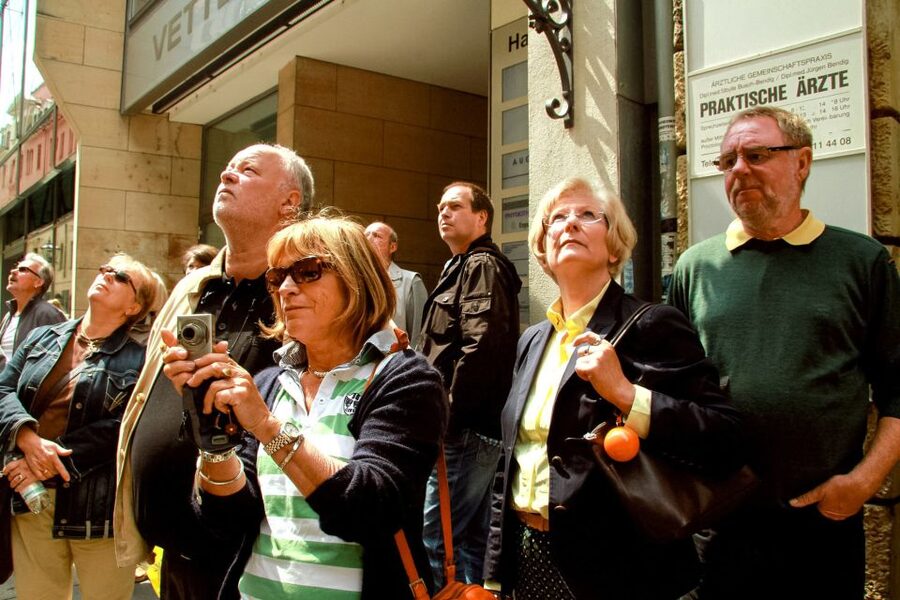
The church also shows why guide quality matters. A clear speaker can hold attention in an open public space, where traffic, footsteps, and other groups may compete with the commentary. Bernd specifically praised a guide’s loud, clear pronunciation, saying people in the second and third rows could follow without strain. That is a useful detail if you prefer to walk behind the main cluster.
The Central Train Station’s two halves
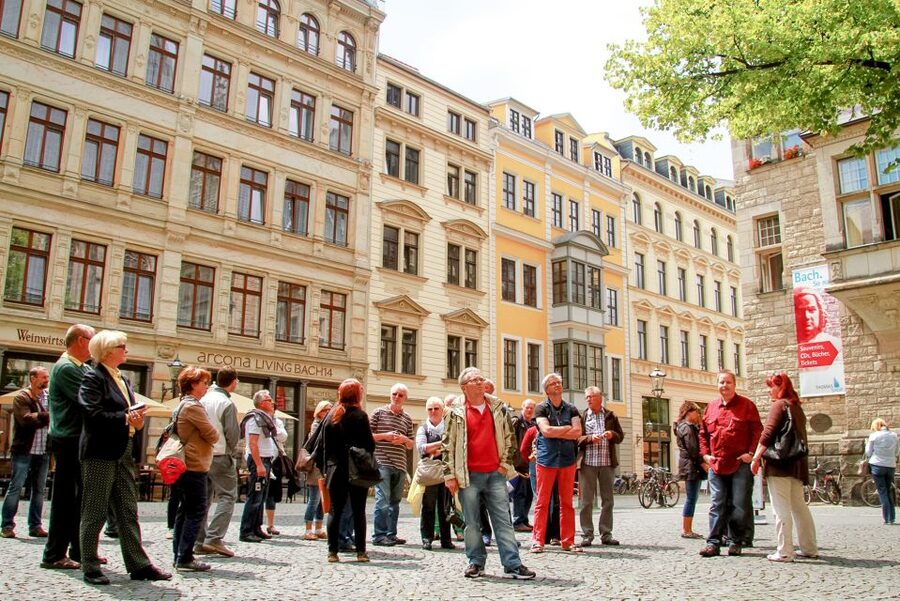
The story of Leipzig’s Central Train Station is one of the tour’s most distinctive promised details. Instead of treating the station as a transport building you pass through, the guide explains why it was made up of two halves.
That sort of explanation gives you a better eye for the city. Large public buildings often contain clues about the political, commercial, or technical needs of their time. Once you hear the reason for the station’s design, you are more likely to notice its structure the next time you pass through.
The station is not listed among the main sightseeing stops in the same way as the Old Town Hall or St. Thomas Church, so the exact amount of time spent there may vary. Still, its story shows the tour’s approach: look for the unusual question, then use it to explain Leipzig.
If you are arriving by train, this story may be especially useful. You can connect the guide’s explanation with a building you have already used, which makes the information easier to retain.
Fountains, Greenlanders, and Shakespeare’s stockings
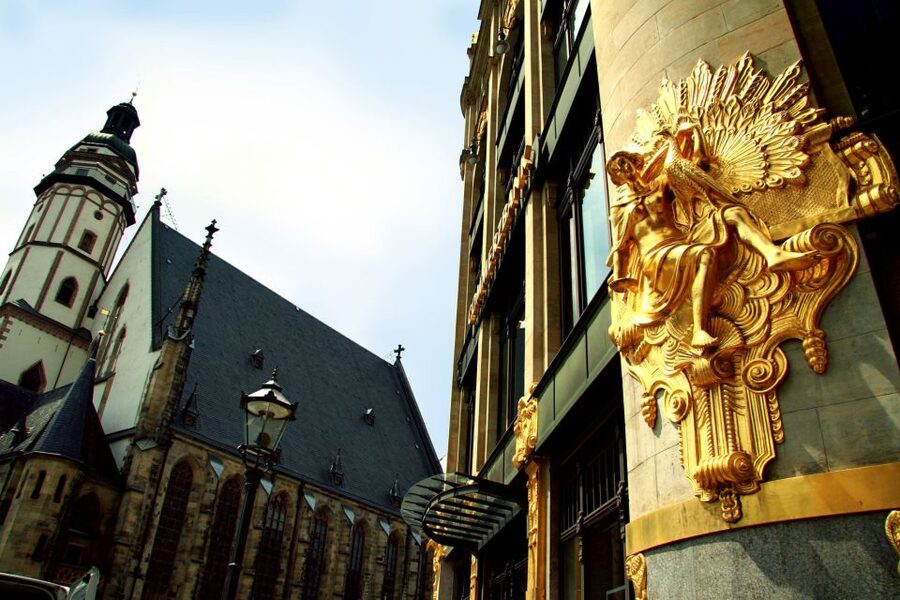
The tour’s most unusual subjects are also its best selling point. Fountains, Greenlanders in Leipzig, and Shakespeare’s stockings may seem unrelated, but that is precisely why they can make the walk memorable.
A city tour needs some odd turns. Without them, the route can become a chain of impressive but interchangeable buildings. These subjects give you stories to retell and encourage you to look more closely at places you might otherwise pass.
The guide is expected to explain the stories in German with live commentary. This is not an audio guide, a printed route, or a silent sightseeing walk. You need to listen as the group moves, and the humor may depend on understanding word choice and timing.
For German learners, that can be a real benefit. You get cultural context and listening practice at the same time. For beginners, it may be demanding. The experience is not advertised with translation or multilingual commentary, so you should choose it only if you can follow German spoken at normal tour speed.
A brief look at Leipzig before the Berlin Wall fell
Leipzig’s recent political history can add weight to the walk. One particularly praised presentation took place near St. Nicholas Church and focused on the period before the fall of the Berlin Wall.
St. Nicholas Church is not listed among the core stops in the formal route description, so you should not assume every departure includes the same extended talk there. Still, the guide’s use of Leipzig’s modern history is important. It shows that the city is not only about old churches, concert halls, and trading passages.
If this subject matters to you, ask at the start whether the route will include that part of the story. Guides may place different emphasis on particular sites, and the 90-minute schedule leaves limited room for long stops.
This is also why the tour works well as an introduction rather than a final word. It can point you toward subjects you may want to explore further, including Leipzig’s music, architecture, university life, and political change.
What the $17 price gets you
At $17 per person, the tour is fairly priced for a live, 90-minute walk through central Leipzig. You are paying for a guide who combines several major sights with prepared stories and local anecdotes. There are no transfer costs because the experience is on foot.
The value is strongest if you are new to Leipzig or have limited time. A self-guided walk costs less, but you would need to research the route and find the stories yourself. The tour saves that preparation and gives you a person who can explain, adjust the pace, and answer questions during the walk.
The value is weaker if you already know the city well or want extended time inside each landmark. This is not an admission ticket, museum tour, or specialist architecture seminar. It gives you a lively overview.
Free cancellation up to 24 hours before the start also lowers the risk of booking early. You can reserve and pay later, which helps if your plans are still shifting. Those policies are useful, but the central question remains language: paying $17 for commentary you cannot follow is poor value.
Who should book this Leipzig walk?
I would choose this tour if you want a compact introduction to Leipzig, enjoy stories with a little humor, and understand German well enough to follow a live guide. It is particularly useful on a first day in town, when you want to learn the layout before choosing museums, concerts, or longer visits.
It should also suit German-speaking visitors who prefer a guide with personality rather than a formal lecture. The strongest guide feedback emphasizes clear speech, humor, and an ability to explain older and newer history without losing the group.
I would be cautious if you need English commentary, dislike group walks, or want substantial time inside the churches and concert venues. The tour includes major sights, but it does not promise interior access, transfers, or a private format.
Arrive at Katharinenstraße 8 15 minutes early, wear shoes suitable for walking, and stay close enough to hear. If you are interested in the tower at St. Thomas Church, check separately rather than assuming it is part of this tour.
Final call: a strong first look in German
Book this walk if you want Leipzig’s main center sights explained through memorable stories rather than a dry list of facts. The mix of the Mädler Passage, Old Town Hall, St. Thomas Church, music landmarks, and unusual subjects such as Greenlanders and Shakespeare’s stockings gives the route a good balance.
Skip it if you need English, want a private experience, or prefer to spend an hour and a half inside one major building. For German speakers, though, $17 buys a useful orientation, a human voice, and plenty of odd details that can make Leipzig stick in your mind.
FAQ
How long is the Leipzig walking tour?
The tour lasts 1.5 hours, or 90 minutes.
What language is the tour conducted in?
The tour is conducted in German with live commentary from a German-speaking guide.
Where does the tour start?
It starts at the Tourist Information Center at Katharinenstraße 8 in Leipzig.
How early should I arrive?
You should arrive at the meeting point 15 minutes before the tour begins.
Which Leipzig sights are included?
The route includes the Opera House, Gewandhaus concert hall, university, Mädler Passage, Old Town Hall, and St. Thomas Church.
Does the tour include transfers?
No. Transfers are not included, and the activity is a walking tour.
Does the tour include the tower of St. Thomas Church?
The information provided lists the walking tour and St. Thomas Church, but it does not state that tower access is included. A separate tower visit may need to be booked.
Can I cancel the booking?
Yes. You can cancel up to 24 hours before the tour for a full refund. You can also reserve now and pay later.
New routes in Germany
- Munich: Walking Tour Old Town and Viktualienmarkt★ 4.7 · 839 reviews
- Stuttgart: Guided Ghost Walking Tour★ 4.5 · 867 reviews
- Stuttgart: Private Guided Circular City Walk★ 4.7 · 129 reviews
- Stuttgart: Old Town Highlights Guided Walking Tour★ 4.2 · 101 reviews
- Stuttgart: City Highlights – Guided Walking Tour★ 4.7 · 189 reviews
- Hamburg: Private Tour Red Light District Walking Tour★ 4.7 · 227 reviews
- Small Group Walking Tour: “Wild Kreuzberg”★ 4.8 · 199 reviews
- Sachsenhausen Memorial: Walking Tour from Berlin★ 4.7 · 132 reviews
Germany Walking Tours, compared.

Berlin City walk Government District and Places of Democracy
Read our review →

Berlin’s Best: 2 Hour Walking Tour Third Reich and the Cold War
Read our review →
Explore Berlin: See All The Iconic Sights & Some Hidden Gems
Read our review →
Third Reich Berlin: Hitler and WWII Walking Tour
Read our review →
Browse the lists this tour appears in