
Review · CROATIA
Zagreb: City and WWII Tunnels Walking Tour
Zagreb’s most surprising sight is below street level: the Grič Tunnel, a WWII-era passage later used as a Cold War shelter. This 150-minute walk links that unusual stop with the cathedral, Dolac Market, Upper Town, and Tkalčićeva Street, giving you a useful first look at the Croatian capital.
I like the small price, $14, and the way the tour combines major sights with local details, from market produce to the cannon fired at Lotrščak Tower. I also like the guides’ friendly style. Robert, Marko, Iva, Zrinka, and Marin are praised for clear storytelling, humor, photos, and restaurant advice.
The main drawback is the funicular closure, with renovation scheduled through March 2026. The tunnel can also be closed on certain dates, so check the schedule before booking if those two features are your main reason for going.
Key points to know before you book
- The WWII tunnel is the tour’s most unusual stop, adding modern Zagreb history to the usual old-town sights.
- The route covers both Lower Town and Gradec, so you get city orientation as well as landmark sightseeing.
- The $14 price is strong value, especially with a licensed English-speaking guide and funicular ticket when operating.
- Guides bring humor and practical advice, including food, drinks, museums, and places to visit later.
- The walk is generally manageable, with regular stops for photos, explanations, and questions.
- Check current operations, since the funicular is closed for renovation until March 2026 and the tunnels may not open on every date.
Why this is a smart first look at Zagreb
I would use this tour early in a Zagreb stay. It gives you a working map of the center, introduces the city’s two historic levels, and points out places you can return to at your own pace.
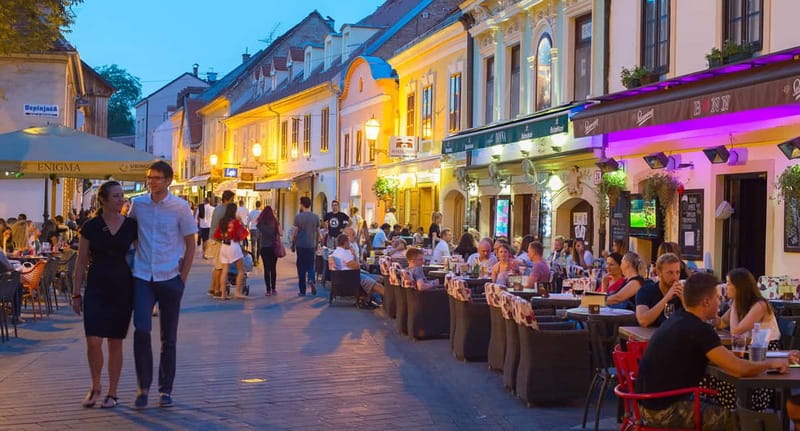
The route begins in the formal parks and squares of Lower Town, then moves toward the market and tunnel before climbing to Gradec, Zagreb’s Upper Town. It finishes near Tkalčićeva Street, one of the easiest places to find a café, bar, or casual meal.
That order matters. You do not spend two and a half hours hearing disconnected facts. You move through the city as it developed, from grand public spaces to the medieval hilltop, with the WWII tunnel providing a sharp change of mood.
The guides also add value beyond a map. Robert and Marko are repeatedly praised for mixing jokes with solid explanations. Iva is noted for making the city’s past easy to follow, while Zrinka is praised for small details, fun facts, and architectural clues you could easily miss alone.
More Walking Tours in Croatia:
- Dubrovnik: Old Town Walking Tour
★ 4.8 · 5,174 reviews - Split: Old Town and Diocletian Palace Walking Tour
★ 4.9 · 4,727 reviews - Dubrovnik Discovery Old Town Walking Tour
★ 5.0 · 4,458 reviews
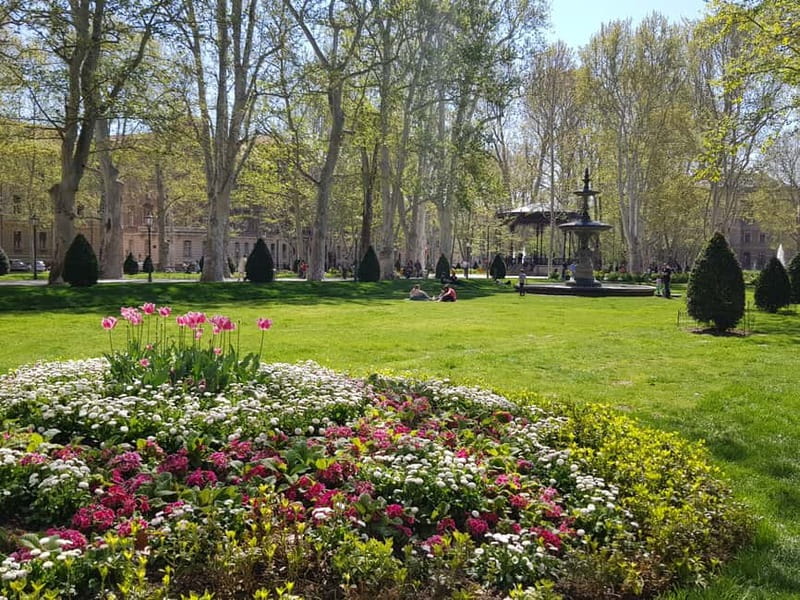
Starting at Zrinjevac Park
Meet in front of the Meteorological Station at Trg Nikole Zrinskog 2. This is a sensible starting point because Zrinjevac Park places you in Zagreb’s Lower Town, among formal paths, mature trees, public art, and handsome historic buildings.
Your first stop is mainly about orientation and photographs. It is also a gentle beginning, since you are not immediately pushed up a steep hill or into a crowded attraction.
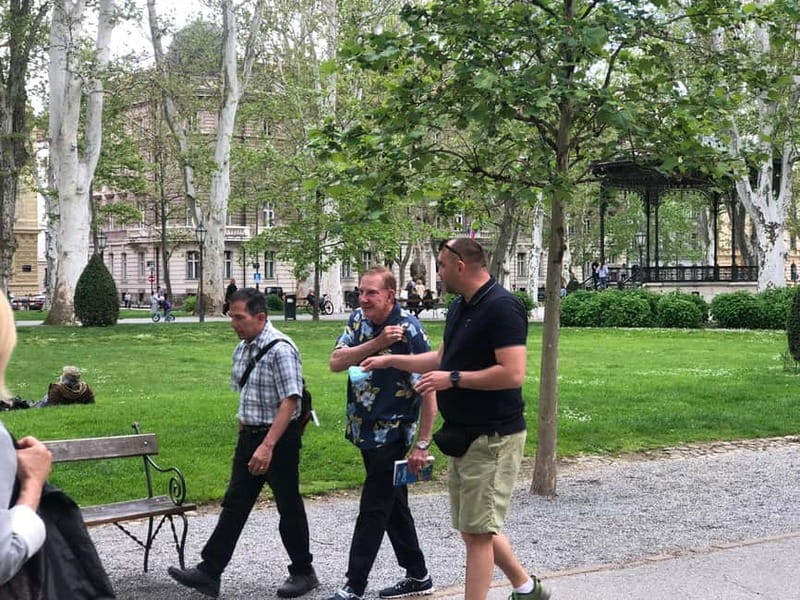
The guide uses the park to set the scene for Zagreb. You can expect an introduction to the city and suggestions for sights worth seeing after the walk. Several guides are also praised for taking good photos, a small service that is useful when you are traveling alone or with a group that wants a shared picture.
Bogovićeva Street and Zagreb’s café culture
From the park, the route continues along Bogovićeva Street. This is a social, central part of the city, lined with bars and restaurants.
The stop helps you see Zagreb as a living city rather than a chain of monuments. You get a quick sense of where people meet for coffee, drinks, and meals. I would pay attention to the guide’s recommendations here, then write down any restaurant or café suggestions that fit your schedule.
This section is not a major historical attraction, so do not expect an interior visit or a long stop. Its value is practical. It helps you understand where to eat and how the center connects before the route turns toward the main square.
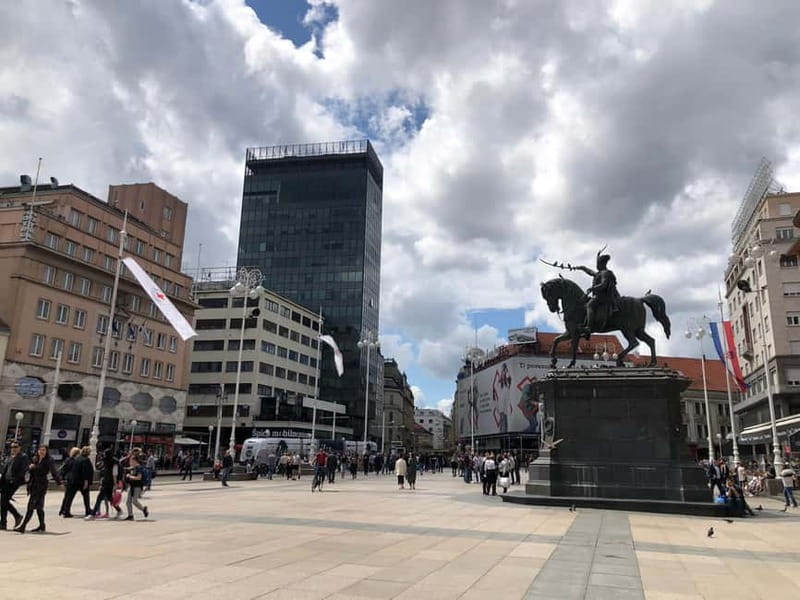
Ban Jelačić Square, the city’s central meeting point
The walk then crosses Ban Josip Jelačić Square, the large central space that most visitors use as their Zagreb reference point.
The square is useful for getting your bearings. From here, you can understand the relationship between Lower Town, the cathedral, the market, and the route toward Upper Town. The guide pauses for sightseeing and photographs, while explaining the square’s role in the city.
This is one of the places where a local guide earns the fee. A quick walk across a large square can otherwise feel like a blank stretch between attractions. With context, it becomes a useful anchor for the rest of your time in Zagreb.
The square is also the tour’s finishing point, so you will know how to return here after exploring on your own.
Same streets, a different guide:
- Dubrovnik: The Original Game of Thrones Tour & Lokrum Option
★ 4.8 · 5,064 reviews - Walking Tour of Split and Diocletian’s Palace
★ 5.0 · 2,588 reviews - Dubrovnik: Game of Thrones Walking Tour
★ 5.0 · 1,732 reviews - Dubrovnik Old Town History Walking Tour
★ 5.0 · 1,684 reviews
Zagreb Cathedral and the changing old town
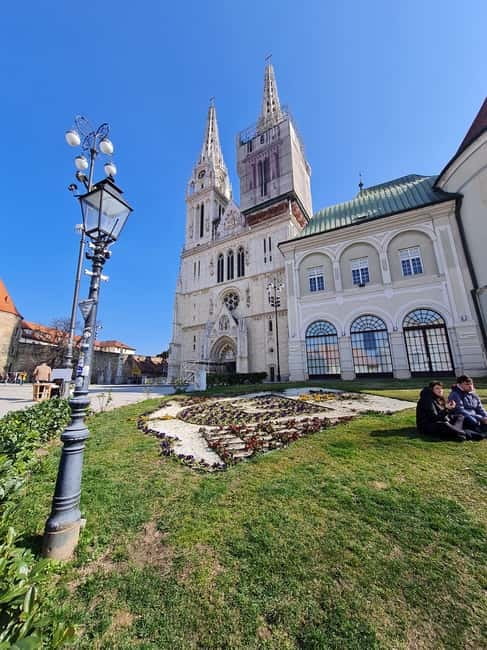
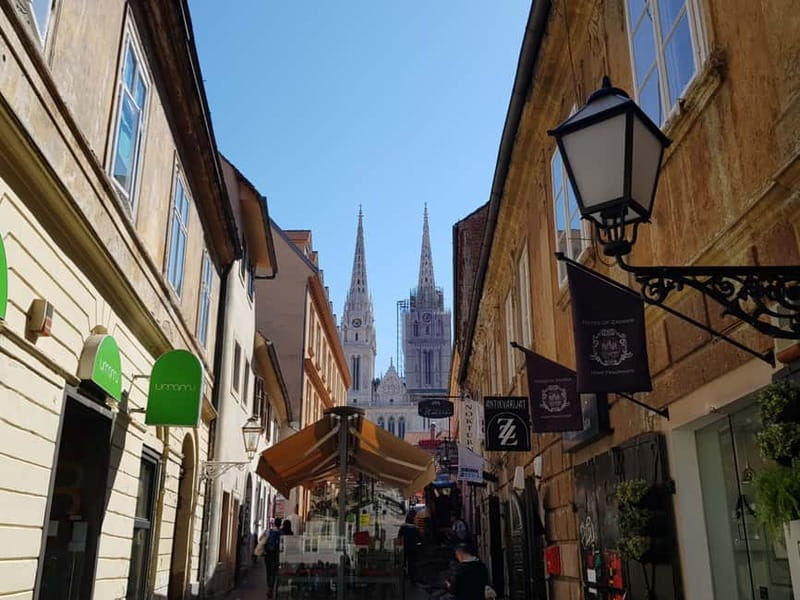
Next comes Zagreb Cathedral, one of the city’s defining landmarks. The tour includes a photo stop and sightseeing, but the information provided does not promise an interior visit.
That distinction matters. You should plan to view the cathedral from outside unless your guide confirms that entry is available. The building and its surroundings are also affected by restoration work following the 2020 earthquakes, and some central sites may have limited access or visible repair work.
Still, this stop belongs on a first walk through Zagreb. The cathedral helps explain the importance of the Kaptol area and gives the route a strong architectural marker before you continue to Dolac Market.
Guides have also used this part of the tour to explain changes in the city and point out details that are easy to overlook. If you have questions about earthquake repairs, ask directly. The tour is designed for discussion, not just a sequence of memorized dates.
Dolac Market: a useful taste of daily Zagreb
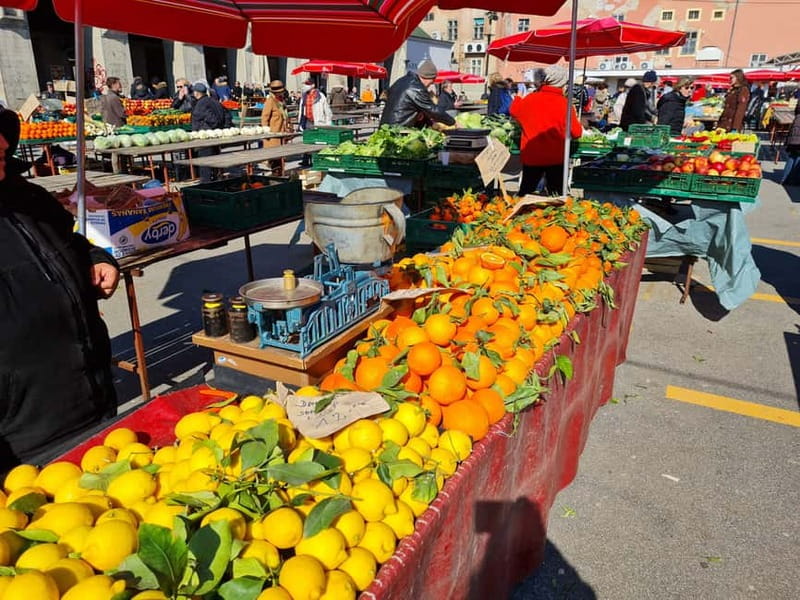
Dolac Market is one of the best stops for seeing everyday city life. The tour includes a visit and time for photographs, so you get more than a passing glimpse from the pavement.
Look for the produce stalls and the practical rhythm of a working market. One guide surprised a small group with local homemade cheese and sour cream, though you should not treat that as a guaranteed part of every departure.
I like this stop because it balances the formal sights. Zagreb is not only squares, churches, and hilltop towers. The market shows where food fits into the city’s daily routine and gives you a chance to ask about Croatian ingredients or local eating habits.
This is also a good place to tell your guide what you like to eat. Marko and several other guides are praised for restaurant and food suggestions, and advice given beside a market can be more useful than a generic list sent before your trip.
Entering the Grič Tunnel
The Grič Tunnel is the experience’s most distinctive stop. Built during World War II, the passage later took on a Cold War role as an underground shelter. The tour uses it to explain a more recent and less decorative part of Zagreb’s past.
The tunnel gives the walk a welcome change of pace. After the open squares and busy market, you move into a darker, enclosed space where the city’s wartime and Cold War concerns become easier to picture.
You may also hear about the underground hospital and bunker uses connected with Zagreb’s wartime history. The exact route and access can vary, so the tunnel should not be treated as guaranteed on every date. The tour information specifically warns that the WWII tunnels may not operate on certain days.
If you are visiting in summer, the tunnel can also provide a cooler break from the heat. In wet or cold weather, it is one of the more sheltered parts of the route, though the tour operates in all weather conditions, so dress for the full walk rather than only the tunnel.
The funicular and the climb to Gradec
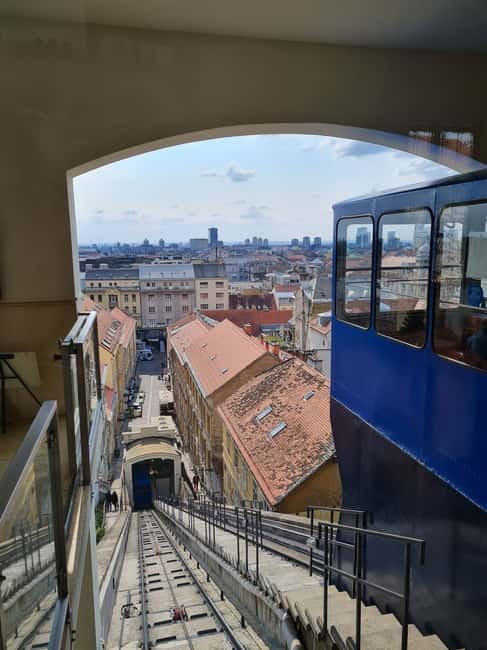
The itinerary includes a short funicular ride to the top of Grič Hill. The journey takes about two minutes, and a ticket is included when the funicular is operating.
This little railway is a fun part of Zagreb’s identity and saves you from walking the full incline. It also gives the tour a change from ordinary city walking. That said, this is the point where you need to check the date carefully. The funicular is closed for renovation until March 2026, so a booking during that period should not be made on the assumption that you will ride it.
The description still includes the Upper Town sights, but the practical details of how the group reaches them may change when the railway is closed. Ask the provider if the funicular experience matters to you.
Once at the top, the route reaches Gradec, Zagreb’s historic Upper Town. You get open views over the city and a clearer sense of the contrast between the lower streets and the hilltop district.
Lotrščak Tower and the noon cannon
Lotrščak Tower is one of the key Upper Town stops. The tour includes sightseeing and a photo opportunity, rather than a guaranteed tower interior visit.
This is also where timing can add a memorable detail. One person specifically enjoyed hearing the cannon fire during the tour, and the guide timed the walk so the group could hear it. Do not assume every departure will line up with the firing, but it is worth asking your guide about the schedule at the start.
The tower is a strong place to pause because it connects Zagreb’s defensive past with the city below. It also helps you understand why Gradec was built on higher ground and why the Upper Town feels different from the broad streets of Lower Zagreb.
St. Mark’s Church and the Stone Gate
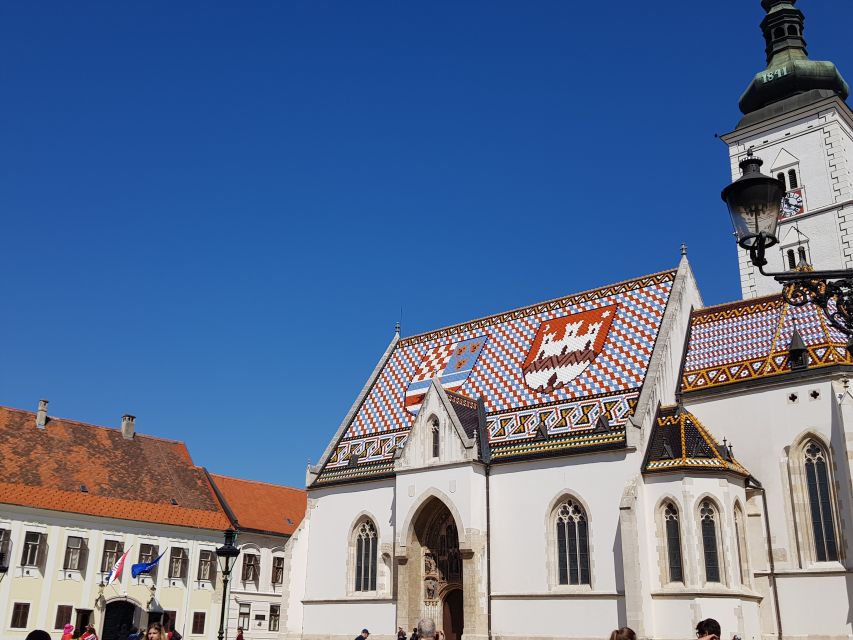
St. Mark’s Church is one of Gradec’s most recognizable sights, especially for its colorful tiled roof. The tour stops for sightseeing and photographs.
You may find restrictions or restoration work around some major buildings, especially given the earthquake damage noted by people taking the tour in late 2025. The walk remains worthwhile even if you cannot enter. The guide can explain what you are seeing and help you spot architectural details from outside.
The route continues to the Stone Gate, another important Upper Town landmark. This passage links the old streets and gives the tour a more intimate feel than the broad central square.
These stops work best as part of the complete route. On their own, they are quick photo locations. Together, they show the shape of the old town and make the climb to Gradec feel purposeful.
Tkalčićeva Street and the end of the walk
The final main stop is Ivana Tkalčića Street, a lively dining and drinking street where you can decide to stay for a snack or a meal after the tour.
The tour does not include food or drinks, so budget separately if you want to sit down here. That is not a flaw. It lets you choose what suits you, from a quick break to a longer meal, instead of being tied to a group reservation.
The walk ends at Ban Jelačić Square. This makes the tour easy to use as a starting point for the rest of your day. You can return to the market, continue shopping, visit another museum, or head back to Tkalčićeva Street using the route you now understand.
Guide style, group feel, and walking pace
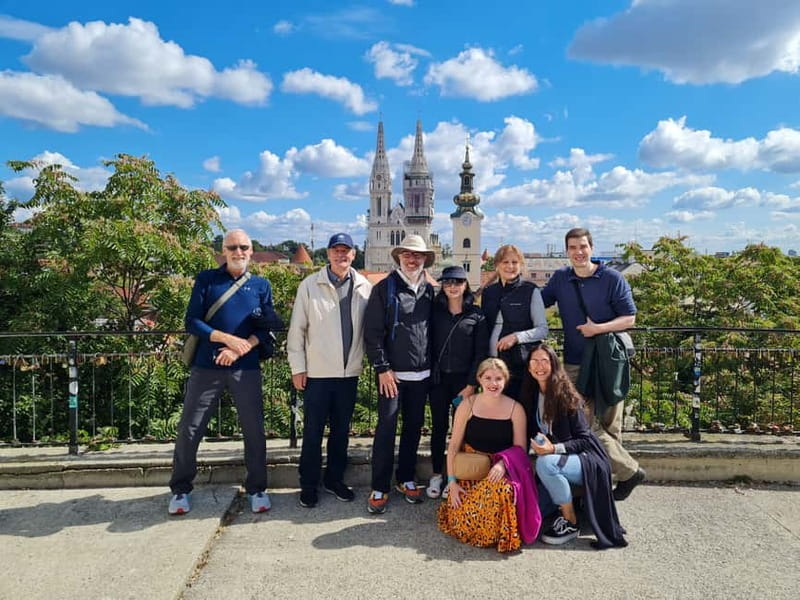
The strongest part of this experience is the guiding. You can expect an English-speaking licensed guide, with names such as Robert, Marko, Iva, Zrinka, Marin, Goran, and Ivana appearing among the assigned guides.
The style is friendly and conversational. Guides are praised for humor, clear storytelling, patience with slower walkers, and willingness to answer questions. Some departures have been very small, with only two or three people, while others have included larger groups. The guide’s ability to stop often and keep everyone together matters on a walking route through busy streets.
The pace is described as steady rather than intense. You will walk for 150 minutes, but the route includes regular pauses for photos and explanations. You should still wear comfortable shoes, since the tour moves across several city districts and includes the Upper Town.
The tour operates in all weather. Bring suitable clothing and do not plan on a purely sheltered activity. Wheelchair access is listed, but because the route includes historic streets and a hilltop district, confirm the current route if you have specific mobility needs.
Is $14 good value?
At $14 per person, I consider this a strong-value introduction to Zagreb. You receive a two-and-a-half-hour guided walk, access to a licensed English-speaking guide, and the funicular ticket when that railway is running.
You are mainly paying for interpretation and orientation, not admission to a series of indoor attractions. That is important when comparing it with museum tours or paid monument visits. The price works best for you if you want local context, a sensible route through the center, and useful advice for the rest of your stay.
The value is even better for a first day. A guide can point out streets you would otherwise pass, explain the connection between the lower and upper parts of the city, and suggest restaurants, bars, museums, and later activities.
The value drops slightly if you mainly want the funicular and tunnel. Both have operating limits, and the funicular is closed for renovation until March 2026. Confirm the current conditions before you pay.
Who should take this Zagreb walk?
I would recommend it to first-time visitors, couples, solo visitors, families with older children, and anyone who wants history explained without spending half a day indoors.
It also suits you if you like a mix of major landmarks and ordinary city life. The cathedral, tower, and church give you the classic Zagreb sights, while the market, café streets, tunnel, and food recommendations make the route more useful.
You may want something else if you prefer a very slow, highly specialized history tour or a long interior visit at each landmark. This is an overview, not a museum seminar. It aims to give you a clear picture of Zagreb and enough context to explore further.
Book it early in your stay if possible. The route ends with you already knowing where the main streets, squares, market, Upper Town, and dining areas are.
Should you book it?
Yes, if you want an affordable first orientation with a memorable underground stop. The guide quality appears to be the biggest strength, and the combination of humor, local advice, city history, and regular photo stops makes the time feel well used.
Before booking, check two details: the funicular’s renovation schedule and the tunnel’s operating dates. If both are available, this is an especially good value. If the funicular is closed, the walk still covers Zagreb’s main center and Upper Town, but you should book for the city introduction rather than for the ride alone.
FAQ
How long does the Zagreb city and WWII tunnels tour last?
The tour lasts 150 minutes, or two and a half hours.
What language is the tour conducted in?
The live tour guide speaks English.
Where does the tour begin?
Meet in front of the Meteorological Station at Trg Nikole Zrinskog 2, beside Zrinjevac Park.
Where does the tour finish?
The walk finishes at Ban Jelačić Square.
Is the funicular ride included?
A funicular ticket is included when the funicular is operating. The railway is closed for renovation until March 2026.
Are food and drinks included?
No. Food and drinks are not included, though the route passes Dolac Market, Bogovićeva Street, and Tkalčićeva Street, where you can find places to eat or drink.
Can I cancel the booking?
You can cancel up to 24 hours in advance for a full refund. Reserve now and pay later is also available.
New routes in Croatia
- Split: Walking tour of Split with a ‘Magister’ of History★ 5.0 · 110 reviews
- Split: Local History and Culture 90-Minute Walking Tour★ 5.0 · 194 reviews
- Split: Food Tasting Walking Tour★ 4.9 · 102 reviews
- Split: Diocletian Palace & Old Town Guided Walking Tour★ 4.7 · 882 reviews
- Split: 1.5-Hour Walking Tour and Diocletian’s Palace★ 4.7 · 256 reviews
- Shipwreck – Blue Lagoon All Inclusive + Trogir Walking Tour★ 4.4 · 110 reviews
- Rovinj: Guided Walking Tour★ 4.8 · 113 reviews
- Pula: Historic Walking Tour with Local Guide & City Views★ 4.8 · 214 reviews
Croatia Walking Tours, compared.
The Original Game of Thrones Tour & Lokrum Option
Read our review →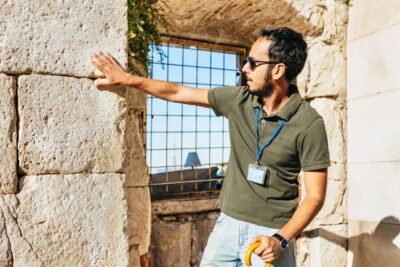
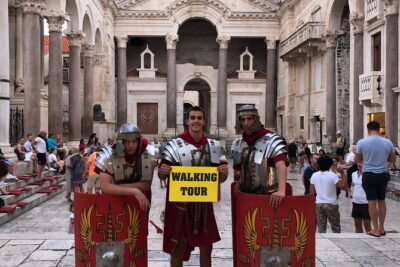
Walking Tour of Split and Diocletian’s Palace
Read our review →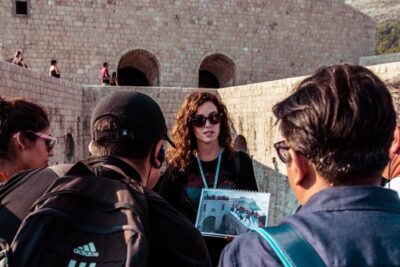
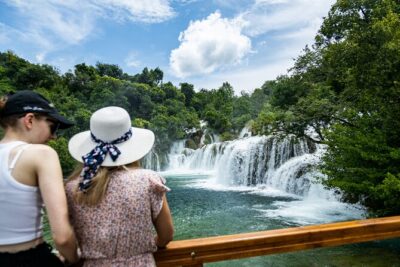
Krka Waterfalls tour with Trogir Walking tour and Krka panoramic boat cruise
Read our review →
City Walls Early Morning or Sunset Walking Tour
Read our review →
Plitvice Lakes: Guided Walking Tour with Bus and Boat Ride
Read our review →Browse the lists this tour appears in