
Review · CROATIA
Rovinj: Guided Walking Tour
Rovinj’s old town makes most sense when you understand that it was once a small island packed with homes, workshops, churches, and thousands of residents. This 90-minute walking tour connects that past to the streets you see today, from the former channel at Bridge Square to the hilltop Church of St. Euphemia.
I like the way the walk mixes big history with useful local advice. You learn where locals shop for produce, where to find good coffee and gelato, and which beach areas are worth your time. I also like that the guide is a local, with Goran receiving especially warm praise for his clear explanations, humor, and restaurant recommendations.
The main drawback is the footing. About half the route runs through the old town on cobbled streets, followed by an uphill walk to the church. It is fairly easy for most people, but anyone with limited mobility may find the surface and incline difficult.
Key points to know before you book
- Rovinj was once an island: Learn where the old channel and bridge stood, and how the channel was filled roughly 1,000 years ago.
- A local guide leads the way: Goran is the named guide most often associated with this experience, and tours are available in English, Italian, Portuguese, French, and Croatian.
- The route links both history and daily life: Along with churches and walls, you get advice on coffee, cakes, gelato, restaurants, markets, and beaches.
- The waterfront is part of the experience: It is a natural pause for views across the Adriatic and, if you wish, an Aperol Spritz on your own.
- The finish is at St. Euphemia: The tour ends at Rovinj’s hilltop church, a strong place for city views and sunset.
- The price is $32 per person: That is reasonable if you want an orientation before exploring Rovinj independently.
Why Rovinj is easier to understand on foot
Rovinj can look simple at first: a compact old town, a waterfront, and a church high above it all. The clever part of this walk is that it explains how the town grew into that shape.
You begin in the lower town, near the farmers’ market and the white World War II memorial on Pietra Ive Street. This is not the postcard center of Rovinj, but it is a practical starting point. You meet the guide in front of the memorial, just off the market, then head toward Valdibora Square.
From here, you get the first major piece of context. Rovinj was once separated from the mainland by a channel, with a bridge linking the two sides. The channel was filled around 1,000 years ago, turning the former island into a connected part of the mainland.
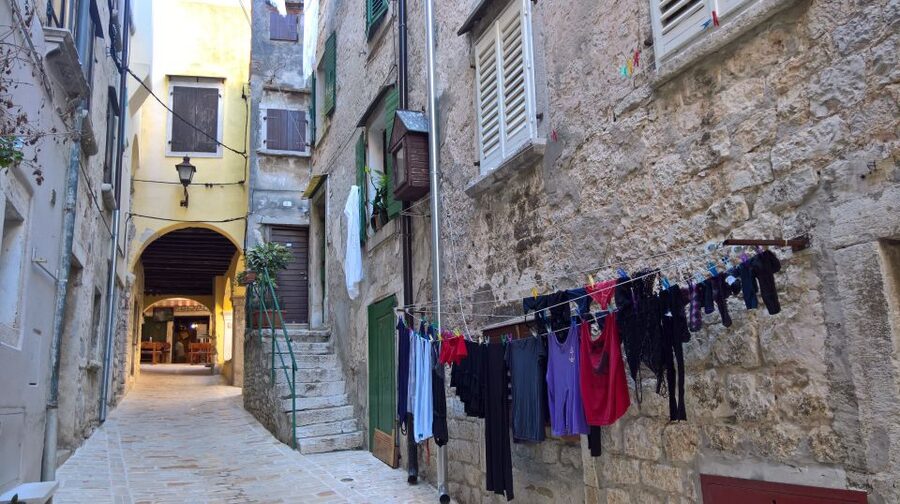
That detail changes the way you read the town. The tight lanes, dense buildings, and irregular streets are not random. They reflect a settlement that had to fit many people into a small area. At Bridge Square, the guide explains why there are no bridges today, even though the name keeps the memory alive.
This opening section is especially useful if you are visiting Rovinj for only a day. Instead of simply admiring the pretty streets, you learn what problem the town was built to solve.
More Guided Walks in Croatia:
- Plitvice Lakes: Guided Walking Tour with Bus and Boat Ride
★ 4.5 · 1,303 reviews - Split: Diocletian Palace & Old Town Guided Walking Tour
★ 4.7 · 882 reviews - Dubrovnik: Panoramic Ride and Old Town Guided Walking Tour
★ 4.7 · 261 reviews
Carera Street and the money behind old Rovinj
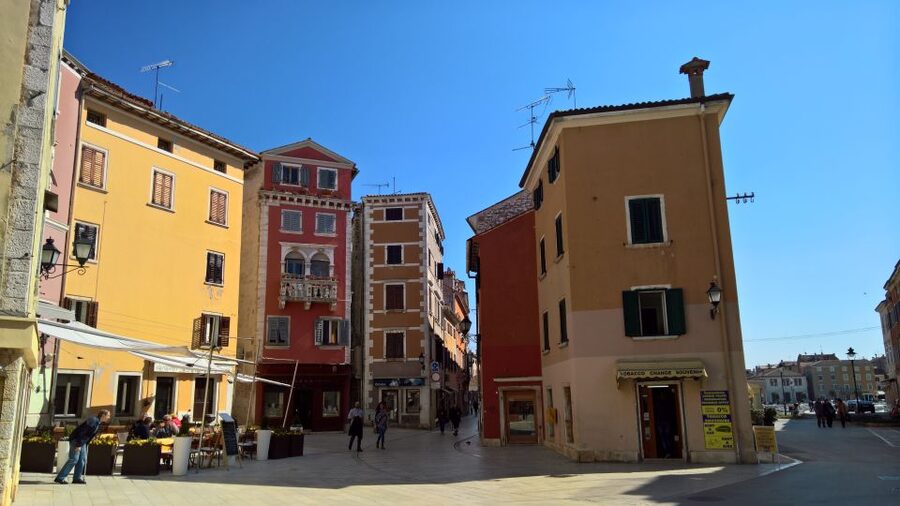
The route continues along Carera Street, one of the main streets through the lower part of town. Here, the focus shifts from geography to trade.
In the 18th century, Rovinj built wealth through olive oil, fish, and wine. Those products were not just background details in the town’s past. They shaped the prosperity of local families and helped create the substantial buildings and busy commercial streets you see today.
I like this part of the tour because it gives everyday meaning to the architecture. You are not simply told that an old house is attractive. You get an idea of how trade supported the people who lived there and why Rovinj became important along this part of the Adriatic.
The street also helps you understand the difference between Rovinj’s lower town and its older hilltop center. The lower area feels more open and connected to modern daily life. As you move uphill, the lanes become tighter, quieter, and more maze-like.
Your guide can also answer questions about Croatia and the Istrian region. Past participants particularly valued the balance between local history, more recent Croatian history, and ordinary cultural details. That makes this a good choice if you want more than a list of dates.
The waterfront is more than a photo stop
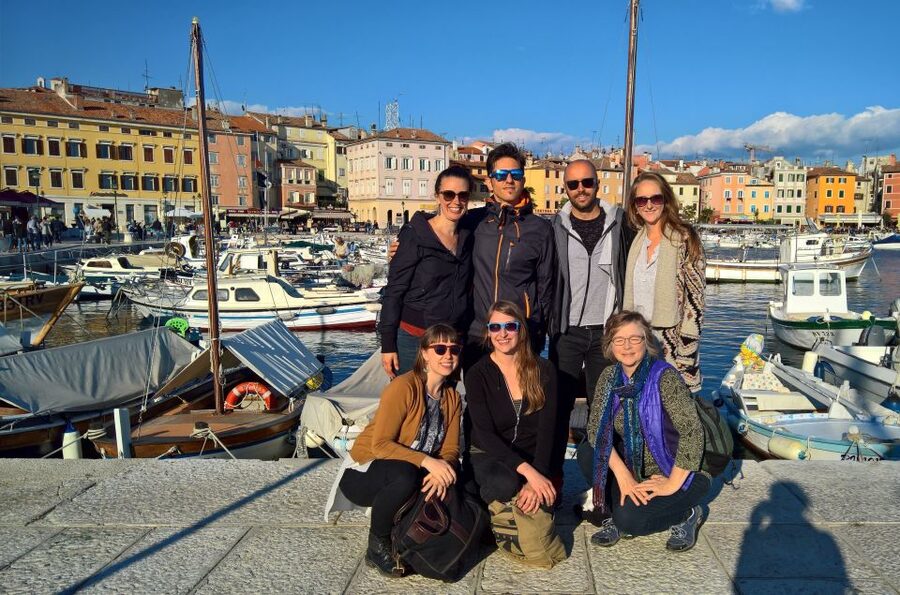
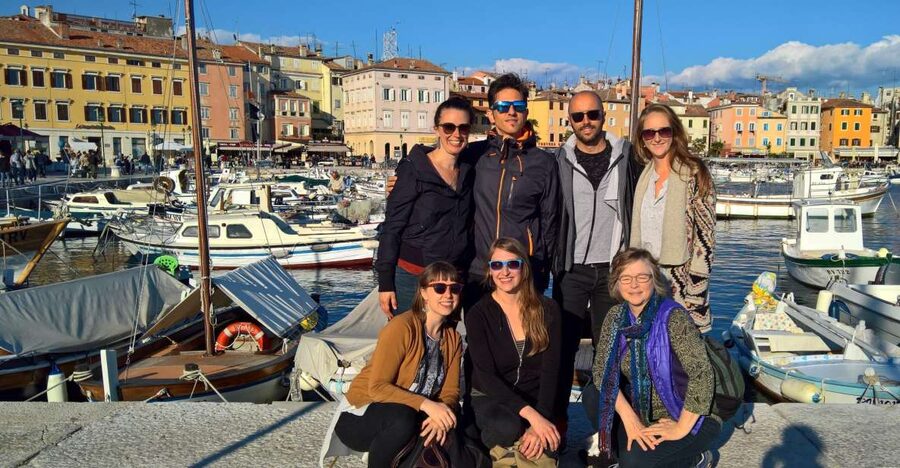
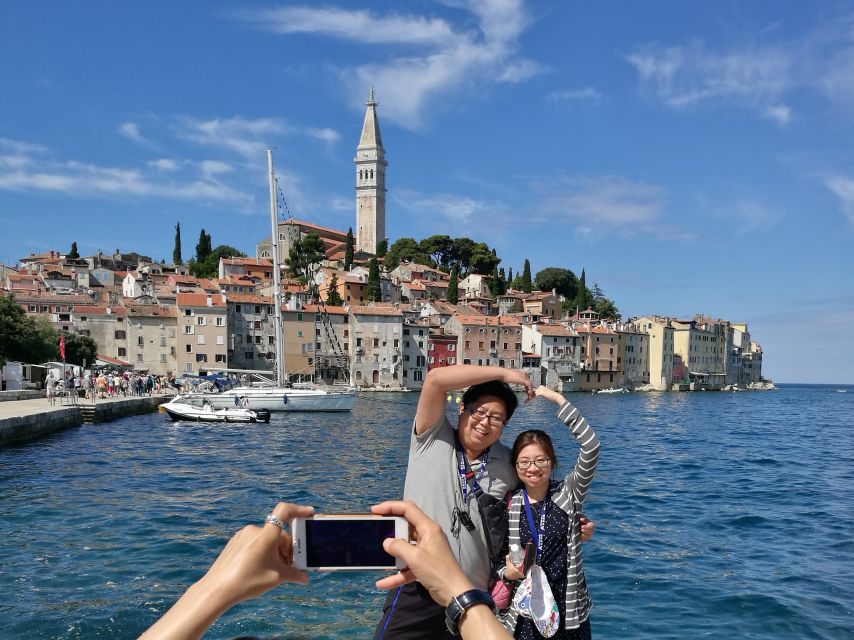
Rovinj’s waterfront is one of the most inviting parts of the walk. The blue Adriatic behind the old town gives you the classic view of the city, with the clustered buildings rising toward St. Euphemia.
This is a natural place to pause and take photographs. It is also where the tour shifts into a more relaxed local rhythm. Your guide points out the setting as a good place for an Aperol Spritz, although drinks are not included in the $32 price.
That small distinction matters. The tour includes the guide, not food or drinks, so you should bring money if you want to stop for a beverage or sample something along the way. The waterfront break is optional in practical terms, but the view is part of what makes the route worthwhile.
The Adriatic backdrop is also a reminder that Rovinj’s story is tied to the sea. Fishing and trade helped support the town, and the waterfront remains the place where the city’s coastal character is most obvious.
Do not expect a long sit-down break here. The total activity lasts 90 minutes, so the emphasis is on walking and explanation rather than lingering at a café.
Through the old Jewish Ghetto and stables area
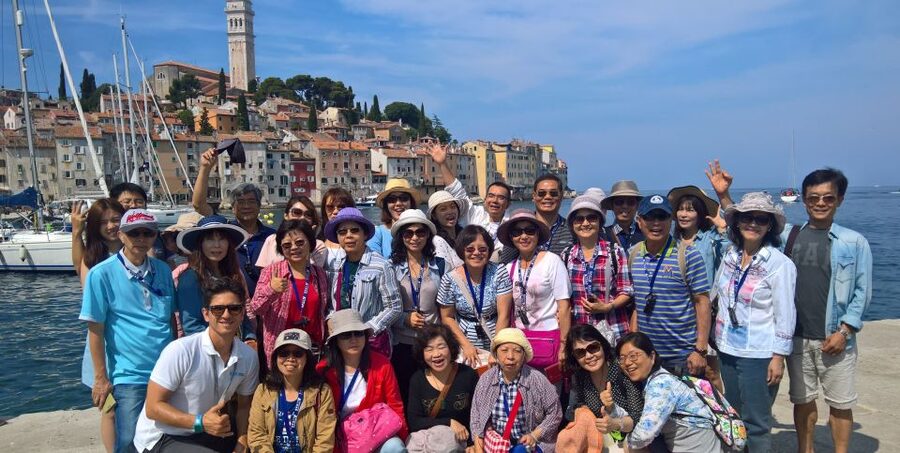
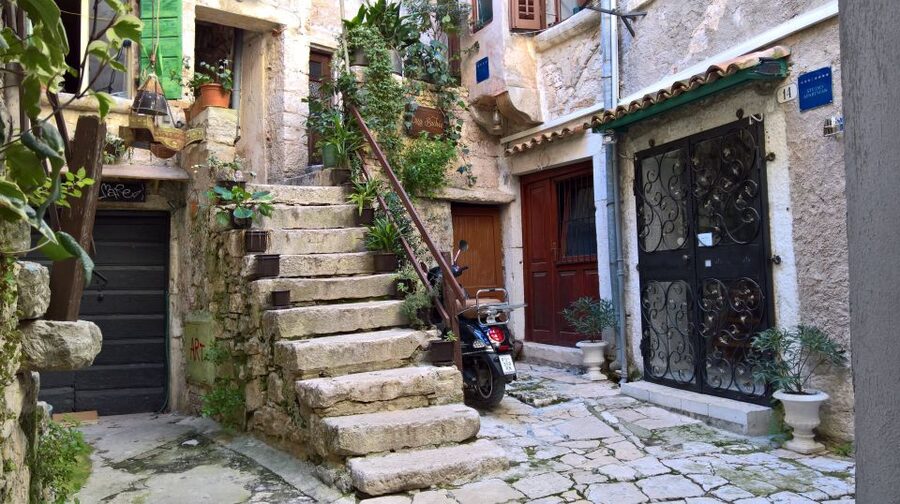
From the waterfront, you enter the maze of cobbled streets leading toward the old Jewish Ghetto and the former stables area. The route is described as being just off the Arch of the Bearded, another small but useful landmark in the old town.
This is where the walk becomes less about broad city views and more about the layered use of space. You pass through narrow passages and older sections of Rovinj that are easy to cross without understanding. A local guide can explain how these areas fitted into the life of the old city.
The mention of the Jewish Ghetto is important, but you should treat this as one portion of a broader walking tour, not a dedicated Jewish heritage tour. The route gives you an introduction to the area and its place in Rovinj’s past. It does not promise a long specialist presentation on Jewish history.
The stables area adds another practical layer. It helps show how the old town was not simply a residential quarter for wealthy families. It also supported animals, work, storage, and the daily business of a dense settlement.
Watch your step here. Cobblestones can be uneven, and the old town’s narrow lanes are not ideal for anyone who needs a smooth, level route. Wear shoes with a firm sole, particularly if you plan to take the tour after a day at the beach.
More Walking Tours in Croatia:
- Dubrovnik: Old Town Walking Tour
★ 4.8 · 5,174 reviews - Split: Old Town and Diocletian Palace Walking Tour
★ 4.9 · 4,727 reviews - Dubrovnik Discovery Old Town Walking Tour
★ 5.0 · 4,458 reviews - Walking Tour of Split and Diocletian’s Palace
★ 5.0 · 2,588 reviews
Following the walls toward St. Euphemia
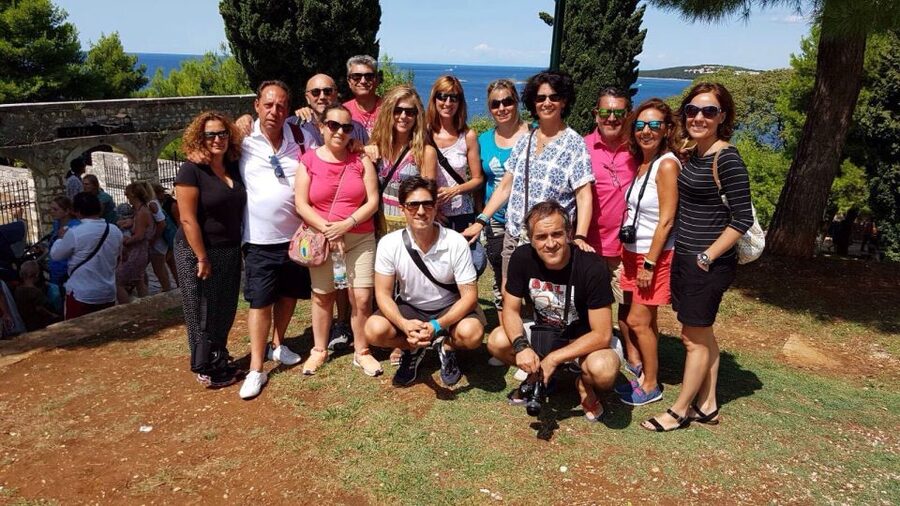
The final part of the walk follows the ancient city walls uphill toward the Church of St. Euphemia. The climb is described as fairly easy, but it is still a climb, and the cobbled surface continues to matter.
The church is the visual anchor of Rovinj. From below, it watches over the town. As you reach the top, the church and the surrounding views help pull together the different parts of the tour: the old island settlement, the waterfront, the trading streets, and the compact historic center.
Ending here is a smart choice. You finish at one of the city’s clearest landmarks rather than being left in a less memorable street. The location is also presented as a prime spot for watching the Adriatic sunset.
Sunset timing will depend on the season and the start time you choose, so do not assume every departure ends at sunset. Still, the final location gives you a useful option: you can remain in the area after the tour and wait for evening light if the timing works.
The church is the tour’s final point, not a promise of an interior visit. The supplied details focus on the church, the hilltop setting, and the views rather than a guided indoor visit.
The local advice is a real part of the value
A walking tour can be worth paying for simply because it saves you from wandering without context. This one adds another benefit: practical advice for the rest of your stay.
By the end, you should know where locals buy fruit and vegetables, where to look for good coffee, and where to find cakes and gelato. You also get suggestions for restaurants, beach areas, and places with good views.
That advice is useful because Rovinj has many attractive options, but a short visit does not leave much time for trial and error. A guide who lives in the city can help you decide what fits your plans, whether you want a morning coffee, a sweet stop after sightseeing, or a place to sit by the water.
Goran is the guide specifically named in the supplied information. His strongest qualities are his humor, clear English, animated style, and ability to answer questions. The comments about him repeatedly focus on his local knowledge and his recommendations for restaurants, coffee houses, traditional food, and gelato.
You should still remember that the exact guide can vary. The experience is offered with a live guide in English, Italian, Portuguese, French, or Croatian, so check the selected departure for the language you need.
Is $32 a fair price for 90 minutes?
At $32 per person, this is not the cheapest way to see Rovinj. You can walk the old town without a guide and enjoy the streets, waterfront, and church at no cost.
The value comes from the explanation. If you want to understand the former channel, the old island settlement, the trade in olive oil, fish, and wine, and the purpose of areas such as the old Jewish Ghetto and stables, the fee is reasonable.
It is also good value for a first visit because the tour gives you a map in your head. After 90 minutes, you know how the lower town relates to the hilltop center, where the waterfront sits, and which areas you may want to revisit on your own.
The price does not cover drinks, food, gelato, or personal purchases. That is normal for a walking tour, but budget separately if you want to follow the guide’s café and restaurant suggestions immediately.
I would especially consider booking it early in your stay. The recommendations about beaches, coffee, food, and sunset spots have more use when you still have time to act on them.
Who will enjoy this Rovinj walking tour?
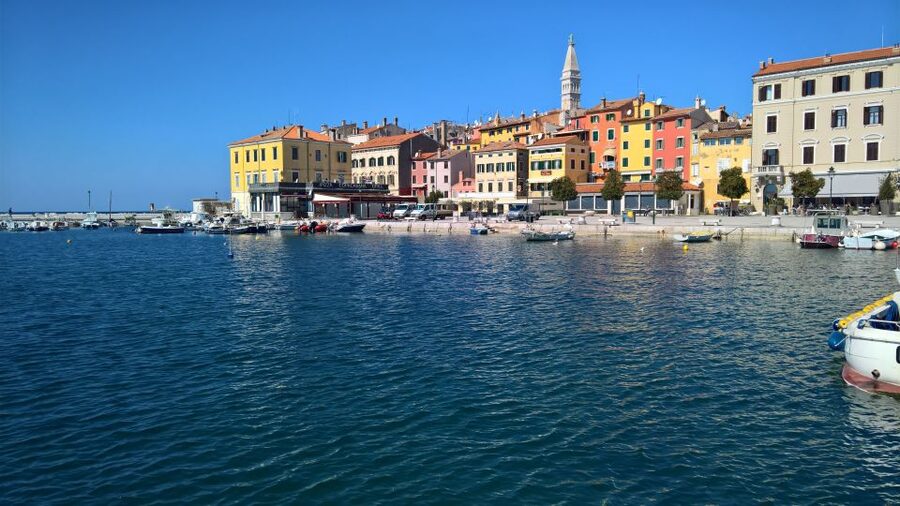
This tour suits you if you want a clear introduction to Rovinj without spending half a day on a formal history lecture. The route is short enough to fit into a busy itinerary, but it covers the city’s main physical story.
It is a good match for:
- First-time visitors who want to get their bearings
- Couples looking for old-town views and a sunset location
- History-minded visitors who like stories tied to streets and buildings
- People who want local food, coffee, gelato, and beach suggestions
- Anyone visiting Rovinj for a short stay or cruise stop
It may be less suitable if you dislike walking on old stone streets or need step-free access. Half the route is in the historic old town, and the walk to St. Euphemia is uphill. The activity is specifically not recommended for people with mobility impairments.
Families can judge this based on the children in their group. The route is only 90 minutes, but the cobbles, narrow lanes, and steady explanations may not suit very young children who need frequent breaks.
Practical details before you go
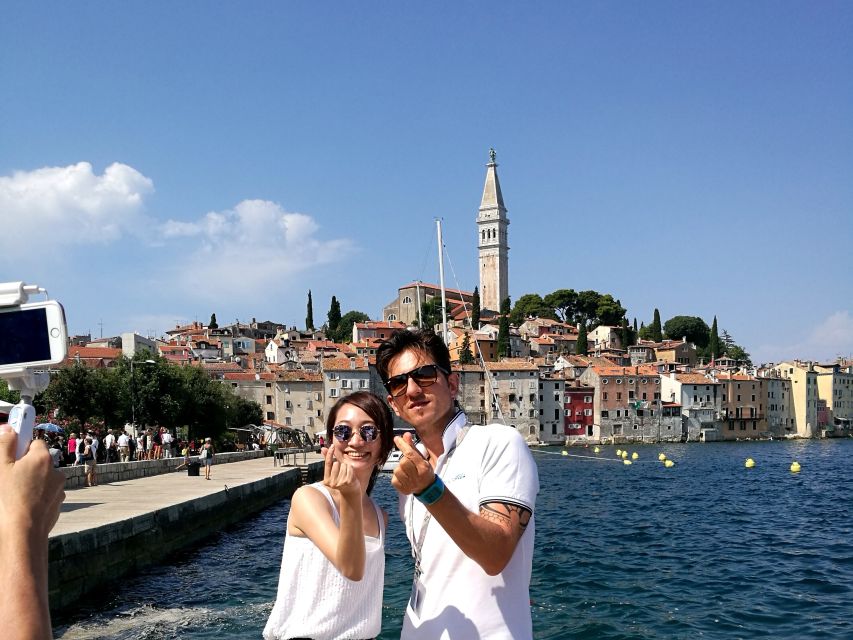
Meet the guide at the ATM operated by Auro Domus, in front of the large whitewashed World War II memorial on Pietra Ive Street. The memorial is just off the farmers’ market in the lower town, so allow a few minutes to identify it rather than relying only on the name of the ATM.
Wear comfortable shoes with good grip. The route includes cobblestones and an uphill section, and comfortable footwear will make the old town much easier.
Bring water in warm weather. The information provided does not promise refreshments, and personal expenses are not included. You might also want a small amount of money or a card if you plan to stop for coffee, an Aperol Spritz, cake, or gelato after the guide points out suitable places.
The tour offers free cancellation up to 24 hours before departure, with a full refund, and you can reserve now and pay later. Starting times vary, so check availability for the date you want.
Should you book the Rovinj Guided Walking Tour?
Book it if you want Rovinj to feel like a real city rather than a pretty collection of photographs. The strongest part is the connection between the town’s shape and its past: the filled channel, the former island, the trading streets, the waterfront, and the hilltop church all become part of one clear story.
I would be especially happy to pay $32 if this were my first visit, if I had only a day in town, or if I wanted practical recommendations from a local guide. Goran’s humor and clear explanations appear to be a major strength when he leads the walk.
Skip it if you prefer exploring alone, already know Rovinj well, or cannot manage uneven cobblestones and an uphill finish. For most first-time visitors who want history, views, and useful food and beach advice in a compact format, it is a sensible start to a Rovinj stay.
FAQ
How long does the Rovinj walking tour last?
The tour lasts 90 minutes.
What is the price of the tour?
The price is $32 per person.
Where is the meeting point?
Meet the guide in front of the large whitewashed World War II memorial on Pietra Ive Street, just off the local farmers’ market. The meeting point is also identified as the ATM operated by Auro Domus.
Where does the tour finish?
The tour finishes at the Church of St. Euphemia at the top of the hill.
Which languages are available?
The live tour guide is available in English, Italian, Portuguese, French, and Croatian.
Is food or drink included?
No. Personal expenses, including food and drinks, are not included.
Is the tour suitable for people with mobility impairments?
No. About half the walk takes place on cobblestones in the historic old town, and the route to St. Euphemia is uphill. People with limited mobility may find it challenging.
Can I cancel the booking?
Yes. You can cancel up to 24 hours in advance for a full refund. The activity also offers a reserve-now-and-pay-later option.
New routes in Croatia
- Split: Walking tour of Split with a ‘Magister’ of History★ 5.0 · 110 reviews
- Split: Local History and Culture 90-Minute Walking Tour★ 5.0 · 194 reviews
- Split: Food Tasting Walking Tour★ 4.9 · 102 reviews
- Split: Diocletian Palace & Old Town Guided Walking Tour★ 4.7 · 882 reviews
- Split: 1.5-Hour Walking Tour and Diocletian’s Palace★ 4.7 · 256 reviews
- Shipwreck – Blue Lagoon All Inclusive + Trogir Walking Tour★ 4.4 · 110 reviews
- Pula: Historic Walking Tour with Local Guide & City Views★ 4.8 · 214 reviews
- Pula: Historic Sites Guided Walking Tour★ 4.8 · 78 reviews
Croatia Walking Tours, compared.
The Original Game of Thrones Tour & Lokrum Option
Read our review →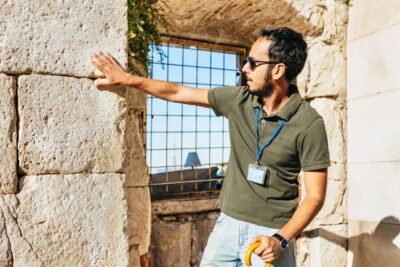
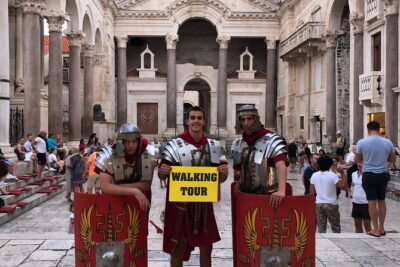
Walking Tour of Split and Diocletian’s Palace
Read our review →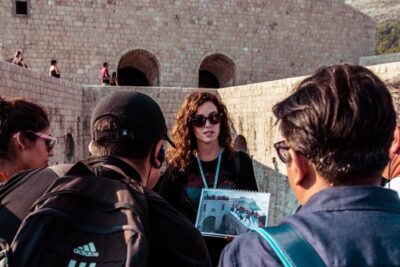
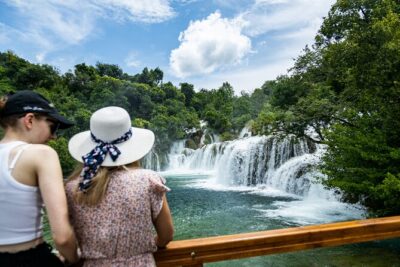
Krka Waterfalls tour with Trogir Walking tour and Krka panoramic boat cruise
Read our review →
City Walls Early Morning or Sunset Walking Tour
Read our review →
Plitvice Lakes: Guided Walking Tour with Bus and Boat Ride
Read our review →Browse the lists this tour appears in