
Review · DUBROVNIK
Dubrovnik: City Walls Early Morning or Sunset Walking Tour
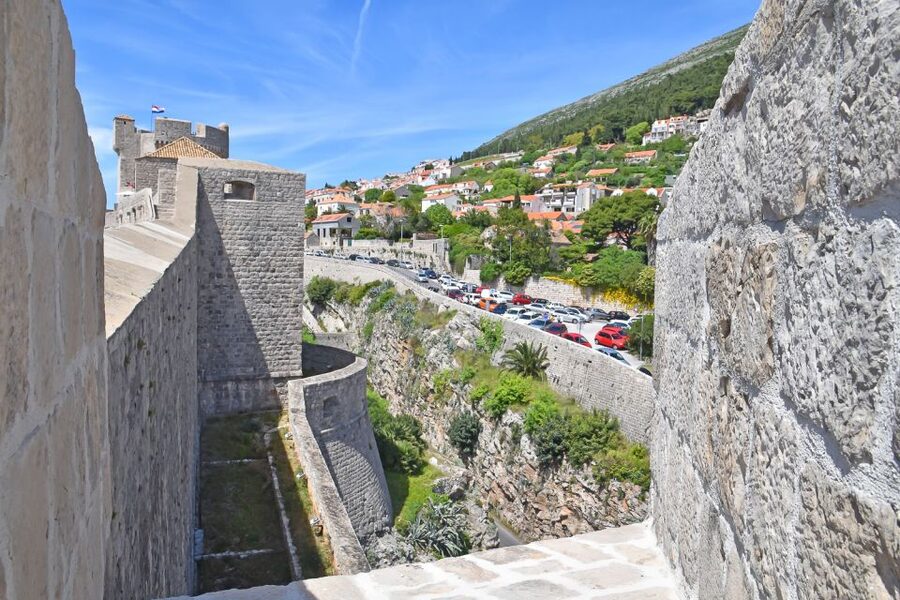
Dubrovnik’s city wall is the place to get your bearings fast. From this high stone walkway, you look down on the Old Town’s narrow lanes and terracotta roofs, then out across the Adriatic where the horizon once served as the city’s first warning system. The full circuit takes you past Minceta Tower and Bokar Fortress, two of Dubrovnik’s most memorable defensive works.
I like the choice of early morning or sunset, since both avoid the hardest midday heat. I also like having a local guide such as Michaela, Mihaela, Disa, or Petra explain the walls, the Homeland War, and daily life in Dubrovnik instead of leaving you to read a few signs.
The main catch is cost: the $29 tour price does not include the wall entrance ticket, which is listed separately at €35 in the practical information, while another price reference gives €40. Check the official wall website for the current amount before booking.
Key points to know before you go

- The full wall circuit is about 2 kilometers, with views over the Old Town, Adriatic Sea, forts, cannons, and rooftops.
- Early morning is the cooler choice, while sunset offers softer light and a more atmospheric view.
- A guide adds local context, especially around the Homeland War, medieval defenses, and modern life in Dubrovnik.
- Minceta Tower and Bokar Fortress are major stops, with Revelin Fortress and St. John Fort also part of the defensive story.
- Expect many steps, steep sections, and narrow walkways, so this is not suitable for people with mobility impairments or a fear of heights.
- The wall ticket is extra, and you should wear comfortable shoes and check the current entrance fee before arrival.
Why walking Dubrovnik’s walls is worth your time
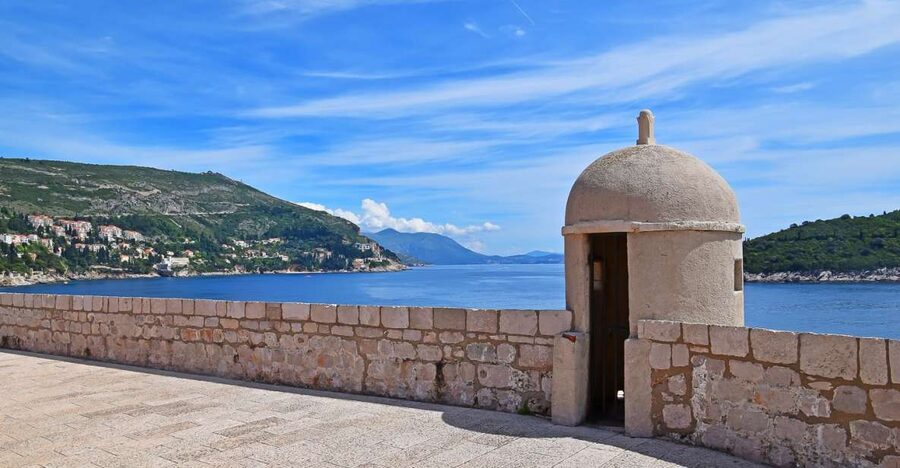
Dubrovnik’s Old Town can feel like a maze at street level. The wall gives you a clear picture of how the city fits together. You see the straight run of Stradun, the compact stone buildings, the red roofs, and the sea beyond the fortifications in one sweeping view.
The wall is also more than a photo platform. It explains Dubrovnik’s survival. The city was protected by thick stone defenses, watchtowers, cannons, and a position that allowed guards to spot ships approaching across the Adriatic. As you walk, the guide connects those physical features with the political and military story of the city.
I find this kind of tour most useful near the start of a Dubrovnik visit. After two hours above the rooftops, you will recognize streets and landmarks when you return to the Old Town. You will also understand why the city has UNESCO World Heritage status rather than seeing it as simply a pretty collection of old buildings.
More Night Walking Tours in Dubrovnik:
- Dubrovnik By Night Walking Tour
★ 4.8 · 208 reviews - Private Street Food Evening Walking Tour in Ho Chi Minh City
★ 5.0 · 3,175 reviews - Granada: Albaicín and Sacromonte Guided Sunset Walking Tour
★ 4.9 · 2,962 reviews
Meeting at the Amerling Fountain near Pile Gate
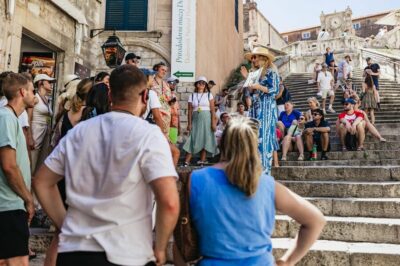
The meeting point is the Amerling Fountain, outside the Old Town next to Dubravka Restaurant. Look for a guide holding a blue umbrella marked with the Du Tour logo.
This is a practical meeting spot because it is close to Pile Gate, one of the main entrances into the historic center. Give yourself enough time to reach it, especially if you are coming from a hotel, a cruise arrival point, or another part of Dubrovnik. The tour begins with a short guided look at Pile Gate and then continues toward Stradun.
The first few minutes are useful for orientation. Pile Gate is not just a doorway into the Old Town. It is the point where modern Dubrovnik gives way to the walled city, and it helps you understand the relationship between the defensive wall and the streets inside.
Pile Gate and Stradun set the scene

The itinerary allows about five minutes at Pile Gate and five minutes along Stradun. That is not long enough for a full explanation of every building, but it gives the guide a chance to establish the city’s layout before you climb onto the wall.
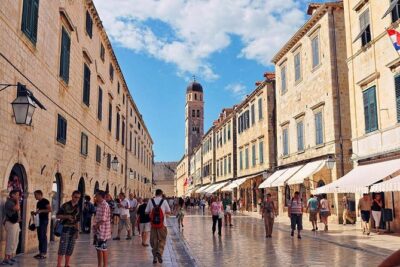
Stradun is Dubrovnik’s main pedestrian street and the Old Town’s central spine. Seeing it from above later makes the street’s role even clearer. From the wall, its straight line helps you read the compact plan of the city, while the side lanes reveal how tightly the medieval town was built.
Do not expect a long street-level walking tour as part of this experience. The focus is the wall. These opening stops are a quick introduction, not a replacement for a separate Old Town tour.
The 2-kilometer wall walk
The main part of the experience lasts about an hour, followed by more focused time at Bokar Fortress and Minceta Fortress. In practice, the entire two-hour tour includes walking, stops, explanations, photos, and time to catch your breath.
The route takes you around the Old Town rather than simply up to one viewpoint and back. That matters because the scenery changes constantly. One stretch looks across the terracotta roofs, another opens toward the sea, and another brings you close to towers, battlements, and old artillery positions.
You should expect steps and uneven changes in elevation. Several people specifically found the pace manageable because the guide paused for photographs, explanations, drinks, and a short break. Still, this is a physical walk. Wear trainers or other comfortable shoes, and do not treat it as a flat promenade.
The wall can also feel exposed. Some parts are narrow or steep, and the height may bother anyone with a fear of heights. People with mobility limitations should choose another way to see Dubrovnik.
More Walking Tours in Dubrovnik:
- Dubrovnik: Old Town Walking Tour
★ 4.8 · 5,174 reviews - Dubrovnik Discovery Old Town Walking Tour
★ 5.0 · 4,458 reviews - Dubrovnik: Game of Thrones Walking Tour
★ 5.0 · 1,732 reviews - Dubrovnik Old Town History Walking Tour
★ 5.0 · 1,684 reviews
Bokar Fortress and the western defenses
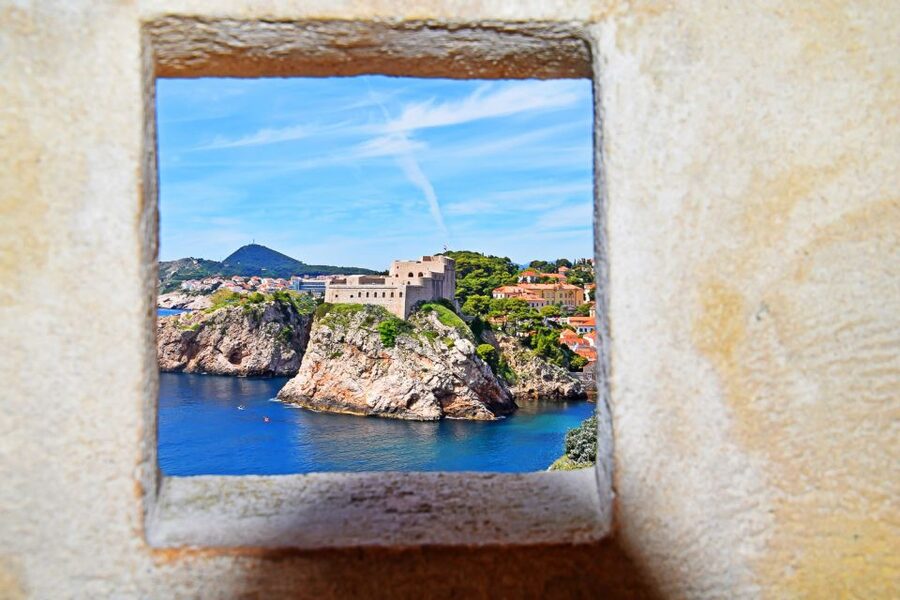
Bokar Fortress is one of the tour’s designated stops, with about 15 minutes for guided sightseeing. Its position on the western side of the Old Town makes it a good place to understand how Dubrovnik protected its landward approach and harbor area.
This is where the wall’s defensive purpose becomes easier to picture. Look for the practical details: thick stone, elevated firing positions, sightlines across the water, and the way the fortress connects with the surrounding wall. The medieval cannons are not decorative background only. They show the technology and reach that helped protect the city.
The stop is also one of the better points for photographs. You can frame the Old Town’s roofs, heavy stone defenses, and sea in one image. Your guide should leave room for photos, but keep your camera ready because the views change quickly as the group moves.
Minceta Tower is the visual high point
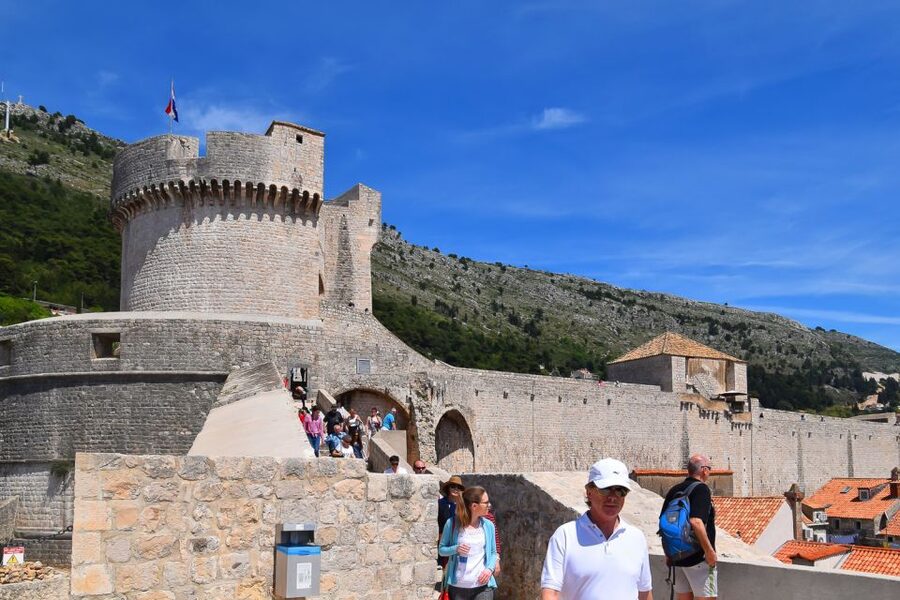
The itinerary gives Minceta Fortress about 30 minutes, making it the longest named stop. That extra time makes sense. Minceta Tower is one of Dubrovnik’s most recognizable defensive structures and provides some of the best elevated views over the Old Town.
From here, the roofs become a broad field of terracotta rather than a series of individual buildings. You can also look down into the narrow streets and see how little open space existed within the walls. The view is especially attractive in the softer light of early morning or sunset.
Minceta also helps explain why Dubrovnik’s walls were so effective. Height gave defenders a better view and a stronger position. The guide can connect the architecture with the city’s long military story, including the damage Dubrovnik suffered during the 1991 to 1995 Homeland War and the later restoration of the Old Town.
The details about that recent conflict are especially valuable because the repaired city can look untouched at first glance. A local guide such as Michaela or Mihaela can explain parts of the story that are easy to miss when you see only polished stone and restored roofs.
Revelin, St. John Fort, and the sea view
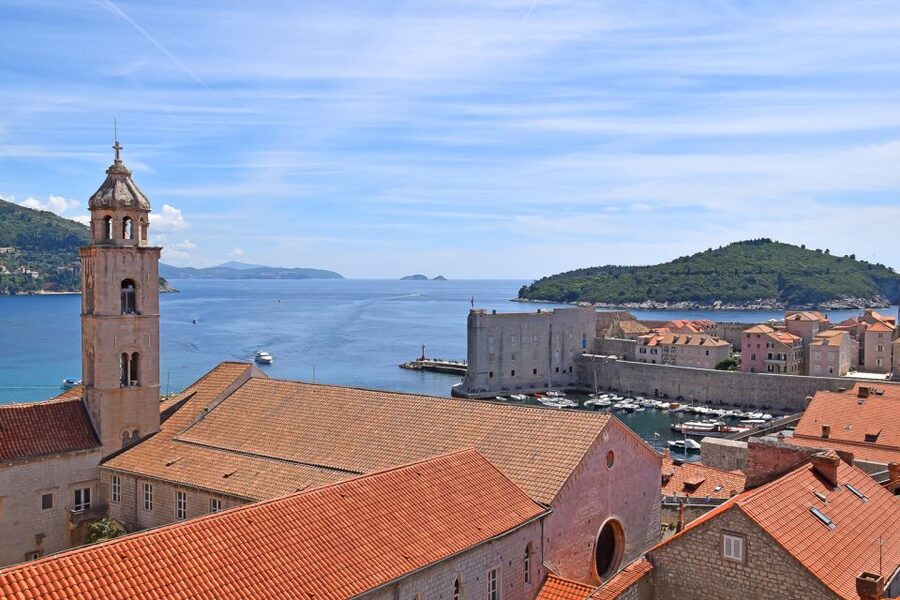
The highlights also include Revelin Fortress and St. John Fort, even though the timed itinerary emphasizes Bokar and Minceta. Together, these defensive points show that Dubrovnik’s protection was a system rather than one continuous wall with identical features.
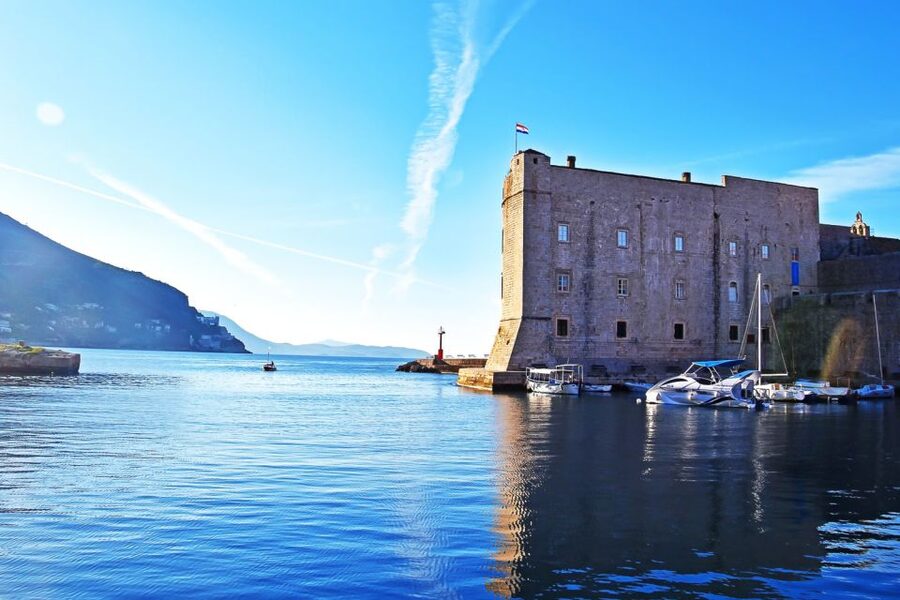
Revelin Fortress guarded an important approach near the eastern side of the city. St. John Fort protected the harbor and helped control movement by sea. Their positions make the geography of Dubrovnik easier to understand: the city had to defend both land approaches and the water.
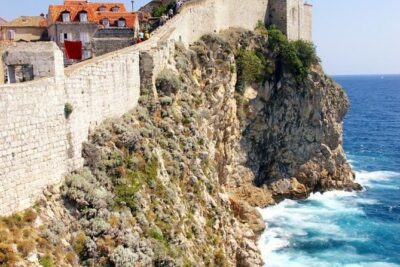
The open Adriatic view is one of the tour’s strongest rewards. On a clear day, you can scan the horizon and understand why watchmen could detect boats from a long way off. It is also one of the simplest pleasures of the walk. Stop, look beyond the battlements, and let the guide’s explanation give the view some meaning.
What local guides add to the walk

You can walk the city walls without a guide, but you will not automatically know why a particular tower sits where it does or how the city changed after wartime damage. The best part of this experience is the conversation between the scenery and the explanation.
The guides praised in the supplied information include Michaela, Mihaela, Disa, Desa, Petra, Matea, and Anne-Femica. Several are local, and one guide was described as having grown up in Dubrovnik. That local connection can add useful details about present-day life, restaurants, souvenirs, and other sights.
The strongest guide style here seems to be friendly and conversational rather than overly formal. You should have time to ask questions, and guides have shared personal recommendations at the end of the walk. The tour is conducted in English, German, Spanish, Portuguese, or French, depending on the selected option.
A guide also helps with pacing. The walk is not a race, but it does need to finish within two hours. A good guide keeps the group moving while stopping often enough for photos, stories, and water.
Choosing early morning or sunset
Early morning is my practical pick for most people. The wall can be hot in the daytime, and starting early lets you walk before the strongest heat and heavier activity of the day. It also gives you a calmer first look at the Old Town.
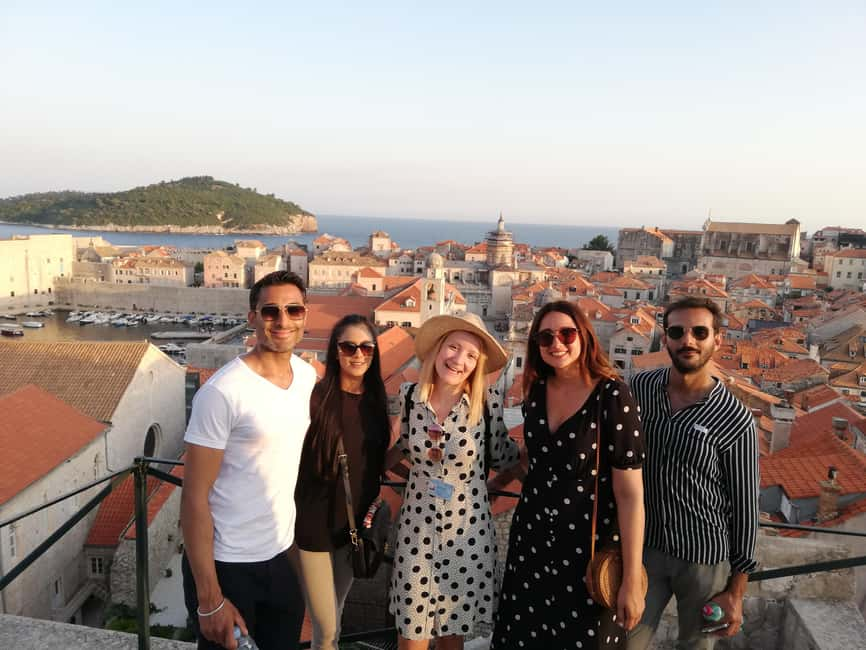
Sunset has a different appeal. The light on the terracotta roofs and Adriatic is softer, and the walk can feel more dramatic. The tradeoff is that sunset times change during the year, and a late tour may leave less spare time afterward. One group also had a schedule adjustment related to daylight saving time, though the change was communicated clearly.
Check the exact start time when booking. The activity page does not give one fixed departure hour, since availability changes by date and season.
Price, wall tickets, and overall value
The guided tour costs $29 per person. That is a reasonable price for two hours with a licensed guide, especially if this is your first visit and you want more than a self-guided circuit.
The important extra cost is the entrance ticket. The information supplied for this activity gives two different figures, €35 and €40 per person, so verify the current price through the official Dubrovnik City Walls website or at the city wall ticket office. A Dubrovnik Pass may also affect what you pay, so check its terms before purchasing a separate ticket.
Once the entrance fee is added, this is not a budget walk. Still, I think the guide is worth considering because the wall is a major Dubrovnik sight, and the explanations turn a scenic walk into a useful introduction to the city. If you already know Dubrovnik well and enjoy reading signs at your own pace, you may prefer to buy the ticket and walk independently.
The option to reserve now and pay later, plus free cancellation up to 24 hours in advance, gives you some flexibility. Those policies are useful when your schedule depends on weather, ferry times, or a changing cruise itinerary.
Who should book this tour
I would recommend it to first-time visitors, history fans, photographers, and anyone who wants a clear overview of Dubrovnik before exploring the streets below. It also suits people who prefer asking questions rather than reading a guidebook while walking.
It is a good fit for reasonably fit walkers who can handle stairs, steep sections, narrow paths, and height. Comfortable shoes are essential. Bring water, especially for a warm daytime alternative, although the early and sunset choices make the heat easier to manage.
I would not choose it for anyone with a mobility impairment, serious difficulty on stairs, or a strong fear of heights. The wall is not a flat route, and the guide cannot remove the physical demands of the site.
Final verdict: guided context makes the wall more rewarding
Book this tour if you want Dubrovnik’s best views paired with a clear explanation of its defenses, wartime experience, and local life. The full two-kilometer circuit, Minceta Tower, Bokar Fortress, and the sea views give you the essential wall experience in two hours.
Choose early morning for cooler conditions and a calmer start. Choose sunset for softer light and a more atmospheric walk. Just budget for the separate wall ticket, confirm the current entrance price, and arrive ready for steps.
I would skip the guided version only if you are determined to explore alone or already have strong knowledge of Dubrovnik. For most first-time visitors, the guide helps you notice far more than the rooftops.
FAQ
How long does the Dubrovnik city walls tour last?
The tour lasts two hours, including the walk, guided stops, explanations, photo breaks, and questions.
How long are Dubrovnik’s city walls?
The walking route around the Old Town is about 2 kilometers.
Where does the tour meet?
Meet at the Amerling Fountain outside the Old Town, next to Dubravka Restaurant. Look for a guide holding a blue umbrella with the Du Tour logo.
Is the entrance fee to the city walls included?
No. The wall entrance ticket is not included in the $29 tour price. The supplied information gives the current ticket as €35 in one place and €40 in another, so check the official Dubrovnik City Walls website for the price on your date.
What should I bring?
Wear comfortable shoes. The route includes many steps, steep sections, and narrow walkways.
Is the tour suitable for people with mobility impairments?
No. The activity is not suitable for people with mobility impairments because of the stairs, steep areas, and uneven walking conditions.
Which languages are available?
The live guide options include English, German, Spanish, Portuguese, and French. A private group option is also available.
New routes in Dubrovnik
- Dubrovnik: Explore Dubrovnik Old Town Walking Tour★ 4.9 · 96 reviews
- Dubrovnik: Panoramic Ride and Old Town Guided Walking Tour★ 4.7 · 261 reviews
- Dubrovnik: Walls and Wars Walking Tour★ 4.8 · 501 reviews
- Dubrovnik: Old Town Walking Tour★ 4.9 · 792 reviews
- Dubrovnik: Game of Thrones&Lokrum Island Walking Tour★ 4.8 · 245 reviews
- Dubrovnik: Game of Thrones And Iron Throne Walking Tour★ 4.8 · 505 reviews
- Dubrovnik: Early Bird Walking Tour★ 4.9 · 123 reviews
- Dubrovnik: Karaka – Game of Thrones Cruise & Walking Tour★ 4.8 · 613 reviews
Dubrovnik Walking Tours, compared.
The Original Game of Thrones Tour & Lokrum Option
Read our review →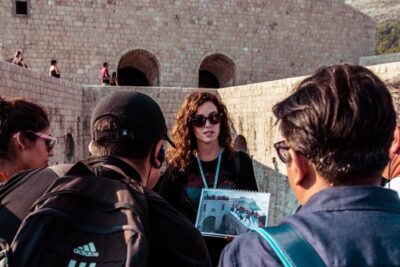
City Walls, Old Town Walking Tour & Adriatic View
Read our review →Browse the lists this tour appears in