
Review · DUBROVNIK
Dubrovnik: Walls and Wars Walking Tour
Dubrovnik’s city walls are more than a pretty walkway above orange roofs. They explain how a small maritime republic survived beside stronger powers, and this Walls and Wars tour ties the stonework to that long struggle. Guides such as Davor, Goran, Andreja, and Darko bring the story to life with humor, local knowledge, and, in some cases, personal memories of the 1991 Homeland War.
I like two things right away: the guide gives meaning to fortresses that can otherwise blur into one long stone circuit, and the headsets help you hear clearly while walking in a line. You also get the best views of the Old Town and port. The catch is practical and important: the €40 adult wall ticket is not included, and the route involves roughly 1,000 or more steps with little shade.
Key points to know before you book
- The wall ticket costs extra: Adults pay €40 and children aged 7 to 18 pay €15. A Dubrovnik Pass may also cover entry.
- The tour connects buildings to strategy: Revelin Fortress, Minceta Tower, and Lovrijenac Fortress each had a specific defensive role.
- The 1991 war is part of the story: Several guides add local perspective on Croatia’s Homeland War and Dubrovnik’s experience.
- Expect a serious workout: The route includes steep stairs, narrow wall sections, and about 1,000 to 1,150 steps.
- Headsets are supplied: They make the guide easier to follow, though you need to stay fairly close to the group.
- Timing matters: An evening departure can mean cooler temperatures, softer light, and fewer people on the walls.
Why Dubrovnik’s walls are the right place to start
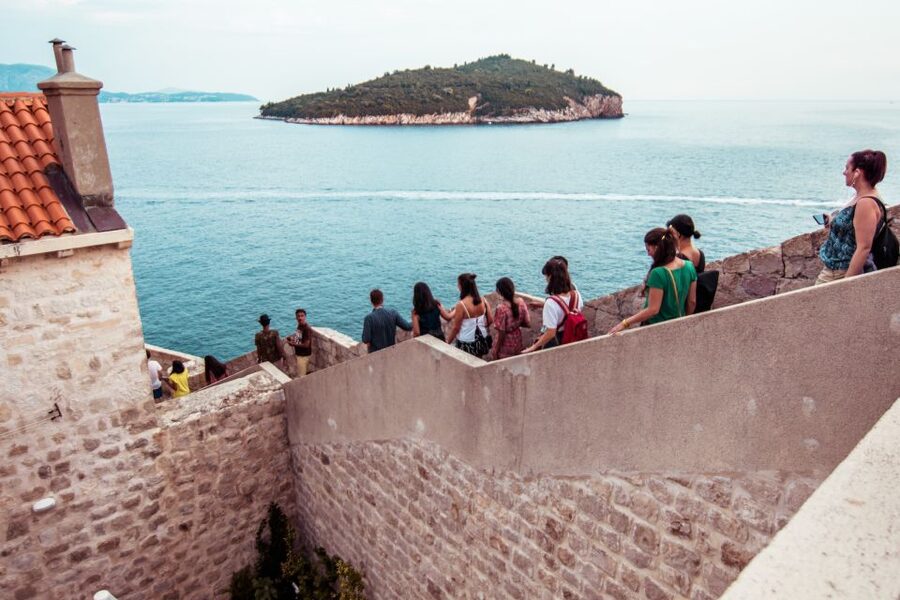
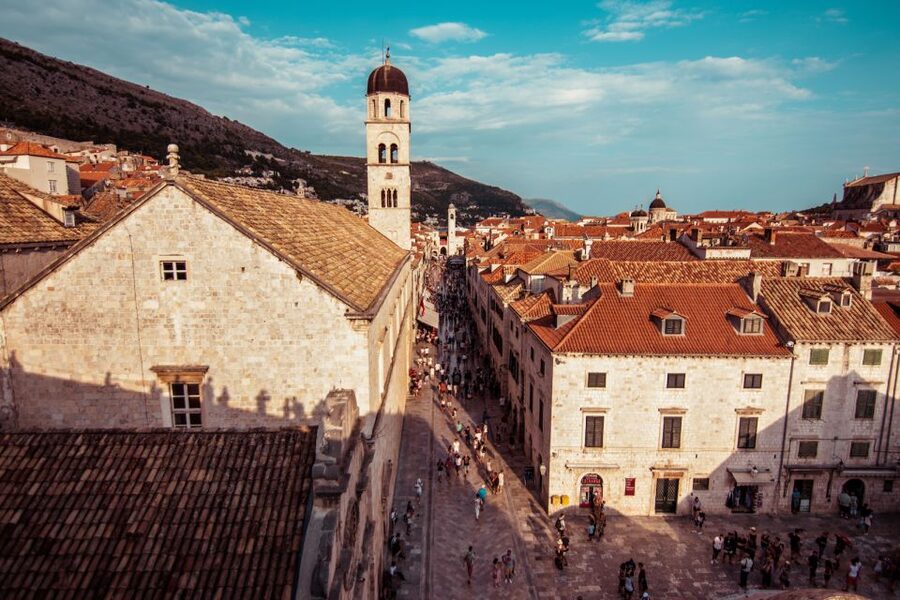
Dubrovnik is easy to admire and surprisingly easy to misunderstand. From street level, the Old Town can look like a polished film set of limestone lanes, churches, and red roofs. From the walls, you see the reason the city endured: a tightly protected settlement with control over its harbor, strong defensive towers, and a political culture built around survival.
The fortifications wrap around the historic city for a little over a mile, with high walls facing both the sea and the inland approaches. This tour does not treat them as a string of photo stops. It explains how the republic used diplomacy, trade, geography, and military engineering together.
That wider frame is the main value of taking a guide. Walking alone, you can enjoy the Adriatic and take excellent photographs. With a guide, you learn why a tower was built in one place rather than another, how an enemy might have approached, and how Dubrovnik protected its prosperity without the military power of a large kingdom.
The tour is led in English by a licensed local guide approved by Croatia’s Ministry of Tourism. Names vary by departure, but Davor, Goran, Andreja, Darko, Mara, and others have led this route. The strongest guides combine dates and architecture with stories about daily life and recent events. Davor is often praised for balancing humor with detail, while Goran is known for clear explanations and personal perspective on the war.
More Walking Tours in Dubrovnik:
- Dubrovnik: Old Town Walking Tour
★ 4.8 · 5,174 reviews - Dubrovnik Discovery Old Town Walking Tour
★ 5.0 · 4,458 reviews - Dubrovnik: Game of Thrones Walking Tour
★ 5.0 · 1,732 reviews
Meeting at Pile and getting oriented
The meeting point is at Brsalje 8, near the Pile local bus stop, the last stop before the Old Town. Look for Dubrovnik Walks staff with orange umbrellas. This is a useful location because Pile is the main approach to the historic center, but give yourself time to find the correct representatives among the buses, pedestrians, and tour groups.
The tour has been described with two possible starting options under Dubrovnik Walks, but the practical instruction is clear: go to Brsalje 8 and find the orange umbrella. From there, the group enters the Old Town area and heads toward the city walls.
Before joining, have your wall admission ticket ready. The tour price is $29 per person, but that fee pays for the guide, the walking tour, and the headset. It does not cover the mandatory wall entry. At the current listed price, an adult should budget another €40, which makes the total cost much higher than the advertised tour price alone.
That extra charge can sting, especially for a family. It is still worth comparing with the Dubrovnik Pass, since the pass may include the walls and other heritage attractions. Check the pass terms for your dates and plans before buying separate admission.
Walking the walls, one defensive problem at a time
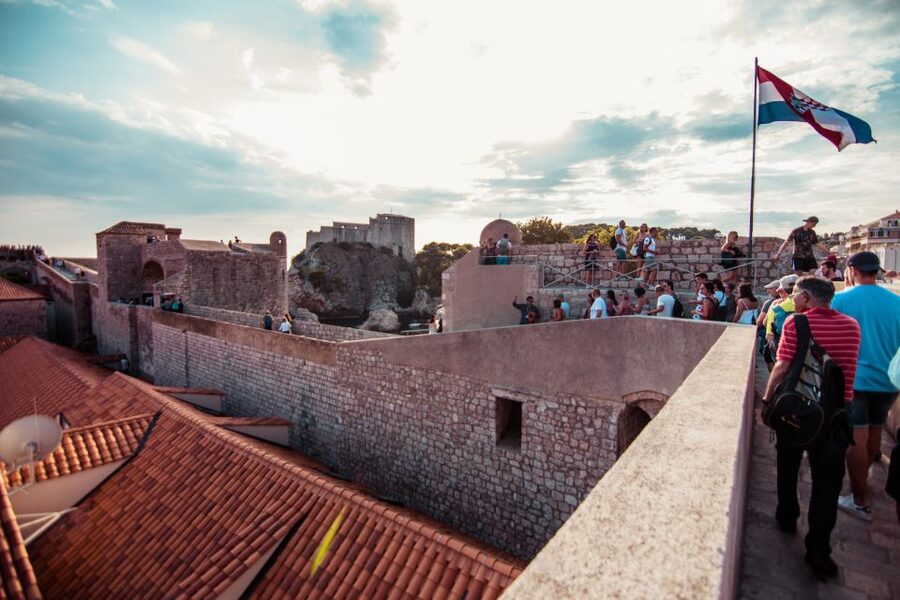
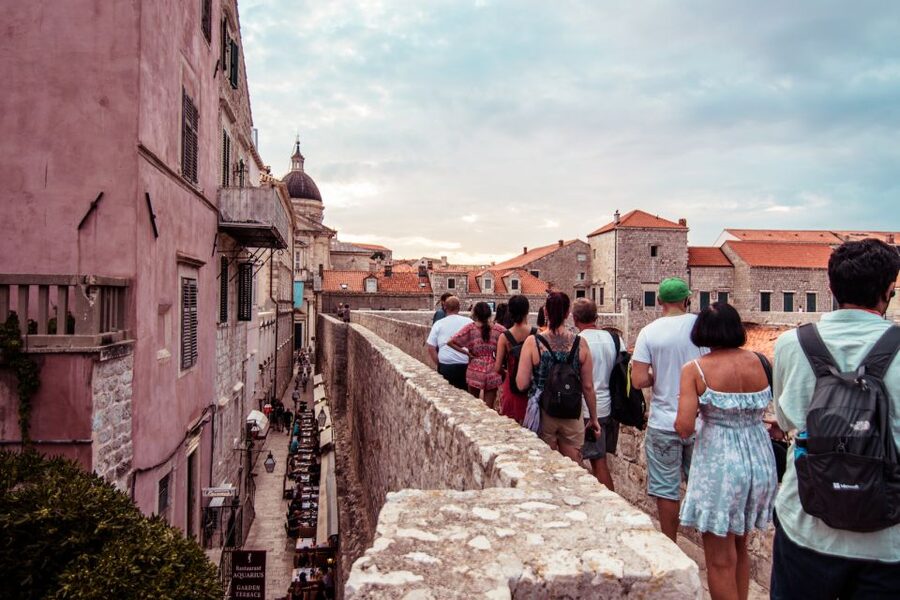
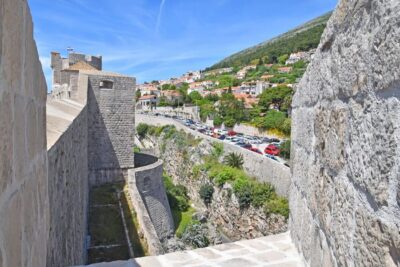
Once on the fortifications, the tour becomes a moving lesson in military design. You walk along the stone ramparts while the guide points out the Old Town on one side and the harbor or open sea on the other. The views are superb, but the real reward is learning to read them.
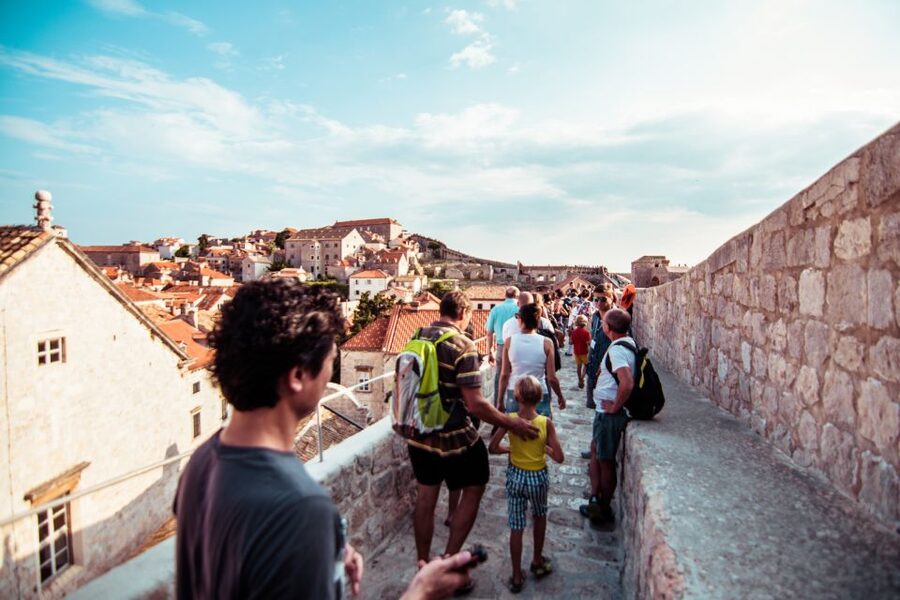
The route includes stairs, uneven surfaces, and narrow stretches. One guide estimated about 1,150 steps, and several people found the climb tiring in summer heat. This is not a gentle stroll through flat lanes. You need comfortable shoes, water, a hat, and a reasonable level of fitness.
The wall has very little shade. On a hot day, the stone reflects heat and there are few places to escape the sun. An evening departure, such as the 6 p.m. option, can be a smart choice. It may still be warm, but the cooler air and lower sun make the walk more manageable. Guides may also pause in whatever shade is available.
Wind and rain can change the feel of the route. Windy weather can make the walk feel exposed, but it also clears the air and creates striking conditions for photographs. Rain makes good footwear even more important. The tour runs for about two hours, so you should not count on finishing quickly if you need frequent rest stops.
Revelin Fortress and the eastern approach

Revelin Fortress protects the eastern side of Dubrovnik and the approach toward the old harbor. Its position tells you something about the city’s defensive priorities. An enemy reaching this side could threaten both the settlement and the port, so the fortress formed part of a layered answer.
Your guide uses the walls and fortifications to explain how Dubrovnik responded to changing weapons and military threats. This is where a good guide helps most. Instead of seeing a massive stone building as an impressive object, you begin to understand its job within the larger defensive system.
The eastern side also provides strong views toward the harbor and the roofs of the Old Town. Bring a camera, but keep it secure as you climb. The route is active and the wall edge is not the place to stop suddenly in a crowded group.
Same streets, a different guide:
- Dubrovnik: The Original Game of Thrones Tour & Lokrum Option
★ 4.8 · 5,064 reviews - Dubrovnik Old Town History Walking Tour
★ 5.0 · 1,684 reviews - Dubrovnik: City Walls Early Morning or Sunset Walking Tour
★ 4.8 · 1,523 reviews - Dubrovnik: Ancient City Walls & Wars Walking Tour
★ 5.0 · 1,270 reviews
Minceta Tower and the highest defensive point
Minceta Tower is one of the most memorable structures on the circuit. Its size and position show how seriously Dubrovnik guarded the inland side of the city. The tower helped protect the northwest corner, where an attack over land posed a major threat.
The guide explains why Minceta was so important and how its placement supported the surrounding walls. This is also one of the places where the city’s physical design becomes easy to grasp. From above, you can see how the fortifications enclose the Old Town and how little room an attacking force would have had to work with.
The views are a major part of the appeal, but they come with a warning. If you are afraid of heights or have vertigo, the walls may be uncomfortable. The tour is not suitable for wheelchair users or people with mobility impairments, and it is specifically not recommended for pregnant women, people with heart or respiratory problems, people over 80, or anyone with a low level of fitness.
Lovrijenac Fortress and the western defense
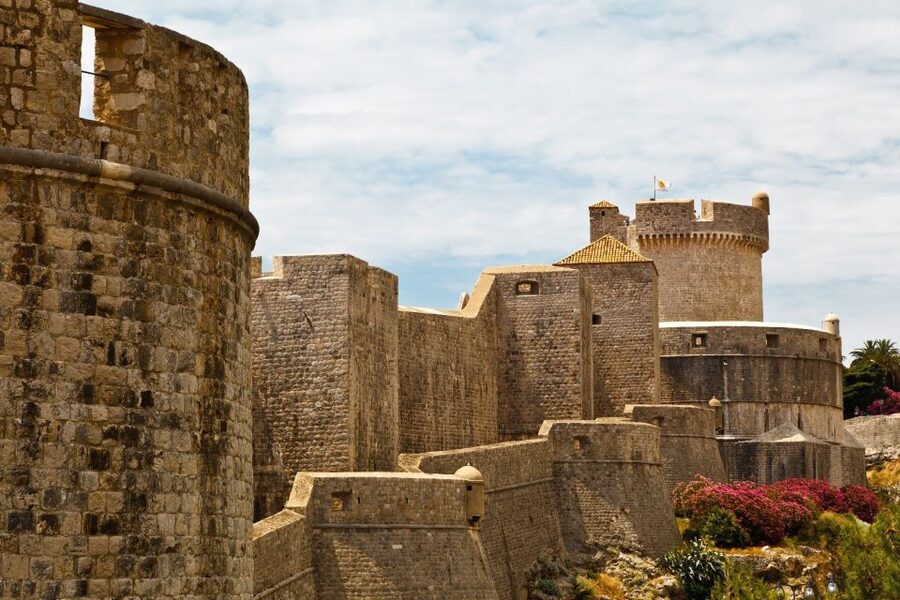
Lovrijenac Fortress sits outside the main wall circuit on a rocky position west of the Old Town. It protected the city from attacks approaching by sea or from the western side. Its location makes the strategic logic clear: Dubrovnik needed defenses outside the main walls, not just a sturdy ring around the houses.
The fortress is vital to the tour’s story even when the route focuses on the walls themselves. Your guide explains how Lovrijenac worked with the city’s other defenses and why control of the approaches mattered so much.
You should confirm exactly what your departure includes at the meeting point, since the supplied tour details identify Lovrijenac as a key landmark but do not promise a separate interior visit. The wall walk itself is the central activity.
From medieval defense to the 1991 Homeland War
The title includes wars in the plural for good reason. The tour covers Dubrovnik’s earlier political and military challenges, but it also addresses the Croatian War of Independence and the shelling of Dubrovnik in 1991.
This recent chapter gives the stone walls a more immediate meaning. Dubrovnik was not simply a medieval republic that vanished into the past. Its people faced modern conflict, and the city’s buildings and fortifications were again part of a story of protection and survival.
Some guides bring direct local experience to this subject. Goran has spoken about living through the war, and other guides have family connections or memories of that period. Andreja is praised for explaining the Homeland War carefully and for allowing time for questions. That personal perspective can be powerful, but it also means the tone may vary by guide. Expect a serious subject handled alongside the older military history, not a separate war museum presentation.
If you want only architecture and photographs, this part may feel heavier than expected. If you want to understand Dubrovnik as a living city, it is one of the tour’s most valuable elements.
Headsets, group size, and the pace of the walk
The supplied headset is a real advantage. The walls are long and narrow, and the guide cannot always stand beside every person. With the headset, you can keep walking while still hearing the explanation.
There is one limitation: reception can weaken if you fall far behind. A large group may spread out, especially on stairs or when people stop for photographs. Stay within sight and hearing distance of the guide. The headset helps, but it does not replace keeping pace.
The walk generally moves at a comfortable rate, with time for questions and short breaks. Guides have adjusted pauses for heat, wind, and individual needs. Still, this is a group tour, not a private visit. If you want to stop for a long time at every viewpoint, you may find the pace restrictive.
The strongest guides make the movement feel easy. They answer questions, add local anecdotes, and keep the group together without turning the walk into a lecture. Names such as Davor and Goran come up often because they combine clear historical explanations with humor. Darko, Mara, Andreja, and other local guides bring their own style, so the exact personality depends on the day.
What the $29 price really gets you
At $29, the tour fee is reasonable for a licensed guide and two hours of instruction. The headset is useful, and the guide adds value to an admission ticket you must buy anyway.
The important calculation is the total cost. Add the €40 adult entrance fee, and the experience becomes a significant expense. A child aged 7 to 18 pays €15 for the wall ticket, while the tour fee is listed per person. Families should check the full total before booking.
The price makes more sense if you already plan to walk the walls. Paying for admission and then wandering without context gives you the views, but not the defensive story behind them. A self-guided walk can work for independent visitors who enjoy reading and researching, yet the guide is especially useful at Revelin, Minceta, and Lovrijenac, where the strategic details are easy to miss.
The wall ticket may also be used with a Dubrovnik Pass, which can improve the value if you plan to visit other included sites. Do not assume the tour price includes the pass or admission. It does not.
Who should book this Dubrovnik wall walk?
I would choose this tour if you want more than photographs and have two hours for a focused introduction to Dubrovnik’s past. It suits first-time visitors, people interested in military architecture, and anyone who wants a clearer explanation of the 1991 war.
It is also a good fit if you prefer a local guide to a printed description. The personal stories and chance to ask questions can make difficult subjects easier to understand.
I would think twice if you have serious mobility limits, heart or breathing problems, vertigo, a fear of heights, or very low fitness. The tour is also a poor match for a hot midday slot if you struggle with sun and stairs. Bring water, wear shoes with good grip, and consider an evening departure.
Strollers are not allowed, and video recording is prohibited. You may want to use a camera for still photographs, but keep your hands free on the stairs and narrow sections.
Should you book the Walls and Wars tour?
Book it if you want the walls to make sense. The views alone are reason enough to visit, but the guide explains why Dubrovnik invested so heavily in its defenses and how the city faced both older threats and the 1991 war.
The extra €40 adult admission is the main drawback, and the physical demands are real. Still, if you can manage the stairs and plan to walk the fortifications, the $29 guide fee buys useful context, clear storytelling, and a far better sense of what you are seeing. Just choose your timing carefully, arrive with the ticket budgeted, and stay close enough for the headset to work.
FAQ
How long does the Dubrovnik Walls and Wars tour last?
The walking tour lasts two hours.
How much does the tour cost?
The tour is listed at $29 per person.
Is the Dubrovnik City Walls ticket included?
No. The mandatory wall ticket is separate and costs €40 per adult and €15 per child aged 7 to 18.
Can I use the Dubrovnik Pass for the wall entrance?
Yes. The wall ticket can be purchased at the entrance, in advance, or with the Dubrovnik Pass.
Where is the meeting point?
Meet at Dubrovnik Walks, Brsalje 8, by the Pile local bus stop. Look for representatives holding orange umbrellas.
Where does the tour finish?
The tour ends near the Old Town port in Dubrovnik.
What language is the tour conducted in?
The live tour guide speaks English.
Is the tour suitable for people with limited mobility?
No. The route includes many stairs and is not suitable for wheelchair users or people with mobility impairments. It is also not recommended for people with vertigo, a fear of heights, heart or respiratory problems, pregnant women, people over 80, or those with low fitness.
What should I bring?
Bring comfortable shoes, a hat, water, and a credit card. Baby strollers are not allowed, and video recording is prohibited.
New routes in Dubrovnik
- Dubrovnik: Explore Dubrovnik Old Town Walking Tour★ 4.9 · 96 reviews
- Dubrovnik: Panoramic Ride and Old Town Guided Walking Tour★ 4.7 · 261 reviews
- Dubrovnik: Old Town Walking Tour★ 4.9 · 792 reviews
- Dubrovnik: Game of Thrones&Lokrum Island Walking Tour★ 4.8 · 245 reviews
- Dubrovnik: Game of Thrones And Iron Throne Walking Tour★ 4.8 · 505 reviews
- Dubrovnik: Early Bird Walking Tour★ 4.9 · 123 reviews
- Dubrovnik: Karaka – Game of Thrones Cruise & Walking Tour★ 4.8 · 613 reviews
- Dubrovnik: Legendary Game of Thrones Walking Tour★ 4.8 · 220 reviews
Dubrovnik Walking Tours, compared.

The Original Game of Thrones Tour & Lokrum Option
Read our review →
City Walls Early Morning or Sunset Walking Tour
Read our review →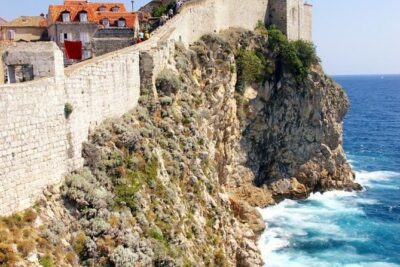
City Walls, Old Town Walking Tour & Adriatic View
Read our review →Browse the lists this tour appears in