
Review · CROATIA
Pula: Historic Walking Tour with Local Guide & City Views
Pula’s Roman amphitheatre is more than a photo stop on this walking tour. It is your starting point for understanding how the city worked, from Roman entertainment and trade to Venetian rule and the local goat on Istria’s flag. Marina’s city stories connect the grand monuments with everyday life.
I like the route’s mix of famous sights and smaller details. The three surviving Roman gates give you a clear sense of the old city, while the farmers market brings you back to present-day Pula. The tour can also bend toward food, culture, nature or local life, which makes it more personal than a fixed script.
The main point to consider is language: the tour is offered in German. Entrance fees are not included, so you should decide in advance whether you want to enter the Arena or focus on the outdoor walk.
Key points to know
- Start beneath Pula Arena’s wooden-roofed entrance: The meeting point is easy to identify at the city’s main monument.
- Follow Roman traces through three city gates: Twin, Hercules and Sergii gates each open a different window onto ancient Pula.
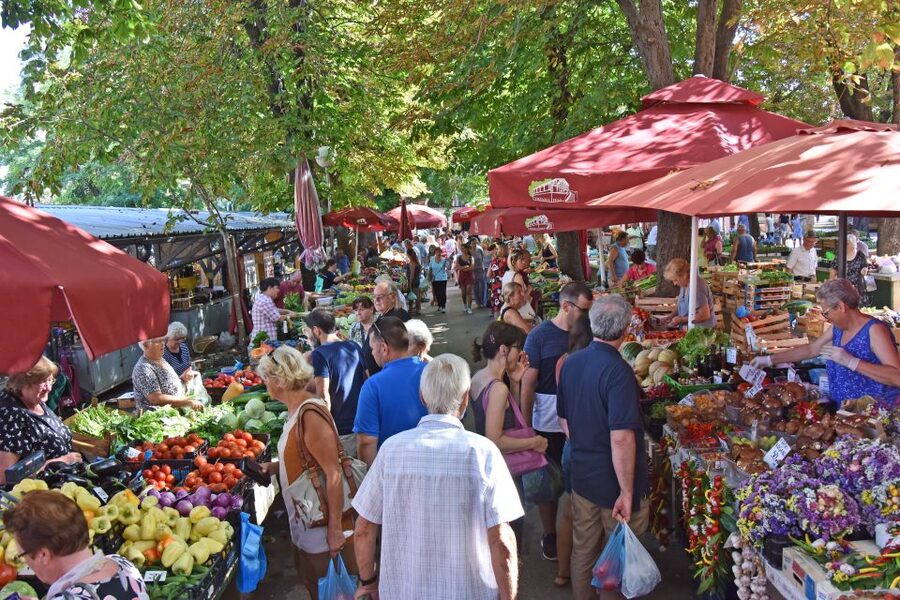
- Visit the farmers market: This is where local produce and Istrian food traditions become part of the walk.
- Connect the Forum to daily life: The square combines Roman remains, the August Temple and Venetian city hall.
- Ask for a personal focus: Marina can shape the conversation around food, nature, culture or local lifestyle.
- Choose a private format if useful: Private groups are available, and the route is wheelchair accessible.
Beginning at Pula’s Roman Arena
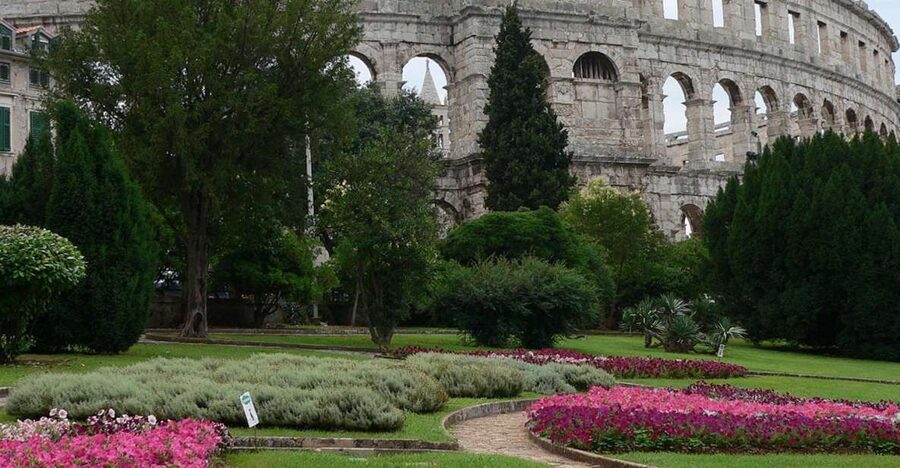
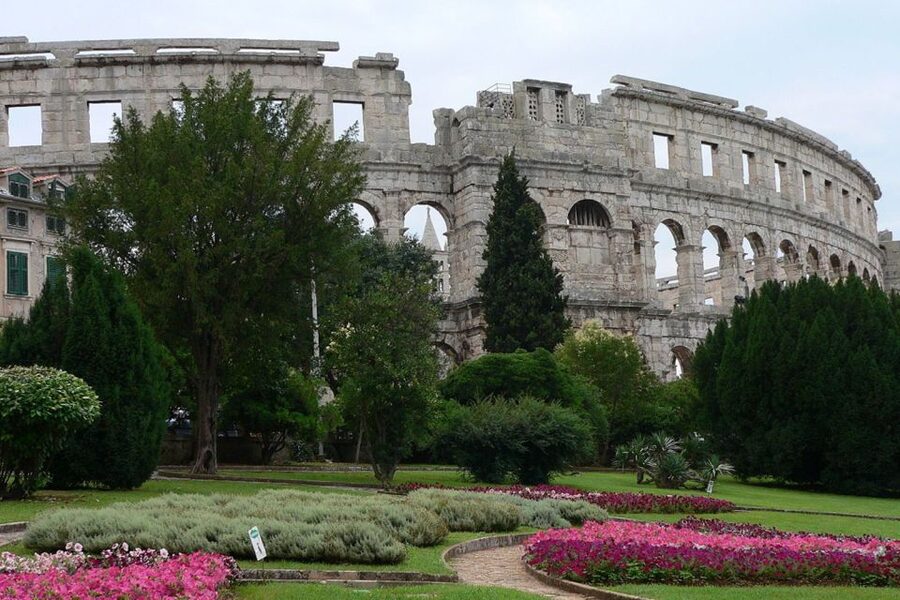
Pula’s amphitheatre, often called the Arena, is the natural place to begin. You meet at the entrance beneath the wooden roof, then start with the building that gives Pula its strongest Roman identity.
The first useful question is not only who fought here. Marina explains what the amphitheatre was built for and how it was used, including purposes that go beyond gladiatorial games. That wider explanation matters because it turns the Arena from a dramatic stone shell into part of the city’s social and public life.
You can choose whether to visit the interior. This flexibility is valuable. If you have already paid to enter or prefer an outdoor walk, you can concentrate on the architecture and the city streets. If you want a closer look, an entrance visit adds cost because admission is not included in the $29 tour price.
The Arena is also a practical meeting point for a first visit to Pula. You do not need to search for a small office or wait in an obscure lane. You begin beside the city’s best-known sight, then move naturally into the older parts of town.
More History Walking Tours in Croatia
- Dubrovnik Old Town History Walking Tour
★ 5.0 · 1,684 reviews - Dubrovnik: Ancient City Walls & Wars Walking Tour
★ 5.0 · 1,270 reviews - Zagreb: City & History Walking Tour & WW2 Tunnels
★ 4.9 · 1,202 reviews
Roman gates that still shape the walk
From the amphitheatre, the route leads toward three Roman gates that remain in Pula: the Twin Gate, Hercules Gate and Sergii Gate. This is one of the strongest parts of the itinerary because you see more than one surviving fragment of Roman Pula.
Each gate offers preserved details for discussion. Their names are easy to remember, but the value comes from learning how they fitted into the city and what their decoration and position can tell you. Marina uses the gates to explain people, buildings and the changing story of the area.
The Twin Gate is especially useful for seeing how an old entrance can become part of a later city. The Hercules Gate provides another compact Roman marker, while the Sergii Gate gives the walk a more formal architectural note. You are not simply ticking off three monuments. You are comparing them as you move through the streets.
This part of the walk also helps you get oriented. Pula’s center is layered rather than arranged as one neat historic district. Roman remains, later buildings and modern local life share the same streets. A guide keeps those layers from becoming a pile of disconnected dates.
The farmers market and the taste of Istria
The farmers market gives the tour a welcome change of pace. After Roman stone and old gates, you see the place where locals buy and sell products native to Istrian soil.
I like this stop because it connects history with something practical. Food is not treated as a separate topic reserved for a cooking class. It becomes part of the city’s identity, trade and daily rhythm. Marina is a passionate cook and can talk about local cuisine, so this is a good moment to ask about ingredients, regional dishes and how food fits into life in Istria.
The market is also a useful stop for anyone staying in Pula for more than a day. You can learn what local products to look for, then return on your own. The supplied information does not promise tastings or purchases as part of the tour, so treat this as a place for explanation and observation rather than a food sampling activity.
If you are especially interested in cuisine, mention it when arranging the tour. The experience can focus on topics that interest you, and food is one of the guide’s stated strengths. That makes the tour a better fit for curious eaters than a standard walk that only lists monuments.
Forum Square, the August Temple and the city hall
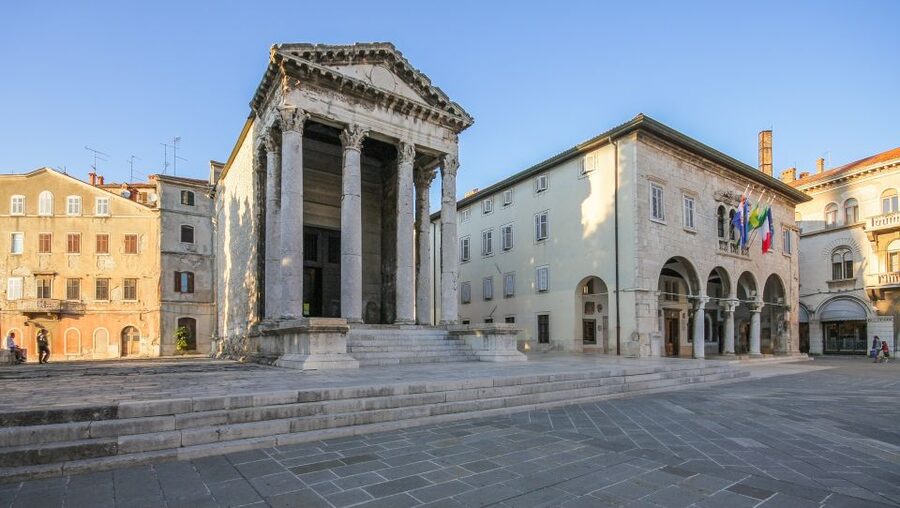
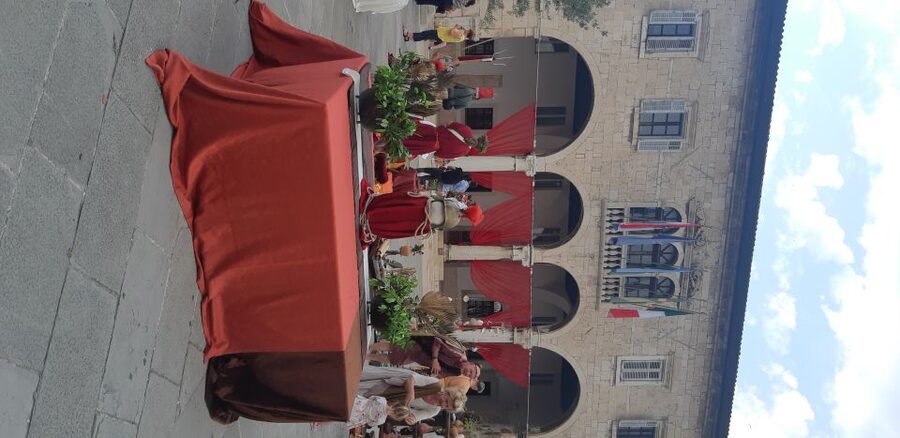
The walk continues to Forum Square, the center of Roman Pula. In Roman times, the Forum was not only a place for public life. It also served as a trading area, which makes a useful connection with the modern farmers market.
Here you see remains of the August Temple and Pula’s Venetian city hall. The contrast is the point. One side of the square recalls Roman religious and civic life. Another reflects the Venetian period and the later development of the city.
Marina also uses the Forum to explain why a goat appears on the regional flag. This is exactly the sort of detail that makes a walking tour worthwhile. You can photograph a temple or a city hall on your own, but the local symbol gives you a story to carry away.
The Forum is a good place to slow down and ask questions. The tour is designed to be personalized, so you can ask about the buildings, the city’s cultures or the meaning behind local symbols. The experience is not limited to a fixed list of dates.
Same streets, a different guide:
- Dubrovnik: Old Town Walking Tour
★ 4.8 · 5,174 reviews - Dubrovnik: The Original Game of Thrones Tour & Lokrum Option
★ 4.8 · 5,064 reviews - Split: Old Town and Diocletian Palace Walking Tour
★ 4.9 · 4,727 reviews - Dubrovnik Discovery Old Town Walking Tour
★ 5.0 · 4,458 reviews
A city shaped by several cultures
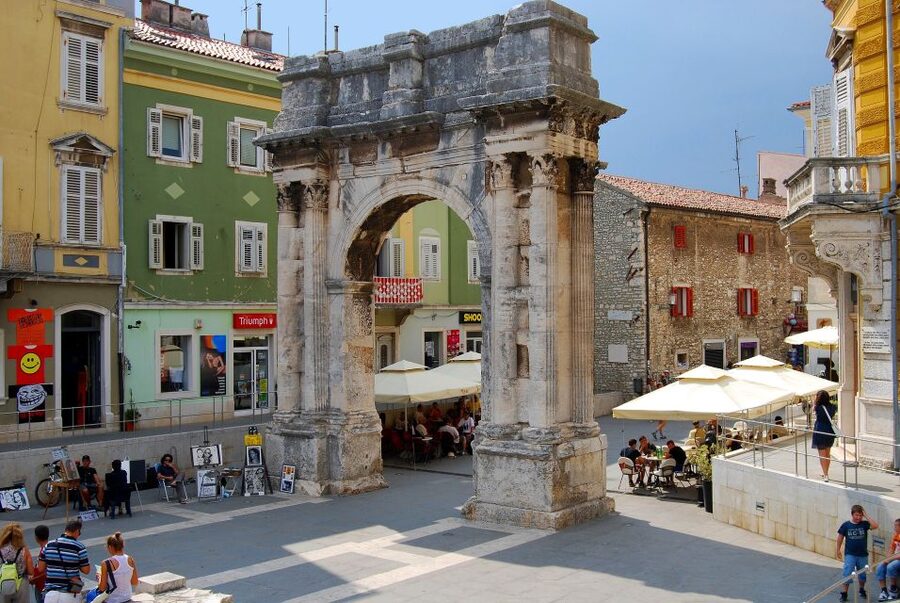
Pula’s old streets are the real thread connecting the stops. The Arena, gates, market and Forum are not isolated attractions. Together they show how different cultures have claimed and reshaped the same city over many centuries.
That layered quality is what makes the walk more useful than a quick monument checklist. Roman Pula appears in the amphitheatre, gates and temple. Venetian Pula appears in the city hall. Modern Pula appears in the farmers market and in the guide’s discussion of local life.
You should expect history to be explained through buildings and places rather than through a museum-style presentation. The route is outdoors and on foot, with the city itself providing the setting. Wear shoes suitable for a walking tour and allow enough time for the experience to run closer to two hours if the conversation becomes detailed. The stated duration is 90 minutes to two hours.
The title refers to city views, but the clearest promise is the route through Pula’s historic center and its major landmarks. Do not book this expecting a dedicated lookout excursion. Book it to see how the old city fits together.
How personal is the tour?
The guide is Marina, a licensed Istrian guide with more than 18 years of experience, and the tour is conducted in German. Her specialization in German-speaking groups is important if you want explanations that feel natural rather than translated on the spot.
The tour can be arranged for a private group, which changes the experience considerably. A private format gives you more room to ask about your own interests and adjust the pace of conversation. One recent group of seven people, including a young child, found the walk comfortable and enjoyable, so the format can work for a small family or friends traveling together.
The information also records a booking led by Veronika, with the guide praised for making the walk entertaining and informative. Since the main description identifies Marina as the guide, confirm the assigned guide when booking if that detail matters to you.
The strongest pattern in the feedback is not one particular monument. It is the guide’s clear explanations, willingness to answer questions and ability to make the walk feel lively. You can expect attention to buildings, people, national and local history, plus practical tips about Pula.
What the $29 price includes
At $29 per person, the tour is priced as a guided orientation to Pula rather than as an admission package. You pay for 90 minutes to two hours with a local guide, not for entry to the Arena or another paid site.
That distinction helps you judge the value. If you want context for the Arena, gates, market and Forum, the price is reasonable for a focused private or small-group walking experience. If you only want to take exterior photographs and read plaques, you may find the cost harder to justify.
The value rises if you use the personalized element. Ask about local food at the market, the goat on the flag, Venetian influence or daily life in Istria. A question-led walk can give you more than a standard route.
Entrance fees are extra, so include them in your budget if you decide to go inside the amphitheatre. You can also keep the tour to its outdoor sights and avoid that additional expense.
Who will get the most from this walk?
This experience suits you best if you want a first look at Pula that combines major sights with local explanation. It is especially useful early in a stay, when you need to understand the city’s layout before exploring on your own.
You will likely appreciate it if you enjoy:
- Roman architecture but want more than gladiator stories
- Food and markets as part of local culture
- Asking questions instead of following a rigid lecture
- Historic streets shared by Roman, Venetian and modern Pula
- German-language guiding
- A private group or a small gathering of family and friends
Families may find the flexible format useful, especially if a child needs a little more attention or a shorter explanation. The experience is listed as wheelchair accessible, though you should still discuss any specific route needs when arranging the tour.
This is less suitable if you want a long archaeological tour, a dedicated food tasting or a broad excursion across Istria. It is a city walk, not a full-day regional tour. Its strength is the compact route and the personal conversation.
Practical details before you reserve
The tour offers free cancellation up to 24 hours before the start, and you can reserve now and pay later. That is useful if your Pula plans depend on weather or changing arrival times.
The meeting point is at the Arena entrance, under the wooden roof. Look for the entrance area rather than a separate street address. Since the tour begins at Pula’s main attraction, arriving a little early will help you orient yourself.
The stated duration varies from 90 minutes to two hours. Check the available start times and plan around the longer end if you want room for questions or a possible Arena visit.
The live guiding language is German. Private groups are available, and the activity is wheelchair accessible. Admission charges are not included. Those are the main details to settle before booking.
Should you book Pula’s historic walking tour?
Book this tour if you want Pula explained by someone rooted in Istria, with room to ask about food, local life and the odd details that make the city memorable. The combination of the Arena, three Roman gates, farmers market and Forum gives you a strong overview in a manageable walk.
The best reason to choose it is the guide’s personal approach. Marina’s long experience, German-language focus and interest in cuisine give the route more range than a basic monument tour. The main limitation is that you need German, and you must pay separately for any entrance fees.
For a first visit to Pula, $29 is a fair price for a guided introduction, especially if you choose a private group and make use of the flexible topics. If you want a quiet self-guided stroll, skip it. If you want the city’s Roman and Venetian layers to make sense, this is a practical choice.
FAQ
How long does the Pula walking tour last?
The tour lasts 90 minutes to two hours. Available start times vary, so check the schedule when booking.
Where does the tour meet?
You meet at the entrance to Pula Arena, beneath the wooden roof.
Is the Arena entrance included?
No. The walking tour includes the local guide, but entrance fees are not included.
What language is the tour conducted in?
The live tour guide language is German.
Is the tour wheelchair accessible?
Yes, the activity is listed as wheelchair accessible.
Can I book a private group?
Yes. A private group option is available.
New routes in Croatia
- Split: Walking tour of Split with a ‘Magister’ of History★ 5.0 · 110 reviews
- Split: Local History and Culture 90-Minute Walking Tour★ 5.0 · 194 reviews
- Split: Food Tasting Walking Tour★ 4.9 · 102 reviews
- Split: Diocletian Palace & Old Town Guided Walking Tour★ 4.7 · 882 reviews
- Split: 1.5-Hour Walking Tour and Diocletian’s Palace★ 4.7 · 256 reviews
- Shipwreck – Blue Lagoon All Inclusive + Trogir Walking Tour★ 4.4 · 110 reviews
- Rovinj: Guided Walking Tour★ 4.8 · 113 reviews
- Pula: Historic Sites Guided Walking Tour★ 4.8 · 78 reviews
Croatia Walking Tours, compared.
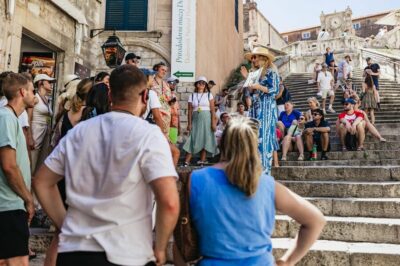
The Original Game of Thrones Tour & Lokrum Option
Read our review →
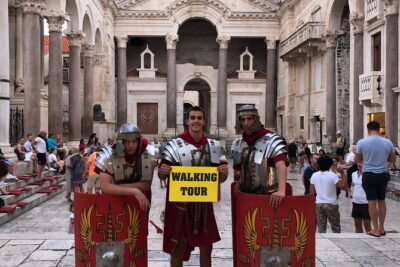
Walking Tour of Split and Diocletian’s Palace
Read our review →
Krka Waterfalls tour with Trogir Walking tour and Krka panoramic boat cruise
Read our review →
City Walls Early Morning or Sunset Walking Tour
Read our review →
Plitvice Lakes: Guided Walking Tour with Bus and Boat Ride
Read our review →Browse the lists this tour appears in