
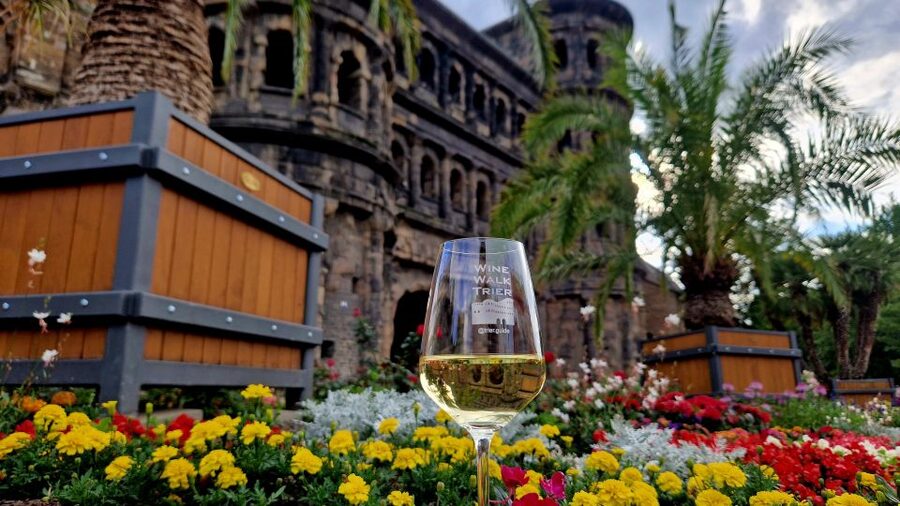
Review · GERMANY
Trier: Guided City Walk with Wine Tasting
Trier’s Roman gate, medieval squares, cathedral, grand palace, and ancient bath ruins make a fine walking route. This tour adds a clever local touch: five wines are matched to places in the city, so the tasting becomes part of the story rather than a stop at a generic wine bar.
I like the way the route connects the Moselle wine region with Trier’s past, and I like the small extras: water, breadsticks, and a voucher for a glass of wine with a main course at Weinwirtschaft Friedrich-Wilhelm. The main thing to consider is that you taste outdoors as you walk, rain or shine, and the city center can make it hard to hear at busy moments.
Key points at a glance
- Roman Trier in two hours: Follow a compact route from Porta Nigra to the Forum Baths.
- Wine with a reason: Each pour has a link to a building, place, winery, or period of Trier’s story.
- Simon’s personal connection: Simon, who grew up in Trier, brings strong local knowledge, humor, and a clear interest in wine.
- Seasonal tasting: Expect five regular wines in summer, or four local mulled wines in winter when at least six people register.
- Easy walking route: The tour is barrier-free and does not require climbing steps.
- Useful added value: Breadsticks, water, and a voucher for a glass of wine with a main course are included.
Why this Trier walk works so well
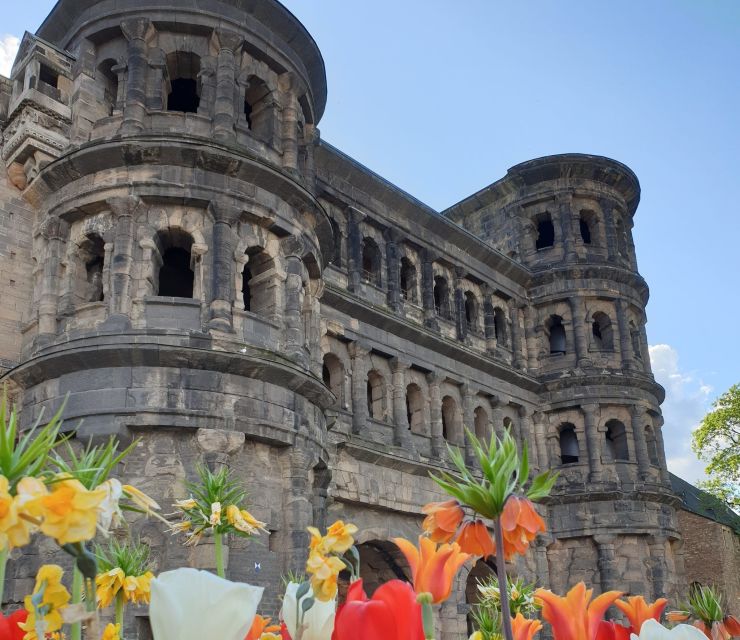
A standard city walk can leave you admiring monuments without understanding how they fit together. This experience gives you a simple thread to follow: Trier’s Roman power, Christian importance, medieval life, and wine culture all meet in the same small center.
You begin near the Porta Nigra, the massive Roman gate that once formed part of the city’s defenses. From there, the route passes through the central market area, beside the cathedral and Liebfrauenkirche, toward the Basilica, Electoral Palace, Kaiserthermen, and Forum Baths.
The walking itself is not strenuous. The route is completely barrier-free, and no steps are required. That makes it a practical choice for a mixed-age group or for anyone who wants a close look at Trier without committing to a long day on foot.
The wine gives the tour a social rhythm. You stop, hear a piece of history, taste a regional wine, and move on. Simon’s style, based on the experience details and repeated comments from people who joined his tours, is warm and conversational. He is especially good at answering questions and bringing together the history of Trier and the Moselle wine trade.
More Wine and Tapas Walking Tours in Germany:
- Barcelona Tapas and Wine Experience Small-Group Walking Tour
★ 5.0 · 5,804 reviews - Authentic Parisian Gourmet Food Tour with 10 Local Dishes & Wines
★ 5.0 · 4,754 reviews - Barcelona: Tapas Walking Tour with Food, Wine, and History
★ 4.8 · 4,261 reviews
Starting beside the Porta Nigra
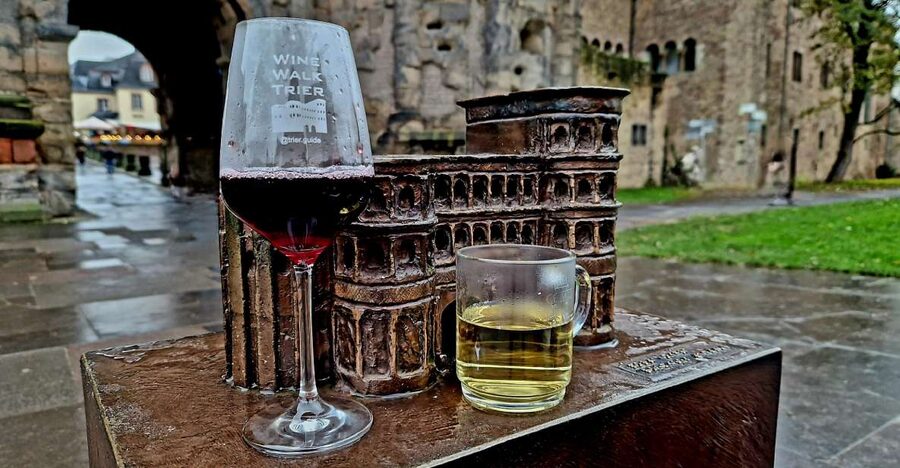
Meet on the left side of the Tourist Information, in front of the city model near the flags. This is close to the Porta Nigra and easy to identify, but remember that the walk is run by Trier.Guide, not by the Tourist Information itself.
The Porta Nigra is the right opening scene. Its dark stone and heavy Roman construction immediately show that Trier is not simply a pretty German old town. This was a major Roman city, and the gate remains one of the clearest reminders of that past.
The first tasting takes place in this Roman setting. The important point is not just the flavor of the wine. You learn why a particular wine fits the location or the region, which gives you a useful introduction to Moselle wine before the route moves into the medieval center.
Bring a coat or rain layer. The tour operates in all weather, and wine stops take place along the outdoor route. In warm weather, chilled Rieslings are a natural match for the walk. In winter, the mulled wine version makes the experience more seasonal and cozy.
Market Cross and the old city center
From Porta Nigra, the group heads toward the Market Cross on the Main Market. This square is one of Trier’s key public spaces, and it changes the feel of the tour. The Roman gate is monumental and defensive. The market is more social, commercial, and tied to the daily life of the city.
Here, the guide can explain how Trier developed after the Roman period and how the center served different roles over time. This is also one of the places where street noise may make it harder to hear every word, especially if the square is busy. Stay close to the guide and ask for a repeat if needed.
The wine stop works well here because wine is not treated as a separate subject. You are tasting a product connected with the wider Moselle area while standing in the place where trade, religion, and civic life met. That link gives the tasting more purpose than simply sampling several unrelated bottles.
Trier Cathedral and Liebfrauenkirche
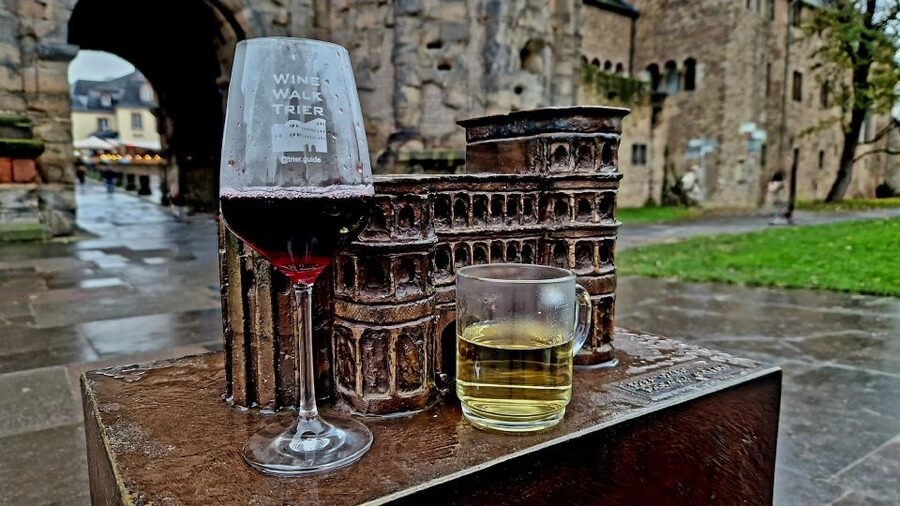
The route continues to Trier Cathedral, then to the Liebfrauenkirche. These buildings show the city’s importance as a Christian center and add a very different layer to the Roman story.
The cathedral is large and imposing, while the Liebfrauenkirche has a lighter, more graceful character. The tour allows time for photographs and guided explanation, and you may have a chance to look more closely at the interiors or return later on your own. The walk does not replace a full visit to each church, so if you want detailed interior time, plan to come back after the tour.
The stop at Liebfrauenkirche also provides another wine connection. This is one of the tour’s strongest ideas: the drink in your hand is tied to the place around you. You are not trying to memorize grape varieties in a formal tasting-room setting. You are learning how wine, religion, land, and local history overlap in the Moselle region.
If you prefer not to drink alcohol, grape juice can be arranged by email. That option is worth requesting before the tour rather than assuming it will be available at the meeting point.
More Food Walking Tours in Germany:
- Berlin Center Food Tour with 8+ Authentic Local Tastings
★ 5.0 · 1,227 reviews - Cologne: Südstadt Guided Foodie Walking Tour
★ 4.6 · 624 reviews - Dresden: Taste of Dresden Food Walk
★ 4.6 · 397 reviews - Hamburg: Speicherstadt Walking Tour with Coffee Tasting
★ 4.6 · 360 reviews
The Basilica and Electoral Palace
The Aula Palatina, usually called the Basilica, is one of Trier’s most striking Roman buildings. Its enormous interior once served imperial purposes, and its scale is hard to grasp from photographs alone.
Beside it, the Electoral Palace adds a later chapter. Its ornate appearance contrasts sharply with the plain Roman bulk of the Basilica. Together, the two buildings make a useful visual lesson in changing power: Roman imperial authority, then the influence of Trier’s prince-electors and church leaders.
The tour’s wine stop near the Electoral Palace helps keep the historical sequence moving. You are not simply hearing a list of dates. You see how the city’s architecture changed as different rulers and institutions shaped Trier.
Simon is particularly well suited to this part of the route. He grew up in Trier, and the experience is at its best when he points out details that a quick self-guided walk might miss. The repeated praise for his humor and patience also matters here, since the story of Trier covers a lot of ground in a short time.
Kaiserthermen and the Forum Baths
The Kaiserthermen are the next major Roman stop. These ruins once formed part of a vast bath complex, giving you a glimpse of the engineering and public life of the Roman city.
The tour ends at the Forum Baths, another Roman bath complex, on Viehmarkt Square. Ending here creates a neat bookend to the Porta Nigra. You begin with a Roman city gate and finish among the remains of a Roman public building.
The Forum Baths are not just a final photo stop. They give you a chance to understand the scale of Roman Trier after seeing several later monuments. The route has moved from defense to religion, royal power, and public leisure, all within a manageable central area.
The final tasting is linked to this closing location. Because the tour ends outside the Forum Baths, you can continue exploring Viehmarkt Square or use the included dining voucher nearby.
What you actually taste along the way
In the summer season, the standard format includes five different regional wines. The selection focuses on the Moselle area, with Riesling receiving particular attention. The wines are explained in relation to Trier and the places visited, rather than presented as a technical lesson full of specialist language.
You also receive water and breadsticks. These are modest additions, but they matter. Several tastings during a walking tour can feel less comfortable without water and a little food, especially on a warm day.
From the middle of November through the end of January, the tour can feature four different mulled wines from local wineries when at least six people register. This is not simply the summer tasting served warm. The winter format has its own character and suits the Christmas-season atmosphere of Trier.
There is one seasonal detail to check carefully. If fewer than six people register for the winter version, the experience may use five different wines instead of four mulled wines. If that distinction matters to you, confirm the format before booking.
A tasting glass is not included. You can buy one afterward for €6, and a wine-glass holder costs €3. The experience is designed to be portable, so do not expect a seated winery tasting with a formal glass for every sample.
Price and what the extras add
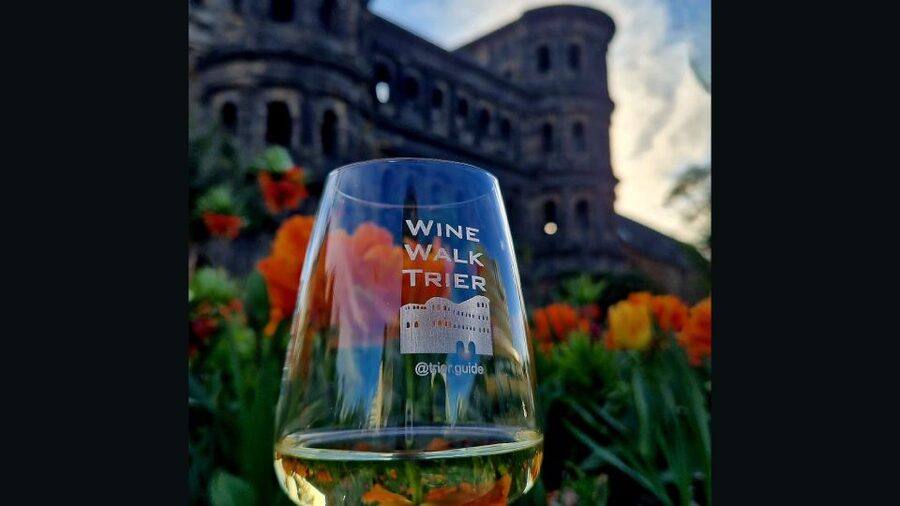
At $43 per person, the tour is not the cheapest way to see Trier’s monuments. You can walk past many of them without paying anything. The value comes from combining a guide, a two-hour route, five wines or four seasonal mulled wines, water, breadsticks, and a useful restaurant voucher.
The wine alone does not justify the price for everyone. If you already know Trier well or prefer to visit monuments independently, a self-guided walk will cost less. But if you want the city’s Roman, religious, and political history explained while you taste local wine, the price is reasonable.
The voucher is for one glass of wine with a main course at Weinwirtschaft Friedrich-Wilhelm, next to the Basilica. It is not a free meal, but it gives you a practical follow-up option after the walk. You can use it to continue the wine theme over dinner rather than treating the tasting as a complete evening out.
I see this as a good-value introduction for a first visit, especially if you have only a day in Trier. It covers many headline sights without requiring separate transport or a full-day commitment.
Timing, weather, and hearing the guide
The experience lasts two hours, which is enough for a broad introduction but not enough for long interior visits at every monument. You will stop for photos and explanations, but the route keeps moving.
The tour runs rain or shine. In good weather, walking with chilled wine is an easy pleasure. In rain, the same route remains possible because it is barrier-free, but you will need suitable clothing and may find the outdoor tasting less comfortable.
The central streets and squares can be noisy. One person specifically noted that the street activity sometimes made it difficult to hear. This is not a major flaw, but it is a real practical point. Stay near the guide, and do not hesitate to ask him to repeat a detail.
The tour is offered in German and English. Because the route covers Roman rule, Christianity, the Middle Ages, modern history, and wine production, the information comes quickly. You will get more from it if you treat the walk as an overview and mark the places you want to revisit afterward.
Who should book this wine walk?
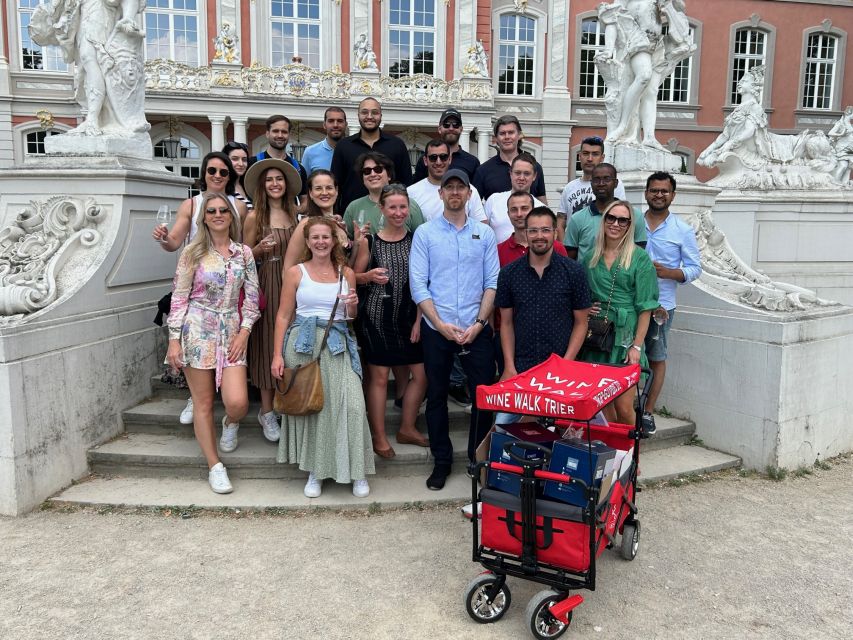
I would recommend it to first-time visitors who want both sightseeing and a taste of the Moselle region. It suits couples, friends, and families with adults who enjoy history but do not want a formal lecture.
It is also a smart choice for a day trip from Luxembourg. The meeting point is easy to find near the center, and the route gives you a quick but substantial look at Trier before you return.
Wine lovers should book it for the regional context, not for a specialist tasting course. You will sample several wines and learn their connections to the city, but the focus stays on Trier.
The tour also works for non-drinkers if you arrange grape juice by email. People who want a fully seated experience, a winery visit among the vines, or long time inside each monument should choose a different format.
Free cancellation is available up to 24 hours before the start, and you can reserve now and pay later. The tour is wheelchair accessible and does not require steps, which makes it easier to fit into a careful sightseeing plan.
Should you book it?
Book this tour if you want a lively overview of Trier with local wine built into the route, especially on a first visit or a short day trip. Simon’s local connection, the thoughtful links between each pour and the city, and the compact route give the experience more character than a basic monument walk.
Skip it if you dislike outdoor tastings, need quiet conditions to hear every detail, or would rather spend your money on full monument admissions and a separate winery visit. For most visitors who like history, Riesling, and an easy city walk, $43 is a fair price for a well-packed two hours.
FAQ
How long does the Trier wine and city walk last?
The tour lasts two hours.
Where does the tour start?
Meet on the left side of the Tourist Information, in front of the city model near the flags, close to the Porta Nigra.
Where does the tour end?
The tour ends at the Forum Baths on Viehmarkt Square.
How many wines are included?
The summer format includes five different regional wines. From the middle of November through the end of January, the tour can include four different local mulled wines when at least six people register. If fewer than six people register, five regular wines may be served instead.
Can I choose a non-alcoholic option?
Yes. Four different grape juices can be arranged, but you need to book this option by email.
Is the tour wheelchair accessible?
Yes. The route is completely barrier-free and does not require climbing steps.
What happens if it rains?
The tour operates rain or shine, so bring suitable weather protection.
Are a glass and wine holder included?
No. A glass can be purchased after the tour for €6, and a wine-glass holder can be purchased for €3. Water and breadsticks are included.
New routes in Germany
- Munich: Walking Tour Old Town and Viktualienmarkt★ 4.7 · 839 reviews
- Stuttgart: Guided Ghost Walking Tour★ 4.5 · 867 reviews
- Stuttgart: Private Guided Circular City Walk★ 4.7 · 129 reviews
- Stuttgart: Old Town Highlights Guided Walking Tour★ 4.2 · 101 reviews
- Stuttgart: City Highlights – Guided Walking Tour★ 4.7 · 189 reviews
- Hamburg: Private Tour Red Light District Walking Tour★ 4.7 · 227 reviews
- Small Group Walking Tour: “Wild Kreuzberg”★ 4.8 · 199 reviews
- Sachsenhausen Memorial: Walking Tour from Berlin★ 4.7 · 132 reviews
Germany Walking Tours, compared.
Berlin City walk Government District and Places of Democracy
Read our review →
Berlin’s Best: 2 Hour Walking Tour Third Reich and the Cold War
Read our review →
Explore Berlin: See All The Iconic Sights & Some Hidden Gems
Read our review →
Third Reich Berlin: Hitler and WWII Walking Tour
Read our review →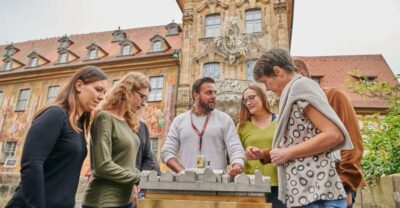
Browse the lists this tour appears in