

Review · TBILISI
Tbilisi Walking Tour Including Cable Car and Traditional Bakery
Tbilisi’s story unfolds best on foot, and this four-hour city walk gives you a useful first look at the capital without turning the day into a forced march. You cross the Mtkvari River, ride up to Mother of Georgia, explore old churches and bathhouse streets, then finish near Meidan Bazar with a Georgian pastry and lemonade.
I like the cable car ride, which gives you an easy view over the old rooftops, and I like the mix of famous sights with small cultural details, from the tamada toastmaster tradition to the working tone bakery. The main drawback is pace: some groups find the walk pleasantly relaxed, while others feel a few stops receive more explanation than they need.
- Cable car to Mother of Georgia: A short ride from Rike Park brings wide views over Tbilisi and the Mtkvari River.
- Old Tbilisi in one sweep: Churches, bridges, bathhouses, a waterfall, statues, and historic streets fit into one half-day.
- English-speaking guides: Guides including Soso, Ana, Nini, Dimitri, Shoti, Toko, and Ellie are praised for friendly explanations and good group care.
- Local food included: You receive a traditional Georgian pie and lemonade at a tone bakery.
- Useful first-day tour: The route helps you understand the city’s layout before exploring on your own.
- A few practical limits: Churches require modest clothing, and the cable car may close in windy weather.
Starting near Avlabari and meeting the city
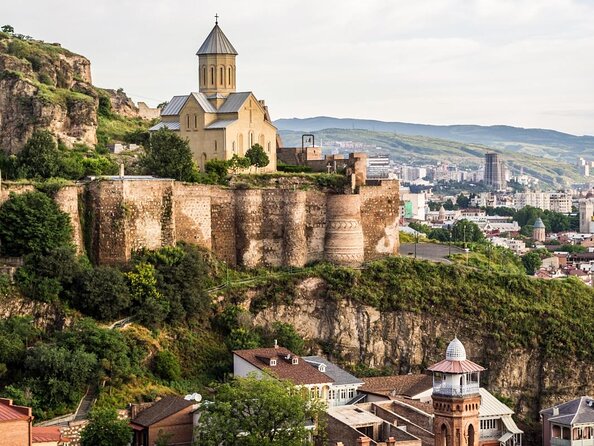
The tour begins at the M/S Avlabari meeting point at 10:00 am. The nearby Avlabari metro area is handy, and the operator provides online support if you have trouble finding the start. That small detail matters in Tbilisi, where streets can change character quickly and several landmarks have similar names.
The opening stop is a 15-minute visit to Traveler’s Meeting Point, a free social space with board games, music, and wine. Think of it as a gathering place rather than a major attraction. It gives the guide a chance to organize the group and set the tone before the sightseeing begins.
From there, the route moves toward Metekhi Cathedral. The walk is not just a parade of photo stops. Your guide explains how the church sits above the Mtkvari on a cliffside plateau and connects the site with Vakhtang Gorgasali and the early religious story of Tbilisi.
You should expect a lot of standing while the guide speaks, followed by short stretches of walking. The overall pace is suitable for most people aged five and up, but comfortable shoes still matter. Tbilisi’s old streets include uneven surfaces, slopes, and steps.
Metekhi Cathedral and the founder of Tbilisi
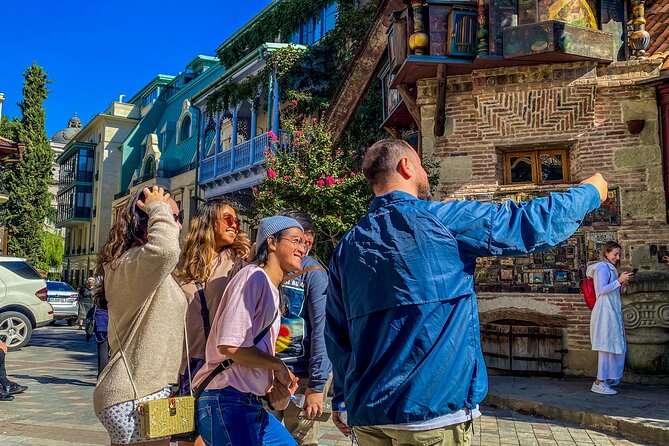
Metekhi Cathedral is one of the route’s strongest early stops. Its position above the river gives it real presence, while the church itself introduces the close relationship between Georgian faith, royal power, and city identity.
The guide also points out the monument to King Vakhtang Gorgasali, the ruler traditionally linked with the founding of Tbilisi. His dates and achievements are not always simple to pin down, so this is a place where a good guide can help separate established history from local tradition.
You get about 15 minutes at Metekhi Cathedral and five minutes at the king’s monument. That is enough for an introduction and photographs, but not a long church visit. If you want extended time inside religious buildings, this tour may feel brisk.
More Walking Tours in the world:
- Magical London: Harry Potter Guided Walking Tour
★ 4.7 · 22,044 reviews - Reykjavik Food Walk – Local Foodie Adventure in Iceland
★ 5.0 · 18,952 reviews - History and Hauntings of Salem Guided Walking Tour
★ 5.0 · 14,564 reviews
Europe Square, Rike Park, and the cable car
The walk continues through Europe Square, where the guide discusses Georgia’s relationship with the European Union. It is a short stop, but it adds current political context to the older monuments. The tour is not only about kings and churches. It also touches on how Georgians see their country today.
Next comes Rike Park, a modern recreation area on the left bank of the Mtkvari. Its features include fountains, climbing walls, a children’s maze, giant chess boards, walking paths, bars, and restaurants. The park also serves as the lower station for the cable car.
The cable car ride is included, which improves the value of the tour. You do not need to arrange a separate trip up the hill, and the ride breaks up the walking. In about 10 minutes, the route carries you toward the upper station near Mother of Georgia, with views across the river and central Tbilisi.
The cable car does not operate in windy weather. The tour still runs in all weather, so you should be ready for a possible change in the experience. If the ride is important to you, check conditions before booking, but do not assume a cancellation simply because the weather is poor.
Mother of Georgia and the view from Sololaki Hill
At the top, you visit Kartlis Deda, commonly called Mother of Georgia. The 20-meter aluminum statue was created in 1958 for Tbilisi’s 1,500th anniversary. In one hand she holds a bowl of wine for friends. In the other, she holds a sword for enemies.
That image gives you a compact way to understand a Georgian idea of welcome: hospitality is generous, but national pride is not passive. Your guide can explain the symbol, then give you time to take in the city below.
This is one of the tour’s best moments for orientation. From the hill, you can see how the old city follows the Mtkvari and how the newer parts of Tbilisi spread beyond the historic center. The view is especially useful early in your stay because it helps turn a map into a place you recognize.
The stop is listed at about 10 minutes. That is enough for the statue and a quick view, but not a long hilltop visit. If you want to linger for a quiet morning above the city, plan to return on your own.
Crossing the Bridge of Peace into Old Tbilisi
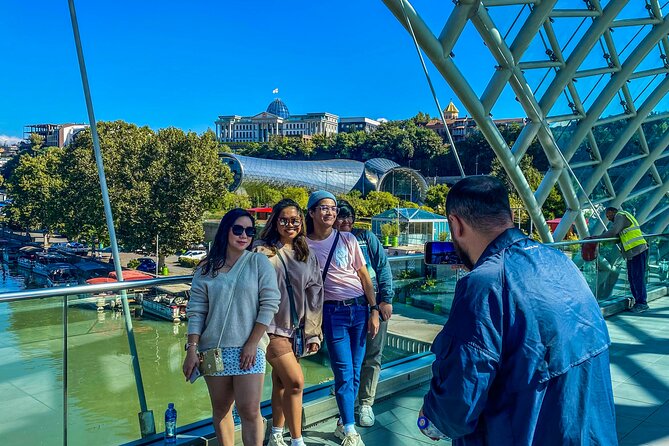
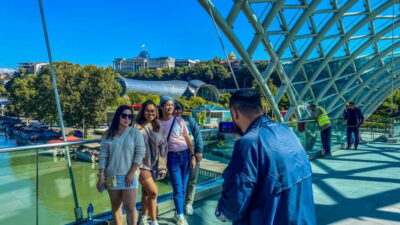
The group returns toward the river and reaches the Bridge of Peace, one of Tbilisi’s most recognizable modern structures. Its curved glass and steel form opened in 2010, and more than 10,000 LED bulbs light it each evening before sunset.
The bridge is a good contrast to Metekhi Cathedral and the old lanes. Tbilisi can shift from medieval religious architecture to bold contemporary design within a few minutes, and this route makes that contrast easy to see.
From the bridge, the walk passes the Patriarchate of Georgia and continues to Anchiskhati Basilica. The Patriarchate stop is brief, with about five minutes for background and explanation. Anchiskhati receives about 10 minutes and dates to the sixth century, making it one of the oldest churches in the city.
Church visits require planning. Shorts are not permitted, and women must cover their heads. Dress modestly from the start, especially if you are joining the morning departure and want to enter the religious sites without interruption.
Same streets, a different guide:
- New Orleans Premier Ghost, Voodoo and Vampire Walking Tour
★ 4.5 · 12,856 reviews - Amsterdam Anne Frank: Small-Group Walking Tour & Local Guide
★ 4.8 · 12,789 reviews - Edinburgh: Harry Potter Magical Guided Walking Tour
★ 4.8 · 11,944 reviews - Edinburgh Castle: Guided Walking Tour with Entry Ticket
★ 4.7 · 11,699 reviews
Anchiskhati, Sioni, and the old city’s religious core
Anchiskhati Basilica sits on Shavteli Street in the upper Kala district. Its original name related to the Virgin Mary’s birth, and it later took the Anchiskhati name after a revered image was moved there from the Anchi church.
The details can be dense, but they show how churches in Tbilisi carried layers of religious, artistic, and family history. The stop works best if you listen for the larger idea rather than trying to remember every name.
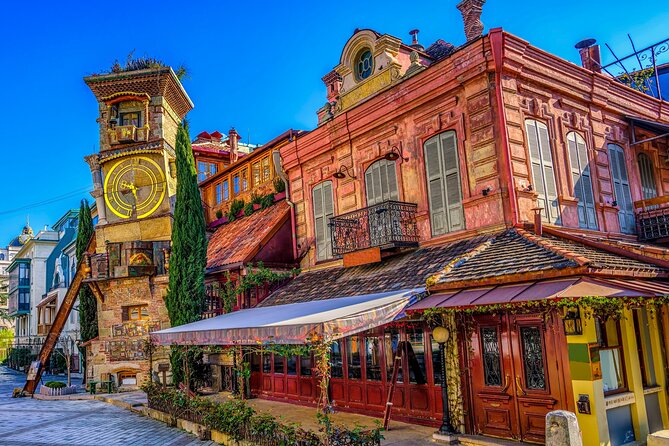
The route then passes the Rezo Gabriadze Marionette Theater and its crooked-looking clock tower. Every hour, an angel appears with a small hammer to ring the bell. At noon and 7:00 pm, the tower presents The Circle of Life, though the standard tour timing does not guarantee that you will see the performance.
The tower is decorated with tiles designed by Rezo Gabriadze. It is a playful pause after the formal churches, and you will want a camera ready. The stop lasts about 10 minutes.
Sioni Cathedral comes next. The church is on Sioni Street, in one of the oldest parts of Tbilisi, and local tradition links the first church on this site to Vakhtang Gorgasali. Again, the visit is about 10 minutes, so you receive a clear introduction rather than a full religious or architectural study.
A tone bakery and the taste of Georgia
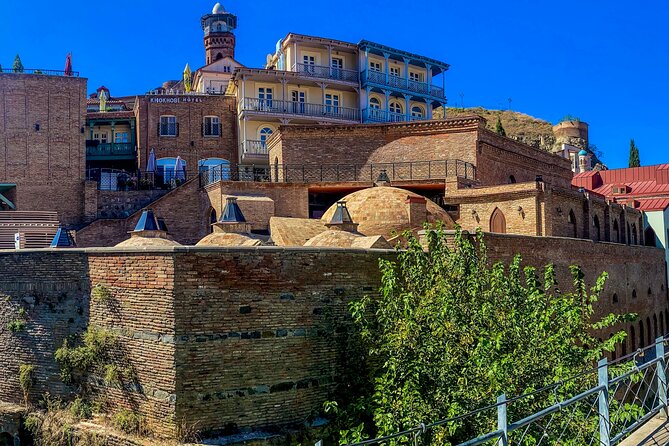
The tone bakery is where the tour shifts from looking to tasting. You receive a traditional Georgian pie and lemonade, included in the $19 price.
A tone is a traditional Georgian oven, and the bakery stop gives you a small but useful connection to daily food culture. The pastry may be khachapuri or another Georgian pie, depending on the arrangement that day. The information supplied for this experience specifically includes a traditional Georgian pie, so you should not expect a full meal.
Some descriptions of this experience also refer to wine tasting, and several guide comments discuss wine as part of the day. Wine is not listed among the stated inclusions here, which are the guide, cable car, pie, lemonade, and online support. I would treat wine as a possible extra or changing feature, not something to book this tour for.
The bakery stop lasts about 15 minutes. It is a welcome break, particularly in warm weather, but anyone needing a substantial lunch should plan another meal afterward.
Tamada, Shardeni Street, and the sulfur baths

After the bakery, the group visits the Tamada statue. Tamada means toastmaster, a central figure in Georgian feasting and formal toasts. The guide explains the tradition and gives you a sense of why Georgian meals are often social ceremonies, not simply a plate of food.
Jan Shardeni Street follows. This pedestrian lane is one of the most popular parts of the Old Town, with restaurants, bars, and a polished tourist center feel. It is attractive and convenient, though it may feel less quiet and traditional than the smaller lanes nearby.
The walk then reaches Abanotubani, the sulfur-bath district. The name refers to the area’s public bathhouses, which use hot spring water. The stop is short, about five minutes, but it gives you a reason to return later if you want to see more of the bathhouse area or arrange a bath separately.
The tour finishes at Meidan Bazar, in the center of the Old City. Ending there is practical. You are close to restaurants, shops, the bath district, and other Old Tbilisi streets, so you can continue exploring instead of needing transport back to the starting point.
The final waterfall and the shape of the route

Leghvtakhevi Waterfall is the final listed sight. It is a small natural break inside the city, reached through the Abanotubani area. The place is used by locals and visitors as a cool spot during hot weather.
The waterfall stop lasts about five minutes, so expect a quick look rather than a long rest. The entire itinerary is tightly packed with short stops. That lets you cover a lot, but the tradeoff is limited time at each place.
The route includes 17 stops, yet the walking feels manageable because the cable car removes one uphill section and the guide keeps the group moving between nearby sights. Some guides, including Soso, Ana, Nini, Dimitri, Shoti, Toko, and Ellie, have been praised for friendly explanations, sensible pacing, and answering questions clearly. The exact guide depends on the departure.
Is $19 a good value for four hours?
At $19 per person, this is a strong value if you want a broad introduction to Tbilisi. The price includes a professional English-speaking guide, the cable car, a Georgian pie, and lemonade. The cable car alone would otherwise be a separate cost, and the food stop adds a local touch without making the tour much more expensive.
You are paying for coverage rather than depth. The tour does not offer long visits inside each church, a full meal, or extended time at the waterfall and hilltop. If you prefer to linger, sketch, shop, or photograph each site at length, a self-guided route may suit you better.
The group can reach up to 100 people, which is a large possible maximum. A smaller departure will feel more personal, while a full group may make it harder to hear or stay close to the guide in narrow streets. The operator’s online support is useful if you need help before the start.
Who will enjoy this Tbilisi walk?
I would choose this tour for a first morning in Tbilisi, especially if you want the basic map of the city before exploring independently. It is also useful for a short stay because it covers the main Old Town sights in about half a day.
It suits you if you enjoy:
- A mix of walking, sightseeing, history, and food
- A guide who explains the city as you go
- Short visits to many landmarks
- A cable car ride and city views
- A tour that ends in the center rather than returning to the start
It may not suit you if you want a quiet, slow church tour, a serious food tasting, or a small-group experience guaranteed in advance. The pace can feel slow to some people and well measured to others. Wear sensible shoes, carry water in warm weather, and bring modest clothing for church visits.
Free cancellation is available when you cancel at least 24 hours before the local start time. The tour operates in all weather, and the cable car may not run in strong wind.
Should you book it?
Book this Tbilisi walking tour if you want an affordable first look at the capital, a useful mix of major sights, and a guide to connect the pieces. The cable car, Mother of Georgia viewpoint, old churches, tone bakery, tamada story, and sulfur-bath district give you a broad sample of what makes Tbilisi distinctive.
Skip it if your main goal is deep time at each monument or a substantial culinary tour. For most first-time visitors with four hours to spare, though, the route offers a practical introduction and leaves you in the Old Town with plenty more to explore.
FAQ
How long does the Tbilisi walking tour last?
The tour lasts approximately four hours.
What time does the tour begin?
The listed start time is 10:00 am.
Where does the tour start?
It starts at M/S Avlabari in Tbilisi, Georgia.
Where does the tour end?
The tour ends at Meidan Bazar in the center of the Old City.
Is the cable car included?
Yes. The cable car ride from Rike Park to the upper station near Mother of Georgia is included.
What food and drink are included?
The tour includes a traditional Georgian pie and traditional Georgian lemonade.
Is wine tasting included?
Wine tasting is not included in the stated inclusions for this tour. Some descriptions connected with the experience refer to wine, but you should not assume it is part of every departure.
Can children join the tour?
Yes. The minimum traveler age is five.
What happens if the weather is windy?
The tour operates in all weather, but the cable cars will not operate during windy weather. Dress according to the forecast.
What should I wear for the churches?
Shorts are not allowed inside the churches, and women must cover their heads. Modest clothing is required for church visits.
New routes in the world
- Gothic Quarter Donation-Based Walking Tour in English★ 5.0 · 72 reviews
- Barcelona Historical Walking Tour: Gothic Quarter and El Born★ 5.0 · 217 reviews
- Private Tailored Barcelona Walking Tour★ 5.0 · 80 reviews
- The Spanish Civil War & Franco Barcelona Walking Tour★ 5.0 · 539 reviews
- Jewish Walking Tour Barcelona by Expert Jewish Guide 2h★ 5.0 · 297 reviews
- Barcelona Dark History Night Walking Tour With Drinks★ 5.0 · 153 reviews
- Ramblas, Old Town, Gothic and Gaudi Architecture Walking Tour★ 5.0 · 723 reviews
- Barcelona Gems, 10+ Sights Immersive Walking Tour★ 5.0 · 209 reviews
Tbilisi Walking Tours, compared.
Tbilisi:Evening Walking & Talking Tour with Wine & Boat Ride
Read our review →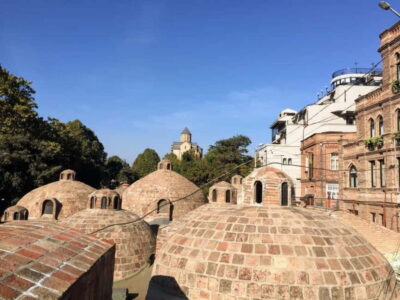
Tbilisi: Old Town Walking Tour – Must-See Attractions
Read our review →
Old Tbilisi Highlights Walking Tour with Wine & 10 Tastings
Read our review →Browse the lists this tour appears in