
Review · SPLIT
SPLIT-PRIVATE Walking Tour of Diocletian’s Palace & Old Town
Diocletian’s Palace is not a ruin sitting apart from modern life. It is the old center of Split, with homes, cafés, shops, churches, and narrow lanes built into the remains of a Roman emperor’s retirement palace. This private walk helps you read the city as a living map, from the Peristyle and Golden Gate to the palace cellars below street level.
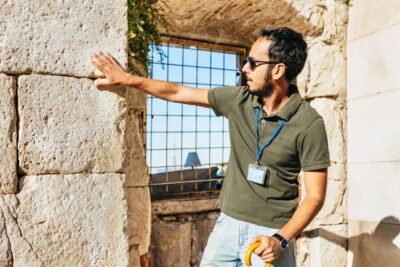
I like the personal format, since your group alone joins the licensed local guide. I also like the teaching style praised throughout this tour: Joško, Josko, Joko, and Joseph are names used in the feedback, and the guide is described as funny, clear, flexible, and good with children and teenagers.
The main consideration is that two hours is a short time for more than 1,700 years of Roman, medieval, and modern history. The underground cellars receive a major share of the visit, and entrance fees for the cellars, cathedral, and Jupiter’s Temple are extra, so budget for those if you want to go inside.
Key points at a glance
- A private walk for up to 12 people: You get the guide’s attention rather than joining a large public group.
- The palace cellars are central: The best-preserved section of Diocletian’s Palace takes about 20 minutes and costs €10 per person to enter.
- Joško is a strong storyteller: The tour uses humor, timelines, fun facts, and local perspective to make Roman history easier to follow.
- You see Split’s main historic spaces: The route includes the Peristyle, Riva, Old Town, Golden Gate, People’s Square, Fruit’s Square, and Vestibule.
- Optional interiors cost extra: Cathedral entry is €3.50 per person, Jupiter’s Temple is €1.50, and the cellars are €10.
- A useful first activity in Split: The route gives you your bearings before you explore restaurants, markets, museums, and nearby sights on your own.
Why Diocletian’s Palace feels different from a normal ancient site
The emperor Diocletian built his palace in AD 305. That date matters, but the more useful point is how the building survives. You are not simply looking at disconnected columns and broken walls. The palace became part of the town, and later generations built, altered, and lived within it.
Your guide can show you how Roman planning still shapes the center of Split. Streets, gates, squares, and underground spaces make more sense when you see the palace as a working residence with ceremonial areas, private rooms, storage areas, and access points.
The tour begins and ends on the main Riva promenade at Obala Hrvatskog narodnog preporoda 22. That is a practical meeting point near the waterfront and close to the historic center. From there, you move into the old palace area on foot.
I would take this tour early in your stay. The route covers enough of the center to help you recognize places later, and the guide can point out locations worth revisiting. One family described it as a good way to change their view of Split, which is exactly the value of an orientation walk in a city built over so many periods.
More Old Town Walking Tours in Croatia
- Split: Old Town and Diocletian Palace Walking Tour
★ 4.9 · 4,727 reviews - Split: Diocletian Palace & Old Town Guided Walking Tour
★ 4.7 · 882 reviews - Diocletian’s Palace and Old Town SMALL GROUP Walking Tour
★ 5.0 · 502 reviews
Inside the palace: the Peristyle, Vestibule, and cellars
The Peristyle is the ceremonial heart of the palace. This was Emperor Diocletian’s square, and it remains one of the most memorable open spaces in the old center. Your guide explains its role and places it within the emperor’s residence rather than treating it as just another attractive plaza.
The Vestibule follows as the main entrance to the emperor’s private residence. Its position helps you understand the separation between public ceremony and private imperial life. A guide is especially useful here because the remains can look simple at first glance. The meaning comes from how the spaces connect.
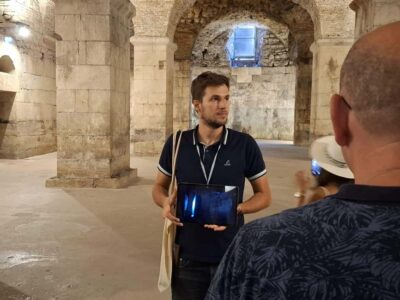
The palace substructures are a major part of this experience. They are described as the best-preserved section of the palace, and one account makes clear that much of the tour takes place in the cellars. This may surprise you if you expect a broad sightseeing walk under the sun.
That underground emphasis is not a flaw, but you should know it in advance. The cellars help explain the layout above and show how the palace was preserved. They also give the tour a stronger archaeological focus. If you want the full visit, the museum entrance costs €10 per person and is not included in the tour price.
I would not assume the cellars are a quick add-on. The planned visit takes about 20 minutes, and the reviews give the underground spaces particular attention. If your group prefers open-air views and photography, you may wish to balance this tour with extra time around the Riva and Old Town afterward.
Old Split, where Roman walls meet medieval streets
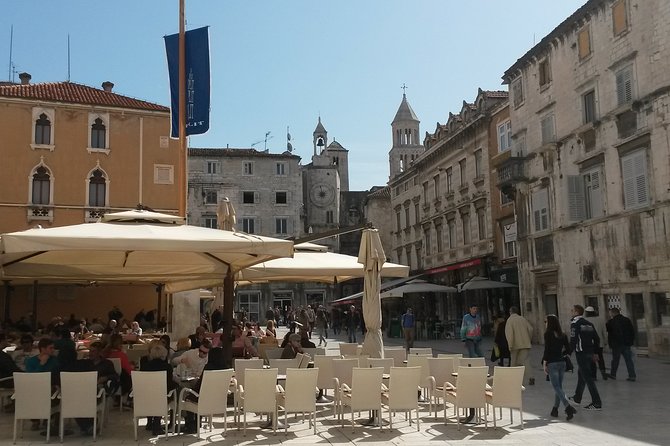
The Old Town section shifts the focus from one emperor’s residence to the city that grew around it. You walk through the medieval town and see how later life filled the palace footprint. This is where the tour becomes less about a single Roman building and more about Split as a changing city.
Narodni Trg, or People’s Square, is the largest and liveliest piazza in the old center. It gives you a sense of how public life moved beyond the original palace spaces. The City Clock, described as 500 years old and displaying 24-hour time, adds another layer to the walk.
Fruit’s Square, officially Trg Brace Radic, was once the Green Market. It includes the statue of Marko Marulić, known as the father of Croatian literature. These details give you useful local context beyond the standard Roman story.
The guide’s local connection is one of the tour’s strongest features. Joško is described as proud of Split and interested in showing the city through local eyes. That can make a difference in a place where the famous palace attracts most of the attention. You learn not only what a building was, but how the area has been used and understood over time.
One point to keep in mind: the listed time at many individual sights is only about five minutes. That does not mean the tour is a series of rushed photo stops, since the main palace and Old Town sections receive longer blocks of time. Still, if you want extended time in every square, market, and church, plan to return after the walk.
The Golden Gate and Grgur Ninski Statue
The Golden Gate is the palace’s main and most beautiful entrance. It gives you a clear sense of the palace’s scale and formal design. Your guide can connect the gate to the larger Roman plan and explain why the entrances mattered.
The nearby Grgur Ninski Statue introduces one of Croatia’s important historical figures. This stop broadens the subject beyond Diocletian and Roman rule. You get a short lesson in Croatian history within a route that otherwise begins in the ancient world.
These brief stops work well for a private group because you can ask for clarification without holding up dozens of other people. The guides are repeatedly praised for answering questions and adding a few extra sites when time and interest allow. That flexibility is more useful than a rigid script, especially if your group includes children or a family member who already knows a great deal about Roman history.
More Private Walking Tours in Croatia
- Tour The Game of Thrones – Private Walking Tour
★ 5.0 · 464 reviews - Dubrovnik: Old Town & City Walls Private Walking Tour
★ 5.0 · 206 reviews - Zagreb Unveiled: Private walking tour with a local guide
★ 5.0 · 185 reviews
Cathedral of Saint Domnius and Jupiter’s Temple
The Cathedral of Saint Domnius is viewed from outside as part of the standard walk. You can choose to go inside, but admission costs €3.50 per person and is not included.
The cathedral is an important stop because it shows how a Roman palace space was adapted for Christian worship. Even a short exterior explanation helps you see the old center as a place of changing beliefs and uses, not a preserved Roman set.
Jupiter’s Temple is also viewed from outside, with optional entry for €1.50 per person. The temple was dedicated to the main Roman god, so it fits naturally into a tour centered on Diocletian’s world. The extra fee is modest, but the choice matters if you are counting costs or keeping the walk short.
The outside stops are useful if your priority is context. Choose the interiors if you want a closer look at the buildings themselves. Since the tour is private, you can discuss what best suits your group, though the available time remains limited.
The Riva gives the tour a modern finish
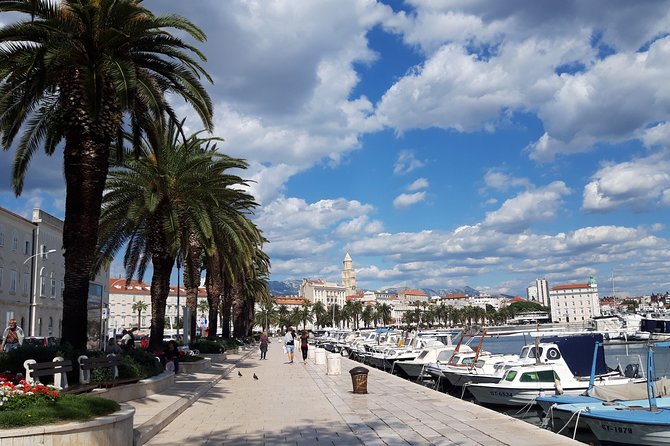
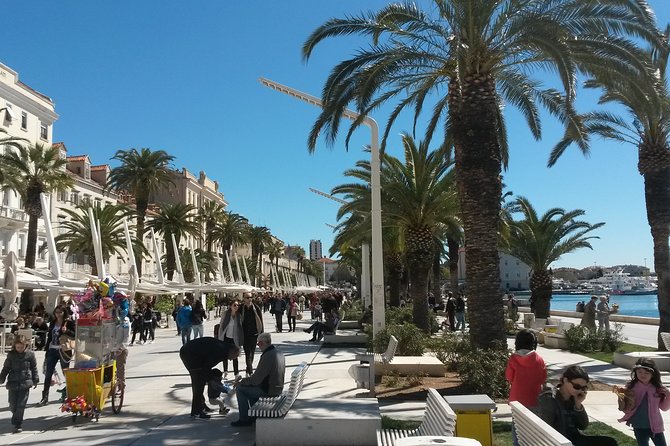
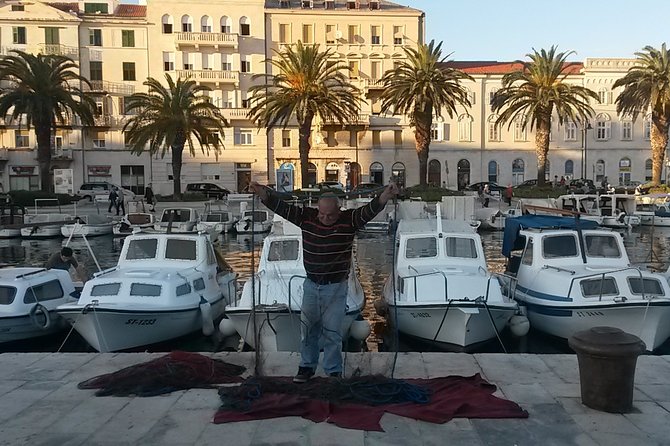
The Riva harbor promenade is both the starting and ending point. This waterfront setting helps frame the old center as part of present-day Split, not a sealed historic district.
You may find the Riva especially useful before or after the tour. It is an easy place to continue walking, pause for a drink, or use as a reference point when you return to the palace. The tour itself gives only a short scheduled stop here, so do not expect a long harbor stroll as part of the two-hour route.
The walk also includes stops at the main gates and squares, which means you receive a practical map of central Split. I like this format for a first morning or afternoon in town. You learn where the major landmarks are, then decide which ones deserve a second visit at your own pace.
What Joško’s guiding style adds
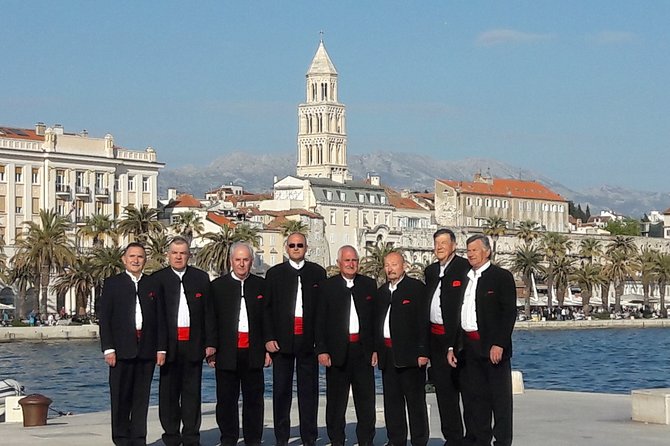
The strongest pattern in the feedback is the guide’s delivery. Joško is praised for taking a large amount of material and breaking it into clear, memorable pieces. Humor is a regular part of the approach, but the tour remains focused on architecture, rulers, wars, peace, and the changes that shaped the city.
That balance suits a place like Split. A purely academic lecture could become heavy after a few Roman dates. A quick photo walk would leave you unable to explain what you saw. The guide aims for the middle ground: enough detail to give the palace meaning, with stories and jokes to keep the pace lively.
Families appear to be a good match. One account specifically describes 12- and 14-year-old children staying engaged, and another notes that the guide took photographs for the group. The tour also worked well for people with a strong interest in history, including a history teacher, because the explanations go beyond a few surface facts.
Communication before the walk is another useful feature. The guide is described as responsive, and one family was able to reschedule after rain. That does not remove the need to watch the weather, but it suggests that the operator understands the practical issues of touring Split on foot.
Is $240 a fair price for a private Split tour?
The price is $240 per group of up to 12 people. If you fill the group, that works out to $20 per person before tips and entrance fees. For a couple, the same price is $120 per person, and for a family of four it is $60 per person.
That makes the tour most attractive for families, friends, and small groups traveling together. You pay for a private licensed resident guide, a custom-designed route, and the chance to ask questions as you go. A solo visitor or couple may find the total harder to justify, but the personal format can still make sense if you place a high value on focused instruction.
Add the optional admissions to your calculation:
- Diocletian’s Palace cellars: €10 per person
- Cathedral of Saint Domnius: €3.50 per person
- Jupiter’s Temple: €1.50 per person
- Guide gratuity: not included
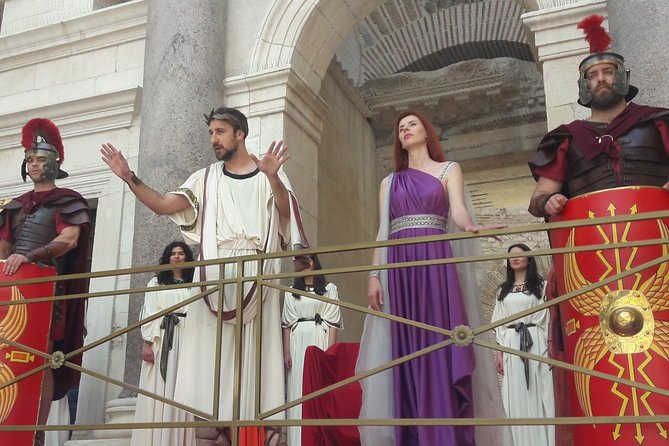
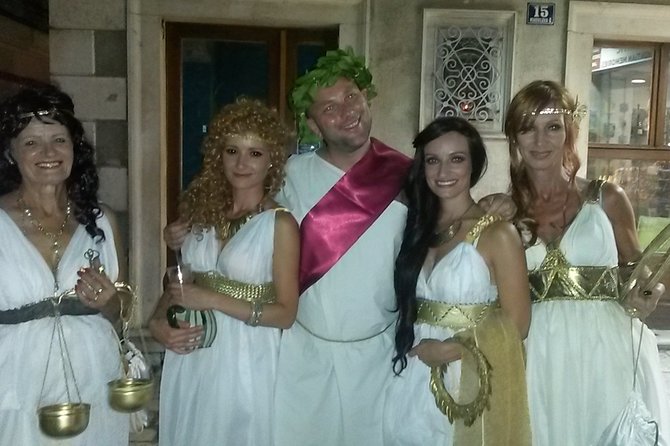
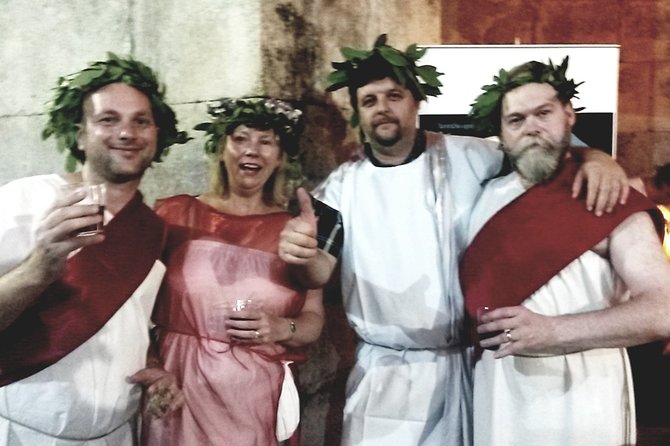
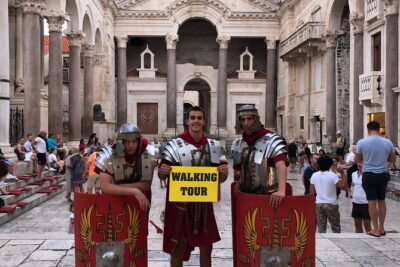
The cost does not include a costumed theater show or a similar performance. That is worth noting if you are comparing this with a staged palace presentation. This is a walking and history tour, not a theatrical production.
The advertised duration is approximately two hours. One account describes a three-hour experience, so timing may have some flexibility, but I would plan around the stated two-hour duration and avoid scheduling a tight connection immediately afterward.
Practical details before you book
The tour is offered in English and uses a mobile ticket. Confirmation arrives when you book, and the activity is near public transportation. Most people can participate, but no more detailed accessibility information is provided, so you should ask the operator directly if your group has specific mobility needs.
The tour is private, with only your group participating, and the maximum group size is 12. That is a useful limit because the palace lanes and smaller spaces can feel crowded when a group is too large.
Free cancellation is available if you cancel at least 24 hours before the start time. Changes or cancellations inside that window are not accepted for a refund. The experience requires good weather and a minimum number of participants, so a provider cancellation can lead to another date, another experience, or a full refund.
Bring water and comfortable walking shoes. That is ordinary advice, but it matters here because the route moves between open squares, narrow streets, and underground spaces. Split can feel hot in direct sun, while the cellars offer a different, enclosed setting.
Who should book this private walk?
I would choose this tour if you want a clear introduction to Split before exploring alone. It suits anyone interested in Roman architecture, local history, medieval town planning, and the way an old palace became a living city.
Families should consider it because the humor and storytelling help keep younger people involved. It also works for adults who want detail without sitting through a dry lecture. The private setup makes it easier to slow down, ask questions, or request a little extra context.
You may want something else if you mainly want panoramic views, a long open-air walk, or a relaxed route with little history. The underground cellars take a notable share of the visit, and several sights are viewed only from outside unless you pay extra.
Should you book the Split Palace and Old Town walk?
Book it if you want the palace to make sense, not just look impressive. The strongest reason to go is the guide’s ability to connect dates, buildings, rulers, and local life in a way that stays light and easy to follow.
For the best value, join with family or friends so the $240 group price is shared. Add the cellar fee if you want the key underground section, and treat the cathedral and Jupiter’s Temple as optional extras. If you are starting your Split visit, this is a useful first step. It gives you the basic map and story, then leaves you free to return to the places that catch your eye.
FAQ
How much does the private Split walking tour cost?
The tour costs $240 per group of up to 12 people. Guide gratuity and certain admission fees are not included.
How long does the tour last?
The advertised duration is approximately two hours. One provided account describes a three-hour experience, so allow some flexibility in your schedule.
What language is the tour offered in?
The tour is offered in English.
Is this a private tour?
Yes. Only your group participates, with a maximum group size of 12 people.
Where does the tour start and finish?
It starts at Obala Hrvatskog narodnog preporoda 22, 21000 Split, Croatia, on the main Riva promenade. It ends back at the meeting point.
Is entry to the palace cellars included?
No. Entry to the Museum of Diocletian’s Cellars costs €10 per person and is not included.
Are the cathedral and Jupiter’s Temple included?
The Cathedral of Saint Domnius is viewed from outside, with optional entry costing €3.50 per person. Jupiter’s Temple is also viewed from outside, with optional entry costing €1.50 per person.
Can I cancel for a full refund?
Yes, if you cancel at least 24 hours before the experience start time. Cancellations made less than 24 hours in advance are not refunded.
What happens if bad weather cancels the tour?
If poor weather causes a cancellation, you will be offered a different date or a full refund. The same applies if the minimum number of participants is not met, with the option of another date, another experience, or a full refund.
More Old Town Walking Tours in Split
- Discover The Old Town Split 1.5h walking Small group tour
★ 4.8 · 93 reviews - Underground Vaults Walking Tour in Edinburgh Old Town
★ 4.5 · 8,506 reviews - Prague: 3-Hour Walking Tour of Old Town & Prague Castle
★ 4.7 · 5,696 reviews - Dubrovnik: Old Town Walking Tour
★ 4.8 · 5,174 reviews
More Castle and Palace Walking Tours in Split
- Walking Tour of Split and Diocletian’s Palace
★ 5.0 · 2,588 reviews - Split & Diocletian’s Palace Walking Tour
★ 5.0 · 1,125 reviews - Split: 1.5-Hour Walking Tour and Diocletian’s Palace
★ 4.7 · 256 reviews - Edinburgh Castle: Guided Walking Tour with Entry Ticket
★ 4.7 · 11,699 reviews
New routes in Split
- Split: Walking tour of Split with a ‘Magister’ of History★ 5.0 · 110 reviews
- Split: Local History and Culture 90-Minute Walking Tour★ 5.0 · 194 reviews
- Split: Food Tasting Walking Tour★ 4.9 · 102 reviews
- Split: Diocletian Palace & Old Town Guided Walking Tour★ 4.7 · 882 reviews
- Split: 1.5-Hour Walking Tour and Diocletian’s Palace★ 4.7 · 256 reviews
- From Split: Krka Waterfalls Cruise & Trogir Walking Tour★ 4.7 · 681 reviews
- Split: History and Heritage Walking Tour★ 4.9 · 650 reviews
- Diocletian’s Palace and Old Town SMALL GROUP Walking Tour★ 5.0 · 502 reviews
Split Walking Tours, compared.
Walking Tour of Split and Diocletian’s Palace
Read our review →
Krka Waterfalls tour with Trogir Walking tour and Krka panoramic boat cruise
Read our review →
Walking Tour of Split with a ‘Magister’ of History
Read our review →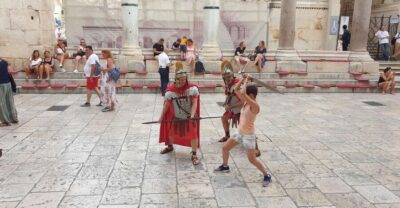

Local History and Culture 90-Minute Walking Tour
Read our review →
Browse the lists this tour appears in