
Review · SPLIT
Walking Tour of Split with a ‘Magister’ of History
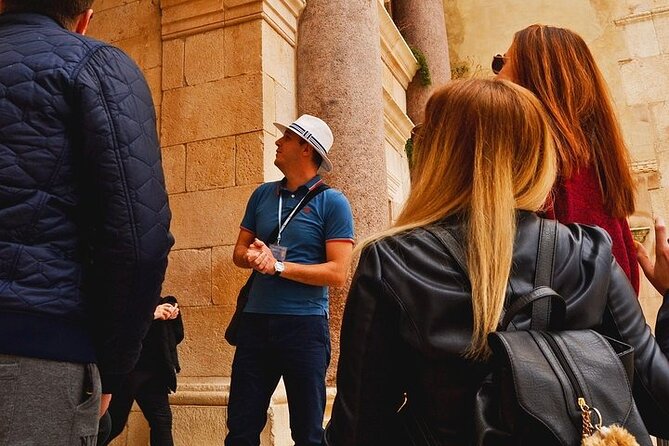
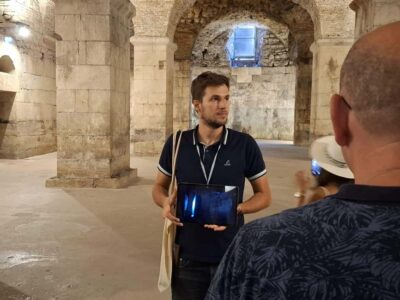
Split’s Diocletian’s Palace is far more than a Roman ruin. It is a living town, with homes, cafés, shops, churches, and narrow lanes built into the emperor’s old retirement residence. This walking tour makes sense of that mix, led by Toni Šare, a local historian who grew up in Split and uses his own 3D reconstructions to show what has vanished.
I like the way the tour moves beyond Roman emperors to explain medieval, Venetian, and modern Split. I also like the small-group limit of 18, which makes it easier to hear Toni and ask questions. The main consideration is that this is an outdoor history walk, with no entry into the cathedral, museums, or paid sites.
Key points to know before booking
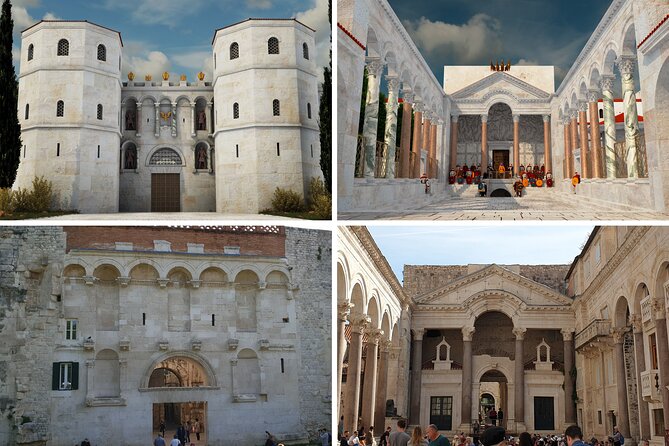
- Toni Šare brings his own 3D reconstructions: These images help you picture Diocletian’s Palace before later centuries changed it.
- The route covers Roman, medieval, Renaissance, Venetian, and modern Split: You get more than a quick tour of ancient stones.
- The tour takes about 1 hour 40 minutes to 1 hour 50 minutes: It is long enough for context without taking over your day.
- The group can include up to 18 people: That is still fairly manageable in the tight lanes of the old town.
- You see the major palace gates and courtyards without paying extra admission: The cathedral, Temple of Jupiter, and museums are viewed from outside.
- The tour ends at Narodni trg, or Piazza Square: From there, you can easily continue exploring Split on your own.
Why Toni’s approach works in Diocletian’s Palace
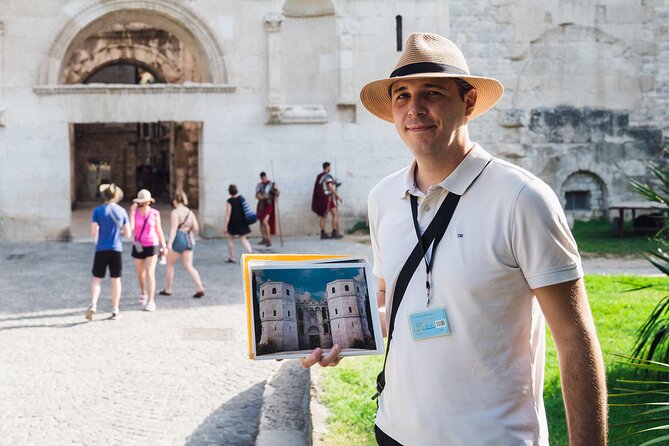
The most useful thing about this tour is its sense of scale. Without help, Diocletian’s Palace can feel like a maze of attractive stone alleys. You see columns, walls, gates, and fragments, but it is not always clear how they once fitted together.
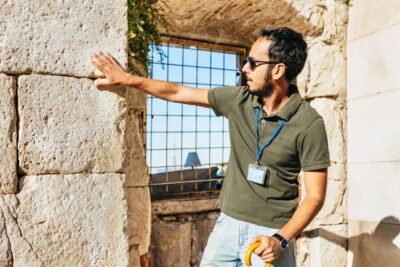
Toni’s 3D reconstructions give those fragments a clearer shape. He can show how the palace looked in its Roman period and explain which parts remain original, which were changed, and how later residents used the old structures. That visual aid is especially helpful at the Peristyle, where the surviving stonework gives only part of the picture.
Toni’s background also gives the walk a local point of view. He was born and raised in Split, studied and taught history, and runs DiocleSpot Tours. The tour is not limited to dates and emperors. It also covers Croatian language and culture, Venetian influence, religion, architecture, politics, and the way the city developed around the palace.
I would take this tour early in your stay. It gives you a map for later wandering. Afterward, the narrow lanes and odd corners of the old town are easier to read, and you can decide which places deserve a slower visit.
More History Walking Tours in Croatia
- Split Walking Tour with Professor of History
★ 5.0 · 926 reviews - Split: History and Heritage Walking Tour
★ 4.9 · 650 reviews - Split: Local History and Culture 90-Minute Walking Tour
★ 5.0 · 194 reviews
Starting at the Riva and the Brass Gate
The meeting point is the Brass Gate, also called Porta Aenea, at Obala Hrvatskog narodnog preporoda 22. This is on Split’s Riva, the waterfront promenade and one of the city’s main gathering places.
The Riva is a practical starting point because you can see the southern wall of Diocletian’s Palace from the harbor side. Toni uses models and graphic material here to introduce the palace before taking you inside. That opening matters because the southern wall can look plain from the outside, even though it once formed the sea-facing edge of an imperial residence.
You spend about 15 minutes here. Admission is free, and the stop sets up the rest of the walk without rushing straight into the busiest interior spaces.
The Riva is also easy to locate, though it can be crowded and exposed to the sun. Wear a hat in summer and arrive with a little time to find the exact meeting point.
The Peristyle shows Rome at its most theatrical
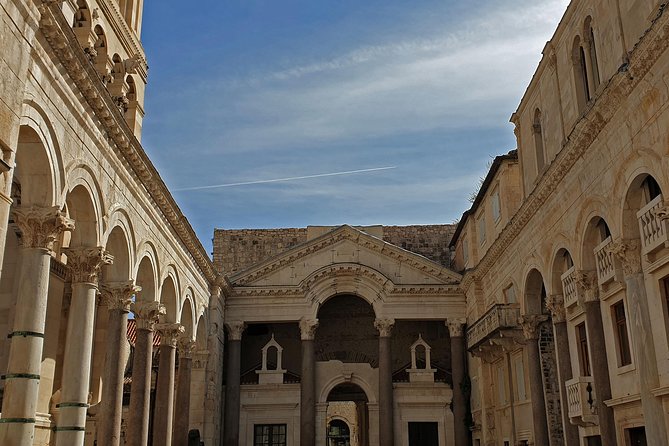
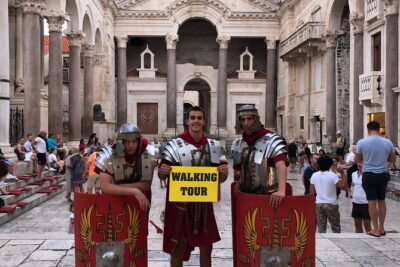
The Peristyle is the central square of Diocletian’s Palace and one of the most striking spaces in Split. It was designed as a ceremonial approach to the emperor’s mausoleum and private quarters, so its columns and formal arrangement were meant to impress.
Toni spends about 10 minutes here, pointing out Roman structures that remain unusually well preserved. His reconstructions help you imagine the decoration and buildings that once surrounded the square. You get a better sense of the original palace instead of seeing the Peristyle only as a picturesque gathering place.
This is one of the busiest parts of the route, and the open square can be noisy. Still, the stop works well because Toni can point to details that are easy to miss when you are taking photographs or simply trying to navigate through the crowd.
The cathedral and the emperor’s former mausoleum
The Cathedral of Saint Domnius occupies what was originally Diocletian’s mausoleum. It is one of the clearest examples of how Split’s Christian history took over and reused the emperor’s Roman building.
Toni explains how a tomb became a cathedral, how the bell tower relates to the building, and why this structure remains so important. You do not go inside, so the tour does not include the cathedral’s interior or any paid admission. If you want to see the inside later, plan a separate visit.
That limitation is worth noting, but the outside explanation still gives you the key story. The building is not simply an ancient Roman monument beside a church. It is the same structure, changed in purpose over centuries.
More History Walking Tours in Split:
- Split: Walking tour of Split with a ‘Magister’ of History
★ 5.0 · 110 reviews - History and Hauntings of Salem Guided Walking Tour
★ 5.0 · 14,564 reviews - Lisbon: History, Stories and Lifestyle Walking Tour
★ 4.8 · 10,902 reviews - Boston: Freedom Trail History Small Group Walking Tour
★ 5.0 · 6,450 reviews
The Temple of Jupiter and Roman building mistakes
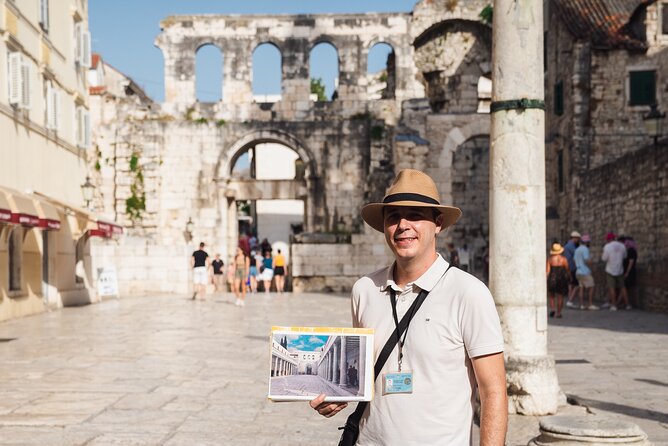
The Temple of Jupiter is another strong stop because Toni looks at the structure closely rather than treating it as a generic Roman remnant. He points out construction anomalies and mistakes made by the builders.
You spend about 15 minutes here, viewing the temple from outside. Admission is not included, though the tour does not plan to enter. This keeps the walk focused and avoids turning it into a string of ticket lines.
The stop is a good reminder that Roman buildings were made by workers solving practical problems on site. Imperial architecture was grand, but it was not always perfect. Small errors and odd details can tell you as much about the building process as the polished columns do.
The Silver Gate gives you the best palace view
The Eastern, or Silver, Gate offers one of the most useful views of the palace. From here, you can see the cathedral on one side, the gate on the other, and the only preserved section of the original Roman road below.
The stop lasts about five minutes, but it earns its place on the route. It lets you connect several parts of the palace at once. Instead of examining one doorway or wall in isolation, you see how the old road, religious buildings, and defensive entrances relate to each other.
The Silver Gate is also a reminder that Split’s Roman core was later adapted for medieval life. The city did not discard the palace. It kept using it.
Grgur Ninski and the story of Croatian language
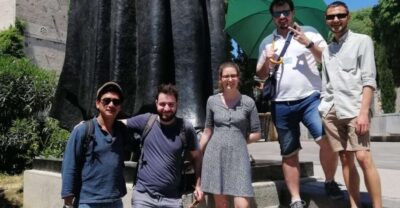
The statue of Grgur Ninski, or Gregory of Nin, is one of Split’s best-known landmarks. Toni explains what the figure represents and connects it to Croatian language and early medieval culture.
This is a short five-minute stop, but it broadens the tour beyond Diocletian. If you came expecting only Roman history, this is where you begin to see how later Croatian identity became part of the city’s story.
The statue is a natural meeting point and a useful landmark when you explore on your own later. Toni’s explanation gives it meaning beyond its size and prominent location.
The Vestibule opens the emperor’s private quarters
The Vestibule was an ancient entrance to Diocletian’s private residence. From here, Toni leads you around the remains of the emperor’s private area and explains how the palace was divided between public ceremony and private life.
You spend about 10 minutes at this part of the route. The distinction between the ceremonial Peristyle and the private residence helps make the palace’s layout easier to understand. Diocletian did not build a single hall or fortress. He created a large complex with different zones and purposes.
This is another place where the 3D reconstructions add value. Stone remains can be hard to read, especially when later buildings have grown around them. Seeing the earlier form helps you understand what you are looking at.
Noble palaces, Venetian influence, and old city layers
As you walk through the palace, Toni points out noble residences and smaller architectural details along the way. Split’s story did not end with Rome. Medieval families, Renaissance builders, Venetian rulers, and later residents all changed the old center.
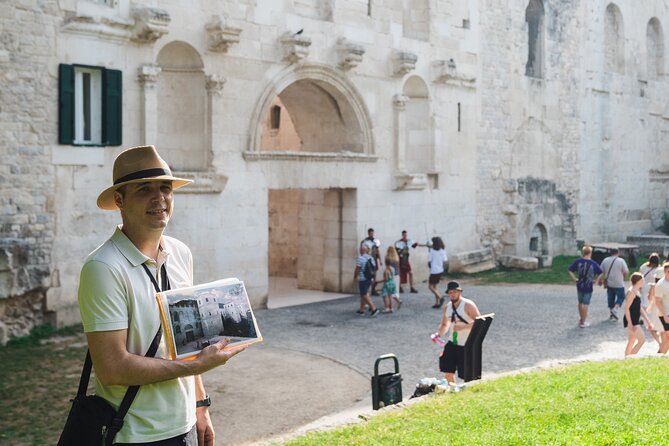
The City Museum courtyard is one of the most useful examples. The museum sits in a well-preserved Renaissance noble palace, but the tour visits only the courtyard, not the museum interior. Toni uses the setting to explain Venetian history and the arrival of this type of aristocratic architecture.
This part of the route rewards people who like details. You are not stopping only at famous monuments. You are also learning to notice doorways, palace fronts, courtyards, and the way private buildings fit into Roman walls.
The Golden Gate and the medieval reuse of Rome
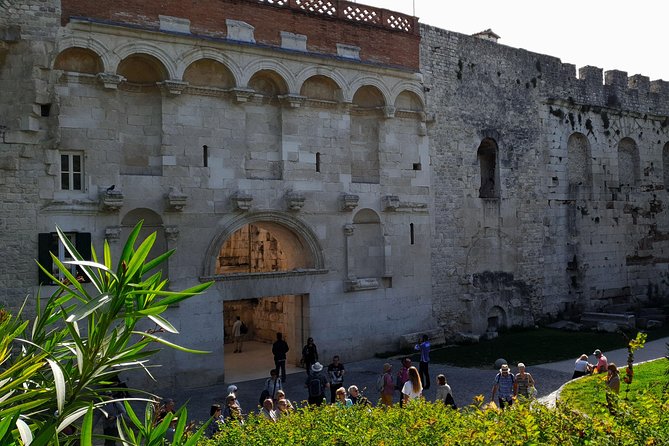
The Golden Gate is the main entrance to Diocletian’s Palace and the best preserved of the four major gates. It is also the most decorated and memorable, with the northern wall extending around it.
Toni explains how the medieval city continued to use Roman structures for defense. He also points out where later residents removed sections they no longer needed. That process helps explain the palace’s unusual appearance today. It is not a frozen Roman site. It is a city that kept changing while retaining much of its ancient framework.
The Golden Gate is a good place for photos, but the value lies in the interpretation. You learn to see the gate as part of a defensive system and as a boundary between the old palace and the later city.
The route may also pass Game of Thrones filming locations in Split. Toni shows them if the group is interested, and the walk goes by the fan shop. This is a useful bonus for fans, but it does not replace the main historical focus.
Finishing at Piazza Square
The tour ends at Narodni trg, commonly called Piazza Square or Pjaca. This has been Split’s main square since medieval times and is a natural finish because it is easy to find and close to other parts of the old town.
The 14th-century Town Hall is here, along with other historic buildings. Toni spends about five minutes explaining the square before letting you continue on your own.
I like this ending because it leaves you oriented instead of dropping you in a random side street. From Piazza Square, you can reach restaurants, shops, and other parts of the center without needing another map lesson.
Price, group size, and the real value
At $34.83 per person, the tour sits at a reasonable price for a guided walk of about 100 to 110 minutes. Its value comes less from the number of stops than from the explanation connecting them.
You are not paying for museum admissions. You are paying for Toni’s time, historical interpretation, local perspective, and 3D material. Since the cathedral, Temple of Jupiter, and museums are not entered, you should budget separately if those interiors matter to you.
The group size can reach 18 people. That is not a private experience, but it is small enough to be workable in the palace’s narrow passages. A private upgrade is available if you want more control over the pace or more time for questions. Group discounts can also help if you are booking for several people.
The tour is offered in English and includes a mobile ticket. Most people can participate, and service animals are allowed. It is near public transportation, though the old town itself is best handled on foot.
Best timing and who should book
The walk works well on your first day in Split, especially in the morning. You can use Toni’s explanations to choose where to return later.
An evening departure can be a smart choice in summer. One afternoon booking may be uncomfortable in the heat, while an evening walk can make the outdoor route easier to manage. The exact time you choose will affect light, heat, and crowd levels, but the tour itself remains the same.
I would recommend it most strongly to:
- First-time visitors who want the old town explained, not just photographed
- People interested in Roman, medieval, Venetian, and Croatian history
- Families and small groups who appreciate a clear route
- Anyone who likes architecture and visual aids
- Game of Thrones fans who want filming locations added if the group is interested
You may want a different option if your priority is entering monuments, spending a long time inside museums, or exploring at your own pace without a guide. This is an outdoor overview with strong interpretation, not an admission-based museum tour.
Should you book the Walking Tour of Split with a Magister of History?
I would book this tour if you want to understand how Split grew around Diocletian’s Palace. Toni’s local roots, teaching background, historical range, and personal 3D reconstructions give the walk more substance than a simple circuit of famous sights.
The best reason to choose it is the connection between eras. You see Rome, but you also see the medieval city, Venetian palaces, Croatian culture, religious change, and modern uses of the old center. At $34.83, that is good value if you care about the story behind the stones.
Just remember that the tour does not enter the cathedral, Temple of Jupiter, museums, or other paid sites. Book it for context, orientation, and a lively explanation of Split’s old town, then decide which interiors you want to visit separately.
FAQ
How long does the Walking Tour of Split with a Magister of History last?
The tour lasts approximately 1 hour 40 minutes to 1 hour 50 minutes.
Where does the tour begin?
It begins at the Brass Gate, also called Porta Aenea, at Obala Hrvatskog narodnog preporoda 22 in Split.
Where does the tour end?
The tour ends at Narodni trg, also called Piazza Square or Pjaca, in the center of Split.
Does the tour enter the cathedral or museums?
No. The route explains the Cathedral of Saint Domnius and Temple of Jupiter from outside and visits the courtyard of the City Museum palace, but it does not enter paid sites or museums.
Who leads the tour?
The guide is Toni Šare, owner of DiocleSpot Tours. He is a local historian and uses 3D reconstructions during the walk.
What is the cancellation policy?
You can cancel up to 24 hours before the start time for a full refund. Changes or cancellations made less than 24 hours before the start time are not accepted for a refund. If poor weather cancels the tour, you will be offered another date or a full refund.
New routes in Split
- Split: Walking tour of Split with a ‘Magister’ of History★ 5.0 · 110 reviews
- Split: Local History and Culture 90-Minute Walking Tour★ 5.0 · 194 reviews
- Split: Food Tasting Walking Tour★ 4.9 · 102 reviews
- Split: Diocletian Palace & Old Town Guided Walking Tour★ 4.7 · 882 reviews
- Split: 1.5-Hour Walking Tour and Diocletian’s Palace★ 4.7 · 256 reviews
- From Split: Krka Waterfalls Cruise & Trogir Walking Tour★ 4.7 · 681 reviews
- Split: History and Heritage Walking Tour★ 4.9 · 650 reviews
- Diocletian’s Palace and Old Town SMALL GROUP Walking Tour★ 5.0 · 502 reviews
Split Walking Tours, compared.
Walking Tour of Split and Diocletian’s Palace
Read our review →
Krka Waterfalls tour with Trogir Walking tour and Krka panoramic boat cruise
Read our review →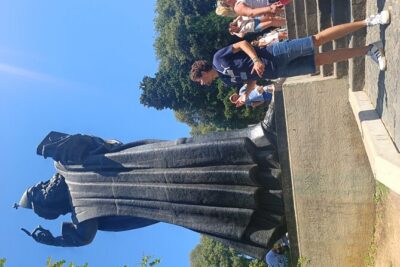
Local History and Culture 90-Minute Walking Tour
Read our review →
Browse the lists this tour appears in