
Review · SPLIT
Split: History and Heritage Walking Tour
Split’s old town is not a museum behind glass. It is a living Roman palace, with cafés, shops, homes, churches, and people moving through spaces built nearly 1,700 years ago. This walking tour helps you read that jumble, from Peristil Square and the Roman palace to medieval defenses and Venetian-era buildings.
I like the price, just $18, and the strong local storytelling. Guides such as Antonella, Antonela, Nikolas, and Doris are praised for making complicated history easy to follow. I also like the mix of major sights and small details, including traditional singing and Game of Thrones filming facts. The main concern is group size: one outing reached close to 30 people, which can mean waiting in crowded lanes and working harder to hear.
Key points to know before you book
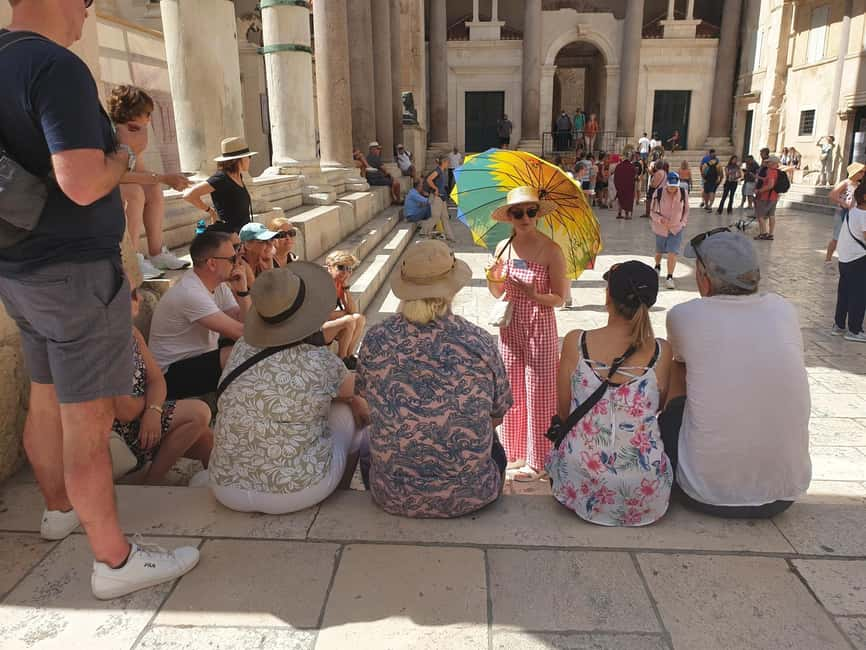
- Begin beneath the Roman arch on Peristil Square: Find the guide in a yellow shirt or beside a yellow umbrella, next to the Tourist Information Office.
- See 1,700 years in one compact walk: Roman stonework, medieval churches, fortifications, Gothic palaces, and modern shops all share the same streets.
- Expect story-led guiding: Antonella and Antonela are especially noted for clear explanations, humor, enthusiasm, and local knowledge.
- The $18 price covers the essentials: You get a small-group walking tour and guide, but not admission tickets, food, drinks, or hotel transport.
- Plan for weather and pavement: The walk operates in rain or sun, so wear comfortable shoes and bring a hat.
- Check the group size on your date: The tour is described as small-group, but some departures may be much larger than expected.
Why Diocletian’s Palace is unlike a normal Roman ruin
The first thing to understand is that Split’s old center is not simply a set of ruins. Diocletian’s Palace became the foundation of the modern city. Roman walls still shape the streets, old chambers sit beneath later buildings, and people live and work inside the former imperial complex.
That makes a guided walk useful. If you explore alone, you can admire the stone and columns but miss the basic question: what was this place for? Your guide explains how the palace worked, how it changed over time, and what remains from its Roman beginning.
You’ll also hear the story of Diocletian’s rise, from an obscure background to the most powerful man in the Roman world. That personal story gives the palace a human angle. It is not only about emperors and dates. It is about why a ruler built such a huge retirement residence and how his building survived by being absorbed into city life.
The setting is compact, but the history is not. Roman rule, the arrival of the Croats, Venetian influence, medieval defenses, and modern Split all appear during the walk. The best guides connect those layers rather than treating each monument as an isolated stop.
More History Walking Tours in Croatia
- Walking Tour of Split with a ‘Magister’ of History
★ 5.0 · 1,122 reviews - Split Walking Tour with Professor of History
★ 5.0 · 926 reviews - Split: Local History and Culture 90-Minute Walking Tour
★ 5.0 · 194 reviews
Starting at Peristil Square under the old arch
The meeting point is on Peristil Square, beneath the old Roman arch at the north side of the square, beside the Tourist Information Office. Look for a yellow T-shirt or yellow umbrella. This is a practical meeting point, but Peristil itself deserves your attention before the tour even begins.
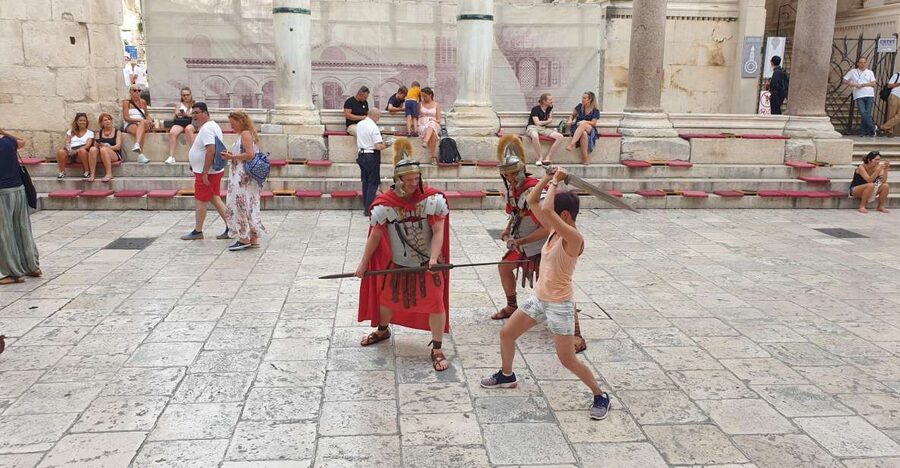
The square is one of the clearest places to see the palace’s Roman character. Stone columns and arches frame the space, while later buildings press close around it. It can feel busy, especially when several groups arrive at once, so give yourself enough time to find the guide and listen for instructions.
Your guide uses Peristil to establish the palace’s original plan and purpose. From here, you begin to understand the contrast that defines Split: ancient masonry underfoot, later architecture above it, and ordinary city life passing through the middle.
This is also where a larger group can become noticeable. If your departure has many participants, stay close to the guide and position yourself where you can see the speaker. Crowded lanes and uneven pacing can cause the back of the group to lose time.
Roman remains mixed with everyday Split

The tour’s central appeal is the way the Roman palace remains part of daily life. You are not walking through a silent archaeological park. You pass modern shops and businesses set into ancient walls, with medieval and later additions filling the spaces between.
That combination can confuse you at first. An arch may be Roman, but the building attached to it may be much later. A church may occupy a space that once served another purpose. A narrow lane can follow the shape of the old palace rather than a modern street plan.
A good guide gives you the visual clues. Look for changes in stone, masonry, arches, and street width. Listen for explanations of what survived, what was rebuilt, and how the palace continued to function after the Roman period.
This is where the tour provides more than surface facts. One guide, Nikolas, is praised for explaining the Roman and Venetian influences while linking them to Split’s present-day character. That kind of context helps you see why the old center feels layered rather than uniformly ancient.
Medieval churches, fortifications, and Gothic palaces
The walk does not stop with Diocletian. You also explore medieval churches, old defensive works, and Gothic palaces. These sections matter because they show how Split developed after the Roman era.
The medieval buildings are not just an afterthought. They reveal how the city adapted the imperial complex for new religious, political, and domestic needs. Fortifications help explain the practical side of urban life, when walls and controlled entrances mattered. Gothic palaces point to a later period of wealth, local power, and changing architectural taste.
The exact order of these sights can vary with the guide and the flow of the old town. You should expect a continuous walking route rather than a sequence of formal indoor visits. The emphasis is on seeing the major features from public areas and understanding how they fit together.
Admission tickets are not included. The tour therefore works best as an orientation walk through the historic center, not as a package that takes you inside every paid attraction. If you want museum interiors or ticketed sites afterward, ask the guide for suggestions during the walk.
More History Walking Tours in Split:
- Split: Walking tour of Split with a ‘Magister’ of History
★ 5.0 · 110 reviews - History and Hauntings of Salem Guided Walking Tour
★ 5.0 · 14,564 reviews - Lisbon: History, Stories and Lifestyle Walking Tour
★ 4.8 · 10,902 reviews - Boston: Freedom Trail History Small Group Walking Tour
★ 5.0 · 6,450 reviews
Storytelling that keeps history moving
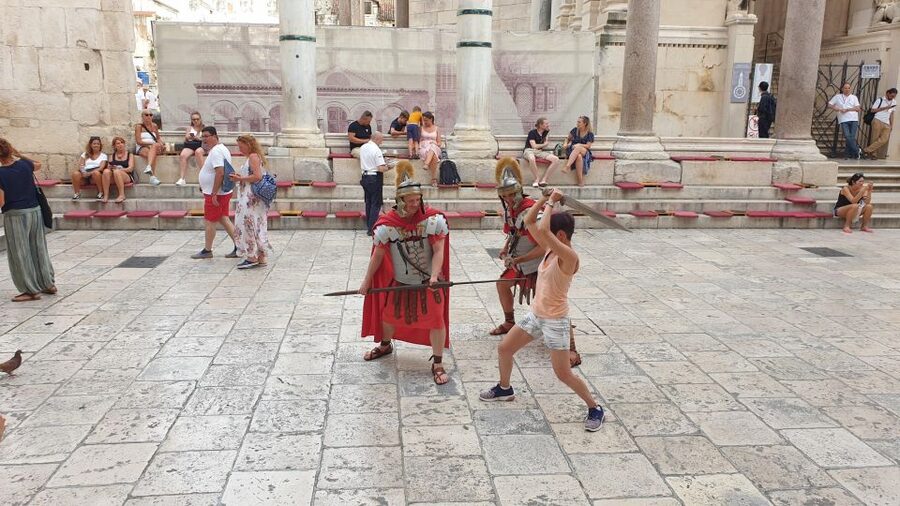
History tours can become a list of rulers and dates. This one is designed to keep the story moving, and that is where the guides make the biggest difference.
Antonella and Antonela receive repeated praise for clear explanations, strong energy, and a lively way of presenting the past. They are described as easy to understand and good at keeping people interested, including companions who do not normally enjoy history. One guide was also compared to a teacher, which fits the practical tone of the tour.
You may hear stories about Roman power, the arrival of Croats, Venetian influence, and the drama surrounding Diocletian. The goal is not to overload you with every date. It is to give you a usable timeline and show how each period left something behind.
The best part is the local connection. Guides speak about Split and Croatian culture as more than abstract subjects. Along the route, you might encounter traditional singing, and the tour may include personal details that are difficult to get from a guidebook.
Game of Thrones information is available as a bonus. It should not be your main reason to book, since the tour is focused on history and heritage, but fans will appreciate learning how the old town served the show’s visual world.
What the group size means on the ground

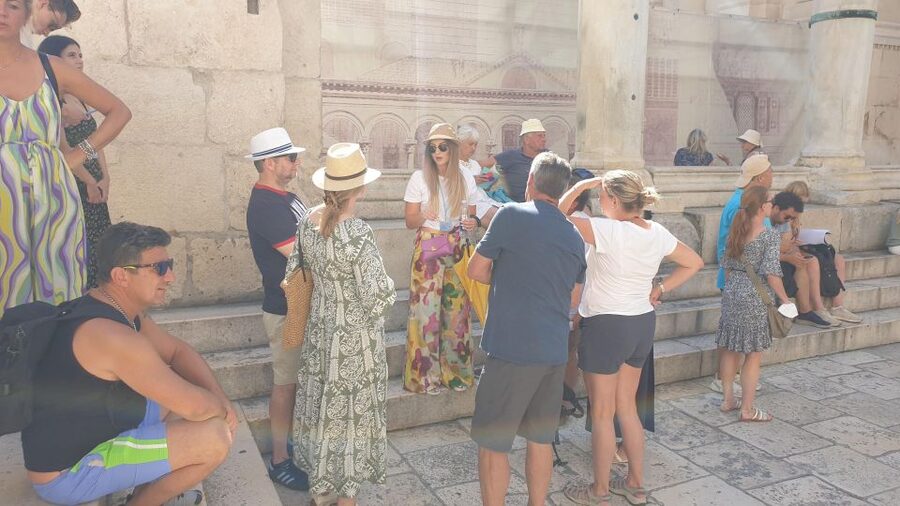
The experience is sold as a small-group walking tour, but group size may not always feel small. One departure had nearly 30 people, and the guide even commented on the size. That is important in Split, where lanes can be narrow and busy.
A larger group does not ruin the tour, but it changes the rhythm. You may spend time waiting for people to catch up, and it can be harder to hear when the group spreads out. Stay near the guide, avoid lingering at the back, and move promptly when the group changes position.
At other times, the group may be genuinely small and feel more personal. One participant specifically described a small group and found the experience especially informative. You cannot count on that exact size, so book this with realistic expectations.
The guides appear to handle practical needs well. Doris provided an umbrella during rain, and one late arrival was accommodated. Still, do not treat those as guarantees. The tour runs in all weather, and you should arrive prepared rather than rely on the guide for equipment.
The practical value of an $18 walking tour
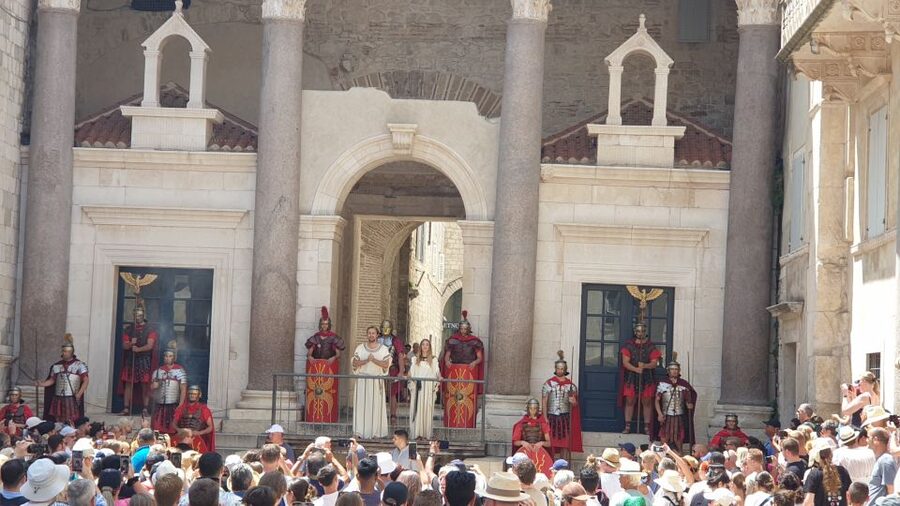
At $18 per person, this is a strong-value introduction to Split’s historic center. You are paying for a guide who can explain the city’s complicated layers, not for transport, meals, or a ticketed attraction.
The value is highest if you are visiting Split for the first time or have only a short stay. One person with just 48 hours in the city found the walk useful for learning the basics quickly. Another participant who had already visited Split twice described it as the best tour they had taken there, which suggests it can also add structure to a repeat visit.
I would take it early in your stay. After the walk, you will have a better sense of which lanes, buildings, and Roman remains deserve a second look. You can then return on your own and spend more time at the places that caught your interest.
There are limits. Since food and drinks are not included, plan your own break before or after the tour. Hotel pickup and drop-off are also not provided, but that is less important here because the meeting point is in the central old town. Admission tickets are separate, so budget for them only if you plan to visit paid interiors.
Language, comfort, and who should choose it
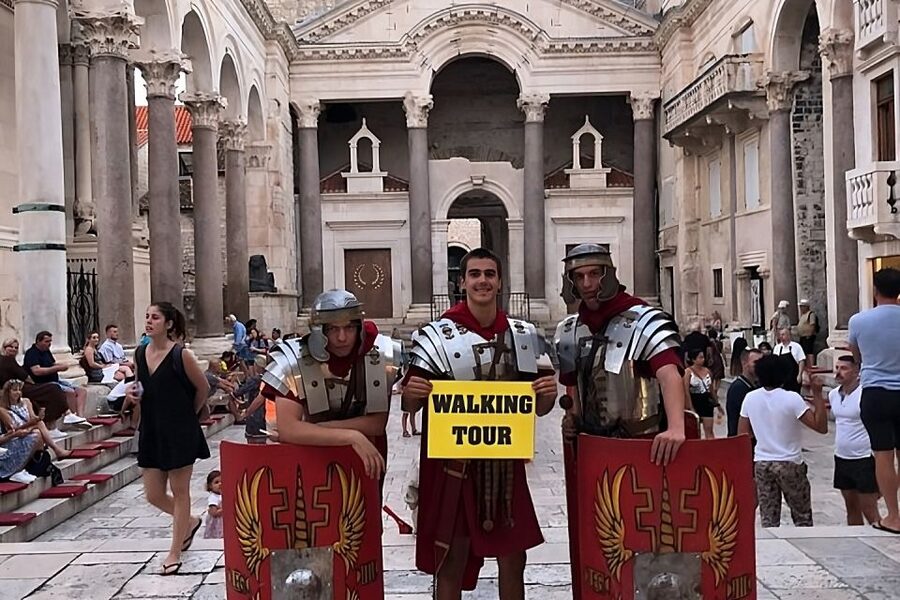
The tour is offered in English, Russian, German, and French. Confirm your preferred language when booking so you know what to expect.
Wear comfortable shoes. The route is on historic streets, and your attention will be divided between listening and watching your footing. A hat and comfortable clothing are sensible in strong sun. Since the tour operates in rain as well, bring weather protection.
The activity is suitable for all ages, but it is not recommended for people with high blood pressure or those with hearing impairment. That matters in a walking tour where the guide may speak outdoors, in crowded spaces, and while the group is moving.
The pace is described in very positive terms by the people who took it, with one person calling it a good balance of time and information. Still, the experience involves standing and walking through the old town. If you need frequent rests or a very quiet setting, ask about the expected conditions before reserving.
How this tour compares with exploring alone
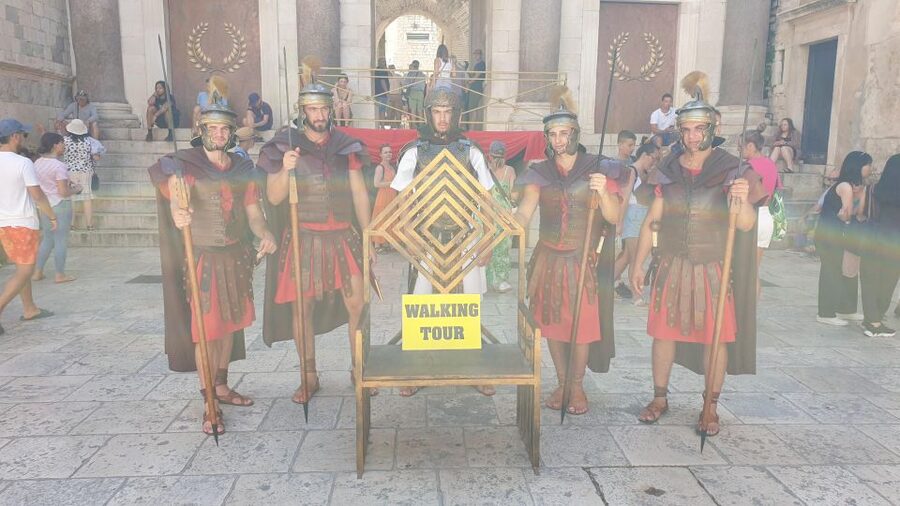
You can walk through Peristil Square and the old palace without paying for a guide. That free option lets you set your own pace, stop for coffee, and return to any street you like.
The problem is interpretation. Without help, Roman remains, medieval additions, Gothic buildings, and modern alterations can blur together. You may see the main sights but miss why they are important or how they connect.
This tour earns its fee by supplying a framework. It tells you what came first, what changed, and why the city looks the way it does now. It also takes you to areas you might not notice while wandering, according to the experience described by one participant.
If you prefer quiet exploration, take a self-guided walk afterward. The guided tour and independent wandering work well together: first learn the basic story, then revisit the old town at your own speed.
Should you book the Split History and Heritage Walking Tour?
Book it if you want a clear introduction to Split, enjoy local storytelling, or have limited time in the city. The combination of Roman remains, medieval buildings, Gothic palaces, and Venetian influence gives you a useful understanding of the old center. At $18, it is an inexpensive way to get oriented.
I would especially choose it for first-time visitors, history fans, families with older children, and anyone who wants more than photographs of Peristil Square. The guides’ energy and ability to explain difficult subjects in plain language are major strengths.
Think twice if you dislike group walks, need a very quiet experience, or expect entry to paid attractions. The possible 30-person group is the chief drawback, and the tour does not include tickets, food, drinks, or transport.
For most people, I would book it near the start of a Split visit, wear sensible shoes, and arrive early at the Roman arch. You will leave with a map in your head and a better idea of what you are looking at when you walk back through the palace later.
FAQ
Where does the tour start?
It starts on Peristil Square under the old Roman arch on the north side of the square, next to the Tourist Information Office.
How do I find the guide?
Look for a guide wearing a yellow T-shirt or holding a yellow umbrella.
Where does the tour finish?
The activity ends back at the meeting point on Peristil Square.
What does the $18 price include?
The price includes a small-group walking tour and a tour guide.
Are admission tickets included?
No. Admission tickets, food, and drinks are not included.
Is hotel pickup provided?
No. Hotel pickup and drop-off are not included.
Which languages are available?
The tour is offered in English, Russian, German, and French.
Does the tour operate in bad weather?
Yes. It takes place in rain or sun, so bring suitable clothing and wear comfortable shoes.
Can I cancel for a full refund?
Yes. You can cancel up to 24 hours in advance for a full refund. You can also reserve now and pay later.
New routes in Split
- Split: Walking tour of Split with a ‘Magister’ of History★ 5.0 · 110 reviews
- Split: Local History and Culture 90-Minute Walking Tour★ 5.0 · 194 reviews
- Split: Food Tasting Walking Tour★ 4.9 · 102 reviews
- Split: Diocletian Palace & Old Town Guided Walking Tour★ 4.7 · 882 reviews
- Split: 1.5-Hour Walking Tour and Diocletian’s Palace★ 4.7 · 256 reviews
- From Split: Krka Waterfalls Cruise & Trogir Walking Tour★ 4.7 · 681 reviews
- Diocletian’s Palace and Old Town SMALL GROUP Walking Tour★ 5.0 · 502 reviews
- Split: City Walking Tour w/ Game of Thrones Locations★ 4.9 · 318 reviews
Split Walking Tours, compared.

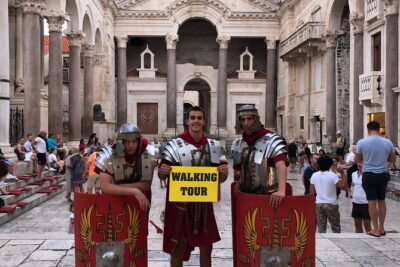
Walking Tour of Split and Diocletian’s Palace
Read our review →
Krka Waterfalls tour with Trogir Walking tour and Krka panoramic boat cruise
Read our review →
Walking Tour of Split with a ‘Magister’ of History
Read our review →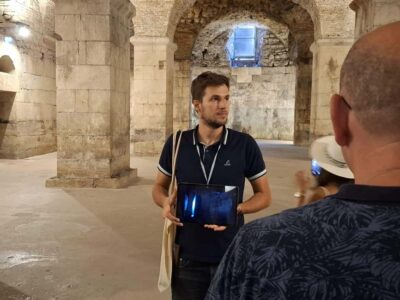

Local History and Culture 90-Minute Walking Tour
Read our review →
Browse the lists this tour appears in