
Review · BATH
Roman Baths and Bath City Walking Tour
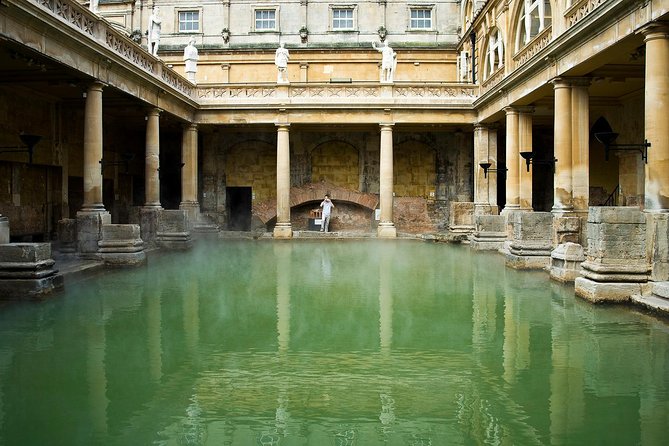
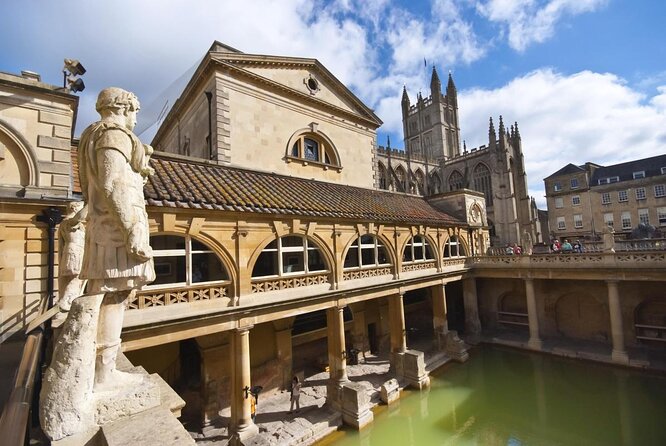
Bath’s story is unusually easy to read in its streets. Ancient Roman baths sit beside a medieval abbey, while graceful Georgian terraces curve up the hills nearby. This tour connects those pieces on foot, then offers an optional visit to the Roman Baths, where the Great Bath, hot pools, and museum bring the city’s oldest chapter into focus.
I like two things here: the small maximum group of 15, which gives you a fair chance to hear and ask questions, and the useful mix of major sights and local stories. Guides such as Jamie, George, John, William, and Will have been praised for clear explanations, humor, and good pacing. The main drawback is meeting the guide at a crowded spot near Bath Abbey. Look for the white and green company umbrella, and arrive with enough time to find it.
Key points to know before booking
- Two ways to see the Roman Baths: Choose the walking tour alone, or select the option that includes admission to the Roman Baths.
- A strong first look at Bath: The route covers Bath Abbey, Pulteney Bridge, the Pump Rooms, Royal Crescent, and the Circus.
- Morning or afternoon departure: Pick the time that fits your day, with the activity lasting about two hours.
- Small-group setting: The tour accepts no more than 15 people, a useful limit in busy central Bath.
- Comfortable shoes matter: The route is an easy city walk, but you will be on your feet and should expect changing weather.
- Central start and finish: Meet at Bath Abbey and return to the same meeting point at the end.
Why this Bath tour works as an introduction
Bath can look simple on a map. The Roman Baths, abbey, river, and Georgian crescents are all close together, yet the city’s story covers two very different eras. A guide helps you see how the spa town created by the Romans later became an 18th-century center of fashion, building, and social life.
The walk is designed as an overview rather than a single-site lecture. You move through the center, stop at important buildings, and hear how the city developed. That makes it especially useful on your first day, when you want to get your bearings before choosing where to spend more time.
The current score is 4.6 out of 5 from 762 ratings, and 90 percent of people recommend it. The most consistent praise goes to the guides and the pace. Jamie is often described as funny and engaging, George as passionate and ready for questions, and John as clear and well paced. William and Will have also been singled out for their warm, lively approach.
Your experience can vary with the guide, group size, weather, and how clearly you hear from the back of the group. One less successful outing involved a guide who was hard to identify and spoke too quietly. That is a fair warning: if you cannot find the group or hear the introduction, speak up at once.
More Walking Tours in the UK:
- Magical London: Harry Potter Guided Walking Tour
★ 4.7 · 22,044 reviews - Edinburgh: Harry Potter Magical Guided Walking Tour
★ 4.8 · 11,944 reviews - Edinburgh Castle: Guided Walking Tour with Entry Ticket
★ 4.7 · 11,699 reviews
Starting at Bath Abbey and Pulteney Bridge

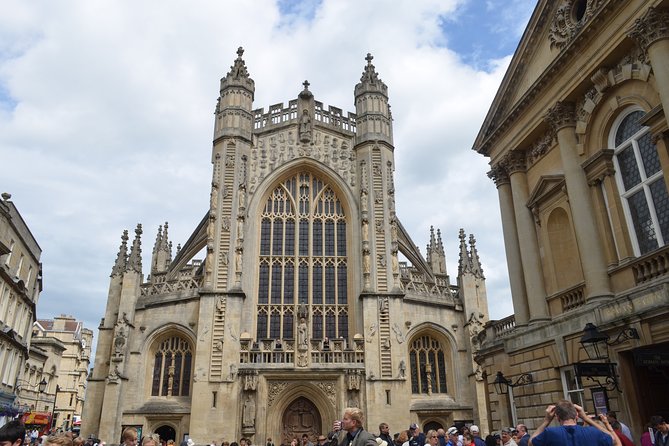
The meeting point is Bath Abbey in central Bath. The abbey is a large and prominent building, but the surrounding area can be crowded with several tour groups. The instructions identify the abbey and postcode, not a detailed side or entrance, so check the meeting details carefully before setting out.
The operator says guides generally use white and green umbrellas with the company logo. This is the most useful visual clue. If you arrive and see several groups gathered nearby, look for that umbrella rather than assuming every guide belongs to the same tour.
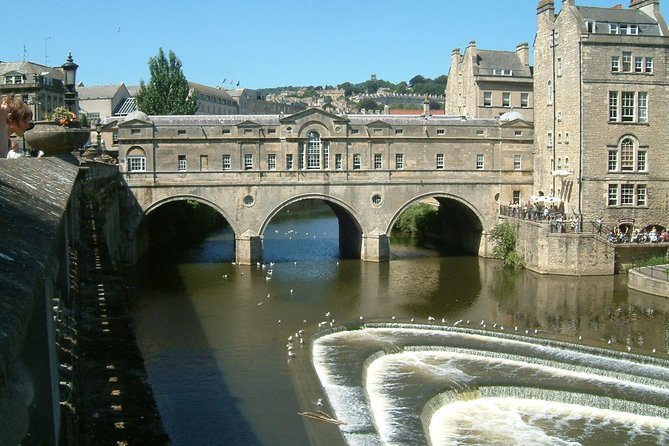
From the abbey, the walk takes in Pulteney Bridge. The bridge is one of Bath’s most recognizable sights, with shops built along both sides. It is more than a quick photo stop in the context of this tour: it helps explain Bath’s connection to the River Avon and the way the city’s public spaces and buildings fit together.
Bath Abbey adds another layer. It is identified as the coronation site of England’s first king in 973, giving the opening part of the walk a medieval and national connection before the route returns to Roman and Georgian Bath. You will not be looking at isolated monuments. The point is to see how several centuries share the same compact center.
Entering the Roman Baths and its hot pools
The Roman Baths are the central attraction, but admission depends on the option you book. The walking-only choice does not include entry, so read the booking selection closely before paying. If you want to see the interior, choose the package that includes the entrance fee.
Inside, the route focuses on the Great Bath, changing rooms, hot pools, and other facilities used by Romans for relaxation and social life. The scale and layout help explain that this was not just a place to wash. It was a public setting where bathing, conversation, and ritual were tied together.
You will also see the hot springs and museum collections. The named highlights include Minerva’s Head and inscribed stone tablets. These objects give the ancient site a human voice. A carved head or written tablet can tell you more about belief and daily life than a bare wall or column ever could.
A practical point matters here. Some people choose the walking tour after visiting the Roman Baths on an earlier trip, while others book the combined option and continue into the site after the city walk. Both approaches make sense. If you already know you want the baths, the combined ticket removes one extra purchase. If you have seen them before, the walking-only option gives you a shorter overview of Bath without repeating the museum.
The included visit, where selected, may be self-guided once you enter. A free audio guide is available with the Roman Baths admission, so do not expect the outdoor guide to lead every room inside. This can be a benefit if you like to set your own pace, but it is worth knowing before you book. The walking portion and the museum portion are not the same style of touring.
Reading Bath’s Georgian architecture
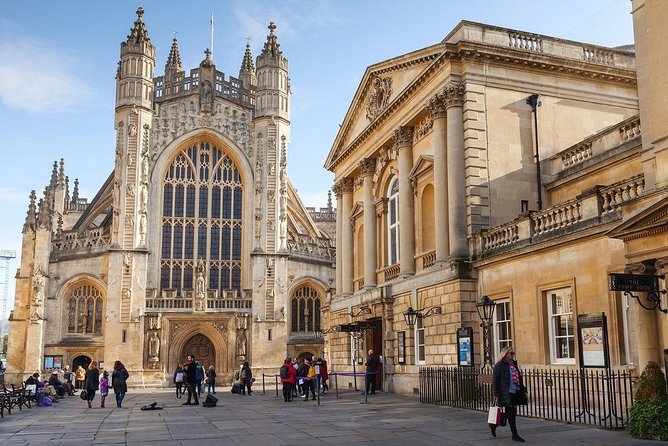
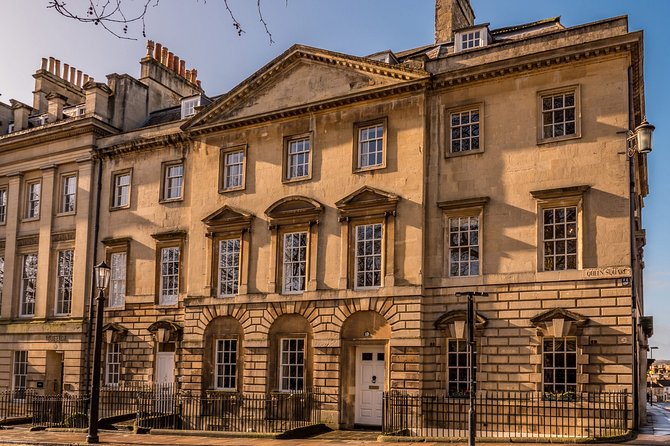
After the Roman and medieval sights, the tour turns to the Georgian center. Bath’s honey-colored stone gives the city a unified look, but the buildings were created in an age when architecture also signaled money, taste, and social rank.
The Pump Rooms are a key stop. Their name points to Bath’s spa culture, when taking the waters was a central part of the city’s social life. The building sits beside the Roman Baths, so this part of the route shows how later Bath built its own customs around the ancient springs.
The walk also includes the Upper Assembly Rooms. These rooms were tied to the formal social life of Georgian Bath, when visitors came to meet, dress up, dance, and be seen. The stop is useful because it gives the elegant terraces a social purpose. Without that context, the buildings can look like rows of handsome facades with no story behind them.
The guides are expected to explain the city’s development rather than simply point at buildings. That is where the tour earns its price. You can walk past a grand terrace alone, but you may miss why the proportions, materials, and layout matter. John, Jamie, George, and Will have all been praised for adding facts and stories without making the walk feel like a long classroom session.
Same streets, a different guide:
- Underground Vaults Walking Tour in Edinburgh Old Town
★ 4.5 · 8,506 reviews - London: The Original Jack the Ripper Walking Tour
★ 4.7 · 7,833 reviews - Oxford University Walking Tour With University Alumni Guide
★ 5.0 · 6,905 reviews - Edinburgh Castle: Guided Walking Tour with Entry Ticket
★ 5.0 · 5,540 reviews
The Royal Crescent and the Circus
The Royal Crescent is Bath’s showpiece. Its long sweep of Georgian homes creates one of the city’s most memorable views, and the guide pauses to explain the design and place it in the wider story of 18th-century Bath.
The curve is impressive from a distance, but the value of seeing it with a guide is learning how the terrace was planned as a unified architectural statement. You can take in the scale, stonework, and open space in front of it, then compare that broad arc with the more enclosed form of the Circus.
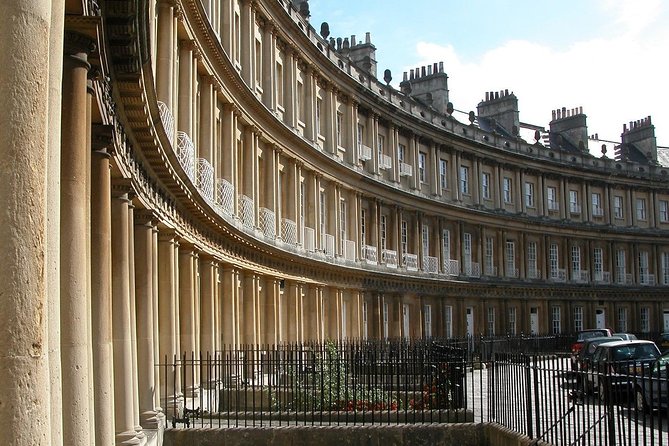
The Circus is made from curved segments arranged in a circular plan. Its shape is one of Bath’s cleverest visual tricks: the buildings feel grand and balanced without presenting one long straight frontage. This is the kind of detail that is easy to miss if you rush from one famous stop to the next.
The route finishes back in the city center, at the original meeting point. That makes it simple to continue to lunch, return to your hotel, or visit a site you noticed during the walk. There is no hotel pickup or drop-off, so plan your own way to and from central Bath.
Timing, group size, and walking effort
The advertised duration is about two hours, although one account describes a 90-minute city walk before the Roman Baths portion. The exact length can depend on the selected option, the pace of the group, and how much time is spent answering questions.
The maximum group size is 15. That is small enough to feel more personal than a large city tour, yet large enough that the guide may need to position the group carefully at busy sights. Several accounts praise the pacing as neither rushed nor drawn out. You should still stay close to the guide, especially around the abbey and central streets.
You need a moderate level of fitness. The route is on foot, and you will spend much of the experience standing. Wear comfortable shoes, as one practical note from the feedback puts it, and bring warm gloves in cold weather. Bath’s weather can change, and the outdoor part does not become easier because the buildings are beautiful.
Children must be accompanied by an adult. The tour is offered in English, and the booking information allows you to note special requirements in advance. If you have an important need, write it clearly when booking rather than hoping to explain it at the meeting point.
Is the $35.37 price good value?
At $35.37 per person, the price is reasonable if you want both an organized city overview and the Roman Baths entry option. You are paying for a professional guide, a focused route through the main sights, and, depending on your selection, access to one of Bath’s major attractions.
The value is weaker if you only want to stroll around independently. Bath’s central sights are close together, and you do not need a ticket to walk past the abbey, bridge, Pump Rooms, Royal Crescent, or Circus. The tour earns its keep through explanation, orientation, and the chance to ask questions.
Check the exact package before booking. A walking tour without Roman Baths admission can suit someone who has already visited the site. The combined option is better for a first visit, but you should compare the cost with the admission price available directly on the day. One unhappy booking came from a person who expected the ticket to cover the full baths visit and later bought a separate, cheaper admission. Clear expectations matter here.
The tour is usually booked about 19 days ahead. That does not guarantee every departure will sell out, but it suggests that booking well before your Bath visit is sensible, especially if you need a particular morning or afternoon time.
The meeting point is the main weakness
The biggest practical concern is not the route or the sights. It is finding the guide. Bath Abbey is an obvious landmark, but it is also a busy gathering point with several tours operating nearby.
Arrive early enough to look for the white and green umbrella. Keep your phone available for the booking confirmation, and do not join a group simply because it is waiting near the abbey. If the guide is not visible at the stated time, ask nearby staff or contact the operator promptly.
Hearing can also affect the experience. One person found the guide too quiet, especially in a group setting. Stay near the guide during explanations and say something if you cannot hear. A small group helps, but it cannot solve every problem in a noisy street.
Who should book this experience?
I would choose this tour if you are visiting Bath for the first time and want the main story in one manageable outing. It suits people who like architecture, Roman sites, and short historical explanations rather than a full-day excursion.
It also works well for solo visitors and couples who want company without joining a huge crowd. The reported pace is gentle, and the group limit leaves room for questions. Families can book too, provided children stay with an adult and are comfortable walking and standing.
You may want another plan if you dislike guided groups, already know Bath well, or want a long, unhurried visit inside the Roman Baths. The walking-only option also may not suit you if the Roman site is your main reason for coming. In that case, select the admission-inclusive package and allow enough time for the audio-guided museum visit.
The activity is non-refundable and cannot be changed after booking. If poor weather or too few bookings force cancellation, you are offered another date or a full refund. Since the tour depends on outdoor walking, check the forecast and your schedule before making a non-refundable reservation.
Should you book the Bath walking tour?
Book it if you want a clear introduction to Bath’s Roman, medieval, and Georgian sides, with a small group and an optional Roman Baths visit. The strongest reason to go is the guide-led context. Jamie, George, John, William, and Will have all been praised for humor, warmth, stories, and a steady pace.
Skip it if you only need admission to the Roman Baths or prefer to explore every sight alone. The walk itself is not a secret route, and the city center is easy to cover independently. Still, for a first visit, the combination of Pulteney Bridge, Bath Abbey, the Pump Rooms, Royal Crescent, Circus, and the Roman site makes this a practical way to get oriented fast, provided you confirm the ticket option and find the umbrella at the abbey.
FAQ
Where does the Bath walking tour start?
The tour starts at Bath Abbey, Bath BA1 1LT, in central Bath.
Where does the tour finish?
The activity ends back at the meeting point near Bath Abbey.
How long does the tour last?
The tour lasts approximately two hours. One city-walking option is described as about 90 minutes, with the Roman Baths visit handled separately.
Is entry to the Roman Baths included?
Roman Baths admission is included only if you select the option that includes the entrance fee. The walking-only option does not include entry.
What sights are included on the walking route?
The route includes Pulteney Bridge, Bath Abbey, the Roman Baths area, the Pump Rooms, the Upper Assembly Rooms, the Royal Crescent, and the Circus.
Is the tour offered in the morning?
Yes. You can select a morning or afternoon departure.
How large is the group?
The tour has a maximum of 15 participants.
What should I wear?
Wear comfortable shoes and be prepared for outdoor weather. A moderate level of physical fitness is required, and warm gloves may help in cold conditions.
New routes in the UK
- Aberdeen City Centre Walking Tour (2pm)★ 5.0 · 217 reviews
- German London : The Ultimate Walking tour★ 4.8 · 400 reviews
- London: Medieval History Walking Tour from The Tower★ 4.9 · 318 reviews
- Oxford: Official University and City Walking Tour★ 4.7 · 618 reviews
- The Beatles London Walking Tour★ 4.2 · 147 reviews
- Stratford-Upon-Avon’s Town Walking Tour (10:30am & 2pm)★ 4.8 · 143 reviews
- The Sinister Side of Shakespeare’s Stratford Walking Tour★ 4.8 · 547 reviews
- Stratford-Upon-Avon: The Famous Walk Talk Show★ 4.9 · 342 reviews
Bath Walking Tours, compared.
Walking Tour of Bath with Blue Badge Tourist Guide
Read our review →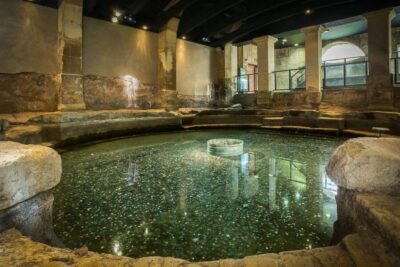
City Walking Tour with Optional Roman Baths Entry
Read our review →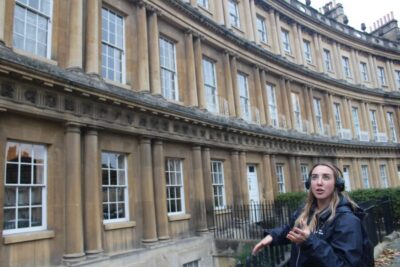
Bridgerton Filming Locations Walking Tour with Music
Read our review →

Private Bridgerton Walking Tour for upto 20 people
Read our review →Browse the lists this tour appears in