
Review · BATH
Bath: City Walking Tour with Optional Roman Baths Entry
Bath’s appeal comes from its sharp change of character: Roman engineering sits beside grand Georgian streets, and this tour links the two in one brisk walk. You’ll see Pulteney Bridge, Bath Abbey, the Royal Crescent, and the Circus before or around your visit to the Roman Baths.
I like the clear sense of place you get from a local guide, especially when the guide connects Bath’s buildings to the people and decisions that shaped them. I also like the choice of adding Roman Baths entry, since you can take the guided walk first and explore the museum at your own speed.
The main thing to note is that the guide does not lead you through the Roman Baths itself. The ticket gives you entry and an audio guide, so allow extra time beyond the 1.5 to 2 hour walking tour. The walk also includes steps and a small hill near the end.
Key points at a glance
- Roman and Georgian Bath in one route: Move from the hot springs and Roman remains to the Royal Crescent and 18th-century architecture.
- Pulteney Bridge is a highlight: See its Palladian design, with a link to the film Les Misérables.
- The Royal Crescent is the grand finale: Look across 30 Grade 1 listed houses forming one of England’s finest Georgian views.
- Guides keep the history lively: George, Jamie, John, Ewan, Tom, Anna, and others are praised for humor, local stories, and friendly pacing.
- The Roman Baths option is self-guided: You receive entry and an audio guide, not a continuation of the live walking commentary.
- Early starts can be smart: A 9 a.m. booking may mean quieter streets and an easier time hearing the guide.
Why this short Bath walk works

At $26 per person, this is a useful first look at Bath rather than a full-day attraction package. In roughly two hours, you cover the city’s major architectural and historical markers without having to work out the route yourself.
I like this format for a first visit. Bath is compact, but its story is not simple. The Romans established a spa settlement around the hot springs, while much of the city you see today took shape during the Georgian period. A good guide helps you understand why the streets look so uniform and why certain buildings matter.
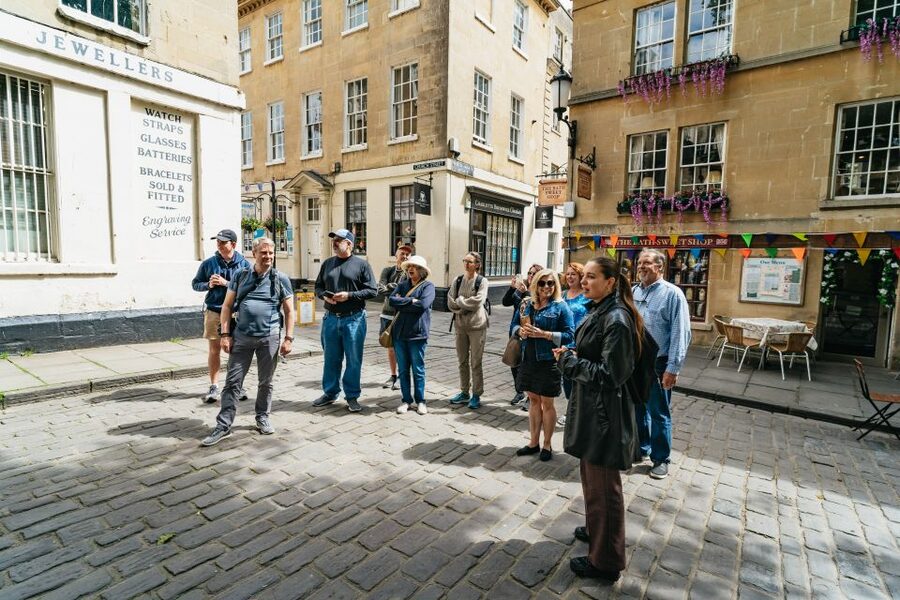
The human touch is a large part of the appeal. Guides including George, Jamie, John, Ewan, Tom, Anna, and William Darcy Jones are described as warm, funny, and easy to listen to. George is especially good at linking Bath’s growth from a small settlement to a major Georgian city, while Jamie is praised for involving the whole group and keeping the tone light.
A guide also gives you room to ask questions. One morning group found that the walk felt more like a conversation than a formal speech, which suited them well. That style can vary by guide, but the repeated strength is clear: the best guides make the past feel connected to the streets in front of you.
The tradeoff is time. You are moving through a lot of material in 90 minutes to two hours. You will see the main sights, but you will not receive a long interior visit at every building. Think of this as a smart orientation walk, not a deep study of Bath’s architecture.
More Walking Tours in the UK:
- Magical London: Harry Potter Guided Walking Tour
★ 4.7 · 22,044 reviews - Edinburgh: Harry Potter Magical Guided Walking Tour
★ 4.8 · 11,944 reviews - Edinburgh Castle: Guided Walking Tour with Entry Ticket
★ 4.7 · 11,699 reviews
Starting at Bath Abbey and the city center
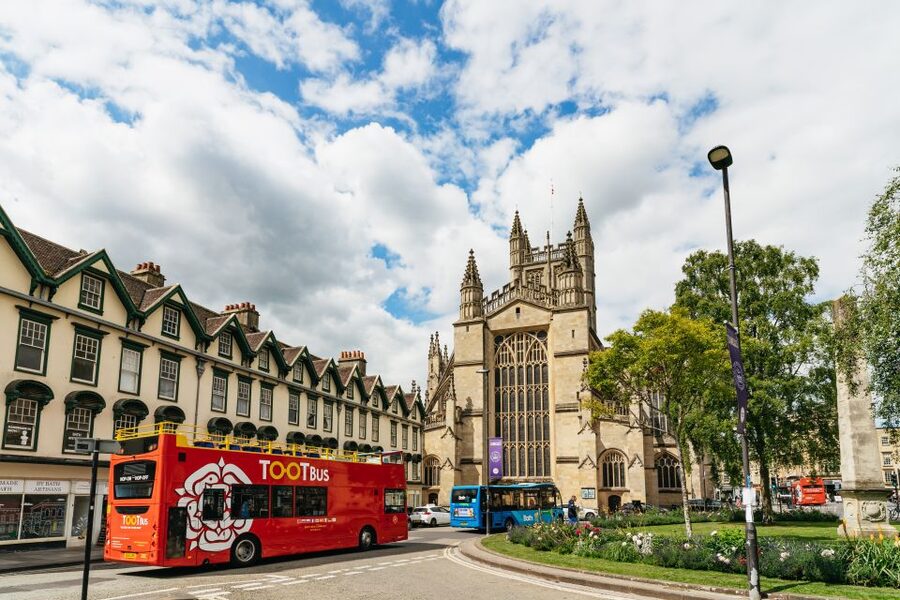
The tour begins at or near Bath Abbey, depending on the option you book. This is a sensible meeting point because it places you in the middle of Bath’s most important sights from the first minute.
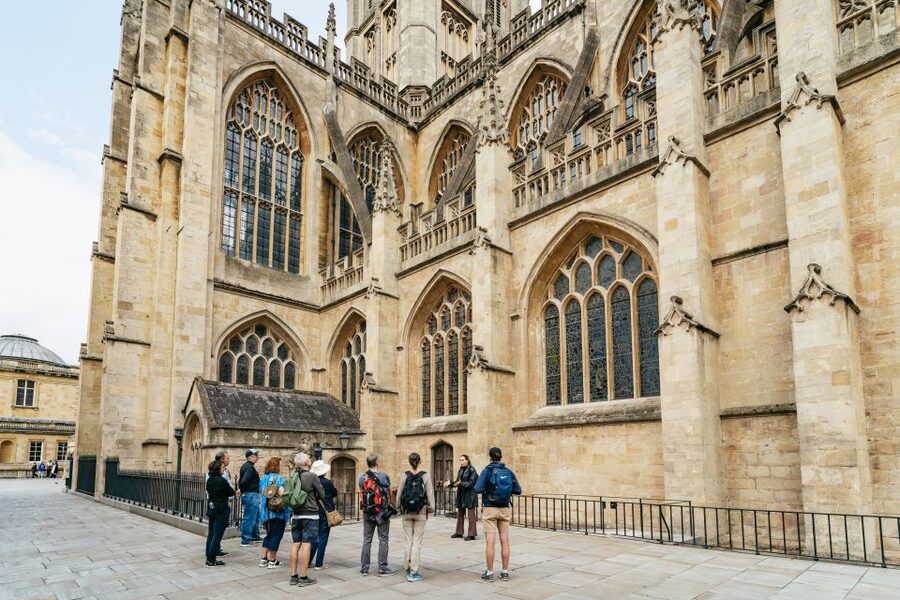
Bath Abbey is known for its Perpendicular Gothic design, one of the finest examples of that style in England. The building gives the tour an early reminder that Bath is not only about Roman remains and Georgian elegance. Its medieval identity is part of the city’s story too.
The walk then moves through the center, where the guide sets up the broad story of Bath. You will hear how the Roman settlement, religious foundations, fashionable Georgian society, and later city life all left their mark.
I would pay attention to the guide’s explanations of how Bath grew and who influenced it. The strongest commentary does not just list dates. It explains why the city developed as it did, and why so many of its streets share the same pale stone and formal look.
The city center can be busy later in the day. If you book a morning start, especially around 9 a.m., you may find it easier to hear the guide and take in the buildings without as much foot traffic around you. A smaller group also makes it easier to ask questions.
Pulteney Bridge and the river view
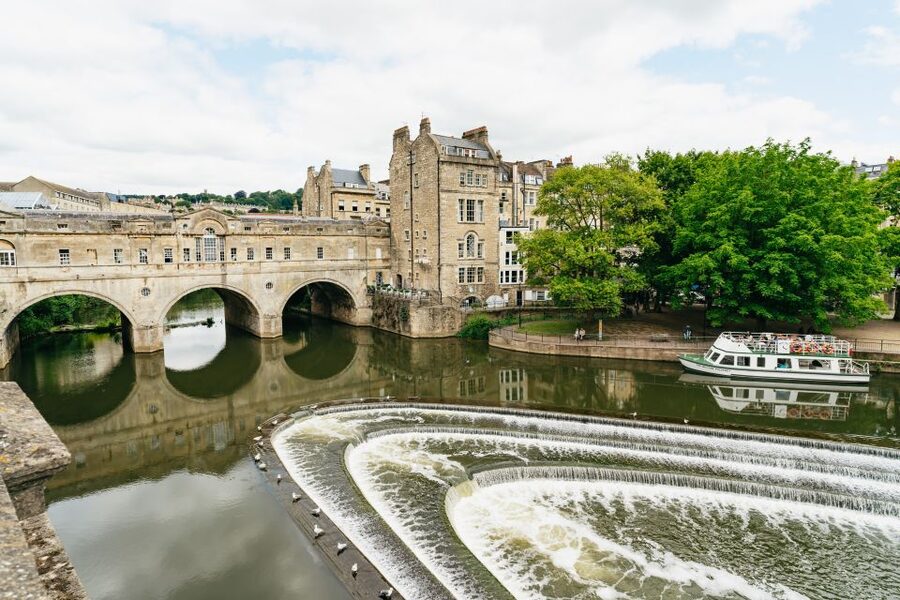
Pulteney Bridge is one of Bath’s most memorable stops. Its Palladian design gives it a grand, balanced appearance, but it is also a practical crossing over the River Avon.
The bridge is known internationally for its appearance in Les Misérables. That film connection may attract you, but the bridge is worth seeing for its architecture alone. The design creates a strong view from the river, while the shops built into the bridge make it different from an ordinary crossing.
This is a good place to notice how Bath combines beauty with daily use. The bridge is not simply a monument set apart from city life. It is part of the working streetscape, with people passing through and businesses occupying the structure.
Your guide can give you the context that a quick photograph misses. Look for the proportions, the repeated arches, and the way the bridge frames the water. Bath has many grand facades, but Pulteney Bridge feels especially connected to the river and the city’s movement.
The stop is also a useful change of pace. After the Abbey and central streets, the river gives you a more open view. Keep your camera ready, but listen first. This is one of the places where a few minutes of explanation helps you see more than the facade.
The Roman Baths and the hot springs
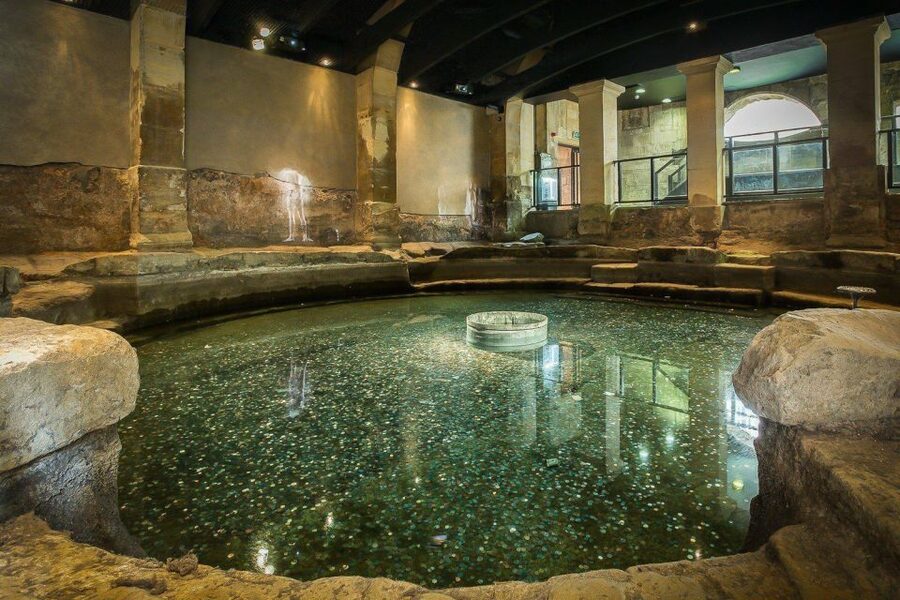
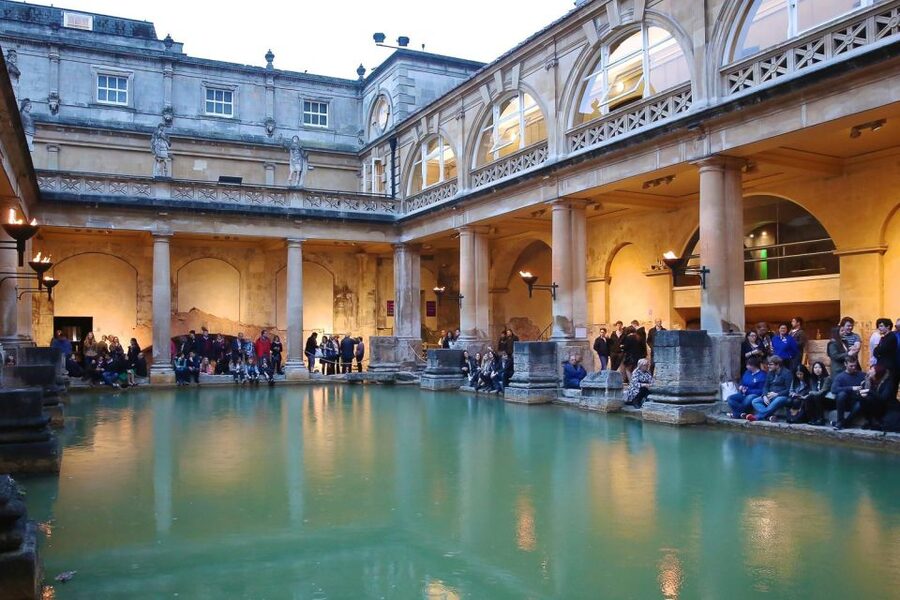
The Roman Baths are the tour’s optional paid entry. The site shows how the Romans used Bath’s geothermal springs and left behind a remarkable record of their occupation.
The hot water is the essential fact here. Bath’s springs are not an ordinary cold-water source, and the Roman settlement grew around this natural phenomenon. Inside, you can see archaeological remains, objects, and displays that explain how the baths worked and what they meant to Roman Bath.
The entry is self-guided, with an audio guide available inside. This distinction matters. The live guide introduces the Roman connection during the city walk, but you will not simply continue behind that same guide through the museum.
I see this as both a strength and a limitation. The audio format lets you move at your own pace, pause at displays, and spend longer on the sections that interest you. If you prefer a single storyteller guiding every room, you may miss having your walking guide continue inside.
Allow about three and a half to four hours for the walking tour plus the Roman Baths if you want to take your time. The walk itself lasts 1.5 to 2 hours, and the baths deserve more than a rushed look.
Crowds can affect the visit. One person found the Roman Baths very busy, making some areas hard to see. If the baths are your main reason for booking, consider visiting at a quieter time if your schedule allows, and do not assume that the short walking-tour duration includes a full museum visit.
The optional ticket can still offer good value at the total tour price, especially if you would otherwise need to plan the baths separately. Just make sure you understand what you are buying: a city walk with a guide, followed by independent exploration of the Roman site.
Same streets, a different guide:
- Underground Vaults Walking Tour in Edinburgh Old Town
★ 4.5 · 8,506 reviews - London: The Original Jack the Ripper Walking Tour
★ 4.7 · 7,833 reviews - Oxford University Walking Tour With University Alumni Guide
★ 5.0 · 6,905 reviews - Edinburgh Castle: Guided Walking Tour with Entry Ticket
★ 5.0 · 5,540 reviews
The Pump Rooms and Bath’s Georgian turn
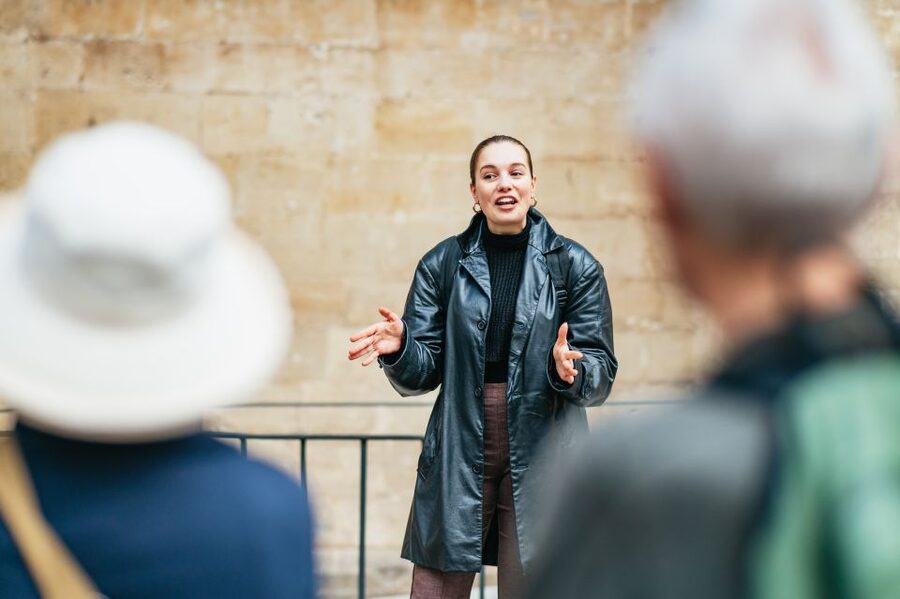
From the Roman and medieval parts of Bath, the tour shifts toward the city’s Georgian identity. The route takes in the central Pump Rooms and continues toward the Upper Assembly Rooms.
This part of Bath is about fashion, status, and social life. The architecture was designed to impress, but the buildings also served a purpose. They were places where people gathered, met, watched one another, and took part in the rituals of fashionable society.
The guide helps you read the city as more than a collection of elegant fronts. The Georgian buildings show how much planning and money went into creating a fashionable resort city. Their repeated stone facades and formal arrangements make Bath feel unusually coherent.
You may not enter every major building on the route. That is one of the practical limits of the tour. You see the exteriors and learn what happened inside, but if you want to inspect interior rooms, you may need separate admission or another visit.
Still, I think the outside commentary is valuable here. Bath’s architecture is easy to admire and easy to misunderstand. Without context, a row of matching buildings can blur into one long photo stop. With a guide, you can begin to notice scale, symmetry, and the social purpose behind the design.
The Circus and Royal Crescent
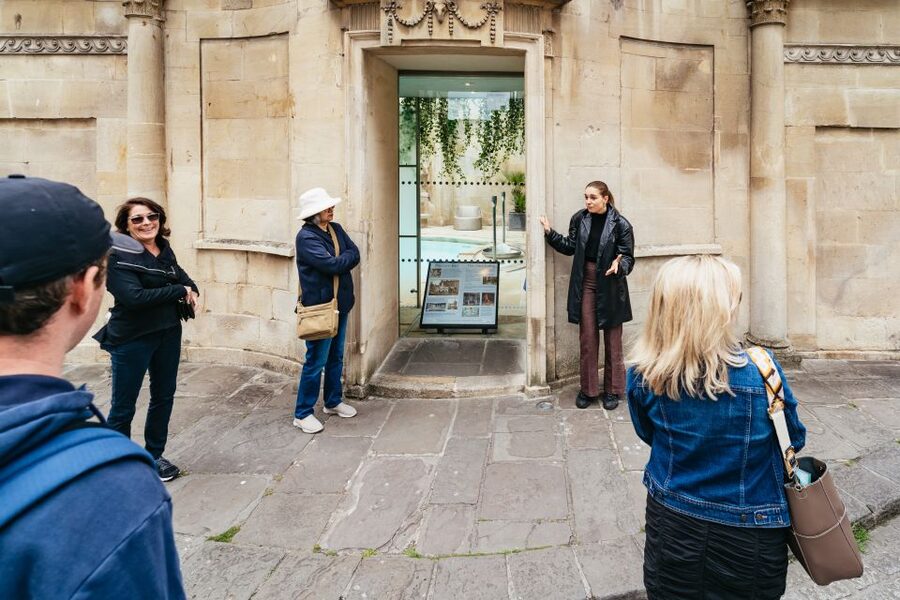
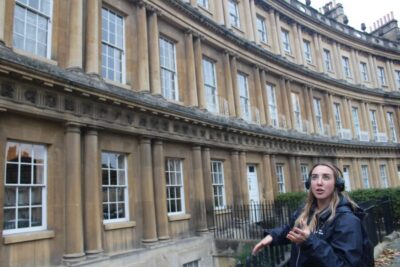
The Circus is one of the tour’s most distinctive architectural stops. This circular arrangement of buildings is often described as mysterious because its design is less immediately obvious than a straight Georgian terrace.
Your guide explains how the Circus works as an architectural composition. Look at the repeating details and the way the buildings create a strong sense of enclosure. It is a place where the whole design matters more than any single doorway.
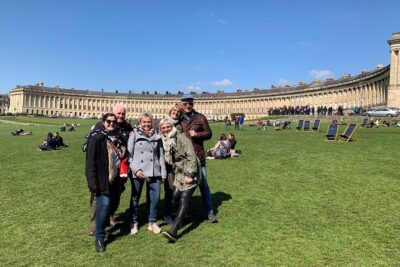
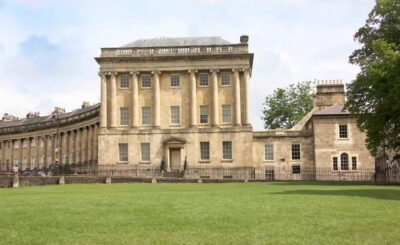
From there, the route continues toward the Royal Crescent. This is the image many people associate with grand Georgian Bath: a broad sweep of 30 Grade 1 listed houses facing an open area.
The Royal Crescent is not just a row of attractive homes. Its scale shows the confidence and wealth behind Georgian Bath. The repeated facades create unity, while the curve gives the view a theatrical quality.
I like this part of the tour because the guide can explain how the Circus and Royal Crescent differ. Both use Georgian order and repetition, but they create different moods. The Circus feels enclosed and planned around a central shape. The Royal Crescent opens outward and gives you a wider sense of space.
The walk toward the upper parts of Bath includes a small hill and some steps. It is not described as a strenuous hike, but you should wear comfortable shoes and expect ordinary city walking rather than a flat museum route.
The Royal Crescent is also a strong final stop because it gives you time to step back. After hearing about Roman engineering, medieval Bath, and Georgian society, you can see how the city’s later identity was built into its streets.
The guides make the difference
The strongest feature of this experience is the quality of the live commentary. Guide names change, so you cannot choose a specific person unless the booking system allows it, but the names most often praised include George, Jamie, John, Ewan, Tom, Anna, Marcel, and William.
George is often singled out for humor, local pride, and his ability to explain Bath’s growth across different periods. Jamie is praised for being friendly, punctual, and good at bringing every member of a group into the discussion. John is described as easy to listen to, thoughtful with questions, and good at adding personal observations about the city.
Ewan is noted for covering a lot of ground without making the pace feel rushed. Anna is praised for clear explanations of Bath’s architecture and for handling questions comfortably. Tom brings enthusiasm and strong historical detail, while Marcel is appreciated for setting a comfortable pace.
You may get a guide who speaks quickly when excited about the subject. That can be entertaining, but it means you need to stay close and listen carefully. In larger groups, hearing every word may be harder, particularly in busy streets. Early morning is a useful choice if you want quieter conditions.
A private group is available. That may suit families or friends who want more control over the pace and questions, though the supplied information does not specify the private-group price.
Timing, group size, and practical value
The tour lasts 1.5 to 2 hours and can begin in the morning or afternoon. I would choose the earliest available start if Bath is a priority for you. The streets can be calmer, the group may be smaller, and the guide’s voice is easier to follow.
The meeting point can vary by booking option, so check your confirmation carefully. One person was sent to the wrong meeting point but found the guide patient and understanding. Even so, you should confirm the exact location before setting out.
The activity is in English only. That works well if you are comfortable following a live explanation, but it is not the right choice if you need commentary in another language.
At $26 per person, the value is strongest for first-time visitors and anyone with only one day in Bath. You get a route through the key sights, a local guide, and a donation to Bath Abbey. If you add the Roman Baths option, you also receive entry and an audio guide.
The price is less compelling if you already know Bath well or prefer to wander alone. You can see many of the exteriors without a tour. The real value is the organization, the historical connections, and the chance to ask questions while moving through the city.
The activity is non-refundable, so check your schedule before booking. A private group is available, and the live tour is conducted in English.
Who should book this Bath tour?
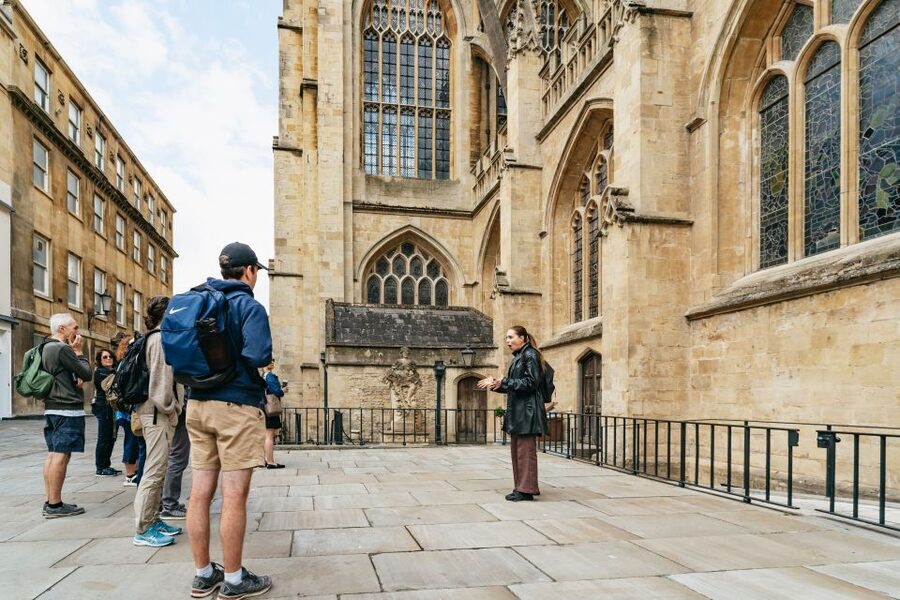
I would choose this tour if you are visiting Bath for the first time, want the main sights explained clearly, or need a good route for a short stay. It is also useful for families and mixed-age groups because the guides aim to keep the history lively rather than turning it into a lecture.
It suits people who enjoy architecture, local stories, and a steady walking pace. It also works well as an opening activity, since you can use the walk to decide which buildings or museums deserve more of your time later.
You may want another plan if your priority is an in-depth Roman Baths visit led by the same guide from start to finish. The entry is self-guided, and busy periods can make the museum feel crowded. I would also think twice if you dislike walking, steps, or a small uphill section.
For most first-time visitors, I think the tour is worth booking. Take the walking portion for the city overview, choose an early start if possible, and add the Roman Baths only if you can spare the extra time needed to explore them properly.
FAQ
How long does the Bath walking tour last?
The walking tour lasts approximately 1.5 to 2 hours.
What sights are included in the walking route?
The route includes Bath Abbey, Pulteney Bridge, the Roman Baths area, the Pump Rooms, the Upper Assembly Rooms, the Circus, and the Royal Crescent.
Is entry to the Roman Baths included?
Roman Baths entry is included only if you select the option that includes it.
Does the live guide lead the tour inside the Roman Baths?
No. The Roman Baths entry is self-guided, and an audio guide is available inside.
How much does the experience cost?
The listed price is $26 per person. The final option price may depend on whether you add Roman Baths entry.
What language is the tour conducted in?
The live tour is conducted in English.
Can I book a private group?
Yes. A private group option is available.
Where does the tour meet?
The meeting point may vary depending on the option you book. Check the meeting details for your selected option before arriving.
New routes in the UK
- Aberdeen City Centre Walking Tour (2pm)★ 5.0 · 217 reviews
- German London : The Ultimate Walking tour★ 4.8 · 400 reviews
- London: Medieval History Walking Tour from The Tower★ 4.9 · 318 reviews
- Oxford: Official University and City Walking Tour★ 4.7 · 618 reviews
- The Beatles London Walking Tour★ 4.2 · 147 reviews
- Stratford-Upon-Avon’s Town Walking Tour (10:30am & 2pm)★ 4.8 · 143 reviews
- The Sinister Side of Shakespeare’s Stratford Walking Tour★ 4.8 · 547 reviews
- Stratford-Upon-Avon: The Famous Walk Talk Show★ 4.9 · 342 reviews
Bath Walking Tours, compared.
Walking Tour of Bath with Blue Badge Tourist Guide
Read our review →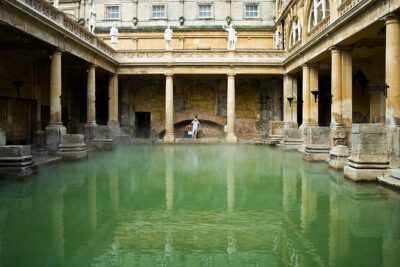
Bridgerton Filming Locations Walking Tour with Music
Read our review →
Private Bridgerton Walking Tour for upto 20 people
Read our review →Browse the lists this tour appears in