
Review · GERMANY
Cologne: Old Town Virtual Reality Walking Tour
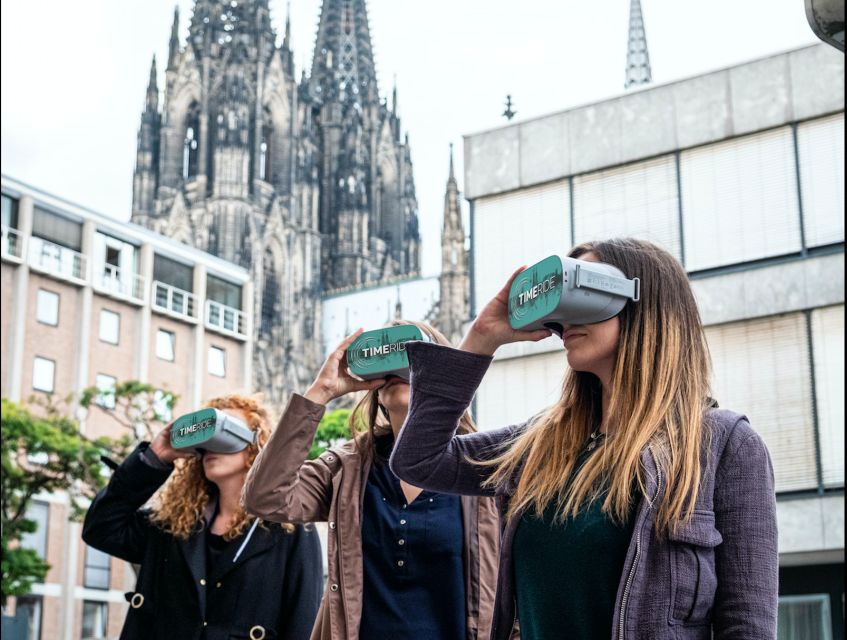
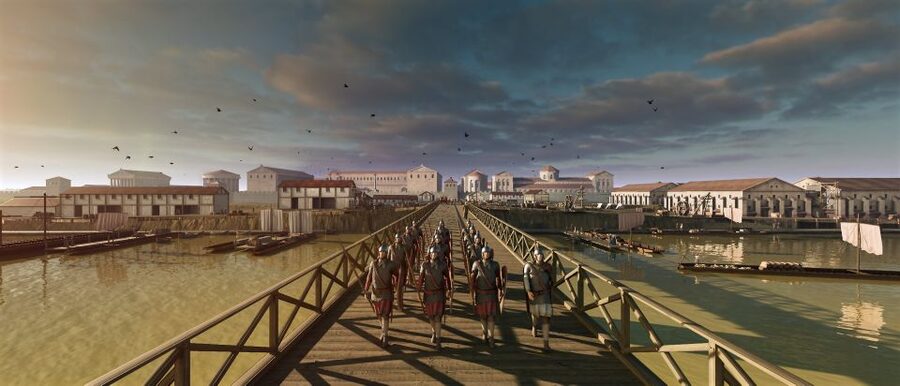
Cologne’s Old Town becomes a time machine on this 90-minute walking tour, where you put on a virtual reality headset at seven stops and see earlier versions of the streets around you. Roman buildings, medieval cathedral construction, wartime ruins, and carnival traditions appear where modern Cologne now stands.
I like the clear route, which covers about 2.1 kilometers without turning into an all-day march. I also like the way the VR scenes give children and history fans something concrete to watch, rather than asking them to picture every century from a guide’s description alone. The main consideration is language: the live tour is offered in German, and the headset adds a technical layer that may not suit everyone.
Key points
- Seven time-travel stops: The tour connects Alter Markt, Heumarkt, Roncalliplatz, the cathedral, St. Kolumba, and Hohe Straße.
- A 2.1-kilometer route: You walk between stops, then pause for the VR scenes.
- Four major eras: The story covers Roman Cologne, the Middle Ages, World War II, and modern carnival customs.
- German-speaking guides: Carlos, Carlo, and Kathrin are among the guides associated with this experience.
- Family-friendly from age six: The format is especially suited to children who enjoy visual storytelling.
- Museum admission is separate: The tour begins outside TimeRide, but entry to the TimeRide museum is not included.
How the Cologne time machine works
This is not a headset experience from start to finish. You meet your guide in front of TimeRide Köln, then walk through the Old Town with the glasses put away. At selected points, the group stops, receives the VR headsets, and looks into earlier scenes connected with that location.
That rhythm matters. You are not wandering through Cologne with your eyes covered. You first see the real street, square, or church, then compare it with a reconstructed moment from the past. After the scene ends, you continue on foot to the next stop.
The route tells a broad story over almost 2,000 years. It begins with Roman Cologne, moves to the great medieval cathedral project, turns to the destruction of World War II, and finishes with the return of Cologne’s customs and carnival life. The result is more of a visual history lesson than a standard sightseeing stroll.
The tour is conducted in German. If you understand German, you can follow the guide’s explanation and the historical scenes directly. If you do not, the visual material may still be interesting, but the spoken parts will be harder to follow. That language point should guide your booking decision more than the impressive VR equipment.
More Old Town Walking Tours in Germany
- Nuremberg: Old Town Guided Walking Tour
★ 4.6 · 2,416 reviews - Munich: Old Town & Viktualienmarkt City Walk in German
★ 4.7 · 2,304 reviews - Heidelberg: Walking Tour of the Old Town
★ 4.6 · 1,742 reviews
Starting outside TimeRide Köln
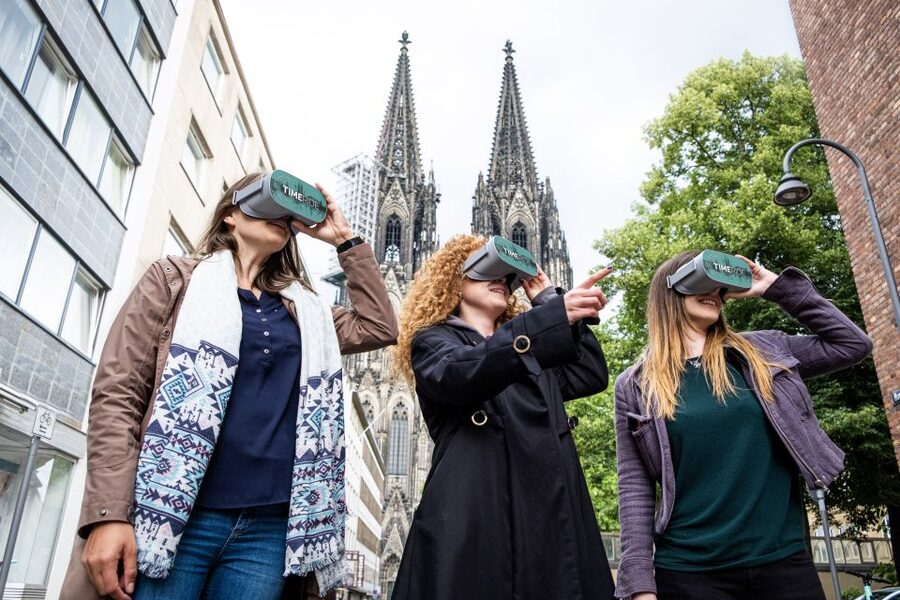
Your meeting point is in front of TimeRide. The tour does not include admission to the museum itself, so you should not assume that booking this walk gives you access to the indoor TimeRide attraction.
The start is useful for visitors who want to combine a modern presentation of history with a walk through the city. Still, keep the two products separate in your planning. This tour includes a live guide and the VR headsets used at the outdoor stops. Museum entry costs extra.
The entire experience lasts 90 minutes. That is long enough to cover several major sights but short enough to fit into a busy day in Cologne. You cover about 2.1 kilometers, so comfortable shoes are sensible. You also need clothing suited to the weather because most of the experience takes place outdoors.
Alter Markt and the Roman beginning
Alter Markt is one of the first substantial stops. Here, the walk begins to connect the present-day Old Town with the city’s Roman origins.
Cologne has more than two millennia of history, and the Roman chapter gives the tour its first major time shift. Through the headset, you can see an earlier version of the city rather than only hearing that Roman buildings once occupied the area. The point is not simply to look at old architecture. It is to understand that the modern streets sit on top of several very different cities.
The stop lasts about 15 minutes, including guided explanation, sightseeing, walking, and the VR portion. That makes it a manageable first lesson. You are not expected to absorb an entire Roman history course before moving on.
For families, this is where the format begins to earn its keep. A child may not remember every date, but seeing a Roman city appear in the same setting can make the scale of Cologne’s past easier to grasp. Adults who already know the basic story may appreciate the contrast between the current square and the earlier buildings shown through the glasses.
Heumarkt and the walk between centuries
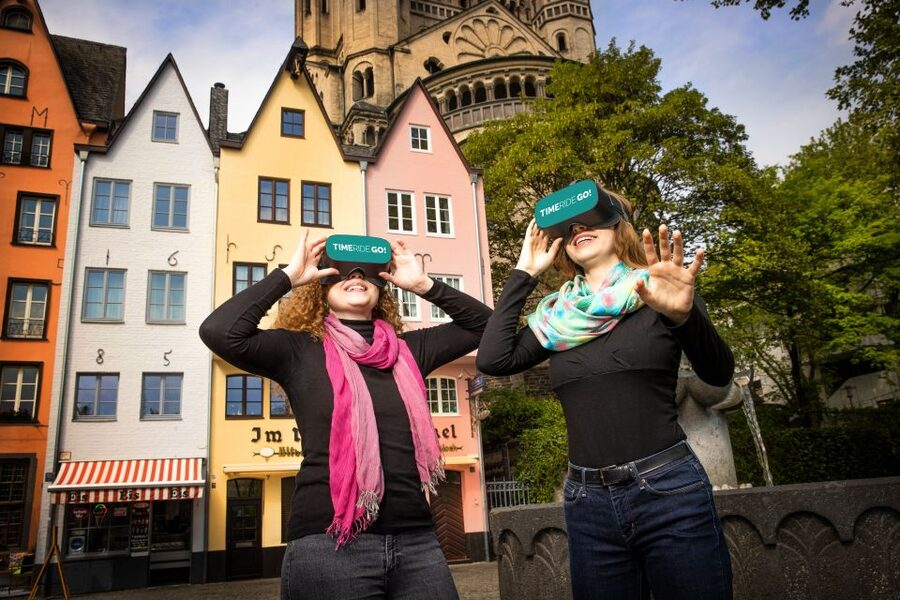
The route continues to Heumarkt, another central Old Town location. The walk between stops is part of the experience, not dead time. You move through modern Cologne while the guide explains how the city changed around you.
At Heumarkt, the tour keeps building its timeline. The seven-stop format means no single location carries the whole story. Each place gives you another piece of the city’s development, and the pauses keep the information from becoming one long lecture.
The listed timing allows about 15 minutes here. That is enough for a short explanation and a VR scene, but not enough for an extended visit to nearby sights. You should think of the stop as part of a moving history presentation, not as free time to explore Heumarkt independently.
This pacing also helps keep the group together. You walk without the glasses, stop at the designated point, watch the scene, and move on. One guide, Carlos, has been praised for strong preparation and an engaging manner, while Carlo is also noted for making the tour clear and enjoyable. Guide quality can shape how well the scenes make sense, so the live explanation remains important.
Same streets, a different guide:
- Discover Berlin Half-Day Walking Tour
★ 5.0 · 9,624 reviews - Berlin City walk Government District and Places of Democracy
★ 4.7 · 8,467 reviews - Berlin: Third Reich & Cold War Guided Walking Tour
★ 4.9 · 8,378 reviews - Munich: Third Reich & WWII Walking Tour
★ 4.6 · 6,181 reviews
Roncalliplatz and the medieval cathedral project
At Roncalliplatz, the story turns toward the Middle Ages and Cologne’s enormous cathedral-building effort. This is one of the tour’s most naturally dramatic chapters. The cathedral is familiar as a finished landmark, but the VR scenes let you consider it as a construction project unfolding over time.
The value here comes from seeing progress rather than only admiring the final result. A finished monument can feel permanent and inevitable. A virtual reconstruction can show the scale, labor, and changing surroundings that went into creating it.
The guide leads the group through the setting before the headsets come out. That sequence helps you connect the historical view to the pavement beneath your feet. You can first get your bearings in the modern square, then look back through the glasses.
The stop is also close to one of Cologne’s biggest sights, but this tour is not a substitute for going inside the cathedral. The itinerary includes a cathedral visit and photo stop, yet it does not include cathedral admission or a dedicated interior tour. If the cathedral is a priority, allow separate time for it.
Cologne Cathedral and the city’s biggest visual moment
The cathedral stop is likely the point many people anticipate most. You visit, photograph, and hear the guide explain its place in Cologne’s story. The VR element adds a look at the cathedral during its medieval construction, giving you a different way to read the building.
I like this approach because it avoids treating the cathedral as an isolated object. The surrounding city changed as the project developed, and the headset helps link the landmark to the people and work behind it.
The stop lasts around 15 minutes. That is enough for the guided presentation and a photo, but it is not a full cathedral visit. You may want to return later if you prefer a quiet look inside or need more time for photographs.
This is also a busy part of central Cologne. The group may pause near other pedestrians, and you should pay attention when walking with the headset removed. The tour’s structure keeps the VR use controlled, but it is still best to follow the guide closely and avoid drifting away for pictures.
St. Kolumba and the difficult twentieth century
At St. Kolumba, the story moves into the destruction caused by World War II. This is an important change in tone. The tour no longer focuses only on the city’s founding or its grand medieval building project. It shows how much Cologne was damaged and how the city had to recover.
The VR scenes make this period more immediate than a simple verbal account. You see the contrast between the present location and its wartime condition, then return to the modern street. That comparison gives the destruction a physical setting.
The stop is especially useful if you have only a short time in Cologne and want more than postcard views. A standard Old Town walk might point out the cathedral, squares, and shopping streets. This tour adds a clear explanation of how the city was broken and rebuilt.
The subject may be heavy for young children, although the activity is open to ages six and up. Parents should use their judgment. The tour does not present itself as a war museum visit, but the World War II section is part of the central story and should not be treated as a light entertainment segment.
Hohe Straße and the return of Cologne customs
The route reaches Hohe Straße for a short sightseeing segment before returning to TimeRide. This is the briefest listed stop, at about two minutes, so do not expect a long presentation there.
The final historical theme is modern Cologne’s carnival culture and the revival of local customs. That gives the tour a more cheerful finish after the wartime chapter. You see the city not only as an archaeological site or a damaged wartime center, but as a place with living traditions.
The carnival scenes also widen the definition of history. History is not only Roman walls and medieval churches. It includes the ways people celebrate, gather, and carry customs into the present. For a visitor who wants to understand Cologne beyond its major monuments, that closing section adds useful local character.
From Hohe Straße, you return to TimeRide. The route therefore forms a complete loop rather than leaving you at an unrelated stop.
What the VR adds, and what it cannot do
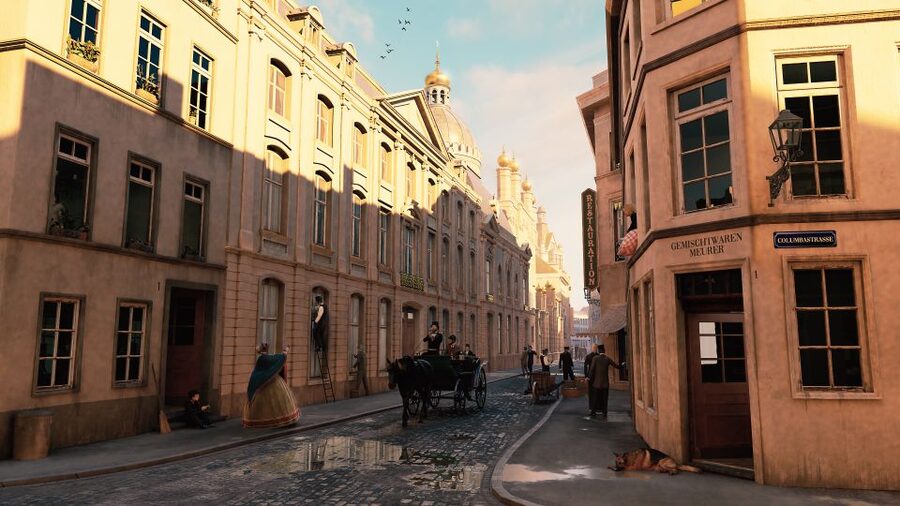
The strongest feature is the comparison between the real city and the reconstructed scenes. You can look at a current square, then see how it might have appeared in another period. That can make broad dates and historical transitions easier to remember.
The glasses also make the tour more active for families. Children six and older can watch the story unfold instead of standing through a long explanation. History lovers get a visual aid, while first-time visitors get a quick introduction to the city’s major turning points.
Still, the VR does not replace a guide. The headset shows a scene, but the guide supplies the sequence and meaning. If your German is limited, you may miss much of that explanation. You also need to be comfortable putting on shared tour equipment and looking through a headset in public spaces.
This is not the right pick if you want an in-depth study of one era. Seven stops across nearly 2,000 years require selectivity. You get a well-paced overview, not a specialist tour of Roman archaeology, cathedral architecture, or wartime reconstruction.
Guide style and group atmosphere
The human side matters here. A guide leads the route, controls the stops, explains the scenes, and keeps the group moving. Carlos has been singled out for being motivated and well prepared, while Carlo is praised for a professional and engaging approach. Kathrin has also led the tour in a way that keeps the glasses off while walking and brings them out only at the historical viewpoints.
That method is worth noting. Walking without the headsets reduces confusion and lets you pay attention to Cologne itself. The glasses come on only when there is a specific scene to watch.
Group size can vary. Sometimes you may find yourself in a very small group, even with only two people on a quieter departure. That can lead to more relaxed conversation and direct questions. You should not count on a private tour, but small groups are possible.
One practical tip is to schedule this near the end of your Cologne stay if you want to use it as a review of the city. The route touches several central sights, and seeing them first may help the historical scenes make more sense. On the other hand, booking it early can give you useful orientation for later walks.
Price, timing, and practical value
At $38 per person, this is priced above a basic sightseeing walk but below a full museum-style day. The value depends on what you want from a city tour.
You are paying for a live German-speaking guide, a planned Old Town route, and the VR equipment. You are not paying for TimeRide museum admission, and the experience does not include a long indoor visit to Cologne Cathedral. If you want the museum as well, budget for that separately.
For me, the price makes the most sense if you enjoy guided interpretation and want a compact introduction to Cologne’s past. A family may find the visual format more worthwhile than a conventional lecture. A visitor who already knows Cologne well, or who wants only free time for photographs and shopping, may get less value.
The 90-minute length is a practical strength. You can fit it between other plans, and the 2.1-kilometer route is active without becoming exhausting. Add extra time before or after for the cathedral, independent sightseeing, meals, or shopping on Hohe Straße.
Free cancellation is available up to 24 hours in advance for a full refund, and you can reserve while paying later. Check the available starting times when booking, since the tour schedule can affect how easily it fits your day.
Who should book this Cologne tour?
I would choose this experience for families with children aged six or older, first-time visitors who want a quick city overview, and anyone who enjoys seeing history rather than only hearing about it. It is also a good fit for German-speaking visitors who want a lively way to connect Cologne’s present streets with its earlier forms.
History fans should enjoy the broad timeline, especially the movement from Roman foundations to medieval cathedral construction and then to World War II and carnival customs. The tour does not go deeply into any one subject, but it gives you a strong framework for exploring further on your own.
You should think twice if you need an English tour, dislike headsets, or want a quiet, slow look at the Old Town. The German-only format is the clearest limitation. The 90-minute schedule also leaves little room for lingering at each stop.
Final verdict: a smart choice for visual history
Book this tour if you want Cologne’s major historical chapters tied to the streets you are walking through. The seven VR stops, the manageable 2.1-kilometer route, and the mix of Roman, medieval, wartime, and carnival scenes give you more context than a simple monument walk.
Skip it if you are looking for museum admission, an English-language experience, or a detailed specialist study. For German-speaking families and history-minded visitors, though, the format offers a useful compromise: real streets, a live guide, and carefully timed glimpses into the past without taking up an entire day.
FAQ
Where does the Cologne Old Town VR tour begin?
You meet the guide in front of TimeRide Köln.
How long is the tour?
The walking tour lasts 90 minutes.
How far do you walk?
The route covers approximately 2.1 kilometers.
Which language is the tour offered in?
The live tour guide language is German.
What historical periods does the tour cover?
The tour covers Cologne’s Roman beginnings, medieval cathedral construction, the destruction of World War II, and the revival of Cologne’s customs and carnival traditions.
Is TimeRide museum admission included?
No. Admission to the TimeRide museum is not included in this walking tour.
What is the minimum age?
The tour is suitable for people aged six and older. Children under six are not permitted to join.
New routes in Germany
- Munich: Walking Tour Old Town and Viktualienmarkt★ 4.7 · 839 reviews
- Stuttgart: Guided Ghost Walking Tour★ 4.5 · 867 reviews
- Stuttgart: Private Guided Circular City Walk★ 4.7 · 129 reviews
- Stuttgart: Old Town Highlights Guided Walking Tour★ 4.2 · 101 reviews
- Stuttgart: City Highlights – Guided Walking Tour★ 4.7 · 189 reviews
- Hamburg: Private Tour Red Light District Walking Tour★ 4.7 · 227 reviews
- Small Group Walking Tour: “Wild Kreuzberg”★ 4.8 · 199 reviews
- Sachsenhausen Memorial: Walking Tour from Berlin★ 4.7 · 132 reviews
Germany Walking Tours, compared.
Berlin City walk Government District and Places of Democracy
Read our review →
Berlin’s Best: 2 Hour Walking Tour Third Reich and the Cold War
Read our review →
Explore Berlin: See All The Iconic Sights & Some Hidden Gems
Read our review →
Third Reich Berlin: Hitler and WWII Walking Tour
Read our review →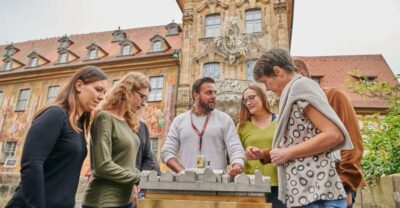
Browse the lists this tour appears in