
Review · GERMANY
Cologne Cathedral Walking Tour around the cathedral with VR
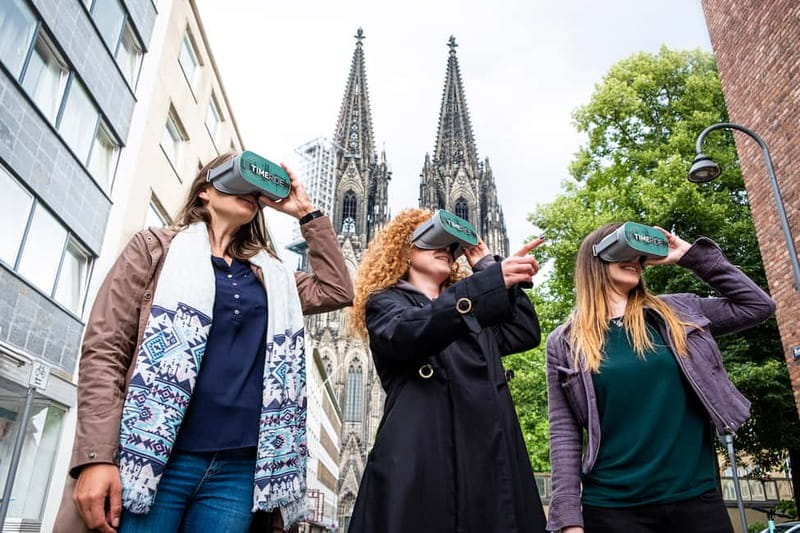
Cologne Cathedral’s history gets a clever twist on this one-hour walk: at six points around the building, you put on a VR headset and look into earlier centuries. The scenes carry you from the medieval construction plan to the cathedral’s wartime years and present-day form, without asking you to spend hours in a museum.
I like the mix of a real walk and VR because you keep your bearings in the city while seeing places and moments that no ordinary street tour can show. I also like the brisk format, with a guide explaining the facts between short headset sessions. The main limitation is clear: you do not enter the cathedral, and the tour is conducted in German.
Key points at a glance
- Six VR stations: Watch Cologne Cathedral change across more than 700 years.
- Four outdoor stops: The route includes Roncalliplatz, the Domherrenfriedhof, Cologne Central Station, and the Domplatte.
- One focused hour: The tour gives you a compact history lesson rather than a long city walk.
- German-speaking guide: The guide adds context, facts, and figures between the VR scenes.
- Family-friendly format: Children from age six can join, and a five-person family found the experience entertaining and easy to follow.
- Outdoor-only visit: You walk around the cathedral but do not go inside it.
Why the VR works well at Cologne Cathedral
The cathedral is enormous, old, and visually busy. A normal walk can show you the stonework and setting, but it cannot show the building site in the Middle Ages or recreate the long gap in construction. The VR sections fill that gap.
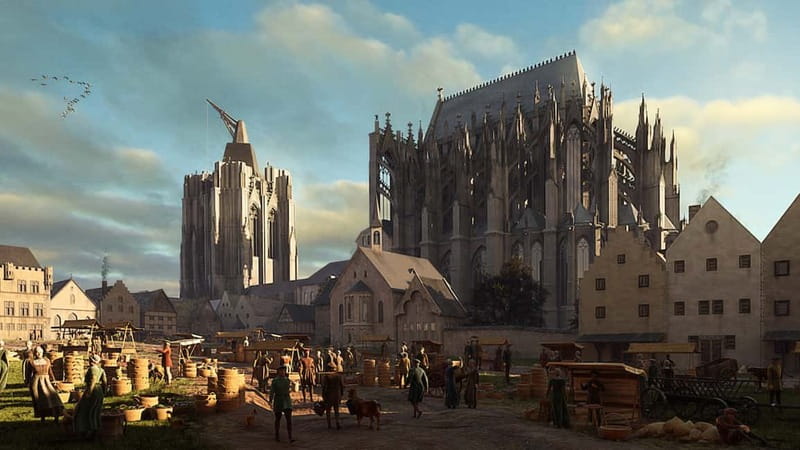
You use the headset at six stations during the route. Each scene places you in a different period connected with the cathedral. The story begins with plans for construction in the Middle Ages, moves to the laying of the second foundation stone after a long halt, then covers the damage and fear of World War II before returning to the cathedral as it appears today.
I like this approach because it gives the building a timeline. You are not just looking at a finished monument. You are following a project that took centuries, stopped for a long period, and later continued. The physical cathedral remains in front of you, while the headset supplies the missing stages.
The format also keeps the history moving. You are not standing in one room reading panels. You walk between stops, listen to a guide, and use the headset for selected scenes. That makes the hour feel varied, especially for families and for anyone who loses focus during long lectures.
The VR is not a replacement for entering the cathedral or taking a full architectural tour. It is best understood as a short historical layer added to an outdoor walk.
More Walking Tours in Germany:
- Discover Berlin Half-Day Walking Tour
★ 5.0 · 9,624 reviews - Berlin City walk Government District and Places of Democracy
★ 4.7 · 8,467 reviews - Berlin: Third Reich & Cold War Guided Walking Tour
★ 4.9 · 8,378 reviews
Starting at the Kreuzblume
The meeting point is the Kreuzblume, a model of a cathedral finial directly opposite the main portal. Look for the TimeRide flag and its name and logo. This detail matters because the model is a common meeting place for several tours around Cologne Cathedral.
The practical lesson is simple: do not rely on the model alone. Check for the TimeRide lettering and flag before the start. One person missed the tour after finding the meeting point unclear, so allow enough time to identify the correct group. This is one of the few avoidable problems with the experience.
The tour includes the guide and the VR headset. Wear comfortable shoes, since the experience involves walking between several outdoor locations. The route lasts 60 minutes, so it is short enough to fit into a busy Cologne day, but you should still expect to remain on your feet for much of the hour.
Roncalliplatz and the medieval building story
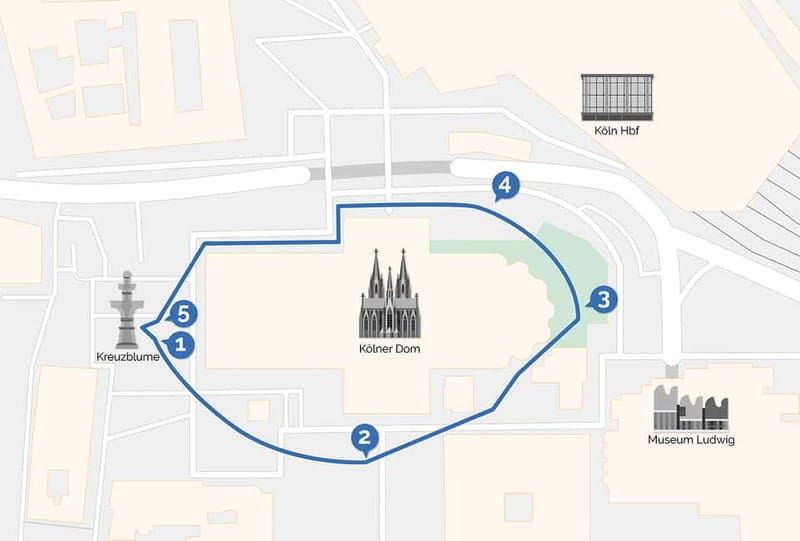
The first major stop is Roncalliplatz, where the guided portion lasts about 20 minutes. This is the longest stop on the route, and it gives the guide room to explain why the cathedral was planned, how its construction began, and what made the project so important.
This is also where the VR concept begins to make sense. Looking at the cathedral today, you see the completed result. The virtual scenes let you picture earlier plans and stages of work that are no longer visible in the square.
The guide adds the facts and figures that help connect the images. You will hear about the cathedral’s construction background and the major periods that shaped it. Since the tour is in German, you need a working understanding of the language to get the full value from the explanations.
The stop is especially useful if this is your first serious look at the cathedral. You receive a basic timeline before moving on, so later VR scenes have a clear place in the story. If you already know Cologne Cathedral’s history well, the visual scenes may offer more value than the spoken introduction.
Domherrenfriedhof and the second foundation stone
The route continues to the Domherrenfriedhof, with roughly 10 minutes of guided commentary. This stop helps explain the cathedral’s long construction gap and the later decision to restart the work.
The key event here is the laying of the second foundation stone after construction had been halted for a long period. That detail gives the cathedral an unusual story. It was not simply built in one uninterrupted campaign. Its history includes a major pause, followed by a determined return to the original plan.
The VR scene can make that change easier to grasp than a date alone. You see the cathedral’s story as a sequence of decisions, delays, and renewed effort. The guide’s role is important here, since the short visual segment works best when you understand what you are looking for.
This part of the walk is less about ticking off another postcard view and more about explaining how the building came to exist in its present form. I would pay close attention here, especially if you are interested in medieval building projects or the practical problems behind major monuments.
Same streets, a different guide:
- Munich: Third Reich & WWII Walking Tour
★ 4.6 · 6,181 reviews - Berlin: Discover Berlin Walking Tour
★ 4.9 · 5,998 reviews - Berlin’s Best: 2 Hour Walking Tour Third Reich and the Cold War
★ 5.0 · 5,486 reviews - Berlin: Hidden Backyards Guided Walking Tour
★ 4.8 · 5,360 reviews
Cologne Central Station and the cathedral in wartime
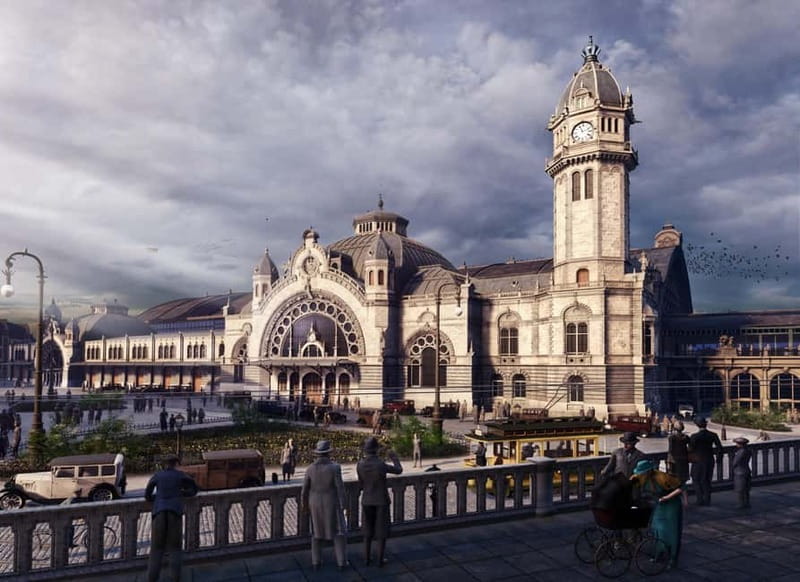
The next guided section takes about 10 minutes near Cologne Central Station. The location adds a modern urban setting to the story, while the subject shifts to the cathedral during World War II.
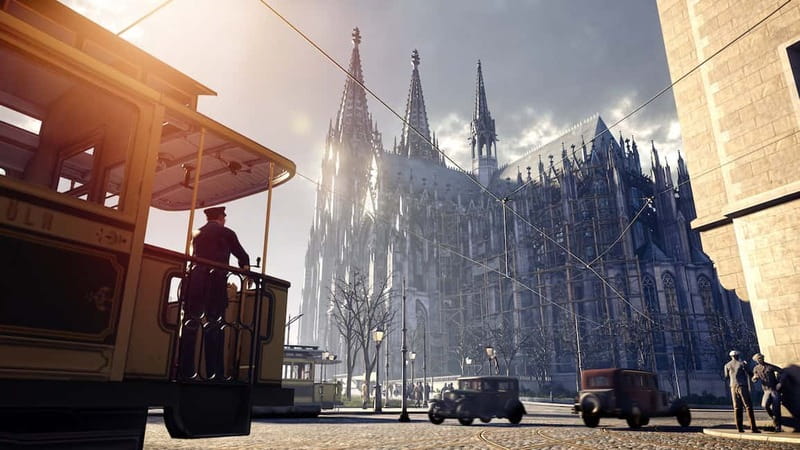
The wartime chapter gives the tour a more serious tone. The cathedral’s history is not presented as a smooth tale of artistic achievement. It also includes the dangers and destruction of the twentieth century. The VR sequence helps you picture the cathedral during that difficult period, then compare it with the building you see around you today.
This contrast is one of the strongest reasons to choose the tour. A standard walk around the facade may leave you with a sense of age and scale, but the virtual scenes connect the monument to major events that changed Cologne.
The guide keeps the section within the one-hour format, so do not expect a full account of the war or a detailed architectural survey. You receive a focused account of how the cathedral fits into that period. For a first visit, that balance is useful. For a specialist history lesson, you will need another source or tour.
Domplatte and the final virtual lift
The final guided stop is the Domplatte, where the group spends about 10 minutes. The broad setting gives you another chance to look at the cathedral in relation to the surrounding city.
The last VR scene includes a virtual lift from the ground. If you are uncomfortable with heights, take this warning seriously. Even though the movement is virtual, the effect may still be unpleasant for some people.
For others, the final sequence offers a fresh way to see the cathedral’s scale. The tour has spent the earlier stops explaining how the building was planned, built, paused, restarted, and affected by war. The elevated view then gives you a visual finish that ties those chapters to the structure in front of you.
After this stop, the group returns to the Kreuzblume. The route is compact, with no long transfer between distant parts of Cologne. You finish where you began, which makes it easy to continue sightseeing or enter the cathedral independently.
What the one-hour format gives you
Sixty minutes is both the tour’s strength and its boundary. I like the clear limit because you can fit it into a morning or afternoon without giving up half a day. The route covers four outdoor stops, and the VR stations keep the hour from becoming a single long talk.
The guide also helps pace the experience. You listen first, walk to the next point, then use the headset at the appropriate station. That rhythm gives you several ways to take in the information.
The tradeoff is that each subject receives only a short treatment. The 20 minutes at Roncalliplatz carries much of the basic background, while the other three stops receive about 10 minutes each. If you want extensive detail on cathedral architecture, Cologne’s wartime story, or the building’s interior art, this will feel too brief.
I would treat it as an introduction. It gives you enough context to make a later independent visit more meaningful, particularly if you enter the cathedral after the tour.
The cathedral interior is not included
This point deserves plain wording: the tour stays outside. You will walk around Cologne Cathedral, but you will not go through the main portal as part of the booking.
That is not necessarily a weakness. The VR format is built around seeing the cathedral from different historical periods and positions around the building. You can visit the interior on your own after the tour, and the starting and ending points make that easy to plan.
Still, check your expectations before booking. If you want an inside visit, stained glass, chapels, or a detailed look at the interior structure, this experience alone will not provide it. Think of it as an outdoor history tour with virtual scenes, not a cathedral entry ticket.
Is $32 a fair price?
At $32 per person, this costs more than a basic outdoor walk, but you are paying for a guide plus the VR equipment and content. The value depends on how much you want the visual part of the story.
For a family, the price can make sense because the headsets add an activity that children and adults can share. A five-person family with ages ranging from 19 to 61 found the format enjoyable even though nobody had used a VR headset before. That is a useful sign for mixed-age groups: you do not need previous VR experience.
The price is harder to justify if you only want a quick explanation of the cathedral or if you plan to spend most of your time inside. In that case, a simple self-guided visit may suit you better, assuming you do not need the virtual scenes.
I see the best value for first-time visitors who want a compact introduction, families seeking a shared activity, and history fans who like seeing past events reconstructed rather than only hearing dates.
Language, comfort, and who should skip it
The live guide speaks German. No other tour language is provided in the supplied details, so make sure you can follow German before paying. The guide’s explanations are a central part of the experience, not a minor extra.
The tour is not suitable for children under six. It is also not suitable for people with mobility impairments, and the walk requires comfortable shoes.
The VR equipment is provided for the tour. You do not need prior headset experience. The family account shows that beginners can take part, but you should be ready to put on the glasses at several stations and follow the guide’s instructions.
Anyone with a fear of heights should consider the final virtual lift. You can ask the guide about the scene before it begins, but the stated warning means this is worth thinking about in advance.
Booking flexibility and meeting-point advice
You can cancel up to 24 hours before the tour for a full refund. You can also reserve now and pay later, which helps if your Cologne schedule is still changing.
The most important practical tip is to find the right flag at the Kreuzblume. The model itself is used by several tour groups, so arrive early enough to look for the TimeRide name and logo. This small bit of preparation can prevent the only serious problem reported for the experience, missing the departure.
Starting times vary, so check availability for your date. The tour returns to the Kreuzblume after the Domplatte, and the cathedral can be visited independently afterward.
Should you book the Cologne Cathedral VR tour?
Book it if you want a short, visual history lesson and you are comfortable with German. The six VR stations add something a normal walk cannot, especially when the story reaches the medieval construction plan, the second foundation stone, and the cathedral’s World War II years.
It is also a good choice for families with children aged six and older, provided everyone can manage the walk and headset. The format is lively without taking over your day.
Skip it if entering Cologne Cathedral is your main goal, if you need a tour in another language, or if you want a long and detailed architecture tour. In that case, visit the cathedral separately and choose a format built around the interior.
For the right audience, $32 buys more than a walk around a famous building. It gives you a clear timeline, a German-speaking guide, and six short windows into the cathedral’s past. Just find the correct TimeRide flag, wear sensible shoes, and remember that the virtual lift at the end is not ideal for anyone uneasy with heights.
FAQ
How long does the Cologne Cathedral VR tour last?
The tour lasts one hour.
Where does the tour start?
It starts at the Kreuzblume, a model of a cathedral finial directly opposite Cologne Cathedral’s main portal.
How can I identify the meeting point?
Look for a flag bearing the TimeRide name and logo. The finial model is used as a meeting place by several tour groups, so the TimeRide lettering is the important detail.
Does the tour enter Cologne Cathedral?
No. The tour walks around the cathedral only. You can enter the cathedral independently after the tour.
What language is the guided tour in?
The live tour guide speaks German.
Are children allowed to join?
Children under six are not permitted. Children aged six and older can join, subject to the walking and headset requirements.
Is the tour suitable for people with mobility impairments?
No. The experience is not suitable for people with mobility impairments.
What should I bring?
Wear comfortable shoes. You should also consider the final VR scene, which includes a virtual lift from the ground and may be uncomfortable for anyone with a fear of heights.
New routes in Germany
- Munich: Walking Tour Old Town and Viktualienmarkt★ 4.7 · 839 reviews
- Stuttgart: Guided Ghost Walking Tour★ 4.5 · 867 reviews
- Stuttgart: Private Guided Circular City Walk★ 4.7 · 129 reviews
- Stuttgart: Old Town Highlights Guided Walking Tour★ 4.2 · 101 reviews
- Stuttgart: City Highlights – Guided Walking Tour★ 4.7 · 189 reviews
- Hamburg: Private Tour Red Light District Walking Tour★ 4.7 · 227 reviews
- Small Group Walking Tour: “Wild Kreuzberg”★ 4.8 · 199 reviews
- Sachsenhausen Memorial: Walking Tour from Berlin★ 4.7 · 132 reviews
Germany Walking Tours, compared.
Berlin City walk Government District and Places of Democracy
Read our review →
Berlin’s Best: 2 Hour Walking Tour Third Reich and the Cold War
Read our review →
Explore Berlin: See All The Iconic Sights & Some Hidden Gems
Read our review →
Third Reich Berlin: Hitler and WWII Walking Tour
Read our review →
Browse the lists this tour appears in