
Review · BELFAST
Belfast Political Tour-Conflicting Stories Walking Tour
The most striking part of this Belfast walk is its two-guide format. You begin in the republican Falls area, then cross to loyalist Shankill Road, hearing each community’s account from people with direct experience of the conflict. This is not a tidy version of Northern Ireland’s past. The stories can be personal, painful, and openly opposed.
I like the tour for two clear reasons: you see the murals and memorials in the places where events happened, and you hear from former political prisoners rather than only receiving a textbook history lesson. The main drawback is that the quality and balance can depend on the guides leading your session, and three hours beside busy roads can be tiring in cold, windy weather.
Key points before you book
- Two sides of the Peace Wall: Spend roughly 90 minutes in the Falls area and 90 minutes on Shankill Road.
- Personal accounts: Former political prisoners and local residents explain how the Troubles affected their communities.
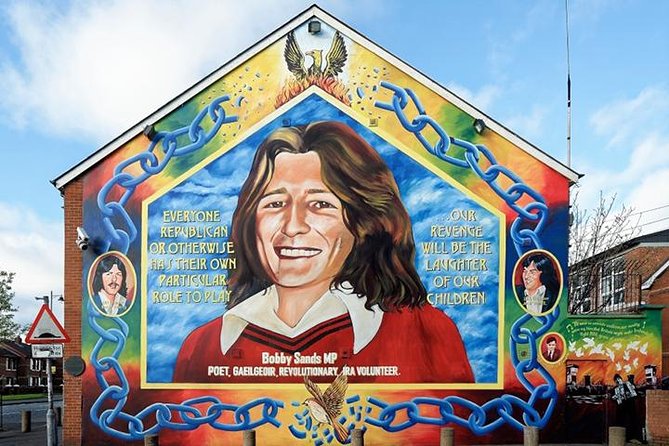
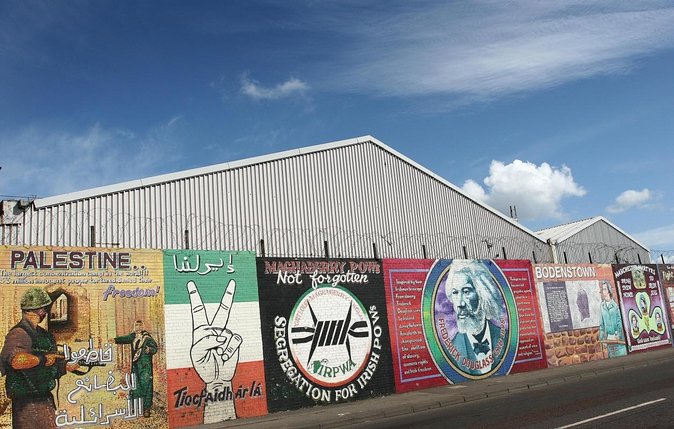
- Major Belfast murals: See the Bobby Sands mural, International Wall, Bombay Street, and Shankill murals.
- Memorials with difficult stories: Stops include the D Company garden, Bayardo bombing site, UVF memorial, Frizzells Fish Shop site, and Somme Memorial.
- Three hours on foot: The route is generally easy but exposed, with little shelter from wind or rain.
- Small-group setting: The maximum group size is 20, so questions are possible, though traffic noise can sometimes make listening difficult.
Why this Belfast political tour feels different
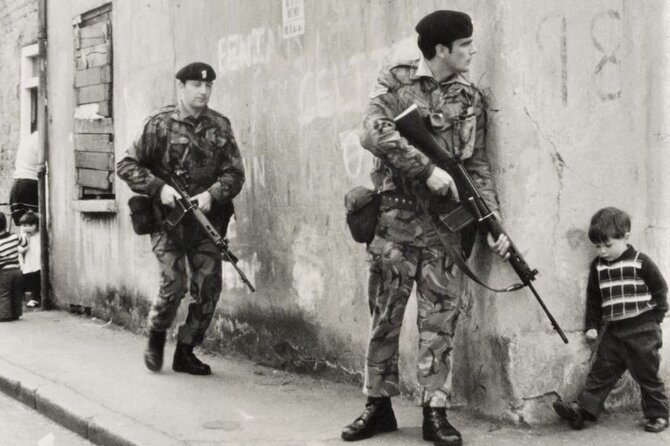
Many Belfast tours show murals from a vehicle or give you a broad overview from one guide. This experience takes a more direct route: it places you on both sides of the dividing line and gives each community its own voice.
You start near Divis Tower in West Belfast. From there, the walk moves through the Falls area before crossing toward Shankill Road. The route ends at Lower Shankill, around an eight-minute walk from the starting point and about 15 minutes from Belfast city centre.
The geography matters. The Falls and Shankill districts sit close together, yet the Peace Wall and its gates still mark a strong social divide. One of the details that may surprise you is that some gates are still locked at night, reportedly around 8 p.m. You are not simply looking at old political art. You are seeing a division that remains part of daily life.
The tour is advertised as a meeting with ex-political prisoners. That gives the conversation a personal edge, but it also means you should arrive ready for strong opinions. The guides explain their own experience rather than presenting a perfectly neutral script. That honesty is a major reason to book, but it requires an open mind.
More Walking Tours in the UK:
- Magical London: Harry Potter Guided Walking Tour
★ 4.7 · 22,044 reviews - Edinburgh: Harry Potter Magical Guided Walking Tour
★ 4.8 · 11,944 reviews - Edinburgh Castle: Guided Walking Tour with Entry Ticket
★ 4.7 · 11,699 reviews
The Falls Road and Bobby Sands mural
The first half lasts about 90 minutes and focuses on the republican side of West Belfast. The Bobby Sands mural is one of the best-known images on the route. Sands was a member of the Provisional IRA who died during the 1981 hunger strike in prison, and his portrait has become an international symbol of the republican cause.
You also visit the International Wall, where murals address Irish nationalism, political prisoners, international struggles, and solidarity movements. The artwork changes over time, but the area remains an important place for understanding how republican identity is expressed in public.
Bombay Street adds a more local, physical sense of the conflict. The street became associated with violence and displacement during the early Troubles. Here, the guide can connect the broad political dispute to the effect on homes, families, and neighborhood boundaries.
The D Company memorial garden adds another layer. Memorials in Belfast are not neutral plaques. They honor particular people and causes, and the wording often reflects the political position of the community that created them. That can be uncomfortable, but it is also the point of seeing them in place instead of reading about them in a museum.
This section has earned especially strong praise for its storytelling. Guides named Jack and Paul have led sessions, though the lineup can vary. You may hear a clear republican interpretation of British rule, civil rights, prison, and armed struggle. Some visitors have found this part more structured and easier to follow than the Shankill section, while others have felt that a guide’s personal views were too forceful.
My advice is simple: listen carefully, separate explanation from agreement, and ask questions when something is unclear. The tour works best when you treat the first half as a firsthand account, not the final word on the conflict.
Crossing the Peace Wall
The transition between the districts is one of the tour’s most memorable moments. The Peace Wall is often treated as a symbol of calm, but it is also a reminder that peace and separation can exist at the same time.
You may see messages written by visitors on the wall. Bring a pen or marker if you want to add one yourself. This small detail gives the stop a more personal feel, but do not mistake visitor messages for reconciliation on the ground. The wall remains a barrier, and the continued use of gates shows how cautious the peace process still is.
The walk itself is not described as hilly. You will make frequent stops, so the pace is moderate rather than athletic. Still, the full route takes three hours, and much of it runs along open streets. Wear sturdy, comfortable shoes and bring water. Layers are sensible even on a sunny day, since wind can make the route feel colder than expected.
Traffic is the main practical nuisance. Some stops are close to busy roads with buses and trucks, and one poor experience included trouble hearing a guide through a badly placed speaker. A small group helps, but you may still need to move closer or ask the guide to repeat a point.
Shankill Road murals and memorial gardens
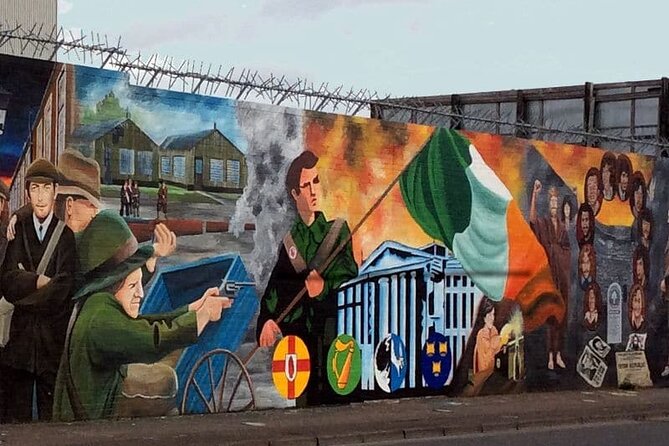
The second 90-minute section takes place along Shankill Road, the main loyalist district on the route. Here the murals often feature British symbols, military references, local paramilitary groups, and memorials to people killed during the Troubles.
The guide explains the loyalist view of the conflict, including the fear of a united Ireland and the desire to remain part of the United Kingdom. You may also hear about childhood friendships across the religious divide, and how those relationships were damaged or ended by violence.
The stops are specific and emotionally heavy. They include the Shankill Memorial Garden, the Bayardo bombing site, a UVF memorial, the former Frizzells Fish Shop bombing site, and the Somme Memorial.
The Bayardo and Frizzells stops bring the cost of violence into sharp focus. Instead of discussing statistics, the guide connects particular locations with people who were killed. The Shankill Memorial Garden provides another concentrated reminder of loss, while the Somme Memorial links local loyalist identity with the First World War and the memory of Protestant military service.
This part can feel less polished than the Falls section depending on who leads it. Some sessions have been led by Ian or Mark, while other guides may be assigned. You might hear a careful account of local loss and a clear commitment to peace. You might also find the explanation more focused on individual incidents than on the larger political timeline.
That difference is worth knowing before you book. The two halves are not designed to match in tone or structure. Their unevenness is part of the risk, but it also reflects the fact that you are hearing two human accounts rather than a single edited narrative.
Same streets, a different guide:
- Underground Vaults Walking Tour in Edinburgh Old Town
★ 4.5 · 8,506 reviews - London: The Original Jack the Ripper Walking Tour
★ 4.7 · 7,833 reviews - Oxford University Walking Tour With University Alumni Guide
★ 5.0 · 6,905 reviews - Edinburgh Castle: Guided Walking Tour with Entry Ticket
★ 5.0 · 5,540 reviews
What the tour explains about the Troubles
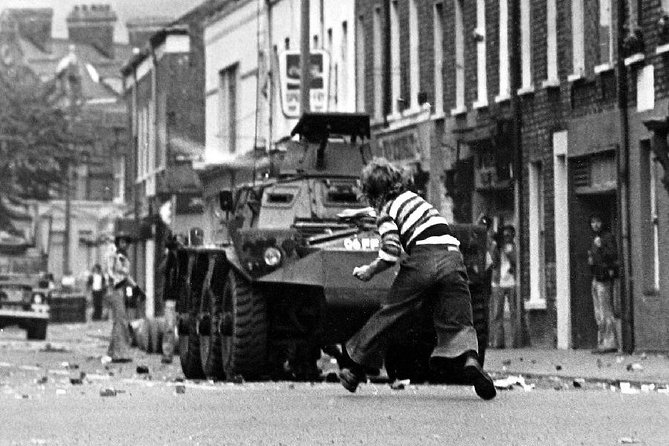
The Troubles were not one simple dispute between Catholics and Protestants. Religion often marked community identity, but the conflict centered on national belonging, civil rights, British rule, Irish unity, policing, discrimination, and the use of violence.
Republicans generally wanted Northern Ireland to leave the United Kingdom and join a united Ireland. Loyalists generally wanted Northern Ireland to remain within the United Kingdom. Both sides included people who used political action, community organizing, and peaceful campaigning, as well as armed groups that carried out killings and bombings.
A good guide can help you connect the murals to this wider picture. You should hear about how segregation, identity, and fear shaped ordinary life, and how memories of violence still influence attitudes today.
The tour does not offer a neat solution. That may frustrate you if you want a clear account of current government plans or a detailed explanation of how the political system might change. It is stronger as a personal and local history walk than as a complete course in modern Northern Irish politics.
The best result is often an uncomfortable one. You may leave understanding why each community sees itself as defensive and the other as threatening. That does not mean both sides were equally responsible for every event, nor does it ask you to excuse violence. It means you are given enough context to see why the arguments continue.
Price, group size, and practical value
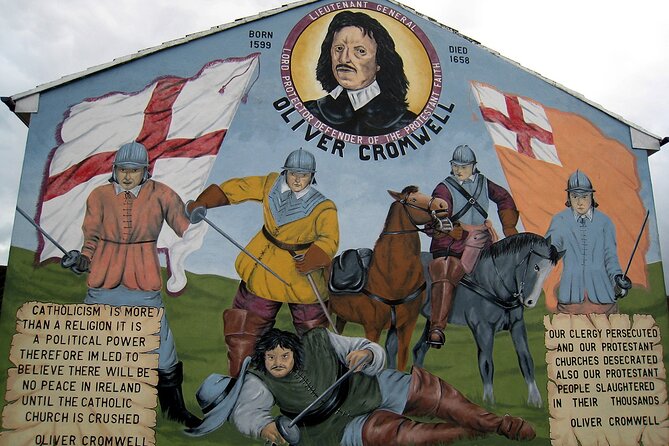
At $36.05 per person, the tour is reasonably priced for three hours with two guides and a route covering both major political districts. You are paying for time, access to personal testimony, and interpretation at sites that can be difficult to understand on your own.
A self-guided walk would cost less, but you would miss much of the background behind the memorials. You could also book a black cab tour, which may cover more ground with less walking. This tour is the better value if you specifically want opposing personal accounts and time to stand at the locations.
The group limit is 20 people. That is small enough for questions, but it is not a private tour. If the guide is speaking beside traffic, move toward the front and say if you cannot hear. A microphone may be used, though equipment does not always solve the problem in a noisy street setting.
The start is at Divis Tower, Belfast BT12 4QA. The walk finishes at 154 Shankill Road, Belfast BT13 2BE. You do not finish in the exact place where you began, but the guide can help with directions or arrange a taxi. The end point is about eight minutes from the start and 15 minutes from the city centre on foot.
The tour is offered in English and uses a mobile ticket. Service animals are allowed, and it is near public transport. Most people can take part, but you should be comfortable walking and standing outdoors for three hours.
Free cancellation is available up to 24 hours before the start time. Changes or cancellations inside that window are not accepted for a refund. Poor weather can also cancel the tour, in which case you should be offered another date or a full refund.
Who should book this walking tour
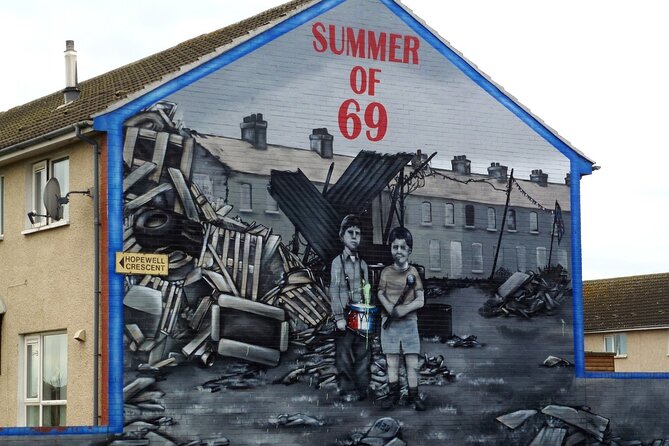
I would choose this tour if you want to understand Belfast through the people and streets most closely tied to the conflict. It suits visitors who are willing to hear views they may dislike and who want more than a quick photo stop at the Peace Wall.
It is also a good choice if you are deciding between a standard city tour and a political tour. The route gives you a strong look at West Belfast, including places you might not reach during a normal centre-city visit.
You should think twice if you dislike emotionally intense stories, prefer a strictly neutral presentation, or have difficulty walking outdoors for several hours. The subject is not softened, and the personal accounts may include murder, bombings, prison, and loss.
Guide quality matters. Names such as Paul, Ian, Jack, and Mark appear in accounts of different sessions, but you should not assume you will meet a particular person. The two-guide structure is the key feature, not any one individual.
Should you book it?
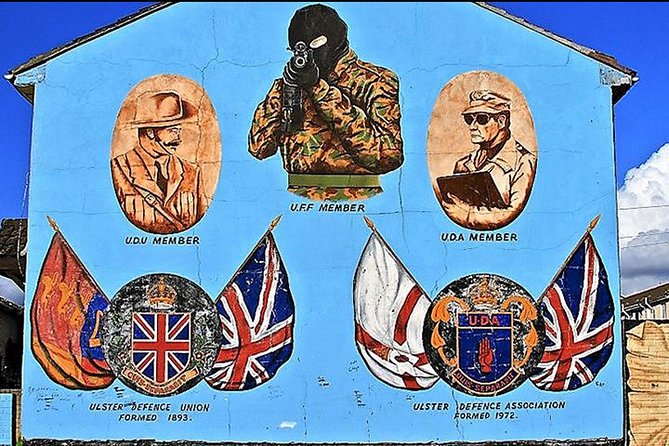
Yes, if you want a serious, place-based introduction to Belfast’s political past and present. The strongest parts are the firsthand stories, the contrast between Falls Road and Shankill Road, and the chance to see memorials in the streets where the events occurred.
Book it with realistic expectations. You will not receive a perfectly even script, a final answer to the conflict, or a comfortable walk sheltered from the weather. You will receive two powerful viewpoints, some uneven delivery, and a clearer sense of why the Peace Wall is still there.
Wear warm layers, choose good shoes, bring water, and keep your questions open. At $36.05, this is good value for anyone who wants to leave Belfast with more than photographs of murals.
FAQ
How long does the Belfast Political Tour last?
The tour lasts approximately three hours, with about 90 minutes in the Falls area and 90 minutes on Shankill Road.
Where does the tour start?
It starts at Divis Tower, Belfast BT12 4QA.
Where does the tour finish?
It finishes at 154 Shankill Road, Belfast BT13 2BE, in Lower Shankill.
How far is the end from Belfast city centre?
The end point is about a 15-minute walk from Belfast city centre.
Does the tour visit both sides of the Peace Wall?
Yes. The route covers the republican area around the Falls Road and the loyalist area around Shankill Road, with stops at many locations along the wall.
Which murals can I see?
The route includes the Bobby Sands mural, the International Wall, murals along Shankill Road, and other political artwork in West Belfast.
Which memorials are included?
Stops include the D Company Memorial Garden, Shankill Memorial Garden, Bayardo bombing site, UVF Memorial, Frizzells Fish Shop bombing site, and Somme Memorial.
Are the guides former political prisoners?
The experience includes meetings with ex-political prisoners who share personal stories. The specific guides can vary by tour date.
Is the tour suitable for people who do not speak English?
The tour is offered in English.
Can I cancel for a refund?
You can cancel for a full refund up to 24 hours before the scheduled start time. If poor weather causes the provider to cancel, you are offered another date or a full refund.
New routes in the UK
- Best of Belfast Walking Tour★ 5.0 · 399 reviews
- The Real Story of Belfast walking tour with a local guide★ 5.0 · 144 reviews
- Belfast Troubles Murals Street Art and Peace Wall Walking Tour★ 5.0 · 163 reviews
- Belfast Centre Food Tour of 12+ Local Irish Dishes & Drinks★ 5.0 · 266 reviews
- BATH: 2-Hour Bath Walking Tour of Bridgerton Filming Locations★ 5.0 · 99 reviews
- Bridgerton Walking Tour of Filming Locations & Storylines – Bath★ 4.5 · 178 reviews
- Bad of Bath fun Walking Tour of Bath★ 5.0 · 402 reviews
- Best of Bath Walking Tours – Georgian Tour★ 5.0 · 449 reviews
Belfast Walking Tours, compared.
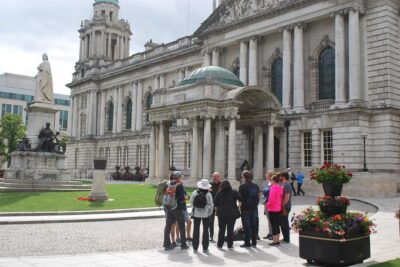
A History of Terror – Belfast City Centre Walking Tour
Read our review →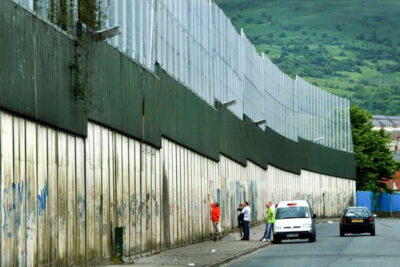
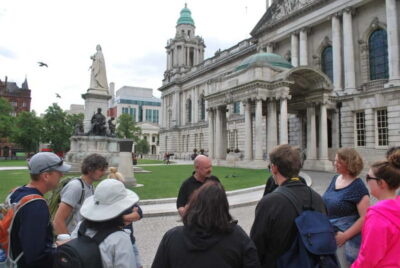
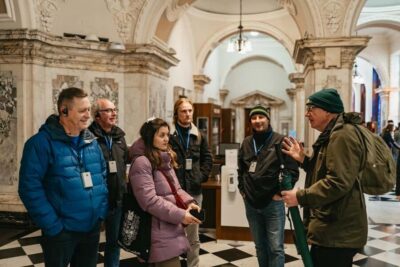
The Troubles Walls & Bridges Guided Walking Tour
Read our review →

Belfast Centre Food Tour of 12+ Local Irish Dishes & Drinks
Read our review →
Belfast Troubles Murals Street Art and Peace Wall Walking Tour
Read our review →
Best of Belfast History, Culture & Art Walking Tour
Read our review →Browse the lists this tour appears in