
Review · GERMANY
Augsburg’s Water Management System – City Walking Tour
Augsburg’s water system is not locked behind museum doors. It runs through the city in canals, fountains, and old waterworks, making this two-hour walk a fine way to see the town with a clear theme. You begin near the Tourist Information Center, cross the Old Town, and finish at the Rotes Tor waterworks.
I like two things here. First, the tour connects ordinary city sights to a bigger story about water, power, and urban life. Second, the Lech quarter gives you cobblestones, red-roofed houses, and narrow canals instead of a parade of grand buildings. The main consideration is that the guide may focus more on dates and historical facts than on engineering details or personal stories.
Key points to know before booking
- The route links several water sites: You see fountains, canals, and waterworks rather than one isolated monument.
- The Augustus fountain is a major stop: The Merkur and Herkules fountains are also part of the walk.
- The Lech quarter changes the pace: Small canals and low red-roofed houses give the tour a quieter, more local feel.
- Rotes Tor holds the strongest finish: You visit the oldest existing waterworks in central Europe.
- The tour is history-led: It explains Augsburg’s water management system, but the emphasis may be less technical than some visitors expect.
- Brigitte Plonner is one named guide: Her enthusiastic, clear approach received especially warm praise, though your guide may be different.
Why Augsburg’s water story matters
Augsburg is easy to see as a handsome Bavarian city of churches, squares, and old streets. This tour gives you another way to read it. Water is not just scenery here. It is the subject that ties together fountains, canals, public works, and the city’s development over time.
The water management system includes 22 elements. You will visit several of them during the walk, not all 22. That is a useful distinction when planning your day. This is an introduction to the system, not a complete inspection of every canal and structure.
I like this format because it turns a normal city stroll into a guided lesson in how a town works. A fountain can look decorative when you pass it alone. With the right explanation, it becomes part of a larger network. A canal beside a house becomes evidence of long-running urban planning rather than simply a pleasant photo stop.
The site’s UNESCO World Heritage status gives the subject added weight, but you do not need to be a specialist to enjoy the tour. The guide explains the facts in the streets where the system still appears. That direct setting is more useful than hearing about Augsburg’s water history inside a classroom.
More Walking Tours in Germany:
- Discover Berlin Half-Day Walking Tour
★ 5.0 · 9,624 reviews - Berlin City walk Government District and Places of Democracy
★ 4.7 · 8,467 reviews - Berlin: Third Reich & Cold War Guided Walking Tour
★ 4.9 · 8,378 reviews
Starting among Augsburg’s Old Town fountains
Meet your guide in front of the Tourist Information Center in the heart of Augsburg. From there, the walking route heads through the Old Town, where the first part of the experience centers on the city’s impressive fountains.
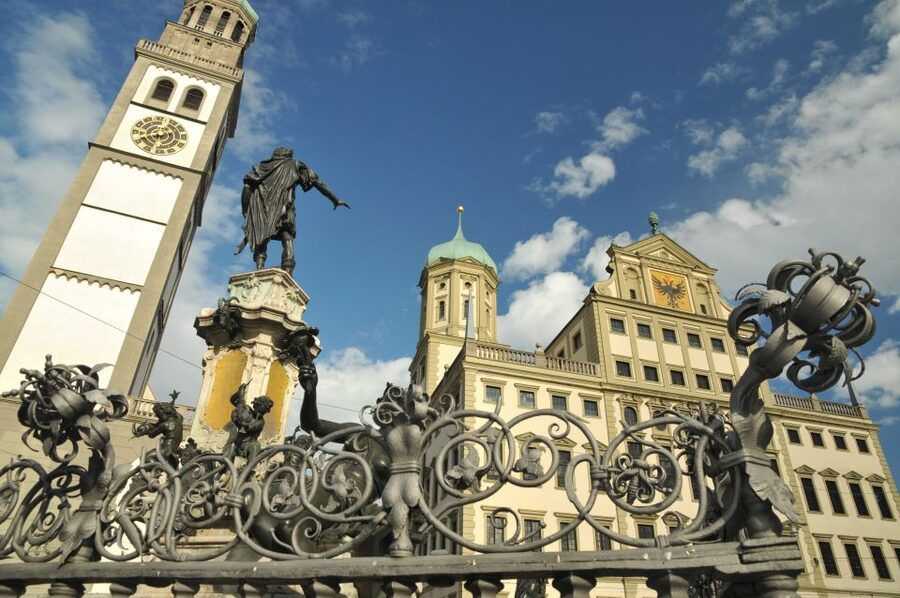
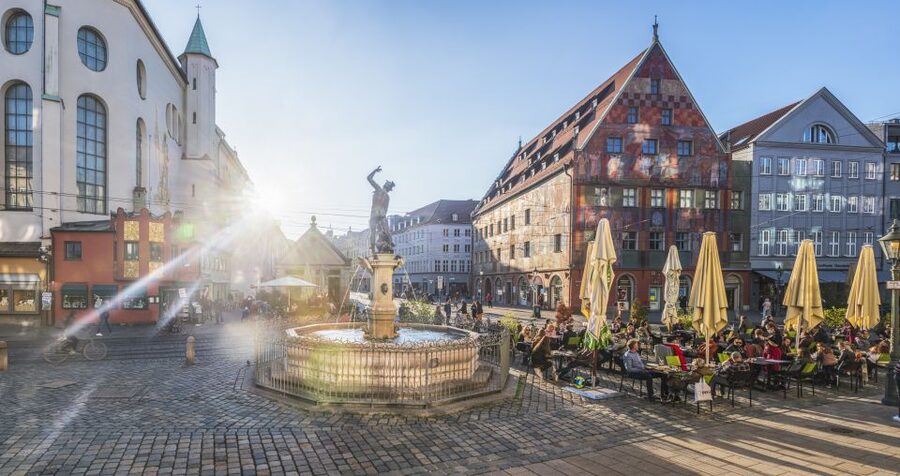
The Augustus fountain is one of the main sights. You also see the Merkur fountain and the Herkules fountain. These are not treated as unrelated works of public art. Your guide places them within the wider story of Augsburg’s water management.
That context is the point. You can admire the sculpture and scale, then understand why fountains mattered to the city. The tour gives you a practical way to connect Augsburg’s visual character with its water infrastructure.
The Old Town section also brings the simple pleasures of a walking tour. You feel the cobblestones under your shoes and move at street level, rather than watching the city pass from a bus window. That means you should wear comfortable shoes, especially if uneven paving is tiring for you.
The route does not include entry tickets to attractions. This matters less here than it would on a museum tour, since the main experience is outdoors and based on the city’s public spaces. Still, do not assume the price covers admission to anything that requires a separate ticket.
The Lech quarter and its small canals
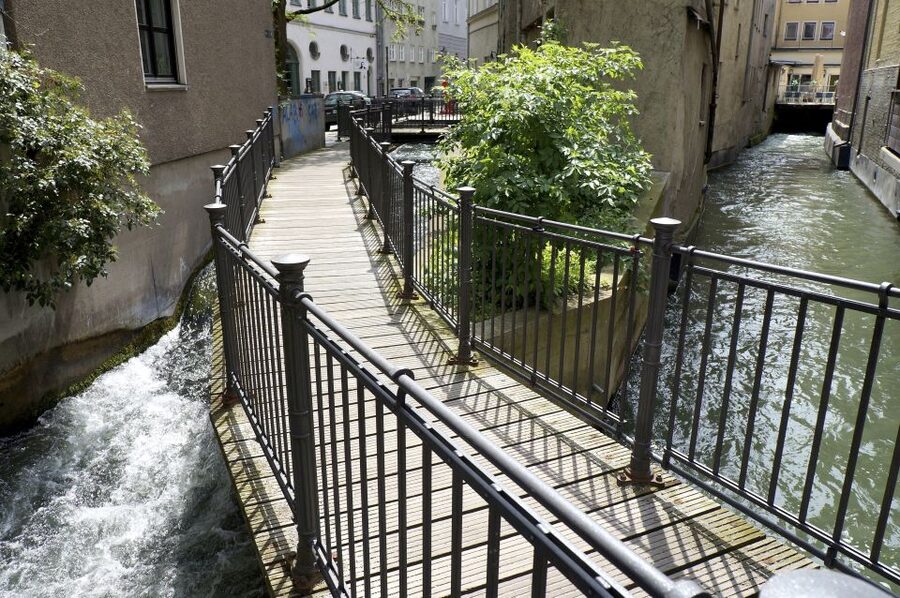
The Lech quarter is likely to be the most atmospheric part of the walk. Here, the city becomes smaller in scale. You follow historic Lech canals past cobblestone streets and red-roofed houses.
I like this section because it shows the water system in a lived-in setting. The canals are not only grand civic features. They run through a quarter where homes, streets, and water sit close together. That makes the subject easier to picture.
The setting also offers a welcome change from the larger fountains. After the broad civic spaces of the Old Town, the Lech quarter gives you narrow views and quieter details. Pay attention to how the canals shape the streets and the feel of the neighborhood. The tour is at its best when the guide helps you notice those links.
The route is described as wheelchair accessible, but cobblestones can still affect comfort and pace. Accessibility does not always mean every surface feels equally easy. If you use a wheelchair, contact the provider if you need more detail about the exact route and paving conditions.
Your guide may also make a difference here. Brigitte Plonner received especially strong praise for explaining Augsburg’s water system in a lively and easy-to-follow way. One small group nearly missed its tour because only a few people had booked, yet she still led the walk with real enthusiasm. That suggests a personal approach when she is your guide, but guide assignments can change.
Rotes Tor and the oldest waterworks
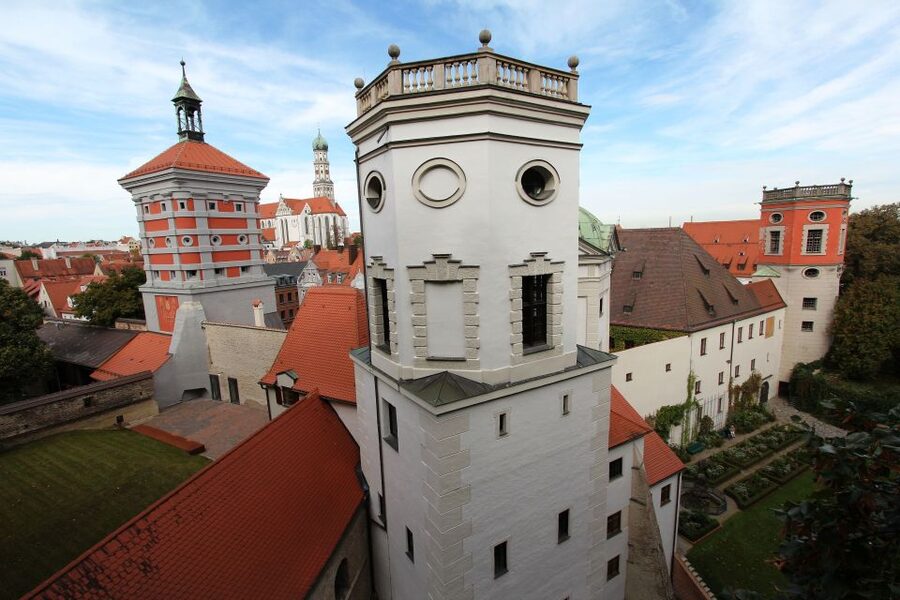
The route ends at the imposing Rotes Tor, where you discover the oldest existing waterworks in central Europe. This is the tour’s clearest payoff for anyone booking specifically to understand the water system.
The Rotes Tor stop gives the walk a sense of arrival. Earlier, you have seen fountains and open canals. Here, the subject comes together at a major waterworks site. You can better understand that Augsburg’s system was not just decorative or incidental. It required purpose-built infrastructure.
The supplied tour information does not promise an interior visit or a detailed technical demonstration. Entry tickets are not included, so you should treat this as a guided look at the waterworks rather than a guaranteed museum admission. Ask your guide what can be visited on your date if seeing the interior is important to you.
This distinction also helps set expectations. Some people want a clear account of how the machinery worked. The tour’s emphasis is more on the history of Augsburg’s water supply than on technical mechanics. One useful comment about the experience pointed out that the historical story receives more attention than the technology itself.
For many people, that will be enough. You get the broad story, the main sites, and the reason the system matters. If you are an engineer, architecture student, or serious waterworks enthusiast, you may want a more technical experience afterward.
Same streets, a different guide:
- Munich: Third Reich & WWII Walking Tour
★ 4.6 · 6,181 reviews - Berlin: Discover Berlin Walking Tour
★ 4.9 · 5,998 reviews - Berlin’s Best: 2 Hour Walking Tour Third Reich and the Cold War
★ 5.0 · 5,486 reviews - Berlin: Hidden Backyards Guided Walking Tour
★ 4.8 · 5,360 reviews
What the two-hour pace feels like
Two hours is a sensible length for this route. It gives you time to walk between the main sights without turning the subject into an all-day commitment. You still have room in your schedule for Augsburg’s other attractions, lunch, or an independent stroll.
The exact starting time depends on availability, so check before booking. The meeting point at the Tourist Information Center is central and straightforward, which helps if you are fitting the tour into a day of sightseeing.
Expect a walking tour rather than a stop-and-start attraction circuit. You will be outside for the full route, so bring weather-appropriate clothing. Rain can affect the mood, and one recent tour took place in wet weather. The guide cannot control that, but the experience may feel less engaging if you are cold or distracted by rain.
Comfortable shoes are the most important practical item. Cobblestones are part of the charm, but they are also part of the physical demand. The walk is wheelchair accessible, yet any visitor who finds uneven streets difficult should plan conservatively.
The optional elysium sound amplification system may help if you want to hear the guide clearly in outdoor spaces. It is free to use. You need your own smartphone, an internet connection, and headphones. This is a useful extra, but it is not a separate audio tour. The guide still leads the walk live in German or English.
The guide’s style and the balance of facts
The guide is central to the quality of this experience. The strongest example in the available feedback is Brigitte Plonner, who explained Augsburg’s water management with enthusiasm and encouraged an exchange with the small group. That sort of guide can make a subject filled with dates and infrastructure feel human.
You should also know that not every guide will use the same style. The tour is built around facts, history, and the UNESCO site. A recent account found the presentation very informative but too focused on historical dates and facts, with few personal stories or anecdotes.
I see that as a preference issue rather than a simple flaw. If you want a firm overview of Augsburg’s water history, the factual approach should suit you. If you prefer colorful characters, local legends, or plenty of jokes, you may find the walk more serious.
The title of the tour may also lead you to expect a technical explanation. The content is better understood as cultural and urban history with water at its center. You will learn how the system fits into Augsburg’s past, but you may not receive a detailed explanation of every machine, channel, or engineering method.
Is $20 a fair price?

The advertised cost is $20 per person. The detailed fare is listed as €14 plus a €3 administration fee, so check the final amount and currency when you book. That difference is worth noting because the base fare and the displayed total are not presented in exactly the same way.
For the price, you receive a two-hour guided walk, live commentary in German or English, and the optional sound amplification system. You do not pay for food, drinks, or entry tickets.
I consider the value strongest if you want a guide to connect several public sights. You are not simply paying to walk past three fountains. You are paying for the thread that links those fountains to the canals, the Lech quarter, Rotes Tor, and Augsburg’s UNESCO designation.
The value is weaker if you only want to see the fountains quickly or if you expect a hands-on technical tour. You could view some public elements independently, but you would lose the explanation that makes them part of one system. The decision comes down to how much context you want.
A small group can make this kind of tour especially pleasant. Brigitte Plonner once led a group of only three people, and the intimate size allowed plenty of exchange. Group size is not guaranteed, so do not book expecting a private tour, but a modest group can give the guide more room to answer questions.
Who should take this walking tour?
I would choose this tour if you want to see Augsburg through one strong theme. It suits first-time visitors who prefer a guided introduction to the Old Town, as well as repeat visitors looking for a different angle on familiar streets.
It is also a good fit for anyone interested in urban planning, public works, fountains, canals, or UNESCO sites. Families with older children may appreciate the simple question at the heart of the walk: how does a city use and control water?
The tour may be less suitable if you dislike outdoor walking, uneven paving, or fact-heavy commentary. It is also not the best match for someone who wants a long interior visit at Rotes Tor or a detailed lesson in hydraulic technology.
You can make the most of it by reading the route as you go. At each stop, ask how the feature relates to the wider system. At the fountains, ask about their public role. In the Lech quarter, notice how the canals sit beside homes. At Rotes Tor, ask which parts of the waterworks can be seen and how much technical detail the guide can provide.
Should you book Augsburg’s water management tour?
Book it if you want a focused, two-hour introduction to Augsburg’s UNESCO water system and enjoy learning as you walk. The fountains, Lech canals, red-roofed houses, and Rotes Tor create a varied route, while the central meeting point keeps the logistics simple.
Go in expecting history more than engineering. The strongest guiding may come from someone such as Brigitte Plonner, whose enthusiasm can turn the facts into a lively conversation, but the style may be more formal with another guide.
For most visitors, the tour offers good value because it shows how separate-looking parts of Augsburg belong to one story. Bring good shoes, dress for the weather, and use the free sound system if hearing the guide outdoors is a concern. If that sounds like your kind of city sightseeing, this is a smart way to spend two hours.
FAQ
How long does Augsburg’s water management walking tour last?
The tour lasts two hours.
What does the tour cost?
The advertised price is $20 per person. The detailed fare is listed as €14 plus a €3 administration fee, so check the final price when booking.
Where does the tour meet?
Meet your guide in front of the Tourist Information Center.
Which languages are available?
The live tour guide speaks German or English.
What sights are included on the route?
The walk includes parts of Augsburg’s Old Town, the Lech quarter and its canals, several fountains, and the waterworks at Rotes Tor.
Which fountains will I see?
The route includes the Augustus fountain, Merkur fountain, and Herkules fountain.
What is special about the Rotes Tor waterworks?
The Rotes Tor waterworks are described as the oldest existing waterworks in central Europe.
Is the tour wheelchair accessible?
Yes, the tour is listed as wheelchair accessible. Comfortable planning is still sensible because parts of the route use cobblestone streets.
Can I use an audio amplification system?
Yes. The free elysium system is optional. You need your own smartphone with an internet connection and headphones.
Are entry tickets, food, or drinks included?
No. Entry tickets to attractions, food, and drinks are not included.
New routes in Germany
- Munich: Walking Tour Old Town and Viktualienmarkt★ 4.7 · 839 reviews
- Stuttgart: Guided Ghost Walking Tour★ 4.5 · 867 reviews
- Stuttgart: Private Guided Circular City Walk★ 4.7 · 129 reviews
- Stuttgart: Old Town Highlights Guided Walking Tour★ 4.2 · 101 reviews
- Stuttgart: City Highlights – Guided Walking Tour★ 4.7 · 189 reviews
- Hamburg: Private Tour Red Light District Walking Tour★ 4.7 · 227 reviews
- Small Group Walking Tour: “Wild Kreuzberg”★ 4.8 · 199 reviews
- Sachsenhausen Memorial: Walking Tour from Berlin★ 4.7 · 132 reviews
Germany Walking Tours, compared.
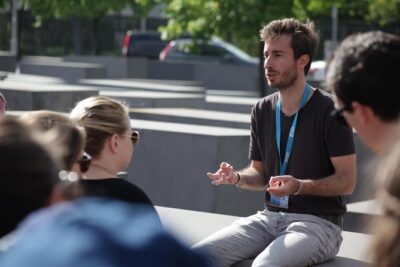

Berlin City walk Government District and Places of Democracy
Read our review →
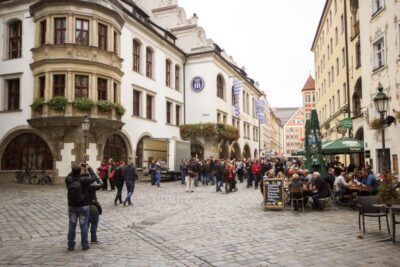
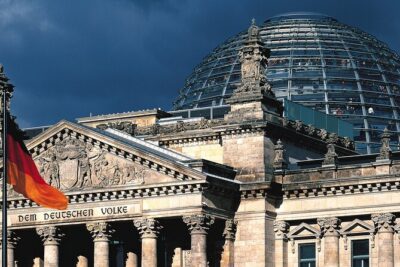
Berlin’s Best: 2 Hour Walking Tour Third Reich and the Cold War
Read our review →
Explore Berlin: See All The Iconic Sights & Some Hidden Gems
Read our review →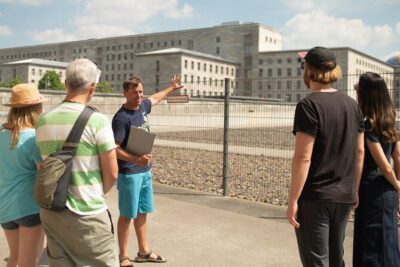
Third Reich Berlin: Hitler and WWII Walking Tour
Read our review →
Browse the lists this tour appears in