
Review · VERONA
Verona: History and Hidden Gems Guided Walking Tour
Verona is easy to admire and surprisingly easy to misunderstand. You can photograph the Arena, pat Juliet’s bronze statue, and stroll through Piazza delle Erbe without noticing how Roman streets, medieval power, old religious buildings, and modern city life all overlap. This tour is built around those overlooked details, with local guide Fabio Massimo Rapanà explaining the city as a connected story rather than a string of monuments.
I especially like two things here: the small groups, capped at 10 people, and the use of headsets. The headsets matter in noisy squares and let you keep looking at the buildings instead of clustering around a guide. I also like the route’s balance between major sights and quiet corners, from the Arena and Ponte Scaligero to old lanes most people would simply walk past.
The main consideration is pace. Two hours covers a lot of ground and includes many brief stops, so this is best for people who enjoy walking and listening rather than lingering inside museums. Entry tickets, food, drinks, and transport are not included, and most sights are viewed from outside.
Key points to know before booking
- A local guide with a personal connection: Fabio was born and raised in Verona and leads the walk with local knowledge, historical context, humor, and practical recommendations.
- A compact but wide-ranging route: In two hours, you move from Piazza Bra and the Roman Arena through medieval squares, riverfront views, old churches, and Juliet-related sights.
- Small groups make a real difference: With no more than 10 participants, questions are easier and the group can pause in narrow streets without becoming a parade.
- Headsets keep the storytelling clear: You can hear the guide in crowded areas and stay focused on the architecture around you.
- A useful first activity in Verona: The walk gives you a working map of the historic center and helps you decide which sights deserve a longer return visit.
- Good in hot or unsettled weather: The tour runs rain or shine, and you should bring water and comfortable shoes.
Starting beneath the Italian flag in Piazza Bra
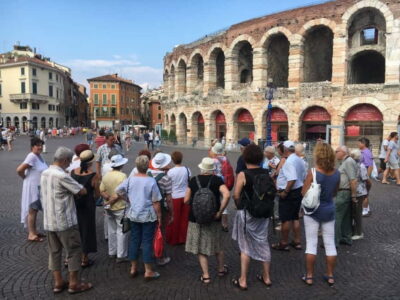
Meet Fabio beneath the Italian flag at Verona’s Town Hall, Palazzo Barbieri, in Piazza Bra. This is a practical meeting point because the square is one of the city’s main arrival areas and the Arena is immediately nearby.
Piazza Bra gives Fabio a natural opening chapter. The wide space frames the Arena and introduces Verona’s role as a Roman city, a medieval center, and a modern place where daily life continues around ancient walls. You get a short visit here before moving toward the amphitheater.
The Arena is the obvious star, but the useful part is the explanation of what you are seeing. Fabio discusses the gladiatorial contests once held here and points out the building’s Roman design. The stop lasts about 10 minutes, long enough for photographs and orientation but not long enough for an interior visit.
That distinction matters. If entering the Arena is high on your list, you will need a separate ticket and additional time. This walking tour gives you context, not an admission visit.
More Hidden Gems Walking Tours in Italy:
- Rome: Paranormal Night Walking Tour & Secret Backstreets
★ 4.9 · 1,921 reviews - Rome Walking Tour: Pantheon, Trevi, Navona & Hidden Gems
★ 4.8 · 501 reviews - Florence: Private Walking Tour of Florence’s Hidden Gems
★ 4.6 · 297 reviews
Roman Verona along the Corso
From Piazza Bra, the route follows traces of Verona’s early medieval walls toward the Corso, described as one of the city’s oldest streets. The walk then reaches Porta Borsari, a Roman-era gateway also known as Porta Jovia.
Porta Borsari is a good example of the tour’s approach. You do not just see a handsome stone façade. You learn to read it as part of the old city boundary and as evidence of how Roman Verona was organized. The stop is brief, around five minutes, so pay attention when Fabio points out architectural details.
This portion is especially useful if you are new to Verona’s layout. Main streets here are not random shopping routes. They often follow older Roman lines, and the transition from gateway to street helps you picture the city as it once worked.
You also pass several small stops that are not fully identified in advance. That is part of the appeal, but it means the route is not simply a checklist of famous attractions. Fabio uses these moments to point out details you might otherwise miss, including architectural features and traces of earlier city life.
The Adige, Castelvecchio, and Ponte Scaligero
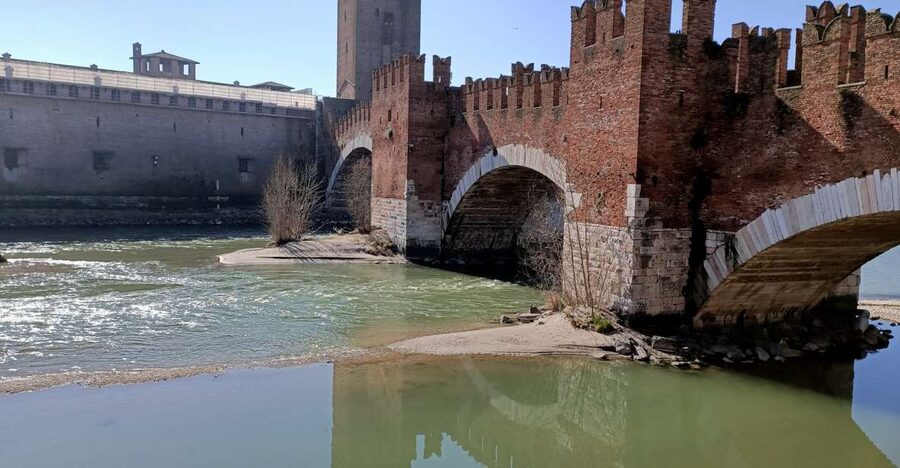
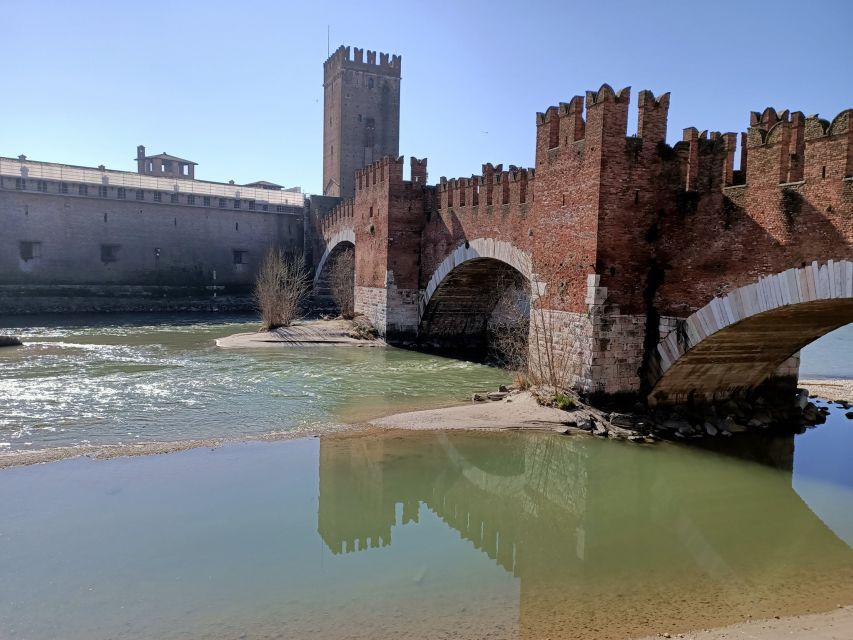
At Riva San Lorenzo, the walk opens toward the Adige River. The river is one of the best ways to understand Verona’s shape, and the views toward Castelvecchio and Ponte Scaligero give the tour a welcome change from tight streets and crowded squares.
Ponte Scaligero is tied to Castelvecchio, the medieval fortress built by the ruling della Scala family. From the river area, you get a strong visual sense of the defensive side of Verona. The bridge’s brickwork and battlements are far more than a pretty background for photographs.
This is one of the places where the headset helps. Riverfront areas can be open and noisy, and you can stand where the view is best without losing Fabio’s explanation. The itinerary includes scenic stops here, but it does not include entry into Castelvecchio.
Piazza delle Erbe and the city market
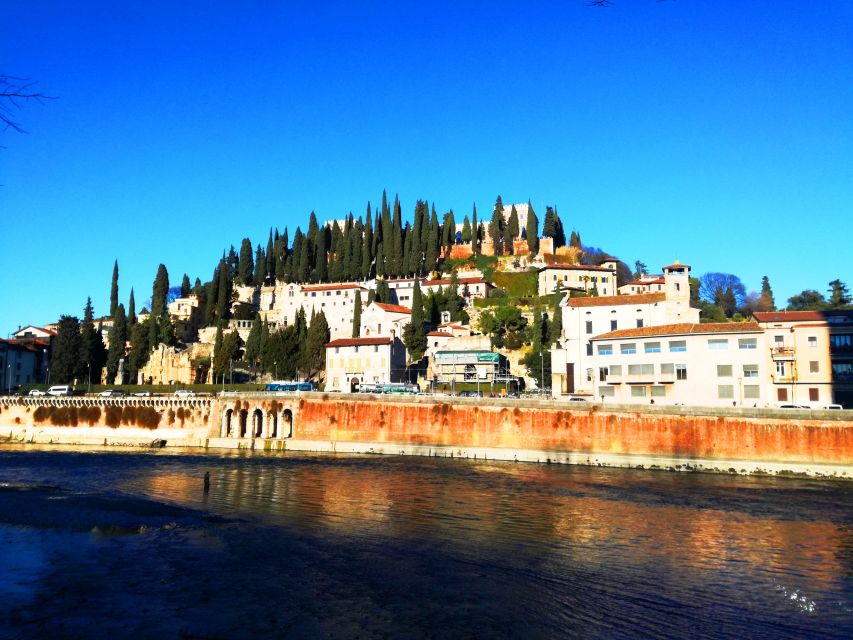
Piazza delle Erbe is one of Verona’s essential squares, and the tour spends about 10 minutes here. You see the old market area, historic townhouses, the city’s oldest fountain, and a collection of façades that reward a slower look.
The square can feel busy, but Fabio’s comments give you a way to sort the layers. Look above the stalls and shopfronts at the painted façades and public buildings. The market is not just decoration for a postcard. It reflects the square’s long role as a commercial and civic center.
I like this stop because it turns a familiar sightseeing scene into an exercise in observation. You may find yourself noticing a coat of arms, a worn column, or a medieval feature that would be invisible without guidance.
The drawback is that Piazza delle Erbe is one of the more crowded portions of the walk. You will have less space to stand together, and the short stop can feel quick if you want extensive photographs. You can always return later, now knowing what to look for.
More History Walking Tours in Italy:
- Venice: City Center Historical Guided Walking Tour
★ 4.2 · 1,873 reviews - Palermo: Street Food and History Walking Tour
★ 4.9 · 1,486 reviews - Rome Food Tour in the Historic Centre with 8+ Food Tastings
★ 5.0 · 1,000 reviews - Rome: Forbidden History Walking Tour & Pub Crawl with Drinks
★ 4.9 · 688 reviews
Piazza dei Signori and the Scaliger power center
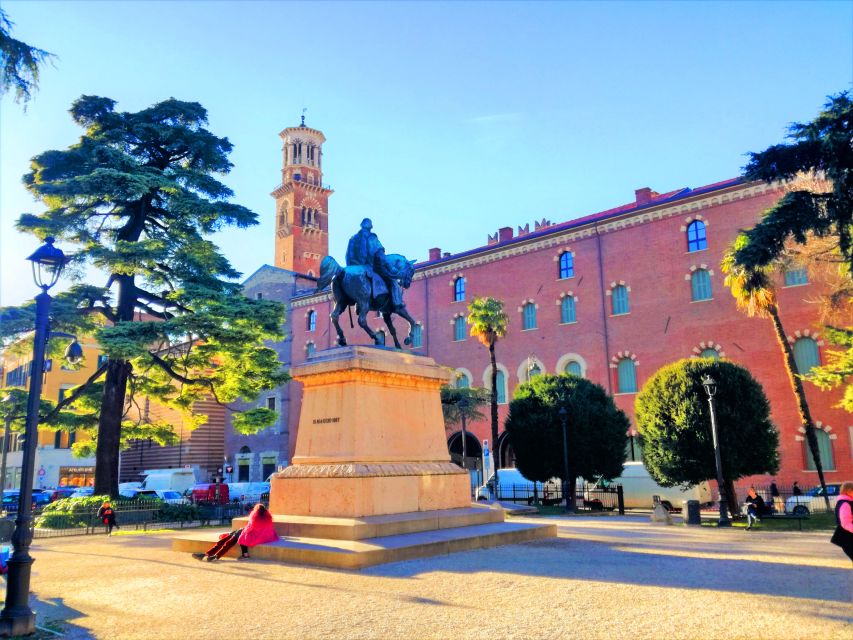
A short walk leads to Piazza dei Signori, a more formal square surrounded by buildings connected with Verona’s medieval government and ruling families. The route takes in Palazzo della Ragione, Palazzo della Scala, and Palazzo del Capitano.
Here Fabio explains the political side of Verona’s medieval past. The square feels different from Piazza delle Erbe because its buildings speak more directly to administration, authority, and the della Scala dynasty. You also see Verona’s highest tower, another useful landmark for understanding the old city’s hierarchy.
This is a good section for anyone interested in architecture. The tour does not treat façades as isolated objects. It explains how public buildings, towers, courtyards, and open squares worked together. That context is what lets you make sense of later stops, including the Scaliger tombs.
Basilica di Santa Anastasia and the quieter lanes
The walk continues past Basilica di Santa Anastasia and through smaller spaces such as Piazzetta Monte and Piazzetta Bra Molinari. Some stops last only two or five minutes, and several are photo stops rather than formal visits.
That sounds modest on paper, but it is exactly where the route earns its title. Verona’s character often appears in a side lane, a church entrance, a courtyard, or a building that does not make every guidebook’s front page. Fabio draws attention to these places and explains why they matter.
Santa Anastasia adds another architectural layer. Even without entering, the church helps show how religious buildings shaped the medieval city. If you want to see the interior, check opening arrangements separately and plan another visit.
The route also passes the Convent of Saint Mary della Scala of the Servants of Mary and other lesser-known sites. These brief glimpses are not substitutes for full visits, but they give you a strong list of places to investigate later.
The Scaliger tombs and Romeo’s house
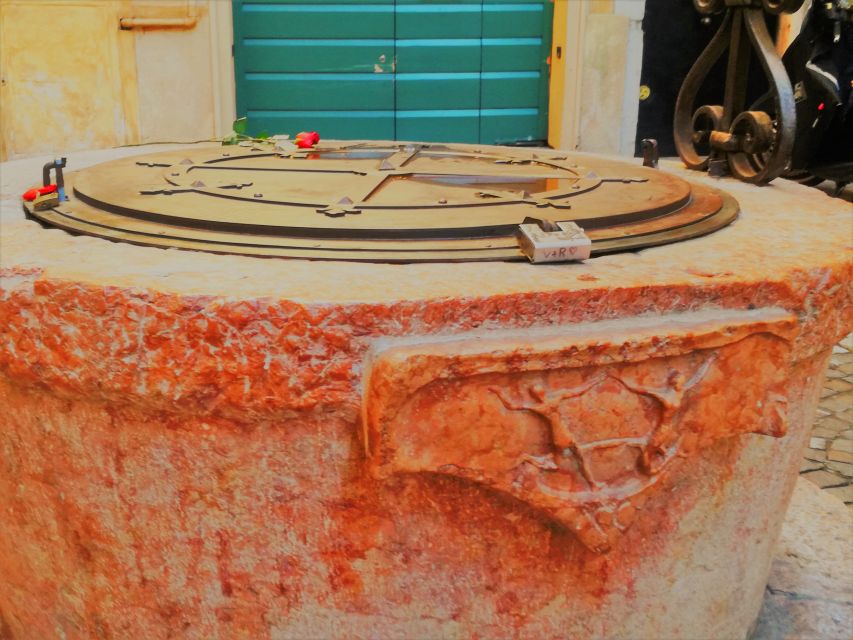
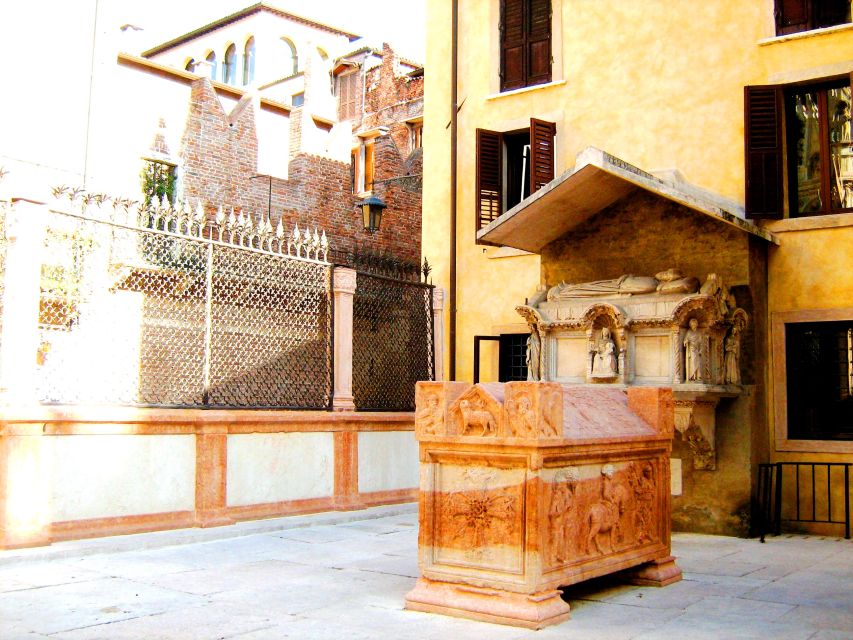
The Arche Scaligere are among Verona’s most dramatic outdoor monuments. These ornate Gothic tombs honor members of the della Scala family and sit close to Piazza dei Signori, making them an effective visual reminder of the power discussed earlier.
Fabio uses the tombs to connect architecture with politics and memory. You are not just looking at elaborate stonework. You are seeing how a ruling family presented itself in public, even after death.
Nearby, you pass Casa di Romeo. The stop is mainly for photographs, and the building should be understood as part of Verona’s Shakespeare connection rather than as a confirmed home of the historical Romeo. The tour is strongest when it separates literary tradition from the city’s documented past.
This is a useful moment for families and younger visitors because the Romeo and Juliet story gives an easy doorway into the harder questions of history, legend, and tourism. Fabio also brings the subject back to Verona itself, rather than allowing the Shakespeare connection to swallow the whole city.
Juliet’s House without letting it define Verona
Juliet’s House is included near the end of the route. You pass through the courtyard area and see the famous balcony, but this is not an admission visit or a long stop. The tour provides historical background about the inspiration for Shakespeare’s tragedy.
That approach is sensible. Juliet’s balcony is one of Verona’s most crowded sights, and it can dominate a first visit. Seeing it during a broader city walk lets you check off the famous scene while keeping the focus on Verona’s Roman and medieval identity.
You may want to return later if you hope to spend time inside or explore the site at a slower pace. The tour’s purpose is to place Juliet’s House in context, not to treat it as the city’s main attraction.
A final circuit through old courtyards and religious history
The return route includes Piazza Indipendenza, the Courtyard of the Old Market, the Verona Synagogue, the convent area, Via Dietro Anfiteatro, and several short photo stops. This final circuit gives the walk a broader social and architectural range.
The Courtyard of the Old Market is particularly useful because it shows how Verona’s public spaces were adapted over time. The synagogue adds another layer to the city’s cultural story, while Via Dietro Anfiteatro brings you back toward the Arena and the starting point.
You should expect some of these stops to be quick. The route includes 32 listed points, but not all are full visits. Several are pass-by views or two-minute photographs. That is why the tour works best as an orientation walk rather than a detailed inspection of every building.
The tour finishes back near Palazzo Barbieri. From there, you can return to the Arena, continue toward Juliet’s House, explore the market area, or follow one of Fabio’s recommendations for food and further sightseeing.
What Fabio adds to the experience
Fabio’s greatest strength is his ability to connect facts to physical places. He explains how architecture, geography, politics, religion, and local stories fit together, then gives you time to look at the evidence around you.
His presentation also appears well suited to a mixed group. He has been praised for remembering people’s names and home countries, answering questions patiently, and keeping younger participants involved. Families should find the balance of stories, buildings, and short stops easier than a lecture-heavy museum visit.
The headsets deserve special credit. You receive an earpiece, and Fabio speaks through a microphone, so people with some hearing loss can follow more easily. You are also less likely to miss a sentence while standing at the edge of a crowded square.
Communication before the tour is another practical plus. Fabio has been described as responsive before meeting the group, which can be reassuring if you are arriving from another city or need help finding the meeting point.
Price, timing, and who gets the best value
At $41 per person, the tour is not the cheapest way to walk around Verona, but the price is fair for a two-hour guided experience with a licensed local guide, a group limited to 10, and headsets included. Large groups often cost less, but you may spend much of the time trying to hear or keep up.
The value is highest if this is your first visit, your time is limited, or you want historical context before exploring on your own. Several people have used the walk as a first activity and then returned to places Fabio introduced them to.
The tour is also a good fit for architecture fans, history enthusiasts, couples interested in the Romeo and Juliet story, and families with older children. It may be less suitable if you want long interior visits, plenty of free time for photos, or a gentle stroll with very few stops.
Bring comfortable shoes and water. The tour operates rain or shine, and summer heat can make a two-hour walk tiring, although Fabio has been attentive about finding shade and allowing breaks. Verona is wheelchair accessible according to the activity details, but you should still confirm the exact route conditions when booking if you have specific mobility needs.
You can choose English, German, Italian, or Spanish. Private options and small-group formats are available, and cancellation is free up to 24 hours before the tour. Reserve now and pay later is also offered, which helps if your Verona plans are still shifting.
Should you book the Verona history and hidden corners walk?
Book it if you want to understand Verona rather than simply photograph it. The route gives you the big sights, but its real value is the connection between Roman gateways, medieval government, river defenses, churches, family tombs, and literary legend.
I would take this tour early in a Verona stay. You will leave with a better sense of direction and a useful list of places to revisit. Just remember that it is a brisk outdoor overview, not a series of museum admissions.
If Fabio is leading your departure, expect a guide who brings strong local knowledge, enthusiasm, and plenty of detail. At $41, the small group and clear audio make this a sensible choice for a first look at Verona, especially if you want the city’s quieter corners to matter as much as Juliet’s balcony.
FAQ
Where does the Verona walking tour meet?
Meet the guide beneath the Italian flag at Palazzo Barbieri, the Town Hall in Piazza Bra.
How long does the tour last?
The walking tour lasts two hours.
What sights are included?
The route includes Piazza Bra, the Verona Arena, Porta Borsari, views of Castelvecchio and Ponte Scaligero, Piazza delle Erbe, Piazza dei Signori, Basilica di Santa Anastasia, the Arche Scaligere, Romeo’s House, Juliet’s House, and several smaller streets and courtyards.
Is entry to the Arena or other attractions included?
No. The tour includes guided visits and exterior views, but attraction entry tickets are not included.
What languages are available?
The tour is available in English, German, Italian, and Spanish.
What should I bring?
Bring comfortable shoes and water. The tour takes place rain or shine, so you should also dress for the forecast.
New routes in Italy
- Private St. Francis Basilica of Assisi and City Walking Tour★ 5.0 · 114 reviews
- Assisi Private Walking Tour including St. Francis Basilica★ 5.0 · 124 reviews
- Milan: City Highlights Walking Tour with The Last Supper★ 4.9 · 195 reviews
- Florence: Heart of Florence Guided Walking Tour★ 4.0 · 81 reviews
- Milan: Private or Shared Essential Walking Tour★ 4.7 · 84 reviews
- Taormina: Shared or Private Food & Wine Walking Tour★ 4.6 · 167 reviews
- Syracuse: Ortigia Private Walking Tour★ 4.8 · 181 reviews
- Syracuse: Ortigia Classic Walking Tour★ 4.7 · 167 reviews
Verona Walking Tours, compared.
Small Group Guided Walking Tour with Arena Tickets
Read our review →
Discover Verona: City Highlights Guided Walking Tour
Read our review →
Browse the lists this tour appears in