
Review · ITALY
Syracuse: Ortigia Classic Walking Tour
The most striking feature of this Syracuse walking tour is the way ancient Greek, Christian, Jewish, and modern Sicilian life sit side by side in a very small area. You begin beside the Temple of Apollo, pass through Ortigia’s narrow lanes, and reach the grand Cathedral square and the papyrus-fringed Aretusa Spring in just two hours.
I like the clear route and the strong local storytelling, especially the explanations of St. Lucy’s feast and its famous procession. I also like the small-group feel, with groups usually around 10 people and never more than 25. The main drawback is that Ortigia can be crowded, noisy, and awkward to navigate when several tours, school groups, and cars converge in its tight streets.
Key points to know before you book
- Greek beginnings: Start at the Temple of Apollo, one of the earliest large stone Greek temples in the western colonies.
- A cathedral built over a temple: Piazza Duomo reveals how Syracuse changed from Greek city to Christian center.
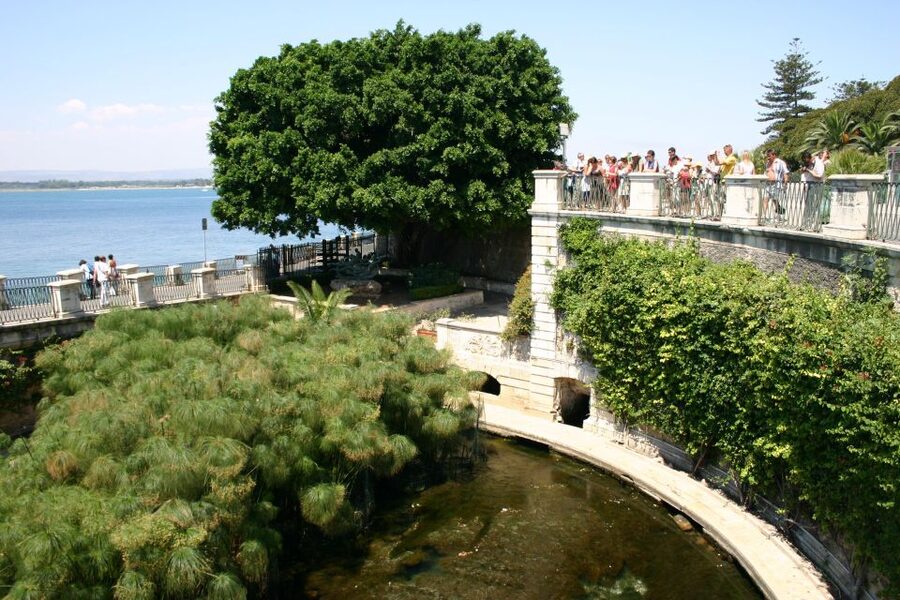
- Myth beside the sea: Aretusa Spring combines local legend, papyrus plants, and one of Ortigia’s best-known views.
- Usually a small group: Groups commonly number about 10, with a maximum of 25 people.
- Strong guiding: Eva is often singled out for her clear explanations, good pace, kindness, and practical suggestions.
- Bring sensible shoes: This is a full walking route through narrow streets and along the seafront, rain or shine.
Why this two-hour Ortigia walk works well
Ortigia is compact, but it is not simple. A casual wander can show you handsome stone buildings and sea views, yet leave you wondering what came first and why the streets look the way they do. This tour gives you a useful framework without taking up half your day.
At $22 per person, the price is reasonable for a live, two-hour introduction to Syracuse. You are paying mainly for the guide’s interpretation rather than for entry to a major monument. That matters here because the most rewarding part of Ortigia is often the connection between places: a Greek temple under a street, a church occupying an ancient structure, or a feast that still shapes local life.
The route is shared, but the group size keeps it from feeling like a large procession most of the time. The usual group is around 10 people, while the stated limit is 25. If the group is larger, free headsets help you hear the guide without crowding around or asking her to raise her voice.
The tour is offered in English or Italian. In a very small group, explanations may be given in both languages, so ask about this when you meet. Guides such as Eva are praised for fluent English, clear answers, and a relaxed pace that leaves time for photographs.
More Walking Tours in Italy:
- Venice: Doge’s Palace and St Mark’s Basilica Walking Tour
★ 4.4 · 6,291 reviews - Milan: Guided Walking Tour & Last Supper Visit with Ticket
★ 4.7 · 5,409 reviews - Naples: Street Food Walking Tour with Local Guide
★ 4.9 · 4,976 reviews
Starting at the Temple of Apollo
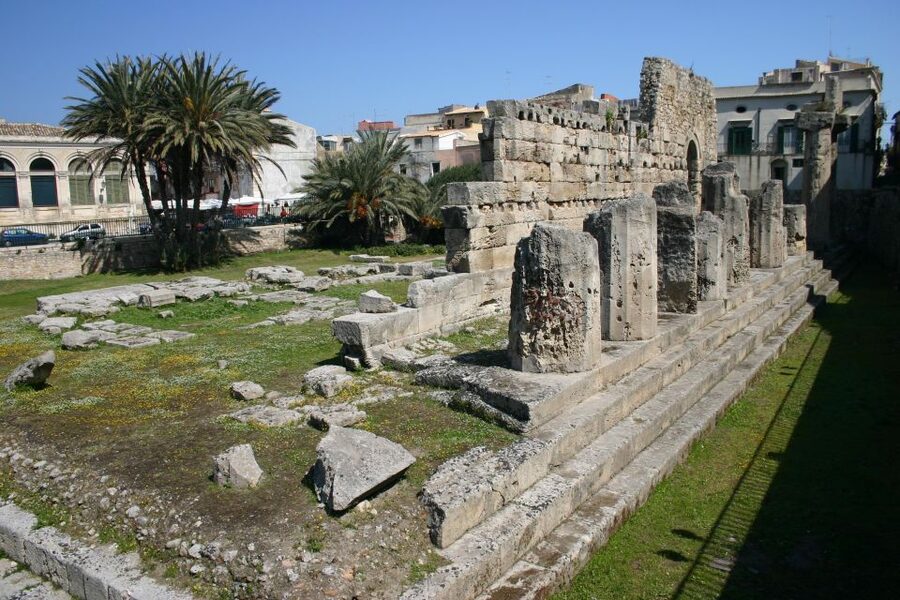
The meeting point is at Largo XXV Luglio, beside the Temple of Apollo at the entrance to Ortigia. Be precise here. Several walking tours can gather in the same general area, and the meeting point may feel a little vague when groups are assembling. Arrive early enough to find the guide and avoid beginning the tour in a mild panic.
The Temple of Apollo is an excellent starting point because it immediately tells you that Syracuse is not simply a pretty Sicilian old town. This was one of the most important Greek colonies, and the temple is described as the first large stone temple built by ancient Greeks in the western colonies.
Your guide uses the remains to explain Syracuse’s Greek origins before moving into the later layers of the city. You will not spend the entire two hours at the temple, so this is an orientation stop rather than a long archaeological visit. That is the right balance for a first look at Ortigia, especially if you plan to return later for museums or the archaeological park.
Piazza Archimede and the Fountain of Diana
From the temple, the group moves toward Piazza Archimede. The square is a natural place to pause and consider how many different periods have shaped Ortigia. The Fountain of Diana provides the visual center, with its sculpted figures and water adding a grand touch to a busy urban square.
This is also where a walking guide earns the fee. You can photograph the fountain on your own, but a guide helps connect the square’s names, buildings, myths, and street pattern. The tour does not treat each stop as an isolated photo opportunity. Instead, it shows you how one part of the old center leads into the next.
The lanes around the square are picturesque but narrow. You may need to stop at the edge while the guide talks, then move aside for pedestrians. One practical warning is worth taking seriously: Ortigia’s pedestrian areas are not always as calm as they look. Cars can appear where you least expect them, and the streets may be crowded with school groups and other tours.
Piazza Duomo and the cathedral over an ancient temple
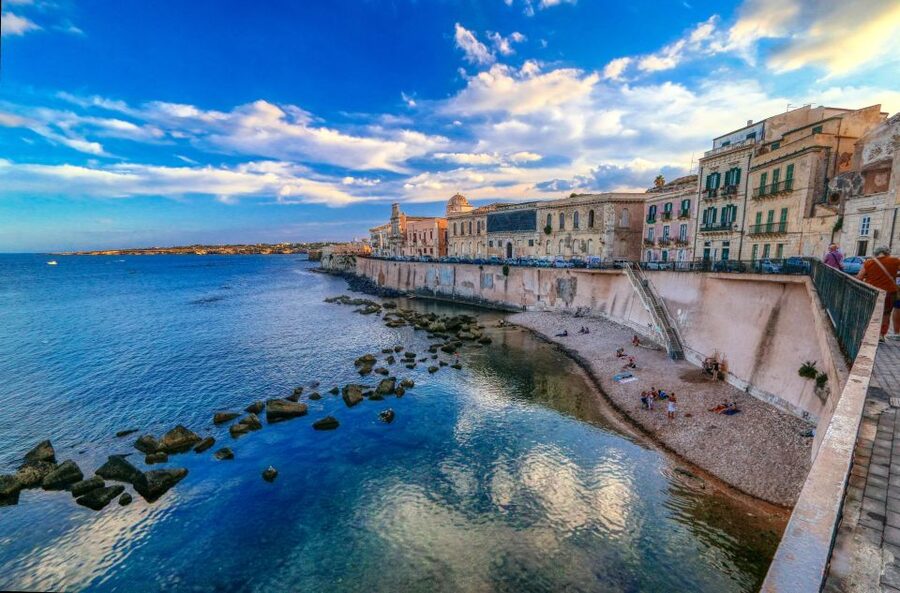
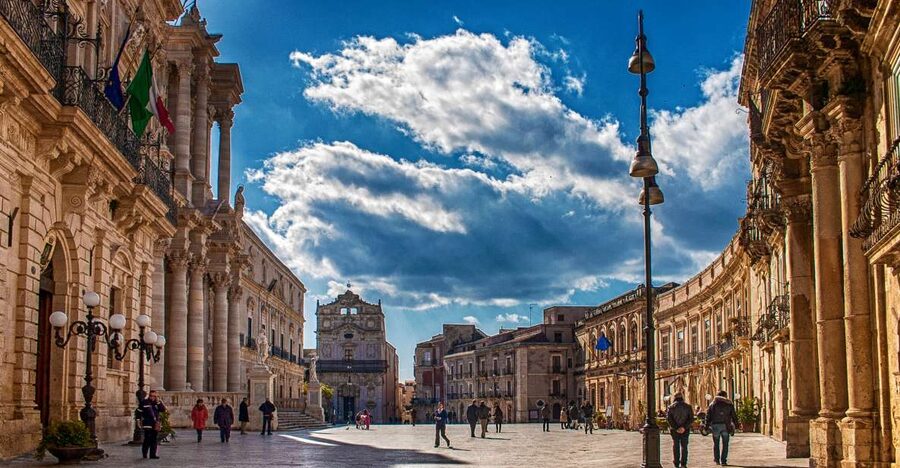
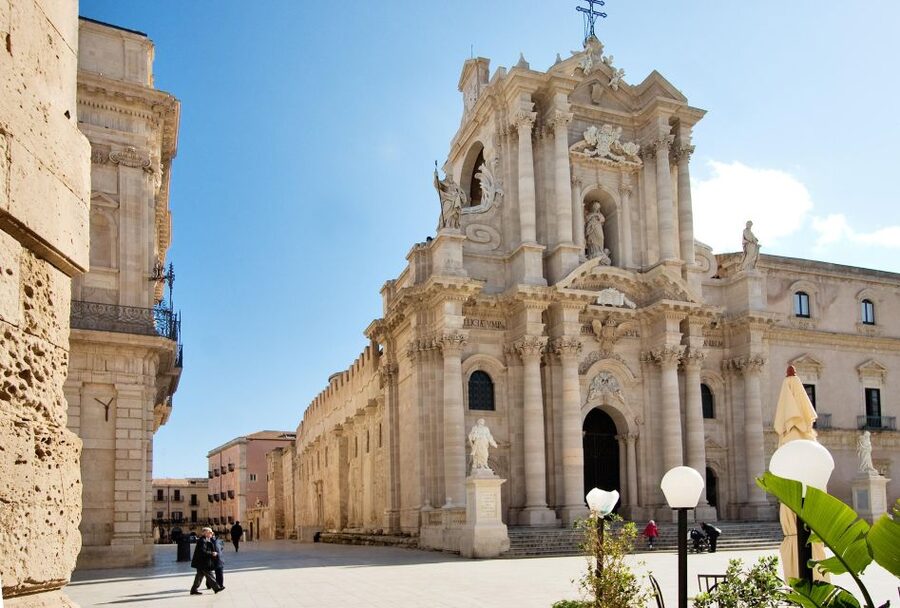
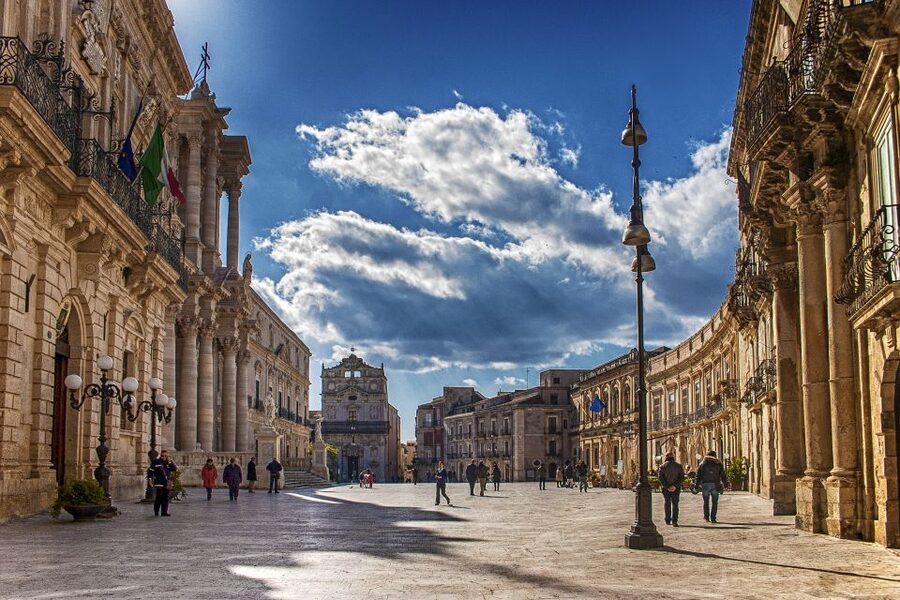
Piazza Duomo is the grandest architectural pause on the route. The square gathers the town hall, Palazzo Vermexio, Palazzo Beneventano del Bosco, St. Lucy’s Church, and the Cathedral in one impressive composition. Even if you know little about Syracuse before arriving, this square makes the city’s long religious and political story easy to see.
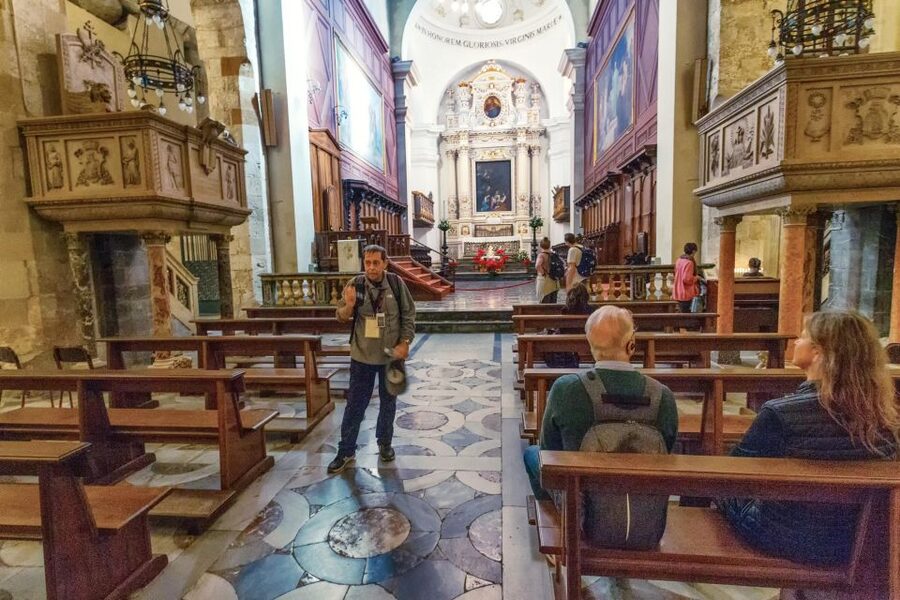
The Cathedral is particularly important because it was built into an ancient Greek temple. The earlier structure did not vanish entirely. Its columns remain part of the church, giving you a rare chance to see Greek and Christian architecture occupying the same building.
When the cathedral is open to visitors, the guide may take you inside. The optional entry costs €2 and is not included in the tour price. Access can vary, so think of the interior visit as a useful possibility rather than the main reason to book. If entry is not available, the guide may offer a short coffee break instead.
The church is also frequently chosen as a wedding venue. That small detail helps explain why the square can feel especially active and dressed up at certain times. Your guide should also cover St. Lucy, Syracuse’s patron saint, and the major December celebration and procession held in her honor. These local traditions add something a view of the buildings alone cannot provide.
Same streets, a different guide:
- Florence: Highlights Walking Tour with Expert Guide
★ 4.6 · 4,662 reviews - Venice: San Marco to Rialto Walk & Spritz Like a Local
★ 4.2 · 3,651 reviews - Uffizi & Accademia Timed Entry: Small Group Duomo Walking Tour
★ 4.5 · 3,630 reviews - Venice Walking Tour and Gondola Ride
★ 3.5 · 3,630 reviews
Aretusa Spring, papyrus, and the waterfront
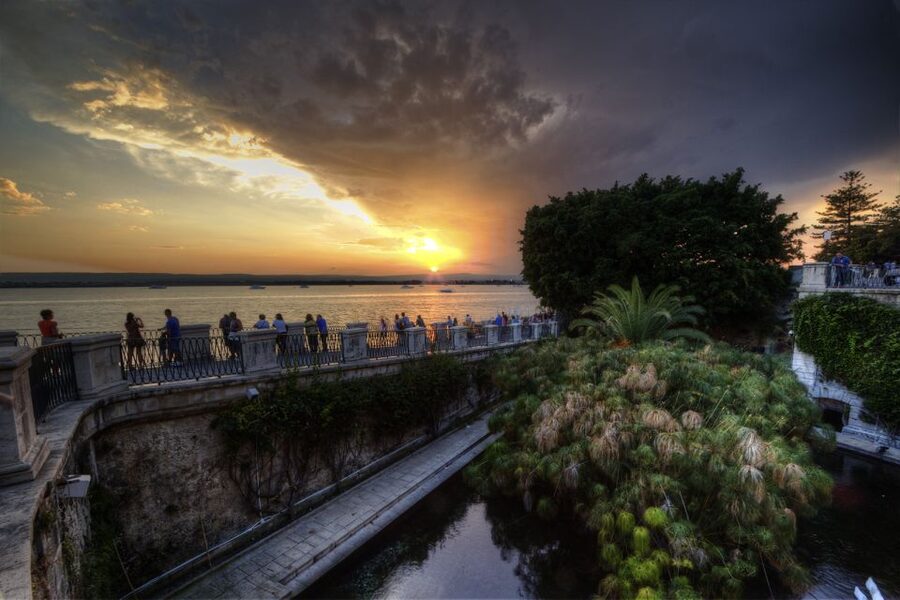
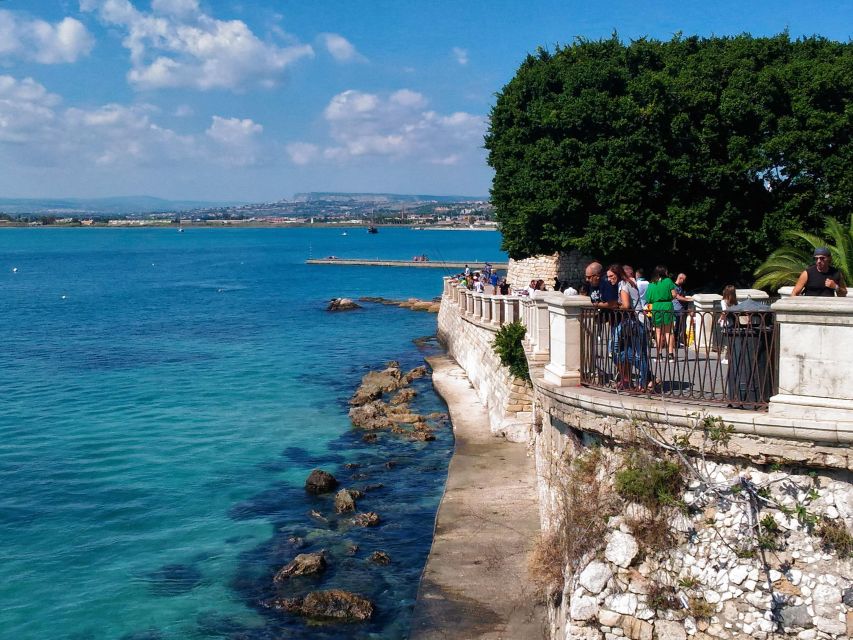
The next major stop is the Aretusa Spring, one of Ortigia’s most famous sights. It is tied to ancient myth and is known for its papyrus plants, an unusual feature that gives the spring a distinctive look.
The stop is not just a quick glance at water. Your guide explains the legend connected with Aretusa and places the spring within Syracuse’s broader Greek past. You also get time to enjoy the setting and take photographs, rather than being hurried immediately onward. That pause is helpful because the spring works best as a scenic stop, not as a monument you rush through.
From here, the route follows the seafront promenade toward Castello Maniace. The itinerary describes scenic views on the way rather than a full castle visit, so do not expect to enter and tour the fortress during this walk. The value is the outlook across the water and the chance to see Ortigia from a more open angle after the enclosed lanes.
This is one of the more relaxed stretches of the tour. Wear shoes with firm soles, since two hours on old streets and promenades can feel longer than two hours in a museum. The tour runs in rain or shine, so a light rain layer is sensible if the forecast looks uncertain.
Giudecca and St. John Baptist Church
The route continues through Via della Giudecca, the former Jewish district of Ortigia. This part of the walk gives the tour a broader cultural reach. Syracuse is not presented only as a Greek or Christian city. The old Jewish quarter brings another important chapter into view and helps you read the street plan with greater interest.
Expect more explanation than formal sightseeing here. The guide points out the area and discusses its past while you walk through the historic lanes. The narrow streets are part of the appeal, but they can also make it harder to hear if the group spreads out. Stay close to the guide, especially at corners.
The itinerary also includes the Church of Saint John Baptist. The supplied details do not promise a specific interior visit or a fixed amount of time inside, so treat this as a guided stop rather than a guaranteed extended church tour. Your guide may explain its place in the neighborhood and the town’s religious life.
This section is especially useful if you want more than a list of Greek ruins. It gives you a sense of how Ortigia changed over time and how religious communities helped shape the old center.
What the guide adds to the experience
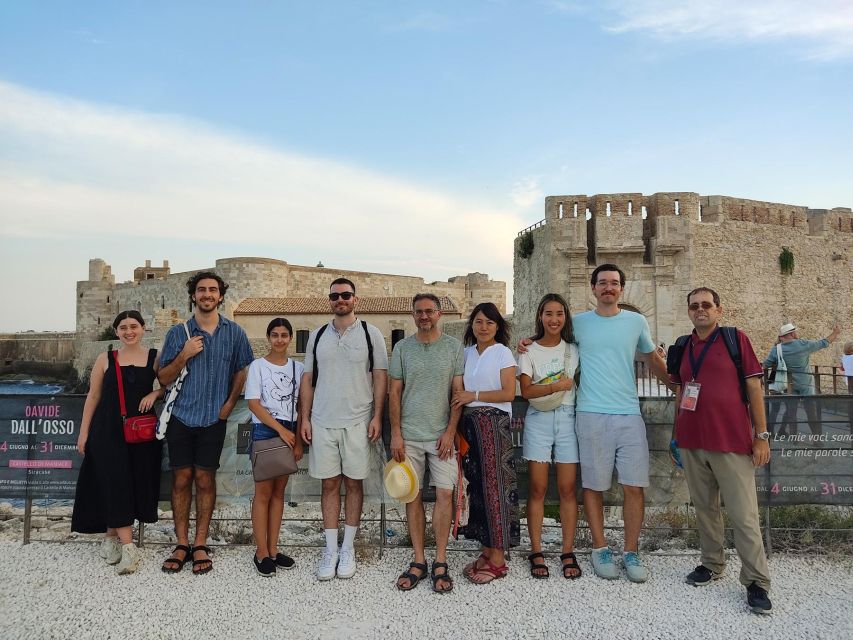
The strongest part of this tour is the guide’s ability to make history conversational. Eva is repeatedly praised for clear explanations, fluent English, patience, and a pleasant pace. She is also noted for answering questions rather than delivering a speech and moving on.
That matters in Ortigia because you will have questions. Why is a cathedral built over a temple? Why is papyrus growing beside a spring? How does St. Lucy’s feast affect the city? A good guide can turn those questions into a connected story.
You should also have time for photographs. Eva is described as allowing the group to pause and look around while still keeping everyone together. That is a better rhythm than either extreme: a rushed march with no pictures, or a loose gathering where you are never sure where to go next.
Headsets are provided free when larger groups make them useful. They are a small but valuable touch in a busy old town. Instead of standing shoulder to shoulder around the guide, you can hear the explanation from a little farther away.
At the end, ask for suggestions. The guide can point you toward other monuments, nearby towns, restaurants, or activities. Since the tour covers the main center rather than every attraction, this is a good moment to decide what deserves a second visit.
Price, timing, and practical limits
The $22 price makes the tour a good-value first orientation, especially for a first day in Syracuse. It does not include the optional €2 cathedral entry, but the extra cost is modest. You are not buying a ticket bundle or a long attraction visit. You are buying context, direction, and a manageable route through a place that can otherwise feel confusing.
The two-hour length is another advantage. You can take the tour in the morning and still have time for lunch, the archaeological park, a museum, or a slower return to your favorite square. It is also short enough for families and for anyone who prefers not to commit to a full-day walking program.
The main limitation is the shared-group setting. Even with a typical group of around 10, you will not receive a private tour. When the streets fill with other groups, schoolchildren, and unexpected traffic, the pace can slow and conversation can become less intimate.
The activity is listed as wheelchair accessible, but the route includes historic narrow streets. If you need very specific access information for a mobility device, confirm the meeting point and route details before booking. Everyone should bring comfortable shoes and be ready for changing weather.
Free cancellation up to 24 hours before the start gives you useful flexibility, and the reserve-now, pay-later option can help if your Sicily plans are still shifting.
Who should book this Syracuse walking tour
I would choose this tour if you are staying in Syracuse for the first time and want a clear introduction before exploring on your own. It suits you particularly well if Greek history, church architecture, local festivals, and neighborhood stories interest you more than ticking off major entrances.
It is also a good match for cruise passengers or short-stay visitors who need a compact route through the old town. The start and finish are both in Ortigia, with the walk ending around Piazza Archimede or the Fountain of Diana, so you remain in the center where you can continue sightseeing.
You may want something else if you prefer a private guide, a slower photography walk, or extended time inside monuments. The cathedral visit is optional, the castle is viewed from the route rather than toured, and the experience is built around streets, squares, explanations, and views.
Should you book it?
Book this Ortigia walking tour if you want a well-paced introduction to Syracuse’s main old-town sights for a modest price. The Temple of Apollo, Piazza Duomo, Aretusa Spring, Giudecca, and the waterfront make a satisfying two-hour arc, while guides such as Eva add the local detail that signs and guidebooks often miss.
Skip it only if you already know Ortigia well or want a private, archaeology-heavy experience. For most first-time visitors, it is a practical way to get your bearings, understand the city’s layered past, and collect useful ideas for the rest of your stay.
FAQ
How long does the Ortigia Classic Walking Tour last?
The tour lasts two hours. Starting times vary, so check availability when booking.
Where does the tour start?
The tour starts at Largo XXV Luglio, near the Temple of Apollo at the entrance to Ortigia. The exact meeting point may vary according to the option booked.
Where does the tour end?
The route ends in the Ortigia center, with drop-off locations listed at the Fountain of Diana or Piazza Archimede.
Is the cathedral entry included?
No. Entry is optional and costs €2. When access is available, the guide may accompany you inside. If not, a short coffee break may be offered instead.
What languages are available?
The live tour is available in English or Italian. In rare cases with very small groups, explanations may be given in both languages.
Is the tour wheelchair accessible?
Yes, the activity is listed as wheelchair accessible. The tour takes place through historic streets, so confirm any specific access needs before booking.
New routes in Italy
- Private St. Francis Basilica of Assisi and City Walking Tour★ 5.0 · 114 reviews
- Assisi Private Walking Tour including St. Francis Basilica★ 5.0 · 124 reviews
- Milan: City Highlights Walking Tour with The Last Supper★ 4.9 · 195 reviews
- Florence: Heart of Florence Guided Walking Tour★ 4.0 · 81 reviews
- Milan: Private or Shared Essential Walking Tour★ 4.7 · 84 reviews
- Taormina: Shared or Private Food & Wine Walking Tour★ 4.6 · 167 reviews
- Syracuse: Ortigia Private Walking Tour★ 4.8 · 181 reviews
- Syracuse: Ortigia and Neapolis Guided Walking Tour★ 4.7 · 205 reviews
Italy Walking Tours, compared.
Doge’s Palace and St Mark’s Basilica Walking Tour
Read our review →
Guided Walking Tour & Last Supper Visit with Ticket
Read our review →
San Marco to Rialto Walk & Spritz Like a Local
Read our review →
Uffizi & Accademia Timed Entry: Small Group Duomo Walking Tour
Read our review →
Browse the lists this tour appears in