
Review · FLORENCE
Florence: Heart of Florence Guided Walking Tour
Florence’s story unfolds best on foot, and this tour connects the city’s religious, political, and Medici centers in one steady walk. You’ll move from San Lorenzo and the Medici residences to the Duomo, Piazza Signoria, and Ponte Vecchio, with the famous bronze porcellino waiting along the way.
I like the route for two clear reasons: it links the major sights without wasting time, and the guide adds the political and family drama that turns grand buildings into a readable city. The $27 price is also fair for a guided introduction, especially on a first day in Florence.
The main caution is uneven guide quality and organization. One booking reportedly had no guide at the meeting point, while other guides earned high praise for their information and pace. Confirm your meeting point carefully, arrive early, and keep your phone available.
Key points at a glance
- Medici Florence first: Begin around San Lorenzo, the Medici Chapels, and Palazzo Medici Riccardi before reaching the Duomo.
- A full central-city route: See the Baptistery, Gates of Paradise, Giotto’s bell tower, Via Calzaioli, Piazza Signoria, and Ponte Vecchio.
- Good first-day orientation: The walk brings together Florence’s religious and political centers in about 1.5 to 2.5 hours.
- Guide quality matters: English and Spanish tours are offered, but the tour may sometimes run in two languages at once.
- Practical walking tour: Wear comfortable shoes, follow church dress rules, and expect the order of stops to change.
- Optional add-ons: Some booking choices include lunch, a self-guided mobile city guide, or a larger combination with the Uffizi and Duomo.
Why this route works for a first look at Florence
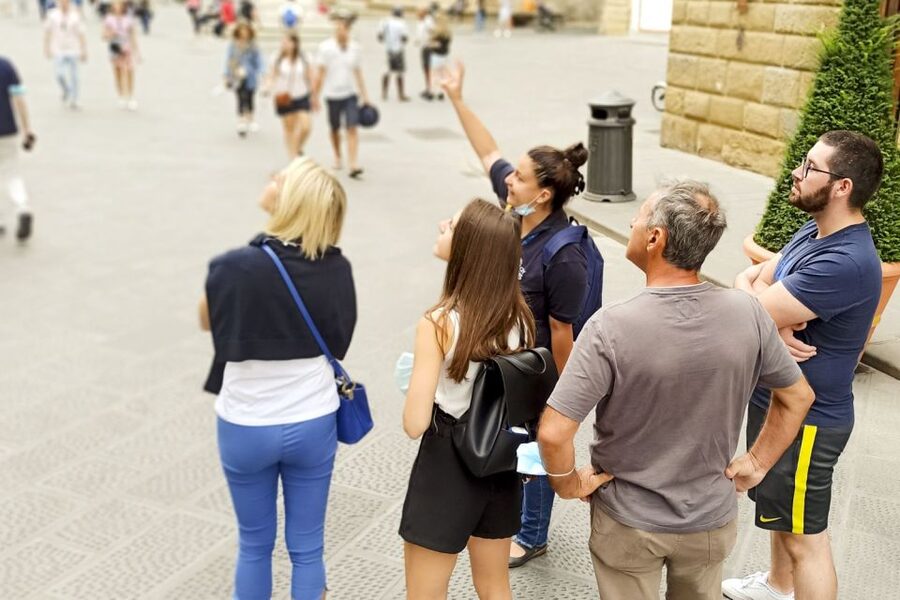
Florence can feel like a series of famous buildings until someone explains how the pieces fit together. This walk gives you that framework. You begin in the area shaped by the Medici family, pass through the city’s religious heart, then reach the civic center around Palazzo Vecchio.
That sequence matters. The Medici were not simply wealthy patrons who paid for beautiful art. Their presence shaped Florence’s politics, architecture, churches, and public spaces. As you walk the narrow streets around San Lorenzo, you get a sense of how close the family’s homes, chapels, and religious foundations were to one another.
The walk is also useful because it covers several sights from the outside in a short time. You see the major facades and public spaces, hear what makes them important, and can then return later to the museums or interiors that catch your eye.
You should think of this as a city introduction, not a museum tour. The package does not promise interior entry to every landmark named along the route. Its value lies in the guide’s explanation, the route, and the chance to get your bearings before exploring Florence on your own.
More Guided Walks in Florence:
- Florence: Highlights Walking Tour with Expert Guide
★ 4.6 · 4,662 reviews - Florence: Duomo Complex with Tickets & City Walk Guided Tour
★ 4.7 · 2,057 reviews - David & Accademia Guided Tour with Time Entry Ticket
★ 4.5 · 1,705 reviews
San Lorenzo and the Medici family district
The tour starts in or around San Lorenzo, Florence’s old Medici quarter. Here, the city feels more compact and lived-in than the postcard views around the Duomo. The streets are narrow, and the buildings are close enough to make the power of the Medici family easier to picture.
You’ll encounter Palazzo Medici Riccardi, the family residence associated with the early Medici rulers. The palace is important not only for its architecture, but also for what it says about power in Renaissance Florence. The Medici lived near the church and market district, close to the institutions that helped them control the city.
The route also includes the Medici Chapels and the Church of San Lorenzo. These places connect family memory, public worship, and political display. Even if your visit focuses on exterior views, your guide can give you the basic context needed to understand why this corner of Florence mattered so much.
I like starting here because it avoids dropping you straight into the busiest part of the Duomo area. You get a gradual introduction to Florence, moving from local streets into the city’s grandest public spaces.
The practical point is to wear shoes with good support. This is a walking tour over stone streets and busy sidewalks, and the pace is intended to keep moving. One highly praised guide was described as maintaining a comfortable pace while offering plenty of information. That combination is exactly what you want in a city walk.
The Duomo complex and the Gates of Paradise
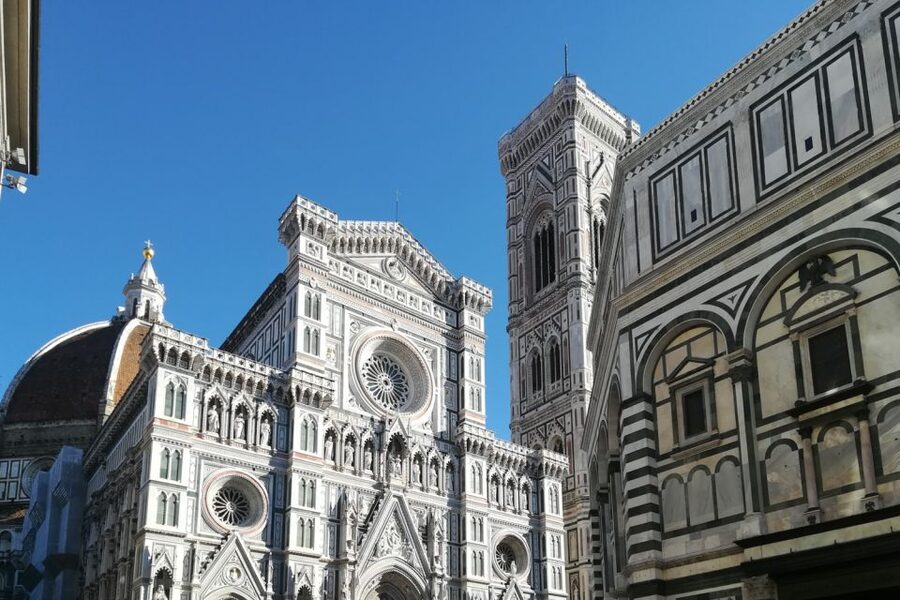
From San Lorenzo, the route heads toward Piazza del Duomo, Florence’s religious center. This is where the scale changes. The Cathedral, Brunelleschi’s dome, Giotto’s bell tower, and the Baptistery create one of Europe’s most memorable architectural groups.
The guide introduces the cathedral and its enormous dome, designed by Filippo Brunelleschi. You should not confuse this guided walk with a dome-climbing experience. The supplied details describe a visit to the Duomo area, not a climb or a guaranteed interior entry.
The Baptistery of San Giovanni receives special attention, along with its famed Gates of Paradise. The doors are known for their sculpted biblical scenes and their role in Florence’s artistic history. They also show how the city used public religious buildings as stages for civic pride.
Giotto’s bell tower adds another layer to the square. Its colored marble exterior and tall, narrow form make it easy to recognize beside the cathedral. A guide can help you distinguish the functions of the cathedral, baptistery, and campanile, since first-time visitors often see them as one large complex.
This part of the tour can be crowded, so stay close to the guide and listen for meeting instructions before the walk begins. Groups of more than 10 receive headphones, which should make the commentary easier to follow in a noisy square. Smaller groups may not have that equipment.
If your tour visits a place of worship, dress appropriately. The information provided does not list exact clothing rules, so the safest approach is modest clothing that covers shoulders and knees.
Via Calzaioli, Orsanmichele, and the Porcellino
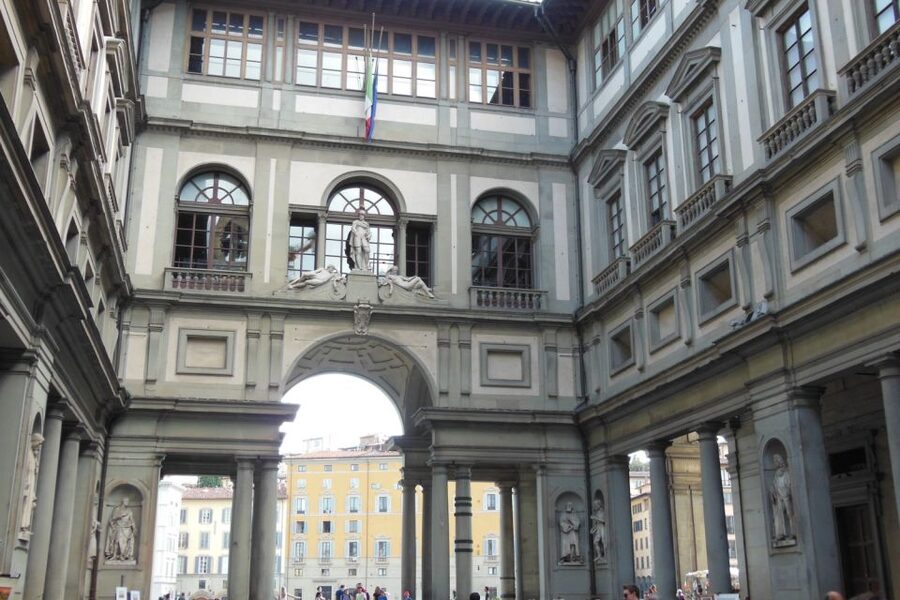
The route then follows Via Calzaioli, one of the main pedestrian connections between the Duomo and Piazza Signoria. This is a good stretch for seeing Florence as a working city rather than a string of isolated monuments. Shops, foot traffic, and historic facades fill the route.
You’ll pass Orsanmichele Church, a building with an unusual past and an important place in Florence’s civic life. Its name and form reflect the way commerce, religion, and public institutions overlapped in the medieval city.
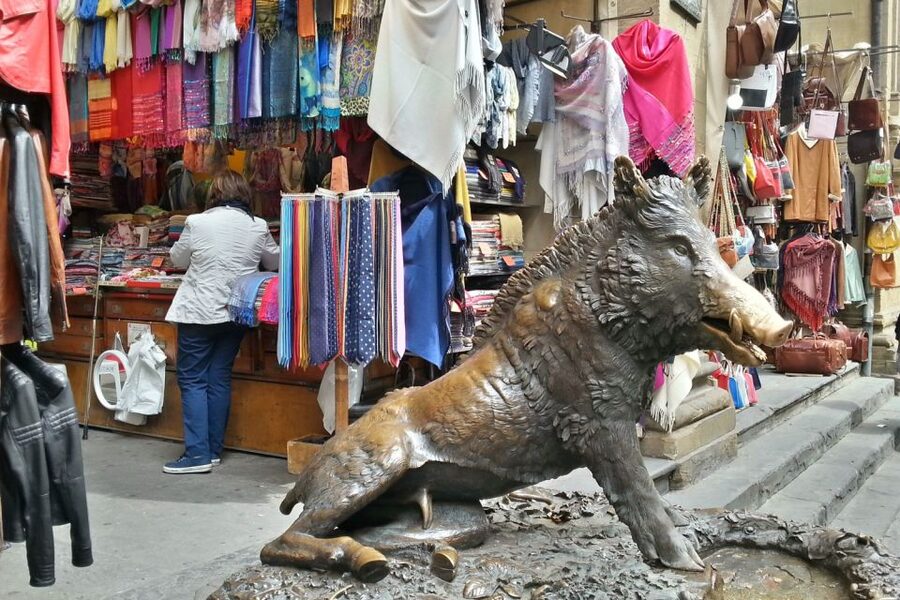
The walk continues toward the Mercato della Paglia, where you’ll find the famous bronze porcellino. The traditional custom is to rub the boar’s nose for good luck. It is a small, playful stop, but it breaks up the architectural detail and gives you a simple ritual to remember.
This is one of the route’s more enjoyable sections because it connects formal history with street life. You are not only looking at palaces and churches. You are also moving through the same central lanes used by shoppers, workers, and visitors today.
The guide’s role matters here. One guide, Greta, received mixed feedback for speaking quickly and offering less commentary between venues. Another guide was praised for giving many useful facts and recommendations for other sites. You’ll get more from the walk if you stay near the guide and ask questions when the group pauses.
More Walking Tours in Florence:
- Uffizi & Accademia Timed Entry: Small Group Duomo Walking Tour
★ 4.5 · 3,630 reviews - Florence: Guided Walking Tour
★ 4.6 · 1,602 reviews - Florence: Renaissance and Medici Tales Guided Walking Tour
★ 4.8 · 1,549 reviews - Florence: Uffizi & Accademia Small Group Walking Tour
★ 4.7 · 1,380 reviews
Piazza Signoria and Florence’s political center
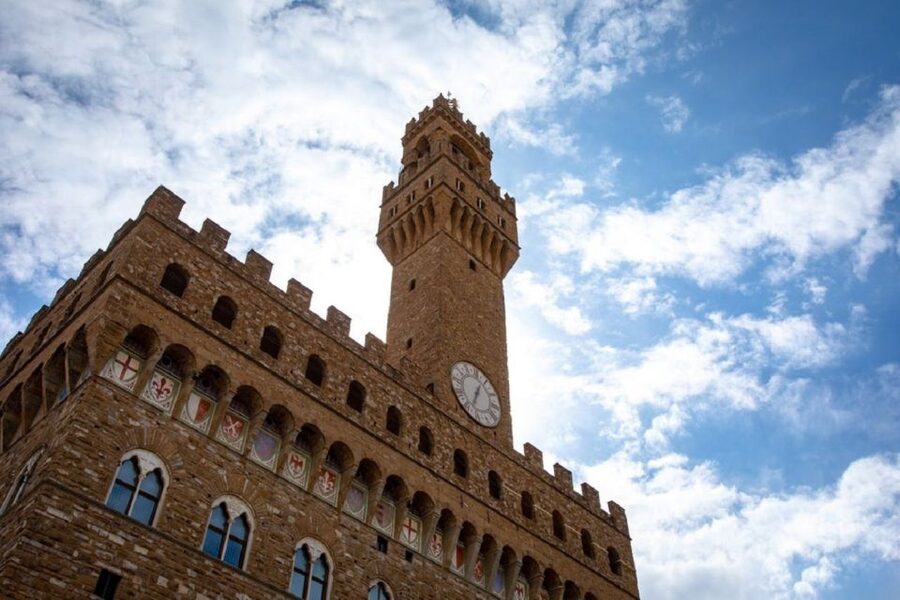
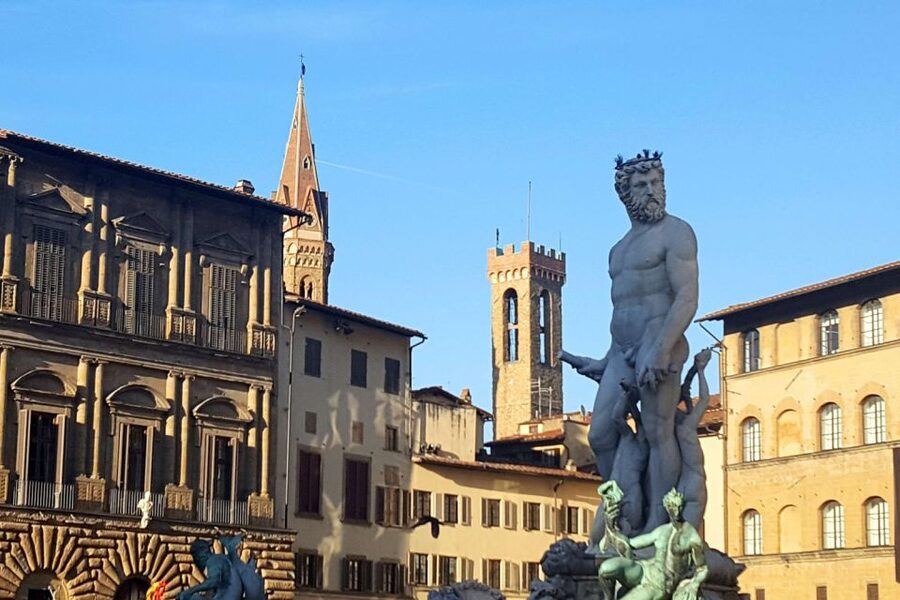
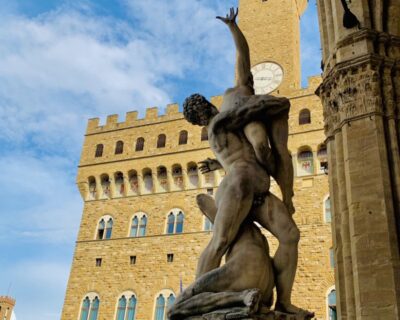
Piazza Signoria marks the shift from religious Florence to political Florence. This open square works like an outdoor sculpture gallery, with the Fountain of Neptune, the Loggia dei Lanzi, and Palazzo Vecchio arranged around it.
The Fountain of Neptune represents the city’s public art tradition and civic ambition. The Loggia dei Lanzi provides a covered display area filled with monumental sculpture. Together, they make the square feel like a museum without walls.
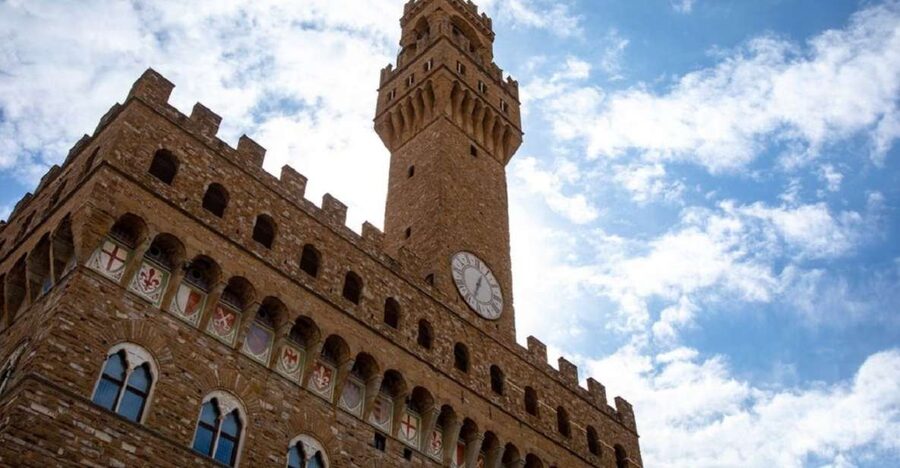
Palazzo Vecchio was the seat of Florence’s government, and its Arnolfo tower gives the building a strong, defensive profile. The tour also mentions the Michelozzo courtyard, an architectural detail that helps you look beyond the famous exterior.
This is where the guide’s storytelling can make the biggest difference. Florence’s political spaces are filled with names, factions, rulers, and rivalries. A clear guide can sort that out without burying you in dates. A less effective guide may rush through the square and leave you with little more than a list of buildings.
The square is also a useful place to decide what you want to revisit. If the courtyard, sculptures, or Palazzo Vecchio catch your attention, note them now and return with more time. The walking tour gives you a quick look, not a full museum visit.
Ponte Vecchio and the end of the walk
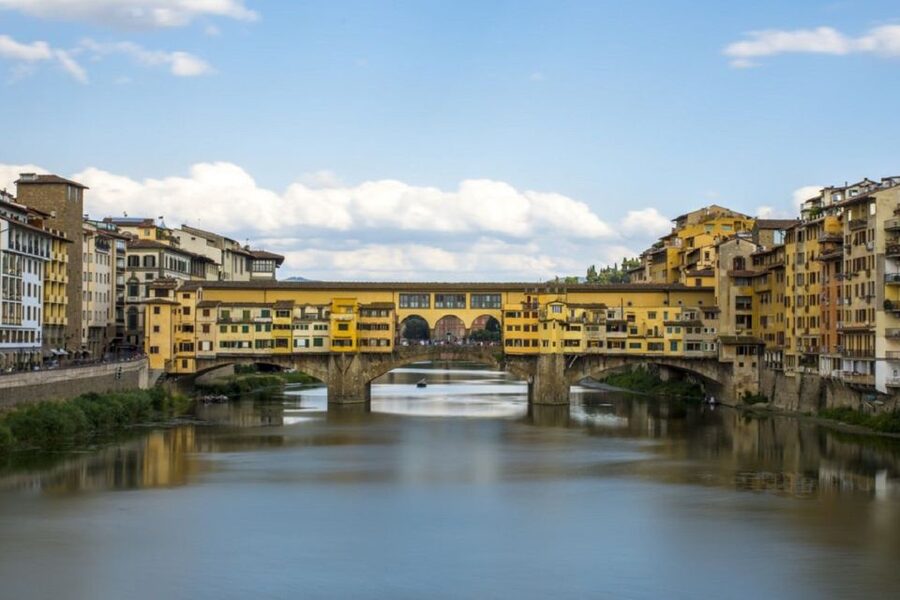
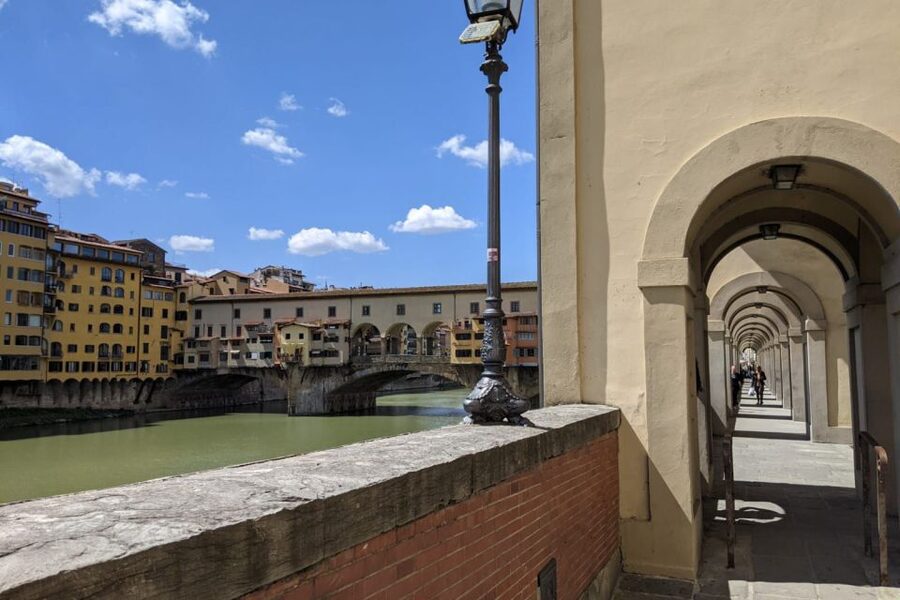
The route reaches the Ponte Vecchio, Florence’s oldest bridge, lined with its famous jewelry shops. The bridge crosses the Arno and offers a different view of the city from the churches and palaces you have just seen.
The shops are part of the bridge’s identity, but the crossing is more than a shopping stop. It completes the walk by connecting the political center to the river and the neighborhoods beyond it. After the grand spaces of the Duomo and Piazza Signoria, the bridge feels narrower, more commercial, and more intimate.
You should expect the route order to change. Weather, local conditions, group movement, and meeting-point arrangements can affect the sequence. The landmarks remain the same, but the walk may not follow the exact order described here.
The total duration is listed as 1.5 to 2.5 hours. That is a meaningful range. A shorter version may keep moving through the main sights, while a longer version may include more explanation or slower group progress. Check the available start times and the exact option you book.
How much value do you get for $27?
At $27 per person, this is reasonably priced for a guided introduction to central Florence. You are paying mainly for the local guide and the organized route, not for a long list of included admissions.
I see the strongest value if you are visiting Florence for the first time, have limited time, or want help deciding what deserves a longer visit. A good guide can save you from wandering between landmarks without understanding their connection.
The price is less compelling if you already know central Florence well or want detailed interior visits. In that case, a self-guided walk may cover the same streets at no cost beyond your own planning.
Some options include unlimited access to a self-guided mobile city guide. Other choices may include lunch, with a three-course Tuscan set menu at a typical restaurant in central Florence. Drinks are not included, and lunch is not included for children aged 0 to 5. These additions can change the value, so compare the exact option before booking.
There is also a larger combination option with a guided historic-center walk, a morning Uffizi visit, and an early-afternoon guided Duomo visit. That package may suit you if you want a packed art-and-monuments day. It will be a long day, though, and the shorter walking tour is easier to fit around your own plans.
Guide quality, language, and group comfort
The tour is offered in English and Spanish. From April through October, the tour is monolingual according to the supplied details. At other times, it may sometimes be delivered in two languages at once.
That arrangement can affect pace and clarity. If every explanation is repeated, the walk may take longer or feel less focused. One booking reported a guide speaking very slowly and making the information feel short and disjointed. Another account praised the guide’s pace, information, and helpful recommendations.
The experience depends heavily on the individual guide. The strongest feedback praised an informative guide who kept a good walking pace. The weakest feedback focused on unclear delivery, limited commentary between stops, and poor communication at the meeting point.
The most serious practical issue was a missed start in which the customer waited from 10:25 until 11:00 without finding a guide. That is not a minor inconvenience, especially in Florence, where several nearby squares and streets can look similar. The meeting point may vary by booking option, so read the confirmation carefully and arrive with time to spare.
Multilingual assistance is provided at the meeting point. Still, I would not rely on that alone. Save the meeting-point details on your phone, check the booked option, and make sure you know whether the group is meeting near San Lorenzo, the Duomo, or another location.
Who should book this Florence walk?

I would recommend it to first-time visitors who want a clear introduction before tackling Florence’s museums. It is also a good match for anyone who enjoys stories, public squares, and city streets more than long indoor visits.
Families may appreciate the short format and the porcellino stop, though the walking pace and crowded central streets require attention. Art lovers who want the Uffizi or Duomo interiors should choose the combo option or arrange separate admission.
You should think twice if you need a guaranteed interior tour, a very quiet experience, or highly detailed commentary at every stop. The route is central and popular, and guide quality can vary.
Should you book the Heart of Florence walk?
Book it if you want a practical first look at Florence’s main historic center for $27. The route is well chosen: Medici power in San Lorenzo, religious grandeur at the Duomo, civic drama in Piazza Signoria, and the Arno crossing at Ponte Vecchio.
The best reason to book is orientation. You’ll finish knowing how the central sights connect and which ones deserve more of your time. The main risk is inconsistent communication, so confirm the meeting point, arrive early, and choose your language and add-ons carefully.
If you value a good guide and can accept a sightseeing walk rather than interior access, this is a sensible introduction to Florence.
FAQ
How long does the Florence walking tour last?
The tour lasts between 1.5 and 2.5 hours. Available starting times vary, so check the schedule for your chosen date.
What languages are available?
Live guides are available in English and Spanish. From April through October, the tour is monolingual, though the tour may sometimes be provided in two languages at once.
What sights are included on the route?
The route includes San Lorenzo, Palazzo Medici Riccardi, the Medici Chapels and Church, Piazza del Duomo, Brunelleschi’s dome, the Baptistery of San Giovanni, the Gates of Paradise, Giotto’s bell tower, Via Calzaioli, Orsanmichele Church, the Mercato della Paglia, Piazza Signoria, Palazzo Vecchio, the Fountain of Neptune, Loggia dei Lanzi, the Michelozzo courtyard, and Ponte Vecchio.
Does the tour include entry inside the Duomo?
The supplied details describe a guided visit around the Duomo area, but they do not confirm interior entry or dome access for this walking tour.
Are headphones provided?
Headphones are provided for groups of more than 10 participants.
What should I wear?
Wear comfortable shoes for the city walk. You also need to follow the dress code when visiting places of worship.
Is lunch included?
Lunch is included only with the lunch option. That option provides a three-course Tuscan set menu at a typical restaurant in central Florence. Drinks are not included, and lunch is not included for children aged 0 to 5.
Can I cancel the tour?
You can cancel up to 24 hours in advance for a full refund. A reserve-now, pay-later option is also available.
New routes in Florence
- Florence: Walking Tour with David, Duomo & Uffizi Gallery★ 4.7 · 414 reviews
- Florence: The Medici Family Guided Walking Tour★ 4.7 · 129 reviews
- Florence Walking Tour & Skip-the-Line David at Accademia★ 4.7 · 159 reviews
- Florence Street Food Walking Tour with Wine in Duomo Area★ 4.9 · 76 reviews
- Florence: Tuscan Food and Wine Guided Walking Tour★ 4.8 · 72 reviews
- Florence: Private Walking Tour with a Local★ 4.6 · 126 reviews
- Florence: Small Group Guided Walking Tour★ 4.7 · 176 reviews
- Florence: Medici Family Guided Walking Tour★ 4.5 · 193 reviews
Florence Walking Tours, compared.
Uffizi & Accademia Timed Entry: Small Group Duomo Walking Tour
Read our review →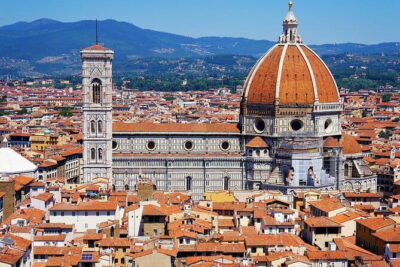
Duomo Complex with Tickets & City Walk Guided Tour
Read our review →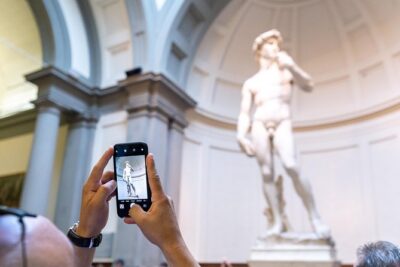
Michelangelo’s David, Accademia & Uffizi Small Group Tour
Read our review →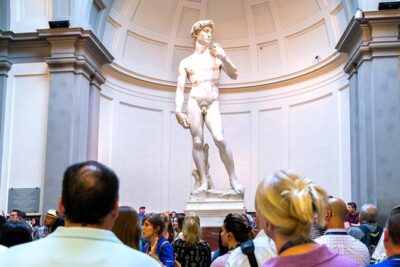
David & Accademia Guided Tour with Time Entry Ticket
Read our review →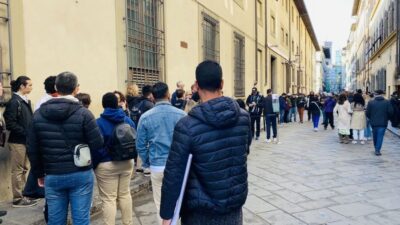
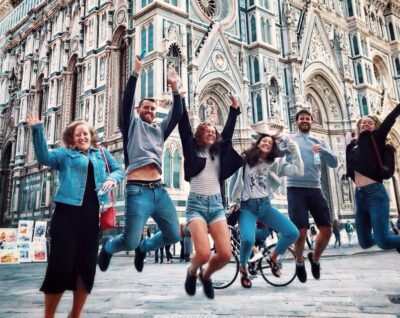
Renaissance and Medici Tales Guided Walking Tour
Read our review →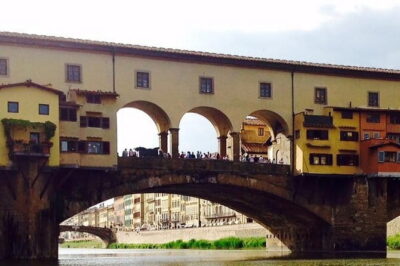
Skip-the-Line Florence Highlights and David Walking Tour
Read our review →Browse the lists this tour appears in