Review · FLORENCE
Florence: Private Walking Tour of Florence’s Hidden Gems
Florence packs a remarkable amount into a small center, and this tour gives you the broad picture in just two hours. You move from medieval streets to Medici palaces, cross Ponte Vecchio, and finish near the Duomo, with a guide explaining how art, banking, politics, and religion shaped the city.
I like the private format, since your guide can adjust the pace and answer your questions. I also like the route’s variety: you see major sights such as the Duomo and Palazzo Vecchio, but also pass elegant Via Tornabuoni and the Oltrarno side of the river.
The main catch is simple: every stop is viewed from outside, and the route covers a lot of ground. If you want to enter the Uffizi, climb the Duomo, or study Santa Croce’s art, you will need separate tickets and more time.
Key points at a glance
- A private two-hour overview: You get a personal guide rather than a large group, with English and Italian available.
- A cross-river route: The walk includes Ponte Vecchio, Pitti Palace, Piazza Pitti, and the streets leading back toward the center.
- Exterior visits only: The Uffizi, Santa Croce, Palazzo Vecchio, Bargello, Medici Chapel, Pitti Palace, and Duomo are seen from outside.
- Strong guide-led storytelling: Guides such as Giacomo, Claudia, Marco, Manuela, and Giulio have been praised for clear history, local advice, and family-friendly explanations.
- A useful first-day plan: The route helps you understand where Florence’s major museums, squares, palaces, and shopping streets fit together.
- Wear proper shoes: Florence’s stone streets and the distance covered make comfortable footwear important.
Why this Florence walk works best on your first day
Florence is easy to explore on foot, but it is not always easy to understand at first glance. A palace may look like a palace, a statue may look like decoration, and a narrow lane may seem like just another narrow lane. A good guide connects these pieces.
That is the real value here. You are not simply ticking off famous buildings. You are hearing how the Medici family used palaces and public spaces to project power, why the Arno shaped the city, and how Florence became such an important center for art and commerce.
The route is also practical. It links several main areas without sending you back and forth across town. You start near the historic center, cross the river, walk through the Oltrarno, and return across Ponte Santa Trinita toward the Duomo area.
I would book this near the beginning of a Florence stay. After two hours, you will know which places deserve a return visit. You may decide to spend your next morning inside the Uffizi, return to Santa Croce, or reserve time for the Duomo complex.
More Private Walking Tours in Florence
- Private Flavors of Florence Walking Tour (Food and Wine Included)
★ 5.0 · 373 reviews - Florence: Private Food Walking Tour with Tuscan Classics
★ 4.8 · 273 reviews - Florence Private Walking tour with Skip-the-line to Accademia
★ 4.5 · 236 reviews
Starting near Santa Firenze and the Bargello
The tour begins at Door 8 for Accord Tours. The listed meeting information also refers to Piazza di Madonna degli Aldobrandini, while the route description begins at Piazza San Firenze. Since the meeting point and route can vary, check the exact location on your booking details before setting out.
Piazza San Firenze puts you close to several important buildings. The Bargello, now the National Museum of Bargello, was once a medieval government building and prison. Its exterior helps set the tone for Florence: power was expressed through stone, towers, courtyards, and imposing public architecture.
The nearby Palazzo Vecchio and Piazza della Signoria soon become part of the walk. This opening section is especially useful if Florence is new to you, because it places the city’s civic center, museums, churches, and major pedestrian routes in relation to one another.
The itinerary also lists the Medici Chapel and Uffizi Gallery as short guided stops. Treat these as exterior explanations rather than indoor visits. You will learn where the buildings are and why they matter, but you will not have time to see their collections during this tour.
Santa Croce, where Florence’s public story turns personal
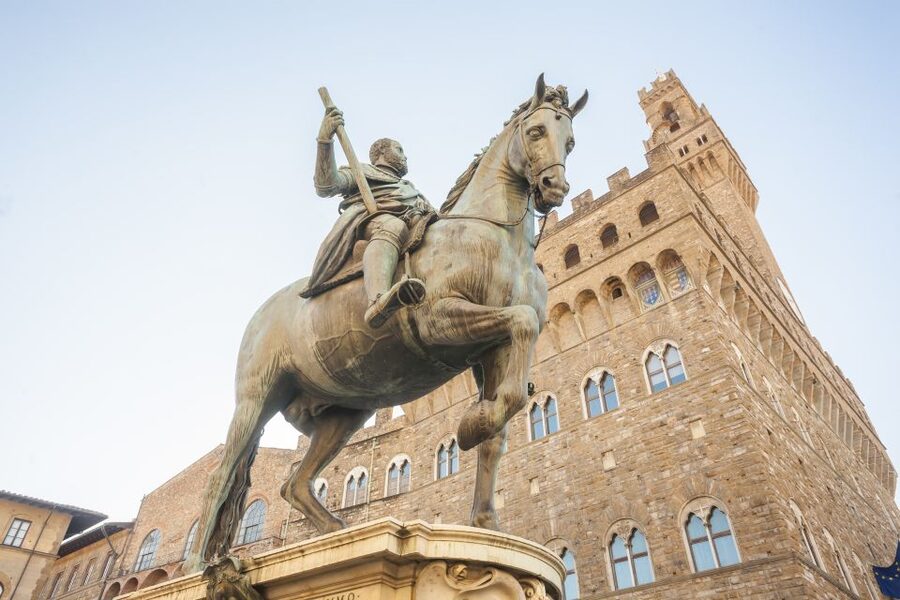
The Church of Santa Croce is one of the most meaningful stops on the route. It is famous not only for its architecture and art, but also as the burial place of major Italian figures.
Your guide can give this church a human scale. Instead of seeing only a grand façade, you begin to understand why Santa Croce matters to Florence’s memory and identity. The stop is brief, so listen for the names and stories you want to investigate later.
This is also one of the places where the exterior-only policy matters most. Santa Croce contains important works and tombs inside, but this experience does not include admission. If you already plan to visit the church, this walk can serve as useful preparation.
Families may appreciate this part of the tour when the guide keeps the story moving. Claudia was especially praised for directing explanations toward children as well as adults, while other guides were noted for making difficult periods of Florentine history clear and entertaining.
Piazza della Signoria and Palazzo Vecchio
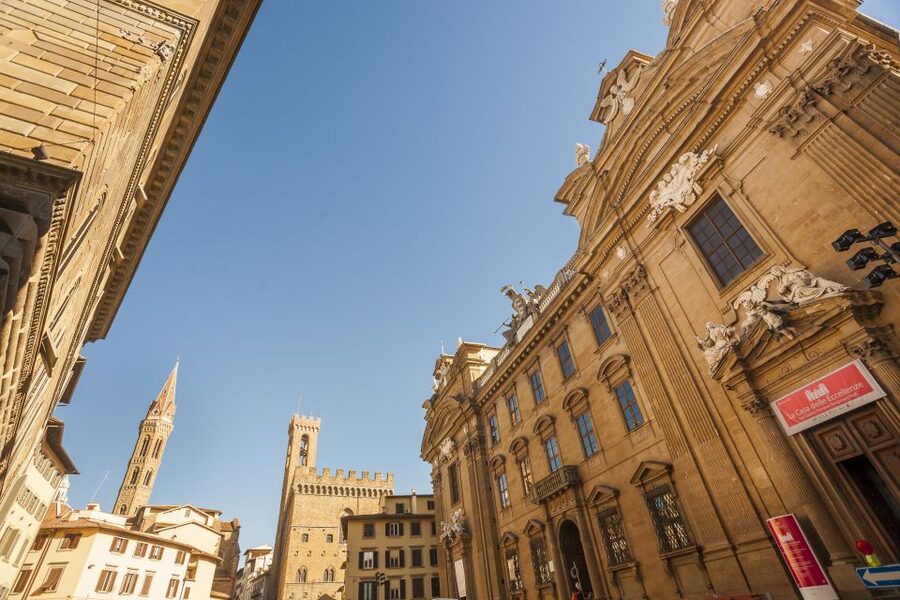
Piazza della Signoria is Florence’s great outdoor stage. It is lined with sculpture, government buildings, and reminders of the city’s political past. Palazzo Vecchio dominates the square, while the nearby Loggia dei Lanzi and Neptune Fountain add an open-air display of art.
The Neptune Fountain is scheduled as a short photo stop. It is a useful pause in a packed walk, though you should not expect an extended discussion of every statue in the square. Your guide’s explanation will likely focus on the square’s role as the center of Florentine public life.
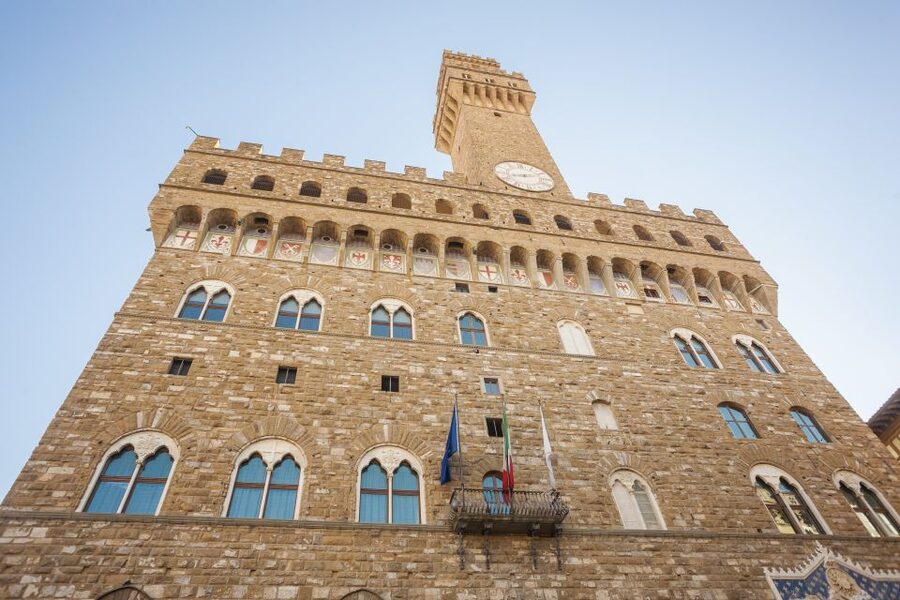
Palazzo Vecchio is another exterior-only stop. You will see where Florence’s government operated and hear about its connection to the Medici period. If you later choose to enter, the outside explanation will give the interior rooms more context.
This is one of the strongest parts of the route for first-time visitors. The square gathers several major sights in one place, and a guide helps you separate the original medieval and Renaissance functions from the modern museum setting.
More Private Walking Tours in Italy
- Florence: Private Walking Tour with a Local
★ 4.6 · 126 reviews - Private 3 hrs Venice Tour: St Mark’s, Walking tour & Boat tour
★ 4.0 · 3,372 reviews - Private Best of Venice Walking Tour with St Mark’s Basilica
★ 4.0 · 1,063 reviews - Venice: Private Walking Tour with a Local
★ 4.6 · 761 reviews
Crossing Ponte Vecchio to Pitti Palace
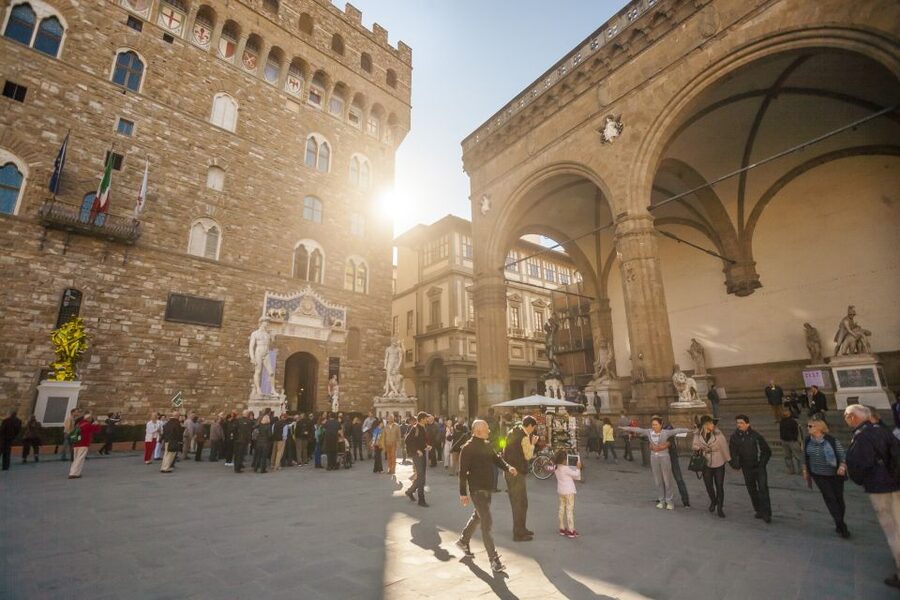
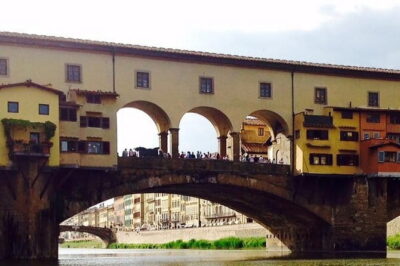
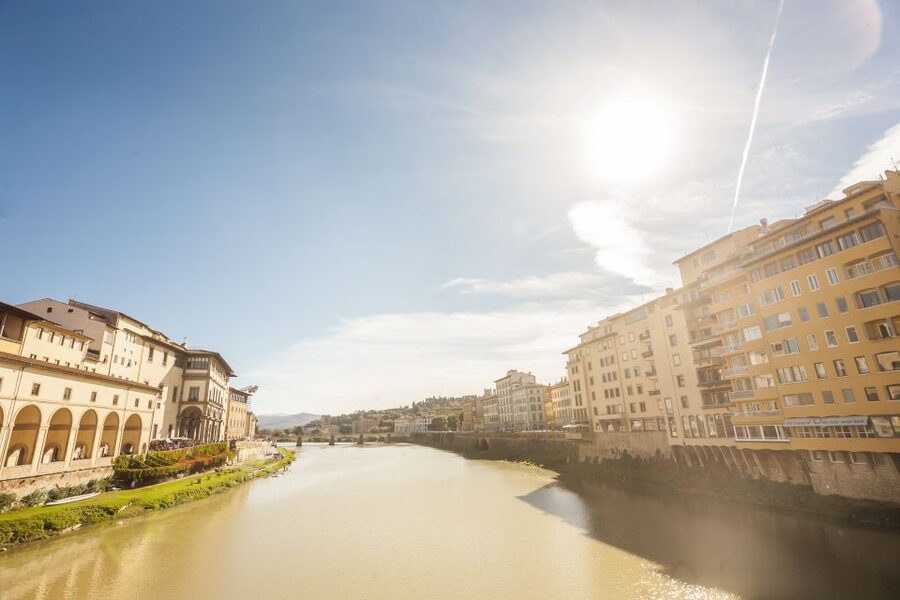
Ponte Vecchio is more than a pretty bridge with jewelry shops. It is one of Florence’s defining views over the Arno and a natural link between the historic center and the Oltrarno.
The bridge can be crowded, especially when people stop to look at the river or browse the gold shops. Stay close to your guide and expect a slower pace here. The crossing is short, but it is not a quiet stroll.
On the far side, the route continues to Pitti Palace, the former Medici residence. The palace’s size makes the family’s power easy to grasp. It was not simply a private home. It was part of a larger system of residences, gardens, offices, and public displays of status.
Again, the visit is from outside. You will not enter the palace or its galleries. That is not a flaw if you want orientation, but it is important to know before booking. Anyone hoping to see the palace collections should plan a separate visit.
Piazza Pitti gives you a broad view of the palace façade and a chance to appreciate the scale of the setting. The stop is short, so it works more as a visual introduction than a full architectural lesson.
Via Maggio, Ponte Santa Trinita, and Via Tornabuoni
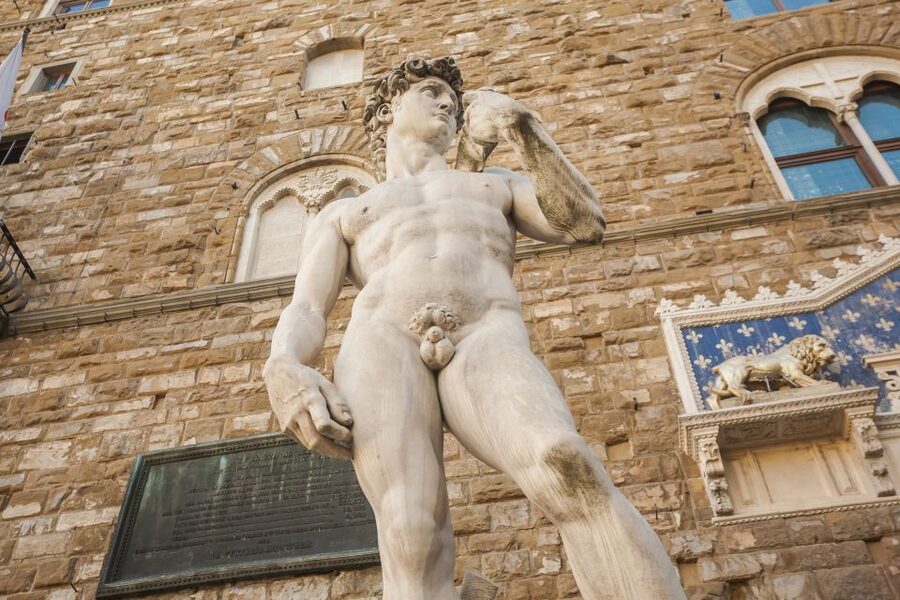
The return route is one of the tour’s more appealing features. Instead of retracing the same streets, you head back along Via Maggio and cross Ponte Santa Trinita.
Via Maggio is associated with the Oltrarno side of Florence, an area known for historic buildings and artisan traditions. The route does not promise workshops or shopping stops, but walking here gives you a different feel from the grand civic center north of the river.
Ponte Santa Trinita offers another view of the Arno and Ponte Vecchio. It is also a useful place to understand Florence’s compact scale. From the bridges, you can see how closely the river, palaces, churches, and commercial streets fit together.
Then you reach Via Tornabuoni, Florence’s polished fashion street. The boutiques here contrast with the medieval lanes and older buildings seen earlier. I like this change of mood because it shows that Florence is not only a museum city. It is also a living center for fashion, shopping, offices, and local business.
Strozzi Palace and Piazza della Repubblica
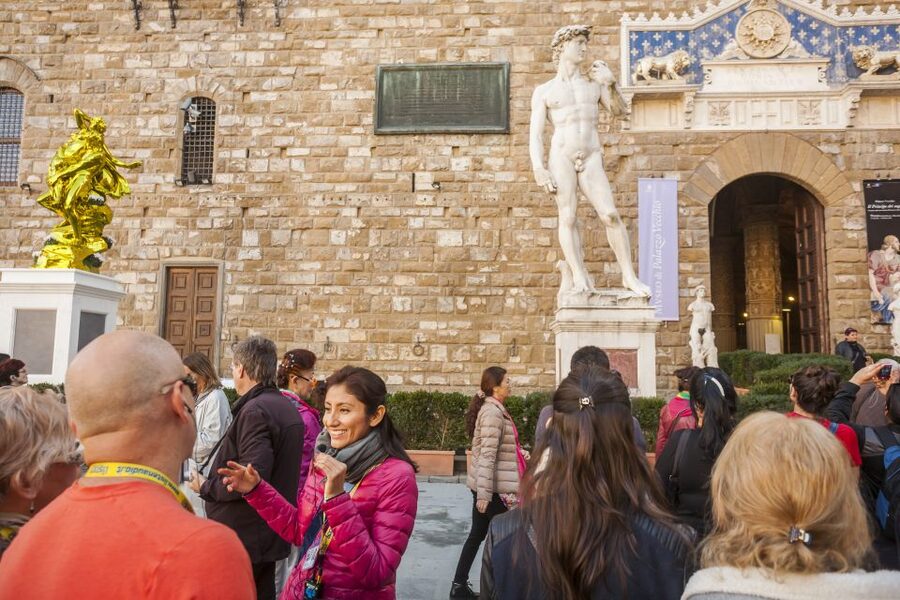
Strozzi Palace is a fine exterior example of Renaissance design. Its regular stone façade and strong proportions make it easy to appreciate even if you are not an architecture specialist.
A guide can point out why the palace feels different from a medieval fortress or a later royal residence. This is where short explanations earn their keep. You see the building, then learn how Renaissance ideas changed the look of elite homes and public spaces.
The final approach leads to Piazza della Repubblica. The square is broad, open, and more modern in feeling than the tight streets around Santa Croce or the medieval bridge. Cafés and shops give it a social role, while its scale reflects later changes to Florence’s center.
The itinerary allows about ten minutes here. That is enough to orient yourself and take in the square, but not enough for a long stop at a café. If you want a relaxed coffee break, plan it after the tour.
Finishing at the Florence Duomo
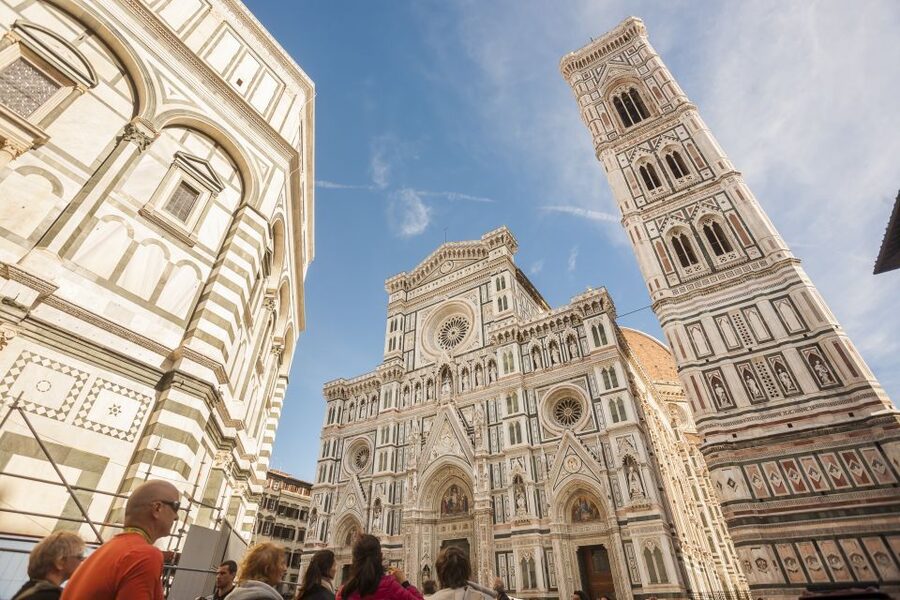
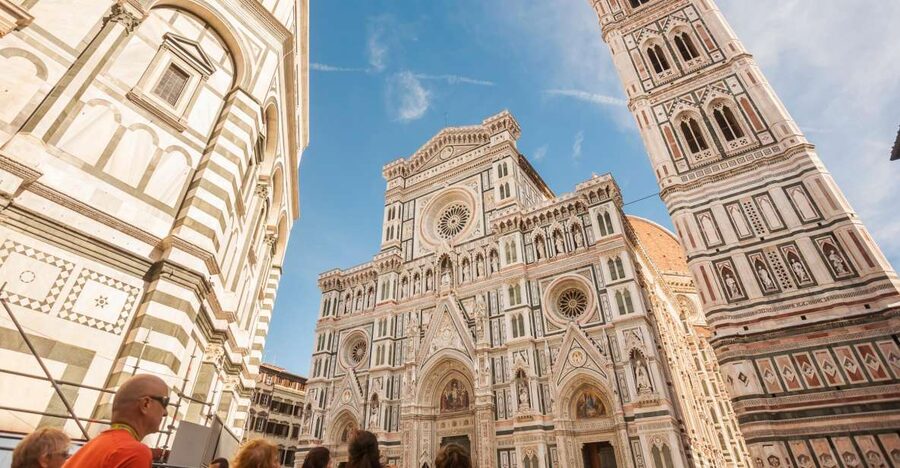
The Florence Cathedral is the natural finale. The exterior gives you a chance to study the marble colors, geometric patterns, and massive dome without the pressure of an indoor queue.
Your guide will explain the cathedral’s place in Florence and point out the key parts of the Duomo complex. The listed visit is short, so do not expect a climb into the dome, a visit to the bell tower, or a tour of the interior.
The clothing rule matters if you plan to enter the cathedral later. Shorts and sleeveless tops are not permitted inside. Dress with that in mind, especially if this walking tour is part of a full day in the center.
Ending here is practical. From the Duomo, you can easily continue to other central sights, return to a museum, or stop for lunch. It also gives you a clear landmark for getting your bearings.
What the guides add to the experience
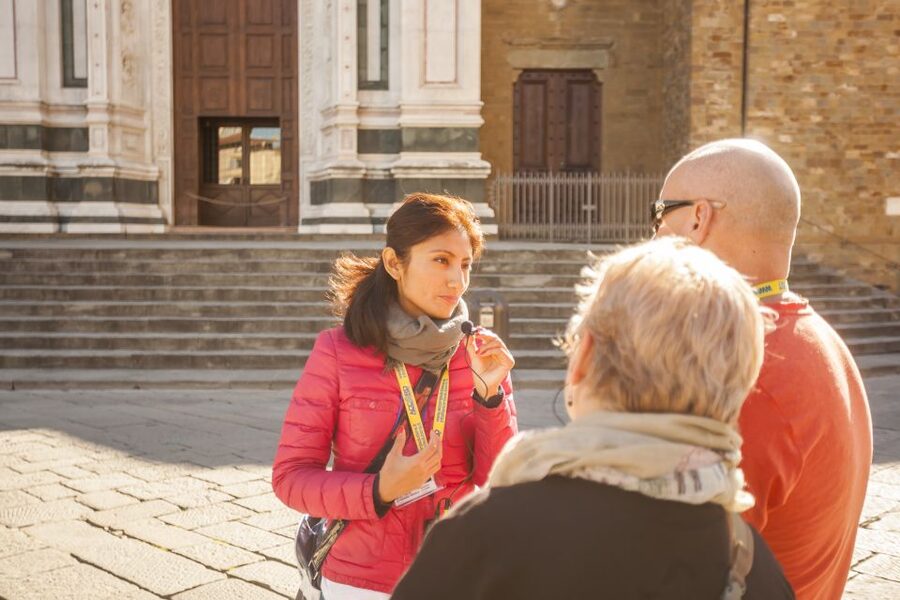
The guide makes or breaks a fast city walk. This route includes many buildings, so a guide who simply recites dates can leave you tired and no wiser. The best feedback points to guides who explain Florence in a relaxed, personal way.
Giacomo was praised for making the city’s complex past easy to follow and for answering questions. Claudia was noted for working well with children and for offering restaurant and leather-shopping suggestions. Marco received praise for explaining architecture, artists, and the rise of the Medici family.
Other guides named in the feedback include Giulio, Ilaria, Manuela, Natalia, Olesia, Silvia, Isabella, Glenda, and Antonella. The repeated strength is clear communication paired with local insight. Some guides have also finished with gelato or a café stop, though you should not assume that this is guaranteed.
One small warning: a past guide’s audio equipment picked up too much street noise, making parts of the explanation hard to follow. That issue may not occur on your tour, but Florence’s traffic, crowds, and open squares can make listening difficult. Stay near the guide and ask for repetition when needed.
Pace, distance, and who should book
Two hours sounds generous until you count the stops. The route includes Santa Croce, Piazza della Signoria, Neptune Fountain, Ponte Vecchio, Pitti Palace, Piazza Pitti, Via Tornabuoni, Strozzi Palace, Piazza della Repubblica, the Duomo, and several other landmarks.
You are not racing from one end of Florence to another, but the walk is active. Comfortable shoes are essential. The route uses city streets, bridges, and busy public squares, so it may not suit anyone with mobility limitations, despite the activity information also describing it as wheelchair accessible.
Families can do well on this tour, especially with a guide who adjusts explanations for children. Past groups included young children, and guides were praised for keeping them involved. Still, the exterior-only format means you need to judge your child’s interest in walking and listening rather than looking at museum objects.
The private format is especially useful for couples, families, or small groups who want to ask questions. It may be less appealing if you prefer a slow architectural study of just two or three buildings.
Value, flexibility, and what is not included
No price is provided here, so I cannot judge the exact cost. The value depends on how much you want from a personal orientation. For a private group, paying more than a large group walk can make sense if you use the guide for questions, neighborhood advice, and help planning the rest of your stay.
The tour does not replace museum admission. You will need separate plans for the Uffizi, Bargello, Medici Chapel, Santa Croce, Pitti Palace, and the Duomo interior or climb. Think of this walk as a map with stories attached, not as an entrance ticket bundle.
The flexible cancellation policy allows cancellation up to 24 hours before the start for a full refund, and you can reserve now and pay later. Those terms are useful when your Florence schedule is still changing.
The activity is offered in English and Italian. Since the route can vary with the meeting point, confirm where to meet and which direction the walk will take.
Should you book this Florence walking tour?
Book it if you want a private first look at Florence, prefer a live guide to an audio app, and want to connect the city’s major squares, bridges, palaces, and churches in one walk. It is particularly useful on your first day, when you need to understand the layout before choosing which interiors deserve your time.
Skip it if your main goal is museum entry, detailed art analysis, or a relaxed visit to a single monument. The tour covers a lot, but every major stop is exterior only.
For most first-time visitors, the strongest plan is to use this as your orientation walk, then return to one or two places that caught your attention. That way, the two-hour route gives you both a sense of Florence and a sensible plan for the days ahead.
FAQ
How long does the Florence walking tour last?
The tour lasts two hours.
Is this a private tour?
Yes. The activity is offered for a private group.
Which languages are available?
The live guide speaks English or Italian.
Does the tour include entry inside the monuments?
No. The monuments are visited from the outside only.
What landmarks are included?
The route includes Santa Croce, Piazza della Signoria, Palazzo Vecchio, Neptune Fountain, Ponte Vecchio, Pitti Palace, Piazza Pitti, Via Tornabuoni, Strozzi Palace, Piazza della Repubblica, the Bargello, the Uffizi area, the Medici Chapel area, and the Florence Duomo complex.
What should I wear?
Wear comfortable shoes. If you plan to enter the cathedral after or during your day in Florence, shorts and sleeveless tops are not permitted inside.
Is the tour suitable for people with mobility impairments?
The activity information says it is not suitable for people with mobility impairments, although it also lists the tour as wheelchair accessible. Check the current arrangements with the provider before booking if accessibility is important for your group.
More Hidden Gems Walking Tours in Florence
- Florence: Dark Secrets & Scandals Evening Walking Tour
★ 4.5 · 120 reviews - Dublin Highlights and Hidden Gems Guided Walking Tour
★ 5.0 · 6,020 reviews - Explore Berlin: See All The Iconic Sights & Some Hidden Gems
★ 5.0 · 4,429 reviews - Kyoto Geisha Walking Tour: Gion District & Hidden Gems
★ 4.7 · 3,273 reviews
New routes in Florence
- Florence: Heart of Florence Guided Walking Tour★ 4.0 · 81 reviews
- Florence: Walking Tour with David, Duomo & Uffizi Gallery★ 4.7 · 414 reviews
- Florence: The Medici Family Guided Walking Tour★ 4.7 · 129 reviews
- Florence Walking Tour & Skip-the-Line David at Accademia★ 4.7 · 159 reviews
- Florence Street Food Walking Tour with Wine in Duomo Area★ 4.9 · 76 reviews
- Florence: Tuscan Food and Wine Guided Walking Tour★ 4.8 · 72 reviews
- Florence: Small Group Guided Walking Tour★ 4.7 · 176 reviews
- Florence: Medici Family Guided Walking Tour★ 4.5 · 193 reviews
Florence Walking Tours, compared.
Uffizi & Accademia Timed Entry: Small Group Duomo Walking Tour
Read our review →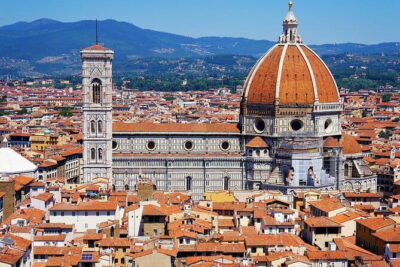
Duomo Complex with Tickets & City Walk Guided Tour
Read our review →
Michelangelo’s David, Accademia & Uffizi Small Group Tour
Read our review →
David & Accademia Guided Tour with Time Entry Ticket
Read our review →
Renaissance and Medici Tales Guided Walking Tour
Read our review →