
Review · SPLIT
Split Walking Tour with Professor of History
Split’s old town is not simply a collection of Roman ruins. It is a living city built inside and around Diocletian’s Palace, with cafés in ancient rooms, laundry above Roman walls, and narrow lanes that still serve as everyday streets. This tour gives you the story that ties those pieces together, led by a history professor rather than a guide working from a short script.
I like the easy mix of major sights and local details. You get the palace substructures, Peristyle, Vestibule, and Golden Gate, then move into Croatian culture, food, city life, and the story behind the shiny toe of Gregory of Nin. I also like that guides such as Mario and Anita bring humor and personal pride to the walk. The main caution is pace: the advertised time is about two hours and 20 minutes, but the tour may run closer to three hours if the guide has more to share.
Key points at a glance
- A professor-led walk through a living Roman palace: See the main palace spaces while learning how Split grew around them.
- Eleven stops in about two hours and 20 minutes: The route covers the Riva, Roman interiors, medieval lanes, 19th-century streets, and open squares.
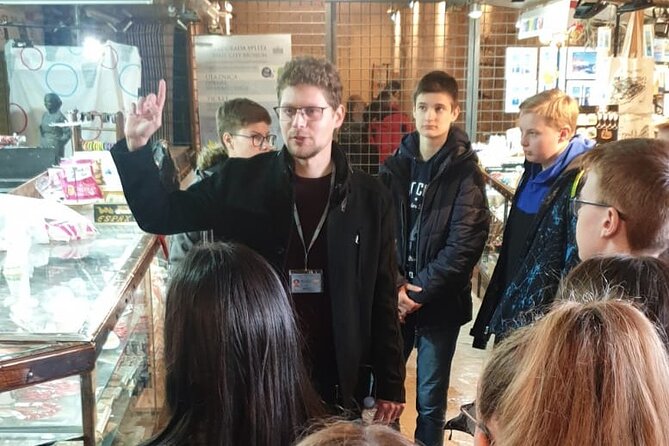
- Strong historical storytelling: Mario is associated with humor, myth-busting, food advice, and detailed explanations, while Anita is praised for her care and clear knowledge of Croatia.
- Small-group format: The group can include up to 17 people, giving you more opportunity to hear and engage than on a large coach tour.
- Useful orientation for your stay: The tour ends at Fruit’s Square, with advice on food, banks, shops, and things to do available from the guide.
- Budget-friendly access: At $24.19 per person, the price covers the guided walk and all fees and taxes, but not paid entry into the cathedral or other sights.
Why Split makes an excellent walking-tour city
Split rewards slow walking. The center is compact, but its layers are easy to miss if you simply pass through with a map. Roman imperial architecture, medieval homes, Venetian-era traces, Napoleonic planning, and modern café life all sit close together.
The focus is Diocletian’s Palace, built for the Roman emperor Diocletian at the beginning of the fourth century. Yet the experience is not limited to an archaeological site. People live and work within the old center, and that gives the tour a useful sense of place. You are not just looking at columns behind a fence. You are walking through streets that remain part of Split’s daily life.
A history professor can add the political and religious setting behind the stone. The best moments are likely to come when the guide explains why a Roman mausoleum became a cathedral, how a pagan temple became a Christian baptistery, or why a formal imperial entrance now sits beside ordinary city traffic.
More History Walking Tours in Croatia
- Walking Tour of Split with a ‘Magister’ of History
★ 5.0 · 1,122 reviews - Split: History and Heritage Walking Tour
★ 4.9 · 650 reviews - Split: Local History and Culture 90-Minute Walking Tour
★ 5.0 · 194 reviews
Starting on the Riva beside the palace
The walk begins at the Brass Gate, also called Porta Aenea, at Obala Hrvatskog narodnog preporoda 22. This is beside the Riva, Split’s waterfront promenade, where people sit over coffee, enjoy the sun, and watch the city move around them.
The first 15 minutes help you get your bearings. The Riva is not ancient in the same way as the palace, but it is important to understanding modern Split. It is the city’s public living room, a place where social life happens in plain view.
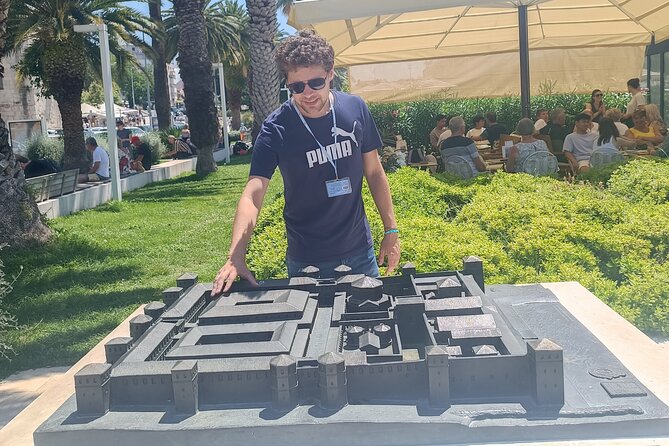
Starting here also gives the guide a natural way to explain the palace’s position beside the harbor. You can look at the model of the palace before entering the old center, which helps you picture the original imperial complex rather than seeing each ruin as an isolated fragment.
The palace substructures and Diocletian’s imperial plan
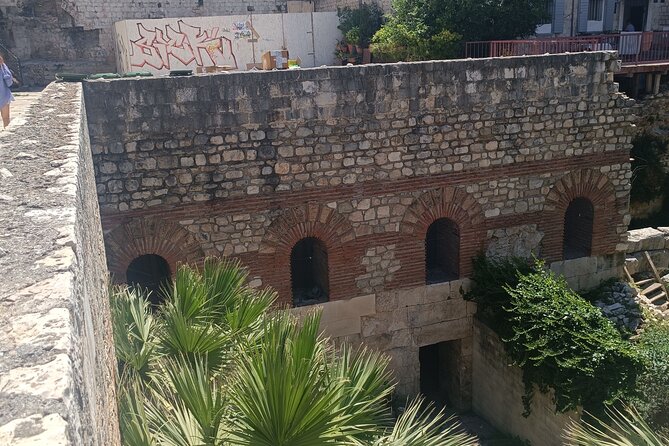
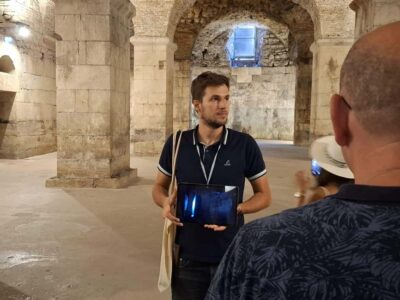
The substructures are among the strongest parts of the walk. These basement halls are unusually well preserved, and they show the layout of the palace above them. The space helped earn Split’s historic center UNESCO World Heritage status in 1979.
You spend about 15 minutes here. That is enough for a clear introduction, though not a long archaeological study. The guide can explain how these lower rooms supported the imperial apartments and how later residents used the spaces. Their condition makes the Roman plan easier to understand than it is from the upper streets alone.
The tour includes the guided explanation, but you should note that the listed price does not promise entry to every paid interior in Split. The itinerary identifies the cathedral and Temple of Jupiter as exterior visits. Ask the guide where to return if you want to pay for additional access after the walk.
Peristyle, the palace’s ceremonial heart
From the substructures, the route reaches the Peristyle, the central square of the palace. This is where the emperor appeared in a highly staged setting, presented as the living son of Jupiter. Subjects approached him with gestures of submission, including kneeling and kissing the edge of his scarlet cloak.
The stop lasts about 10 minutes, but the setting deserves attention. Look up at the surrounding columns and the formal stone architecture. The square was built to express power, not to serve as a casual neighborhood plaza. Today, it can feel open and social, which makes the contrast with its imperial purpose especially striking.
This is also a good place to listen for the guide’s ability to make ceremony understandable. A long list of dates would miss the point. The value is seeing how architecture controlled movement and made the emperor seem larger than ordinary life.
More History Walking Tours in Split:
- Split: Walking tour of Split with a ‘Magister’ of History
★ 5.0 · 110 reviews - History and Hauntings of Salem Guided Walking Tour
★ 5.0 · 14,564 reviews - Lisbon: History, Stories and Lifestyle Walking Tour
★ 4.8 · 10,902 reviews - Boston: Freedom Trail History Small Group Walking Tour
★ 5.0 · 6,450 reviews
The Vestibule and the route to the imperial apartments
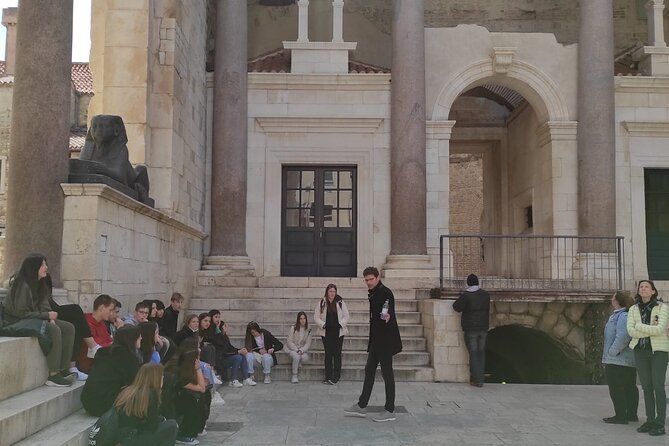
The Vestibule, also called the Rotonda, was the formal entrance to the emperor’s private apartments. It was built by the beginning of the fourth century and once had a dome. Its circular hall measures about 17 meters high and 12 meters across.
The tour allows roughly 10 minutes here. That is enough time to take in the shape and hear why this room was reserved for selected audiences, including ambassadors. The acoustics and round form help you imagine it as a controlled meeting place rather than a simple passage.
You may find the Vestibule less visually complete than some palace spaces. Its importance comes from its role in the plan. The guide’s explanation is what turns a tall circular room into part of the emperor’s route through the complex.
Saint Domnius, from Roman mausoleum to cathedral
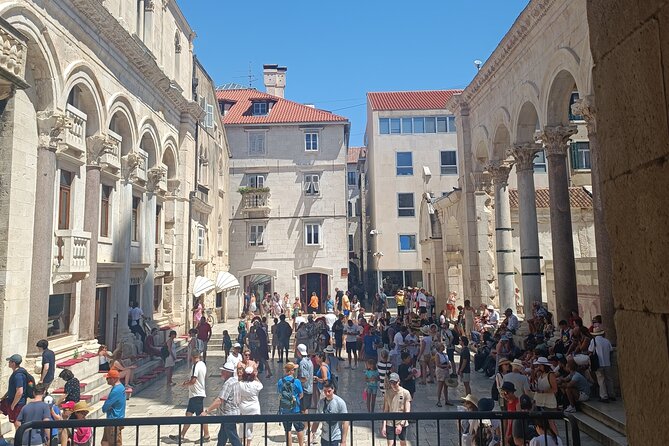
The Cathedral of Saint Domnius receives about 20 minutes, but this tour visits it from the outside. The building can be understood in three ways: it began as a Roman mausoleum, it occupies part of Diocletian’s palace, and it now functions as a church.
That change tells you much about Split. The city did not discard the Roman complex when power shifted. It adapted the old buildings for new religious and civic purposes. The guide explains the exterior and gives you information for a later visit if you want to pay the entrance fee.
This arrangement keeps the walk affordable, but it also means you should plan extra time if seeing the cathedral’s interior matters to you. The tour is best viewed as an orientation and interpretation of the site, not an all-inclusive admission ticket.
Jupiter’s Temple and the narrowest street
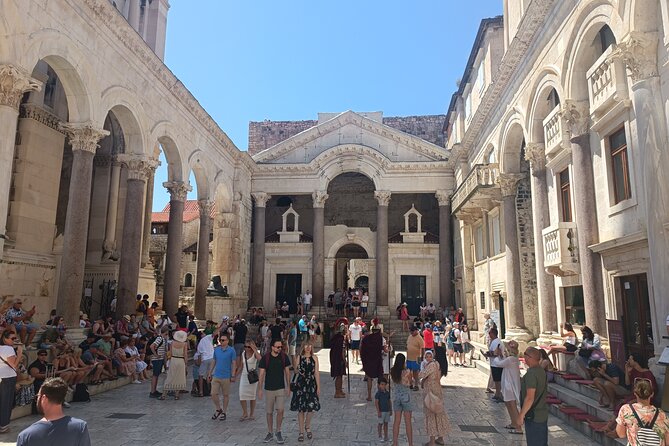
The next stop is the Temple of Jupiter, seen from outside. Jupiter was the supreme god of Roman religion, associated with the sky and thunder. The temple later became a baptistery dedicated to Saint John the Baptist.
The religious change is another useful example of Split’s layered past. Roman worship, Christian practice, medieval building, and modern tourism occupy the same small area. The guide can explain the temple’s original role before pointing out the later conversion.
On the way to the Golden Gate, you pass a tiny lane known as Let Me Pass Street. Local belief calls it the narrowest street in the world. You do not need to treat that claim as a scientific record to enjoy the joke. It is a fine example of Split’s practical, close-packed old-town design.
Golden Gate and Gregory of Nin’s lucky toe
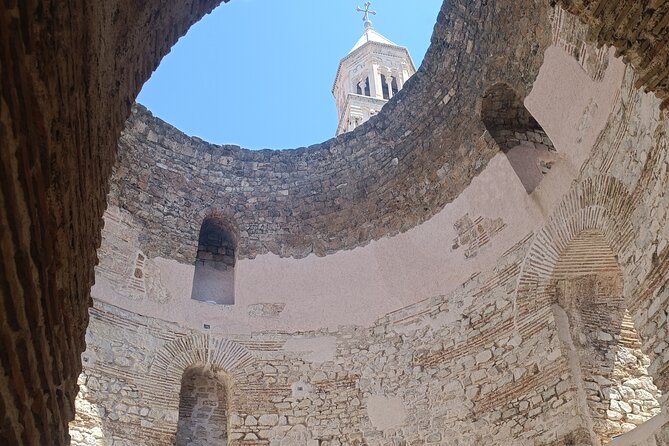
The Golden Gate, or Northern Gate, was one of four main entrances to the Roman palace. It was the emperor’s formal entry point and received more decoration than an ordinary service door. In the Middle Ages, it was sealed and lost columns and statuary before later restoration reopened it.
The stop lasts about 15 minutes. Look for the scale of the entrance and imagine how different it must have felt when it marked the edge of an imperial residence. The gate is also a good reminder that old buildings change through use, neglect, repair, and reinvention.
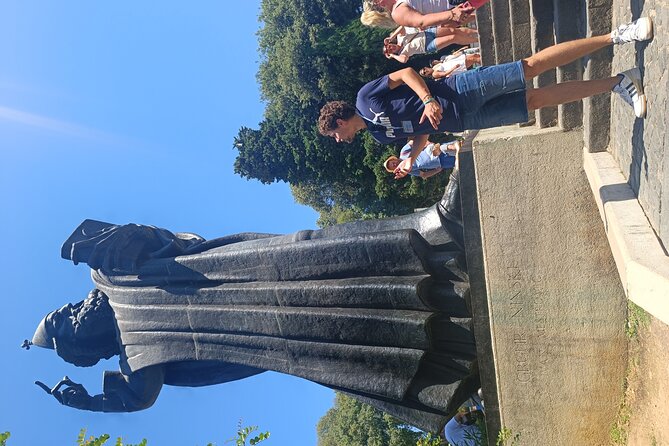
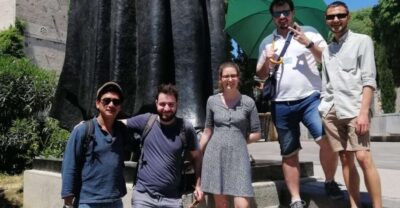
Nearby is the 8.5-meter statue of Gregory of Nin by Croatian sculptor Ivan Meštrović. Its toe has been rubbed smooth by people seeking good luck. You will have time to hear who Gregory was and why the statue matters, then decide if you want to add your own touch to the polished toe.
Marmontova Street, Prokurative, and the city beyond Rome
The route then moves beyond the palace to Marmontova Ulica. The street honors Napoleon’s marshal Marmont, who helped shape the urban development of Dalmatian cities. That detail gives the tour a wider frame. Split is not only Roman, and its modern streets reveal later rulers and planners.
Next comes Republic Square, better known as the Prokurative. The open square is surrounded on three sides by ornate neo-Renaissance buildings. Its broad shape feels very different from the compressed Roman and medieval lanes, so the change in space is easy to notice.
These stops are short, about 10 minutes each. They work well as links between the palace and the modern city, though you should not expect a long architectural lecture at every building. The guide has to keep the walk moving while still giving you enough context to recognize why each area matters.
Fruit’s Square and useful local orientation
The final stop is Fruit’s Square, or Trg Braće Radić. Its name recalls the women who once sold fruit there. The square also offers a natural place to discuss Marko Marulić, often called the father of Croatian literature, along with Croatian history and food.
I like this ending because it shifts the emphasis from emperors and monuments to local life. After hearing about Roman rulers and medieval religious change, you finish with literature, markets, and gastronomy. It gives you practical ideas for what to notice and eat during the rest of your time in Split.
The official end point is back at the meeting point, but the route description identifies Fruit’s Square as the last stop. Confirm the exact end arrangement with your guide on the day. Either way, you finish in the old center, close to places you may want to revisit.
What the guides add to the experience
The guide makes or breaks a history walk. Mario is repeatedly associated with energetic storytelling, humor, trivia, and a strong command of Split’s past. He also gives practical suggestions about restaurants, shops, food, onward travel, and which banks or ATMs to use.
Anita brings a slightly different strength. She is described as proud of her Croatian heritage, attentive to the whole group, and thoughtful about making people feel comfortable. If your group includes a range of ages or interests, that kind of care matters.
Guide assignments can change, so you should not book on the assumption that one named person is guaranteed. Still, the repeated emphasis on clear English, humor, historical depth, and personal connection points to the main character of this experience.
Group size, timing, and physical comfort
The maximum group size is 17 people. That is not a private walk, but it is small enough for the guide to keep an eye on the group and respond to questions. A private upgrade is available if you want a more personal pace and a greater say in the discussion.
The advertised duration is about two hours and 20 minutes. In practice, allow closer to three hours if the guide extends the explanations. That can be a benefit if you enjoy history, but it may cause trouble if you have a fixed lunch reservation, shore excursion, or transport connection.
You will be walking and standing in old streets and squares. The guide has been praised for moving the group into shade and avoiding long spells in one place, but conditions can still be warm and exposed. The tour requires good weather, and the provider may offer another date or a full refund if poor weather cancels it.
The meeting point is near public transportation, and most people can participate. Service animals are allowed. The activity is offered in English and uses a mobile ticket, so keep the booking confirmation available on your phone.
Is $24.19 a fair price?
At $24.19 per person, this is good value if you want a clear introduction to Split rather than a series of paid admissions. The price includes all fees and taxes, and the route covers a wide range of places in one compact walk.
The important limit is what the price does not include. Alcoholic drinks are excluded, and entrance to the Cathedral of Saint Domnius and Temple of Jupiter is not included. The guide explains both from outside, then helps you decide if you want to return and pay for entry.
I would book this early if your dates are fixed. The average booking lead time is 33 days, which suggests that the experience often fills well ahead of the visit. Free cancellation is available up to 24 hours before the start time for a full refund. Changes or cancellations inside that window are not accepted for a refund.
Who should book this Split walk?
I would choose this tour for a first visit to Split, especially if you want the old center to make sense before exploring alone. It suits people who enjoy dates, stories, political context, and the way buildings change purpose over time.
It is also a good fit if you want practical advice alongside monuments. Food suggestions, city tips, and local explanations can save you time after the walk. The mix of Roman, medieval, Croatian, and modern material keeps the route from feeling like a single-site archaeology lesson.
You may prefer a private tour if you dislike group pacing or want to focus closely on architecture, religion, or Croatian literature. You might also choose another option if you need a strict two-hour finish or if paying for interior access is your main goal.
Should you book it?
Book it if you want Split explained by someone who treats the palace as a living part of the city. The strongest reasons are the professor-level historical context, the range of stops, the small maximum group, and the practical local advice associated with guides such as Mario and Anita.
Skip it only if you want a short photo walk, guaranteed cathedral entry, or a tightly fixed finish time. For most first-time visitors, $24.19 buys a useful foundation. Afterward, you can return to the palace spaces that caught your interest and explore them at your own pace.
FAQ
How much does the Split Walking Tour with Professor of History cost?
The tour costs $24.19 per person. All fees and taxes are included.
How long does the walking tour last?
The advertised duration is approximately two hours and 20 minutes. It may run longer, with some tours lasting close to three hours when the guide adds extra explanations.
What language is the tour offered in?
The tour is offered in English.
Where does the tour start?
The meeting point is the Brass Gate, also called Porta Aenea, at Obala Hrvatskog narodnog preporoda 22 in Split.
Where does the tour end?
The activity ends back at the meeting point. Fruit’s Square is identified as the final sightseeing stop.
Are cathedral and Temple of Jupiter admission fees included?
No. The Cathedral of Saint Domnius and Temple of Jupiter are visited from outside, and admission is not included.
What is the cancellation policy?
You can cancel at least 24 hours before the start time for a full refund. Cancellations or changes made less than 24 hours before the start time are not accepted for a refund. If bad weather causes cancellation, you will be offered another date or a full refund.
New routes in Split
- Split: Walking tour of Split with a ‘Magister’ of History★ 5.0 · 110 reviews
- Split: Local History and Culture 90-Minute Walking Tour★ 5.0 · 194 reviews
- Split: Food Tasting Walking Tour★ 4.9 · 102 reviews
- Split: Diocletian Palace & Old Town Guided Walking Tour★ 4.7 · 882 reviews
- Split: 1.5-Hour Walking Tour and Diocletian’s Palace★ 4.7 · 256 reviews
- From Split: Krka Waterfalls Cruise & Trogir Walking Tour★ 4.7 · 681 reviews
- Split: History and Heritage Walking Tour★ 4.9 · 650 reviews
- Diocletian’s Palace and Old Town SMALL GROUP Walking Tour★ 5.0 · 502 reviews
Split Walking Tours, compared.
Walking Tour of Split and Diocletian’s Palace
Read our review →
Krka Waterfalls tour with Trogir Walking tour and Krka panoramic boat cruise
Read our review →
Walking Tour of Split with a ‘Magister’ of History
Read our review →
Local History and Culture 90-Minute Walking Tour
Read our review →
Browse the lists this tour appears in