
Review · BATH
Bath: The Bad of Bath Walking Tour
Bath’s polished stone facades hide a less polished past. The Bad of Bath Walking Tour brings that side of the city forward, linking famous buildings with stories of crime, corruption, gambling, and Georgian excess. Guide Simon keeps the tone lively, so you learn about Bath without feeling trapped in a classroom.
I like two things in particular. First, the tour visits the major sights, including the Royal Crescent, the Circus, Pulteney Bridge, Bath Abbey, and the Roman Baths area, while giving each place a human story. Second, Simon’s style is flexible and friendly. He asks questions, welcomes discussion, and adjusts his pace to the group. The only real consideration is that the advertised duration varies between roughly 90 minutes and two hours, and the walk goes ahead in bad weather.
Key points to know before booking

- Georgian Bath with the gloss removed: Learn about the thieves, gamblers, scandals, and social excess behind the city’s elegant architecture.
- Simon is the guide to look for: His humour, clear explanations, and easy conversation are central to the experience.
- A gentle circular route: Start and finish at Bath Abbey, with the main sights covered without a strenuous hike.
- Good value for a first look: At $29 per person, you get a guided city introduction without paying entrance fees for attractions you may not plan to enter.
- Friendly to different ages and abilities: The tour is described as pram and wheelchair friendly, and children, teenagers, and older adults can take part.
- Plan for British weather: The walk runs rain or shine, so bring suitable clothing and footwear.
Why the Bad of Bath idea works
Bath is easy to admire from the outside. The city has grand crescents, formal squares, pale honey-coloured stone, and a reputation tied to Roman baths, Georgian society, and Jane Austen. A standard tour can give you those facts in neat order.
This tour takes a different route through the same streets. It asks what happened behind the elegant doors and who benefited from Bath’s fashionable social life. The focus is not simply on famous buildings, but on the people who used them, misused them, or helped create the city’s more questionable reputation.
That makes the experience useful if you have already seen Bath’s postcard views. You still get the big landmarks, but the stories give them more character. A grand terrace becomes more than a line of pretty houses. A social gathering becomes a chance to talk about status, pleasure, gambling, and the darker side of Georgian manners.
The tone matters. This is not presented as a frightening ghost walk, and it is not only a crime tour. You get real stories about real people, along with architecture and social history. The humour keeps the subject approachable, while the darker material gives the tour its identity.
More Walking Tours in the UK:
- Magical London: Harry Potter Guided Walking Tour
★ 4.7 · 22,044 reviews - Edinburgh: Harry Potter Magical Guided Walking Tour
★ 4.8 · 11,944 reviews - Edinburgh Castle: Guided Walking Tour with Entry Ticket
★ 4.7 · 11,699 reviews
Starting at Bath Abbey
The circular walk begins and ends at Bath Abbey, a practical meeting point in the centre of the city. That makes it easy to fit the tour into a day of sightseeing, especially if you are arriving by train or spending only a short time in Bath.
Starting here also puts you close to several of the city’s major sights from the outset. You are not sent out to a distant suburb before the tour begins. The route stays within the central sightseeing area and connects the city’s Roman and Georgian layers.
I would use this tour early in your Bath visit. You will get an orientation of the centre, learn which buildings deserve a second look, and pick up facts you can use for the rest of your stay. One participant who arrived late was able to join the group after contacting Simon, and he quickly covered the missed information. That suggests a considerate approach, though you should still aim to arrive on time.
The Roman and Georgian sides of Bath
Bath’s story stretches across several periods, and the walk uses that contrast well. The Roman Baths area represents the city’s ancient fame, while the Georgian streets show how Bath developed into a fashionable resort and social centre.
The tour is not an entrance visit to the Roman Baths. Entrance fees are not included, so you should treat the exterior and surrounding area as part of the walking route. If you want to go inside, plan that separately and allow extra time.
The Georgian portion is the heart of the experience. Bath’s 1700s identity was built around style, social connections, leisure, and display. That sounds polished until you consider who was gambling, who was exploiting the system, who was excluded, and how quickly pleasure could turn into debt or scandal.
This is where the tour offers more than a list of dates. Simon connects the buildings to the attitudes of the people who lived and socialised there. You hear about the gap between public respectability and private behaviour, which is exactly what makes the Bad of Bath theme more than a gimmick.
The Royal Crescent and the price of elegance
The Royal Crescent is one of Bath’s essential sights, and it is a natural stop for a tour about status and social ambition. Its sweeping curve and uniform facade suggest order, wealth, and good manners.
The useful point here is that the architecture tells only part of the story. A building designed to impress can also reveal how Georgian society valued appearance. As you look across the crescent, you are encouraged to think about the people behind the windows and the social pressures that came with living in a fashionable city.
Do not expect a house visit. The route is an exterior walking tour, and the focus is on stories, views, and context rather than entry into individual buildings. That keeps the price down, but it also means you should book a separate attraction if you want to see period interiors.
The stop works well for photographs, but listen before reaching for your camera. The building itself is easy to admire without help. The added value comes from hearing why the setting mattered and how Bath’s fashionable world functioned.
Same streets, a different guide:
- Underground Vaults Walking Tour in Edinburgh Old Town
★ 4.5 · 8,506 reviews - London: The Original Jack the Ripper Walking Tour
★ 4.7 · 7,833 reviews - Oxford University Walking Tour With University Alumni Guide
★ 5.0 · 6,905 reviews - Edinburgh Castle: Guided Walking Tour with Entry Ticket
★ 5.0 · 5,540 reviews
The Circus and Georgian social theatre
The Circus gives you another strong example of Bath’s planned Georgian architecture. Its rounded form and repeated stone fronts create a feeling of harmony, but the tour uses this polished setting to discuss the less harmonious behaviour connected with fashionable life.
This is one of the places where the guide’s storytelling makes a difference. A dry explanation of architecture may tell you when the buildings were created. Simon’s approach also asks what people were doing for entertainment, how reputations were made, and why the city attracted both respectable society and opportunists.
The stories include gamblers, thieves, and figures linked to Bath’s more scandalous side. The material is lively rather than grim, but parents should know that the tour deals with adult themes such as vice and excess. It remains suitable for a mixed age group, though the exact level of detail can depend on the group and the guide’s judgement.
The Circus is also a good place to notice the physical demands of the walk. The route is described as gentle, and the pace is manageable, but you are still walking on city streets and stopping outdoors. Comfortable shoes are sensible.
Pulteney Bridge and the busy centre
Pulteney Bridge is another headline sight on the route. Its shops and position over the River Avon make it one of Bath’s most recognisable views.
Here, the attraction is not only the bridge itself. The stop helps show how commerce, movement, and social life shaped Bath. A bridge lined with shops feels more connected to ordinary business than the grand crescents do, so it adds useful variety to the route.
The central streets can be active, especially during popular visiting hours. You may need to stay close to the group while crossing roads or moving through crowded areas. Simon is used to keeping people together and checking that nobody is left behind, which is particularly helpful for families and small groups.
The bridge is also a good reminder that this is a city orientation walk, not a remote countryside ramble. You will see Bath as a working urban place as well as a heritage destination.
Simon’s guiding style
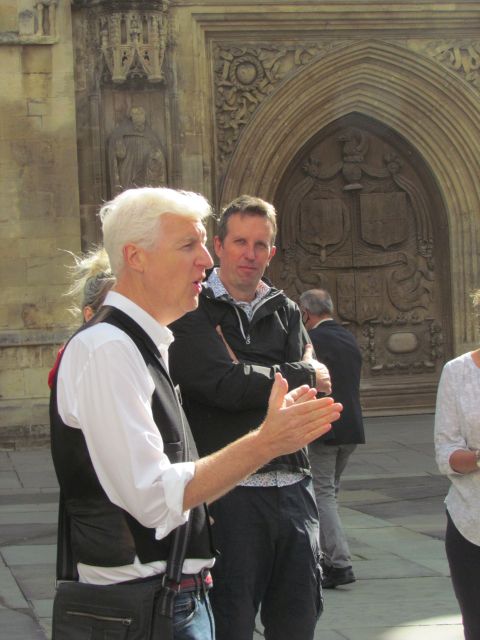
The guide can make or break a two-hour walking tour. Here, Simon’s strongest qualities are his calm manner, humour, and ability to explain complicated social history in plain English.
He does not simply talk at the group. He invites questions and draws people into discussion about Georgian attitudes to enjoyment and excess. That gives the walk a more personal feel, particularly when the group is small.
Small groups can be a real advantage. Several bookings have involved only two to eight people, while another group included 12 participants and even a dog. Simon has been able to keep the conversation inclusive across different ages and interests.
The flexibility is useful for international visitors, too. One participant who was not a native English speaker found Simon easy to follow and willing to explain missed context or unfamiliar phrases. The tour is offered in English only, so some historical vocabulary and fast jokes may still require concentration.
The strongest praise consistently centres on the way Simon makes the information feel alive. He has also tailored parts of the walk to group interests, including references to Bridgerton for fans of the series. That does not turn the tour into a television themed walk, but it shows that he pays attention to who is standing in front of him.
Pace, length, and accessibility
The published duration is two hours, while the walk itself is described as roughly 90 minutes. In practice, you should allow two hours, and possibly a little more if the group is engaged and questions continue.
Some outings have lasted around two and a half hours. That can be a benefit if you enjoy conversation and want extra detail, but it matters if you have a restaurant booking, train, or timed entry elsewhere. Leave a buffer after the tour rather than scheduling something immediately.
The pace is gentle. You are not being marched from landmark to landmark, and the route is designed to cover the central sights without an exhausting climb. Still, it is an outdoor walking tour, so you should be comfortable standing and moving for the full session.
The tour is described as wheelchair accessible and pram friendly. That is important for families and visitors who need step-free access, but Bath’s old streets can still be uneven or busy. If you have specific mobility needs, confirm the route details when booking, since street conditions and temporary obstacles can change.
The walk operates rain or shine. Bath’s weather can shift quickly, so pack a waterproof layer rather than trusting a clear forecast. An umbrella may help, but it can make it harder to hear or stay close to the guide in a busy group.
Is $29 good value?
At $29 per person, the price is reasonable for a guided introduction to central Bath. You are paying for the guide, the route, and the storytelling. Food, drinks, and attraction entrance fees are not included.
The value is strongest if you want to see several major sights in one outing and prefer social history to a formal lecture. You also avoid paying for a bundle of admissions you may not use. If your main goal is to enter the Roman Baths, tour historic interiors, or spend hours inside museums, you will need to budget for those separately.
The cost becomes especially attractive for a small private-feeling group. When only a few people book, Simon can answer questions and adjust the conversation. Even in a larger group, the interactive format gives you more than a scripted route.
You can also reserve now and pay later, with free cancellation up to 24 hours before the start time for a full refund. That helps if your Bath plans depend on weather or a changing day trip schedule.
Who should book this Bath walking tour?
I would choose this tour if you want the major sights with an unusual angle. It suits first-time visitors who need an introduction, repeat visitors who want something fresh, and anyone bored by a simple list of kings, architects, and building dates.
It is a good fit for adults, families with older children, mixed-age groups, and couples. The humour and stories give teenagers something to hold onto, while the manageable pace works for older participants. Pram and wheelchair access also make it more practical than many old-city walks.
You may want another option if you dislike scandal stories, prefer a tightly timed 90-minute route, or want extensive access inside historic buildings. This experience is about outdoor storytelling and city context, not formal attraction entry.
Should you book The Bad of Bath Walking Tour?
Yes, if you want Bath’s famous architecture explained through human behaviour rather than polished heritage facts alone. The combination of the Royal Crescent, the Circus, Pulteney Bridge, Bath Abbey, and the Roman Baths area gives you a solid city introduction, while the stories of gamblers, thieves, corruption, and excess keep it distinctive.
I would book it near the start of your stay and wear good shoes with rain protection. Allow the full two hours, stay open to questions, and treat Simon’s humour as part of the experience. At $29, it is a sensible way to get your bearings and see why Bath’s elegant surface does not tell the whole story.
FAQ
Where does The Bad of Bath Walking Tour start and finish?
The tour starts and ends at Bath Abbey. It follows a gentle circular route through central Bath.
How long does the tour last?
The listed duration is two hours, while the walking portion is described as roughly 90 minutes. You should allow about two hours, and possibly longer if the group has questions or discussion continues.
Which Bath sights are included?
The route includes famous places such as the Royal Crescent, the Circus, and Pulteney Bridge. The central area around Bath Abbey and the Roman Baths is also part of the city sightseeing experience.
Is the tour wheelchair accessible?
Yes. The tour is described as wheelchair accessible and suitable for prams.
What language is the tour in?
The live tour guide speaks English, and English is the listed tour language.
Does the tour operate in bad weather?
Yes. The walk takes place rain or shine, so bring suitable clothing and footwear.
Are attraction entrance fees, food, or drinks included?
No. The price covers the guided walking tour only. Entrance fees, food, and drinks are separate.
New routes in the UK
- Aberdeen City Centre Walking Tour (2pm)★ 5.0 · 217 reviews
- German London : The Ultimate Walking tour★ 4.8 · 400 reviews
- London: Medieval History Walking Tour from The Tower★ 4.9 · 318 reviews
- Oxford: Official University and City Walking Tour★ 4.7 · 618 reviews
- The Beatles London Walking Tour★ 4.2 · 147 reviews
- Stratford-Upon-Avon’s Town Walking Tour (10:30am & 2pm)★ 4.8 · 143 reviews
- The Sinister Side of Shakespeare’s Stratford Walking Tour★ 4.8 · 547 reviews
- Stratford-Upon-Avon: The Famous Walk Talk Show★ 4.9 · 342 reviews
Bath Walking Tours, compared.
Walking Tour of Bath with Blue Badge Tourist Guide
Read our review →
City Walking Tour with Optional Roman Baths Entry
Read our review →
Bridgerton Filming Locations Walking Tour with Music
Read our review →
Private Bridgerton Walking Tour for upto 20 people
Read our review →Browse the lists this tour appears in