
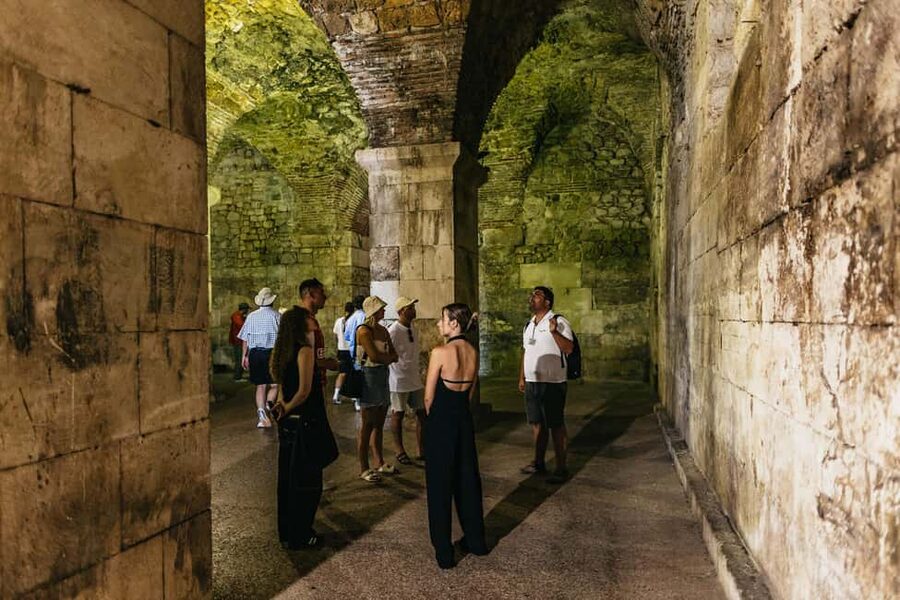
Review · SPLIT
Split: Diocletian Palace & Old Town Guided Walking Tour
Diocletian’s Palace is not a quiet ruin sitting apart from modern life. It is the working heart of Split, with cafés, shops, homes, and narrow lanes built into the walls of a Roman emperor’s retirement palace. This short walk helps you understand that unusual mix before the stones start to blur together.
I like the compact route and the guides’ clear storytelling. Ina, Natasa, Darko, Tin, and other local guides are often praised for answering questions, adding humor, and explaining how Split grew around the palace instead of leaving it as a museum. The four gates and the Peristyle also give you a useful visual framework for exploring on your own.
The main drawback is time. At about 50 minutes, or roughly an hour in the supplied itinerary, this is an introduction rather than a full archaeological tour. Crowds, heat, uneven cobbles, and the occasional lack of a microphone can also make it harder to hear every word.
Key points at a glance

- A Roman palace that became a city: Walk through a living Old Town built inside and around Diocletian’s fourth-century complex.
- Four original gates: See the Bronze, Silver, Golden, and Iron Gates, each facing a different side of the palace.
- A strong first look at Split: The short format gives you the main sights without taking half a day.
- Guides with personality: Ina, Natasa, Darko, and Tin are praised for clear explanations, humor, local tips, and patience with questions.
- Good value at $17: You get a guided introduction to the palace and Old Town without paying for transport or a long formal excursion.
Why this short walk helps you understand Split

Split can feel confusing at first. Ancient columns appear beside restaurant tables. Laundry hangs above Roman walls. Medieval lanes twist through a palace built for an emperor who retired here in AD 305.
That confusion is part of the charm, but it is not always easy to read without help. This tour gives you the basic map: the waterfront, the palace gates, the Peristyle courtyard, the cathedral, the cellars, and the nearby squares. Once you know those anchors, you can return later and explore at your own pace.
The tour begins at Apodos Travel Agency, beside an open-top red bus. Look for staff in red or white shirts. That meeting point matters because the Riva promenade can be crowded, especially when buses and day visitors fill the waterfront. Arrive with enough time to spot the red bus and connect with your guide.
The walk is offered in English, Spanish, and Italian. Guide assignments can vary, but the names that appear repeatedly in the supplied experiences include Ina, Natasa, Darko, Tin, and Ena. Their styles differ, yet the strongest pattern is clear: the tour works best when you ask questions. Several guides stay after the walk to explain extra details or suggest what to see next.
More Old Town Walking Tours in Croatia
- Split: Old Town and Diocletian Palace Walking Tour
★ 4.9 · 4,727 reviews - Diocletian’s Palace and Old Town SMALL GROUP Walking Tour
★ 5.0 · 502 reviews - SPLIT-PRIVATE Walking Tour of Diocletian’s Palace & Old Town
★ 5.0 · 467 reviews
Starting on the Riva promenade
The Riva is Split’s palm-lined waterfront, filled with cafés and open views toward the Adriatic. It is a fitting starting point because you can see the city’s two personalities right away: a polished public promenade in front of an old stone center.
Your guide uses the waterfront as a quick orientation point before leading you inland. From here, the palace does not look like one giant imperial compound. Modern façades and later buildings have softened its edges. That is exactly why the introduction is useful.
I would not treat the Riva stop as a major sightseeing visit in itself. It is more of a visual reset before the tighter streets begin. If you arrive early, use the time to get water and check your footwear. The walk soon moves onto uneven stone and cobblestones.
Passing through the four palace gates
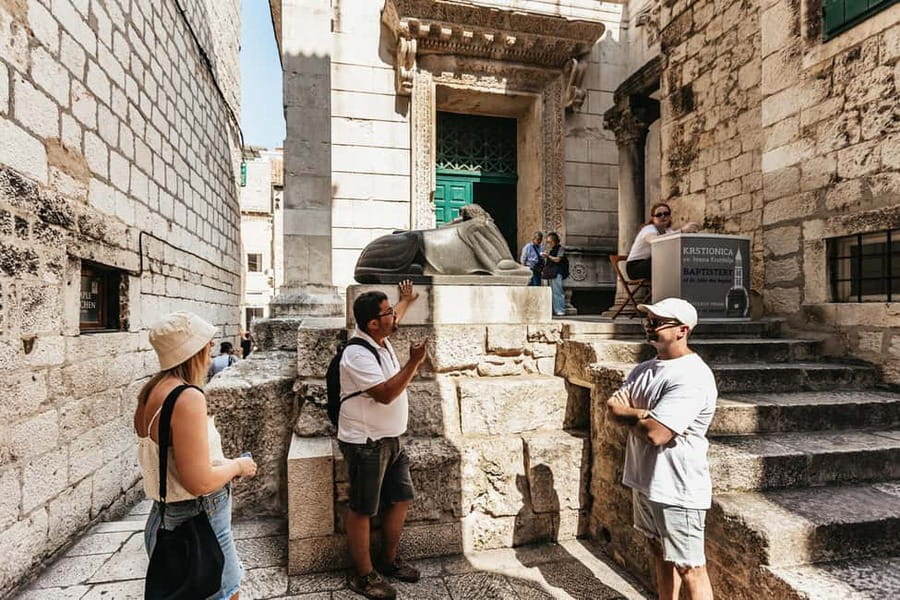
One of the best features of the route is its attention to the Bronze, Silver, Golden, and Iron Gates. These were the original entrances to Diocletian’s fortified complex, and seeing all four gives you a better sense of how the palace was organized.
The gates also help you orient yourself after the tour. The Bronze Gate faces the waterfront, while the other entrances connect the palace with the surrounding city. You do not need to memorize every detail, but noticing their different roles makes later wandering much easier.
The passages are not grand in the same way as the Peristyle. Some are tight, worn, and partly absorbed into daily city life. That contrast is the point. This is not a staged Roman attraction with everything cleared away. It is a place where old defensive walls and modern foot traffic share the same space.
Expect other people moving through the gates, particularly at busy times. A small group is easier to keep together in these narrow spots. One useful strength of the guides praised in the supplied experiences is their habit of watching for people at the back, rather than marching ahead and leaving stragglers behind.
The palace cellars and the emperor’s quarters
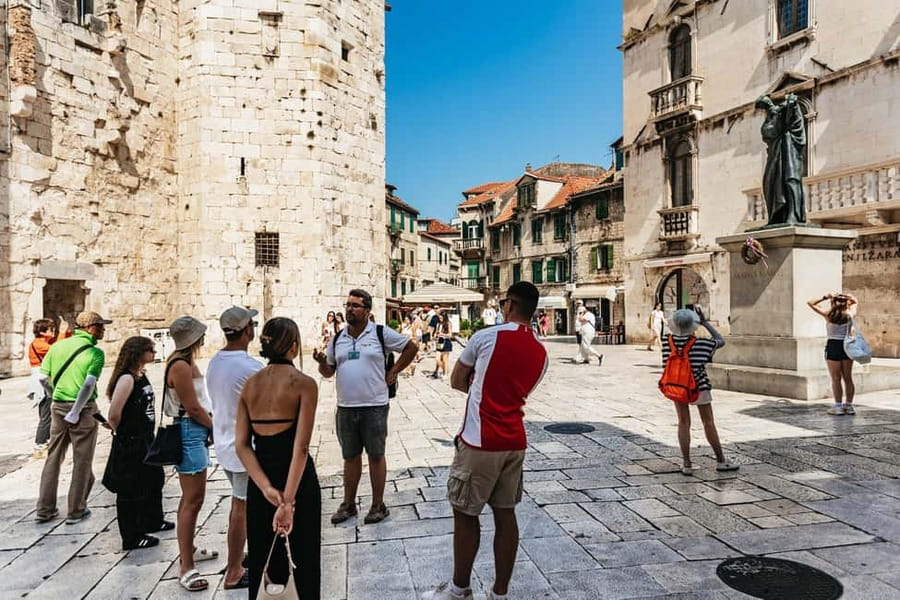
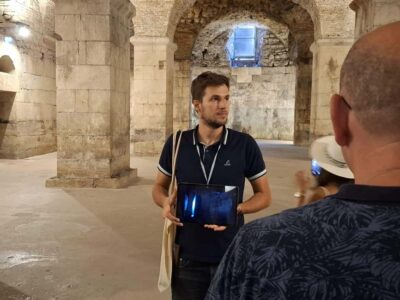
The palace cellars show how much of Diocletian’s original plan survives below the modern city. The route includes the underground spaces and the area connected with the emperor’s private chambers and observatory.
This section is especially valuable if you have trouble picturing the palace as a complete Roman residence. Above ground, later construction can hide the original layout. Below, the walls and passageways give you a clearer sense of the structure that supported the imperial complex.
Do not expect a long archaeological examination in a 50-minute walk. The guide has to keep moving, and the cellar portion is one part of a wider route. Still, a short explanation here can do more than a sign on a wall. It connects the rooms, passageways, and upper courtyards into one plan.
The private observatory is another unusual detail. It adds a personal side to an emperor often presented only through politics and military power. You are not simply looking at a palace façade. You are seeing a place designed for retirement, ceremony, private life, and control.
More Castle and Palace Walking Tours in Split:
- Walking Tour of Split and Diocletian’s Palace
★ 5.0 · 2,588 reviews - Split & Diocletian’s Palace Walking Tour
★ 5.0 · 1,125 reviews - Split: 1.5-Hour Walking Tour and Diocletian’s Palace
★ 4.7 · 256 reviews - Edinburgh Castle: Guided Walking Tour with Entry Ticket
★ 4.7 · 11,699 reviews
The Peristyle, Split’s great Roman stage

The Peristyle courtyard is the visual center of the palace. Tall columns and stone paving create a dramatic open space, and the surrounding buildings show how later generations adapted the Roman setting.
This is the point where the palace usually makes the strongest impression. Your guide explains how the space worked in the imperial period and how it became part of the later town. The setting rewards a few quiet moments, though you may need to share it with crowds, tour groups, and people simply crossing town.
I like that the route does not present the Peristyle as a frozen monument. Split’s story is about reuse. Roman structures became the frame for medieval life, Venetian influence, religious buildings, shops, and homes. That continuing use is one of the most important ideas to take from the walk.
The short length helps here. You get enough time to understand why the courtyard matters without being held in one place for an extended lecture. If you want detailed architectural measurements, construction dates for every section, or a long look at decorative fragments, you will need more time on your own afterward.
St. Domnius Cathedral and the bell tower
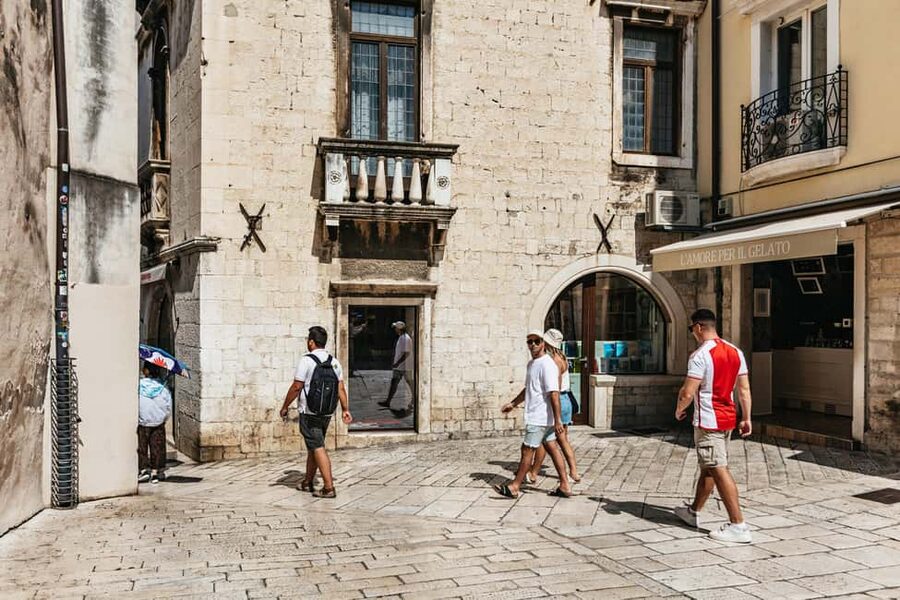
St. Domnius Cathedral, or Sv. Duje, began as Diocletian’s mausoleum and later became a cathedral. That change captures Split’s long story in one building: an imperial burial place became a Christian center within the same palace walls.
The cathedral is among the oldest cathedrals in the world, and its position inside the palace makes it more than a separate church visit. It is part of the Roman complex and helps explain how the city changed after Diocletian’s time.
The experience description includes the bell tower and its city and harbor views. If climbing is important to you, confirm exactly how the tower visit is handled and whether a separate ticket or extra time is needed, since the tour inclusions specifically focus on the guided palace and Old Town walk. The standard route is short, so you should not assume a lengthy tower climb is built into the 50 minutes.
The cathedral section may appeal to visitors interested in art, architecture, or the way religious buildings were adapted from earlier Roman sites. It can be less satisfying if you want a full interior visit with plenty of quiet time. The guide’s explanation is the main value here.
Town Hall, Fruit Square, and later Split

The walk also reaches the 15th-century Town Hall and Fruit Square, where baroque monuments add a later layer to the city. These stops keep the tour from becoming only a Roman history lesson.
Fruit Square, in particular, helps you see the shift from imperial palace to medieval and Venetian town. The architecture is less uniform than the Roman core, and that is useful. Split is not one period preserved behind glass. It is a city patched together over centuries.
The Town Hall adds another civic note. After seeing the emperor’s spaces and religious buildings, you get a glimpse of how local government and public life took shape in the old center.
These later sights are covered fairly quickly. That is sensible for a short introduction, but you should take note of anything that interests you and return afterward. A guide such as Ina or Natasa may also point out small businesses, traditional crafts, food production, or other places worth finding after the walk. Those practical suggestions can make the tour useful beyond its formal route.
What the $17 price really gets you
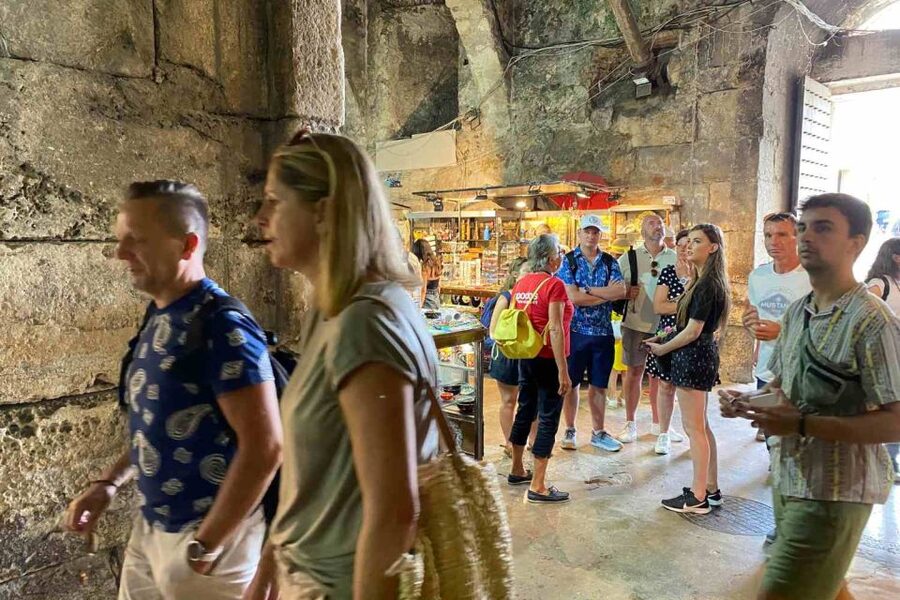
At $17 per person, this is good value if you want a structured introduction rather than a long specialist tour. You are paying mainly for context and orientation: a local guide connects the gates, cellars, courtyard, cathedral, squares, and palace layout in less than an hour.
The price does not include meals, drinks, transport to the meeting point, personal purchases, or souvenirs. That is not a serious concern in central Split, but you should plan your own way to the Riva and bring water, especially in summer.
The tour can also be a smart choice at the start of a Split stay. It gives you a mental map before you return for restaurants, museums, shopping, or a slower look at the palace. Several people who took the walk early in their visit valued that orientation.
You are not getting an all-day archaeology course for $17. You are getting a focused first pass through one of Europe’s most unusual old towns. For many visitors, that is the right trade-off.
Timing, comfort, and accessibility
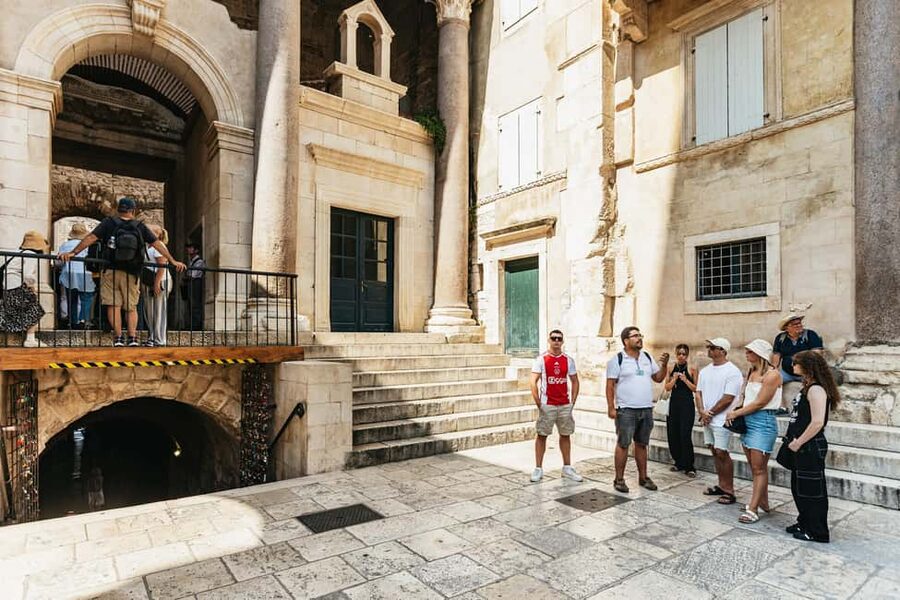
The advertised duration is 50 minutes, while the route description allows about an hour. Plan for roughly one hour, with a little flexibility for questions and crowd movement.
Wear comfortable shoes. The route includes uneven and cobblestone surfaces, along with about 15 to 30 steps. Sunglasses and a hat make sense on sunny days, and long sleeves can help on windy days.
The activity is listed as wheelchair accessible, and a guide may be able to choose routes with fewer or no steps for some members of a group. Still, the old center contains stone surfaces and steps, so anyone with a wheelchair, stroller, or mobility concern should confirm the exact route with the operator before arrival.
One practical weakness is sound. A guide can explain history perfectly and still be hard to hear when the group is surrounded by city noise. One person specifically wished for a microphone. Stay close to the guide, especially in the Peristyle and narrow lanes.
The tour has received a 4.7 rating from 882 reviews, and 91 percent of ratings are perfect scores. Those figures suggest steady satisfaction, but your experience will still depend on the guide, group size, weather, and how crowded the palace is that day.
Who should book this Split walking tour
I would recommend it to first-time visitors, cruise or ferry passengers with limited time, families wanting a short history lesson, and anyone who prefers a guide to wandering without context.
It is also a good fit for people who normally avoid tours. The route is brief, the price is modest, and the content stays focused. Several guides are praised for making history conversational rather than formal, which helps if you are traveling with teenagers or people who lose interest during long lectures.
You may want something else if you have already spent several days studying the palace, need extensive time inside each monument, or want a specialized Roman archaeology tour. The compact format cannot cover every chamber, inscription, and later architectural change.
Book it if you want to understand Split quickly, then explore with a better sense of place. Skip it if your priority is uninterrupted photography or a slow, private visit to every site.
Final verdict: a smart first hour in Split
This walking tour succeeds because it explains the strangest and most memorable fact about Split: an emperor’s palace did not become a dead ruin. It became the city center.
For $17, you get the essential route through the gates, cellars, Peristyle, cathedral area, Town Hall, Fruit Square, and Old Town. The guide quality is a major part of the experience, with Ina, Natasa, Darko, Tin, and others praised for humor, clear English, local advice, and patience with questions.
The route is short and can feel hurried if you want detail. But if you arrive with comfortable shoes, water, and realistic expectations, it is an efficient way to get your bearings and decide what deserves a second look. I would book it early in a Split visit, then return to the palace on your own for the corners that caught your attention.
FAQ
How long does the Diocletian Palace walking tour last?
The advertised duration is 50 minutes. The route description gives an itinerary time of about one hour, so plan for roughly an hour.
How much does the tour cost?
The listed price is $17 per person.
Where does the tour start?
It starts at Apodos Travel Agency. Look for an open-top red bus and staff wearing red or white shirts, who will connect you with the guide.
Which languages are available?
The tour is offered in English, Spanish, and Italian.
What sights are included?
The route includes Diocletian’s Palace and Split Old Town, the Peristyle courtyard, palace cellars, the emperor’s private observatory, the Bronze, Silver, Golden, and Iron Gates, the 15th-century Town Hall, Fruit Square, and historical commentary about Split.
Is transportation included?
No. You must arrange your own transportation to and from the starting point.
Is the tour wheelchair accessible?
The activity is listed as wheelchair accessible. You should still expect uneven and cobblestone surfaces, with about 15 to 30 steps, and confirm any route needs in advance.
What should I bring?
Bring comfortable shoes, water, and a camera. Sunglasses and a hat are recommended on sunny days, while long sleeves can help on windy days.
Can I cancel the booking?
You can cancel up to 24 hours in advance for a full refund. The reserve-now, pay-later option lets you book without paying immediately.
More Old Town Walking Tours in Split
- Discover The Old Town Split 1.5h walking Small group tour
★ 4.8 · 93 reviews - Underground Vaults Walking Tour in Edinburgh Old Town
★ 4.5 · 8,506 reviews - Prague: 3-Hour Walking Tour of Old Town & Prague Castle
★ 4.7 · 5,696 reviews - Dubrovnik: Old Town Walking Tour
★ 4.8 · 5,174 reviews
New routes in Split
- Split: Walking tour of Split with a ‘Magister’ of History★ 5.0 · 110 reviews
- Split: Local History and Culture 90-Minute Walking Tour★ 5.0 · 194 reviews
- Split: Food Tasting Walking Tour★ 4.9 · 102 reviews
- Split: 1.5-Hour Walking Tour and Diocletian’s Palace★ 4.7 · 256 reviews
- From Split: Krka Waterfalls Cruise & Trogir Walking Tour★ 4.7 · 681 reviews
- Split: History and Heritage Walking Tour★ 4.9 · 650 reviews
- Diocletian’s Palace and Old Town SMALL GROUP Walking Tour★ 5.0 · 502 reviews
- Split: City Walking Tour w/ Game of Thrones Locations★ 4.9 · 318 reviews
Split Walking Tours, compared.
Walking Tour of Split and Diocletian’s Palace
Read our review →
Krka Waterfalls tour with Trogir Walking tour and Krka panoramic boat cruise
Read our review →
Walking Tour of Split with a ‘Magister’ of History
Read our review →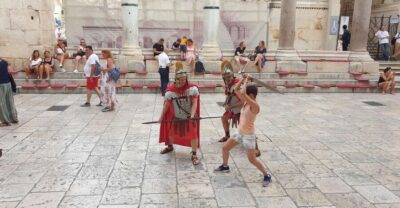

Local History and Culture 90-Minute Walking Tour
Read our review →
Browse the lists this tour appears in