
Review · CROATIA
Pula: Historic Sites Guided Walking Tour
Pula’s old town is compact, but its story is layered: Roman arena, Venetian fortress, medieval cathedral, Austro-Hungarian touches, and a working market all sit within an easy walking route. This 90-minute tour gives you the main landmarks without asking you to spend half a day on your feet.
I like the quick overview at the Arena and the climb to Pula Castle, where you get a broad view of the city. I also like the human touch from guides such as Sini and Sinisha, whose clear English, humor, and willingness to answer questions help turn stones into a story. The main consideration is that entry tickets are not included, and the route is not suited to people with mobility impairments.
Key points at a glance
- Roman Pula in one compact walk: See the Arena, Forum, Augustus Temple, Roman mosaics, Arch of Sergii, and Gate of Hercules.
- A useful castle viewpoint: The Venetian fortress adds panoramic views and a change of pace from street-level monuments.
- Guides who explain rather than recite: Sini and Sinisha are praised for clear English, ancient-history knowledge, humor, and thoughtful answers.
- Strong value at $20: You cover the city’s principal historic sights in 90 minutes with a local English-speaking guide.
- A practical first-day tour: The route helps you understand Pula’s layout before exploring on your own.
- Plan for outdoor conditions: The walk goes ahead rain or shine, and video recording is not allowed.
Why this short walk works so well in Pula
Pula can feel confusing at first. The most famous monument, the Roman Arena, is easy to spot, but the rest of the old town spreads through a mix of narrow streets, open squares, fortress walls, and later buildings. A guided walk helps you connect the pieces.
This tour begins at Istarska ul. 50, in front of the Amphitheater entrance. Look for a guide wearing a blue card around the neck and holding an umbrella. That meeting-point detail matters because the Arena has a broad frontage, and a clear marker saves you from wandering around searching for the right person.
The route is designed for orientation as much as sightseeing. You begin with one of Pula’s grandest monuments, move uphill to the castle, then return through the Cathedral and Roman Forum before continuing toward the market and Twin Gate. You get the broad outline of the city, then a series of close-up details that are easy to miss alone.
I would treat this as a strong first activity in Pula. Afterward, you will know where the Forum is, how the old town fits around the Arena, and which monuments deserve a closer look. The walk is also short enough to fit into a cruise stop or a busy day in Istria.
The tradeoff is depth. Ninety minutes is enough for a lively introduction, not a full archaeological study. You will hear a lot, but you will not have extended time inside every site. If you want detailed interior visits, you will need to return independently and pay any separate admission charges.
More History Walking Tours in Croatia
- Dubrovnik Old Town History Walking Tour
★ 5.0 · 1,684 reviews - Dubrovnik: Ancient City Walls & Wars Walking Tour
★ 5.0 · 1,270 reviews - Zagreb: City & History Walking Tour & WW2 Tunnels
★ 4.9 · 1,202 reviews
Starting beneath the Pula Arena
The Arena is the natural opening point. This enormous Roman amphitheater gives the guide an immediate way to explain Pula’s place in the ancient world, its construction, and the role such buildings played in Roman public life.
Expect a brief introduction before the group moves on. This opening is useful because it sets a scale for the rest of the walk. Once you have seen the Arena’s size and learned its basic story, smaller Roman remains elsewhere in the city make more sense.
The tour focuses on the outside experience, and entry tickets are not included. That is an important detail if entering the Arena is high on your list. You may want to budget time and money for a separate visit, either before or after the walk.
I like beginning here because the monument is hard to miss and easy to use as a reference point. If you are arriving in Pula for the first time, the Arena immediately gives you a firm sense of place. The guide’s first explanation also helps you notice that Roman Pula was not simply a collection of scattered ruins. It was a planned city with public buildings, roads, gates, temples, and forums.
Several people who took the walk found that the route moved at a comfortable pace. That matters in summer, when a hurried march between monuments can make even an interesting tour tiring. The guide explains, walks, and takes questions rather than racing through a checklist.
Climbing to the Venetian fortress
From the Arena, the route continues to Pula Castle. The fortress was built by the Venetians in the 17th century, so it shifts the story from Roman Pula to a later period of military and political control.
This change in era is one of the tour’s strengths. You are not hearing the same Roman facts for 90 minutes. The castle shows how Pula’s strategic position continued to matter long after the Roman period. Your guide also explains the fortress’s previous inhabitants and its changing role.
The castle adds a viewpoint that the lower streets cannot provide. You get panoramic views across Pula, which makes the city’s layout easier to read. From above, the walk’s separate sites begin to connect: the old town, the Arena area, and the surrounding urban setting.
There is a practical catch. The route includes an uphill section, and the tour is specifically not suitable for people with mobility impairments. If stairs, uneven surfaces, or inclines are difficult for you, this is not the best way to see Pula. The provided information does not give an exact step count or accessibility arrangement, so you should be cautious rather than assume the route is easy for everyone.
For most walkers, though, the castle is a welcome pause from close street views. It gives you a chance to look outward, take in the city, and understand why the site mattered beyond its attractive stone walls.
From the Cathedral to the Roman Forum
The walk then heads toward Pula Cathedral. The Cathedral adds a religious layer to the city’s story and helps show how the town changed as different cultures and eras left their mark.
The value here is not only the building itself. The guide places the Cathedral in relation to the nearby Roman Forum and other old-town sites. That context helps you see Pula as a living city rather than an archaeological park made up of isolated monuments.
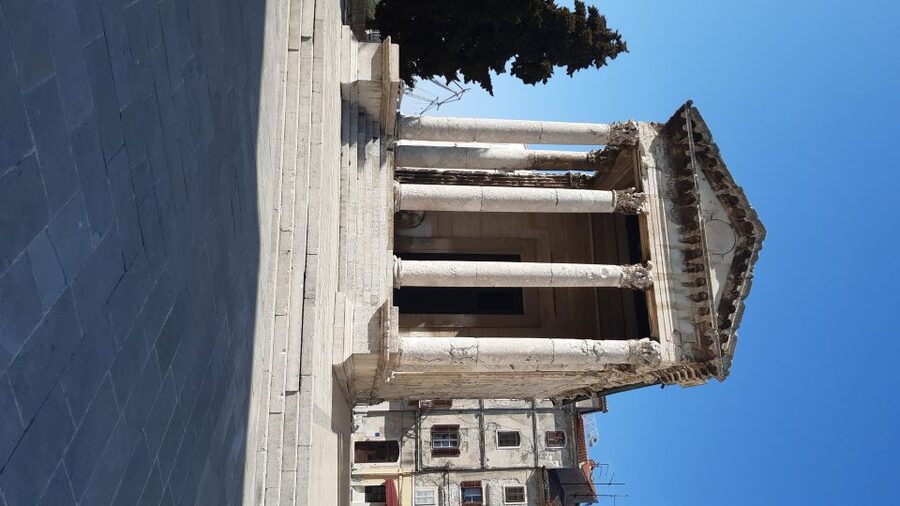
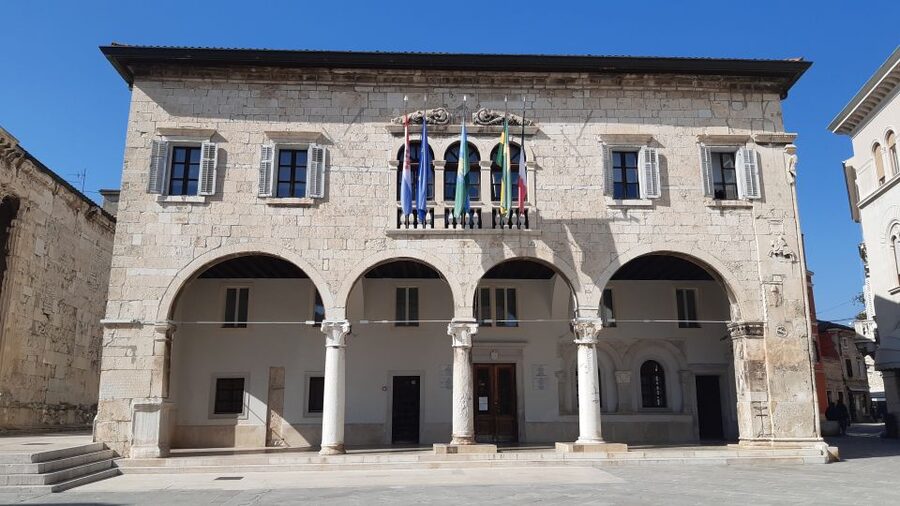
From the Cathedral, you continue to the Roman Forum, the historic civic heart of Pula. Here, the Augustus Temple and City Hall sit close together, creating one of the most rewarding sections of the route.
The Augustus Temple is the small, precise counterpoint to the Arena’s huge scale. At roughly 2,000 years old, it gives you a direct look at Roman religious architecture. The Forum also shows how public life was organized, with sacred and civic functions gathered in one central area.
City Hall introduces another layer to the square. The contrast between the ancient temple and the later municipal building is exactly the sort of detail that is easy to miss without explanation. A guide can point out how the square kept its importance even as the city changed.
This is where Sini or Sinisha’s style appears to matter most. The strongest feedback about the guiding focuses on clear English, broad knowledge of ancient history, friendly delivery, humor, and an open attitude toward questions. That combination is more useful than a long memorized speech. You can ask why a building matters, how the pieces fit, or what changed over time.
The Forum is also a good place to slow down for photographs. Video recording is not allowed on the tour, but still photography is not listed as restricted. Even so, listen first and photograph second. The guide’s explanation is what makes the familiar-looking stones memorable.
Same streets, a different guide:
- Dubrovnik: Old Town Walking Tour
★ 4.8 · 5,174 reviews - Dubrovnik: The Original Game of Thrones Tour & Lokrum Option
★ 4.8 · 5,064 reviews - Split: Old Town and Diocletian Palace Walking Tour
★ 4.9 · 4,727 reviews - Dubrovnik Discovery Old Town Walking Tour
★ 5.0 · 4,458 reviews
Spotting Roman traces beyond the major monuments
One of the best reasons to take a local walking tour is the smaller evidence. Pula’s Roman past is not limited to the Arena and Augustus Temple. Along the route, you see Roman mosaics and other traces that can be easy to pass without noticing.
The mosaics are especially valuable because they reward attention rather than size. They do not have the immediate drama of an amphitheater, but they offer a glimpse of everyday Roman decoration and urban life. Your guide can point out where to look and explain why the remains matter.
The Arch of Sergii adds another major Roman marker. It gives the walk a sense of movement through the old town, linking monumental architecture with the streets people still use today.
I like this balance between famous sites and smaller remains. If the tour only visited the headline monuments, you could easily reproduce the route with a map. The Roman traces make the walk feel more observant. You learn to look down, check the edges of buildings, and notice fragments that lack a large sign or dramatic entrance.
The guide’s local perspective is useful here. Several participants found that the explanations helped them see things they would otherwise have missed. That is a fair reason to pay for the tour even if you are comfortable exploring independently. A map tells you where a monument is. A guide can tell you why a less obvious detail deserves two minutes of your attention.
Pula Market and the Gate of Hercules
The route continues through Pula Market, established in the early 1900s. This is a welcome change from temples, arches, and fortress walls. The market connects the historic center to ordinary city life and gives you another period to add to the timeline.
A market can tell you more about a city than another formal monument. Here, the point is not simply to admire old architecture. You see how Pula’s center continued to serve local needs as the city developed. The market also gives the walk a more grounded feel after the grand scale of the Arena and the formal setting of the Forum.
The final major stop is the ancient Gate of Hercules. Its name points to the city’s Roman past, and its position helps you understand how movement into and through Pula was controlled in earlier times.
The tour finishes at Twin Gate. This is a sensible endpoint because it leaves you near another important remnant of the old city rather than returning you to the starting point. You can use the route as a practical introduction, then decide what to revisit at your own pace.
Because the walk ends in a different part of town, keep that in mind when planning the rest of your day. You are not being returned to the Arena. The distance through the old center is manageable, but your next destination should be planned from Twin Gate.
What $20 buys you in practical terms
At $20 per person, the tour offers solid value if you want an organized introduction to Pula’s key historic areas. You are paying for a local English-speaking guide, not a package of admissions or transport. The route covers the main sights in a compact period, which is especially useful if your time in town is limited.
The value comes from the connections. You could walk past the Cathedral, Forum, mosaics, Arch of Sergii, market, and gates on your own. You would not necessarily understand how the Roman, Venetian, religious, civic, and later urban layers relate to one another.
The tour does not include entry tickets, so check your expectations before booking. If you want to enter the Arena or another paid site, that cost is separate. The walk itself is primarily an outdoor sightseeing and interpretation experience.
The tour also offers reserve now and pay later booking, plus free cancellation up to 24 hours in advance for a full refund. That flexibility helps if your Istria plans are still shifting. Starting times vary, so you need to check availability for your date.
The walk operates rain or shine. Bring suitable clothing and shoes, and do not assume a rainy forecast means the activity will be called off. The provider identifies an umbrella as part of the guide’s meeting-point marker, but that is not a substitute for your own rain protection.
Who will enjoy this Pula walk most
I would recommend this tour to first-time visitors who want the city’s main story in a single outing. It suits you especially well if you enjoy Roman monuments but also want to understand the Venetian and later layers of Pula.
It is a good choice for:
- People with only a few hours in Pula
- Cruise passengers who want a focused old-town route
- Visitors who prefer a local guide to a phone map
- History fans who enjoy Roman sites and ancient architecture
- Anyone who wants a clear orientation before exploring alone
- English-speaking visitors who like asking questions during a walk
The feedback points to a consistent strength in the guides. Sini is repeatedly identified as friendly, funny, and able to explain ancient history clearly. Another name appears as Sinisha or Sinsije, so the exact guide may vary, but the guide quality is a central part of the experience.
I would hesitate if you need a fully accessible route, want a slow photography walk, or dislike fixed schedules. The tour covers a lot in 90 minutes, and the castle section includes an incline. It is also less suitable if your main goal is lengthy interior visits, since admission is not included and the format keeps moving.
My verdict: book it for orientation and context
I would book this tour if I had a first visit to Pula and wanted the main historic sights explained without giving up an entire morning or afternoon. The combination of Arena, Venetian castle, Cathedral, Forum, Augustus Temple, mosaics, Arch of Sergii, market, and ancient gates gives you a useful outline of the city.
The strongest reason to go is the guide. Sini and Sinisha are praised for clear English, friendly manner, humor, and answers that go beyond a basic script. At $20, that personal context makes the walk worthwhile.
Book it with sensible expectations. You will see the key sites from the outside, learn how Pula’s different eras fit together, and finish at Twin Gate. You will not receive admission to paid attractions, and the route is not designed for people with mobility impairments.
If you want a short, focused introduction to Pula, this is a good buy. If you already know the city well or prefer to explore at your own pace, you may want to use the route as a self-guided outline instead.
FAQ
How long does the Pula Historic Sites Guided Walking Tour last?
The tour lasts 90 minutes, or one and a half hours.
Where does the tour begin?
Meet the guide at Istarska ul. 50, in front of the entrance to the Pula Amphitheater.
How do I recognize the guide?
The guide will have a blue card around their neck and hold an umbrella.
Where does the tour finish?
The walk finishes at Twin Gate.
What language is the tour conducted in?
The tour is conducted in English with a live English-speaking guide.
Are entry tickets included?
No. Entry tickets are not included in the tour price.
Can I cancel the booking?
Yes. You can cancel up to 24 hours in advance for a full refund. You can also reserve now and pay later.
New routes in Croatia
- Split: Walking tour of Split with a ‘Magister’ of History★ 5.0 · 110 reviews
- Split: Local History and Culture 90-Minute Walking Tour★ 5.0 · 194 reviews
- Split: Food Tasting Walking Tour★ 4.9 · 102 reviews
- Split: Diocletian Palace & Old Town Guided Walking Tour★ 4.7 · 882 reviews
- Split: 1.5-Hour Walking Tour and Diocletian’s Palace★ 4.7 · 256 reviews
- Shipwreck – Blue Lagoon All Inclusive + Trogir Walking Tour★ 4.4 · 110 reviews
- Rovinj: Guided Walking Tour★ 4.8 · 113 reviews
- Pula: Historic Walking Tour with Local Guide & City Views★ 4.8 · 214 reviews
Croatia Walking Tours, compared.
The Original Game of Thrones Tour & Lokrum Option
Read our review →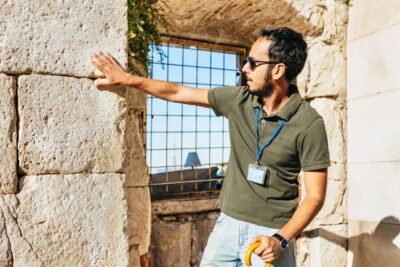
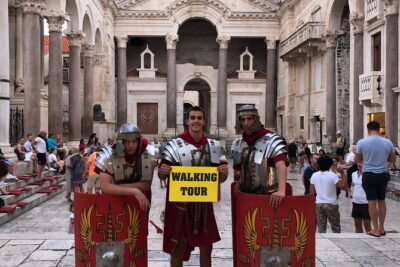
Walking Tour of Split and Diocletian’s Palace
Read our review →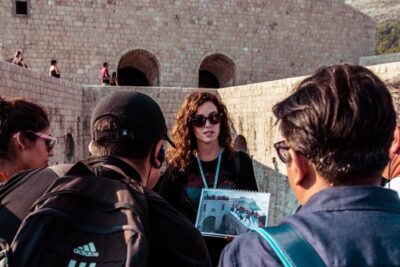
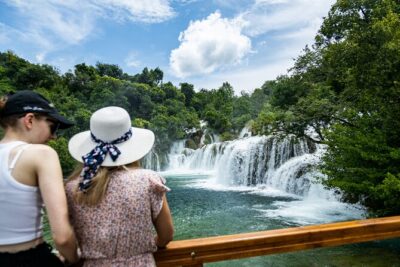
Krka Waterfalls tour with Trogir Walking tour and Krka panoramic boat cruise
Read our review →
City Walls Early Morning or Sunset Walking Tour
Read our review →
Plitvice Lakes: Guided Walking Tour with Bus and Boat Ride
Read our review →Browse the lists this tour appears in