
Review · DUBLIN
Dublin: Highlights and Hidden Gems Walking Tour
Dublin’s story is best read on foot, and this tour packs more than 1,000 years into a city-center walk. You’ll move from Viking Dublin and medieval streets to Georgian boulevards, Victorian hardship, literary life, rebellion, and modern city culture. The route links major sights with smaller corners you could easily miss on your own.
I like the broad historical sweep and the way the guides connect buildings to people, not just dates. I also like the practical advice built into the walk, from places to eat and hear live music to tourist-trap areas worth treating with care. The main consideration is time: it is advertised as two hours, but one outing ran close to three, with no break for food or a toilet stop.
Key points to know
- A fast tour through 1,000 years of Dublin: Viking beginnings, medieval Dublin, Georgian streets, Victorian slums, and modern Ireland all enter the story.
- Major sights are tied together on foot: Dublin Castle, Christchurch Cathedral, Temple Bar, Trinity College, the GPO, and the Liffey all feature.
- The guide makes the difference: Ian, Keith, Alan, Dave, Kieran, Helena, Emily, James, Karl, Gemma, and Chris have all led engaging outings.
- Expect humor with the history: Stories about writers, rebels, rock stars, rogues, and ordinary Dublin life keep the walk moving.
- Useful for your first day: You get restaurant, pub, music, sightseeing, and souvenir suggestions while learning the city’s layout.
- Plan for Dublin weather and busy streets: You’ll be outside for the full walk, and some groups may run longer than the stated two hours.
Starting under the green umbrella at The Old Storehouse
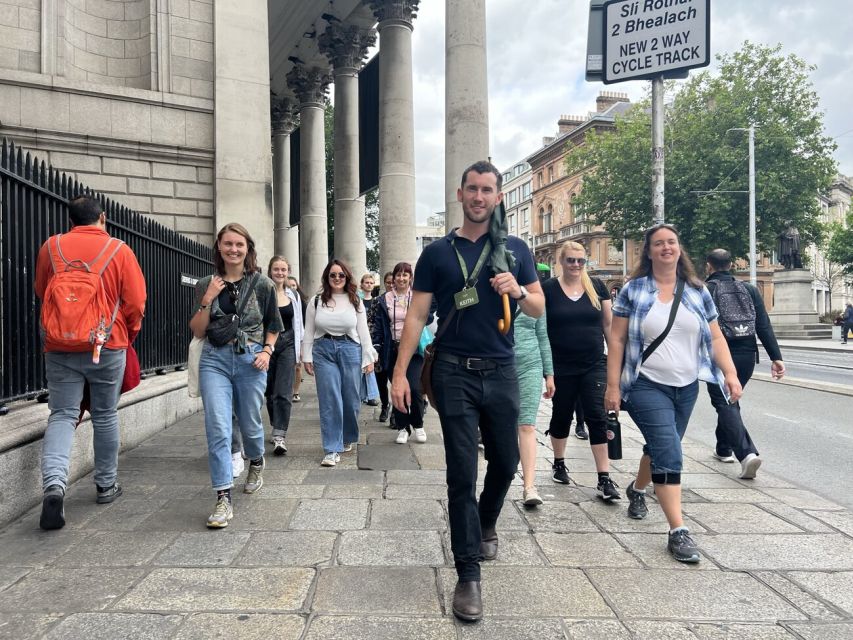
The meeting point is outside The Old Storehouse pub in central Dublin. Look for the green umbrella, and arrive at least ten minutes before departure with your booking ready to show the guide.
That simple meeting point matters in a busy part of town. Temple Bar can be crowded, and a clear marker saves you from circling the block while a group gathers. The tour ends back at the same meeting point, so you can easily continue with a meal, a drink, or another central Dublin sight afterward.
This is an English-language walking tour led by an accredited local guide. No hotel pickup is included, and there is no food or drink included, so you should arrive ready to walk and handle your own refreshments.
More City Highlights Walking Tours in Ireland
- Dublin Highlights and Hidden Gems Guided Walking Tour
★ 5.0 · 6,020 reviews - 90 Minute Dublin Walking tour and Sightseeing tips
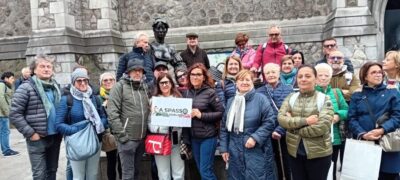
★ 5.0 · 916 reviews - Dublin Highlights: 2.45-Hour Walking Tour in Italian
★ 4.7 · 460 reviews
Temple Bar and the first look at Dublin’s character
Temple Bar is a useful place to begin because it puts Dublin’s present-day visitor scene beside the older city beneath it. You’ll see one of the capital’s best-known areas, but the guide’s job is to help you look past the pubs and bright streets to the layers of history around them.
The tour does not treat Dublin as a collection of postcard stops. Its focus is on how the city changed, who shaped it, and how its reputation was built. You’ll hear about characters ranging from writers and rebels to rock stars and rogues. That mix gives the walk a human scale.
Temple Bar can be lively and crowded. If you prefer quiet lanes and long museum visits, this opening section may feel hurried. If you want to understand where Dublin’s social energy sits and how to avoid spending your whole trip in the most tourist-focused area, it is a useful orientation.
Viking Dublin and medieval streets
The walk then reaches Dublin’s Viking and medieval past. This is one of the strongest reasons to choose a guided route rather than simply following a map. Much of early Dublin is not presented as one perfectly preserved historic quarter. Instead, its story is scattered through streets, buildings, names, and surviving landmarks.
A guide can explain how the city developed around the River Liffey and how medieval Dublin differed from the capital you see today. The emphasis is not only on kings and battles. You’ll also get a sense of how people lived, how neighborhoods changed, and why the city grew in the way it did.
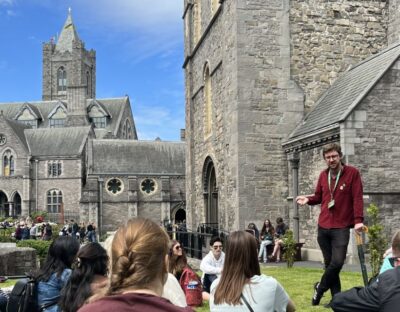
Christchurch Cathedral gives this section a major visual anchor. Its long connection with Dublin’s religious and civic life makes it more than a quick photo stop. You may not enter the cathedral on this tour, since the activity is a walking tour rather than an admission visit, but the outside setting helps place the old city on the map.
Smock Alley Theatre adds another useful layer. It points to Dublin’s performing arts and public life, helping the tour move beyond church walls and military events. The route’s strength is this movement between architecture and personalities. You are not simply told that a building is old. You are given a reason to care about what happened there.
Dublin Castle and the city’s political past
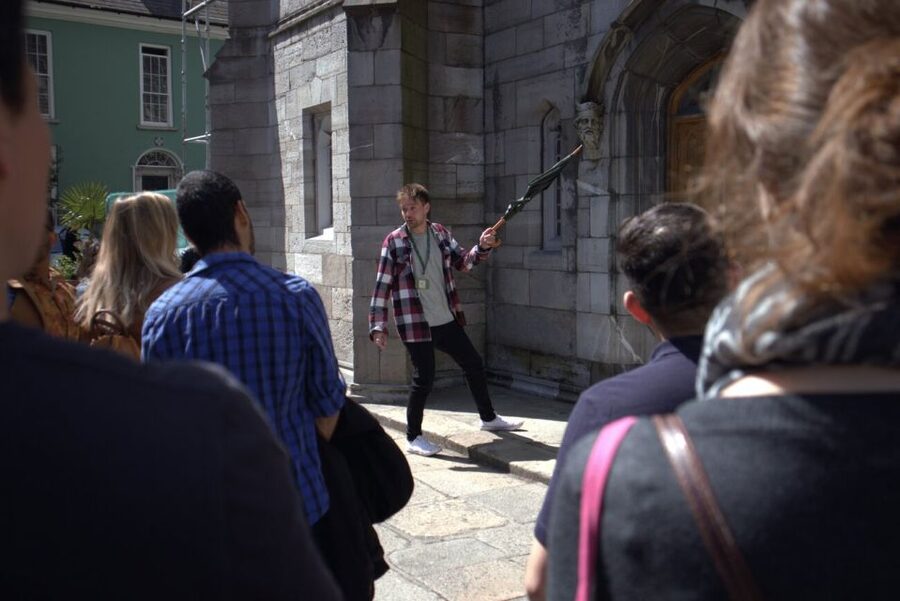
Dublin Castle is one of the essential stops, and it helps explain the political power that shaped the city for centuries. The area connects Dublin’s medieval foundations with the long period of British administration and the later story of Irish independence.
This is where a good guide can keep a complicated subject clear without flattening it. The walk covers the rise, fall, and rebuilding of Dublin, along with the tensions that marked Irish history. Guides such as Alan and Kieran were praised for explaining historical significance in a way that stayed accessible, while Karl was noted for presenting the past openly and encouraging people to think about what they were seeing.
The benefit of hearing this outdoors is pace. You move through the city as the story unfolds instead of sitting through a long lecture. The drawback is that street noise, crowds, or a group’s position may make some details harder to catch. Stay close enough to hear, especially at busy stops.
More Hidden Gems Walking Tours in Dublin:
- Explore Berlin: See All The Iconic Sights & Some Hidden Gems
★ 5.0 · 4,429 reviews - Kyoto Geisha Walking Tour: Gion District & Hidden Gems
★ 4.7 · 3,273 reviews - Marrakech: Ben Youssef, Secret Garden, & Souks Walking Tour
★ 4.6 · 2,802 reviews - Montmartre Hidden Gems and Scenic Highlights Walking Tour
★ 5.0 · 2,684 reviews
Crossing the River Liffey by the Ha’Penny Bridge
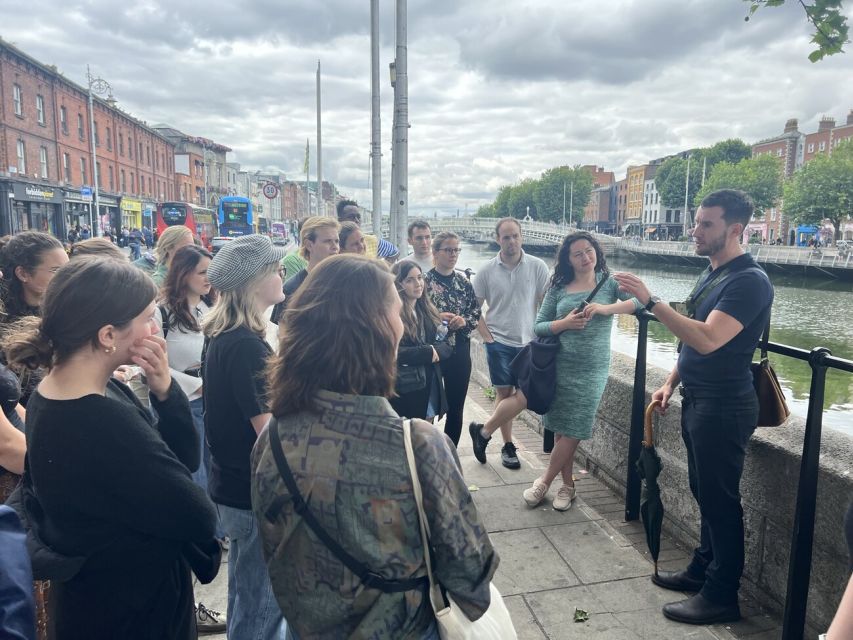
The River Liffey provides a natural change of scene. Crossing or viewing it near the Ha’Penny Bridge gives you a clear sense of Dublin’s compact center and the connection between the north and south sides of the city.
The bridge is one of Dublin’s most recognizable sights, but the useful part of the stop is how it fits into the larger route. You are not being sent out to a distant attraction. The tour keeps linking nearby places, so you spend your time seeing the city rather than sitting in traffic.
O’Connell Bridge continues the walk toward the north side. From here, the character of the city shifts again, and the guide can connect the riverfront with Dublin’s political and public spaces. These crossings also offer natural chances to look around, take photographs, and get your bearings.
Do not expect a quiet photo session. This is an active city-center walk, and bridges can be busy. Keep your attention on the guide while moving, then take photographs when the group pauses.
The GPO and stories of rebellion
The General Post Office, usually called the GPO, is among the most important stops for understanding modern Irish history. Its place in the 1916 Easter Rising gives the building a powerful role in the story of rebellion and independence.
Here the tour moves from old Dublin to a more recent and still emotionally important past. The guide explains the people and events connected with the building rather than leaving you with a grand facade and a date. That personal approach is a recurring strength of the walk.
You may find the political history moves quickly because the route covers so much ground. Still, the GPO gives the tour a strong center of gravity. It shows how Dublin’s streets became settings for major national events, and it helps connect the city you see today with the country’s difficult path toward independence.
This is also a good point to listen for the guide’s interpretation. The strongest guides do not turn the past into a simple heroes-and-villains tale. They make room for conflict, loss, ambition, and the later consequences of political choices.
Trinity College and Dublin’s literary side
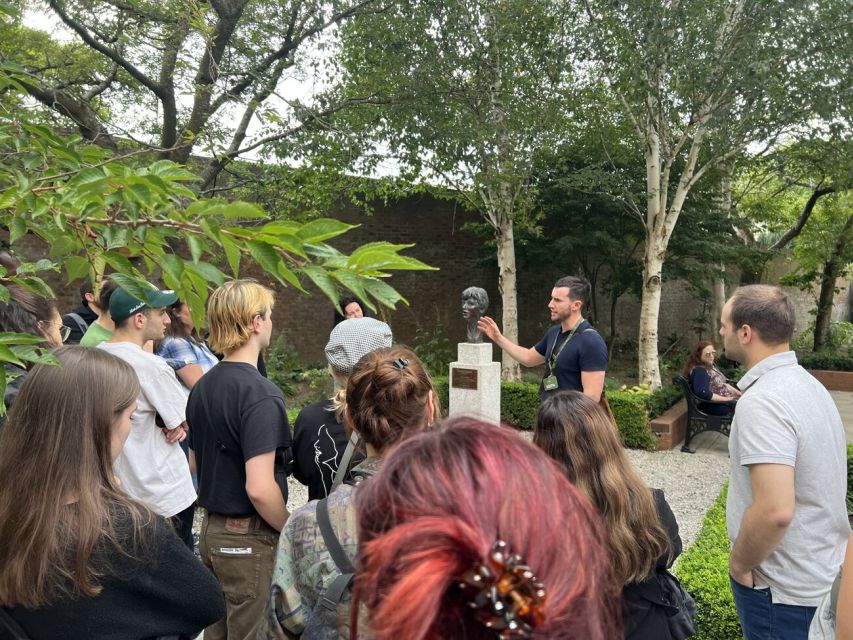
Trinity College brings another of Dublin’s best-known names into the route. The college represents education, scholarship, and the literary culture for which the city is famous.
The tour’s description places Trinity among the main sights, but this is not a dedicated campus or library visit. Treat it as an outside orientation and a chance to hear how the college fits Dublin’s cultural life. If you want to visit an interior attraction afterward, you’ll need to arrange that separately.
This section works especially well for first-time visitors because it links a famous institution with the wider story of Dublin’s writers and public thinkers. The guides are also encouraged to give tips about what to see, where to eat, and where to hear live music, so you can use the walk to plan the rest of your stay.
The route’s cultural range is one of its best features. You are not given only royal, religious, or military history. Dublin’s stages, writers, street characters, and music scene all have a place.
What the guides add to the walk
The guide is the heart of this experience. The route itself is valuable, but the same streets can feel flat if the person leading the group simply recites facts.
The strongest guide experiences here combine clear history with wit and local pride. Ian is described as witty and humorous. Keith is praised for mixing anecdotes, history, and a strong sense of connection to Ireland. Alan is known for being organized, friendly, funny, and full of Dublin stories. Dave is especially associated with kindness, humor, and useful advice about tourist-focused areas.
Kieran is praised for making the walk interactive while watching out for the group. Helena, Emily, Gemma, James, Karl, and Chris are also described as friendly, entertaining, and engaging. Those names are not a guarantee of who will lead your departure, but they give you a sense of the guide style to expect: lively, personal, and story-led.
You should also make use of the question-and-answer side of the walk. Ask where to hear live music, which areas suit a particular meal, and what attractions deserve your limited time. The guide’s local suggestions may be as useful as the historical commentary.
Is two hours enough for this much Dublin?
The listed duration is two hours, which is a sensible length for a first orientation. It is long enough to cover the central sights without taking your whole day, and short enough to fit before a museum, meal, or evening activity.
Still, one experience ran for nearly three hours and had no break for a snack or toilet stop. That may have reflected the guide, the group, or the pace of that particular departure, but it is worth planning around. Use a toilet before you start, bring water, and avoid scheduling something immediately afterward.
Because the walk covers many periods and landmarks, it is more of a city overview than a detailed study of any single site. You will not get a full visit to Dublin Castle, Christchurch Cathedral, or Trinity College as separate attractions. Instead, you get the context to decide which places deserve a later, longer visit.
Price, weather, and who will get the most from it
At $27 per person, this tour offers solid value if you want a guided introduction to central Dublin. The cost is modest compared with booking several separate attractions, and the walk includes a local guide, city-center route, historical and cultural explanation, and practical recommendations.
The value depends on how you use it. If you already know Dublin well or prefer exploring alone with a guidebook, the route may cover familiar ground. If you are arriving for the first time, the combination of orientation and storytelling can save you time and help you choose where to spend the rest of your trip.
You’ll get the most from it if you:
- Are visiting Dublin for the first time
- Want major sights plus less obvious corners
- Like history presented through people and stories
- Want restaurant, pub, music, and sightseeing advice
- Can comfortably spend the full walk outdoors
- Prefer a lively guide to a formal lecture
The activity is listed as wheelchair accessible, which is useful for many visitors, though Dublin’s historic center can still have busy streets and changing surfaces. If you have specific mobility needs, confirm the route details before booking.
Dublin weather can change quickly, so wear practical shoes and bring a rain layer. The tour is outside from start to finish, and you may be standing while the guide speaks. No food or drinks are provided, so plan accordingly.
Should you book the Dublin Highlights and Hidden Gems Walking Tour?
I would book this as an early activity, ideally near the start of your Dublin stay. It gives you a working map of the center, explains the city’s major turning points, and leaves you with ideas for pubs, live music, meals, and further sightseeing.
Choose it if you want a friendly, story-led introduction rather than a slow architectural study. The best part is the guide’s ability to connect Viking Dublin, medieval streets, rebellion, literature, and modern city life in one walk.
Skip it if you need guaranteed two-hour timing, regular refreshment breaks, or detailed interior visits at every landmark. Otherwise, $27 is a fair price for a lively orientation led by an accredited local guide, with enough substance to shape the rest of your Dublin visit.
FAQ
How long does the Dublin walking tour last?
The listed duration is two hours. One experience ran close to three hours, so you should allow extra time after the scheduled finish.
Where does the tour start?
Meet outside The Old Storehouse pub in Dublin city center. Look for the green umbrella and arrive at least ten minutes before the tour begins.
Where does the tour end?
The walk ends back at the meeting point outside The Old Storehouse.
What language is the tour conducted in?
The tour is conducted in English by a live English-speaking guide.
Is a local guide included?
Yes. The experience includes an accredited local guide and a walking tour of Dublin city center.
Which Dublin sights are included?
The route includes Temple Bar, Dublin Castle, Christchurch Cathedral, Viking Dublin, medieval Dublin, Smock Alley Theatre, the River Liffey, Ha’Penny Bridge, O’Connell Bridge, the GPO, and Trinity College.
Is hotel pickup included?
No. Hotel pickup and drop-off are not included. You must make your own way to the meeting point.
Can I cancel the booking?
Yes. You can cancel up to 24 hours in advance for a full refund. You can also reserve now and pay later.
More City Highlights Walking Tours in Dublin
- Dublin: Sightseeing Walking Tour in German
★ 4.7 · 231 reviews - Dublin: Highlights and Hidden Corners Walking Tour
★ 4.8 · 79 reviews - Ho Chi Minh City Street Food Tour & Sightseeing By Motorbike
★ 5.0 · 9,413 reviews - Historic Charleston Guided Sightseeing Walking Tour
★ 5.0 · 6,216 reviews
New routes in Dublin
- Dublin: North Quay Guided Ghost Walk★ 4.2 · 144 reviews
- Dublin: Mythology, Folklore and Legends Walking Tour★ 4.9 · 703 reviews
- Dublin: Traditional Pub Walking Tour★ 4.6 · 295 reviews
- Dublin: Traditional Pubs Walking Tour with Local Guide★ 4.9 · 112 reviews
- Dublin: Irish Music Walking Tour with Live Performance★ 4.8 · 137 reviews
- Dublin: Highlights and Hidden Corners Walking Tour★ 4.8 · 79 reviews
- Dublin: Macabre History Walking Tour★ 4.9 · 95 reviews
- Dublin: Delicious Walking Food Tour★ 4.9 · 137 reviews
Dublin Walking Tours, compared.
Dublin Highlights and Hidden Gems Guided Walking Tour
Read our review →
Dublin Historical Centre Food Tour with 8 Food Tastings & Drinks
Read our review →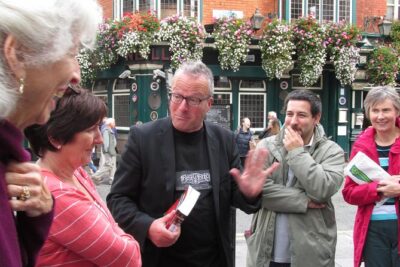

90 Minute Dublin Walking tour and Sightseeing tips
Read our review →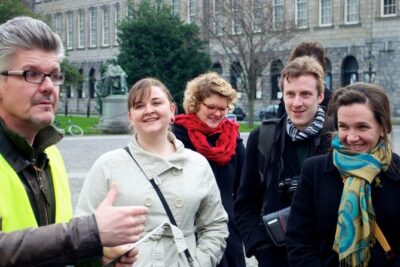
Dublin Highlights: 2.45-Hour Walking Tour in Italian
Read our review →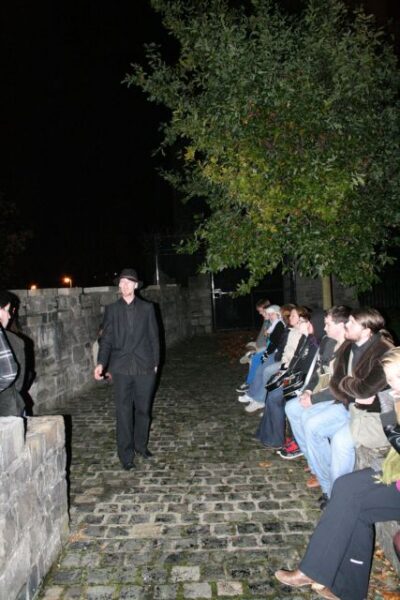
Browse the lists this tour appears in