
Review · DUBLIN
Dublin: Macabre History Walking Tour
Dublin’s darker past is not tucked away in a museum. It sits in old lanes, beside the river, near the city walls, and close to the cathedral. This two-hour walk brings those grim corners to life with tales of grave robbers, public executions, and man-eating rats, along with the strange story of the warrior Cuchulainn.
I like the way this tour goes beyond the usual Dublin sights, and I like that the guides, especially Peter and Rob, use humor, acting, and clear storytelling rather than simply reciting dates. The route also works well for a first look at the old centre because it points out places you might otherwise pass without a thought.
The main drawback is the tone. This is a macabre history walk, but it is not a nonstop horror show. One reviewer wanted the stories to be darker and bloodier, so book it for unusual history and theatrical storytelling, not for jump scares or a haunted-house performance.
Key points at a glance
- Cuchulainn’s death: Hear the grim legend of Ireland’s mighty warrior and the raven connected with his final moments.
- A walk on both sides of the Liffey: The route links lesser-known parts of central Dublin with riverside stretches.
- Grave robbing near the mortuary: Learn about the 19th-century trade that grew around the demand for bodies.
- Old city walls and mummified corpses: The tour looks at unsettling stories tied to Dublin’s medieval past.
- Peter and Rob as guides: Expect animated delivery, humor, local tips, and time for questions.
- Simple central logistics: Meet at the Spire on O’Connell Street, follow the yellow umbrella, and finish back at the same spot.
Starting beneath the Spire on O’Connell Street
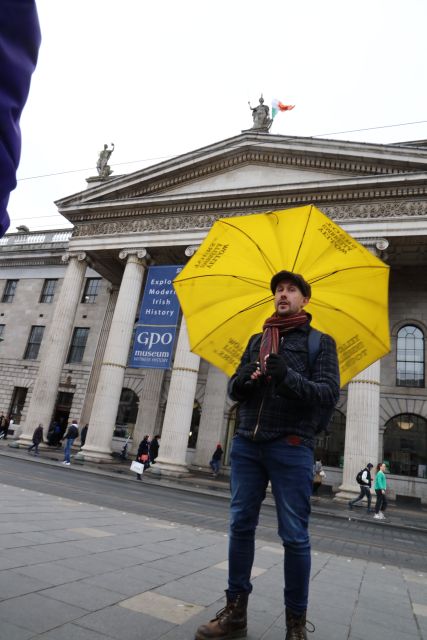
The meeting point is easy to place: the Spire, the tall needle in the middle of O’Connell Street. Look for the yellow umbrella. That detail matters in a busy city centre, although one person noted that more than one yellow umbrella can sometimes appear, so arrive with the tour name and meeting point in mind.
The walk begins in the heart of modern Dublin before moving into older streets and less obvious corners. That contrast is part of the appeal. You start among shops, traffic, and everyday city life, then begin hearing about executions, disease, crime, and death in places that now look ordinary.
There is no hotel pickup, so you need to make your own way to O’Connell Street. The activity lasts two hours and finishes back at the Spire, which makes it easy to combine with another central Dublin plan. Starting times vary, so check the available slot when booking.
The tour is offered in English with a live guide. It is listed as wheelchair accessible, which makes it more useful than many old-city walks, though anyone with specific mobility needs should still confirm the route details before booking.
More History Walking Tours in Dublin
- Dublin Historical Centre Food Tour with 8 Food Tastings & Drinks
★ 5.0 · 1,718 reviews - 2-Hour Historical Walking Tour from Dublin
★ 5.0 · 875 reviews - Historical 2-Hour Guided Walking Tour of Dublin
★ 4.7 · 865 reviews
Cuchulainn and the city’s oldest stories
One early highlight is the story of Cuchulainn’s death. Cuchulainn is presented as a mighty warrior whose final moments involve his eyes being pecked out by the raven on his shoulder. The tale gives the walk an old, legendary opening before it turns toward documented episodes from Dublin’s later past.
This section is not simply a gruesome anecdote. It shows how Dublin’s darker stories come from several layers of time. Myth, medieval belief, disease, crime, punishment, and urban folklore all share the same streets.
The guide’s delivery matters here. Peter is especially praised for being an animated storyteller who acts out scenes and adjusts his pace when someone needs a little more explanation. Rob is also described as personable and entertaining, with the sort of comic timing that keeps an unsettling subject from becoming heavy.
You should expect the guide to explain the stories in a way that is easy to follow, even if you are not familiar with Irish history. The walk is not built only for history specialists. It suits a first-time visitor who wants context without sitting through a formal lecture.
Along the river, where ordinary streets turn grim
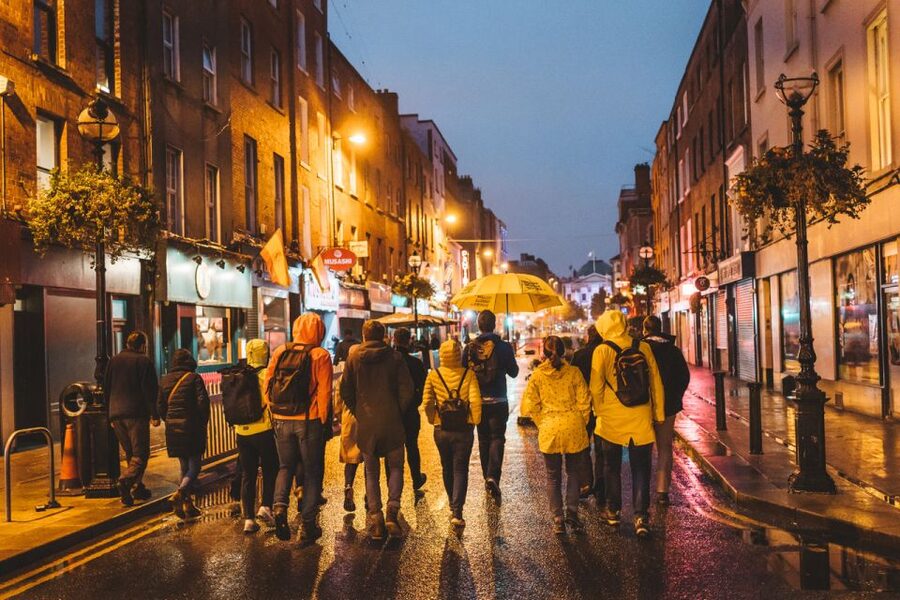
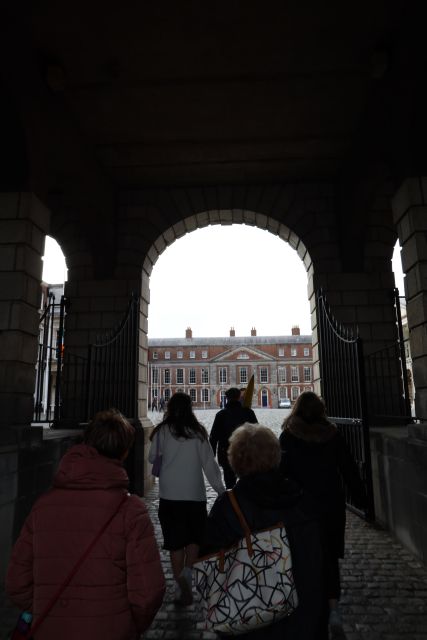
The route explores both sides of Dublin’s river and includes riverside walking. This gives the experience a useful sense of place. You are not sitting in a dark room hearing general ghost stories. You are moving through the city and connecting each tale to streets, walls, buildings, and nearby landmarks.
The route also takes you through lesser-known areas of the old centre. That is one of the strongest reasons to choose this tour over a standard overview walk. You may have already seen the Spire, crossed central streets, or visited the cathedral, yet still miss the small details that carry the city’s darker past.
The guide points out places you could easily walk past without knowing their background. That makes the tour useful even if you have already taken a general Dublin sightseeing tour. It adds a second layer to familiar ground.
The walk is not presented as a series of grand attractions. Some stops are likely to be modest streets or city corners, and that can be a drawback if you want a long list of major monuments. The value comes from the explanation, not from dramatic architecture at every stop.
Grave robbing beside the city mortuary
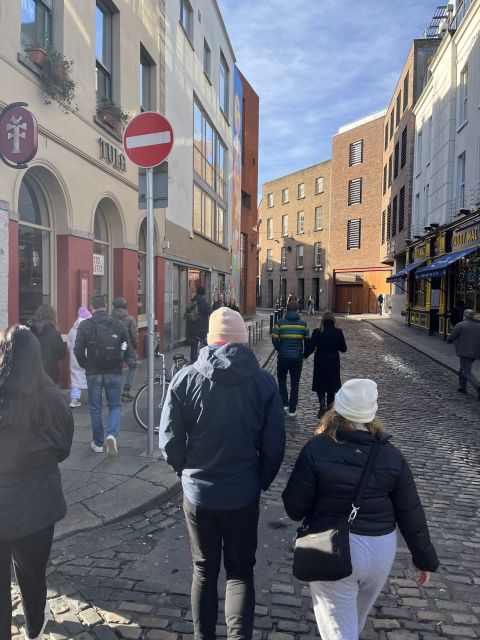
One of the more striking subjects is Dublin’s 19th-century grave-robbing trade. The tour explains how grave robbing became a business beside the city mortuary, linking medical demand, poverty, death, and urban commerce.
This is the kind of detail that makes the walk worthwhile. You get a look at the practical systems that grew around death, not only the sensational crimes. The story helps explain why certain parts of the city carried such grim associations and why bodies could become valuable after burial.
The subject can be uncomfortable, but it also gives the tour some social context. Dublin’s macabre past was not made only by eccentric villains. It was shaped by medical needs, money, poor conditions, and the way institutions dealt with the dead.
Peter’s style seems well suited to this material. He mixes fact with humor and keeps the pace moving, while still allowing time for questions. That balance helps when the subject matter becomes bleak.
More History Walking Tours in Ireland
- Dublin’s Haunted History Walking Tour
★ 4.3 · 345 reviews - Cork: Guided Historical Walking Tour
★ 4.7 · 310 reviews - Galway: Dark History Guided City Walking Tour
★ 4.8 · 236 reviews - Kilkenny: Historical and Hysterical Guided City Walking Tour
★ 5.0 · 126 reviews
Medieval quarantines, mummies, and the old city walls
Near the old city walls, the focus shifts toward medieval disease and mummified bodies. You hear about quarantines and the conditions that shaped life in earlier Dublin. These stories add more than shock value because they show how people responded to illness before modern medicine.
The mummified corpses are another memorable part of the walk. The details are unsettling, but they also encourage you to think about how bodies, churches, burial places, and preservation were understood in earlier periods.
The tour does not treat every story as equally certain. One guide is described as mixing tall tales with historical insight, and the experience includes information that is probably fact alongside material that is definitely fun. That is a fair warning. You should enjoy the folklore, but do not treat every dramatic detail as a proven fact.
This is also where the tour’s balance becomes important. Some people will love the mix of documented events and local legends. If you prefer strictly sourced history, you may want to ask questions and keep a clear line between record and storytelling.
The legless serial killer and Dublin’s criminal past
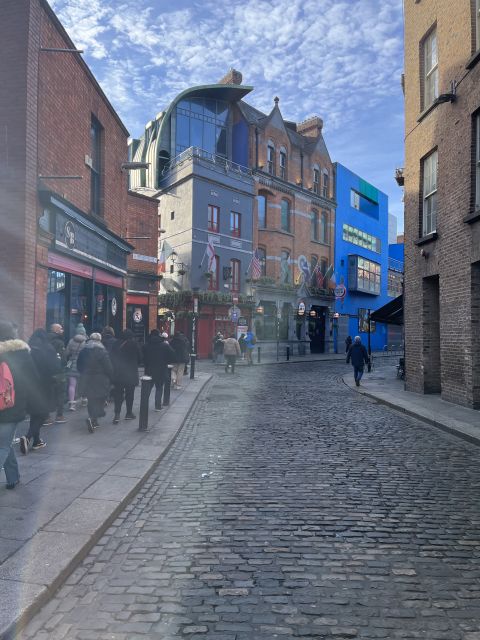
The legless serial killer is one of the tour’s headline stories. The subject has the odd, memorable quality that makes walking tours work well. It gives you a specific character to remember rather than another vague account of crime in the old city.
The tour uses stories like this to show that Dublin’s past was not only shaped by political events and famous buildings. It also included unusual criminals, local fears, and stories passed from one generation to another.
This section should appeal to anyone who likes true crime with a historical setting. It is also likely to be one of the more theatrical moments, since the guides are praised for acting out parts of the stories and using expressive delivery.
Still, the experience is not aimed at true-crime devotees who want forensic detail. The supplied information gives the subject as a major talking point, but not a full case file. Think of it as a brisk story within a wider city walk.
Rats, executions, and Dublin’s rougher edge
Man-eating rats and public executions bring the tour to its most lurid themes. These stories show how frightening urban life could feel when sanitation, medicine, and public punishment operated very differently from today.
The rat story is likely to be one of the easiest details to remember, while the execution material gives more weight to the city’s legal past. Public punishment was not hidden from daily life in the way it generally is now. It could be a public event, a warning, and a form of entertainment at the same time.
This is where the guide’s humor helps. Peter is repeatedly praised for making grim subjects enjoyable without losing the historical thread. Rob is also described as personable and entertaining, and one person compared his comic manner to Max Fosh. You can expect a guide who performs the story rather than simply reading it aloud.
The one caution is that the macabre level may not satisfy everyone looking for a very dark experience. The walk includes murder, death, bodies, disease, and punishment, but the presentation also includes jokes and lighter local facts. That mixture makes it accessible, though some people may want a more intense treatment.
The cathedral finale and a brothel keeper’s fate
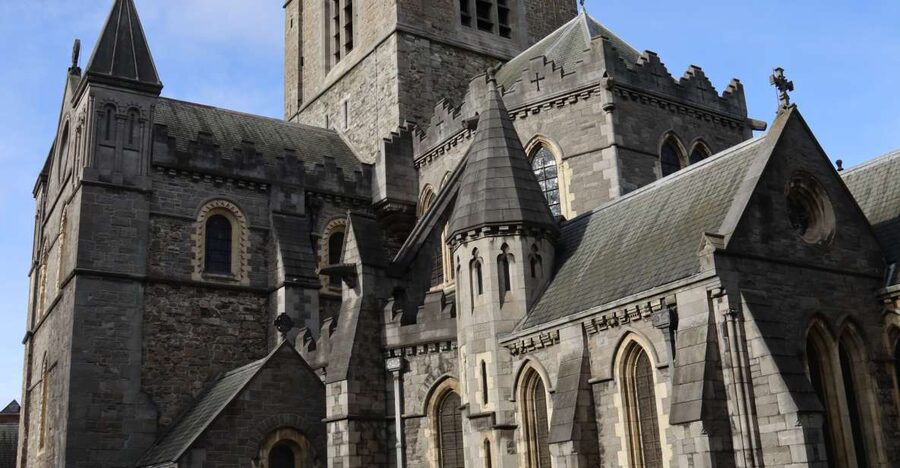
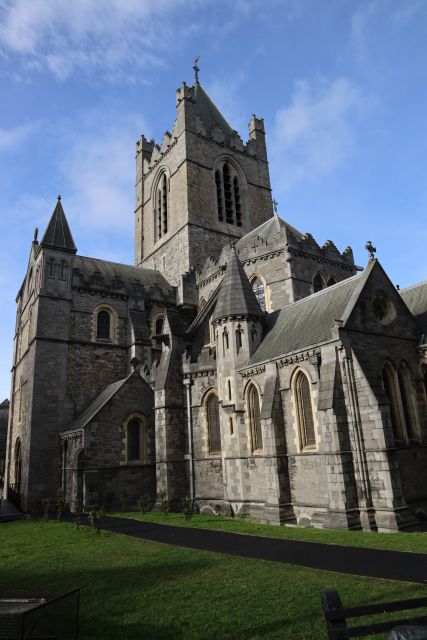
The final section takes place beside the cathedral and covers Dublin’s most famous brothel keeper, including her death by fire at the stake. It is a strong closing subject because it brings together crime, public morality, punishment, and spectacle.
The cathedral setting gives the ending a clear sense of place. Instead of finishing with a random final anecdote, the tour ties one of Dublin’s most notorious women to a major historic landmark and the city’s old systems of justice.
This stop also shows why the experience is more than a ghost walk. The focus is not simply on spirits or unexplained events. It looks at people, institutions, legends, and the ways Dublin remembered its most troubling episodes.
The tour then returns to the meeting point at the Spire. That makes the finish practical. You are not left at an unfamiliar edge of the city, and you can continue with dinner, another central attraction, or public transport from O’Connell Street.
Peter, Rob, and the value of a small group
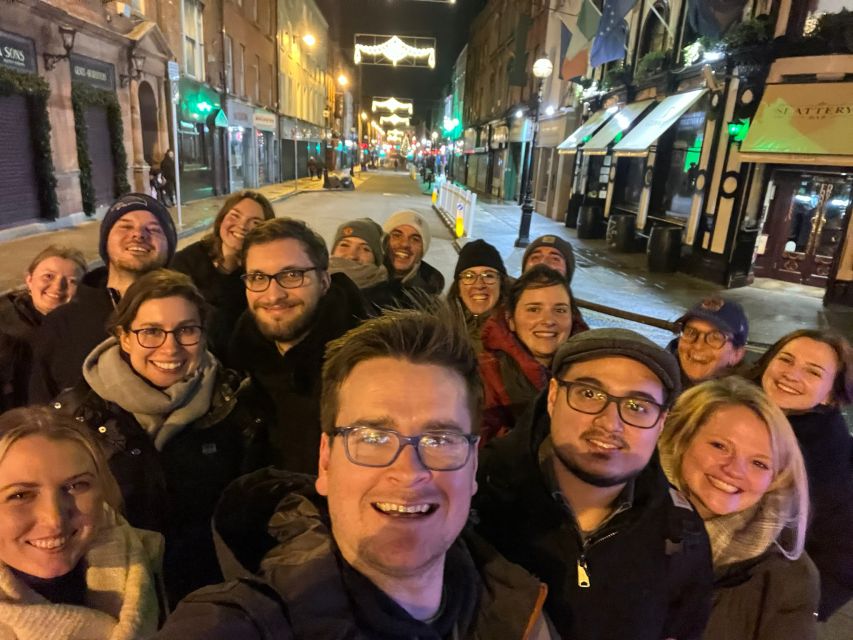
The guide is the main reason to book this walk. Peter receives particularly strong praise for passion, clarity, humor, and the ability to answer questions. Several people describe him as someone who can make a story feel immediate while still explaining the wider history of Dublin.
Rob also receives praise for his warmth, storytelling, and entertaining delivery. The experience provider is Yellow Umbrella Tours Ltd, and the yellow umbrella is used as the visual meeting marker.
Group size can vary. Some departures have been very small, with only three people, which can make the experience feel almost private without changing the published format. Small groups also make it easier to ask questions and hear the guide in narrow streets.
You should not count on having a tiny group every time. The available information confirms that small groups happen, but it does not promise a fixed group size. If you value personal attention, ask questions as you go. The guides are described as happy to stop and explain.
Is $19 a fair price for two hours?
At $19 per person, this is a good-value city walk if you want storytelling rather than entry to a paid attraction. The price covers the two-hour guided tour and the English-speaking guide, with no hotel transfer or extra attraction admission included.
I see the value in the route and the subject matter. You are getting a focused look at parts of Dublin that a standard sightseeing loop may skip, plus a guide who can connect each place to a memorable story. The walk can also help you understand the old centre before exploring it on your own.
The price is less attractive if you only want major sights, photographs, or a broad introduction to Dublin’s landmarks. This is a specialist walk with a dark theme. You pay for interpretation and storytelling, not a ticketed monument.
Free cancellation is available up to 24 hours before the tour for a full refund. You can also reserve now and pay later, which helps if your schedule is still changing.
Who should book this Dublin walk?
I would recommend it to adults who enjoy local legends, crime stories, unusual history, and walking through old streets with a guide. It also suits solo visitors, since the story-led format gives you an easy way to learn the city without needing a large group.
It is a good second tour after a general Dublin introduction. The route brings attention to details and areas you might otherwise overlook, and the subject gives you a different way to understand the city.
The tour is not suitable for children under 18. It may also disappoint you if you want a polished ghost attraction, constant scares, or strictly academic history. The style is lively and sometimes funny, with a blend of fact, folklore, and theatrical delivery.
The walk is wheelchair accessible and conducted in English. Check the starting time carefully, arrive at the Spire, and look for the yellow umbrella.
Should you book it?
Book this tour if you want Dublin’s old centre explained through its strangest and most troubling stories. The combination of Cuchulainn, grave robbing, medieval quarantines, mummified bodies, public executions, and the cathedral finale gives the walk a clear identity.
I would choose it for an adult afternoon or evening plan, especially if Peter or Rob is leading the departure. Skip it if your idea of macabre means nonstop gore or horror effects. For $19, it offers a lively, unusual way to see central Dublin, with enough local detail to make familiar streets feel new.
FAQ
Where does the Dublin Macabre History Walking Tour begin?
It begins beside the Spire, the large needle in the middle of O’Connell Street. Look for the yellow umbrella.
Where does the tour finish?
The walk ends back at the meeting point beside the Spire.
How long does the tour last?
The tour lasts two hours.
What language is the tour conducted in?
The live tour is conducted in English.
What stories are covered?
The walk includes Cuchulainn’s death, a legless serial killer, medieval quarantines, public executions, grave robbing, mummified corpses, man-eating rats, and a famous brothel keeper’s death by fire at the stake.
Is hotel pickup included?
No. You need to make your own way to the meeting point, as hotel pickup and drop-off are not included.
Is the tour suitable for children?
No. The activity is not suitable for children under 18.
Is the walking tour wheelchair accessible?
Yes. The activity is listed as wheelchair accessible.
Can I cancel for a full refund?
Yes. You can cancel up to 24 hours in advance for a full refund.
Can I reserve now and pay later?
Yes. You can reserve your place and pay later, which keeps your plans flexible.
New routes in Dublin
- Dublin: North Quay Guided Ghost Walk★ 4.2 · 144 reviews
- Dublin: Mythology, Folklore and Legends Walking Tour★ 4.9 · 703 reviews
- Dublin: Traditional Pub Walking Tour★ 4.6 · 295 reviews
- Dublin: Traditional Pubs Walking Tour with Local Guide★ 4.9 · 112 reviews
- Dublin: Irish Music Walking Tour with Live Performance★ 4.8 · 137 reviews
- Dublin: Highlights and Hidden Corners Walking Tour★ 4.8 · 79 reviews
- Dublin: Delicious Walking Food Tour★ 4.9 · 137 reviews
- Dublin: Sightseeing Walking Tour in German★ 4.7 · 231 reviews
Dublin Walking Tours, compared.
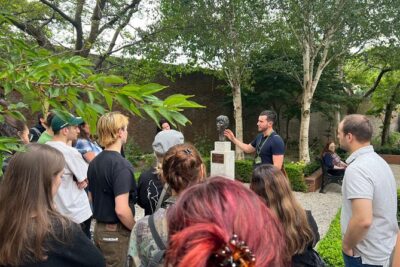
Dublin Highlights and Hidden Gems Guided Walking Tour
Read our review →
Dublin Historical Centre Food Tour with 8 Food Tastings & Drinks
Read our review →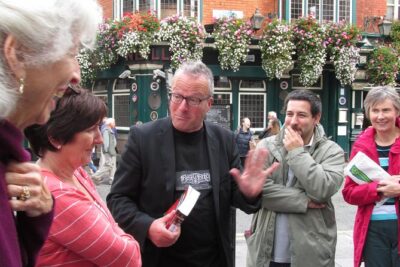

90 Minute Dublin Walking tour and Sightseeing tips
Read our review →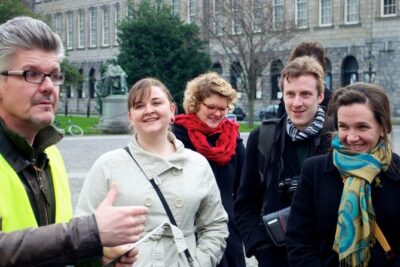
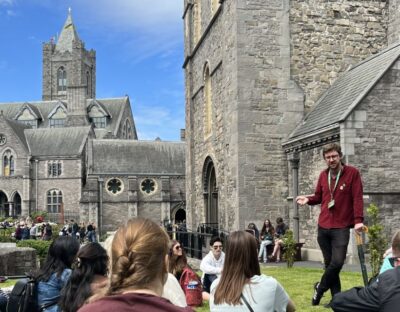
Dublin Highlights: 2.45-Hour Walking Tour in Italian
Read our review →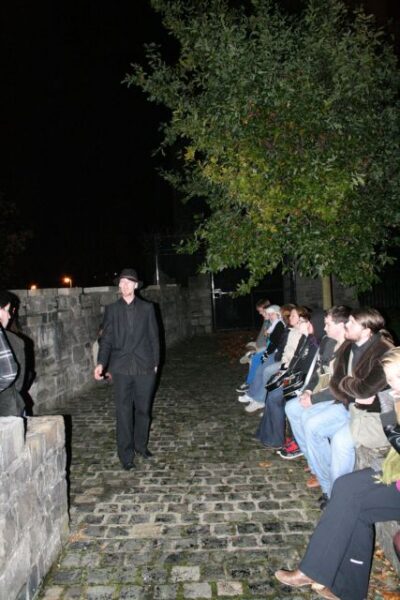
Browse the lists this tour appears in