Review · NEW ORLEANS
New Orleans: French Quarter Food History Walking Tour
New Orleans puts its story on a plate, and this three-hour French Quarter food walk gives you a tasty way to read it. You move from gumbo and boudin to pralines, po-boys, muffuletta, red beans and rice, and bananas foster bread pudding while your guide links each dish to the people and traditions that shaped the city.
I like the small group size, capped at nine, and the mix of sit-down restaurants, candy shops, a hot sauce bar, and casual food counters. I also like that guides such as Beth, Gary, Meg, John, Cat, and the Professor bring different personalities to the history talks. The main caution is food fit: the tour offers a vegetarian menu, but not vegan, gluten-free, or dairy-free choices, and you do not choose every dish served.
Key points at a glance
- Start with Cajun gumbo: Meet inside 3rd Block Depot at 316 Chartres Street and begin with gumbo and warm potato salad.
- Taste both famous New Orleans sandwiches: The menu includes a fried catfish po-boy and a meaty muffuletta.
- Food comes with context: Guides connect dishes to Louisiana seafood, Creole cooking, local customs, and the growth of the French Quarter.
- Expect a full meal, not just nibbles: Several samples are substantial, so arrive hungry and avoid eating a large breakfast or lunch first.
- Vegetarians have a real alternative: Black-eyed pea soup, vegetable jambalaya, and a Portobello po-boy replace the meat and seafood selections.
- Plan for weather and food limits: The walk runs rain or shine and is not suitable for vegans or people with gluten intolerance.
Why this French Quarter food tour works
Food tours can be a string of samples with little connection between them. This one has a clearer rhythm. You walk through the Vieux Carré, pause to eat, then walk again while your guide explains how the dish fits New Orleans life.
That structure matters in a city where food names can blur together. Gumbo is not simply soup. A po-boy is not just a sandwich. Muffuletta, pralines, boudin, and red beans and rice each carry a different piece of Louisiana culture. The guide helps you keep those pieces straight.
The group size helps, too. With up to nine people, it should be easier to hear the guide and ask questions than on a large coach-style excursion. The guides have different styles. Beth is known for lively stories and careful timing, Gary for tying food to the wider story of the city, and John and the Professor for patient explanations and humor. Meg and Cat bring an approachable, energetic tone, which can help keep the walk moving on hot and humid days.
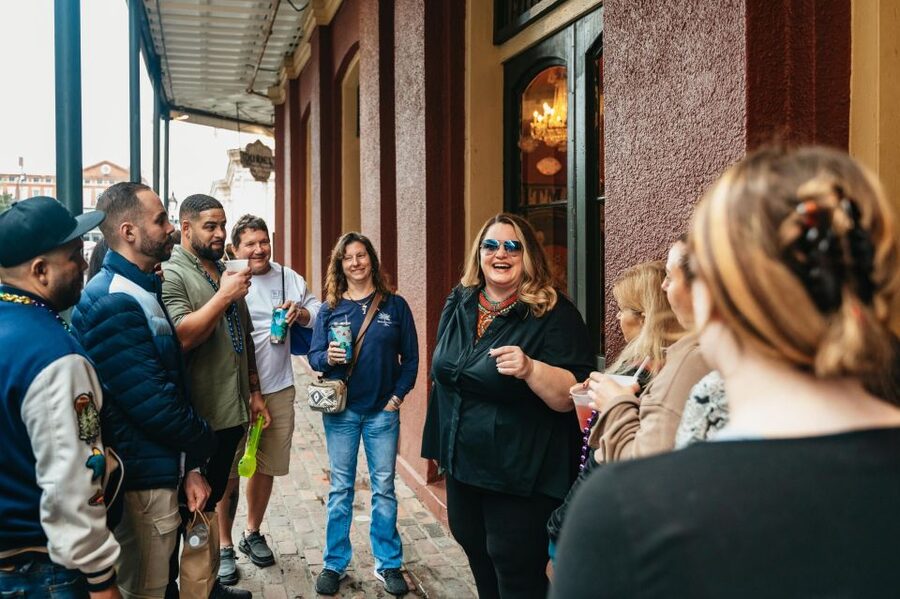
You should expect a talkative tour rather than a quiet restaurant crawl. Guides regularly pause to explain what you are eating, how local traditions developed, and what to notice in the streets around you. If you want only a meal, this may feel slow. If you want food and orientation at the same time, the format makes sense.
More Food Walking Tours in the USA
- New Orleans Food Walking Tour of the French Quarter with Small-Group Option
★ 5.0 · 6,118 reviews - New Orleans Food and History Walking Tour
★ 5.0 · 1,544 reviews - Little Havana Food and Walking Tour in Miami
★ 5.0 · 8,882 reviews
Starting at 316 Chartres Street with gumbo
The meeting point is inside 3rd Block Depot, a practical place to begin in the center of the French Quarter. Your first taste is rustic Cajun-style gumbo with warm potato salad.
This is a smart opening dish. Gumbo gives your guide plenty to explain, from Louisiana’s use of seafood and meat to the way Creole and Cajun cooking overlap and differ. The warm potato salad is also a useful local touch, since it gives the first stop more character than a standard bowl of soup and bread.
The stop lasts about 25 minutes, including the guided talk and tasting. You are not rushed through the bowl, but the restaurant setting can be active. One person specifically found the staff at the starting restaurant too loud during the history talk. That is worth keeping in mind: the first stop may not offer the calmest listening environment.
The gumbo receives some of the strongest praise in the food lineup. Still, the serving is selected for the group, so you should not expect to customize it. If you avoid seafood, alligator, or other common Louisiana ingredients, tell the provider about allergies when booking. An aversion or simple preference may not lead to a replacement.
Hot sauce, pralines, and the sweet side of Creole cooking
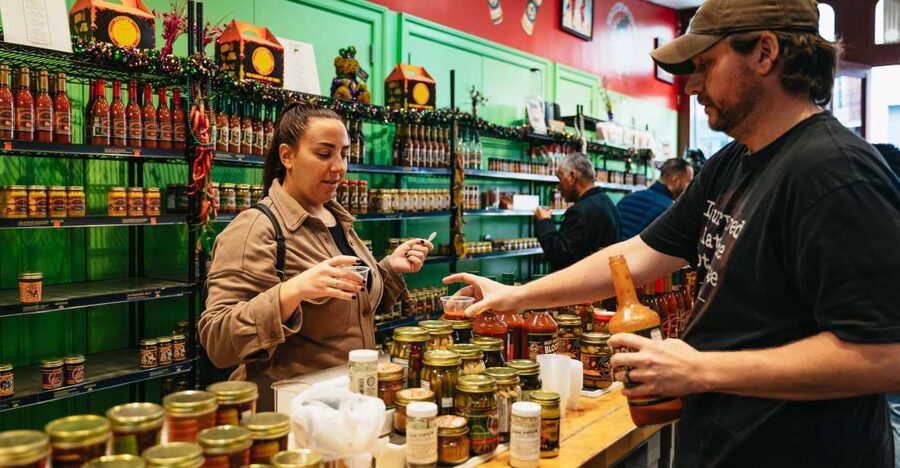
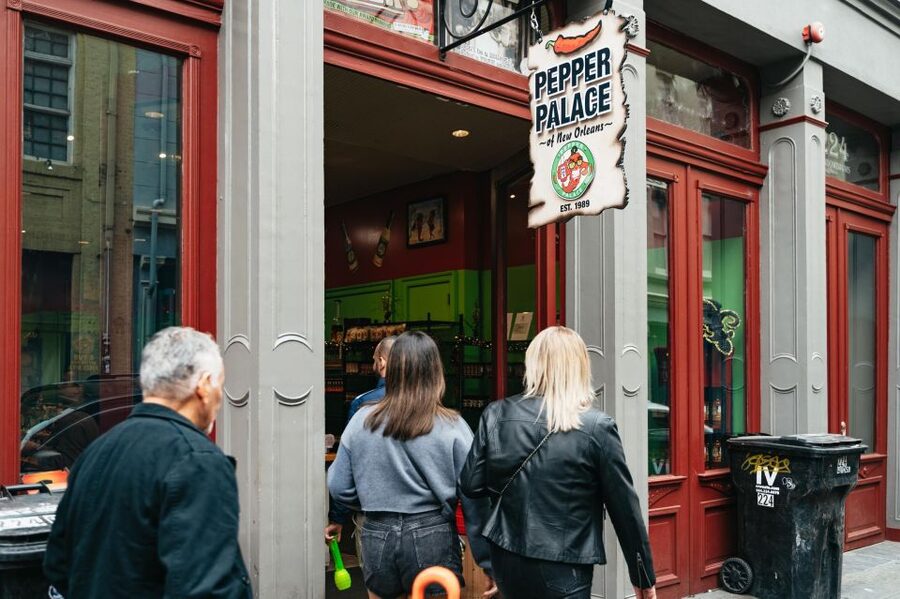
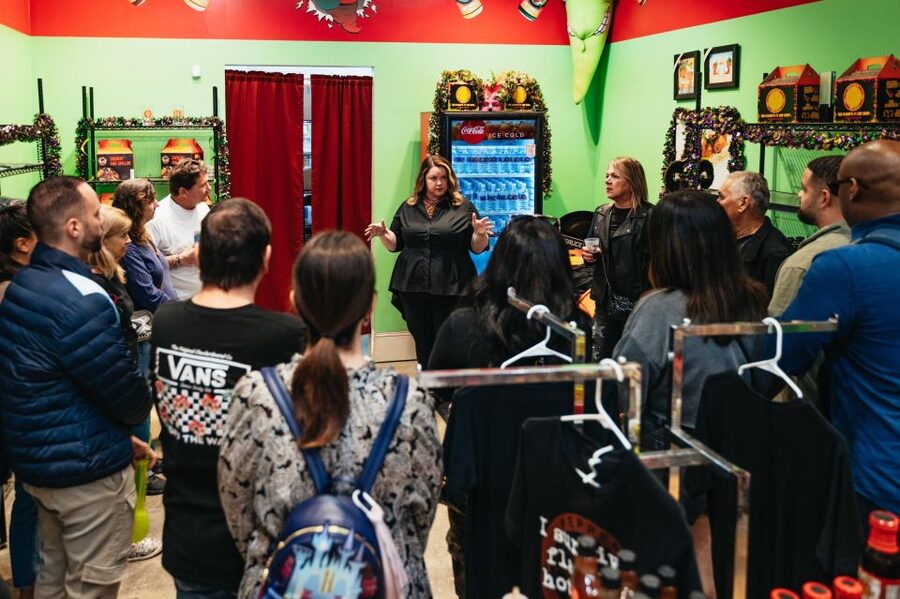
After about five minutes on foot, the tour moves to a hot sauce bar. You can sample dozens of fiery varieties, which turns this into more than a quick condiment stop.
This is one of the tour’s playful moments. You can compare heat levels and flavors, but take the warning seriously. One participant needed milk after trying a particularly hot sauce. Do not treat every bottle as a dare, especially if you still have several food stops ahead.
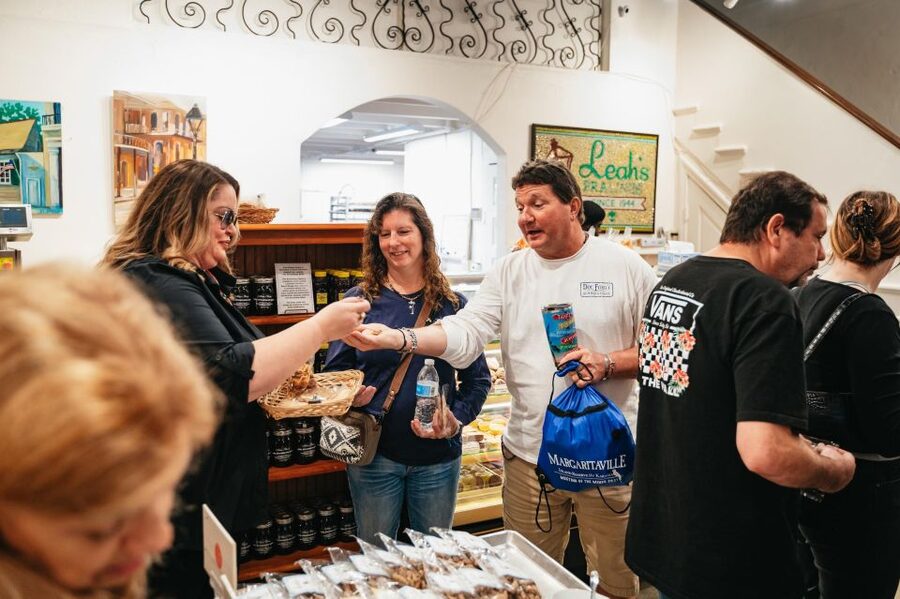
The next walk takes about five minutes and leads to Leah’s Pralines. Here you sample a Creole classic or the newer bacon pecan brittle. This stop shows another side of New Orleans food. The tour is not only about stews and sandwiches. Sugar, pecans, butter, and candy-making are part of the city’s food identity as well.
I like the contrast between the hot sauce and pralines. One wakes up your mouth; the other settles it down. The candy stop also gives you a chance to think about how local food traditions can be carried through shops and family recipes, not only through full-service restaurants.
Catfish po-boy at NOLA Poboys
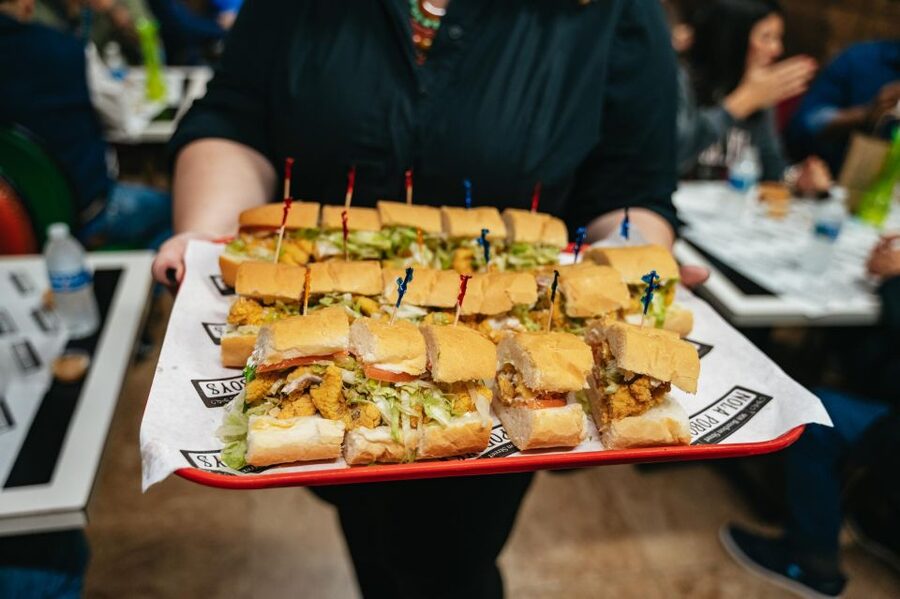
The longer walk, about ten minutes, brings you to NOLA Poboys. The tasting here is a freshly fried catfish po-boy, with a talk about Louisiana’s seafood traditions.
A po-boy is one of the foods you should try in New Orleans, and this tour makes sure you do not leave the French Quarter without one. Catfish gives you a clear taste of the state’s connection to its waterways and seafood trade. The fried filling also adds crunch and weight, making this more than a token sample.
The stop lasts around 35 minutes, so you have time to eat and listen. Portion sizes across the tour can add up quickly. Several people found the food sufficient to fill them, and one practical piece of advice comes up again and again: arrive with an empty stomach.
The drawback is the fixed menu. If you do not eat seafood, you may find this stop less useful unless you have requested the vegetarian option. The vegetarian version includes a Portobello po-boy, which keeps the sandwich tradition in place without relying on fish.
More History Walking Tours in New Orleans
- New Orleans Garden District History Walking Tour
★ 5.0 · 2,879 reviews - French Quarter Historical Sights and Stories Walking Tour
★ 5.0 · 2,724 reviews - New Orleans: Drunk History Walking Tour
★ 4.2 · 165 reviews
Muffuletta and boudin, two very different New Orleans bites
Another walk of about ten minutes leads to a stop featuring a muffuletta and savory boudin balls. These foods give you a sharp change in texture and flavor from the po-boy.
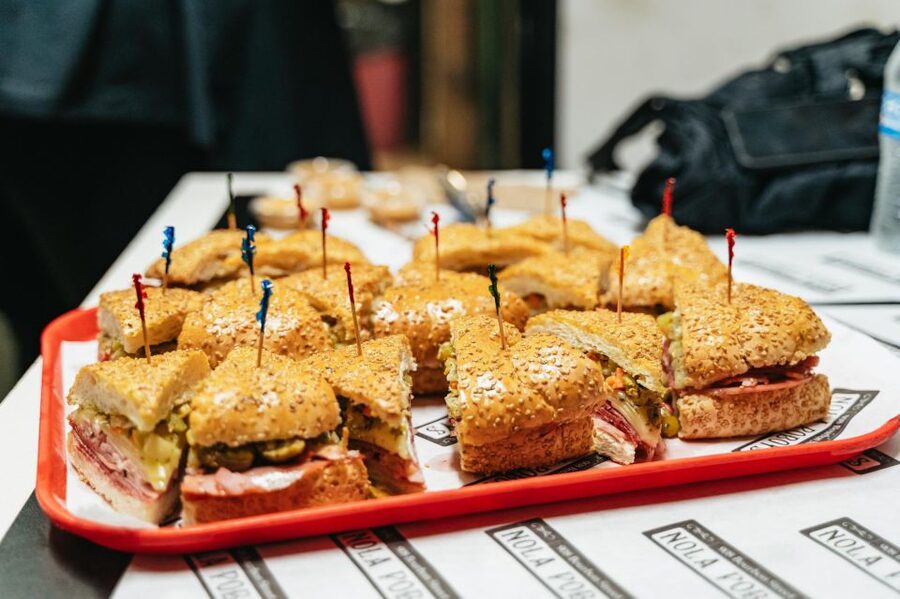
The muffuletta is a substantial, meaty sandwich associated with New Orleans. It is often recognized by its round shape and olive-based filling, though the exact preparation can vary. Here, you get the chance to compare it directly with the po-boy, which is one of the best reasons to take a food tour rather than order one familiar dish on your own.
Boudin balls offer another Louisiana staple. Boudin itself is a seasoned sausage mixture, and the fried ball format makes it easy to sample while walking between larger dishes. Your guide can explain the dish as part of the state’s broader Cajun food tradition.
This middle section is where the tour feels most like a meal. You have already had gumbo, candy, and a sandwich, and now two more savory bites arrive. If you are a light eater, pace yourself. You can enjoy the food without finishing every sample, but the tour is designed for people who want a broad tasting rather than tiny chef-style portions.
Red beans and rice at Creole Cookery
The final major savory stop is Creole Cookery, where you get red beans and rice. The guided portion lasts about 45 minutes, making this the longest stop on the route.
Red beans and rice is a useful dish for understanding everyday New Orleans cooking. It is filling, economical, and closely tied to home-style meals. It also provides a gentler counterpoint to fried catfish, hot sauce, and boudin. One guide favorite from the tour is this dish, and I can see why: it gives the meal a warm, familiar center.
This is also where the tour’s food-and-history approach pays off. You are not only sampling restaurant specialties. You are tasting dishes that speak to work, family meals, local ingredients, and the habits that helped define the city’s cooking.
The vegetarian menu includes black-eyed pea soup and vegetable jambalaya, which gives vegetarian participants more than a single substitute plate. That said, the provider does not offer a vegan, gluten-free, or dairy-free version. Request the vegetarian menu at checkout, and contact the provider about allergies before the tour rather than relying on a last-minute adjustment.
Banana bread pudding to finish
The tour ends near Toulouse Street with dessert, usually bananas foster bread pudding. After the salty and spicy dishes, this is a fitting finish.
The dessert has a familiar Southern base but a distinctly New Orleans flavor profile. The banana element connects it to the city’s well-known dessert traditions, while the bread pudding makes it substantial enough to feel like the end of a full meal rather than a small sweet.
Several food stops offer bars, so you can buy a soft drink, beer, cocktail, or other beverage along the way. Drinks are not included, and you should budget separately if you want them. Water is included, which is useful on warm days.
The finish near Toulouse Street is convenient for continuing your time in the French Quarter. You are not returned to the starting point, so plan your next stop from the endpoint rather than assuming you will finish at Chartres Street.
What the $85 price gets you
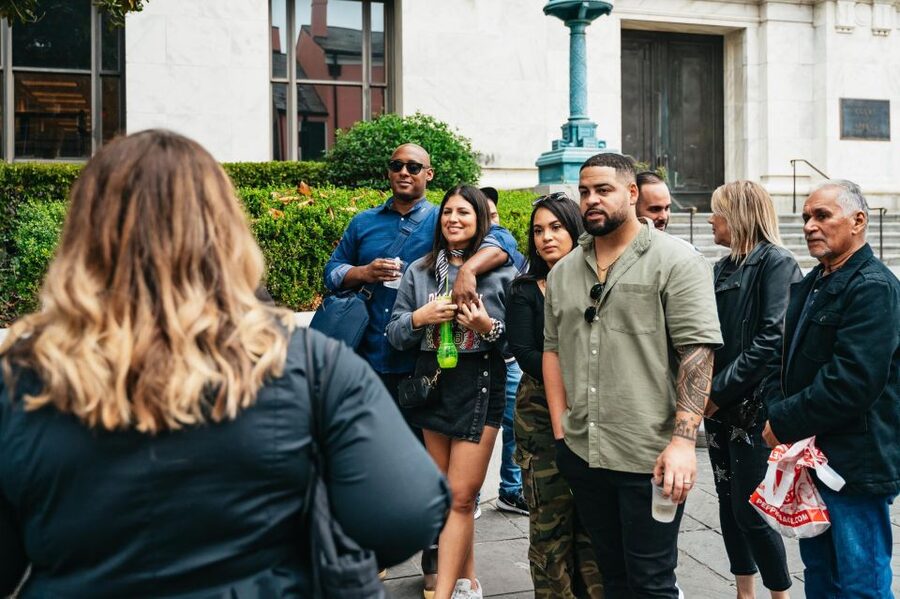
At $85 per person, this is not a cheap way to grab lunch. It is a guided food experience with a meal’s worth of tastings, a three-hour walk, service tips, and water included.
The value improves if you want several dishes in one outing. Ordering gumbo, a po-boy, muffuletta, boudin, red beans and rice, pralines, hot sauce samples, and dessert separately could take time and planning. You also receive the guide’s explanations and restaurant-to-restaurant route, which are part of what you are paying for.
The price is less attractive if you eat only small portions, avoid several main ingredients, or already have a firm list of French Quarter restaurants you want to visit. One participant found the tour expensive and did not eat because of seafood and alligator concerns. That is a fair warning. Read the food lineup before booking.
You can cancel up to 24 hours ahead for a full refund, and the reserve-now, pay-later option makes it easier to hold a place while your plans settle. Those policies help, but they do not solve the food restriction issue. The menu is the key value question.
Who should book this walking tour
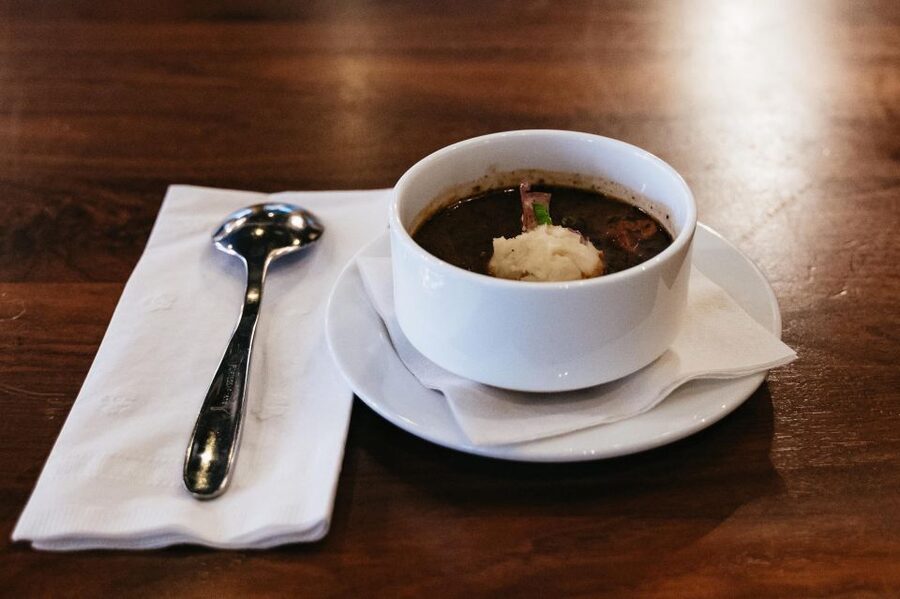
I would choose this tour early in a New Orleans visit. It gives you a working list of dishes to seek out later, and the French Quarter stories can help you understand the streets you will walk for the rest of your stay.
It suits:
- First-time visitors who want food and local history together
- Couples and small groups who enjoy trying many dishes
- Pescatarians and meat eaters who want a wide Louisiana sample
- Vegetarians who request the alternate menu in advance
- People who prefer a guide to explain what they are tasting
- Anyone who wants a full lunch spread rather than one restaurant meal
I would skip it if you need vegan, dairy-free, or gluten-free food. I would also think twice if mobility is a concern. The tour is on foot, runs rain or shine, and is marked as not suitable for people with mobility impairments, even though it is listed as wheelchair accessible. Ask the provider for a clear answer about your specific needs before paying.
Wear comfortable walking shoes and bring protection from rain or heat. The pace is described as manageable, with walks of roughly five to ten minutes between stops, but three hours of standing, eating, and walking still requires some stamina.
Final call: book it for the food and the stories
Book this tour if you want New Orleans explained through what you eat. The strongest features are the range of dishes, the small group, and the guides who connect gumbo, seafood, sandwiches, candy, and rice dishes to the city’s people and past.
Book early in your trip, arrive hungry, and request the vegetarian menu if needed. Skip it if you need strict dietary control or want to choose every dish yourself. For most omnivores and many vegetarians, $85 buys a generous introduction to French Quarter food, with enough variety to shape the rest of your eating plans.
FAQ
Where does the New Orleans food tour begin?
Meet your guide inside the 3rd Block Depot restaurant at 316 Chartres Street in the French Quarter.
Where does the tour finish?
The tour finishes on Toulouse Street in New Orleans, Louisiana. It does not finish at the starting restaurant.
How long does the food tour last?
The walking tour lasts three hours, including the guided talks, walks between stops, and food tastings.
What food is included?
The tasting lineup includes gumbo with warm potato salad, hot sauce, pralines or bacon pecan brittle, catfish po-boy, muffuletta, boudin balls, red beans and rice, and bananas foster bread pudding. The tour includes up to eight food samples, while the full tasting program may include up to nine food tastings.
Is there a vegetarian option?
Yes. Request the vegetarian option at checkout. It includes items such as black-eyed pea soup, vegetable jambalaya, and a Portobello po-boy.
Is the tour suitable for vegans or people with gluten intolerance?
No. The tour does not offer vegan, gluten-free, or dairy-free options. Tell the provider about food allergies when booking.
Are drinks included?
Water is included. Alcoholic drinks and soft drinks are not included, but most restaurant stops have bars where you can buy beverages.
More Food Walking Tours in New Orleans
- Reykjavik Food Walk – Local Foodie Adventure in Iceland
★ 5.0 · 18,952 reviews - Ho Chi Minh City Street Food Tour & Sightseeing By Motorbike
★ 5.0 · 9,413 reviews - Naples: Street Food Walking Tour with Local Guide
★ 4.9 · 4,976 reviews - Authentic Parisian Gourmet Food Tour with 10 Local Dishes & Wines
★ 5.0 · 4,754 reviews
More History Walking Tours in the USA
- History and Hauntings of Salem Guided Walking Tour
★ 5.0 · 14,564 reviews - Boston: Freedom Trail History Small Group Walking Tour
★ 5.0 · 6,450 reviews - Historic Charleston Guided Sightseeing Walking Tour
★ 5.0 · 6,216 reviews - Savannah History and Haunts Candlelit Ghost Walking Tour
★ 5.0 · 3,235 reviews
New routes in New Orleans
- New Orleans: Witches Coven Garden District Walking Tour★ 4.9 · 113 reviews
- New Orleans: French Quarter Ghost and Legends Walking Tour★ 4.3 · 129 reviews
- New Orleans: 2-Hour Homes of the Rich & Famous Walking Tour★ 4.6 · 115 reviews
- New Orleans: French Quarter Photo Shoot and Walking Tour★ 5.0 · 74 reviews
- New Orleans: Garden District Guided Walking Tour★ 4.9 · 514 reviews
- New Orleans: Five-in-One City Walking Tour★ 3.8 · 272 reviews
- New Orleans: 2 or 3 Day Hop-On Hop-Off Bus with Walking Tour★ 4.5 · 291 reviews
- New Orleans: Drunk History Walking Tour★ 4.2 · 165 reviews
New Orleans Walking Tours, compared.

New Orleans Premier Ghost, Voodoo and Vampire Walking Tour
Read our review →
New Orleans Food Walking Tour of the French Quarter with Small-Group Option
Read our review →
St. Louis Cemetery No. 1 Official Walking Tour
Read our review →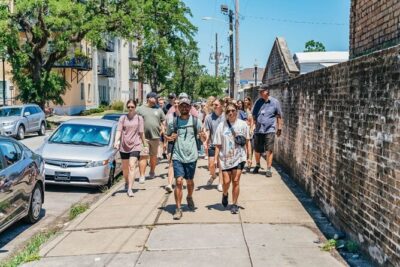
New Orleans French Quarter, Voodoo and Culture Walking Tour
Read our review →
New Orleans Garden District History Walking Tour
Read our review →
French Quarter Historical Sights and Stories Walking Tour
Read our review →
Ghost and Vampire Walking Tour Of The French Quarter
Read our review →