

Review · GERMANY
Leipzig: City Center Guided Walking Tour
Leipzig’s story comes together on foot, often within a few city blocks. This 90-minute walk links music, literature, architecture, and the 1989 Peaceful Revolution, so you get more than a quick parade of pretty buildings.
I like the compact route and the mix of famous names with serious modern history. I also like the practical format: German, English, and French departures are available, and the private-group option lets you keep the pace more personal. The main consideration is time. One visitor found the 90 minutes a little long, so this may feel less appealing if you prefer a very brisk introduction.
- Market Square and the Old Town Hall give you a clear starting point for Leipzig’s civic story.
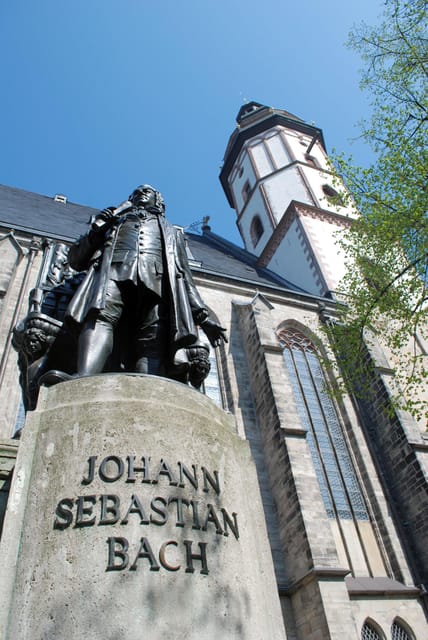
- St. Thomas’s Church connects the city with Johann Sebastian Bach.
- St. Nicholas’s Church brings the 1989 Peaceful Revolution into focus.
- Mädler Passage and Auerbachs Keller add Leipzig’s literary and dining traditions.
- Bach, Mendelssohn, Schumann, Schiller, and Goethe help explain the city’s cultural pull.
- A 4.7 rating from 157 bookings points to especially strong marks for guide manner, content, and group size.
Why a short walk works well in Leipzig
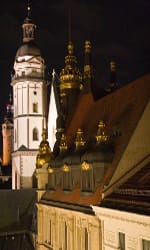
Leipzig is a good city for a first walking tour because many of its major sights sit close together in the center. You are not spending much of the 90 minutes getting from one district to another. Instead, the route can keep returning to one useful idea: Leipzig has long been a place where trade, art, music, religion, and political change meet.
That makes the tour a sensible first activity after arrival. You can learn the shape of the center, see the buildings you may want to revisit, and get a basic timeline before choosing a concert, museum, church visit, or meal.
The tour is also a good fit if you want a guide to explain connections that are easy to miss when you walk alone. A church may look like an attractive old building, but the guide can tell you why it matters to music or modern German history. A shopping arcade may seem like a pleasant passage, but it also points toward Leipzig’s long commercial and literary traditions.
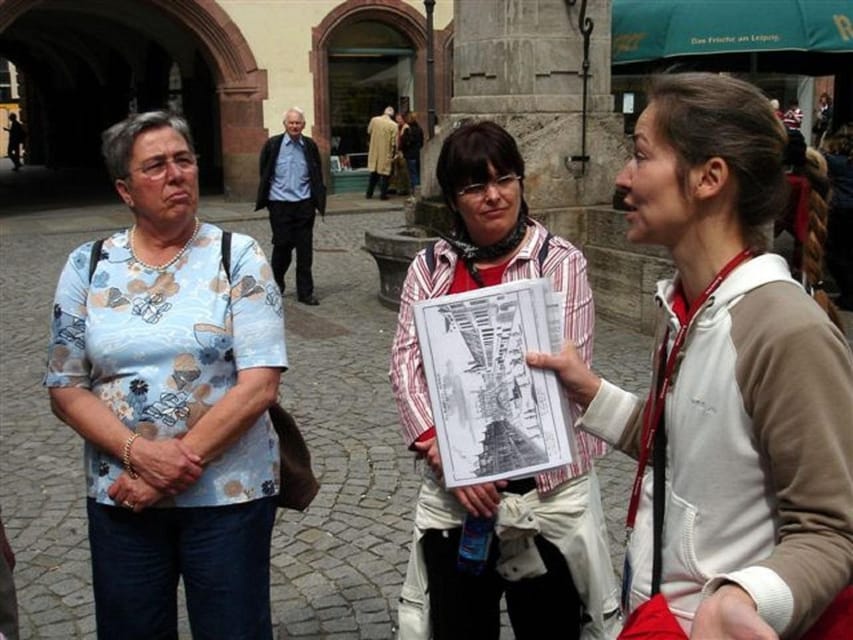
The tone appears to be one of the experience’s strongest points. Max, one of the named guides associated with the tour, is described as pleasant and personable, and the available feedback gives high marks to the mood and the group size. That matters on a city walk. A clear route is useful, but an easygoing guide can make the difference between a dry list of dates and a memorable introduction.
Market Square and the Old Town Hall

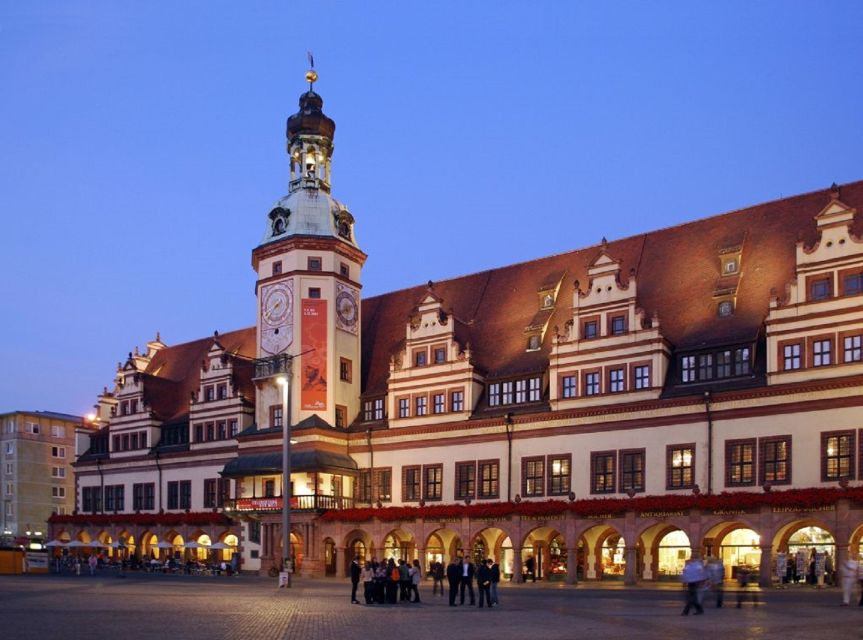
The walk includes Leipzig’s busy Market Square, a natural place to begin understanding the city center. The Old Town Hall gives the square a strong visual anchor and represents Leipzig’s civic identity.
This is the kind of stop where I would listen for the practical story behind the facade. The point is not only to admire a Renaissance building. It is to understand how Leipzig presented itself as an important German city, with public spaces built for administration, commerce, and public life.
The square also helps you get your bearings. If you are staying in central Leipzig, you may pass through it several times during your visit. Seeing it with a guide early on gives those later walks more meaning.
Because the tour is relatively short, do not expect an extended architectural lecture at every stop. The value here is the overview: you get the building, its place in the center, and a useful connection to the city’s wider development.
More Guided Walks in Germany:
- Berlin: Third Reich & Cold War Guided Walking Tour
★ 4.9 · 8,378 reviews - Berlin: Hidden Backyards Guided Walking Tour
★ 4.8 · 5,360 reviews - Bamberg: Guided Walking Tour
★ 4.6 · 3,202 reviews
St. Thomas’s Church and Leipzig’s musical identity
St. Thomas’s Church is one of the most important stops for anyone interested in music. Johann Sebastian Bach spent a major part of his career in Leipzig, and his name is closely tied to this church.
The stop helps explain why Leipzig is still known as a music city rather than simply a place with a famous composer in its past. Bach is part of the story, but the tour also brings in Felix Mendelssohn and Robert Schumann. Their links to Leipzig show how the city’s musical life continued across generations.
The connection reaches into the present through the Gewandhaus Orchestra, one of the city’s best-known musical institutions. You may not attend a concert during your visit, but the guide can help you see that Leipzig’s music reputation is not limited to one historic figure or one old church.
St. Thomas’s is especially useful for first-time visitors who might otherwise treat Leipzig as another attractive German center. The Bach connection gives the city a distinct character. If music is a major reason for your visit, use this stop to note places you may want to explore later.
The tour’s time limit also matters here. The walk can introduce the church and its significance, but it is not a dedicated Bach tour. If you want a detailed account of Bach’s work, performances, or Leipzig years, you will need a separate visit or a longer specialist experience.
St. Nicholas’s Church and the events of 1989
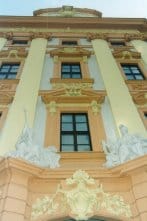
St. Nicholas’s Church adds a very different layer to the route. It is linked with the Peaceful Revolution of 1989, the movement that helped bring an end to East Germany’s Communist government.
This is one of the most valuable parts of the walk because it connects Leipzig to recent European history. The story is not presented as something safely distant. It happened in a real church and in recognizable city streets, with citizens gathering and pushing for change without the violent conflict that marked other political upheavals.
The tour also points toward the former Stasi headquarters, once used by East Germany’s secret police. That contrast is striking. On one side, you have a church associated with public protest and hope. On the other, you have the offices of a surveillance system built to control public life.
You should pay close attention here if you are interested in twentieth-century Germany. The stop offers context that a simple sightseeing walk often misses. Leipzig is not only a city of composers and elegant buildings. It was also a key setting in the peaceful challenge to East German rule.
As with the music sites, this is an introduction rather than a full political-history program. The guide can locate the important places and explain their role, but the 90-minute format leaves limited room for detailed personal accounts or a long chronology.
Mädler Passage and Auerbachs Keller
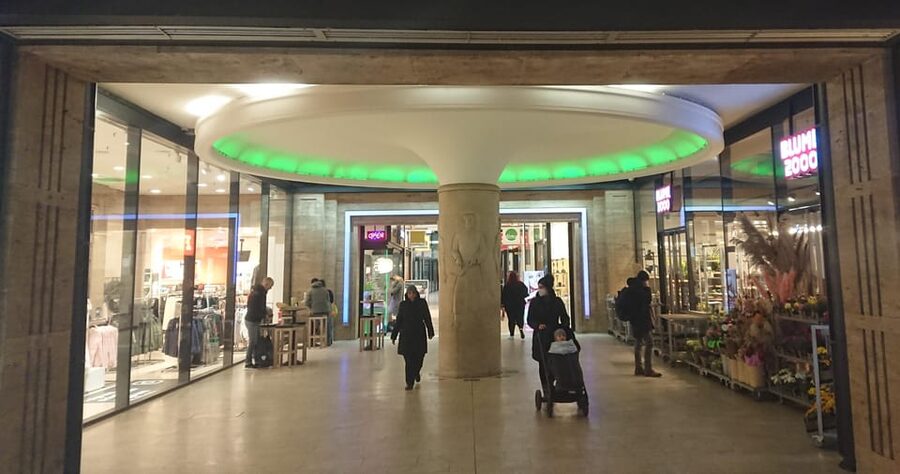
Mädler Passage brings a different mood to the walk. This covered arcade is associated with Leipzig’s commercial and cultural life, and it gives you a chance to see the city’s grander Renaissance and Art Nouveau influences in a more intimate setting.
The passage is also home to Auerbachs Keller, the legendary restaurant connected with Johann Wolfgang von Goethe. Goethe studied in Leipzig in the late 1760s, and the restaurant became part of the city’s literary mythology through his work.
This stop is useful because it shows how a place can carry several identities at once. Mädler Passage functions as a shopping and dining space, yet it also preserves a link to literature and the city’s student culture. Auerbachs Keller is not just a restaurant name to tick off. It represents the way Leipzig’s real places fed the imagination of one of Germany’s most famous writers.
You can treat the stop as a recommendation for later. If you enjoy historic interiors, literary associations, or traditional dining, you may want to return after the tour rather than trying to fit a meal into the walking route itself.
More Walking Tours in Germany:
- Discover Berlin Half-Day Walking Tour
★ 5.0 · 9,624 reviews - Berlin City walk Government District and Places of Democracy
★ 4.7 · 8,467 reviews - Munich: Third Reich & WWII Walking Tour
★ 4.6 · 6,181 reviews - Berlin: Discover Berlin Walking Tour
★ 4.9 · 5,998 reviews
Renaissance and Art Nouveau details along the route
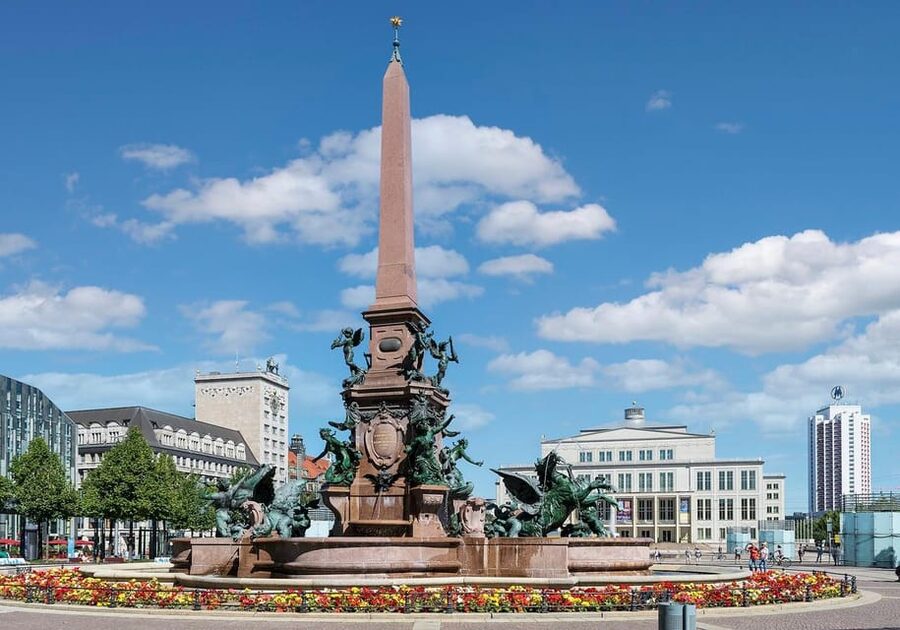
The experience is not limited to major landmarks. One of its useful features is the attention to Leipzig’s mix of architectural periods, including Renaissance and Art Nouveau buildings.
You may find the contrast more interesting than a single grand monument. Renaissance buildings point toward Leipzig’s older civic and commercial power. Art Nouveau details show how the city changed as tastes, wealth, and urban life developed.
A guide can help you notice the parts that are easy to pass without a second look: decorative fronts, passageways, old public buildings, and the way the central streets fit together. That kind of explanation is one reason a walking tour can offer more than a guidebook route.
Still, keep your expectations realistic. The supplied details do not promise an architectural specialist or interior access to every building. The strength is the broad reading of the center, with architecture placed beside music, literature, and politics.
A cultural roll call with real purpose

Leipzig’s list of famous residents and visitors is long, but the best part of the tour is the way those names serve the city’s story. Bach connects to church music. Mendelssohn and Schumann connect to the city’s continuing musical life. Schiller connects to German literature and philosophy. Goethe connects to Leipzig as a place of study, writing, and youthful experience.
That range gives you a fuller picture than a tour focused on one celebrity. Leipzig’s cultural importance did not come from a single golden age. Different figures left different marks, and the center still gives you physical places where those stories overlap.
I also like that the tour does not stop with historic personalities. The Gewandhaus Orchestra carries the music story into modern Leipzig, while St. Nicholas’s Church and the Stasi headquarters connect the city to recent political change.
If you are visiting with family or friends who have different interests, this mix can work well. The music lover gets Bach and the orchestra. The literature fan gets Goethe and Auerbachs Keller. The history-minded visitor gets the Peaceful Revolution and the Stasi. The architecture enthusiast gets the Renaissance and Art Nouveau center.
What the 90-minute pace feels like
Ninety minutes is enough for a strong orientation, but not enough for a slow examination of every sight. Expect a steady route with stops for explanation, rather than a long pause at each church, passage, or square.
That pace suits you if you want a clear introduction before exploring on your own. It is less ideal if you prefer extended photography time, detailed interior visits, or long discussions at each location.
One important clue comes from the mixed reaction to the length. Most of the available feedback is strongly positive, but one person found the tour somewhat long. That does not mean the walk is unusually demanding. It suggests that your enjoyment will depend on how much context you want at each stop.
The guide’s style matters here. A pleasant guide such as Max can make a 90-minute route feel easy, especially when the group size stays comfortable. The experience is offered for groups of up to 25, with private groups available. A smaller or private arrangement may feel more personal, while a full group may offer less room for individual questions.
The meeting point can vary by the option you book, so check that detail before setting out. The route is wheelchair accessible, which makes the format more practical for many visitors, though the exact meeting location still matters for planning.
Price, group size, and overall value
The listed price is $188 per group of up to 25 people. At full capacity, that works out to roughly $7.50 per person, which is strong value for a guided introduction to central Leipzig.
The calculation changes if you are a small private party. A couple paying the full group price would spend much more per person than a large family or organized group. For two or three people, compare the private-group benefit with the cost of joining a shared departure if that option is offered for your chosen time.
The price makes the most sense when you use the tour as a starting point. You are paying not only for the route, but for someone to connect the Old Town Hall, Bach, Goethe, St. Nicholas’s Church, and the Peaceful Revolution in one coherent story.
The score of 4.7 out of 5 from 157 ratings supports the idea that the experience delivers well on its basic promise. The most praised elements are the guide’s friendly manner, the content, the atmosphere, and the group size. Those are exactly the features that matter on a short walking tour.
Languages and who should book it
You can book the live guide in German, English, or French. That makes the tour useful for visitors who want more than a translated pamphlet or an audio guide.
I would recommend it to first-time visitors, music fans, students of German history, and anyone who wants a quick cultural map of Leipzig. It also suits people who prefer to walk rather than spend their first hours using public transport between distant sights.
The tour is less suitable if you already know Leipzig well or want a specialist experience focused only on Bach, architecture, Goethe, or the Peaceful Revolution. In that case, the broad approach may cover familiar ground without giving enough depth.
It is also worth considering your preferred pace. If you like a concise orientation, the 90 minutes should work well. If you want a short photo walk with little commentary, the amount of explanation may feel more than you need.
Should you book the Leipzig city center walk?
Book this tour if you want Leipzig’s main stories tied together in one manageable route. The combination of Market Square, St. Thomas’s Church, St. Nicholas’s Church, Mädler Passage, Auerbachs Keller, major cultural figures, and the 1989 uprising gives you a strong first look at the city.
The best value comes when you are traveling with a larger group, since the $188 price covers up to 25 people. Choose a private option if a more personal pace matters to you, and check the meeting point for the option you select.
Skip it only if you want a highly specialized tour or a very brief walk with minimal commentary. For most first visits, this is a practical and well-rounded way to get oriented, with enough substance to guide the rest of your time in Leipzig.
FAQ
How long is the Leipzig city center walking tour?
The tour lasts 1.5 hours, or 90 minutes.
What is the price of the tour?
The listed price is $188 per group of up to 25 people.
Which languages are available?
Live guides are available in German, English, and French.
Is the tour wheelchair accessible?
Yes, the activity is listed as wheelchair accessible.
Can I book a private group?
Yes, a private-group option is available.
Can I cancel for a full refund?
Yes. You can cancel up to 24 hours in advance for a full refund.
New routes in Germany
- Munich: Walking Tour Old Town and Viktualienmarkt★ 4.7 · 839 reviews
- Stuttgart: Guided Ghost Walking Tour★ 4.5 · 867 reviews
- Stuttgart: Private Guided Circular City Walk★ 4.7 · 129 reviews
- Stuttgart: Old Town Highlights Guided Walking Tour★ 4.2 · 101 reviews
- Stuttgart: City Highlights – Guided Walking Tour★ 4.7 · 189 reviews
- Hamburg: Private Tour Red Light District Walking Tour★ 4.7 · 227 reviews
- Small Group Walking Tour: “Wild Kreuzberg”★ 4.8 · 199 reviews
- Sachsenhausen Memorial: Walking Tour from Berlin★ 4.7 · 132 reviews
Germany Walking Tours, compared.
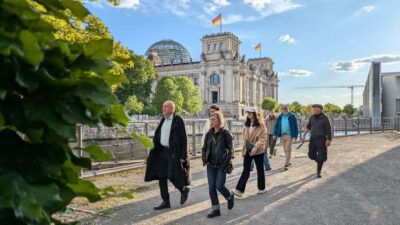
Berlin City walk Government District and Places of Democracy
Read our review →
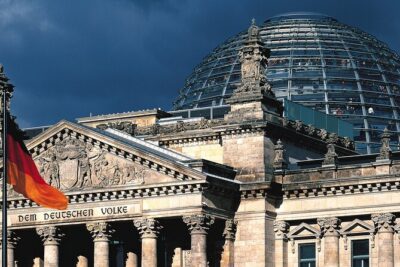
Berlin’s Best: 2 Hour Walking Tour Third Reich and the Cold War
Read our review →
Explore Berlin: See All The Iconic Sights & Some Hidden Gems
Read our review →
Third Reich Berlin: Hitler and WWII Walking Tour
Read our review →
Browse the lists this tour appears in