
Review · GERMANY
Leipzig: Bus Tour with Walking Tour
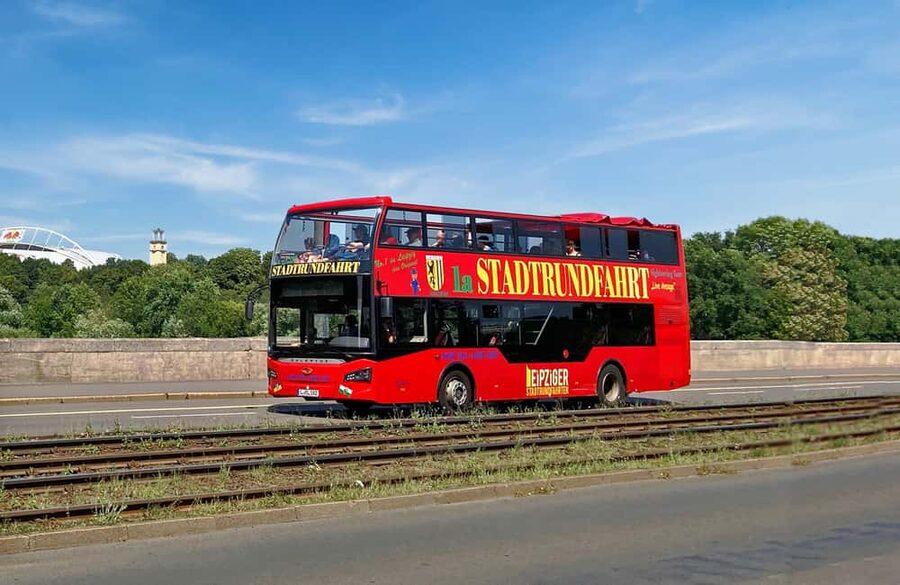
Leipzig’s red double-decker tour gives you a quick, useful sweep of a city that is too spread out to understand from the old center alone. You’ll pass the zoo, Gohliser Castle, the Panometer, the Battle of the Nations Monument, and Augustusplatz, with a 100-minute bus ride and a free walking tour added at the main stop.
I like the low $16 price and the practical location across from the main train station. I also like that the ticket is valid for the day, so you can use the bus as a sightseeing tool rather than sit through one long loop. The main catch is important: live commentary is in German only, and the walking tour runs only from March until the start of the Christmas markets.
Key points to know before you go
- The bus begins across from Leipzig Central Station: Find the main stop at Richard-Wagner-Straße 2, opposite the station’s East Hall.
- The route takes about 100 minutes: It covers Leipzig’s central sights and several areas beyond the old town.
- A free 45-minute walking tour is included: Join at Richard-Wagner-Straße without giving advance notice, from March until the Christmas market season begins.
- Commentary is in German: Written tour information is available in other languages, but spoken translation is not listed.
- You can get off near major sights: The buses run at regular intervals, making the ticket more useful than a single sightseeing circuit.
- The tour is wheelchair accessible: Check the current timetable and bus arrangements when booking if access is especially important to you.
Why this bus tour works well in Leipzig
Leipzig is easy to walk in the central area, but the city’s attractions are not all gathered around the market square. The zoo, Gohliser Castle, the Waldstraßen Quarter, the Panometer, and the Battle of the Nations Monument sit in different directions. A bus tour helps you connect those pieces without spending half your day reading tram maps.
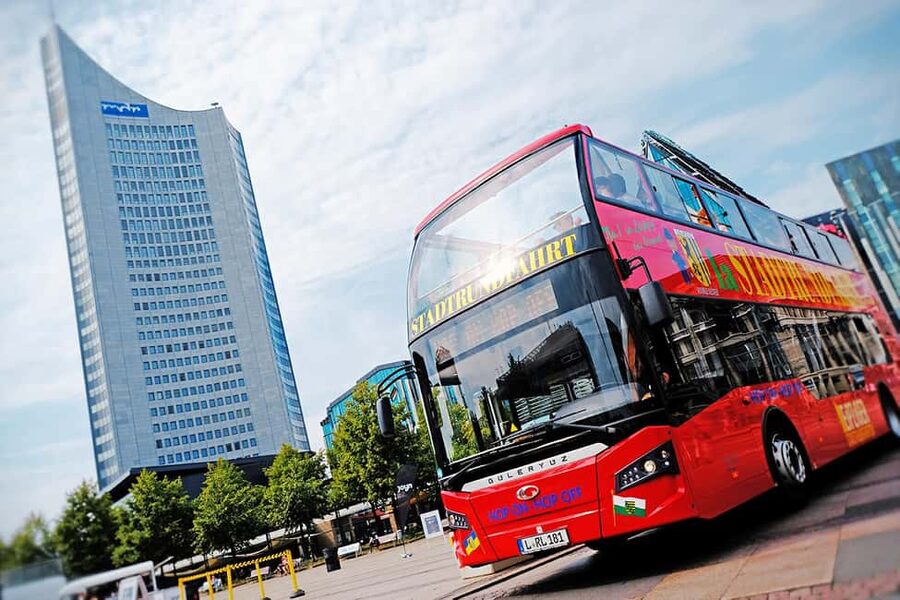
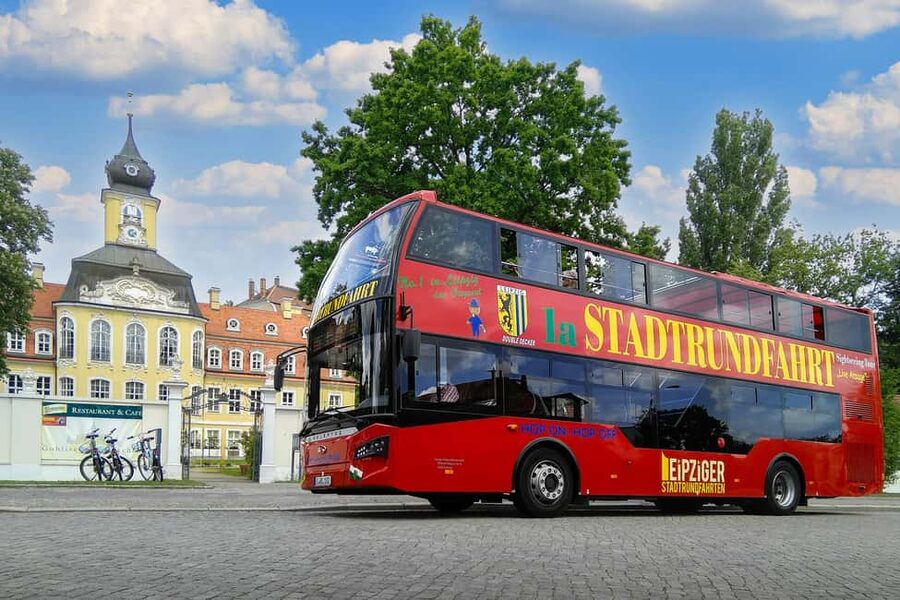
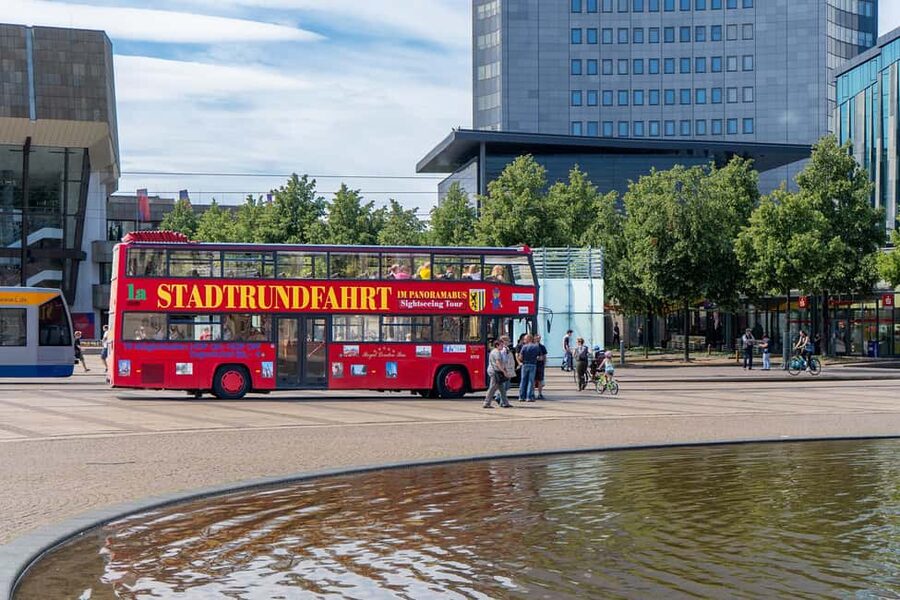
The red double-decker buses, marked with Leipzig’s familiar Messemännchen mascot, add a bit of local character. You get a high view from the upper deck when available, while the lower deck is the safer choice in poor weather or for anyone who prefers easier access.
The tour is not built around a single major entry or long guided visit. Most sights are viewed from the bus, with the exception of the roughly 20-minute stop at the Monument to the Battle of the Nations. That makes the experience best for orientation, first impressions, and deciding where to return later.
At $16 per person, the price is modest for a full day of bus access plus the walking tour. It becomes especially good value if you use the bus for more than the initial circuit. If you simply stay aboard for one loop and never use the walking option, the value is still fair, but less striking.
More Walking Tours in Germany:
- Discover Berlin Half-Day Walking Tour
★ 5.0 · 9,624 reviews - Berlin City walk Government District and Places of Democracy
★ 4.7 · 8,467 reviews - Berlin: Third Reich & Cold War Guided Walking Tour
★ 4.9 · 8,378 reviews
Starting across from Leipzig Central Station
The main departure point is Richard-Wagner-Straße 2, across from Leipzig Central Station and its East Hall. This is a sensible meeting place because the station is easy to find and useful for anyone arriving by train.
You exchange your online voucher at the kiosk before boarding. Allow a few extra minutes for that step rather than walking straight onto the bus. Timetables are available through the local operator’s website, and the buses run at regular intervals, though you should check the current schedule before planning a tight day.
The published information refers to two starting and ending locations connected with Leipziger Stadtrundfahrten. The main stop remains the station-side location. The tour returns to the meeting point, so you can finish where you began rather than arranging a separate ride back.
One practical warning: the last tour starts at about 2 p.m. according to the supplied information. That limits your choices if you arrive late, have a hotel check-in around 4 p.m., or want to combine the tour with a full afternoon of museum visits. Start early if you want to make real use of the day ticket.
The central station and old city
The route begins with Leipzig Central Station, one of the city’s most useful landmarks. You pass the station rather than take a full guided visit inside, but its position helps you understand Leipzig’s layout.
From here, the bus heads toward the old city and the Winter Garden skyscraper. The central area is where Leipzig’s shopping streets, pedestrian zone, historic squares, and major cultural buildings meet. The bus gives you a quick overview before you choose where to walk.
This opening stretch is useful even if you already plan to explore the center on foot. You see how close the station is to Augustusplatz and the pedestrian zone, while also getting a sense of how quickly the city changes beyond the center.
Do not expect detailed commentary in English. The live guide speaks German, and one German-speaking passenger’s reaction may make it clear that the guide is adding local anecdotes. If you understand little German, you will still see the sights, but you may miss much of the explanation.
Zoo, Gondwanaland, and northern Leipzig
The bus passes Leipzig Zoological Garden and Gondwanaland, the zoo’s large indoor tropical attraction. These are not short visit stops on the route, so treat them as planning clues rather than included admissions.
The zoo is one of the city’s major family attractions, while Gondwanaland gives you a reason to visit even in wet or cold weather. Seeing the entrances from the bus can help you decide if they deserve a separate block of time.
The route then reaches Gohliser Castle and the Schiller House area. This section feels different from the station and central shopping streets. The Gohliser Castle stop points you toward an elegant historic building, while Schiller House connects the city to the writer Friedrich Schiller.
The tour also identifies the Gosen Tavern and the Chocolate Palace. These names are useful markers, but the bus ride does not turn them into full visits. If one catches your interest, note its location and return independently.
Same streets, a different guide:
- Munich: Third Reich & WWII Walking Tour
★ 4.6 · 6,181 reviews - Berlin: Discover Berlin Walking Tour
★ 4.9 · 5,998 reviews - Berlin’s Best: 2 Hour Walking Tour Third Reich and the Cold War
★ 5.0 · 5,486 reviews - Berlin: Hidden Backyards Guided Walking Tour
★ 4.8 · 5,360 reviews
Gohliser Castle and Schiller House
Gohliser Castle sits on Poetenweg, in the northern part of the city. The route passes the castle rather than promising an extended interior visit. You get the benefit of seeing where it is without spending time navigating there on your own.
Schiller House Leipzig, at Menckestraße 42, is another pass-by sight. The house is tied to Schiller’s time in Leipzig, and its location near Gohlis makes it easy to pair with the castle area if you return later.
I like this part of the circuit because it shows that Leipzig is more than a compact historic core. You move from major transport infrastructure to literary and architectural sites in a short ride. The drawback is that the commentary may be hard to follow if you do not speak German, especially when the guide uses local pronunciation or a Saxon accent.
Written information in other languages helps, but it is not the same as hearing a guide explain why a building matters. If you want the full spoken experience, German ability will make a clear difference.
Waldstraßen Quarter, Rosental, and the city harbor
The bus continues through the Waldstraßen Quarter, passing Rosental and the zoo display window. This part of the route gives you a look at Leipzig’s greener northern side and the area around the city’s sports facilities.
The Waldstraßen Quarter is a useful contrast with the dense old center. From the bus, you can see how Leipzig combines older residential streets, open parkland, and large public venues. The sightseeing value here comes from the overall view rather than one major stop.
Next comes City Harbor Leipzig on Schreberstraße. The harbor is another reminder that the city has more varied spaces than its central monuments suggest. As with several stops, the bus provides an overview rather than an arranged boat ride or waterfront visit.
You should think of these sections as orientation. They are valuable if you want to understand Leipzig’s shape, but they may feel less rewarding if your only goal is to enter museums and monuments.
Capa House and the western side
Capa House, at Jahnallee 61, is linked to the exhibition War is over, Robert Capa in Leipzig. The route passes the building, along with the Palm Garden and the Rockers Café Tankbar.
This is one of the more distinctive stops because it connects the city tour with modern war photography and Leipzig’s twentieth-century story. The bus does not include entry to the exhibition, so check separately if you want to see the displays inside.
The western section also helps you spot places to revisit on foot. The Palm Garden and Capa House are not simply interchangeable with the old town’s grand squares. They add a different layer to the city, one that a standard central walking route may skip.
Again, the German commentary matters. A guide can add context to a place such as Capa House in a way that a quick view through a bus window cannot. If you need English explanation, use the written material and plan a separate visit.
Federal Administrative Court and the Panometer
The Federal Administrative Court is one of the route’s notable architectural stops. The bus also passes the library known as Albertina. These buildings are viewed from outside, making this section a quick introduction rather than a formal architecture tour.
The route then reaches the Leipzig Panometer, near Fichtestraße and Altenburger Straße. It also passes the MDR premises and the Eisfichte Coffee location. The Panometer is among the strongest reasons to use the bus, because it sits outside the central sightseeing cluster and can be awkward to combine with a walking-only day.
The Panometer presents large panoramic exhibitions in a former gasometer. The supplied tour details do not include admission, so consider the bus stop a chance to locate it for a later visit. If you plan to go inside, check opening times separately and allow time beyond the bus schedule.
This part of the tour shows the real value of a city circuit. You are not limited to the postcard center. You see cultural venues and media sites that you might otherwise miss.
The Battle of the Nations Monument and the 20-minute stop
The Battle of the Nations Monument is the tour’s main scheduled stop, with roughly 20 minutes to get out and see it. This is the one point where you should be ready to leave the bus quickly and make the most of the pause.
The monument is one of Leipzig’s largest and most striking landmarks. It commemorates the Battle of Leipzig, fought in 1813, and sits beside the Southern Cemetery. The tour also identifies the Old Market in this part of the route.
Twenty minutes is enough to take in the exterior, photograph the building, and get a sense of its scale. It is not enough for a leisurely interior visit or a careful climb if those are available at the time of your visit. Treat the stop as a preview, then return independently if the monument becomes a priority.
This stop also breaks up the long circuit. After several pass-by sights, you get a chance to step off, stretch your legs, and see one major landmark at closer range.
German National Library, Bavarian Station, and Augustusplatz
After the monument, the bus passes the German National Library, listed as Deutsche Bücherei. It then continues to Bavarian Station, an old railway station that now includes a restaurant.
These stops are useful for anyone interested in Leipzig’s transport and intellectual institutions. They are not presented as extended visits, so you will mainly use them to mark places for later exploration.
The final major area is Augustusplatz. Here you see the Concert Hall, Panorama Tower, Leipzig Opera, and University Campus, with access to the pedestrian zone nearby. This is one of the strongest sections for first-time orientation because several major city-center landmarks sit close together.
Augustusplatz also makes a good end-of-tour base. Once the bus returns toward the station, you can walk back into the pedestrian zone, continue toward the old city, or finish at the main meeting point.
The walking tour adds the human scale
The free 45-minute walking tour is included with the ticket and begins at Richard-Wagner-Straße. You do not need to give advance notice. Simply come to the meeting point during the operating season, from March until the start of the Christmas markets.
This walking portion matters because the bus shows you the city from a distance. On foot, you can look at façades, squares, and street details at a slower pace. The guide introduces Leipzig’s sights in person, adding the sort of small observations that are easy to miss from an audio recording.
The timing is seasonal. If you visit during the Christmas market period or in the winter months before the walking tour resumes, you should not count on this part being available. The bus service remains the main product.
The walking guide information provided does not include individual guide names. You will receive a professional live guide, but no particular guide can be requested from the details available.
German commentary and language limits
The most important limitation is the language setup. Live commentary on the bus is in German. Written tour information is available in other languages, but the experience does not list live English commentary.
That can be a minor issue for German speakers and a major one for everyone else. You can still identify the sights from the route and use the written material, but jokes, local stories, and quick explanations may pass too fast.
A Saxon accent may add another layer for non-native German speakers. If you understand standard German only partly, sit where you can hear the guide clearly and keep the written information handy.
For an English-speaking visitor who wants a detailed history lesson, this is not the safest choice. For someone who mainly wants to see Leipzig efficiently and can accept limited spoken context, it remains practical.
Price, timing, and who gets the most value
At $16, the tour is inexpensive for a full day of bus use, a 100-minute circuit, and a 45-minute walking tour when that seasonal walk is operating. Reduced rates are available for pupils, students, people with disabilities, and groups of four or more.
The strongest value comes from using the bus more than once. You can make the first circuit for orientation, get off near a sight such as the zoo, Panometer, or Augustusplatz, and use another bus later if the timetable allows. The supplied information also describes regular service and day use, though the ticket is stated as valid for one tour, so confirm the exact current boarding rules when exchanging your voucher.
Plan around the early final departure. A 2 p.m. last tour leaves little room for a late start. The activity lasts one day in ticket validity, not a full day of continuous guided commentary.
Free cancellation up to 24 hours before the activity and reserve-now-pay-later booking make it easier to fit into an uncertain schedule. The tour is wheelchair accessible, though anyone needing specific vehicle arrangements should confirm details before departure.
Should you book the Leipzig bus tour?
Book it if you want a cheap city overview, need to connect sights outside the old center, or enjoy the freedom of a day ticket. It is also a good first activity after arriving at the main station, since the meeting point is so convenient.
The free walking tour improves the deal when you visit between March and the start of the Christmas markets. German speakers will get the most from the live commentary. Non-German speakers should book only if written information and the city views are enough for them.
Skip it if you want every stop to include a full visit, need English narration, or arrive too late for the early final departure. For most visitors who want a broad look at Leipzig for little money, this is a useful introduction, not a complete history tour.
FAQ
Where does the Leipzig bus tour begin?
The main meeting point is Richard-Wagner-Straße 2, across from Leipzig Central Station and the station’s East Hall.
How long is the bus tour?
The bus portion takes about 100 minutes.
Is the walking tour included?
Yes. A 45-minute guided walking tour is included with the ticket from March until the start of the Christmas markets.
Do I need to reserve a place on the walking tour?
No advance notice is required. Go to the Richard-Wagner-Straße meeting point to join it during the operating season.
What language is the live commentary?
The live commentary is in German. Written tour information is available in other languages.
Is the Battle of the Nations Monument a stop?
Yes. The tour includes a roughly 20-minute stop at the monument.
Is the tour wheelchair accessible?
Yes, the activity is listed as wheelchair accessible.
Can I cancel the booking?
You can cancel up to 24 hours in advance for a full refund.
New routes in Germany
- Munich: Walking Tour Old Town and Viktualienmarkt★ 4.7 · 839 reviews
- Stuttgart: Guided Ghost Walking Tour★ 4.5 · 867 reviews
- Stuttgart: Private Guided Circular City Walk★ 4.7 · 129 reviews
- Stuttgart: Old Town Highlights Guided Walking Tour★ 4.2 · 101 reviews
- Stuttgart: City Highlights – Guided Walking Tour★ 4.7 · 189 reviews
- Hamburg: Private Tour Red Light District Walking Tour★ 4.7 · 227 reviews
- Small Group Walking Tour: “Wild Kreuzberg”★ 4.8 · 199 reviews
- Sachsenhausen Memorial: Walking Tour from Berlin★ 4.7 · 132 reviews
Germany Walking Tours, compared.

Berlin City walk Government District and Places of Democracy
Read our review →

Berlin’s Best: 2 Hour Walking Tour Third Reich and the Cold War
Read our review →
Explore Berlin: See All The Iconic Sights & Some Hidden Gems
Read our review →
Third Reich Berlin: Hitler and WWII Walking Tour
Read our review →
Browse the lists this tour appears in