
Review · DUBLIN
Historical 2-Hour Guided Walking Tour of Dublin
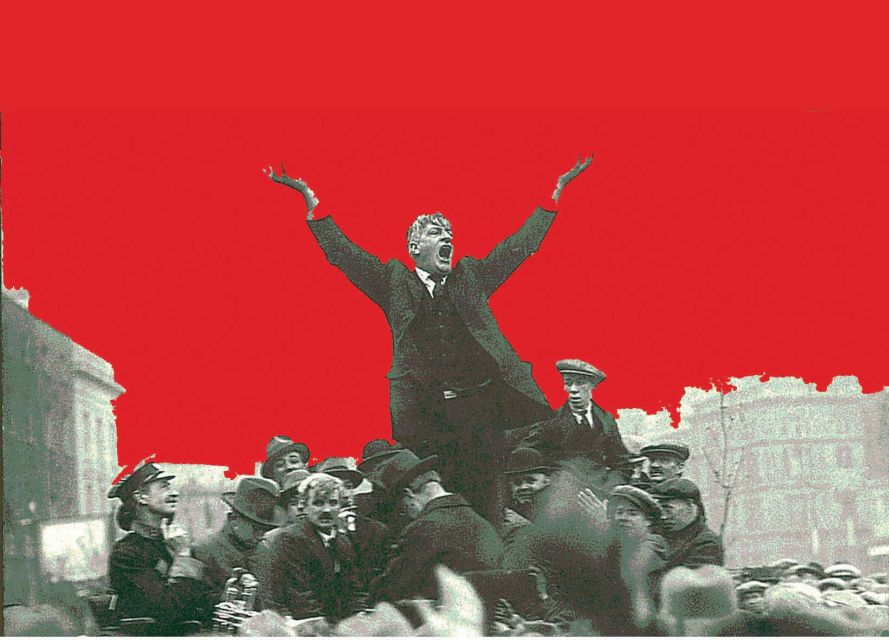
Dublin’s past is complicated, emotional, and often hard to sort out. This two-hour walk gives you a clear route through the Medieval City while linking Dublin Castle, City Hall, Temple Bar, and the events that shaped modern Ireland. Guides such as Daragh, Jodie, Colm, and Eoin bring dates and names down to street level, with jokes, songs, and the occasional story about bullet holes.
I like two things right away. First, the guides are history graduates of Trinity College Dublin or University College Dublin, so you get more than a string of shallow sightseeing facts. Second, the tour connects the American and French revolutions, the Potato Famine, the 1916 Rising, the War of Independence, and the Northern Ireland peace process into one readable story.
The main consideration is pace. You cover a lot in two hours, and there are many names, dates, and political events to absorb. If you prefer a slow architectural tour or want to enter every major building, this may feel too quick. Also, good walking shoes help.
Key points to know before booking
- Dublin’s central story in two hours: Visit Dublin Castle, City Hall, Temple Bar, and the Medieval City while building a timeline of Irish history.
- University-trained guides: Guides are history graduates of Trinity College Dublin or University College Dublin, including names such as Daragh, Jodie, Colm, Eoin, and Jody Fitzpatrick.
- History with personality: Expect humor, personal stories, questions, and, depending on your guide, a few sung lines tied to Irish events.
- A useful first-day orientation: The route covers major sights in central Dublin, making it a practical introduction early in your visit.
- A walking tour, not an inside visit: Entrance to Dublin Castle’s State Apartments is not included, so the focus is on outdoor sites and historical explanation.
- Good value at $22: The price is modest for two hours with a live guide, especially if you want context rather than only photographs.
Starting at Trinity College with a clear sense of place
You meet at the Henry Grattan Statue, opposite the front gate of Trinity College Dublin. Look for a guide wearing an Authenticity Tours lanyard or badge. This is a sensible meeting point because Trinity sits at the center of Dublin’s visitor area, and the statue gives the group a fixed landmark in a busy part of town.
The tour begins by placing Dublin in its wider Irish setting. That matters because Irish history can seem like a pile of disconnected episodes: Norman rule, British government, famine, rebellion, partition, and peace talks. A good guide gives you the links between those events, and this tour is built around that approach.
The history is not presented as a single tidy national story. You’ll hear about outside influences, including the American and French revolutions, and how political ideas moved across the Atlantic and Europe. You’ll also hear how local events in Dublin helped shape the country.
Guides differ in style, but the strongest examples described in the tour’s feedback include Daragh, Jodie, Colm, Eoin, and Jody Fitzpatrick. Daragh is praised for connecting names and dates to wider context. Jody Fitzpatrick is known for a lively delivery and acting talent. Colm mixes personal warmth and humor with songs related to the events being discussed.
That variety is useful. You are not simply listening to a recorded script. You get a live guide who can answer questions and adjust the explanation when something catches your interest.
More History Walking Tours in Dublin
- Dublin Historical Centre Food Tour with 8 Food Tastings & Drinks
★ 5.0 · 1,718 reviews - 2-Hour Historical Walking Tour from Dublin
★ 5.0 · 875 reviews - Dublin’s Haunted History Walking Tour
★ 4.3 · 345 reviews
Dublin Castle and the city’s changing power
Dublin Castle is one of the tour’s major stops. Even from outside, it gives the guide a strong setting for explaining how power was held and exercised in Ireland. The castle helps shift the story from medieval Dublin to the political center of British rule.
The tour does not include entry to the State Apartments. That is important if you are hoping for an indoor castle visit. You should think of this stop as a chance to understand the site, its role, and the surrounding area rather than as a full castle admission.
At $22, the lack of State Apartments entry is not a serious problem for me, but it does affect how you judge the price. You are paying mainly for the guide and the organized story. If seeing the interior is a priority, you will need to arrange that separately.
The value here comes from context. A castle can be easy to photograph and easy to misunderstand. With a guide, you can connect the building to the government, administration, and political tensions that shaped Dublin for centuries. This is especially helpful if you know only the broad outline of Irish history.
City Hall and the road toward rebellion
City Hall gives the tour another useful anchor. From here, the guide can help explain how Dublin’s civic life fit into the larger struggle over Irish government and identity.
The tour then moves through major turning points, including the 1916 Rising and the War of Independence. These events are often reduced to a few dates, but their importance becomes clearer when you hear how they affected Dublin’s streets, buildings, and public memory.
The guides’ academic background helps with the detail. The feedback repeatedly praises their command of names and dates, but the better guides do not stop there. They explain why an event mattered and how it helped lead to later political change.
That approach suits you if you want more than a quick introduction. One comment about Jody Fitzpatrick noted that the tour covers Irish history from the Stone Age to Brexit. That is a huge span for two hours, so do not expect a full lecture on every period. Instead, expect a brisk framework that highlights the events most useful for understanding Ireland today.
The sheer amount of material can be a drawback. You may hear several people, dates, and organizations in a short stretch. If you have little background in Irish history, some of it may pass quickly. The good news is that guides are available for questions, and the walking format breaks the talk into separate places and pauses.
Temple Bar beyond the pubs
Temple Bar is one of Dublin’s most recognizable areas, but it is often reduced to nightlife and colorful streets. On this walk, it serves as part of the older city and a chance to see Dublin as more than a pub district.
The tour places Temple Bar within the Medieval City. That framing gives the area more meaning. Instead of simply passing through a popular visitor zone, you get a sense of how the older urban core fits into Dublin’s development.
This is one reason I like taking a historical walk early in a Dublin stay. Once you understand the basic shape of the old city, you can return to areas such as Temple Bar with a better eye for what you are seeing. You may also be less likely to spend your entire visit treating the neighborhood as a restaurant and bar strip.
The route is not designed as a food tour, shopping tour, or nightlife tour. If that is what you want, choose something else. Here, Temple Bar is one piece of a larger political and urban story.
More History Walking Tours in Ireland
- Dublin: Macabre History Walking Tour
★ 4.9 · 95 reviews - Cork: Guided Historical Walking Tour
★ 4.7 · 310 reviews - Galway: Dark History Guided City Walking Tour
★ 4.8 · 236 reviews - Kilkenny: Historical and Hysterical Guided City Walking Tour
★ 5.0 · 126 reviews
The Medieval City and small details you could miss
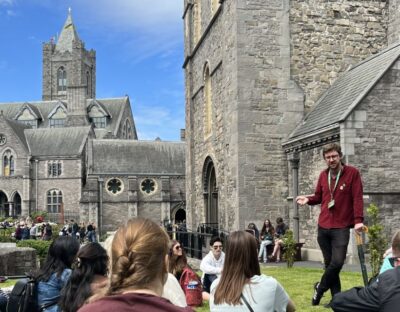
The Medieval City section gives the walk its strongest street-level quality. You are not only hearing about national events from a distance. You are looking at old streets, public spaces, architecture, statues, and small signs of past conflict.
One especially useful detail is the chance to notice bullet holes. These physical marks can make the 1916 Rising and later political violence feel less remote. A date in a book is one thing. A mark in a Dublin building can make you stop and look twice.
The walk is described as easy, but it still lasts about two hours. Wear shoes you can use comfortably on city streets, and keep your attention on the guide while moving between stops. The route is accessible for wheelchair users, though the practical ease of any city walk can depend on crowding and street conditions at the time.
You will spend much of the tour outdoors. Dublin weather can change, so a light rain layer is sensible. The supplied details do not promise shelter or indoor seating along the route, so prepare for a standard city walk rather than a museum-style experience.
From the Famine to the peace process
The tour’s strongest feature is its time range. It does not stop with medieval Dublin or the 1916 Rising. You also hear about the Potato Famine, the War of Independence, and the Northern Ireland peace process.
The Famine is essential to any useful explanation of modern Ireland. It affected population, migration, politics, and memory. A short tour cannot cover every part of that subject, but placing it in the timeline helps you understand why later Irish politics developed as they did.
The War of Independence then brings the story into a period of direct conflict and political change. The guide’s job is to keep the story understandable without pretending that the issues were simple. The strongest guides use humor to make the walk enjoyable, but they also keep the difficult parts in view.
Ending with the Northern Ireland peace process and modern Dublin gives the tour a current frame. You are not left with Ireland as a country frozen in rebellion-era images. Instead, you get a connection between older struggles and the society you see in Dublin now.
This modern section also helps explain why the tour may appeal to repeat visitors. You do not need to be in Dublin for the first time to gain from a clearer political timeline. One person who had already visited Dublin several times still found the historical context useful.
What the guides do especially well
The praise for this tour centers on the guides rather than on a single building. That is worth noting because walking tours rise or fall on delivery.
The best guides appear to combine four skills:
- They know the material well enough to handle follow-up questions.
- They can explain a long sequence of events in a readable order.
- They use humor without turning serious subjects into a joke.
- They speak clearly in a noisy city environment.
Jodie is repeatedly associated with clear, engaging storytelling and the ability to keep a group involved. Daragh is praised for his command of Irish and Dublin history, along with a strong sense of pride in the subject. Colm is noted for humor, personal anecdotes, and occasional singing. Eoin is described as friendly, clear, and entertaining.
You should still remember that this is a live experience. Your guide may have a different personality and emphasis. Some people will enjoy the lecture-like detail. Others may find the number of facts demanding. The format favors curious listeners who like asking questions and following a story.
Is two hours enough for Dublin history?
Two hours is enough to get your bearings and understand the main line of the story. It is not enough to examine every site in depth or cover every period equally.
That limit can work in your favor. A long historical tour can become tiring, especially when the material includes political conflict, famine, and war. Two hours keeps the experience manageable and leaves you with time for a museum, a meal, or another Dublin sight.
The tradeoff is breadth over depth. You will hear about the Stone Age through modern Ireland, but only selected points can receive careful attention. One piece of feedback wanted the tour to be longer and cover more ground. That is a fair criticism if you already have a strong interest in Irish history.
I would choose this tour for a first or second day in Dublin. It gives you a useful map of the central city and a basic timeline before you visit other sites. If you are a serious history buff, use it as a foundation, then allow extra time for places that catch your attention.
The $22 price and what you receive
At $22 per person, the tour offers good value if you want a live explanation of Dublin rather than a self-guided walk. You receive two hours with an English-speaking local guide, entrance fees as stated for the itinerary, and a route through several major central areas.
The price does not include entry to the State Apartments in Dublin Castle. You also pay for your own personal expenses. Since the main product is the guide’s time, the tour is most worthwhile when you listen actively and ask questions.
An award-winning tour with a 4.7 rating from 865 reviews suggests a dependable experience, but the practical value still depends on your interests. I would not book it simply to collect photographs of Dublin’s major sights. I would book it to understand why those sights matter.
Free cancellation up to 24 hours before the tour and reserve-now, pay-later booking make it easier to fit into a changing schedule. The meeting point is central, and the walk returns there at the end, so you can plan another activity nearby without arranging transport.
Who should take this walk?
I would recommend it to:
- First-time visitors who want a quick historical framework.
- Couples and families who prefer a guided walk to a formal museum visit.
- History fans who enjoy names, dates, political detail, and questions.
- Repeat visitors who want more meaning from familiar central streets.
- Visitors with only a short time in Dublin.
- Anyone who likes a guide with humor, storytelling, and occasional performance.
I would be more cautious if you want a slow walk, extensive time inside buildings, or a narrow focus on architecture. The tour covers a very wide period, so you need to accept a brisk pace and a good deal of information.
English is the only stated tour language. You should be comfortable following spoken English, especially during sections packed with historical names and dates. The route is wheelchair accessible, which makes it a practical choice for many visitors, though you may still want to confirm any personal mobility needs before booking.
My verdict: book it for context, not just sightseeing
Book this tour if you want Dublin’s main historic areas tied into one understandable story. At $22, the strongest value is the guide’s ability to connect Dublin Castle, City Hall, Temple Bar, the Medieval City, the Famine, the 1916 Rising, independence, and the peace process.
I especially like the combination of academic training and theatrical delivery. A guide such as Daragh, Jodie, Colm, or Jody Fitzpatrick can turn a difficult subject into something you remember, while details such as bullet holes give the walk a physical connection to the past.
Skip it if you want a detailed castle interior visit or a leisurely architectural survey. For most visitors who want to understand Dublin before exploring it on their own, this is a smart, compact introduction. Wear good shoes, listen closely, and leave room for questions.
FAQ
How long is the Historical 2-Hour Guided Walking Tour of Dublin?
The tour lasts two hours. Starting times vary, so check availability when you book.
Where does the tour start?
Meet your guide at the Henry Grattan Statue opposite the front gate of Trinity College Dublin. The guide will wear an Authenticity Tours lanyard or badge.
Where does the tour end?
The walk ends back at the meeting point.
Which sights are included?
The route includes Dublin Castle, Temple Bar, City Hall, and the Medieval City, along with historical points connected to major events in Irish history.
Is entry to Dublin Castle’s State Apartments included?
No. Entrance to the State Apartments in Dublin Castle is not included.
What language is the tour conducted in?
The live tour is conducted in English.
Can I cancel the booking?
Yes. You can cancel up to 24 hours in advance for a full refund. Reserve-now, pay-later booking is also available.
More Two-Hour Walks in Dublin
- Berlin’s Best: 2 Hour Walking Tour Third Reich and the Cold War
★ 5.0 · 5,486 reviews - Budapest City Landmarks Walking Tour in 2 Hours
★ 5.0 · 2,048 reviews - Leipzig: 2-Hour Guided Walking Tour in German
★ 4.8 · 1,612 reviews - Lucca: 2-Hour City Center Walking Tour
★ 4.7 · 1,314 reviews
New routes in Dublin
- Dublin: North Quay Guided Ghost Walk★ 4.2 · 144 reviews
- Dublin: Mythology, Folklore and Legends Walking Tour★ 4.9 · 703 reviews
- Dublin: Traditional Pub Walking Tour★ 4.6 · 295 reviews
- Dublin: Traditional Pubs Walking Tour with Local Guide★ 4.9 · 112 reviews
- Dublin: Irish Music Walking Tour with Live Performance★ 4.8 · 137 reviews
- Dublin: Highlights and Hidden Corners Walking Tour★ 4.8 · 79 reviews
- Dublin: Macabre History Walking Tour★ 4.9 · 95 reviews
- Dublin: Delicious Walking Food Tour★ 4.9 · 137 reviews
Dublin Walking Tours, compared.
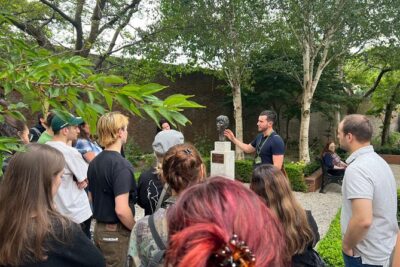
Dublin Highlights and Hidden Gems Guided Walking Tour
Read our review →
Dublin Historical Centre Food Tour with 8 Food Tastings & Drinks
Read our review →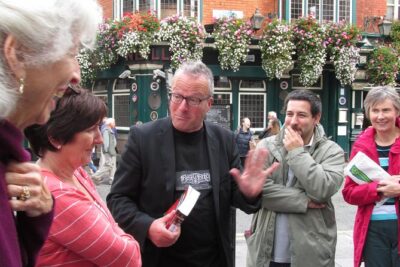

90 Minute Dublin Walking tour and Sightseeing tips
Read our review →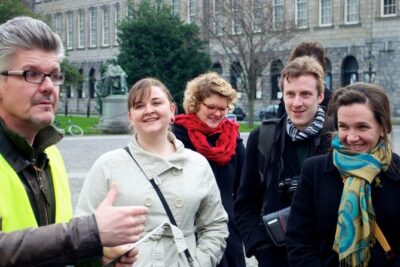
Dublin Highlights: 2.45-Hour Walking Tour in Italian
Read our review →
Browse the lists this tour appears in