
Review · ROME
Ghosts, Legends & Mysteries of Rome Tip-Based Walking Tour
Rome’s grand monuments look different after sunset, especially when your guide replaces the usual parade of emperors and artists with executions, poisoners, ghosts, and corrupt popes. This 90-minute walk links Castel Sant’Angelo with Campo de’ Fiori, using Rome’s streets as a stage for unsettling stories.
I like the face-to-face storytelling, with no headphones getting between you and the guide, and I like the mix of serious history with dark humor. The main drawback is time: 90 minutes can feel short, and one account notes that the stories do not always build toward a clear final climax.
Key points
- Castel Sant’Angelo after dark: Begin beside Rome’s fortress and hear about its grim associations before walking toward the historic center.
- True crime and urban legend: Expect stories of executions, assassins, witches, heretics, the Inquisition, and Giulia Tofana, the infamous poisoner.
- Guides with strong personalities: Ivan, Leonardo, Simone, Simon, and Max have all led this experience, with particular praise for humor and storytelling.
- A compact route: The walk ends at Campo de’ Fiori after stops near the Fountain of the Mask and Farnese Palace.
- Pay what you want: The advertised price is only a booking figure. Plan on giving the guide a tip, with 10 euros per person often used as a sensible starting point.
- Useful local advice: The guide may finish with suggestions for nearby restaurants, gelaterias, and drinks.
Rome’s darker side begins at Castel Sant’Angelo
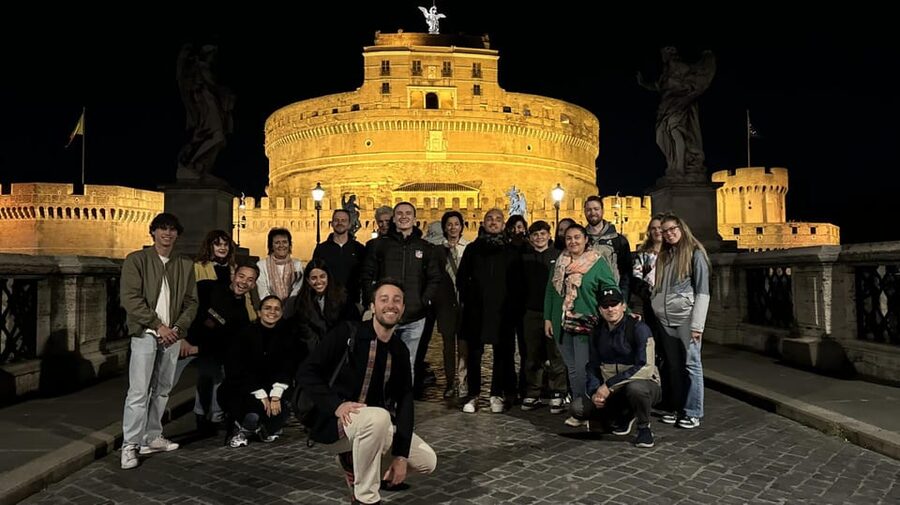
The meeting point is directly in front of Castel Sant’Angelo, by the Sant’Angelo Bridge. That is a practical place to start: the castle is easy to recognize, the bridge gives you a clear landmark, and the setting already feels more theatrical at night than it does in the middle of a busy sightseeing day.
Castel Sant’Angelo began as a mausoleum and later became a fortress and papal refuge. This tour uses the building less as a formal museum visit than as an atmospheric opening chapter. You stop for photographs, then hear the darker associations tied to the castle and the people who passed through it.
Do not book this expecting entry inside Castel Sant’Angelo. The stated program describes a guided walk and sightseeing from the outside, with about 15 minutes devoted to the castle area. The value here is the setting and the story, not an interior tour of the monument.
The opening also helps establish the tour’s tone. You are not getting a polished account of Rome that skips unpleasant details. The guide discusses violence, brutality, crimes, and the strange beliefs that gathered around old buildings. Dark jokes are part of the delivery, so you should be comfortable with humor that may be politically incorrect.
More Free Walking Tours in Rome:
- Rome: Piazza del Popolo and City Sights Free Walking Tour
★ 4.8 · 83 reviews - Paris City Center Free Walking Tour (Tip-Based)
★ 5.0 · 1,340 reviews - Budapest Historical Sightseeing – Free Walking Tour
★ 5.0 · 1,302 reviews
A night walk built around stories, not special effects
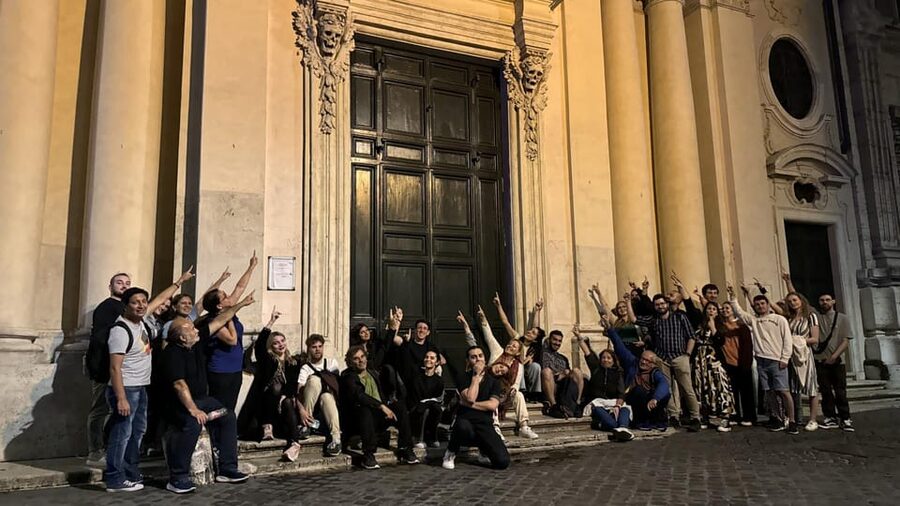
This is a walking history tour with a sinister angle, not a haunted-house attraction. There are no stated actors, props, theatrical scares, or supernatural effects. The appeal comes from hearing what happened, or what people believed happened, at the places where the stories took shape.
That distinction matters. If you want jump scares, this is probably too restrained. If you enjoy standing in an ordinary Roman street and learning that it was connected to an execution, a crime, or an old tale of witchcraft, the format works well.
The route includes several short stops between Castel Sant’Angelo and Campo de’ Fiori. Some are described only as secret stops, while others are tied to named places. That keeps the walk from becoming a simple monument checklist. You will hear the guide point out details that are easy to pass without noticing.
The guides rely on direct conversation rather than headphones. That has two benefits. You can ask questions as you go, and the guide can react to the mood of the group. The tradeoff is that you need to stay fairly close, particularly if the group grows larger. One assessment specifically found the group too large for everyone to speak easily, although the walk was still enjoyable.
From hidden corners to the Fountain of the Mask
After the castle, the walk moves through a series of brief stops. The itinerary allows five to ten minutes at many of them, which means the guide has to work quickly. You get a succession of compact stories rather than a long lecture at one location.
The first unnamed stops help shift your attention from the famous sights to the side streets between them. This is where the tour’s alternative character comes through. The guide may connect a doorway, alley, or old façade with a person or event that does not appear in standard Rome sightseeing tours.
The material covers witches, heretics, the Inquisition, assassins, and corrupt popes. These subjects give you a different way to read central Rome. Churches and palaces are no longer only examples of art and power. They become places connected with punishment, scandal, fear, and political control.
The Fountain of the Mask provides a named stop along the way. It is not one of Rome’s grand headline monuments, which makes it a good fit for this type of walk. You are guided toward a smaller detail and given a reason to remember it. The stop itself lasts about five minutes, so expect explanation and observation rather than a long pause.
Because the route is short, you should not expect every story to receive equal treatment. Some episodes may feel like quick introductions. That is useful if you want variety, but less satisfying if you prefer one crime or legend to be examined from every angle.
Farnese Palace and the power behind the stories
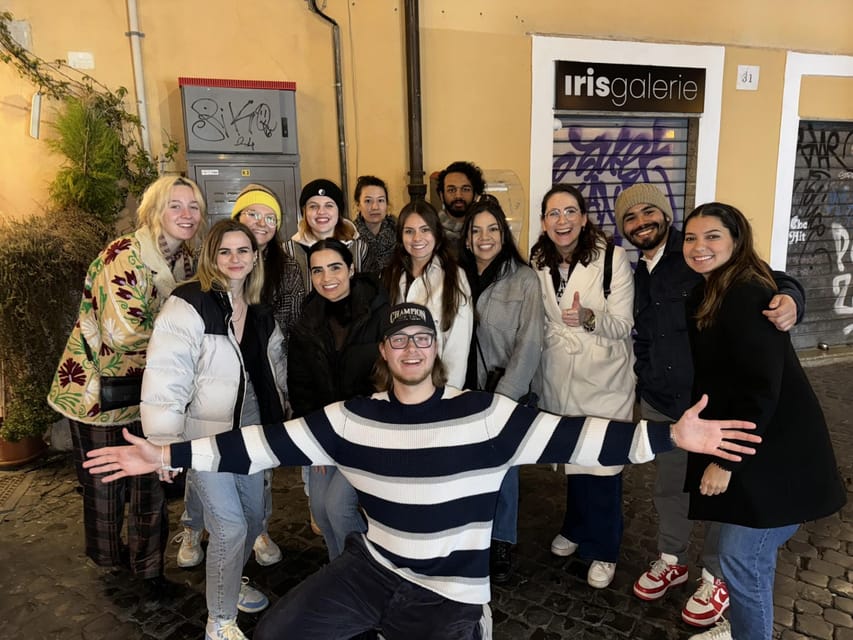
Farnese Palace adds another layer to the route. Its grand architecture gives the guide a place to discuss the people who held power in Rome and the less attractive side of that power. The tour’s focus on popes, political figures, and violence fits naturally around the city’s palaces.
This is one reason the experience works better than a simple ghost walk. Rome’s dark stories are often tied to real institutions and real people. The frightening part is not only the idea of a ghost. It is the record of what people did to one another when religion, wealth, politics, and punishment were closely linked.
The guide’s presentation is important here. Ivan is repeatedly praised for making serious material funny without losing the thread of the history. Leonardo is described as especially strong at explaining events clearly and keeping the group involved. Simone is also praised for passion, humor, and the ability to answer questions.
Those names are useful when you choose a time, but guide assignments can change. You should book for the route and subject rather than assuming one particular guide will lead every departure.
More Ghost Walking Tours in Rome:
- Rome: Paranormal Night Walking Tour & Secret Backstreets
★ 4.9 · 1,921 reviews - Rome: Haunted City Night Walking Tour
★ 4.9 · 616 reviews - New Orleans Premier Ghost, Voodoo and Vampire Walking Tour
★ 4.5 · 12,856 reviews - London: The Original Jack the Ripper Walking Tour
★ 4.7 · 7,833 reviews
Campo de’ Fiori gives the walk a grim finish
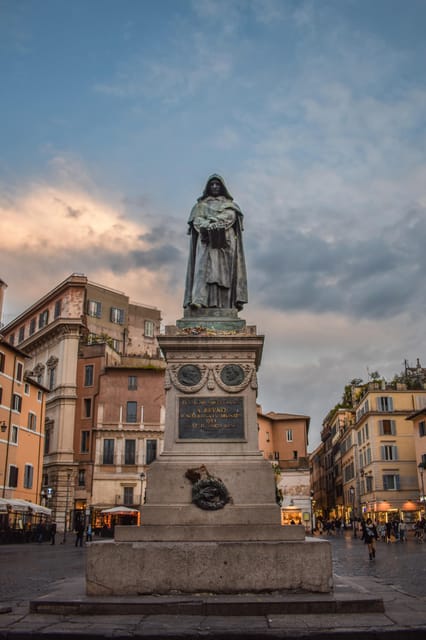
The tour ends at Campo de’ Fiori, a lively square by day and a place with a much darker association in Rome’s past. The final section is devoted to the square and its history, with roughly ten minutes of guided storytelling.
Ending here makes practical sense. Campo de’ Fiori is central, easy to recognize, and surrounded by places to eat and drink. It also gives the tour a memorable closing setting instead of leaving you beside an anonymous street.
The finish is not presented as a dramatic theatrical finale. One rating described the route as a little disconnected, with separate stories that did not always build toward a strong climax. I would treat that as a fair caution. The walk is better understood as a string of dark episodes than as one tightly plotted mystery.
That loose structure will suit you if you enjoy variety. You can hear about a poisoner, then move to an execution site, then hear a local legend without needing every story to connect. If you want a carefully shaped narrative with a big revelation at the end, this may feel less focused.
Giulia Tofana and the human stories behind the legends
One of the most distinctive subjects is Giulia Tofana, Rome’s infamous poisoner. Her story gives the tour a strong example of how crime, gender, fear, and social conditions can overlap. The subject is not simply presented as a spooky tale. It is part of the wider pattern of hidden crimes and uncomfortable episodes that official versions of history often leave out.
The guide also discusses actual executions and notorious figures. That makes the experience more suitable for adults and older teenagers than for young children. The subject matter includes death, brutality, and murder, even when the guide uses jokes to keep the mood from becoming too heavy.
The balance between grim material and comedy is one of the tour’s defining features. Some people will appreciate the release. Others may find the jokes too sharp, particularly when the story involves victims or religious persecution. The description openly signals this tone, so you can make an informed choice before booking.
What the guide adds to a short route
At 90 minutes, the guide has little room for filler. The strongest part of the experience is the way a good storyteller makes a brief stop feel worthwhile. Ivan, Leonardo, and Simone receive repeated praise for keeping the pace comfortable, answering questions, and using humor without allowing the group to lose interest.
The walk is also praised for staying face to face rather than using headphones. That creates a more personal feel, and it means you can ask about details as they arise. It also makes the group’s size more noticeable. If many people attend, stand where you can see and hear the guide clearly.
The pace appears manageable. Several accounts describe the route as well paced, and the stops are short enough that you are not standing in one place for long. You should still wear comfortable shoes because the experience is entirely on foot and runs through central Rome’s streets and lanes.
Some guides have been helpful when participants were late or lost, but you should not rely on that. The meeting point is at the entrance to Castel Sant’Angelo by the Sant’Angelo Bridge, so allow enough time to identify the castle and reach the group before departure.
Is the tip-based price a real bargain?
The listed price of $3.77 per person is not the full expected cost. This is a pay-what-you-want tour, meaning the guide works for tips rather than a standard fixed ticket. You can give what you think the walk was worth at the end.
The practical advice is to budget at least 10 euros per person in cash. One participant specifically noted this amount as a useful minimum, while the general guidance places tips anywhere from 10 euros to 50 dollars. The tip is optional, but it is the guide’s main payment, so include it in your Rome budget from the start.
At 10 euros, the value is strong if you want an entertaining introduction to Rome’s darker past. You receive a local guide, a 90-minute walking route, several unusual stops, and suggestions for places to eat and drink. The value is less clear if you dislike tip-based pricing or want a formal historical tour with documented sources and a tightly organized story.
The reserve-now, pay-later option keeps the booking flexible, and free cancellation is available up to 24 hours in advance for a full refund. Those terms are useful if you are arranging several Rome activities around changing plans.
Who will enjoy this Rome ghost tour?
I would choose this walk if you have already seen the Colosseum, Trevi Fountain, and other major sights, or if you want an evening activity that does not repeat the standard route. It also suits anyone interested in true crime, old punishments, religious conflict, and the stranger corners of Roman history.
It is a good match for couples, friends, solo visitors, and families with older children who can handle grim subjects. The tone is lively rather than solemn, and the guide’s humor gives the evening a social feel.
I would be more cautious if you want a traditional ghost tour built around supernatural evidence. The walk includes hauntings and urban legends, but it is also firmly rooted in historical crimes and people. You should also think twice if politically incorrect jokes are likely to spoil the evening for you.
The tour is offered in English and Spanish. Guide names associated with recent departures include Ivan, Leonardo, Simone, Simon, and Max. The exact guide may vary, but the repeated strengths are clear: lively delivery, strong command of the stories, and an ability to keep people involved.
Small details that improve the evening
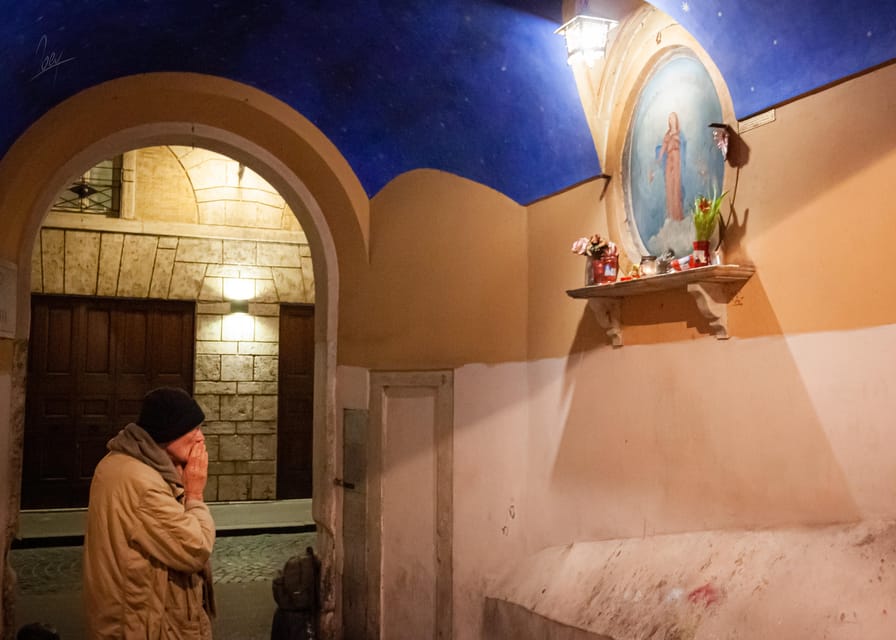
Meet at Castel Sant’Angelo rather than assuming the tour begins at the bridge itself. The official meeting point is directly in front of the castle entrance, by Sant’Angelo Bridge.
Bring cash for the tip. You may also want to keep the end of the evening open, since Campo de’ Fiori is a useful place to continue with food, drinks, or gelato. The guide may offer local recommendations, which can be more useful than choosing a restaurant at random.
Keep your group together and stay close enough to hear. Since the tour avoids headphones, the guide’s voice and your position in the group matter. If you arrive late, contact the guide if possible, but aim to be there on time.
Finally, expect a broad selection of stories rather than a detailed study of every stop. The short format is part of the appeal, but it also means some episodes receive only a few minutes.
Should you book Ghosts, Legends and Mysteries of Rome?
Book it if you want Rome after dark, unusual stories, and a funny local guide rather than another standard monument tour. The route is short, the price model is flexible, and the subjects range from Giulia Tofana and assassins to executions, witches, and corrupt popes.
Skip it if you need a fully documented academic presentation, dislike dark humor, or want a supernatural tour with staged scares. For most curious visitors, though, the walk offers a smart way to look at familiar streets from a less polished angle. Just budget for the tip, arrive ready to walk, and treat the experience as a lively collection of Rome’s grim stories rather than a single grand mystery.
FAQ
Where does the Ghosts, Legends and Mysteries of Rome tour begin?
It begins directly in front of the entrance to Castel Sant’Angelo, beside Sant’Angelo Bridge.
Where does the walking tour finish?
The tour ends at Campo de’ Fiori.
How long does the tour last?
The walking tour lasts about 1.5 hours.
What languages are available?
The tour is available in English and Spanish.
Is the tour free?
It uses a pay-what-you-want model. The advertised booking price is low, but the guide works mainly for tips. A tip of at least 10 euros per person is a practical amount to budget, and cash is recommended.
What stories are included?
The tour covers ghosts, executions, urban legends, witches, heretics, the Inquisition, corrupt popes, assassins, and Giulia Tofana, the infamous poisoner.
Does the tour enter Castel Sant’Angelo?
The stated program includes a photo stop, guided sightseeing, and a walk around Castel Sant’Angelo. It does not specify admission inside the castle.
Can I cancel the booking?
You can cancel up to 24 hours in advance for a full refund. You can also reserve now and pay later.
More Crime and Mystery Walking Tours in Rome
- Rome by Night Walking Tour – Legends & Criminal Stories
★ 4.5 · 1,003 reviews - Dark Heart of Rome – Facts, Legend & Mystery Walking Tour
★ 4.5 · 329 reviews - Rome Night Mysteries Guided Walking Tour
★ 4.9 · 119 reviews - Prague: Ghost Walking Tour Where Legends Come To Life
★ 4.4 · 5,253 reviews
New routes in Rome
- Rome: Colosseum and Ancient Rome Guided Walking Tour★ 4.5 · 95 reviews
- Rome Walking Tour: Pantheon, Trevi, Navona & Hidden Gems★ 4.8 · 501 reviews
- Rome: Guided Walking Tour and Pantheon Priority Entry Ticket★ 4.3 · 317 reviews
- Rome: Trastevere Food Walking Tour with Beer and Wine★ 4.9 · 71 reviews
- Rome: Trevi Fountain, Spanish Steps & Pantheon Walking Tour★ 4.6 · 336 reviews
- Rome: Underground Trastevere Guided Walking Tour★ 4.8 · 87 reviews
- Rome: Relics from the Passion of the Christ Walking Tour★ 4.9 · 84 reviews
- Rome: Trastevere and Roman Ghetto Guided Walking Tour★ 4.7 · 79 reviews
Rome Walking Tours, compared.
Guided Food Walking Tour with Wine in Trastevere
Read our review →
Trastevere & Campo de Fiori Street Food Walking Tour
Read our review →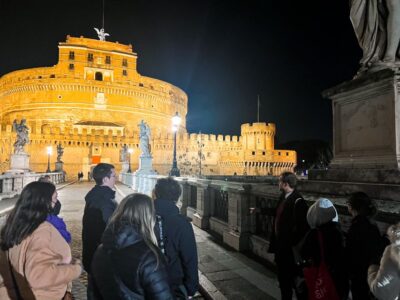
Paranormal Night Walking Tour & Secret Backstreets
Read our review →
Colosseum Arena, Roman Forum & Palatine Hill Tour
Read our review →
Trastevere Street Food Walking Tour with Local Expert
Read our review →

Rome by Night Walking Tour – Legends & Criminal Stories
Read our review →
Rome Food Tour in the Historic Centre with 8+ Food Tastings
Read our review →Browse the lists this tour appears in