
Review · ROME
Rome: Trastevere and Roman Ghetto Guided Walking Tour
Rome’s story changes block by block on this walk. You begin in Trastevere, where church mosaics, fountains, poets, cafés, and narrow streets set a relaxed Roman mood, then move into the Jewish Ghetto and finish beside the ancient Theatre of Marcellus. The shift from bohemian neighborhood to Jewish quarter to ancient Rome gives the tour a strong sense of place.
I like the unhurried pace and the chance to ask questions without being rushed. I also like the small-group feel, with some tours limited to nine people and several departures hosting only two or three guests. The main drawback is the lack of a planned restroom stop, and the route is not suitable for wheelchair users or people with mobility impairments.
Key points at a glance
- Three very different parts of Rome: Trastevere, the Jewish Ghetto, and the Theatre of Marcellus form a varied walking route.
- Piazza Santa Maria in Trastevere: See one of Rome’s oldest churches, with a 12th-century basilica, mosaics, and a fountain-filled square.
- A thoughtful look at Jewish Rome: The walk explains the difficult past of the Roman Ghetto and includes the Great Synagogue of Rome.
- Small groups can make a real difference: Some departures have only two or three people, giving you plenty of time for questions.
- A relaxed 2 to 2.5 hours: The route allows time to look around, take photos, and hear stories rather than simply tick off sights.
- Bring water and comfortable shoes: This is a continuous city walk, with no hotel pickup or drop-off.
Why this Rome walking tour works
I like walking tours that show how Rome is built in layers, and this route does exactly that. You start with neighborhood life in Trastevere, pass through Campo de’ Fiori, consider the long experience of Rome’s Jewish community, and end at a Roman theatre dating to 13 BC.
That sequence gives you more than a collection of attractive squares. It helps you see how religion, daily life, politics, memory, and ancient construction all meet within a fairly compact part of the city.
The guides are the heart of the experience. Estefi has been praised for her careful explanations, photos, and practical food suggestions. Celia, Sarah, Giuseppe, Gabriella, and other guides have also been singled out for clear storytelling, patience, humor, and strong knowledge of Rome’s architecture and history.
The small groups are especially useful here. With fewer people, you can hear the guide without strain and stop to ask about a church façade, a street name, or a local custom. When groups exceed 10 people, headsets are provided, but smaller groups may feel more natural because you can speak directly with your guide.
At $41 per person, the tour is not the cheapest way to see these neighborhoods. Still, the price can be fair if you want context rather than a self-guided stroll. You are paying for a live guide, a carefully connected route, and the chance to ask questions. If you already know Rome well, you might prefer exploring independently. For a first visit, the explanations add real value.
More Jewish Heritage Walking Tours in Rome:
- Rome: Jewish Ghetto Walking Tour
★ 4.7 · 274 reviews - Highlights of Jewish Ghetto And Trastevere Walking Tour
★ 4.8 · 233 reviews - Amsterdam Anne Frank: Small-Group Walking Tour & Local Guide
★ 4.8 · 12,789 reviews
Starting at Piazza Mastai
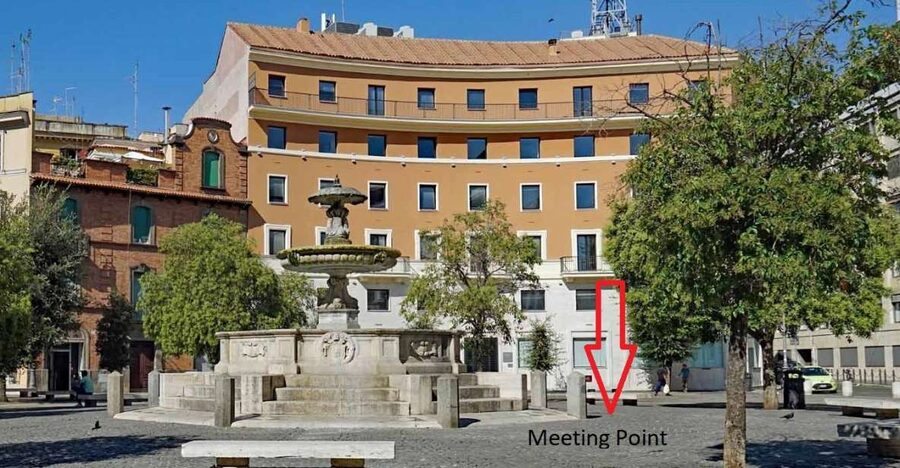
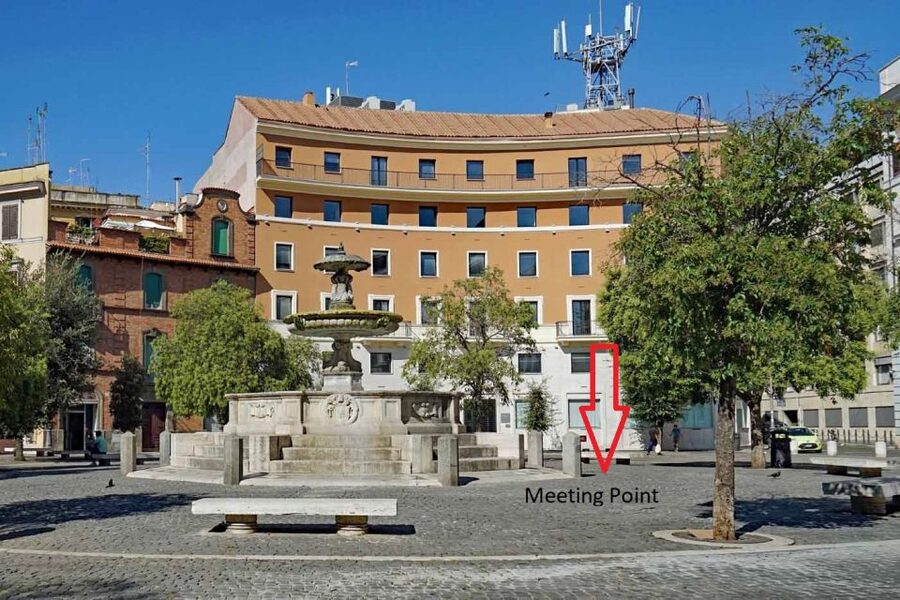
Meet your guide around the main fountain in Piazza Mastai, 15 minutes before departure. Your guide will hold a sign with the tour name, which should make the meeting point easier to identify.
Piazza Mastai is a sensible place to begin. It puts you inside Trastevere from the start, rather than spending the first part of the tour walking in from a distant meeting point. Since hotel pickup is not included, plan your route to the square in advance and allow extra time if you are crossing the river or arriving by public transport.
The tour is offered in English, French, and Spanish. Check the available starting times when booking, since the schedule can vary.
Trastevere and the Basilica of Santa Maria
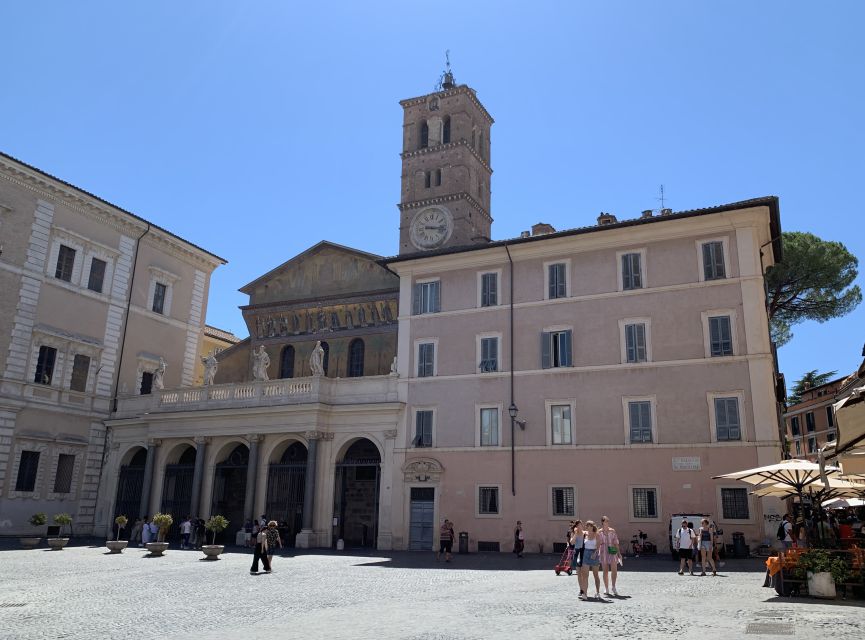
The first major stop is Piazza di Santa Maria in Trastevere, one of the neighborhood’s best-known squares. Its centerpiece is the Basilica of Santa Maria in Trastevere, a church dating to the 12th century.
Your guide explains the church’s architecture and mosaics, helping you notice details that are easy to miss if you simply walk in, take a photo, and leave. The fountain in the square gives you a natural place to pause and take in the setting.
This is where the tour begins to show its value. Trastevere can feel simple at street level, with lanes and lively corners, but its churches carry centuries of art and devotion. A guide can connect the square to the wider story of Rome without turning the visit into a lecture.
Allow yourself time to look up. Rome often rewards that habit. The most memorable details may be above eye level, around a church entrance, or in a mosaic that seems less obvious from the square.
Piazza Trilussa and local Roman character
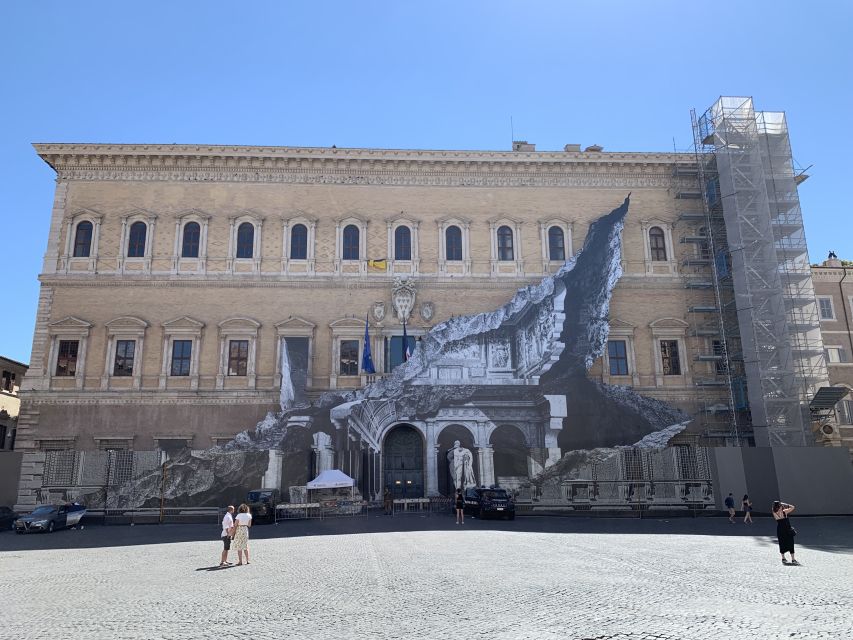
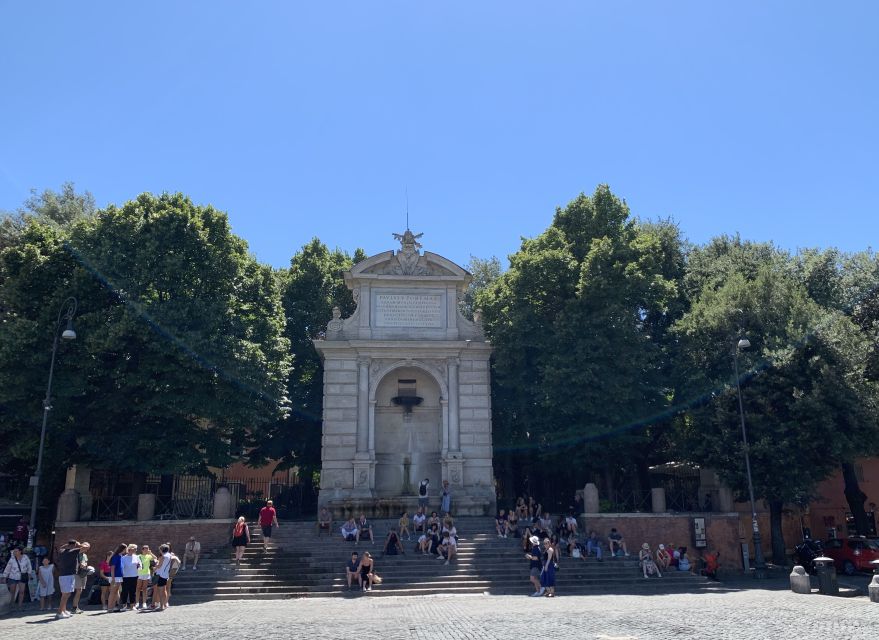
From Santa Maria, you walk toward Piazza Trilussa, named for Carlo Alberto Salustri, the Roman satirical poet known as Trilussa. The square is associated with local culture, public life, and street performance.
This stop brings a different mood from the basilica. Instead of focusing mainly on church art, you get a sense of how Romans use public space. The square can be lively, and your guide may point out how the poet’s work reflects Roman humor and everyday speech.
The route includes about 20 minutes of guided walking between listed stops, though the full timing depends on the group and the guide. That pace is manageable for most people who are comfortable walking through city streets, but it is not designed for travelers who need frequent seated breaks.
A useful feature of this section is the room for questions. Several guides have been praised for being friendly and patient, and that matters when you want to understand the difference between a famous monument and the ordinary life around it.
More Guided Walks in Rome:
- Rome: Guided Food Walking Tour with Wine in Trastevere
★ 4.9 · 3,105 reviews - Rome: Small-Group Guided Day or Night Walking Tour
★ 4.8 · 1,009 reviews - Rome: Guided City Center Evening Sightseeing Walking Tour
★ 4.4 · 953 reviews - Rome: Guided Small Group Walking Tour of City Highlights
★ 5.0 · 682 reviews
Campo de’ Fiori, from market to difficult history
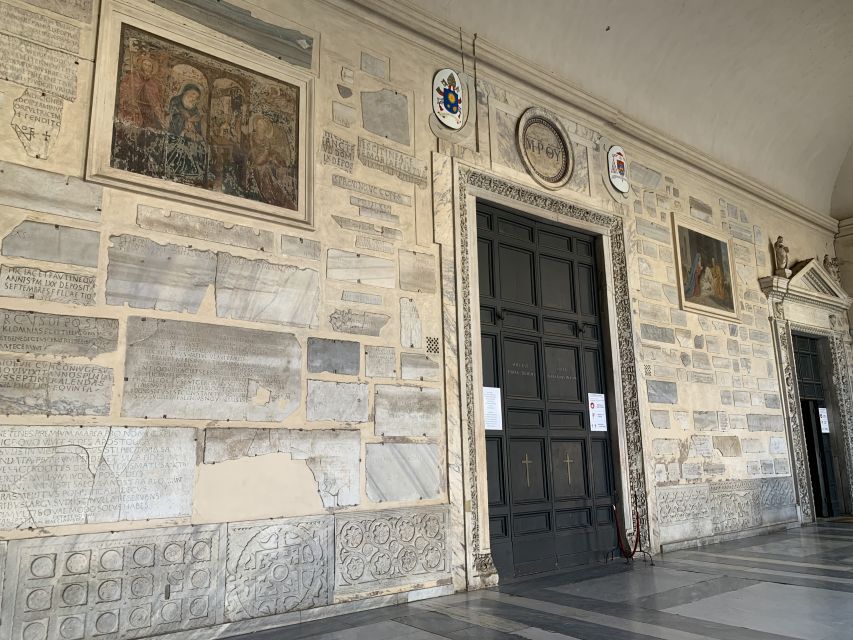
The walk continues to Campo de’ Fiori, a square with a market atmosphere and a long place in Rome’s public life. It is one of those stops where the guide’s commentary shapes what you notice.
On your own, you may focus on the stalls, buildings, and steady flow of people. With a guide, you get a clearer sense of how the square fits into Rome’s past and present. The market also gives the route a practical pause. One small group used the time to pick up coffee and juice, a useful reminder that the walk is not rushed from monument to monument.
This is also the point where the tour moves toward heavier subjects. The transition from a popular Roman square to the Jewish Ghetto gives the route emotional range. You are not looking only at pretty streets. You are also being asked to consider the forces that shaped who could live, worship, and work in different parts of Rome.
If you are visiting during a hot month, take the water advice seriously. One guide, Giuseppe, was praised for seeking shade whenever possible, but shade cannot be guaranteed along every part of the route. A reusable bottle and light clothing are sensible choices.
Entering Rome’s Jewish Ghetto
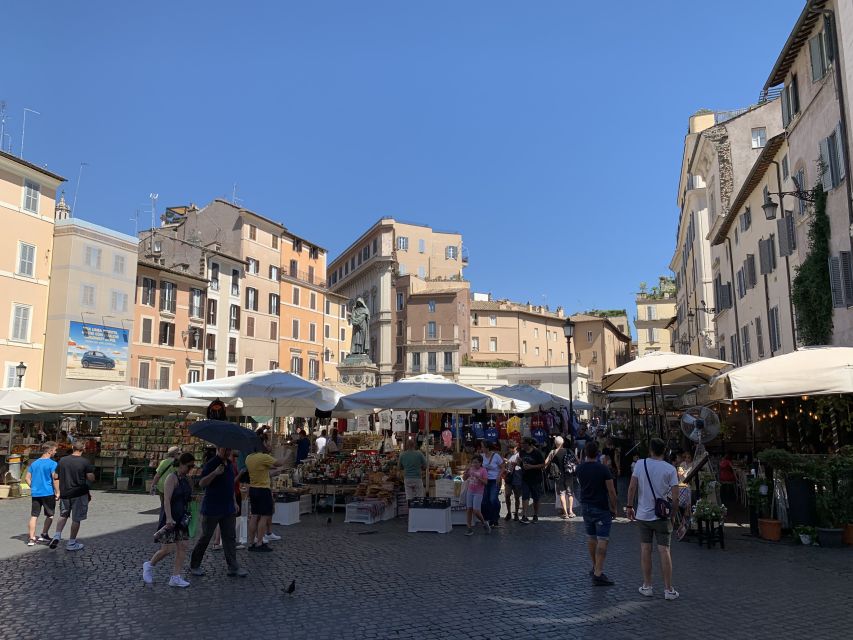
The Jewish Ghetto is the most historically serious section of the tour. Here, your guide explains the long and difficult experience of Rome’s Jewish community and the conditions that shaped life in this part of the city.
This part of the walk deserves attention and respect. The value is not just in seeing another neighborhood. It is in learning how a community endured, maintained its traditions, and remained part of Rome through centuries of restriction and change.
The exact level of detail will depend on your guide and the questions you ask. Guides such as Estefi, Fabiano, and Gabriella have been praised for explaining history and architecture clearly, while Sarah was noted for making a large amount of information easy to follow. The best approach is to listen closely and give this section more than a quick photo stop.
You will also see the Great Synagogue of Rome, an important building and a symbol of strength for the city’s Jewish community. The synagogue gives the discussion a physical focus. Rather than hearing only names and dates, you can connect the story to a major building in the neighborhood.
Do not expect a museum visit or a full synagogue interior tour from the information provided. The experience is a guided walk through the area, with the synagogue included as an architectural and historical highlight.
Finishing at the Theatre of Marcellus
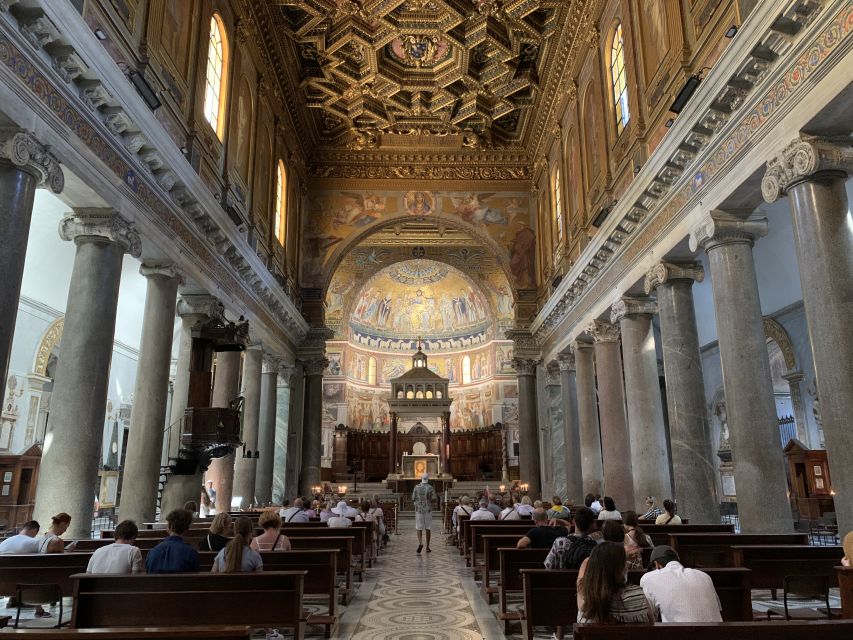
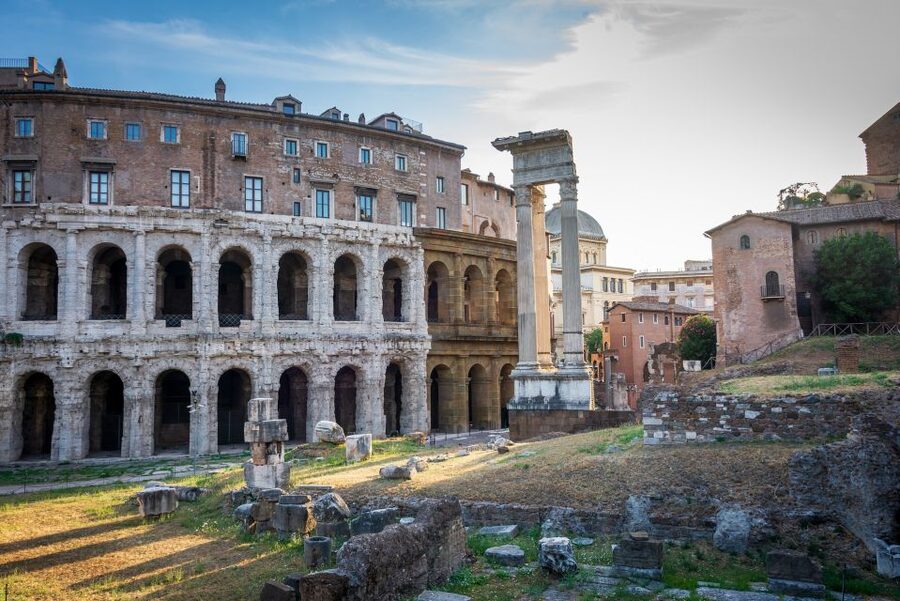
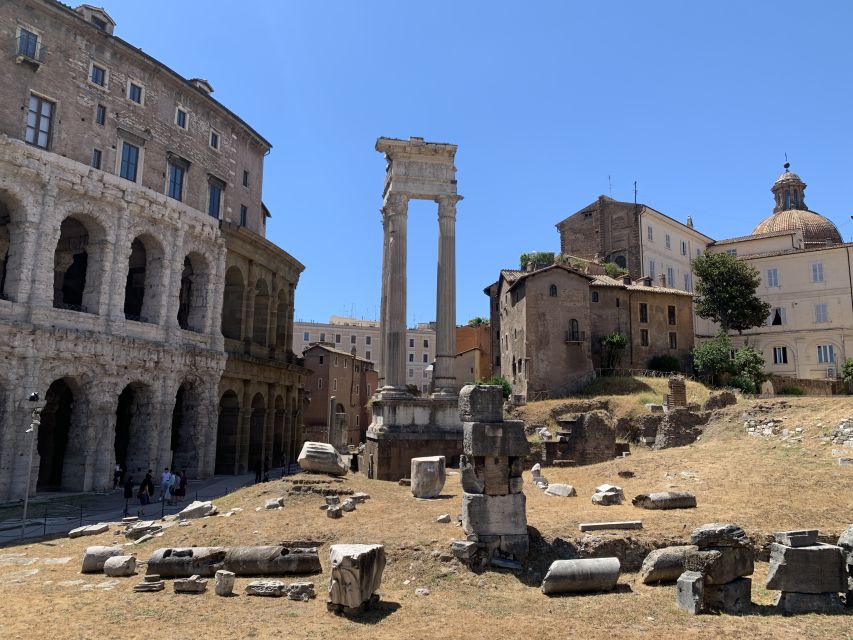
The final destination is the Theatre of Marcellus, an ancient Roman amphitheater dating to 13 BC. Its age and scale provide a strong finish after the more intimate streets of Trastevere and the Jewish Ghetto.
Ending here works well because the route closes with one of Rome’s oldest layers. You have moved through churches, public squares, market streets, and a Jewish quarter, then arrive at a monument from ancient Rome. The theatre reminds you that Rome’s neighborhoods were built around, over, and beside much older structures.
Your guide can help you place the theatre within the city’s wider architectural story. This is one of the reasons I would take the tour early in a Rome visit. The walk gives you reference points that can make later independent exploring easier.
The route does not include hotel drop-off, so you are free to continue sightseeing from the theatre afterward. The provided details do not specify onward transportation or a final meeting service, so plan your next stop on your own.
Pace, group size, and comfort
The stated duration is 2 to 2.5 hours. That is long enough for real context but short enough to fit into a busy Rome itinerary. It is also a useful length for families with older children and teenagers, especially if they respond well to stories, legends, and changing scenery.
The pace is described as leisurely. One small group had time for a coffee and juice stop, and another guide allowed time to take in each area. Even so, this remains a walking tour across urban streets. You should be comfortable walking for the duration, standing during explanations, and managing uneven or crowded city surfaces.
The tour is not suitable for wheelchair users or people with mobility impairments. The information does not provide a step-free route, accessible transport, or adapted support, so you should choose another experience if those features are essential.
There is also no stated restroom break. One participant specifically wished for a bathroom stop in the middle of the tour. Use facilities before meeting your guide, and do not count on a scheduled pause.
What the guides add
The strongest feature of this experience is the guide, not a single monument. A good guide makes the route feel connected and gives you useful answers when Rome’s details become confusing.
Estefi has been praised for being attentive, taking photos, and offering food recommendations. Celia and Sarah were noted for being friendly, clear, and well informed. Giuseppe adjusted for the heat, while other guides have used humor to keep the walk moving.
The small-group setup can make those strengths more noticeable. With only two or three people, the guide can adapt the conversation to your interests. Larger groups may be less personal, though headsets are supplied when more than 10 people attend.
Food advice is a pleasant extra, but it is not a food tour. You may hear suggestions for local dishes or places to eat, yet the main subject remains Rome’s neighborhoods, architecture, stories, and history.
Who should book this walk
I would recommend this tour to first-time Rome visitors who want an introduction to areas beyond the Colosseum, Trevi Fountain, and Vatican. It also suits repeat visitors who have seen the headline monuments and want more neighborhood context.
It is a good fit for you if:
- You enjoy history explained through streets and buildings.
- You want a guide who can answer questions.
- You prefer a small group to a large sightseeing crowd.
- You like a relaxed pace rather than a rushed checklist.
- You want to combine Trastevere and the Jewish Ghetto in one outing.
- You can walk continuously for two to 2.5 hours.
I would be more cautious if you need regular restroom breaks, have limited mobility, or prefer to explore at your own pace. The tour also may not suit someone looking for extended interior visits, since the supplied details focus on outdoor walking and guided stops.
Free cancellation is available up to 24 hours before the start, and you can reserve now and pay later. Those options are useful if your Rome schedule is still shifting.
Should you book it?
Book this tour if you want Rome explained through its neighborhoods rather than reduced to famous monuments. The combination of Trastevere, Campo de’ Fiori, the Jewish Ghetto, and the Theatre of Marcellus gives you a varied route, while the guides bring the architecture and personal stories into focus.
At $41, it is best value for first-time visitors and anyone who wants a friendly introduction with room for questions. Skip it if you need a wheelchair-accessible route, a guaranteed restroom stop, or long visits inside individual sights. For most able walkers, this is a thoughtful and well-paced way to get your bearings in central Rome.
FAQ
How long does the Rome walking tour last?
The tour lasts about 2 to 2.5 hours.
Where does the tour begin?
The meeting point is Piazza Mastai. Your guide waits around the main fountain, holding a sign with the tour name, and is scheduled to arrive 15 minutes before the tour begins.
Where does the tour finish?
The final destination is the Theatre of Marcellus.
Which places are included?
The route includes Piazza Mastai, Piazza di Santa Maria in Trastevere, Piazza Trilussa, Campo de’ Fiori, Rome’s Jewish Ghetto, the Great Synagogue of Rome, and the Theatre of Marcellus.
What languages are available?
The tour is offered in English, French, and Spanish.
Are headsets provided?
Headsets are provided when the group has more than 10 people.
Is the tour suitable for wheelchair users?
No. The activity is not suitable for wheelchair users or people with mobility impairments.
What should I bring?
Bring water and a reusable water bottle. Comfortable walking clothes and shoes are also sensible for a 2 to 2.5-hour city walk.
New routes in Rome
- Rome: Colosseum and Ancient Rome Guided Walking Tour★ 4.5 · 95 reviews
- Rome Walking Tour: Pantheon, Trevi, Navona & Hidden Gems★ 4.8 · 501 reviews
- Rome: Guided Walking Tour and Pantheon Priority Entry Ticket★ 4.3 · 317 reviews
- Rome: Trastevere Food Walking Tour with Beer and Wine★ 4.9 · 71 reviews
- Rome: Trevi Fountain, Spanish Steps & Pantheon Walking Tour★ 4.6 · 336 reviews
- Rome: Underground Trastevere Guided Walking Tour★ 4.8 · 87 reviews
- Rome: Relics from the Passion of the Christ Walking Tour★ 4.9 · 84 reviews
- Rome Trastevere Walking Food Tour★ 4.8 · 97 reviews
Rome Walking Tours, compared.
Guided Food Walking Tour with Wine in Trastevere
Read our review →
Trastevere & Campo de Fiori Street Food Walking Tour
Read our review →
Paranormal Night Walking Tour & Secret Backstreets
Read our review →
Colosseum Arena, Roman Forum & Palatine Hill Tour
Read our review →
Trastevere Street Food Walking Tour with Local Expert
Read our review →
Rome by Night Walking Tour – Legends & Criminal Stories
Read our review →
Rome Food Tour in the Historic Centre with 8+ Food Tastings
Read our review →Browse the lists this tour appears in