
Review · PARIS
Paris City Center Free Walking Tour (Tip-Based)
Paris reveals itself best on foot, and this tour gives you a useful first look at its historic center without asking you to pay a standard admission fee. Starting near Fontaine Saint-Michel, you move through Île de la Cité, cross old bridges, pass the Louvre, and finish with a view of the Eiffel Tower from the Tuileries.
I like the strong storytelling, especially the sections on the French Revolution, Napoleon, Henri IV, and the 2019 Notre-Dame fire. I also like the practical pace: guides such as Alberto, Sanna, Ezra, and Bruce use humor, answer questions, and in some cases use a microphone so a larger group can hear.
The main point to consider is that this is an outdoor history walk, not an inside visit to Notre-Dame or the Louvre. You will also need to make your way back from the Tuileries, and the exact pace or finishing point may vary slightly by guide.
Key points to know before you go
- The route links major Paris sights: Île de la Cité, Notre-Dame, Pont Neuf, the Louvre, the Tuileries, and an Eiffel Tower view all fit into one walk.
- The storytelling is the main attraction: Expect French kings, revolutionaries, Napoleon, wartime Paris, Leonardo da Vinci, and the building of the Eiffel Tower.
- The tour is tip-based: The listed booking price is only $3.62 per group of up to nine, while contributions are accepted by card or electronic payment and include VAT.
- Plan for about two hours and fifteen minutes: The ground is generally flat, but you will stand and walk for extended periods.
- The cathedral and Louvre are exterior stops: You see the buildings and hear their stories, but admission is not included.
- Guides use different strengths: Alberto is praised for polished historical storytelling, Sanna for clear explanations and group engagement, and Ezra for humor and warmth.
Why this route works as a first look at Paris
This walk covers a lot of ground without trying to show you every corner of the city. It follows a clear historical line, beginning with the oldest heart of Paris and moving through royal power, revolution, empire, art, public gardens, and modern engineering.
That sequence helps you understand why central Paris looks the way it does. You are not simply ticking off famous buildings. You are hearing how kings shaped the city, how war left marks on its bridges, how Napoleon used architecture to project power, and how later rebuilding changed Paris.
The walk lasts about 2 hours and 15 minutes. That is longer than a quick orientation stroll, but still short enough to fit into your first full day. I would place it near the beginning of a Paris visit, especially if you want to decide which places deserve a longer visit later.
The tour is offered in English and allows up to 50 people. Actual groups described for this experience included about 22 to 25 people, so you should expect a group rather than a private walk. A microphone can make a big difference in busy areas, and several guides use one.
More Free Walking Tours in Paris:
- Budapest Historical Sightseeing – Free Walking Tour
★ 5.0 · 1,302 reviews - Discover Helsinki – Tip-based Tour by RED UMBRELLA – 2026
★ 5.0 · 368 reviews - Downtown Asheville Tip-Based Sightseeing Walking Tour
★ 5.0 · 360 reviews
Fontaine Saint-Michel and the oldest heart of Paris
The official meeting point is Fontaine Saint-Michel, at Place Saint-Michel in the Latin Quarter. It is close to public transportation, which makes the start fairly practical, but arrive with enough time to locate the guide and group.
The route then turns toward Île de la Cité, the island at the center of the city. The Parisii tribe established temples here more than 2,000 years ago before Roman rule changed the course of the settlement. This is the right place to begin because Paris did not start as the broad city you see today. It began around this island and the Seine.
You will spend roughly 15 minutes on Île de la Cité. Expect an introduction to the island’s role as the geographic and historical center of Paris, along with an explanation of how the early settlement developed.
This opening section is useful if you are new to the city. It gives you a mental map before the tour moves into royal, religious, and political stories.
Notre-Dame from the outside
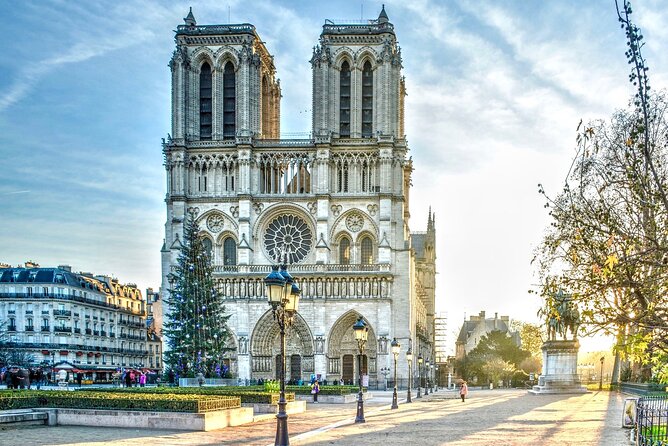
Notre-Dame gets about 12 minutes. You do not enter the cathedral, so think of this as an architectural and historical stop rather than a cathedral visit.
The guide covers its construction, which began in 1163, and the 2019 fire. You will also hear about the French Revolution and Napoleon’s coronation, connecting the building to the major political changes that shaped France.
The value here is the extra context. A quick photograph of Notre-Dame tells you little about why the cathedral matters. A guide can explain how its long building history, religious role, revolutionary upheaval, and recent fire all belong to the same story.
If you want to go inside Notre-Dame, you will need to arrange that separately. The same applies to the Louvre later in the walk. This tour gives you orientation and background, not entry tickets.
Saint-Michel, wartime Paris, and the bridges
The Fontaine Saint-Michel stop focuses on the grand rebuilding of Paris. The fountain dates from that period of major urban change, when the city gained much of the ordered appearance associated with central Paris today.
At Pont Saint-Michel, the subject shifts to the Second World War. You can see bullet holes on the bridge while the guide explains why Paris was not destroyed during the war. It is a small physical detail with a large story behind it, and it gives the walk a more personal connection to the city’s past.
This stop also shows why walking is better than a fast bus ride for certain parts of Paris. You can pause at the stonework, look across the Seine, and notice marks that would be easy to miss from a vehicle.
The route is not a strenuous hike in the mountain sense, but do not treat it as a seated sightseeing ride. You will spend time on your feet listening at each stop. Comfortable shoes are a sensible choice.
More Walking Tours in Paris:
- Authentic Parisian Gourmet Food Tour with 10 Local Dishes & Wines
★ 5.0 · 4,754 reviews - Paris Top Sights Half Day Walking Tour with a Fun Guide
★ 5.0 · 2,893 reviews - Montmartre Hidden Gems and Scenic Highlights Walking Tour
★ 5.0 · 2,684 reviews - Montmartre Hill French Gourmet Food and Wine Tasting Walking Tour
★ 5.0 · 2,588 reviews
Place Dauphine and Henri IV
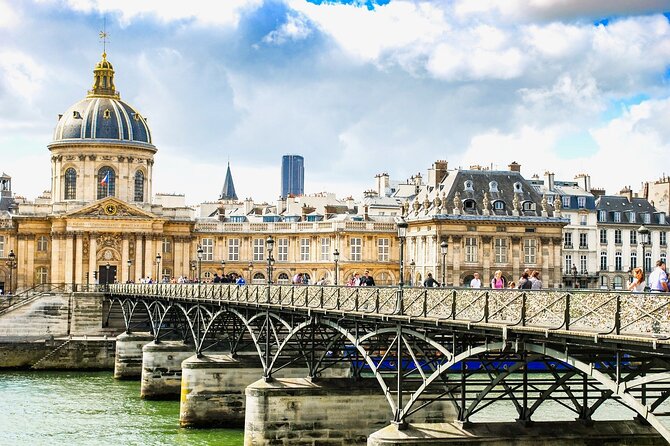
Place Dauphine offers a change of mood. This elegant square was one of the early projects of Henri IV, and its restaurants make it a useful place to remember for a meal after the tour.
I like this part because it shows a quieter side of central Paris. The route is not limited to huge monuments. It also points out a square where you can slow down, look at the surrounding buildings, and picture how royal planning shaped everyday city life.
The nearby equestrian statue of Henri IV gives the guide another chance to explain the king’s short but important reign. You also get views toward the Seine, so this is one of the route’s better pauses for combining scenery with political history.
The itinerary gives each of these stops about 12 minutes. That is enough time for a focused explanation, but not enough for a long meal or a detailed architectural study. Take notes if a restaurant or square catches your eye, then return later at your own pace.
Pont Neuf and the stories beneath the monument
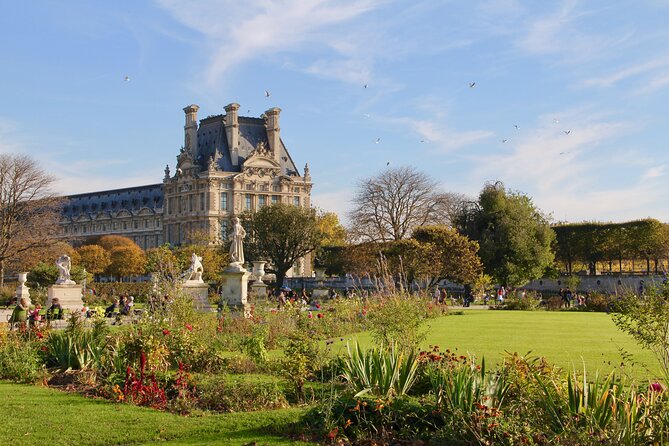
Pont Neuf is described as the oldest bridge in Paris. It was completed in 1607 under Henri IV, and its long history gives the guide plenty to work with.
This is where the walk becomes especially story driven. Along with Henri IV, you hear about the tooth pullers of Paris and other characters connected with the bridge. These small details help keep the history from becoming a list of dates and rulers.
You also get views along the Seine. The bridge is a practical crossing, but it is also a good place to understand how the river shaped the city’s growth and movement.
A guide’s delivery matters here. Alberto is especially well regarded for historical storytelling and witty comments, while Ezra is praised for making stories approachable and funny. The exact guide is not guaranteed, but the experience depends heavily on this ability to turn facts into a clear tale.
The Louvre, Leonardo, and the Mona Lisa
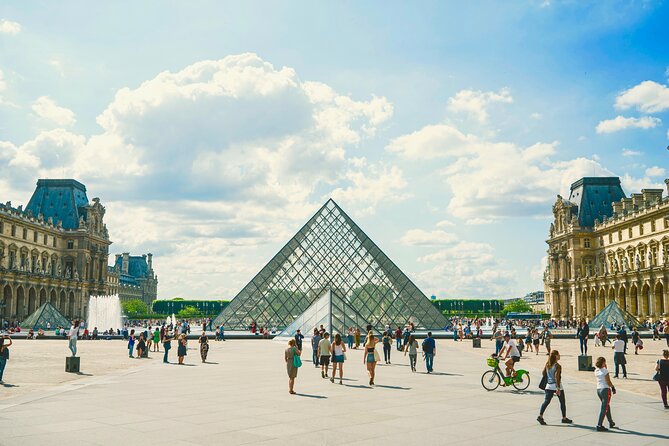
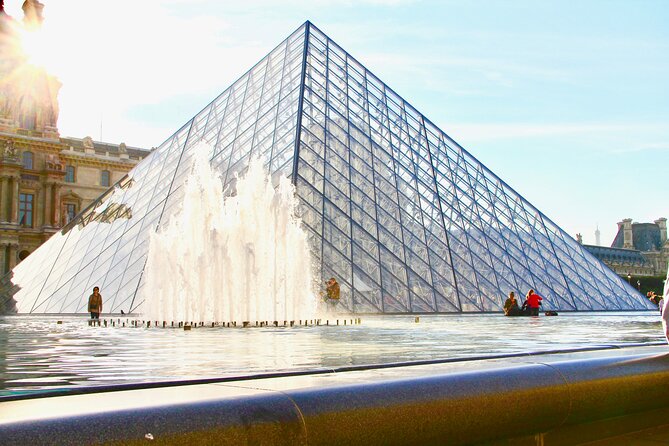
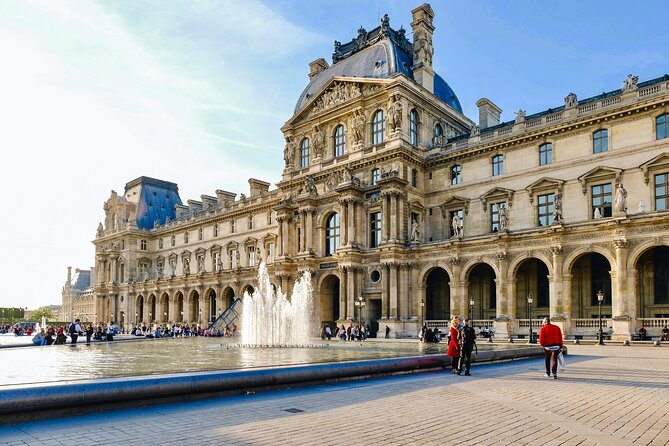
The Louvre is another exterior stop. You do not enter the museum, but the guide uses the building and its glass pyramid to explain how this place developed.
You will meet Francis I, the king who laid the foundations for the Louvre as a fortress and palace. You will also hear the true story of Leonardo da Vinci and why the Mona Lisa became so famous.
This is useful preparation if you plan to visit the museum later. The Louvre can feel overwhelming when you first arrive. Knowing that it began as a fortress and later became a palace gives you a better way to read the building before you enter its galleries.
The glass pyramid provides a second layer to the story. It contrasts sharply with the older palace around it, and the guide points out the mysteries and ideas connected with the modern entrance.
Allow extra time another day if the Louvre is a priority. Twelve minutes outside cannot replace a museum visit, and the tour does not include admission or time inside.
Napoleon’s arch and the Tuileries Gardens
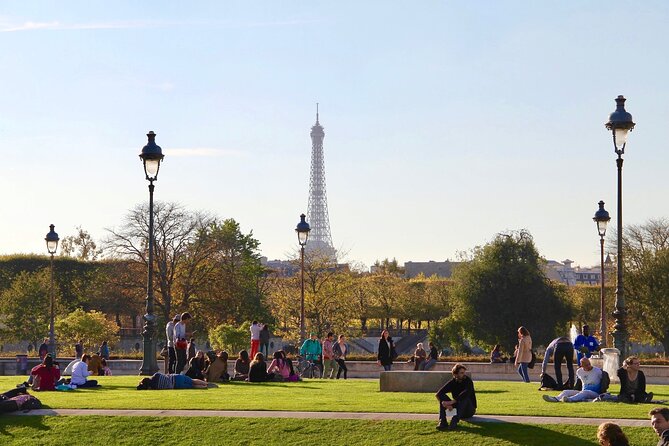
The Arc de Triomphe du Carrousel follows the Louvre. Napoleon built it to reflect his rise as master of Europe, so it fits neatly with the earlier discussions of revolution, kingship, and imperial power.
The monument is smaller than the Arc de Triomphe at the top of the Champs-Élysées, but its position near the Louvre makes it especially useful for understanding Napoleon’s attempt to connect military success with grand public spaces.
The walk then enters the Tuileries Gardens. The gardens began as a tile factory area before becoming royal grounds. Their design is linked to the same garden designer who worked on Versailles, and the result is a formal setting of statues, sculptures, fountains, and long views.
This is one of the more pleasant sections of the route. After several bridge and street stops, the open gardens give you room to breathe. The paths are suitable for a gentle pace, though you will still be walking and standing rather than sitting through the entire stop.
The stated endpoint is the Tuileries Garden, near 75001 Paris. Some guide schedules or route variations may finish close to the Louvre, so listen for the final instructions and plan your onward route from the central Paris area rather than assuming you will return to Fontaine Saint-Michel.
The Eiffel Tower view and the final story
The tour finishes with a view of the Eiffel Tower from the Tuileries. You do not visit the tower itself, but the guide explains how Gustave Eiffel managed its construction for the 1889 exhibition.
This ending works well because it shifts the story from medieval stone and royal gardens to modern engineering. You finish with one of Paris’s most recognizable sights while hearing how controversial and ambitious its construction was.
The view is the reward, but the practical value is also strong. You can use this final stop to decide how much time you want to give the Eiffel Tower later. This tour does not include entry, elevator access, or a visit to the tower.
What the guides do well
The strongest part of the experience is the guide’s presentation. Alberto is repeatedly singled out for clear delivery, humor, and strong command of French history. His tours are described as organized, prompt, and generous with questions.
Sanna is praised for making complicated history easy to follow and for keeping a group of about 25 people involved. Her use of a microphone helps people at the back hear the explanations.
Ezra is noted for warmth, jokes, and a well-timed pause for coffee and a croissant. Bruce is praised for using a body microphone effectively and for keeping a group engaged even on a cold day.
Those details matter because outdoor guiding is not easy. Paris traffic, passing pedestrians, and city noise can quickly swallow a soft voice. A microphone is a real advantage, especially if you are not near the front.
The experience also appears suitable for families and older walkers who are comfortable standing and moving at a steady pace. One account describes the route as manageable for two older sisters, while another notes that teenagers enjoyed it. Still, expect a full outdoor session, and use a restroom before starting because a dependable bathroom break is not built into the route.
Price, tipping, and overall value
The listed price is $3.62 per group of up to nine. That is unusually low, but this is not a fully prepaid free service. Tips are accepted only through credit or debit cards and electronic payments, and VAT is added to contributions.
You should treat the small booking charge as access to a tip-based model, not as the final measure of what the guide’s work is worth. If the guide gives you a useful two-hour history lesson, answers questions, and helps you get oriented, prepare to tip accordingly through the accepted payment method.
The value is strongest for a first visit, a short stay, or anyone who wants a clear overview before buying museum tickets. You see many major sights without paying entry fees, and you get advice about places to eat, drink, and explore afterward.
The value is weaker if you want a small private group, indoor access, or detailed art interpretation inside the Louvre. This is an introduction to central Paris, not a replacement for dedicated Notre-Dame, Louvre, or Eiffel Tower visits.
Practical details that affect your day
Confirmation is provided at booking, and cancellation is free up to 24 hours before the start time. Changes or cancellations made less than 24 hours before the start are not accepted for a refund.
The tour requires good weather. If poor weather cancels it, you are offered another date or a full refund. That matters because the entire experience takes place outdoors.
The meeting point is Fontaine Saint-Michel, while the route begins with Île de la Cité and ends in the Tuileries area. Public transportation is nearby, service animals are allowed, and most people can take part.
The maximum group size is 50. Larger groups can work when the guide uses a microphone, but you may prefer to arrive early and stay close enough to hear clearly.
Who should book this Paris walk?
I would recommend it to first-time visitors who want the city’s main historical thread before exploring on their own. It is also a good fit for a short Paris stay, families with older children, and anyone who enjoys stories more than a rapid list of dates.
It suits people who can walk and stand for more than two hours on mostly manageable, flat city routes. Bring weather protection, wear comfortable shoes, and plan a meal or café stop after the walk rather than expecting a scheduled break.
I would choose another option if your priority is entering Notre-Dame, spending time inside the Louvre, or having a very small group. In that case, use this walk only as an introduction and book separate admission or specialist tours.
Should you book it?
Book this tour if you want an affordable, history-led introduction to Paris with a route that connects the city’s major central sights. The best reason to go is the storytelling, particularly if you get a guide such as Alberto, Sanna, Ezra, or Bruce who can make kings, wars, bridges, and monuments feel connected.
Skip it if you dislike outdoor group walks or want deep time inside the museums. For most first-time visitors, though, the combination of Île de la Cité, Notre-Dame, Pont Neuf, the Louvre, the Tuileries, and an Eiffel Tower view makes this a sensible first step into Paris.
FAQ
Where does the Paris City Center Walking Tour start?
The tour starts at Fontaine Saint-Michel on Place Saint-Michel, 75005 Paris, France.
Where does the tour finish?
The stated endpoint is the Tuileries Garden in the 75001 area of Paris.
How long does the walking tour last?
The tour lasts approximately 2 hours and 15 minutes.
Is entry to Notre-Dame included?
No. Notre-Dame is viewed from outside, and the tour does not enter the cathedral.
Is entry to the Louvre included?
No. The Louvre is an exterior stop, and museum admission is not included.
How are tips paid?
Tips are accepted through credit or debit cards and electronic payments only. VAT is added to contributions.
New routes in Paris
- The Official Emily in Paris Locations Walking Tour★ 4.9 · 383 reviews
- Paris: Montmartre Food Tasting Walking Tour with Secret Dish★ 4.8 · 107 reviews
- Paris: Emily Inspired Walking Tour★ 4.9 · 312 reviews
- Saint-Germain: Gourmet Chocolate & Pastry Walking Food Tour★ 4.8 · 495 reviews
- Paris: Walking Tour with Notre Dame or Ste-Chapelle Access★ 4.4 · 198 reviews
- Paris Uncovered: Unique Guided Walking Tours with a Twist★ 4.8 · 582 reviews
- Paris: Walking Tour of Montmartre★ 4.7 · 470 reviews
- Paris Top Sights Half Day Walking Tour with a Fun Guide★ 4.9 · 92 reviews
Paris Walking Tours, compared.

Authentic Parisian Gourmet Food Tour with 10 Local Dishes & Wines
Read our review →
Paris Top Sights Half Day Walking Tour with a Fun Guide
Read our review →
Montmartre Hidden Gems and Scenic Highlights Walking Tour
Read our review →
Montmartre Hill French Gourmet Food and Wine Tasting Walking Tour
Read our review →
Montmartre Highlights Walking Tour with a Local Guide
Read our review →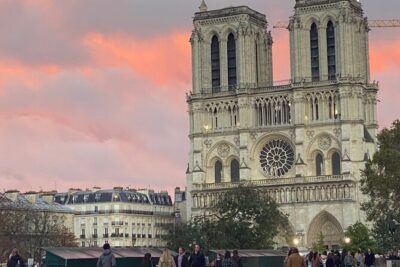
Paris Île de la Cité and Notre-Dame Walking Tour With Crypt
Read our review →
Montmartre Cheese, Wine & Pastry Guided Walking Tour
Read our review →
Paris in a Day: Louvre or Orsay, Eiffel Tower, City Walk & Cruise
Read our review →Browse the lists this tour appears in