
Review · ROME
Dark Heart of Rome – Facts, Legend & Mystery Walking Tour
Rome after sunset can feel like a different city, and this tour uses that change in mood well. Over 90 minutes, you follow Rome’s darker stories through lanes and piazzas, mixing documented events with ghost tales, old legends, and the kind of odd details most daytime tours skip.
I like the low price and the route. At $14, you get an entertaining evening walk that also helps you see central Rome at night. I also like the guides’ style: Rob, Alethea, Alberto, and Inti have all been praised for expressive storytelling, humor, and strong English.
The main drawback is that this is a walking tour with no hotel pickup, and it is not suitable for wheelchair users, people with mobility impairments, or strollers. Some stories are grim, too, so this is not a gentle sightseeing stroll for every child.
Key points to know before booking
- A 90-minute route through central Rome: Start at Sant’Andrea della Valle and finish near Castel Sant’Angelo.
- Dark stories with real historical context: Expect crime, violent characters, supernatural tales, and less familiar details about famous streets.
- Rome looks especially good at night: The route passes Campo de’ Fiori, Piazza Farnese, Via Giulia, and other atmospheric areas.
- The guide makes the experience: Past guides have included Rob, Alethea, Alberto, Inti, and others praised for humor and theatrical storytelling.
- Good value at $14: You get a full evening activity without museum admission fees or transport costs.
- Wear proper shoes: The walk covers winding historic lanes and ends away from the starting point.
A darker introduction to Rome after sunset
Most first visits to Rome focus on emperors, churches, fountains, and grand ruins. This walk takes another route. It asks you to notice the city’s less comfortable stories: public punishment, strange deaths, haunted places, secretive characters, and legends that have survived because they are too memorable to disappear.
That shift in subject matter is the main reason to book. You are not simply ticking off famous monuments. You are learning how Rome’s streets acquired their darker reputations, while seeing the historic center under softer evening light.
The tone is more entertaining than frightening. Guides use humor to keep the mood relaxed, even when the subject turns sad or morbid. I would expect some stories to be unsettling, but not a theatrical haunted-house show with actors or special effects. The interest comes from the guide, the setting, and the mix of fact and folklore.
The tour is described as Rome’s only night-time walking tour in English. That is a strong selling point for anyone who has already spent the day in museums and wants an evening activity that feels different from a standard monument tour.
More Crime and Mystery Walking Tours in Rome:
- Rome by Night Walking Tour – Legends & Criminal Stories
★ 4.5 · 1,003 reviews - Ghosts, Legends & Mysteries of Rome Tip-Based Walking Tour
★ 4.7 · 284 reviews - Rome Night Mysteries Guided Walking Tour
★ 4.9 · 119 reviews
Starting at Sant’Andrea della Valle
The meeting point is on the steps of the Church of Sant’Andrea della Valle, on Corso Vittorio Emanuele II. It is about 150 meters from Largo di Torre Argentina, on the left when you walk toward the Tiber, beside Piazza Vidoni and Piazza Sant’Andrea della Valle.
This is a useful central starting point, but give yourself time to find the correct church entrance. Rome has several churches, piazzas, and streets with similar names, and the meeting point is outside the church rather than inside it.
You present your voucher to the tour coordinator or guide. There is no hotel pickup, so you need to reach the church independently. Since the tour finishes at Castel Sant’Angelo, think about your plans afterward before you set out. Public transport and taxis are available there, but you will not return to the starting point.
Sant’Andrea della Valle also gives the tour a fitting opening. You begin among major historic buildings, then move away from the usual daytime sightseeing pattern and into streets where atmosphere matters as much as architecture.
Campo de’ Fiori and Rome’s public memory
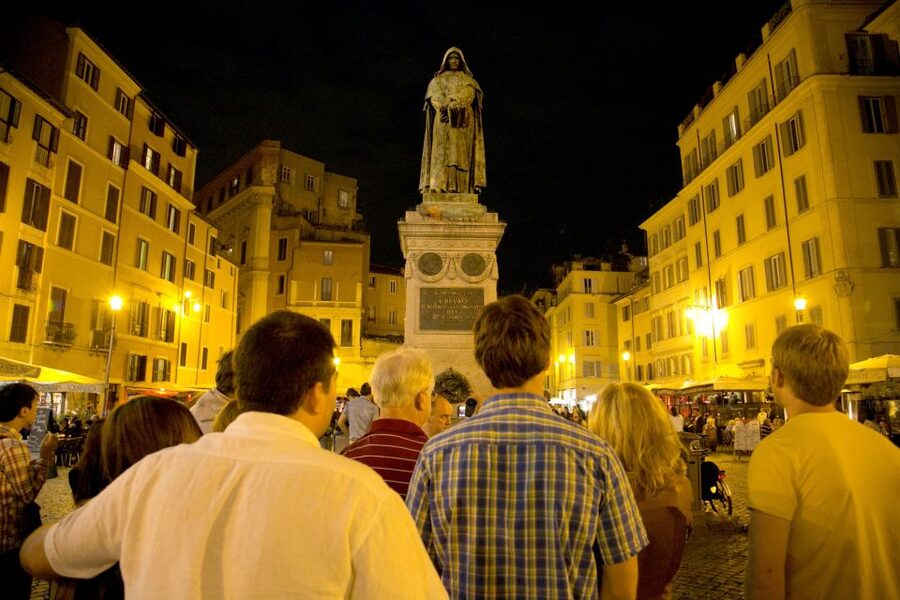
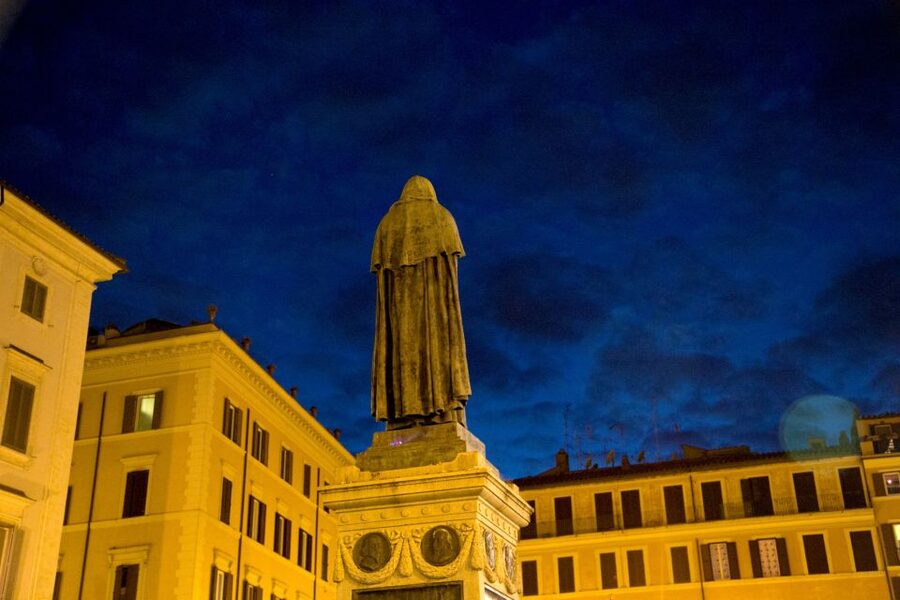
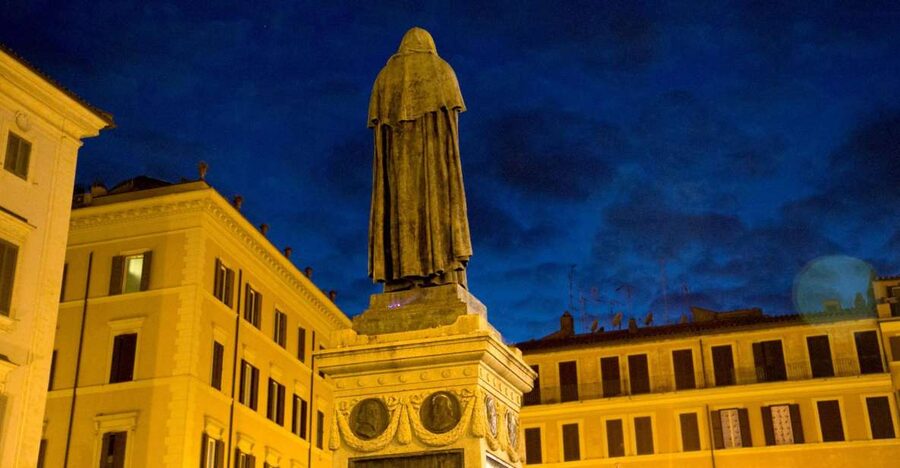
Campo de’ Fiori is one of the key stops on the route. By day, it is known for its market and central position. At night, the square takes on a more serious mood, making it a natural place for stories about punishment, public spectacle, and the city’s difficult past.
The value here is not simply hearing one gruesome tale. A good guide connects the square with the way Rome has used public spaces over time. You begin to see the piazza not just as a photo stop, but as a place where power, religion, crime, and public opinion once met.
This section also shows how the tour works best. You are standing in a familiar spot, but the guide draws attention to details and associations you may otherwise miss. The stories can change how you see the square during the rest of your stay.
If you prefer strictly academic history, the folklore may feel loose at times. This experience is built around storytelling, so legends and supernatural claims are part of the fun. The guide generally presents the darker material as a blend of fact, tradition, and mystery rather than as a formal lecture.
Corso Vittorio Emanuele II and the quieter lanes
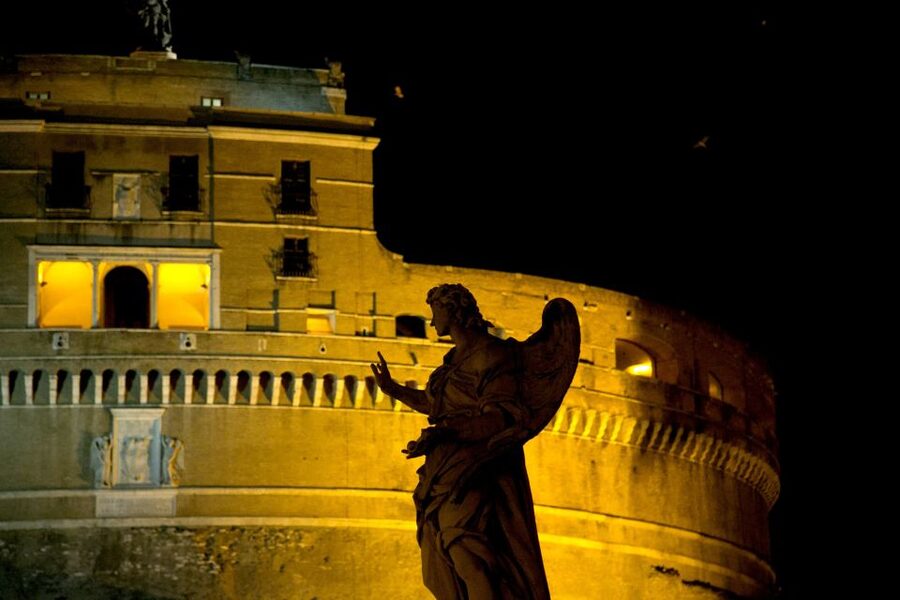
From the central area, the walk continues along Corso Vittorio Emanuele II and into streets such as Via del Governo Vecchio. This is where the tour becomes less about a single famous square and more about the character of Rome’s old center.
The winding lanes are important to the mood. Rome’s historic core is full of narrow passages, worn walls, old façades, and sudden views toward larger churches or open piazzas. At night, the reduced light helps the guide create a sense of suspense without needing anything artificial.
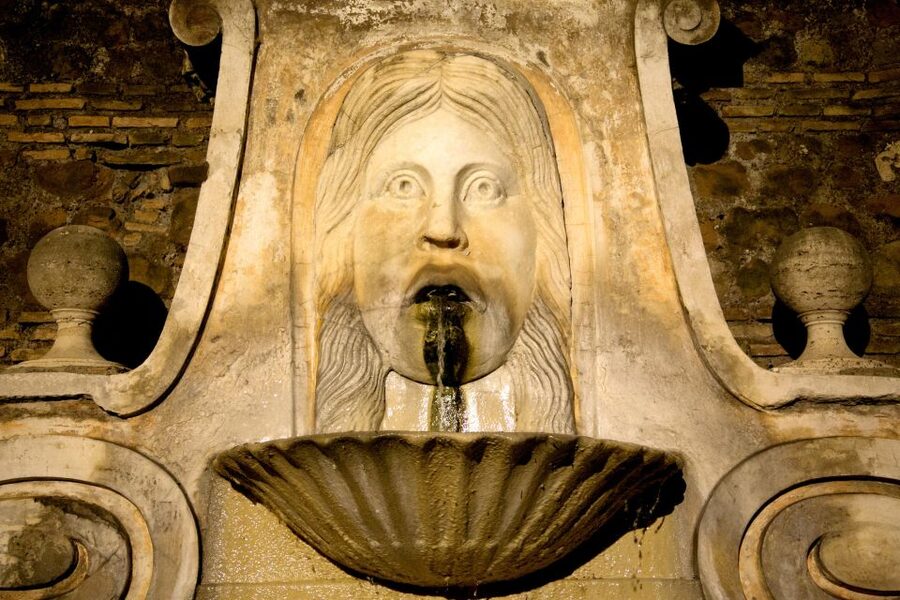
Past participants have especially appreciated the way the walk reveals details that are easy to pass in daylight. You might notice a carving, a plaque, a doorway, or an architectural feature that carries a strange story. The experience works best when you stay alert and look where the guide points.
The route involves a fair amount of walking, though it lasts only an hour and a half. Comfortable shoes are a must. The historic streets may be uneven, and standing still on pavement while listening can become tiring in poor footwear.
More Walking Tours in Rome:
- Rome: Guided Food Walking Tour with Wine in Trastevere
★ 4.9 · 3,105 reviews - Rome: Trastevere & Campo de Fiori Street Food Walking Tour
★ 4.9 · 2,768 reviews - Rome: Paranormal Night Walking Tour & Secret Backstreets
★ 4.9 · 1,921 reviews - Rome: Trastevere Street Food Walking Tour with Local Expert
★ 4.8 · 1,784 reviews
Via Giulia and Piazza Farnese after dark
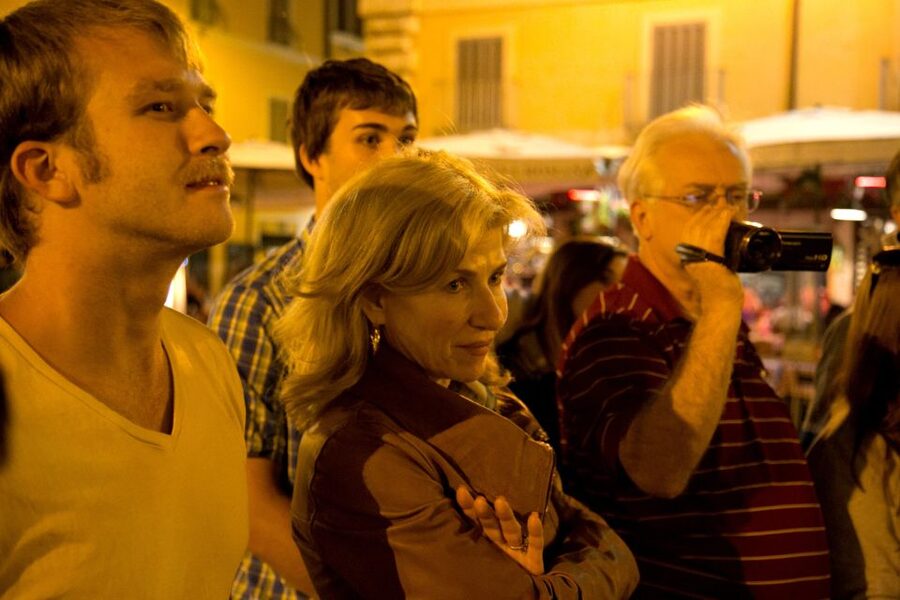
Via Giulia brings a different mood. It is one of the notable historic streets in central Rome, and at night it can feel calmer than the main tourist routes. Here, the appeal comes from the contrast between elegant surroundings and the darker material being discussed.
Piazza Farnese adds another open space to the route. The square is visually impressive at night, and its broad layout gives the group room to gather while the guide explains the next story. This is also a good point for taking in Rome’s architecture without rushing through it.
You should not expect extended time at each place. This is a moving storytelling walk, not a series of long monument visits. The guide will usually stop at selected locations, talk for a while, and then lead the group onward.
That pace suits an evening tour. Ninety minutes is long enough to build a theme but short enough to fit before dinner or after an earlier day of sightseeing. The route gives you a useful introduction to several neighborhoods without asking you to spend an entire night on your feet.
The guides make or break the evening
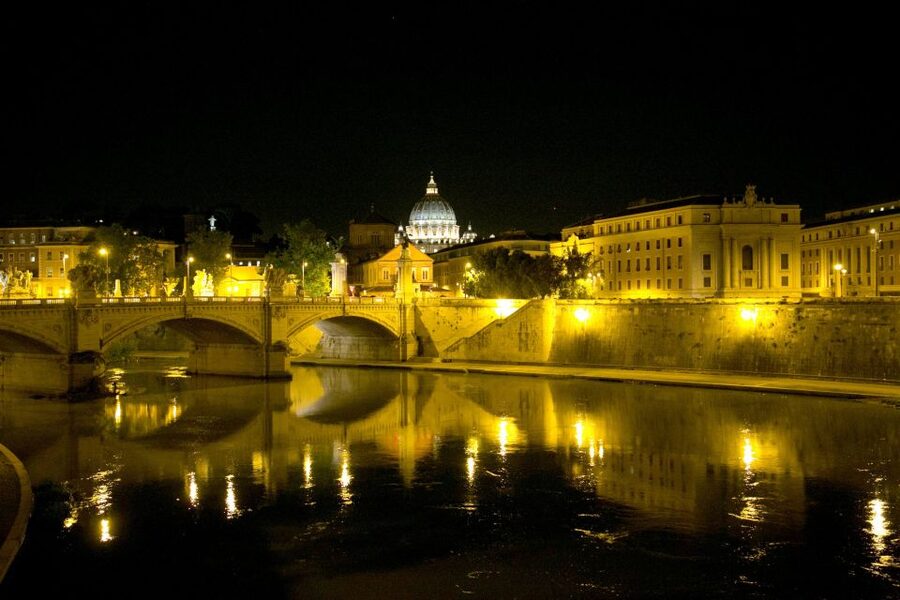
The strongest part of this experience is the live guide. The subject matter is unusual, but the same stories could feel flat in the hands of a poor storyteller. Several guides associated with the tour have earned praise for clear English, comic timing, expressive delivery, and friendly interaction.
Rob has been singled out for making the walk both funny and informative. Alethea has been praised for enthusiasm, strong storytelling, and a sharp eye for the darker side of Rome. Alberto and Inti have also been noted for drawing people into the stories and keeping the group involved.
Guide assignments can change, so you cannot book a particular person based on past departures. Still, the pattern is clear: this tour depends heavily on personality. You are paying for interpretation, timing, and a sense of occasion as much as for the route itself.
Some past participants found the stories so interesting that they checked the details later. That is a good sign for a tour that mixes history and legend. You should still expect the occasional tale that belongs more to local tradition than to provable fact. The fun is in hearing how the story fits the place.
The guides also tend to add context about other areas to visit and local food. Do not count on a full restaurant consultation, but it is worth asking if you want suggestions after the walk.
Finishing near Castel Sant’Angelo
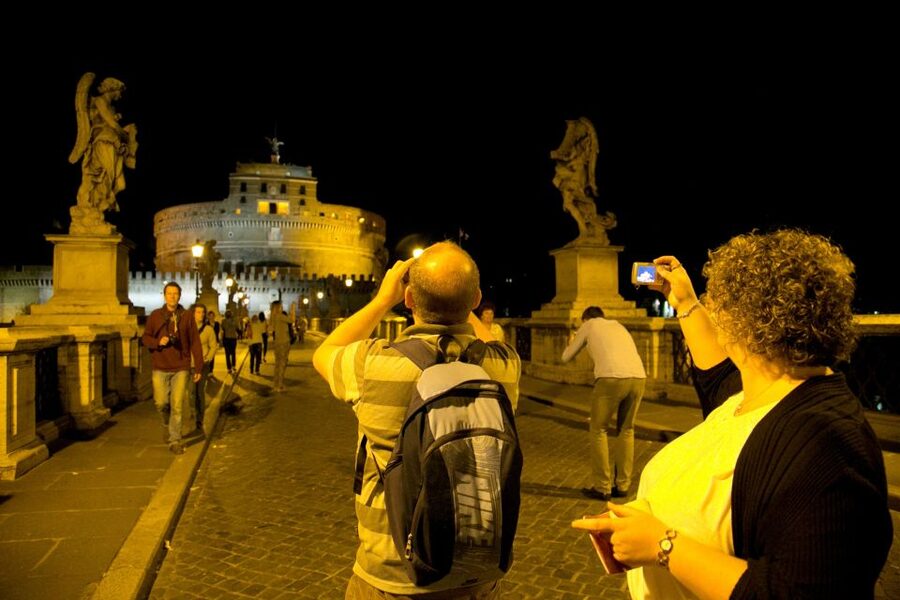
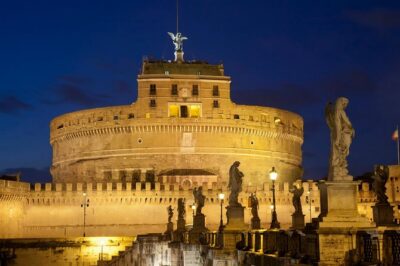
The tour ends at Castel Sant’Angelo rather than returning to Sant’Andrea della Valle. That makes the final stretch practical for anyone planning dinner, drinks, or further sightseeing near the Tiber.
Castel Sant’Angelo is a strong ending point at night. Its shape and setting suit the tour’s themes, and the walk there provides a clear finish rather than leaving you in an anonymous side street.
The end point also matters for planning. Public transport and taxis are accessible from Castel Sant’Angelo, but you should check your route before joining the walk. If your hotel is on the other side of the historic center, you may need an additional walk or ride.
I like the one-way design because it lets the tour cover more ground. The tradeoff is that you need to organize your return yourself. That is easy enough in central Rome, but it is still something to remember after an evening out.
Is $14 good value?
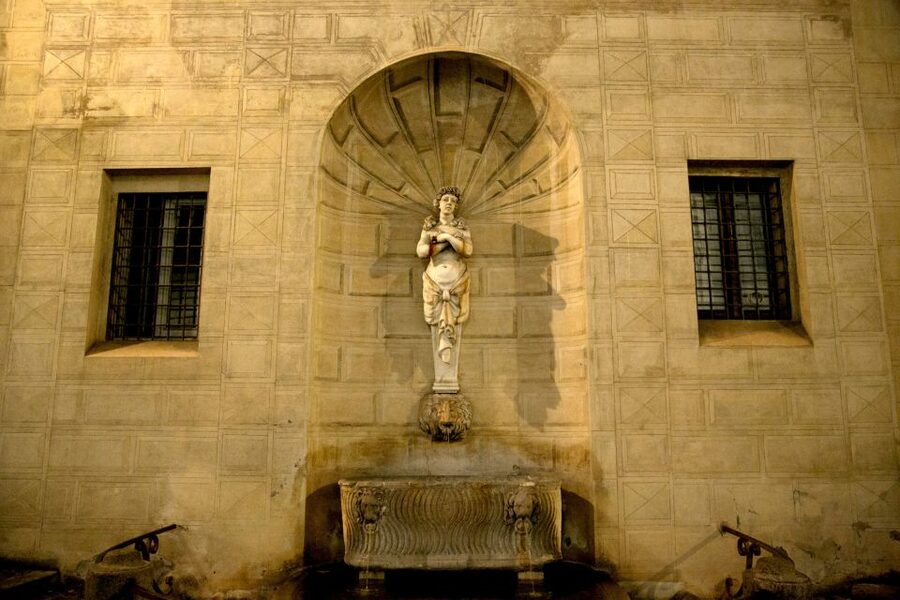
At $14 per person, this is a strong-value Rome activity. You are getting 90 minutes with an English-speaking guide, a central route, and a subject that differs from the usual Colosseum, Vatican, and fountain circuit.
The price is especially fair if you want a first-night orientation. The route introduces several central areas, shows you how attractive Rome can look after dark, and may give you ideas for places to revisit during the day.
It is not a substitute for a detailed historical tour or a private guide. You will not receive long architectural explanations at every stop, and the schedule does not allow for museum entries or extended monument visits. Think of it as a lively themed walk.
Free cancellation up to 24 hours before the start gives you some flexibility, and you can reserve without paying immediately. Those terms are useful if your Rome schedule is still changing.
Who should book this Rome night walk?
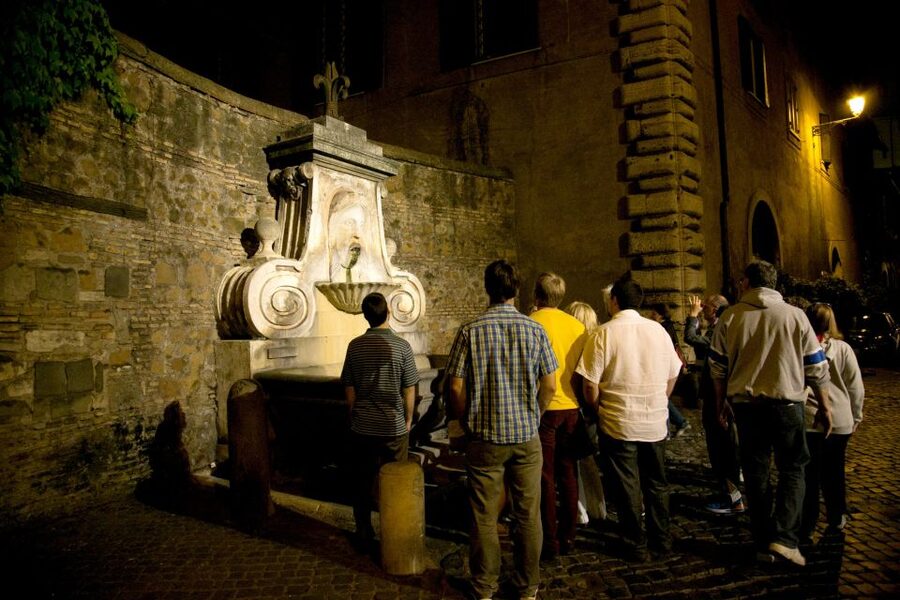
I would choose this tour if you enjoy true crime, old legends, ghost stories, strange historical characters, or the less polished side of famous cities. It also suits repeat visitors who have already seen the major sights and want a fresh angle on central Rome.
It works well early in a trip because the route helps you get your bearings. One past participant found that seeing these streets at night made the rest of the visit more meaningful. That makes sense: you learn to notice small details and recognize areas you might otherwise ignore.
Families can join if older children are comfortable with morbid subjects. The tour is not designed for very young children, and the stories include death, violence, and supernatural material.
I would skip it if you dislike walking, need step-free access, want a quiet architectural tour, or prefer history presented without legends. The provider cannot accommodate wheelchairs, mobility impairments, or strollers.
Practical advice for a better evening
Arrive at the church steps a little early, especially if you are unfamiliar with Corso Vittorio Emanuele II. Wear comfortable shoes and bring a light layer, since evening temperatures can change and much of the tour takes place outdoors.
Keep your phone handy for the meeting point and the return journey, but do not spend the walk staring at a screen. The pleasure comes from looking closely at the streets, façades, and details the guide brings into focus.
Finally, keep an open mind about the stories. Some are historical, some are legendary, and some sit somewhere in between. The tour is most enjoyable when you let the guide tell the tale while remembering that Rome has always mixed fact with imagination.
Should you book the Dark Heart of Rome tour?
Book it if you want a low-cost evening experience with a strong sense of place and a lively guide. The combination of Campo de’ Fiori, Via Giulia, Piazza Farnese, and Castel Sant’Angelo gives you attractive night scenery, while the dark stories provide a reason to look closer.
At $14, the risk is small. Just understand what you are buying: a brisk, entertaining storytelling walk, not a formal history seminar or a guaranteed ghost encounter. If that balance sounds right, this is an easy addition to a Rome itinerary.
FAQ
How long is the Dark Heart of Rome tour?
The tour lasts 1.5 hours, or 90 minutes.
What language is the tour conducted in?
The tour is conducted in English with a live English-speaking guide.
Where does the tour begin?
It begins on the steps of Sant’Andrea della Valle Church on Corso Vittorio Emanuele II, near Largo di Torre Argentina, Piazza Vidoni, and Piazza Sant’Andrea della Valle.
Where does the tour finish?
The tour finishes at Castel Sant’Angelo. Public transport and taxis are available from there.
Which places are included on the walking route?
The route includes areas around Campo de’ Fiori, Corso Vittorio Emanuele II, Via del Governo Vecchio, Via Giulia, Piazza Farnese, and Castel Sant’Angelo.
Does the tour include hotel pickup?
No. Hotel pickup and drop-off are not included.
How much does the tour cost?
The listed price is $14 per person.
Can wheelchair users or people with mobility impairments join?
No. The provider cannot accommodate wheelchair users or people with mobility impairments on this tour.
Can I bring a stroller?
No. Baby strollers and pushchairs cannot be accommodated.
New routes in Rome
- Rome: Colosseum and Ancient Rome Guided Walking Tour★ 4.5 · 95 reviews
- Rome: Guided Walking Tour and Pantheon Priority Entry Ticket★ 4.3 · 317 reviews
- Rome Walking Tour: Pantheon, Trevi, Navona & Hidden Gems★ 4.8 · 501 reviews
- Rome: Trastevere Food Walking Tour with Beer and Wine★ 4.9 · 71 reviews
- Rome: Trevi Fountain, Spanish Steps & Pantheon Walking Tour★ 4.6 · 336 reviews
- Rome: Underground Trastevere Guided Walking Tour★ 4.8 · 87 reviews
- Rome: Relics from the Passion of the Christ Walking Tour★ 4.9 · 84 reviews
- Rome: Trastevere and Roman Ghetto Guided Walking Tour★ 4.7 · 79 reviews
Rome Walking Tours, compared.
Guided Food Walking Tour with Wine in Trastevere
Read our review →
Trastevere & Campo de Fiori Street Food Walking Tour
Read our review →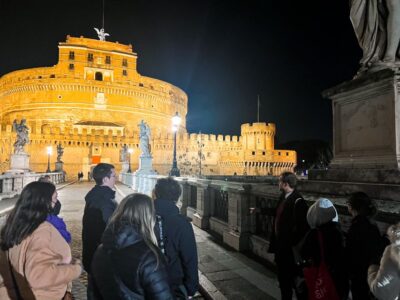
Paranormal Night Walking Tour & Secret Backstreets
Read our review →
Colosseum Arena, Roman Forum & Palatine Hill Tour
Read our review →
Trastevere Street Food Walking Tour with Local Expert
Read our review →
Rome by Night Walking Tour – Legends & Criminal Stories
Read our review →
Rome Food Tour in the Historic Centre with 8+ Food Tastings
Read our review →Browse the lists this tour appears in