
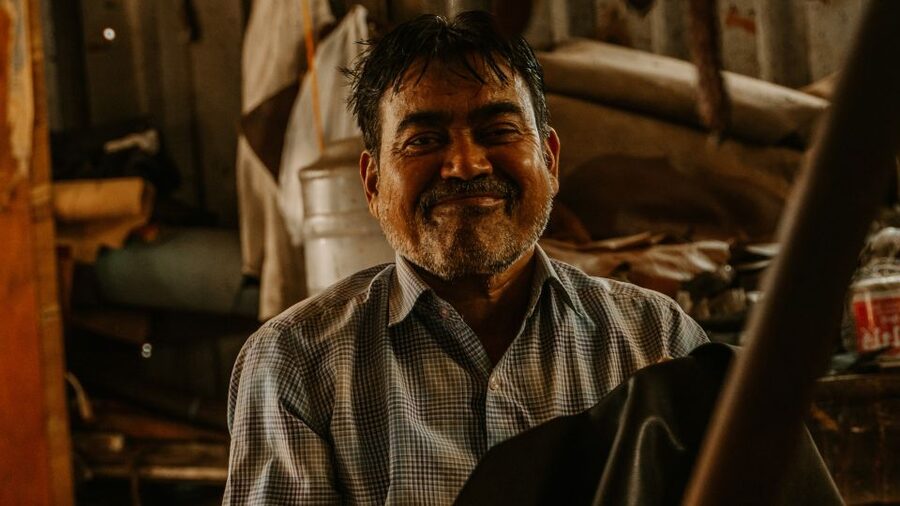
Review · MUMBAI
Mumbai: Dharavi Slum Walking Tour by First Female Tour Guide
Dharavi is not a museum of poverty. It is a working Mumbai neighborhood where recycling, manufacturing, trade, education, and family life fit into a tightly packed urban space. This walking tour, led by Dharavi women such as Pooja, Sneha, Varsha, Anu, and Anushka, helps you see those layers without trying to navigate the lanes alone.
I like the local point of view and the route through both industrial and residential areas. I also like the price: at $5, two and a half hours with a guide and water is remarkable value. The main consideration is that this is an active community, not a polished attraction, so you need to walk respectfully and accept that the narrow lanes can feel crowded and confronting.
Key points
- Meet a Dharavi-born guide: Several guides, including Pooja, Varsha, Sneha, and Anu, live in or grew up in the area.
- See working industries: The route can include plastic, paper, and aluminium recycling, soap, cloth, leather, pottery, and other small businesses.
- Go beyond the factory lanes: You also visit markets, schools, colleges, homes, and commercial areas.
- Expect a two-and-a-half-hour walk: The tour begins and ends outside Third Wave Coffee.
- Ask questions freely: English-speaking guides explain local work, education, daily life, and the area’s changes.
- Book for perspective, not spectacle: The best reason to go is to understand how a large community supports itself.
Why Dharavi deserves more than a quick look from a taxi
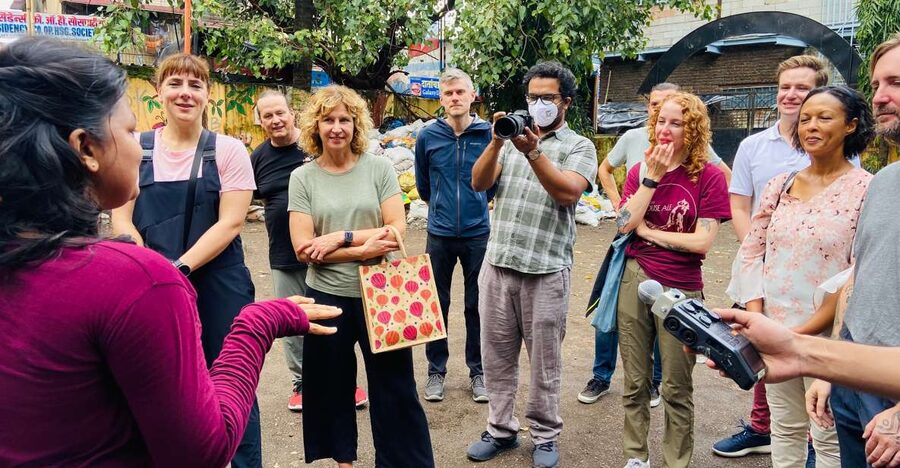
Dharavi sits in the heart of Mumbai and is often described as one of Asia’s largest slum areas. That label is useful for geography, but it tells you very little about the people who live and work there.
The area is also a major center of small-scale industry. Waste materials are sorted and reused. Workshops make clothing and leather goods. Pottery, soap, and other products are made in compact workspaces. Alongside these businesses are homes, markets, schools, colleges, and religious and community spaces.
That mixture is what gives the walk its value. You are not simply looking at difficult living conditions. You are seeing a place where people earn money, run businesses, raise families, and pursue education in very limited space.
I would put this near the beginning of a Mumbai visit. The walk gives you a useful frame for the city’s contrasts: wealth beside hardship, modern commerce beside home-based work, and huge economic activity squeezed into small lanes.
More Guided Walks in India:
- Group Guided Walking Tour in Fort and Colaba
★ 5.0 · 1,073 reviews - Private Guided Walking Tour in Fort & Colaba
★ 5.0 · 895 reviews - Private Guided Walking Tour in Bandra Queen of Suburbs
★ 5.0 · 383 reviews
Starting outside Third Wave Coffee
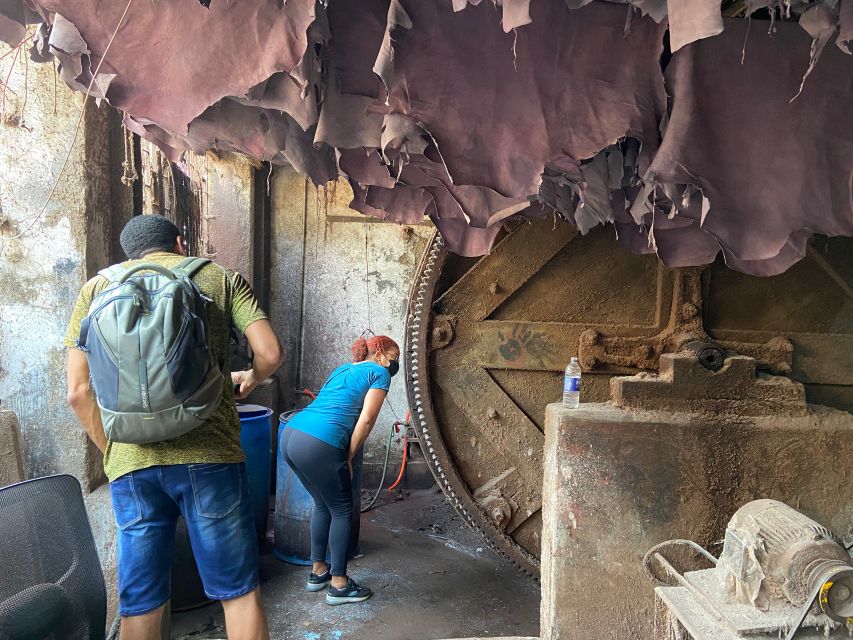
The meeting point is outside the Third Wave Coffee shop. This is a practical choice because it gives you a clear, recognizable place to meet before entering the more confusing lanes of Dharavi.
Arrive ready to walk. The tour lasts about 2 to 2.5 hours and returns to the same coffee shop. A few people have found the meeting point easy to reach by train, while driving requires extra time because Mumbai traffic can be slow and unpredictable.
The guide speaks English, and the particular guide may vary. Names associated with this experience include Pooja, Varsha, Sneha, Anu, Anushka, Sarah, Mahek, and others. That matters because the best part of this walk is the human explanation. You are not following a generic audio script. You are hearing local stories and answers from women who know the area closely.
Bottled mineral water is included. Private groups are available, but the standard experience is designed as a small-group walk. If you do not see your guide outside the café, the booking contact is the right way to reach the operator.
Recycling first: the working side of Dharavi
The walk commonly moves into the industrial sections first. This is one of the strongest parts of the route because it immediately challenges the simple idea that Dharavi is only a residential slum.
You may see plastic recycling, paper recycling, and aluminium recycling. These activities show how discarded material becomes an income source. The process is practical and labor-intensive, and the workspaces are often compact. You should expect an active production area, not a visitor center with neat displays and signs.
The guide explains how the businesses function and how people earn a living from them. This local context helps you understand why Dharavi plays an important role in Mumbai’s economy. It also adds a useful environmental angle: material that might otherwise be thrown away is sorted, processed, and put back into circulation.
This part can be noisy, cramped, or visually demanding. You may need to pay close attention to where you walk. That is a normal part of seeing a real workplace, but it is also why a guide matters. You should not wander through these lanes alone or treat workers as scenery.
Small factories and skilled hands
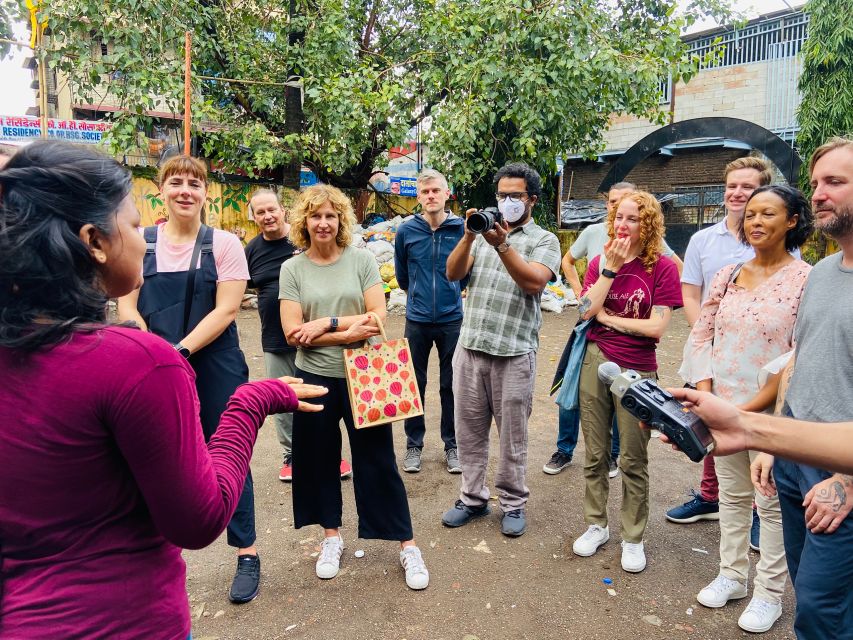
The route can also include soap factories, cloth manufacturing, leather industries, and pottery. These are not grand factories with large machines and official tours. They are smaller operations woven into the neighborhood.
Cloth and leather production reveal the skill behind goods that are often invisible once they reach a shop. Pottery offers another view of traditional making within a modern city. Soap production and recycling show the variety of businesses operating close together.
The important point is scale. Dharavi’s industries are often made up of many small enterprises rather than one large employer. That structure helps explain the area’s economic strength and its crowded appearance. A lane may serve as a workplace, a delivery route, and part of someone’s home area at the same time.
You should listen carefully to the guide’s explanations instead of rushing from one stop to the next. Pooja has been praised for using humor while still explaining difficult subjects clearly. Varsha is known for answering detailed questions in fluent English. Sneha has been described as especially strong at explaining both the industrial and residential sides of Dharavi.
More Walking Tours in India:
- Fontainhas Heritage Walk by Make It Happen
★ 5.0 · 2,834 reviews - The Great Indian Food Tour: Old Delhi Food and Heritage Walk
★ 5.0 · 1,698 reviews - Old Goa Heritage Walk by Make It Happen
★ 5.0 · 797 reviews - Old Delhi Food, Heritage&Cultural Walk with Rickshaw ride to Masterji Kee Haveli
★ 5.0 · 742 reviews
From commercial lanes to family life
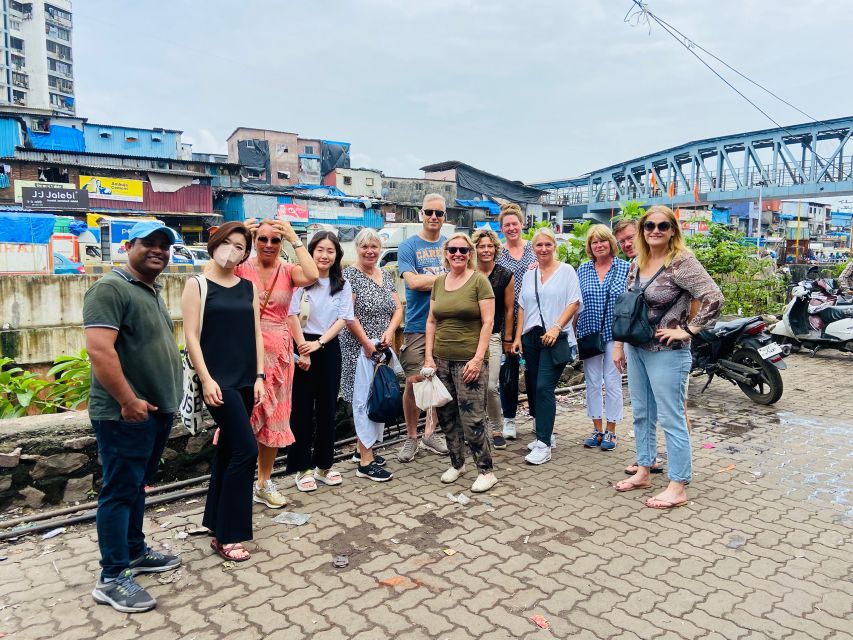
The tour does not stop at recycling and workshops. It also leads through markets, commercial areas, residential lanes, and educational spaces.
This transition is important. It shows that Dharavi is not divided into a simple work zone and a simple home zone. The same neighborhood supports shops, production, schools, and daily errands. The route can help you understand how people adapt to limited space and make a community function.
The residential sections are also where respectful behavior matters most. You are walking through people’s daily lives, not an abandoned site. Keep your voice low, avoid blocking paths, and follow the guide’s instructions. Ask before taking photographs if photography is appropriate. The supplied tour information does not promise a photography program, so the focus should be on observation and conversation rather than collecting images.
Schools and colleges add another useful layer. They remind you that Dharavi is not defined only by its buildings or income levels. Families live there, children study there, and residents work toward better opportunities. Several guides speak about education and the roles it plays in local life.
What the guides add to the experience
The tour’s strongest feature is its female local guides. The description identifies the experience as led by Dharavi’s first female tour guide, while the operating team includes several women who bring their own connections and stories.
Pooja is frequently praised for her friendly manner, humor, and clear explanations. Varsha is described as a local who grew up in Dharavi and can explain the area from first-hand experience. Sneha also lives in Dharavi, according to the information provided, and guides visitors through both the commercial and residential sections.
Anu has been praised for patience and for keeping groups together in the narrow streets. Anushka is described as well prepared and clear. Mahek received strong praise even on her first independent tour. These details suggest that the operator has several capable guides rather than one single personality carrying the whole experience.
Your guide may change, so do not book expecting a guaranteed particular person unless the operator confirms it. Still, the repeated pattern is clear: the guide’s local connection is the central reason to choose this tour over trying to walk around Dharavi without help.
A useful correction to the word slum
The word slum can make a place sound uniform, helpless, and frozen in time. Dharavi is more complicated.
The area does contain poverty and serious pressure on space and services. You should not romanticize those problems. At the same time, the neighborhood has businesses, schools, skilled workers, entrepreneurs, and strong community networks. The walk is at its best when it holds both truths together.
Several people who have taken this route found that it changed their assumptions about what a slum is. That is a worthwhile result, but you should not expect a neat feel-good story. You will see hard conditions as well as creativity and enterprise. The guide’s job is to put those sights into context.
I especially value the emphasis on transformation stories. Waste becomes useful material. Small workshops become livelihoods. Narrow residential lanes support complex social and economic activity. Those examples do not erase hardship, but they offer a fuller picture than a quick drive past the area.
Is two and a half hours enough?
The timing is sensible for a first visit. Two to 2.5 hours gives you enough time to see several kinds of work and residential areas without turning the experience into an exhausting full-day commitment.
The route is on foot, so comfortable shoes are important. The provided information does not specify a fixed distance, number of stops, or accessibility arrangements. You should therefore be prepared for uneven or narrow walking conditions and ask the operator if you have mobility concerns.
The pace depends on the group and the guide. A smaller private group can make it easier to ask questions and pause for explanations. A shared group may be less flexible, though the guide’s role is especially useful in keeping everyone together.
This is also a good activity for families with older children and teenagers. One family found the guide welcoming and felt safe throughout the route. Still, children should understand that this is a real neighborhood and workplace, not an amusement park. The subject matter is serious, and respectful attention is required.
The $5 price and what you receive
At $5 per person, this is one of Mumbai’s best-value guided activities. You receive a walking tour, an English-speaking guide, and bottled mineral water for roughly two and a half hours.
The low cost should not lead you to expect luxury. There is no mention of transport, meals, shopping, or a formal visitor center. You meet at the café, walk through Dharavi, and return to the same point.
The real value is access and interpretation. You could enter the general area on your own, but you would not know which lanes lead to workshops, how the businesses operate, or how to approach residential spaces politely. The guide turns a confusing walk into a structured introduction.
Free cancellation is available up to 24 hours before the start for a full refund, and you can reserve now and pay later. Starting times depend on availability, so check the schedule before planning the rest of your Mumbai day.
Who should book this Dharavi walk?
I would recommend it to you if you want to see Mumbai beyond monuments, museums, and the usual sightseeing circuit. It suits curious visitors who want to understand work, housing, education, recycling, and local enterprise in one compact experience.
It is also a strong choice for first-time visitors. The tour can help you get your bearings in Mumbai’s social and economic contrasts early in your stay. You will leave with more questions, but they will be better questions.
You may want to skip it if you dislike walking through crowded neighborhoods or if you expect a polished attraction with fixed exhibits. It is not designed as a photo stop, and the material may feel emotionally difficult. You need to approach Dharavi with humility rather than the attitude of collecting an unusual experience.
Final verdict: book it for context
I would book this tour if I had 2.5 hours in Mumbai and wanted a grounded introduction to the city. The route combines recycling, manufacturing, markets, schools, homes, and commercial areas, while local female guides provide the explanation that makes those sights meaningful.
The tour’s main strength is not spectacle. It is the chance to see Dharavi as a working community with problems, talent, ambition, and resilience. At $5, the value is hard to question. Just arrive ready to walk, listen, and treat the neighborhood as someone’s home.
FAQ
Where does the Dharavi walking tour meet?
The guide meets you outside the Third Wave Coffee shop. The tour also finishes back at Third Wave Coffee.
How long does the tour last?
The walking tour lasts approximately 2 to 2.5 hours.
What language is the tour conducted in?
The live tour guide speaks English.
What will I see in Dharavi?
You may see plastic, paper, and aluminium recycling, soap factories, cloth manufacturing, leather industries, pottery, schools, colleges, markets, commercial areas, and residential areas.
Is bottled water included?
Yes. Bottled mineral water is included with the walking tour.
Is a private group available?
Yes. A private group option is available.
Can I cancel for a refund?
Yes. You can cancel up to 24 hours in advance for a full refund.
New routes in India
- Agra Walking Tour★ 5.0 · 109 reviews
- Amritsar Heritage Walking Tour★ 5.0 · 112 reviews
- The Great Indian Food Tour: Old Delhi Food and Heritage Walk★ 5.0 · 106 reviews
- Spiritual Walking tour with Puja Ceremony -The Pushkar Route★ 5.0 · 101 reviews
- Spiritual Walk Tour Trivandrum (Guided Walking Experience)★ 4.6 · 87 reviews
- Panaji: Heritage Walk through Goa’s Latin Quarter★ 4.8 · 291 reviews
- Old Goa: Walking Tour of Heritage Churches★ 4.9 · 81 reviews
- Old Delhi: Spices, Heritage and Bazaars Walking Tour★ 5.0 · 173 reviews
Mumbai Walking Tours, compared.

Private Guided Walking Tour in Bandra Queen of Suburbs
Read our review →
Private Guided Spiritual Walk in Banganga Hindu Temples
Read our review →
Mumbai Street Food Tour with Evening Bazaar Walk
Read our review →Browse the lists this tour appears in